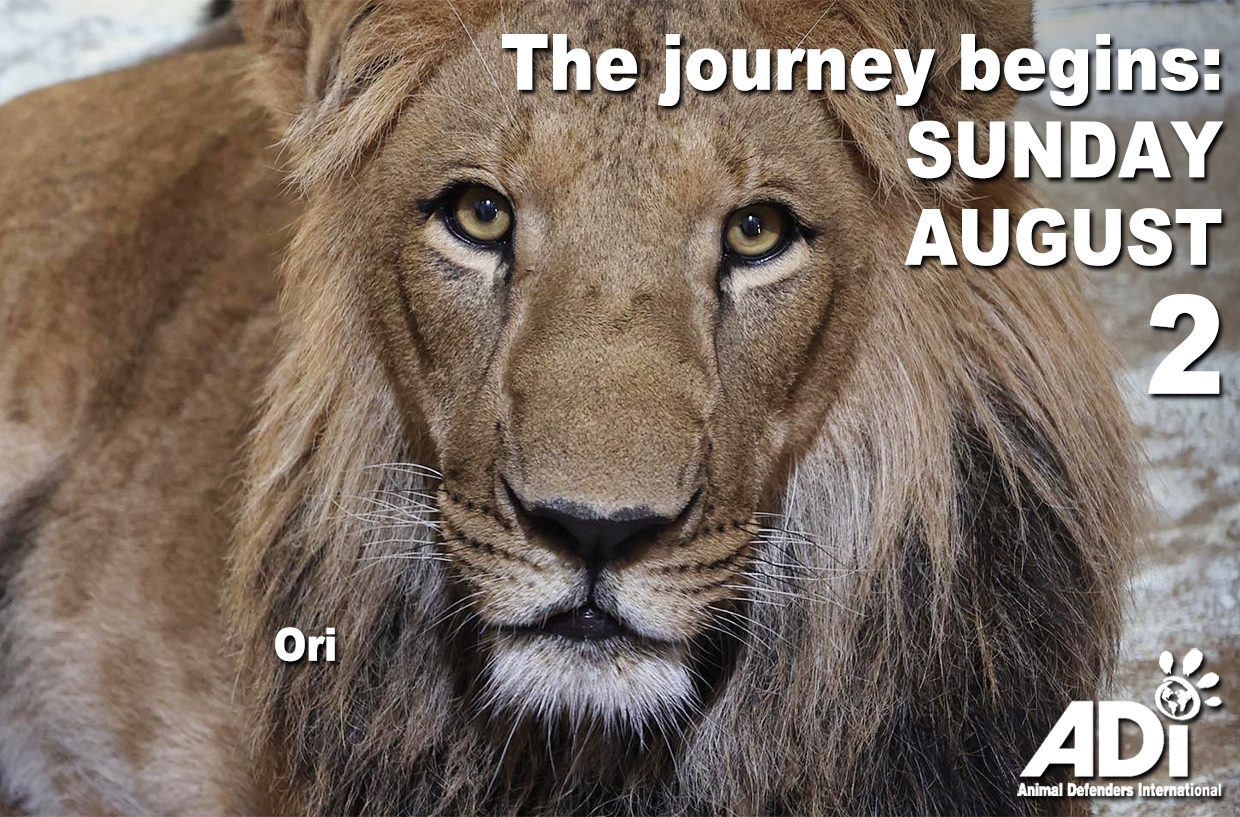
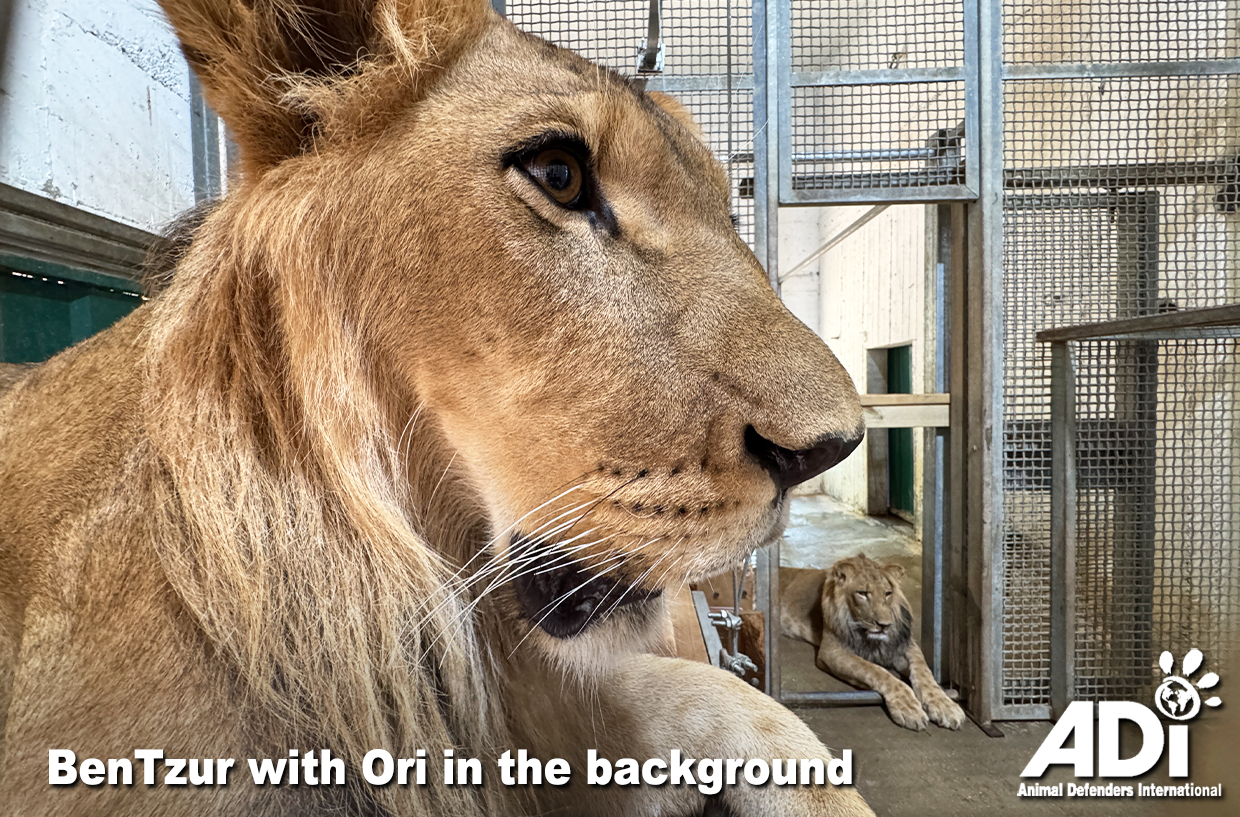
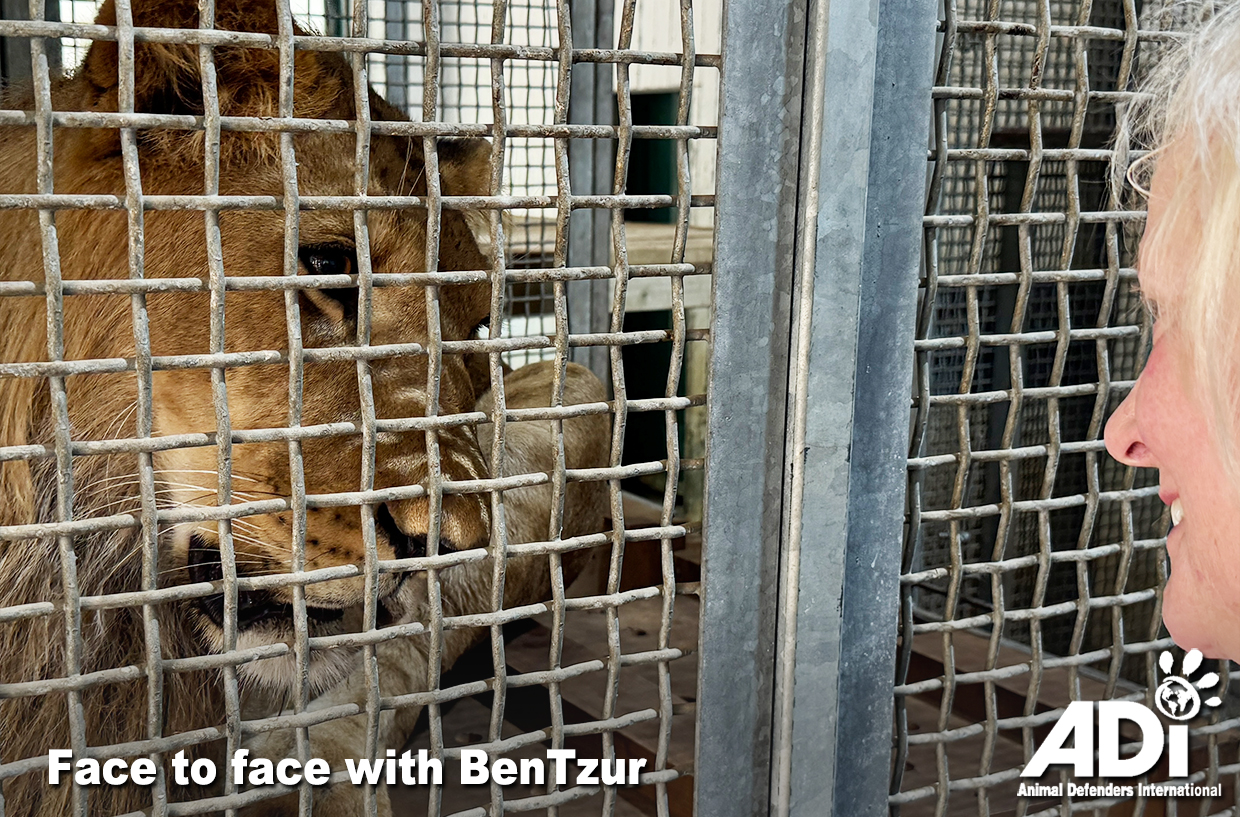
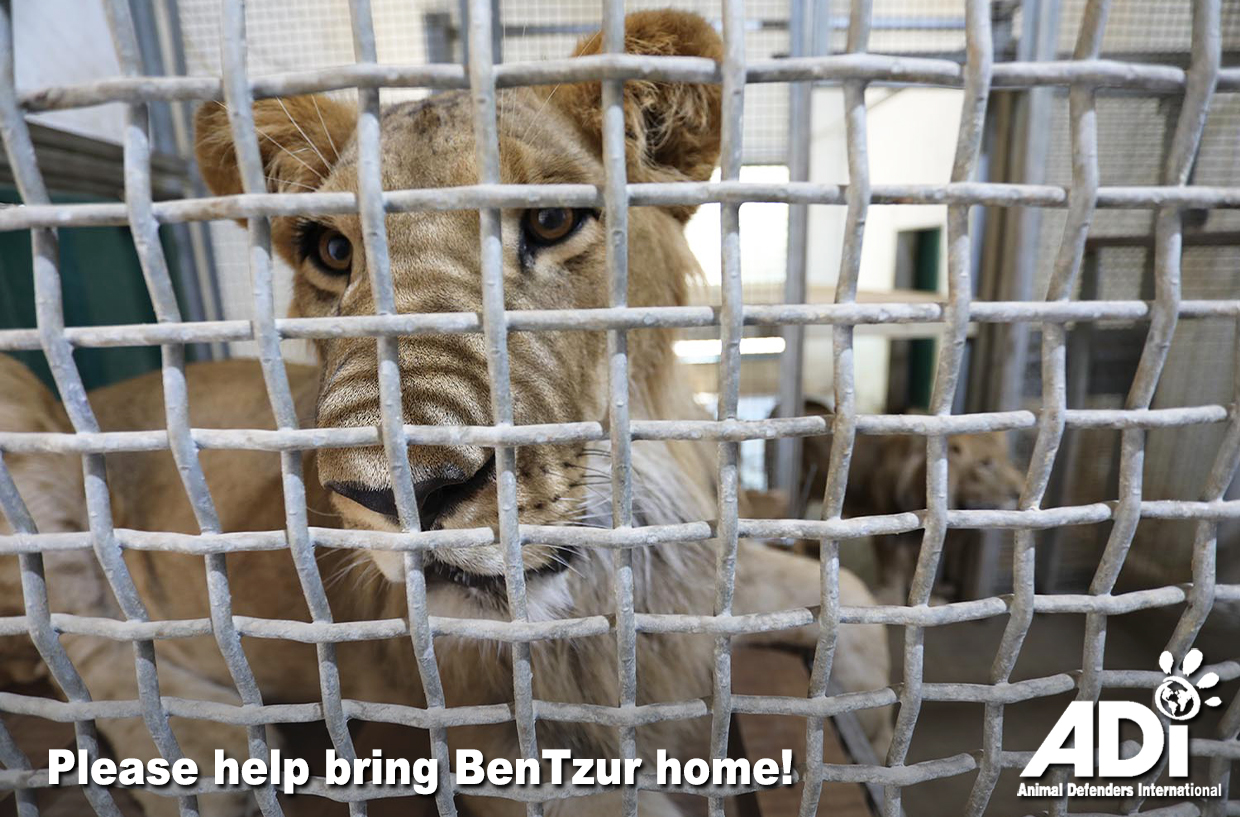
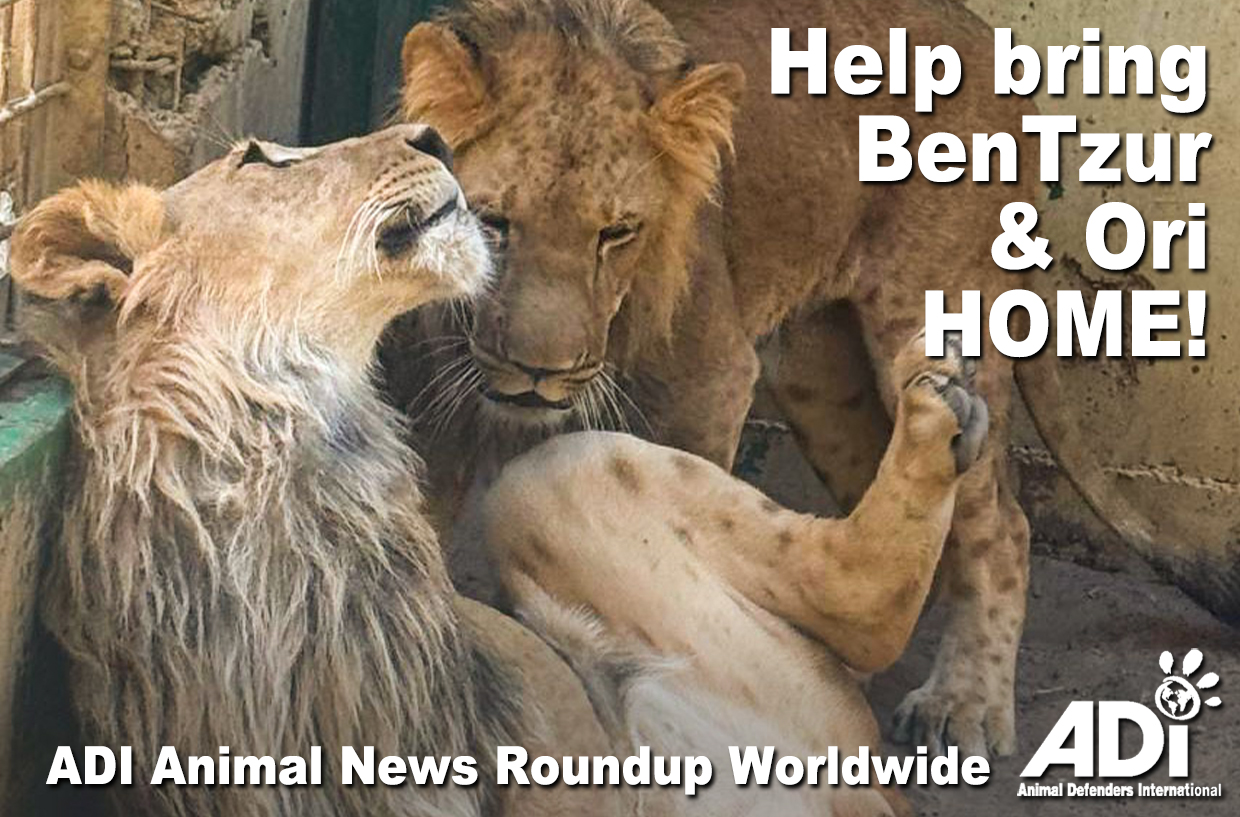
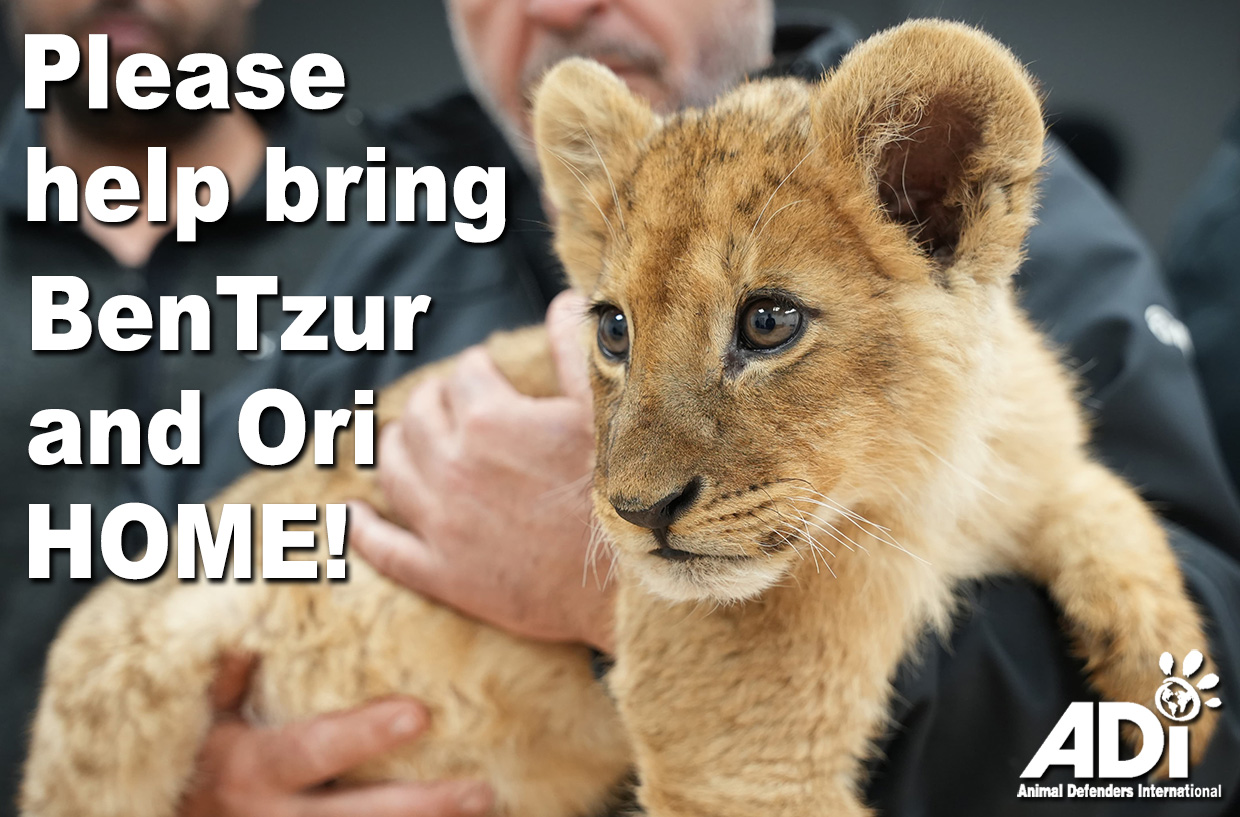
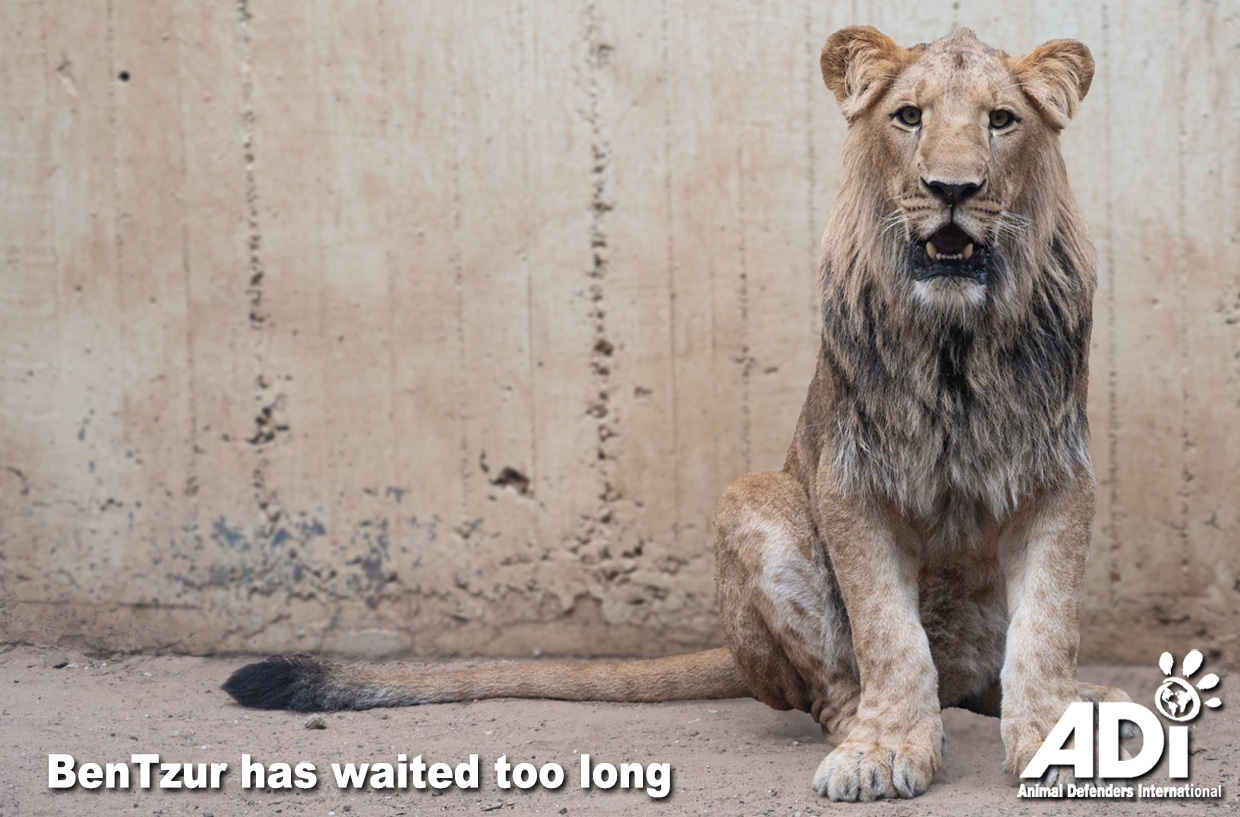
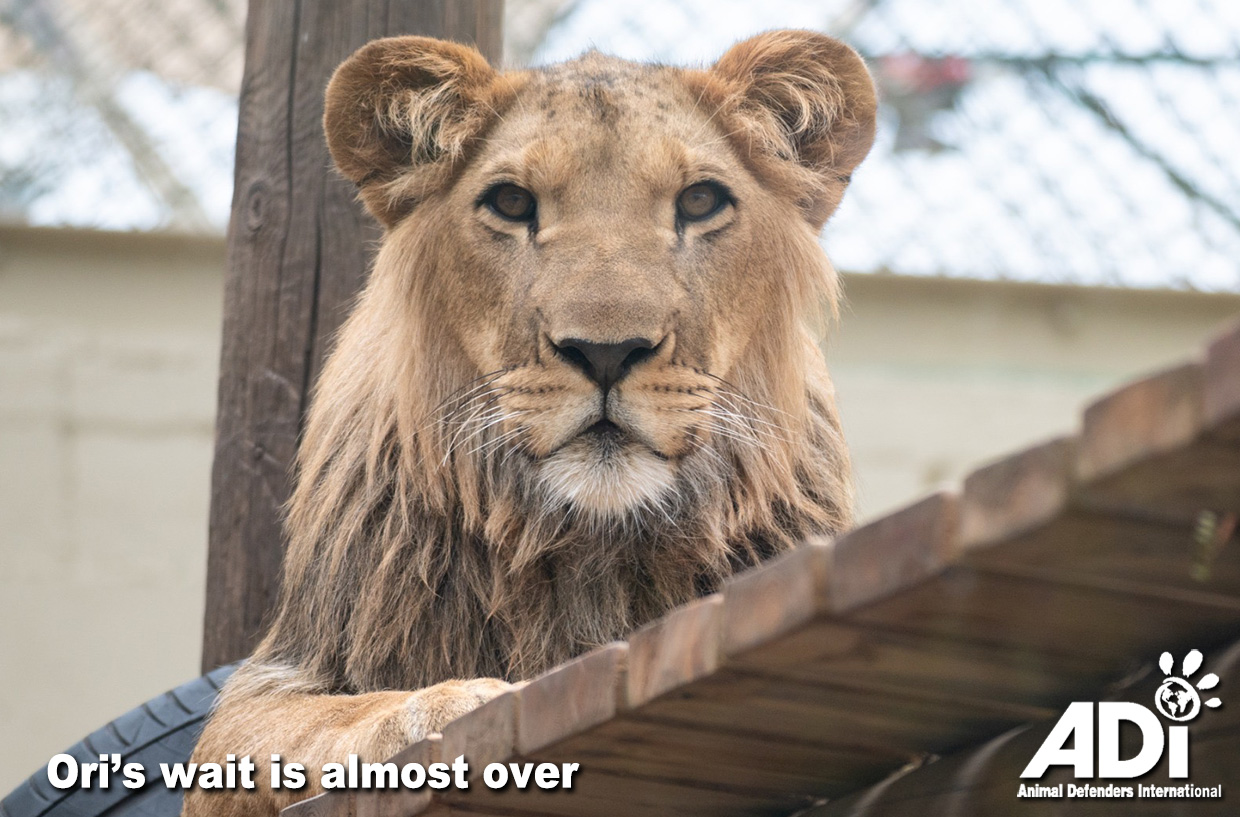
I am writing from Israel where, in the sweltering heat, we are making the final preparations to move rescued lions, BenTzur and Ori, to the ADI Wildlife Sanctuary, South Africa.
On Sunday, 2nd August, we will be loading, BenTzur and Ori, and just after midnight Tim and I will be flying from Tel Aviv to Frankfurt, Germany, on the first leg of our marathon journey to Africa. At Frankfurt, we will have a 10-hour stopover before boarding a non-stop, 10.5-hour flight to Johannesburg, South Africa, landing the next day, on 4th August, for the final road trip, 3.5 hours, to the ADIWS.
We will be providing live updates during the journey on ADI’s social media channels.
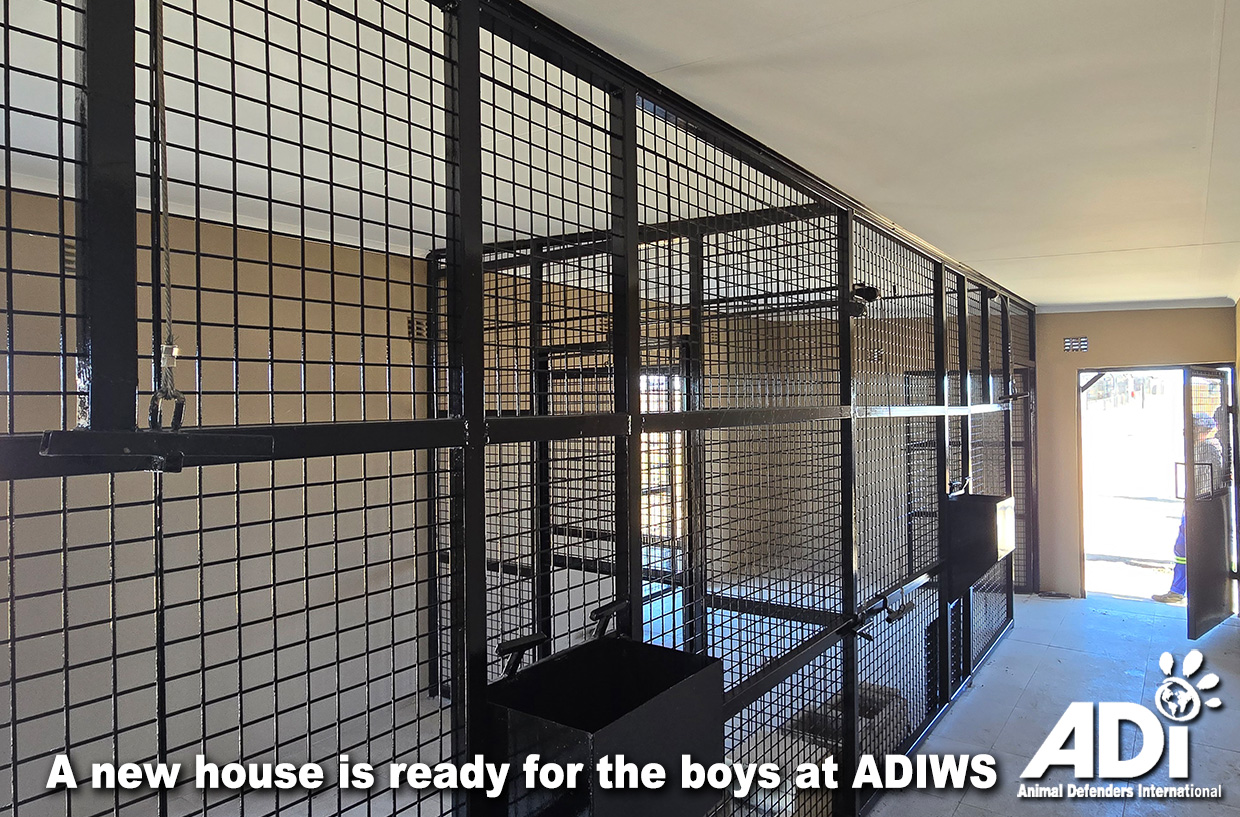
At the ADIWS, their new life begins. As they drive through the gate, all the residents will know immediately and the lions will look up for the new arrivals, and there may be some roaring of welcome. BenTzur and Ori will be moved into their newly refurbished 2.5 acre habitat, with new 2-room night house with new power supply and heated floors, trees, shrubs, and a large platform for the views with den underneath, a total cost of $42,000 (our thanks to Sharon and Art Barber for sponsoring the new house.
It is winter in South Africa, extremely cold, yellow grass, so we will first settle them into their cosy, heated night house. Next day, they can go out into the feeding camp to taste life under the African sky.
Over their first few days, they will hear and see their lion neighbors, listen to the sanctuary-wide morning and evening roaring songs, and perhaps grow in confidence and learning to join in.
On one side of their new home, across the road, are the habitats of ReyA, Kesari, Coco and Chino. On the other side, are tigers Luna, Sun and Moon, and to the north, is home to white lionesses, Lei-ah and Elsa.
Due to the impact of the war, it was not possible to get any assistance from airlines for a free flight, or other transport costs, so we need your help more than ever – for flights ($40,000), trucks, ground transport, new crates, airport and shipping fees. In addition to covering the cost of the relocation we must raise the funds for BenTzur and Ori’s lifetime care, veterinary, food, care team, and habitat maintenance. One found tied to a tree and another hidden in a house, we can give them 20 years of freedom, where nature intended.
Our target is $100,000 for relocation, construction costs and care. Can you help get us there? Please help bring them home and give them a lifetime in the land of their ancestors.
The wait is almost over! Next week I will fly to Israel with Tim and on Sunday 2 August we will load young lions BenTzur and Ori, to fly with them to Frankfurt on Monday 3rd, on the first leg of our journey to freedom in Africa. It will be a long, ten-hour wait in Frankfurt before flying overnight to South Africa, arriving on Tuesday 4August.
The work is now intense, as we ensure everything is in place and we hope there will be no further obstacles to these young lions starting their new life. They have almost their entire lives ahead of them, as much as 20+ years – home in Africa, learning to roar, becoming part of the super-pride at ADIWS.
This is another important rescue which exposes the illegal trophy pet trade, which is being fueled around the world by irresponsible social media companies who do nothing to stop it, and selfish, ignorant, influencers hoping for millions of likes for keeping lion and tiger cubs in miserable, unnatural conditions.
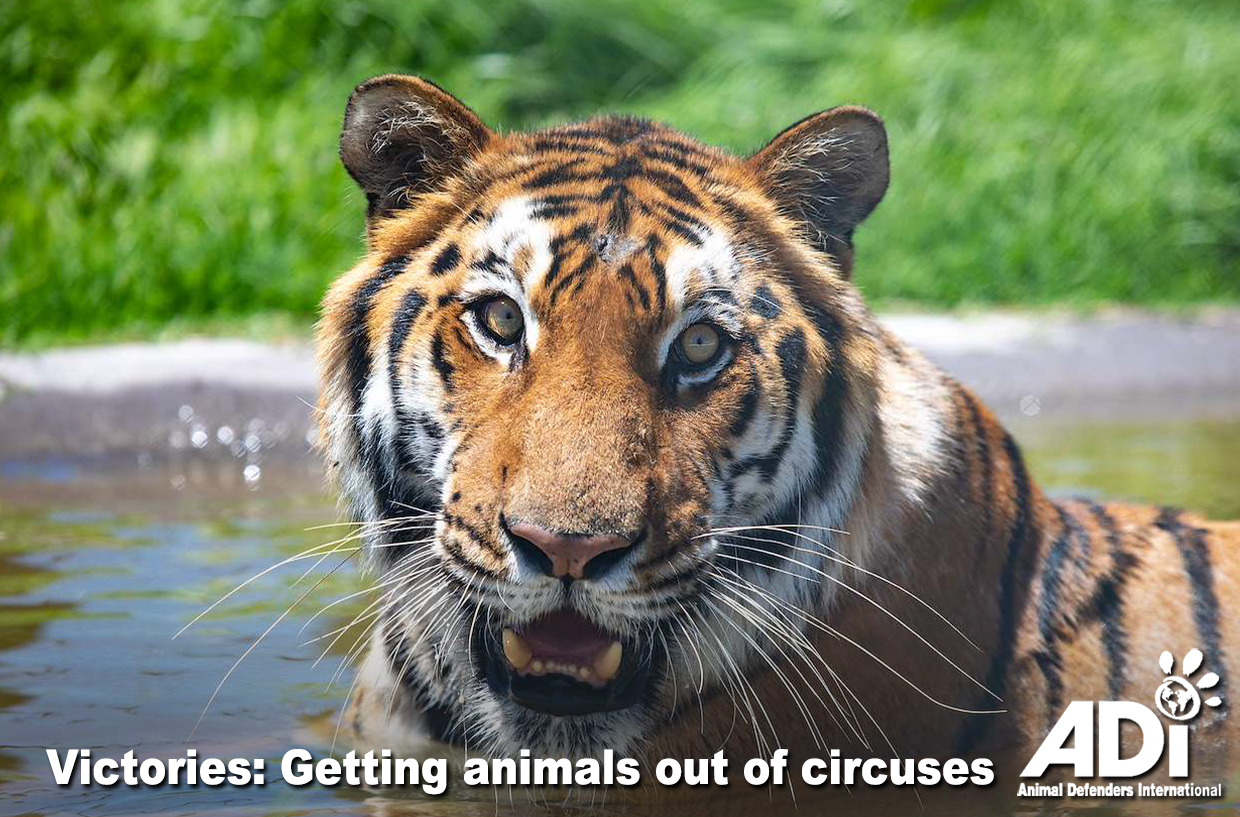
Here is a round-up of some of our campaign activity and developments over the past month, including two more big victories for our Stop Circus Suffering campaign.
Hungary has banned wild animals in circuses with the law coming into force at the end of the current circus season. How the tide has turned was illustrated by some of Hungary’s biggest circus companies, such as The Capital Circus of Budapest and the Hungarian National Circus, coming out in support of the ban.
Illinois expands ban on wild animal acts. Having banned elephants in circuses several years ago, Illinois has now banned the use of cougars, jaguars, leopards, lions, tigers, primates, and bears, becoming the eighth US state with such a ban. Let’s keep the momentum going.
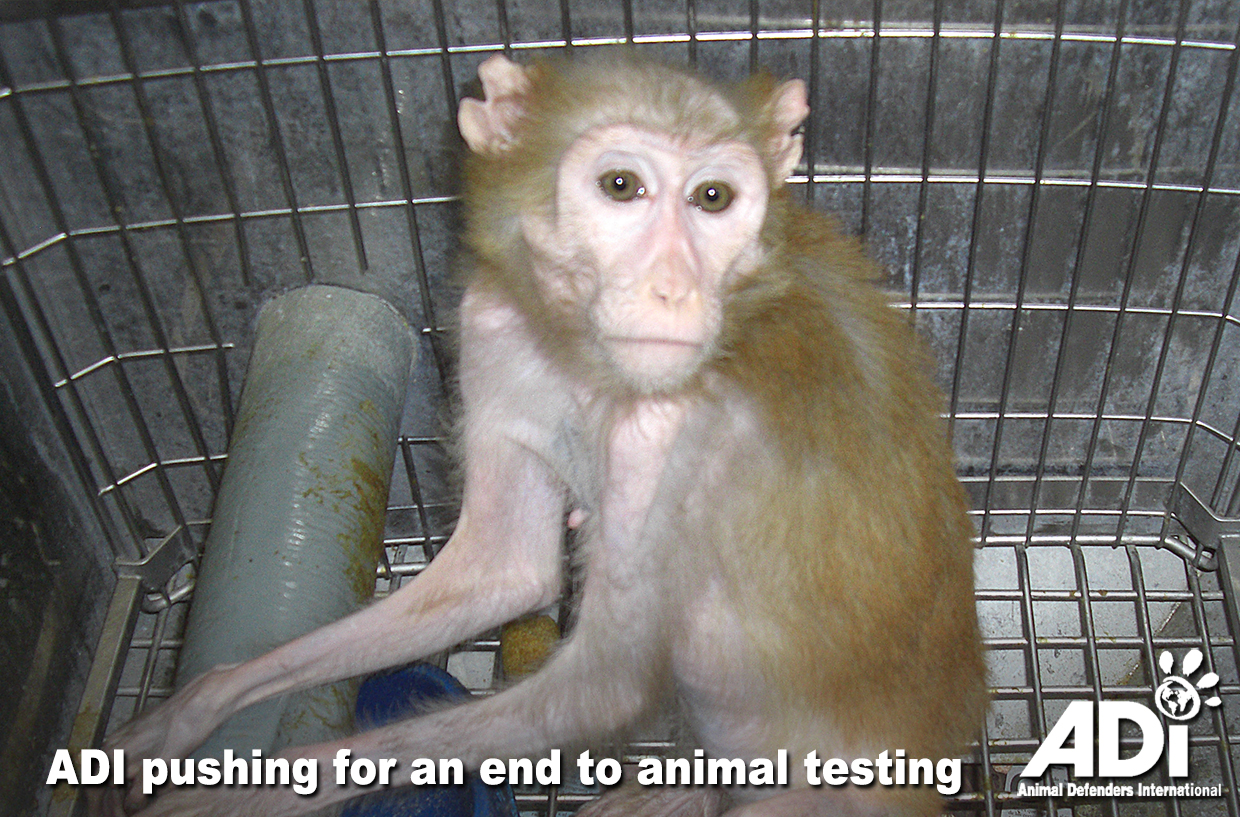
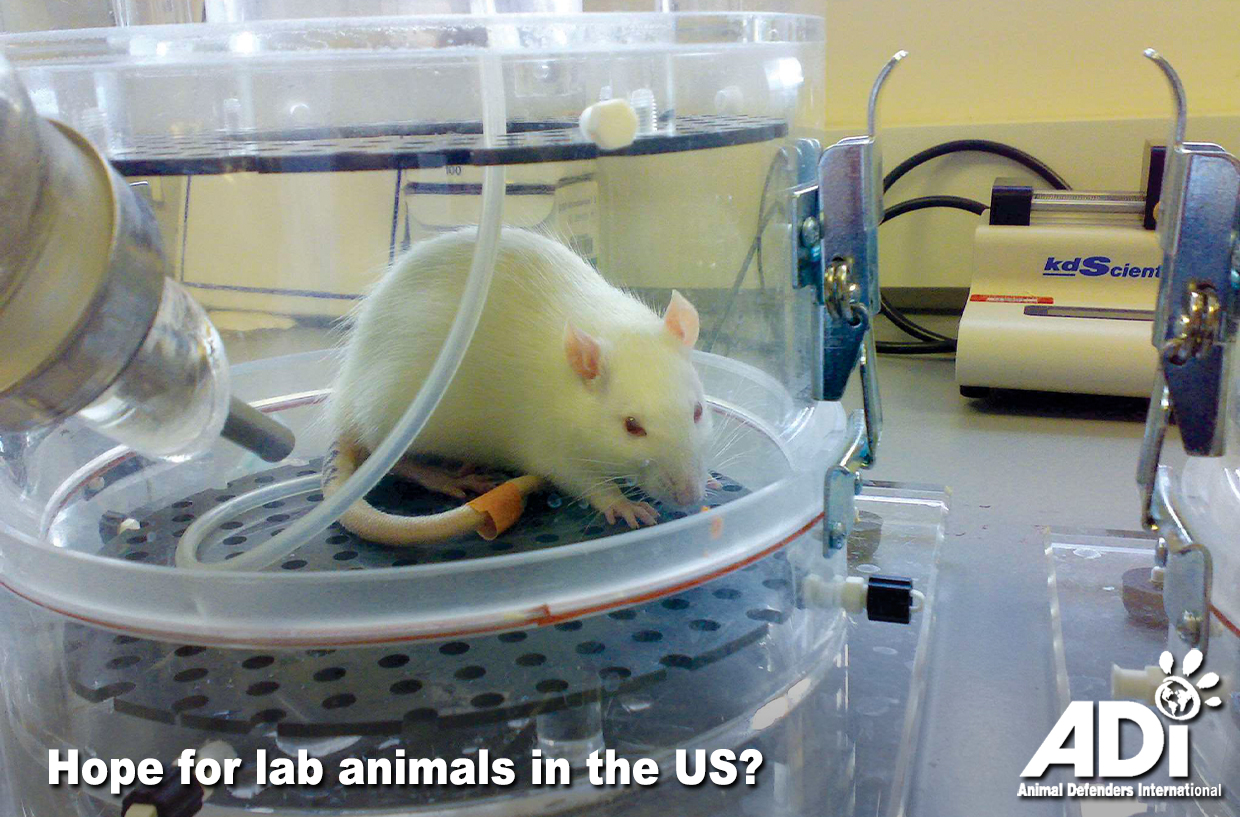
The US Food and Drug Administration (FDA)proposes replacing certain 3-month toxicity studies on monkeys. ADI is pressing Congress to back the measure and ensure it is implemented quickly. ADI has also met with UK Home Office officials to discuss the Government’s roadmap to phase-out animal testing and we are challenging the lack of visible progress. So far, ADI has submitted detailed responses and critiques to the UK ‘roadmap’, as well as similar proposals from the US Food and Drug Administration (FDA), the EU roadmap, and to the Colombian government on the compulsory use of alternatives. Our campaign to end the use of animals in laboratories has hit a potential new wave of progress, after decades of promoting and funding advanced, non-animal technologies to replace unreliable, unethical, and unnecessary animal use, mechanisms that could drive this forward are being proposed. We will NEED YOUR HELP. Take action when we call. Donate to help. In the UK, visit our Roadmap web page and take action for animals today.
Philadelphia’s ban on horse-drawn carriages signed into law – in NYC, ADI testifies to support a ban. Following cities likes Lima, Malaga, Chicago and Montreal,Philadelphia is the latest city to end the cruelty of horse-drawn carriage rides. The bill prohibiting the use of commercial or non-commercial horse-carriages, introduced by Councilmember Squilla, has been signed by Mayor Cherelle Parker.
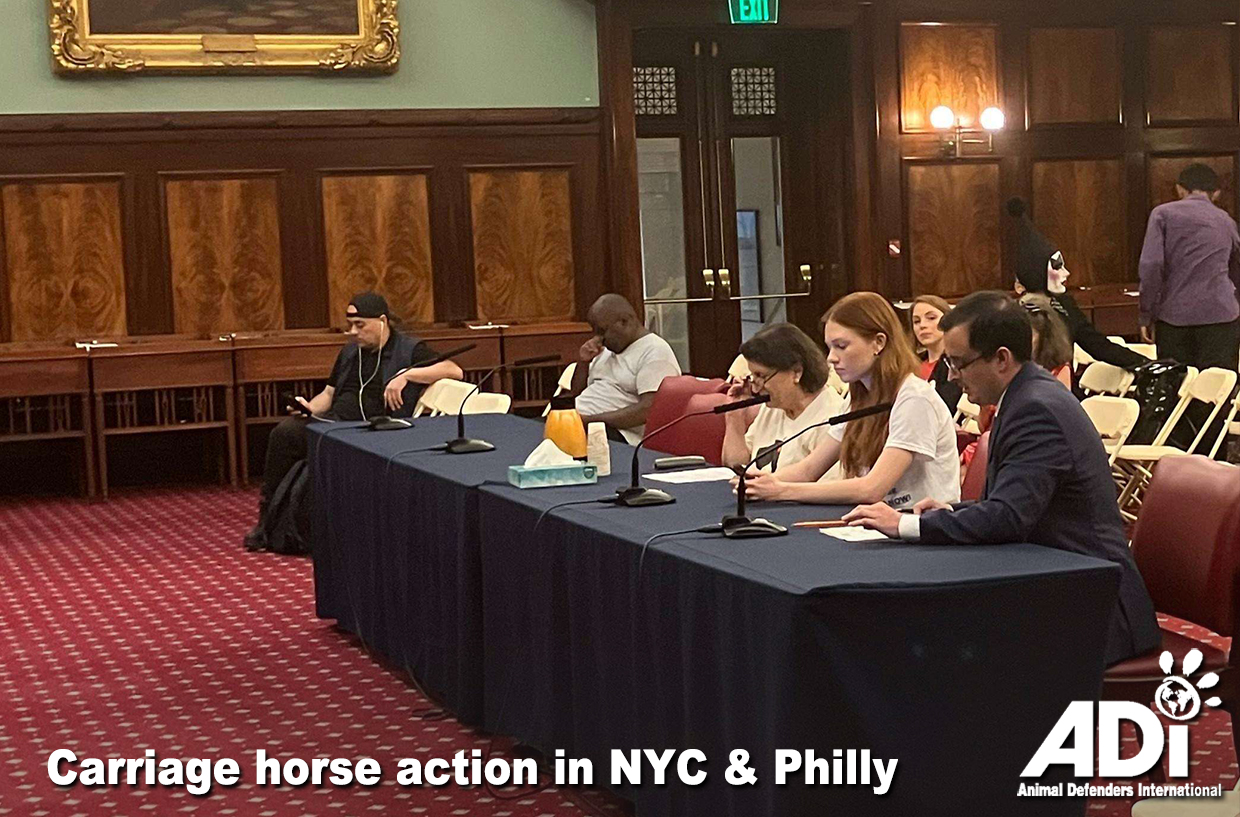
Last week, ADI’s Policy Advisor Drew McCormick was in New York to testify before NYC Committee on Health in support of Bill 0943, to ban horse-drawn carriages in the city. There was a huge turnout outside City Hall and dozens of campaigners testified in support of the bill renamed Romanch’s Law in memory of a teen recently killed when a poor horse pulling a carriage was frightened and ran, killing the young man. The law was previously known as Ryder’s Law, after one of the many horses who collapsed and died from being overworked pulling carriages. Momentum is building with a majority of the NYC Council sponsoring the bill and backing from the Mayor – but we need your help to get it passed!
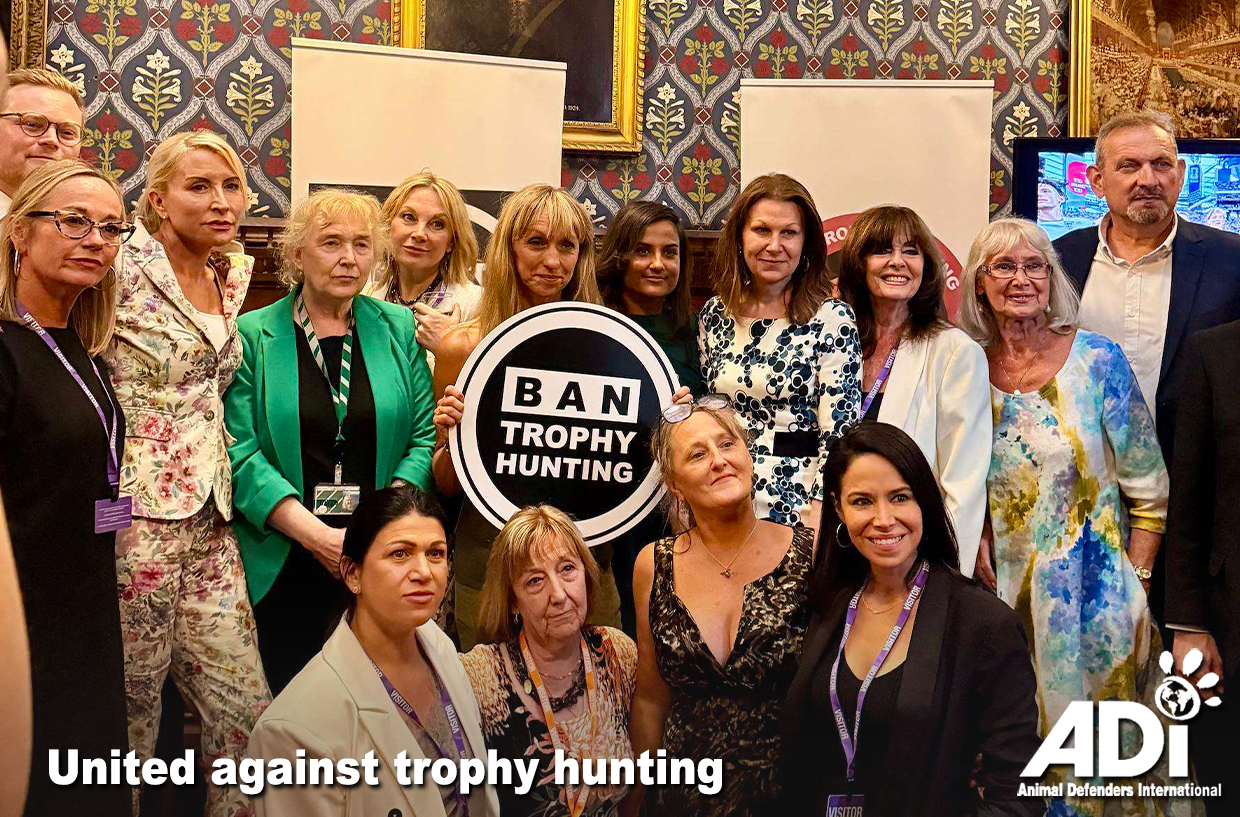
ADI and campaigners unite in UK Parliament to mark the anniversary of the killing of Cecil. Eleven years ago, Cecil the lion was lured from the safety of a protected reserve in Zimbabwe and shot with an arrow by a pathetic US tourist, killing animals for kicks. He suffered for up to 12 hours before being killed, this tragic incident laid bare the abomination of trophy hunting. More than a decade later, blood thirsty cowards continue to travel to Africa to kill wildlife for fun and bans on the import of their vile ‘trophies’ are still awaited in the UK and US. On the anniversary of Cecil’s death campaigners held an event in the Houses of Parliament calling for the ban on imports of hunting trophies.
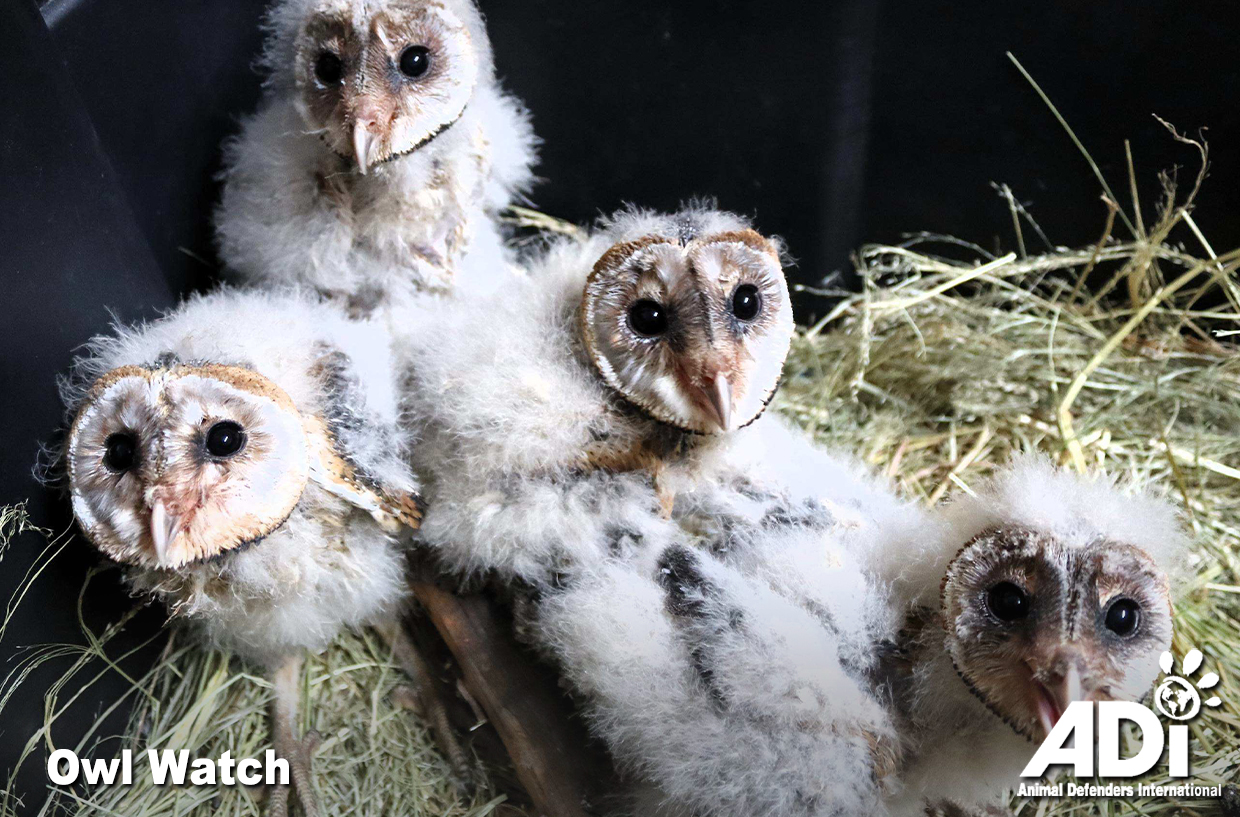
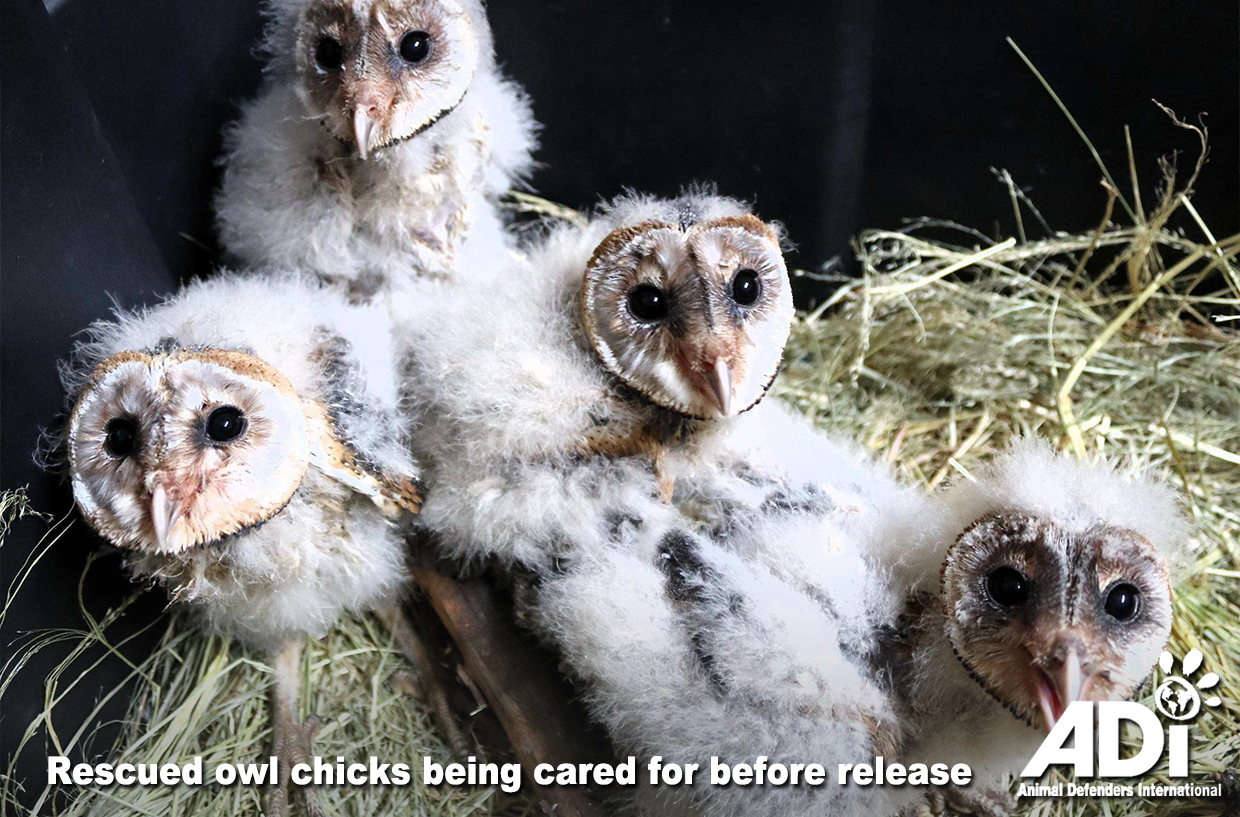
Four orphaned barn owl chicks are growing fast at the ADI Wildlife Sanctuary. Wildlife & Education Director Brent Bester is raising the chicks, mimicking as close as possible, how their parents would feed them. Soon they will be moved into an aviary in our Non-Predator Reception Area for the next phase of their rehabilitation, and once adult, released into the wild. We are posting regular updates following their progress on social media and YouTube.
The Food and Drug Administration (FDA) Modernization Act 3.0 has passed both houses of Congress! Although not a prohibition, the bill would require the FDA to consider use of ‘nonclinical tests’, advanced replacement human-relevant methods called New Approach Methodologies (NAMs), for FDA approval of a drug or other product to go on the market. The Senate must now pass the House version of the bill, which will then go to the president to be signed into law.
Please urge your Representatives to support the FDA Modernization Act 3.0 (H.R. 2821) to advance science and technology for faster, more relevant results. The Senate must now pass the House version of the bill, which will then go to the president to be signed into law.
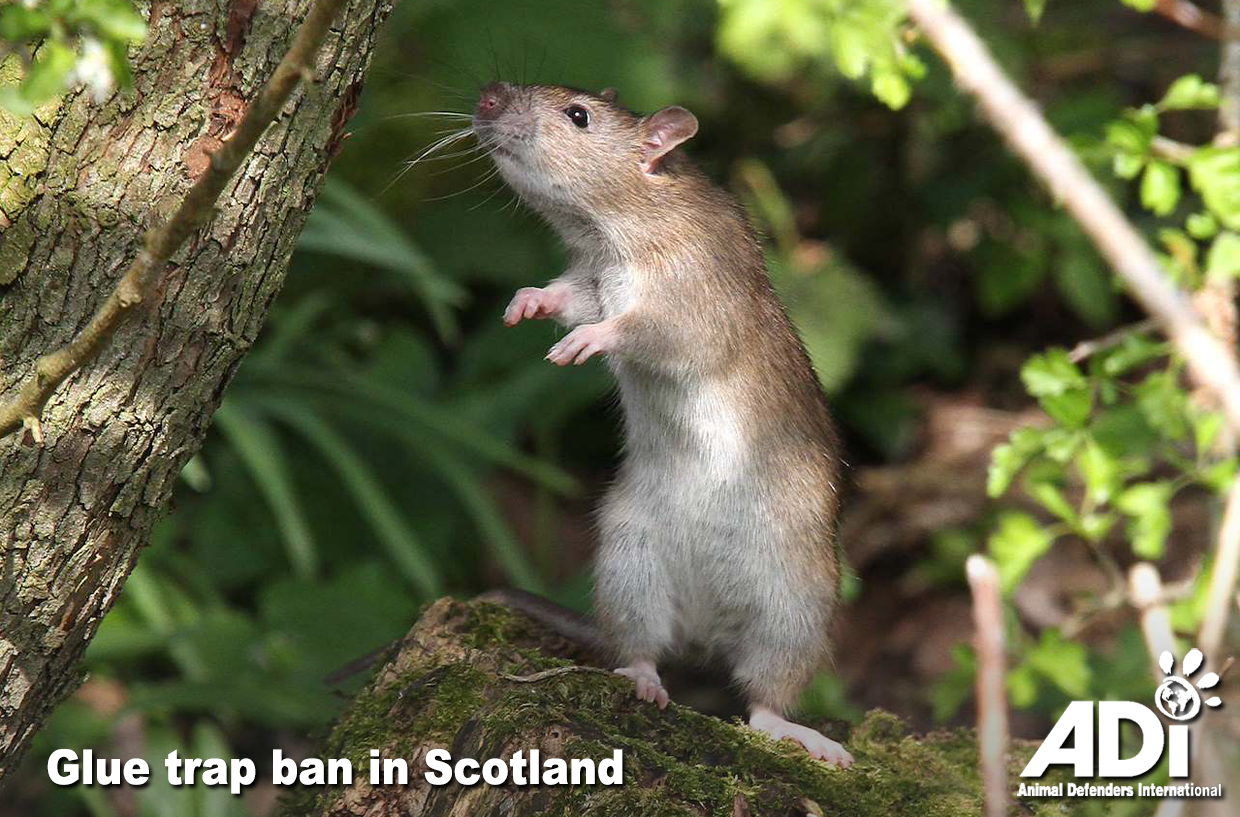
Scotland has prohibited the supply or possession of glue traps, with offenders facing fines up to £40,000/$55,000 or up to 12 months in prison. Scotland passed the ban in 2024, but it was delayed due to clashes with UK law. With a ban in Wales as well, England is now the only country in Great Britain still allowing these devices that cruelly and indiscriminately trap animals (including songbirds, bats and even pets), leaving them to a long and painful death. ADI is urging the Minister for Nature to bring England in line with the rest of Great Britain. Ask your MP to push for a comprehensive ban on cruel and unnecessary glue traps.
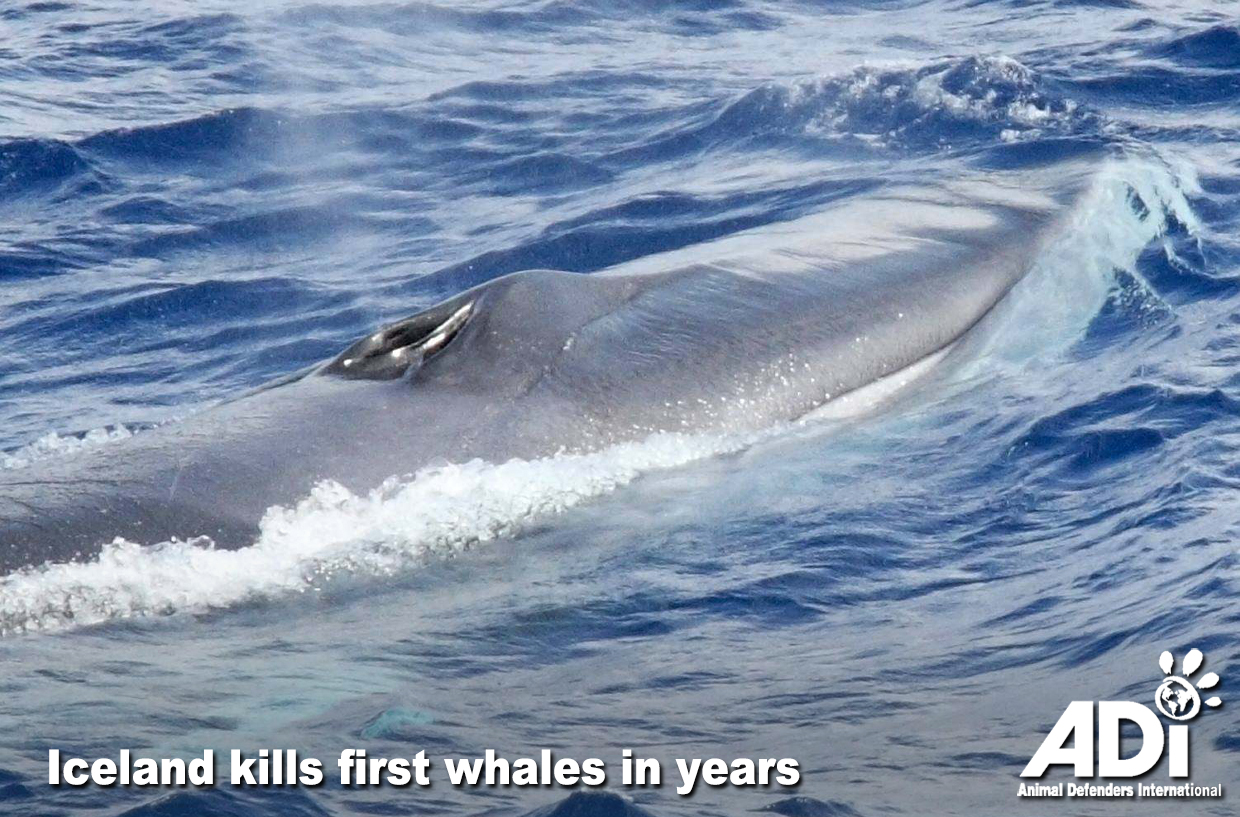
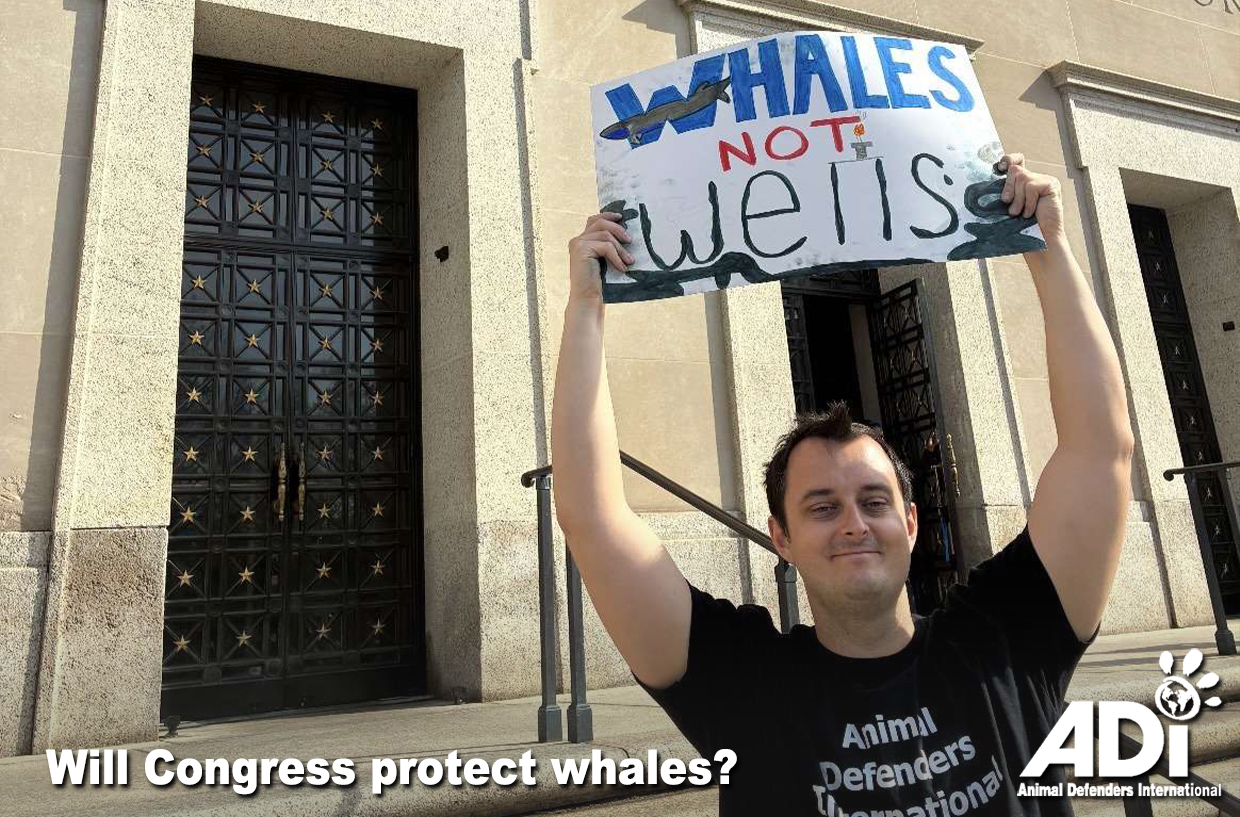
Two fin whales – the second-largest animals on earth and classified as vulnerable to extinction – have been killed by commercial whaling company Hvalur hf in Iceland, one of the few countries to still allow commercial whaling. The company was granted a five-year license in 2024 but this is the first hunt. In May ADI called on Iceland’s Ministry of Industries to justify or revoke the license for a quota for 150 fin whales. They acknowledged receipt of our letter, but did not answer our questions. Please write to Iceland’s Prime Minister Kristrún Frostadóttir, and Minister of Industries Hanna Katrín Friðriksson, and demand they take action to end whale hunting.
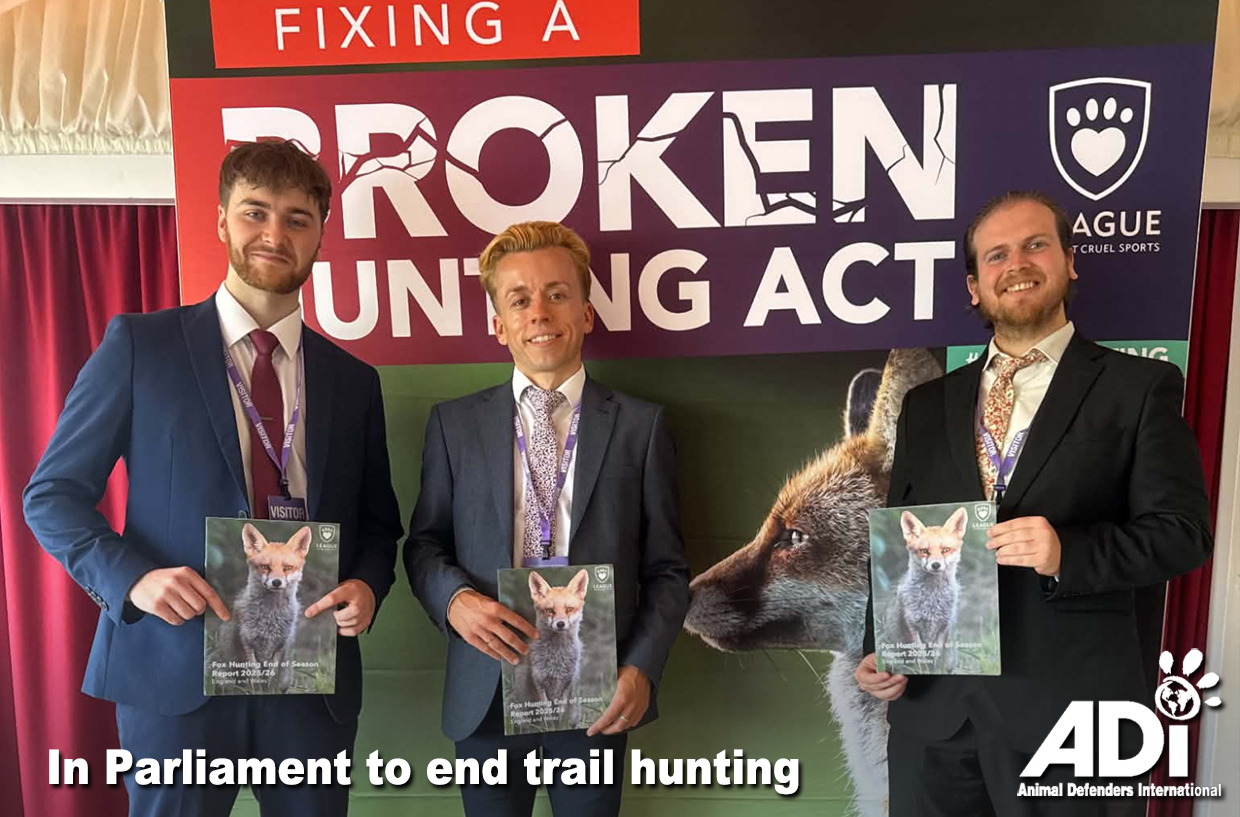
UK Parliament pushed to end trail hunting. ADI’s Bill Carter, George Chilcott and Will Bradley (above) joined MPs, wildlife experts, and fellow campaigners at a parliamentary event to push for an end to trail hunting. Since the passing of the 2004 Hunting Act in England and Wales, trail hunting has been used as cover for illegal hunting. ADI supporters responded to the government’s public consultation and, as part of the Time for Change Coalition Against Hunting, ADI continues to urge the government to deliver its election promise.
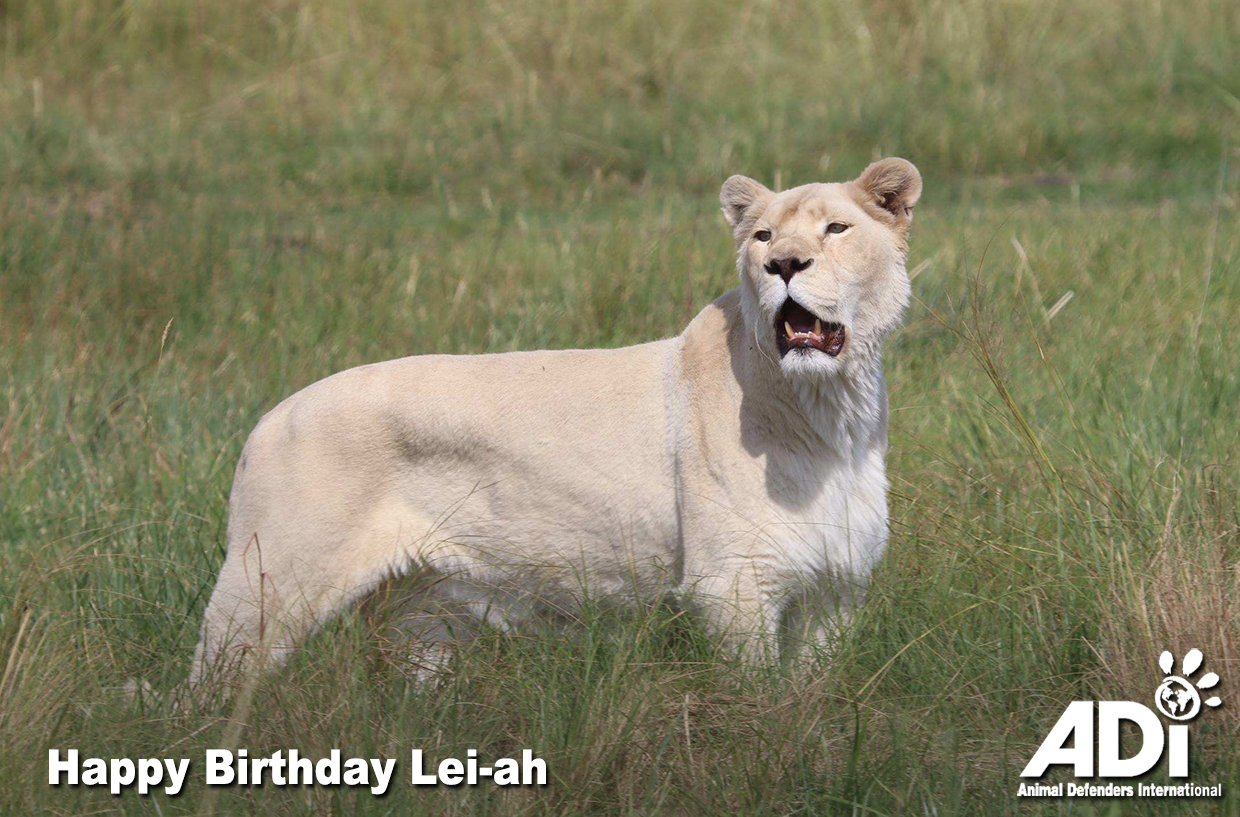
White lioness, Lei-ah, celebrates her 11th birthday at ADIWS. ADI evacuated Lei-ah and Elsa from Panthera Africa Big Cat Sanctuary after a devastating wildfire. ADI has covered all food, care costs, and modifications to the habitat for Lei-ah and Elsa, and we have committed to doing so for as long as the sanctuary needs to rebuild. Our thanks to everyone who is helping us care for these lovely, unexpected, special guests. We think Lei-ah enjoyed her birthday roaming her habitat at ADIWS.
President Trump’s Executive Order, ‘Declaring a National Energy Emergency’, required the Endangered Species Committee to meet for the first time in 34 years. They decided that the Endangered Species Act (ESA) should NOT protect the estimated 50 remaining Rice’s whales in the Gulf of México, and instead, allow oil and gas extraction from the area. ADI Policy Advisor, Drew McCormick (pictured), joined a protest outside the Committee meeting in D.C. Since then, House Resolution 8919 has been proposed to nullify the Committee’s decision to ignore the ESA, and, would prohibit the planned oil and gas drilling and mining in the Gulf. Urge your Representative to support H.R. 8919 and the ESA!
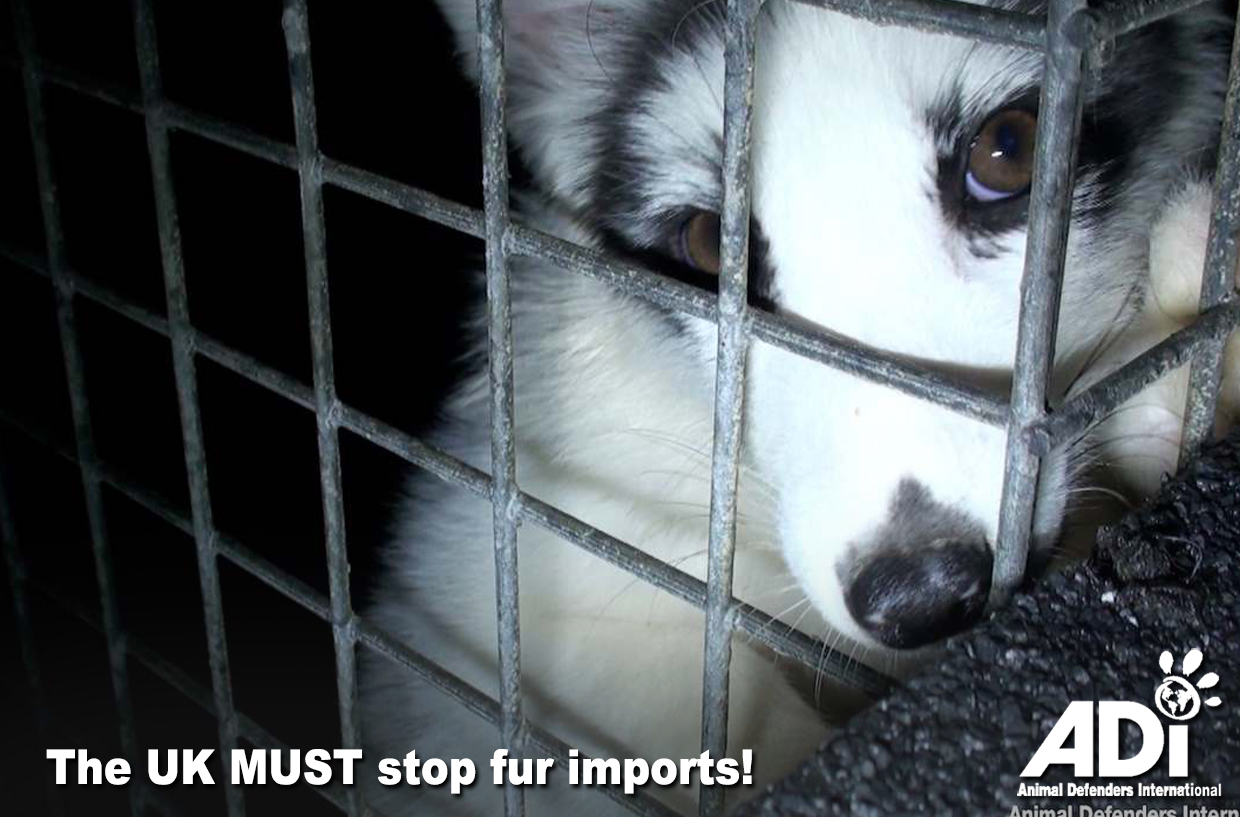
The UK banned fur farming over 20 years ago, but still ALLOWS fur imports. A Private Member’s Bill from Ruth Jones MP will ban the import and sale of animal fur has received its First Reading and is now due to be debated at its Second Reading on 4 September. IT NEEDS OUR HELP. It is very difficult for a Private Member’s Bill to be passed in the UK, so even though this one is clearly in line with British law and ethics. It is vital you contact your MP today and ask them to support the Fur (Import and Sale) Bill and ensure it is given Parliamentary time to pass.
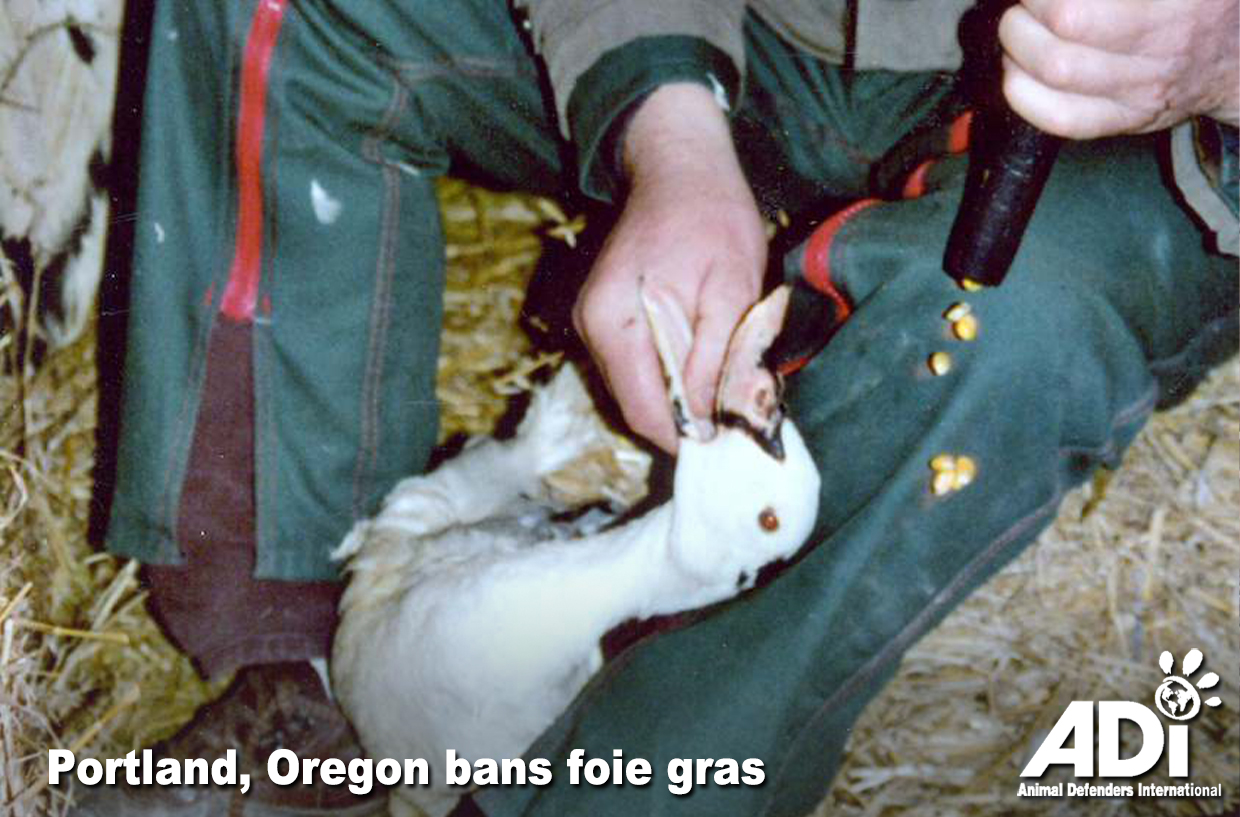
Portland, Oregon recently passed a ban on foie gras and work continues across the US to end this cruel ‘delicacy’ that involves the brutal force feeding of ducks and geese. Multiple states are considering bills or ordinances to ban foie gras, including Washington, D.C., Massachusetts, Ohio, Rhode Island, and Washington state, plus Denver, Colorado. ADI US supporters, act now. If you live in any of these areas, check here to see how you can help.
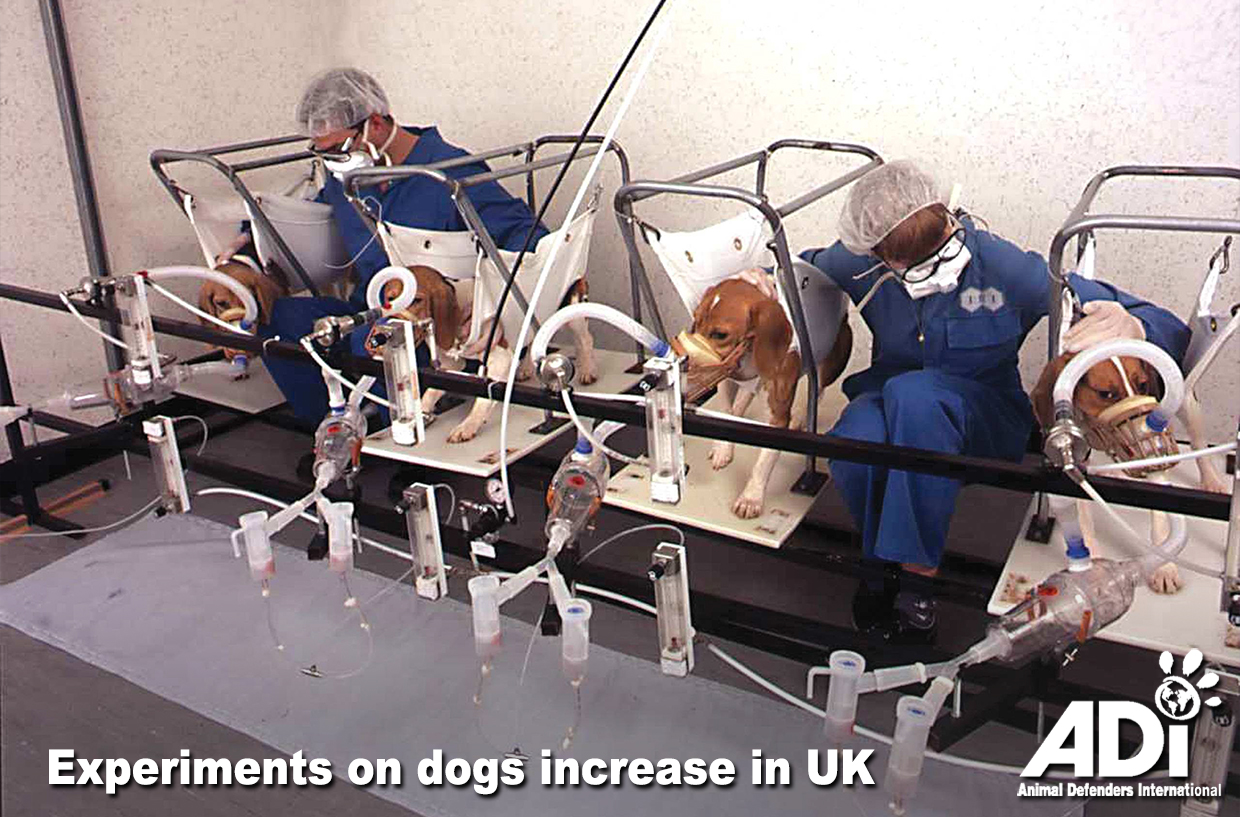
Unlicensed dealers supplying dogs to UK labs as experiments RISE. UK Home Office latest figures reveal that, despite public concern, procedures on dogs in British labs (which had been declining since 2020) rose in 2025 to 2,889 procedures – a 9% increase. The number of dogs used rose to 1,706, with many dogs enduring more than one procedure. While most of these dogs were bred in laboratories or purchased from licensed dealers like MBR, 8 beagles and 41 “other dogs” were obtained from unlicensed establishments. ADI has requested the Home Office clarify who these suppliers are, what checks were made on them, and the justification for going outside of the dealers ‘licensed’ under the UK legislation. The UK licensing system is frequently used to provide reassurance to the public of the ‘strict controls’ on animal experiments, so why are UK labs operating outside the law?
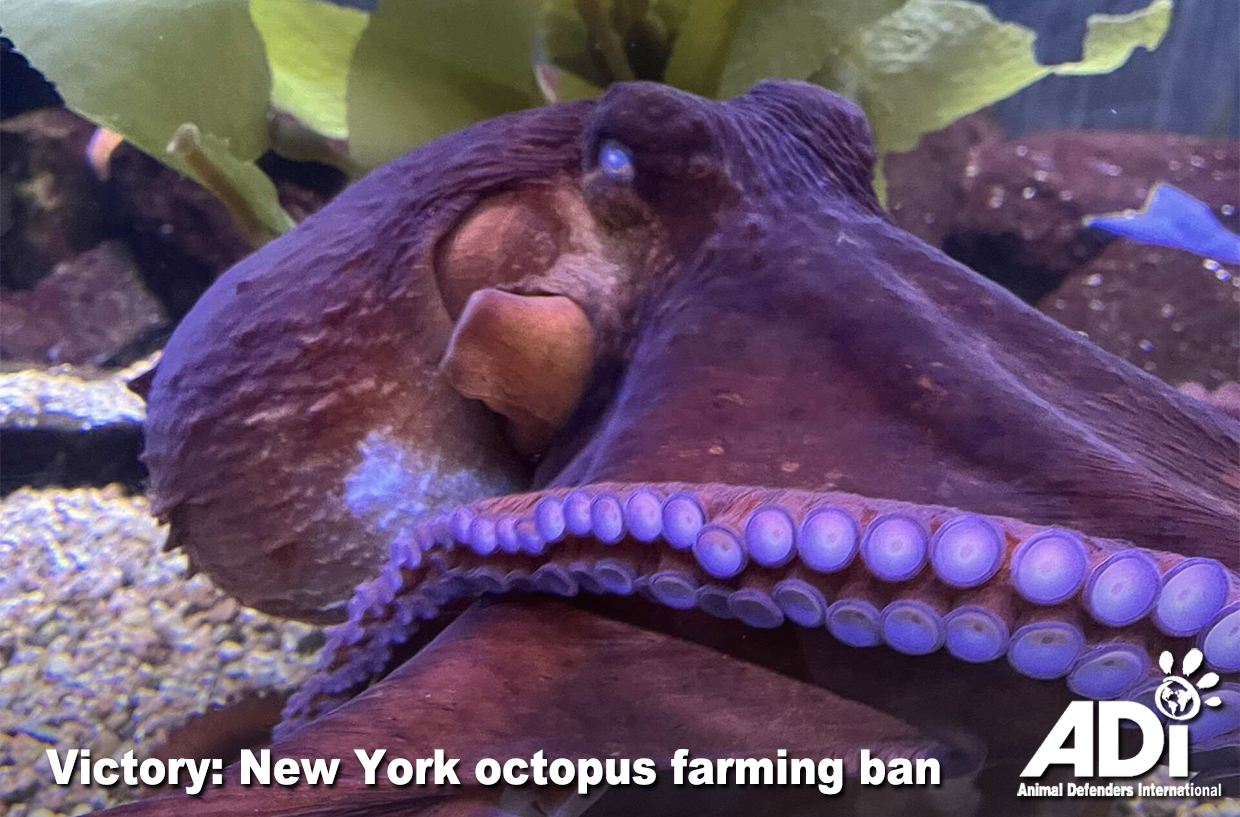
New York State Bill S7421A / A8043, to ban farming of octopuses, has passed both houses and awaits the signature of Governor Hochul. Washington state and California have already banned this cruel industry. In addition to banning production, Washington state is trying to also ban sales of farmed octopus. Several other octopus farming bans are pending around the US including the federal OCTOPUS Act. Please urge your legislators to SUPPORT the following bills!
FEDERAL – The OCTOPUS Act to ban commercial octopus farming throughout the US and prohibit imports of farmed octopus from abroad.
Hawaii – SB 1159 / HB 365 to prohibit the farming of certain non-wild-caught octopuses for human consumption.
Massachusetts – H.4422 to penalize the aquaculture of octopus for human consumption.
New Jersey – A1537 / S1080 to ban aquaculture of octopus for human consumption.
Washington – HB 1608 to prohibit a person from knowingly selling, possessing, transporting, or distributing any octopus from aquaculture.
I have exciting news! After months of twists and turns, ceasefires, then resumption of war, we have just secured a route out of Israel for lions BenTzur and Ori.
With your help today, the lions will be on African soil on August 4th.
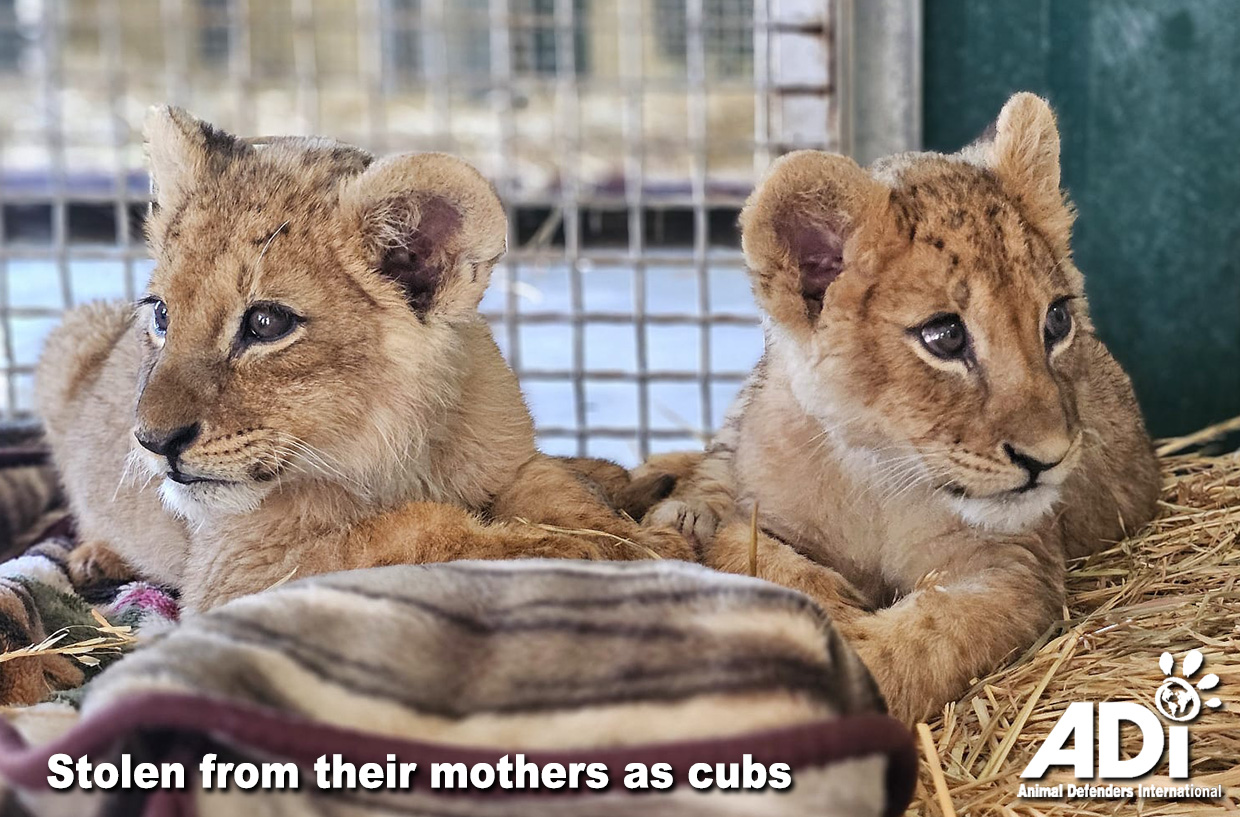
Seized as tiny cubs by the Police with Israel’s Nature & Parks Authority (NPA) in a crackdown on illegally trafficked animals over a year ago, BenTzur and Ori, didn’t just have a bad start in life, but our plans went on hold as they became stranded for months in a war zone.
The tiny cubs were torn from their mother when they should have been suckling, to be passed from person to person to pose with as “trophy pets”.
Treated as a fashion accessories and status symbols for social media likes, these animals are often dumped when the owners get bored, or the animals too big and expensive to feed. Rescues like this are an important if we are to fight back against this cruelty.
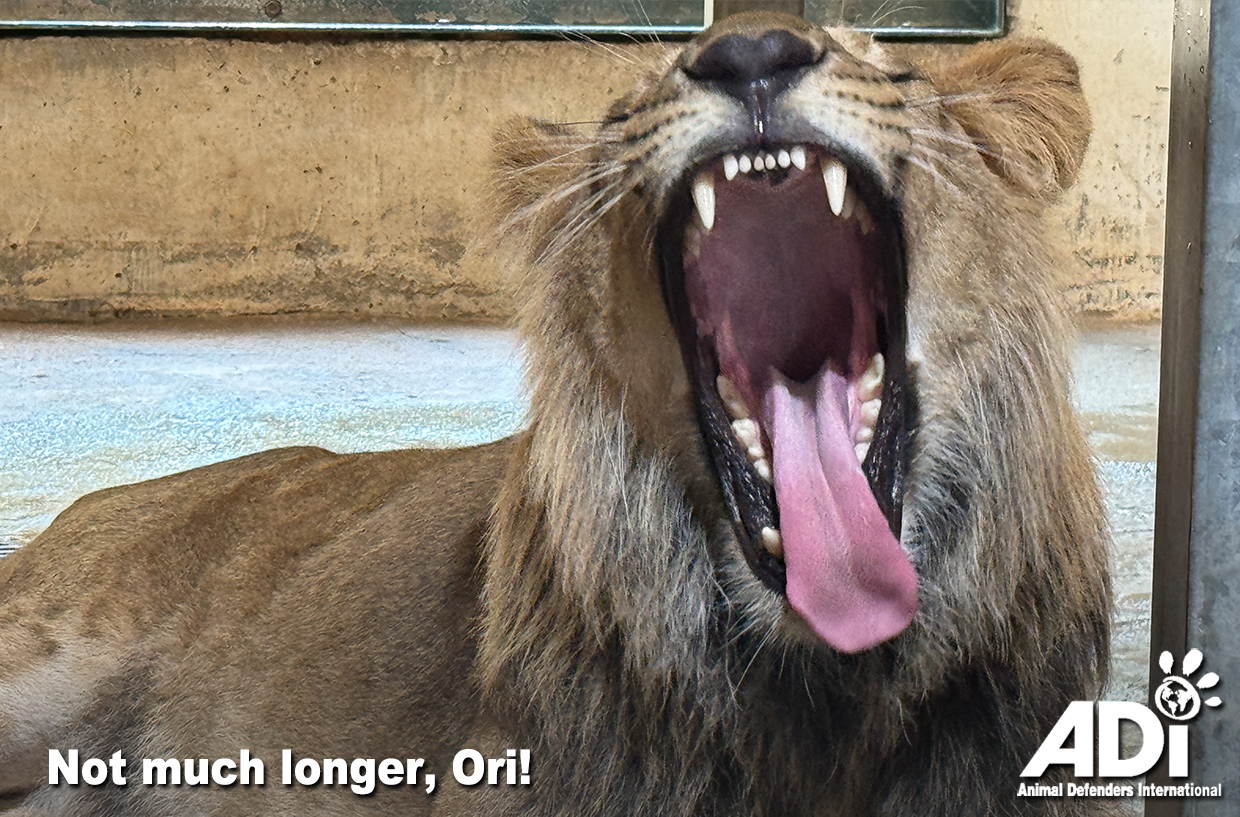
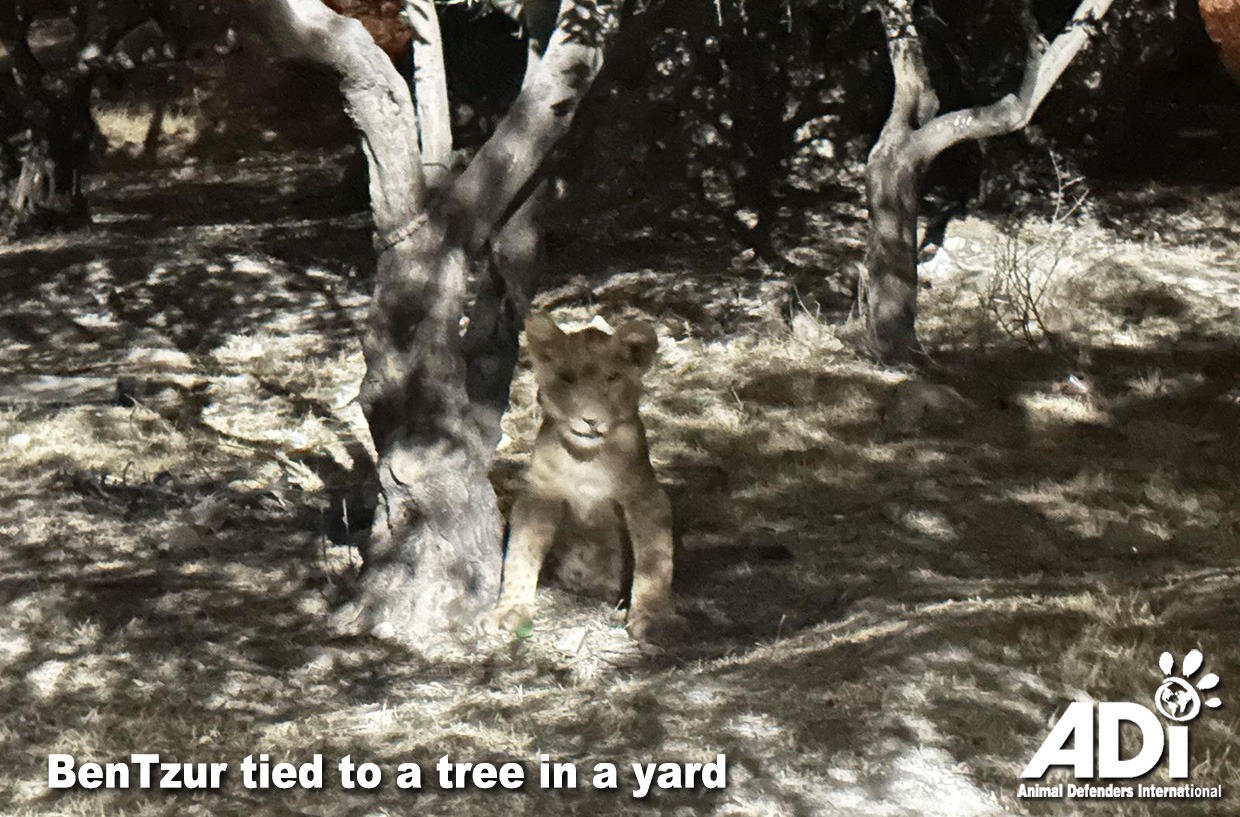
Ori was found in a basement and BenTzur tied to a tree. A zoo took them in on a temporary basis, then after a near year-long wait, they were offered a home in South Africa, only for a wildfire at the sanctuary to end their chance at a life in Africa.
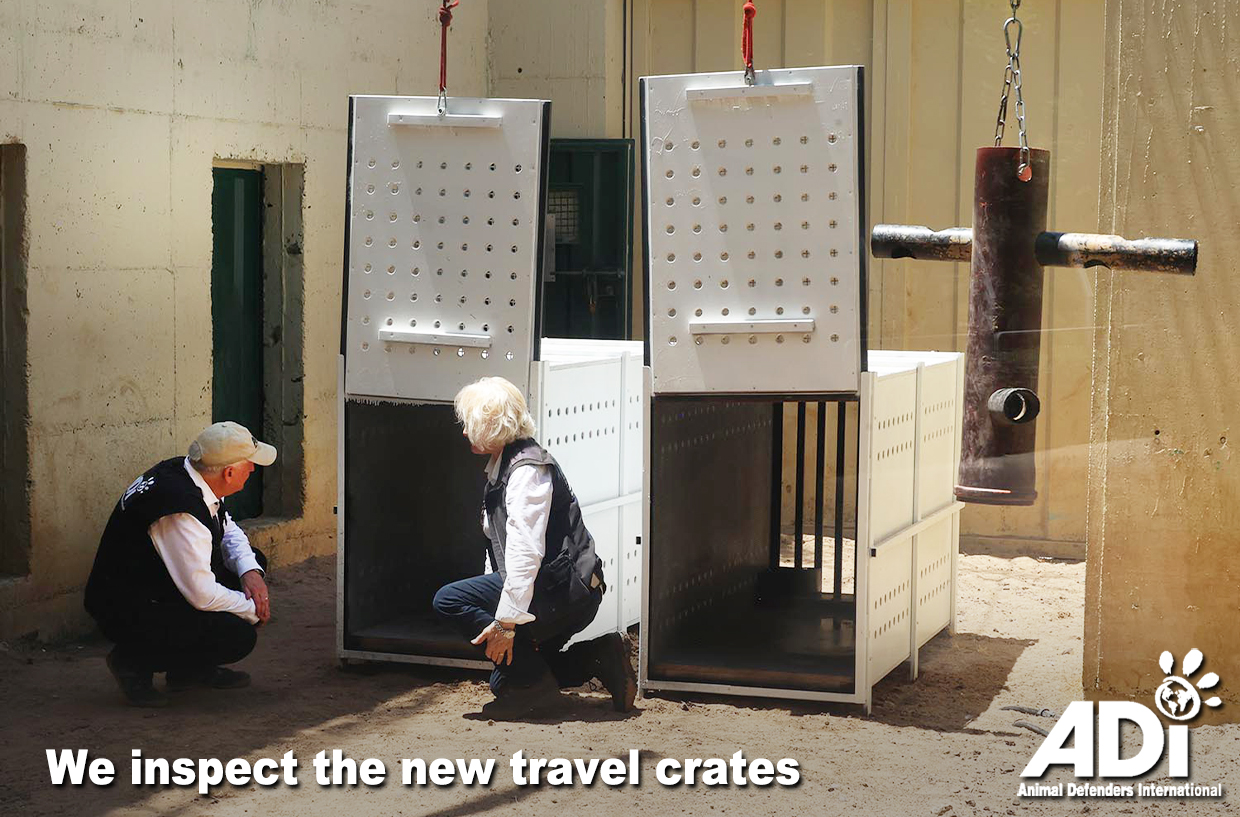
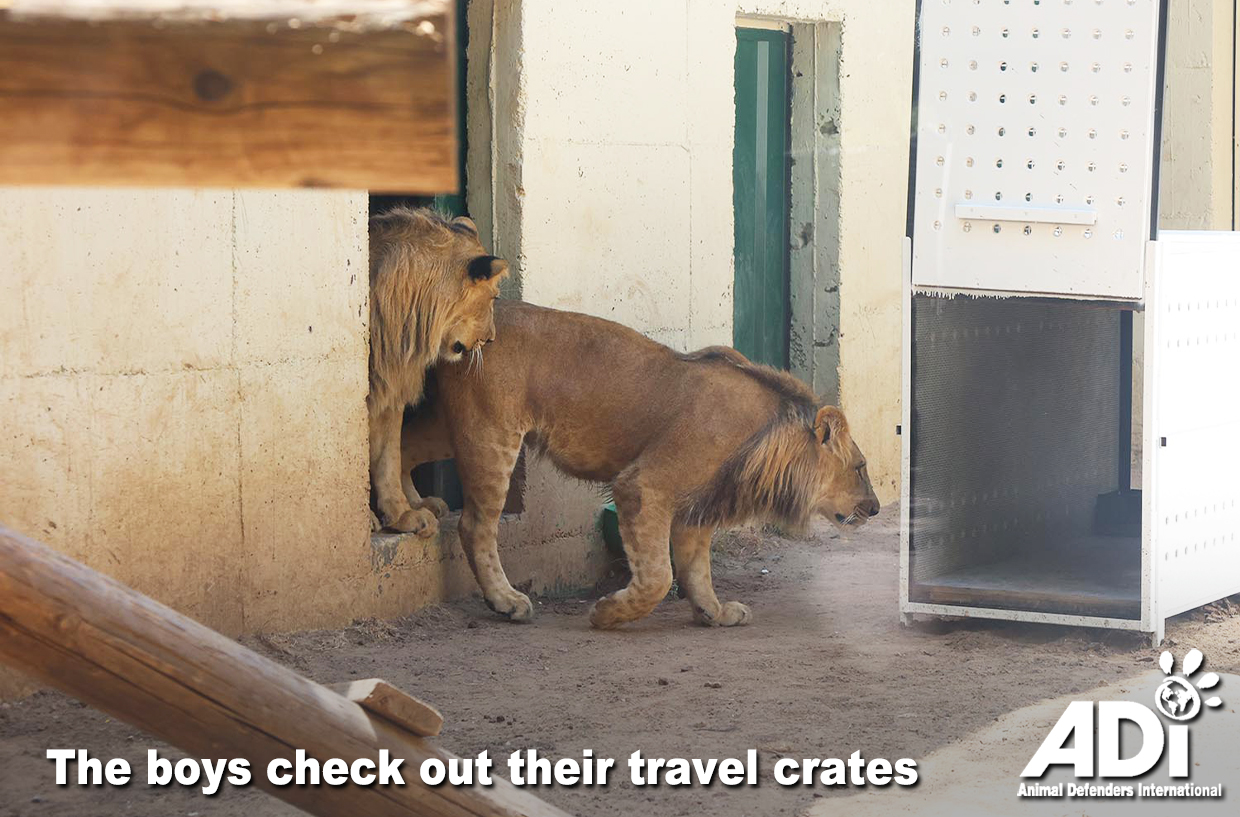
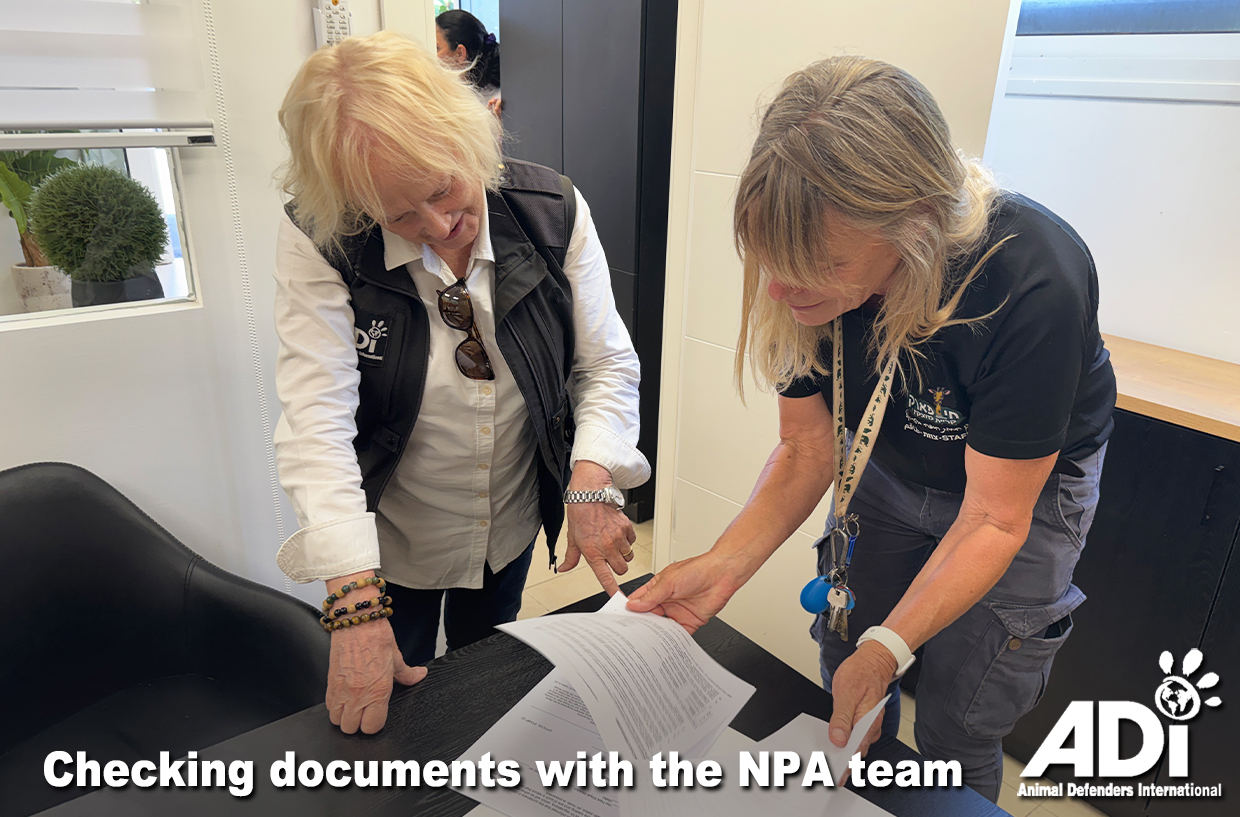
ADI evacuated two white lions, Lei-ah and Elsa, from the stricken sanctuary, and Tim and I flew to Israel to take over the rescue of BenTzur and Ori. We obtained export and import permits to bring the lions to South Africa, and, as they were growing fast, ordered adult-size ADI-specification travel crates built in Israel. With Lei-ah and Elsa in our quarantine unit indefinitely, we began adapting a habitat at the ADI Wildlife Sanctuary to take the boys.
When thewar started between Israel, the United States and Iran, we were suddenly in limbo. After months of waiting, there is now a way outfor the lions and I have seized it.
However, this rescue is coming at high cost, with the war sending prices sky rocketing – there are no free, or discounted, services available to us this time. I desperately need your help to raise $80,000 (£60,000) to cover the most urgent travel, habitat construction, and care costs for BenTzur and Ori. If we cannot raise the funds for this rescue, it will severely impact our ability to help other animals and put a strain on the ADIWS daily running costs.
Tim and I have just managed to secure the last tickets remaining on a flight to Israel. We will arrive there on Thursday 30 July, ready to load the lions on Sunday 2nd August and will take off in the early hours of Monday 3rd, fly to Frankfurt, Germany to change aircraft and finally arrive in Johannesburg on Tuesday 4 August.
I will keep you updated every step of the way.
This is an urgent appeal, please give what you can. With your help we can change the luck of these two lions and bring them home to Africa.Donate US $, CA $ | Donate UK £, Euros, Rand
You can also adopt the lions and contribute to their lifetime care from our US store | UK store.
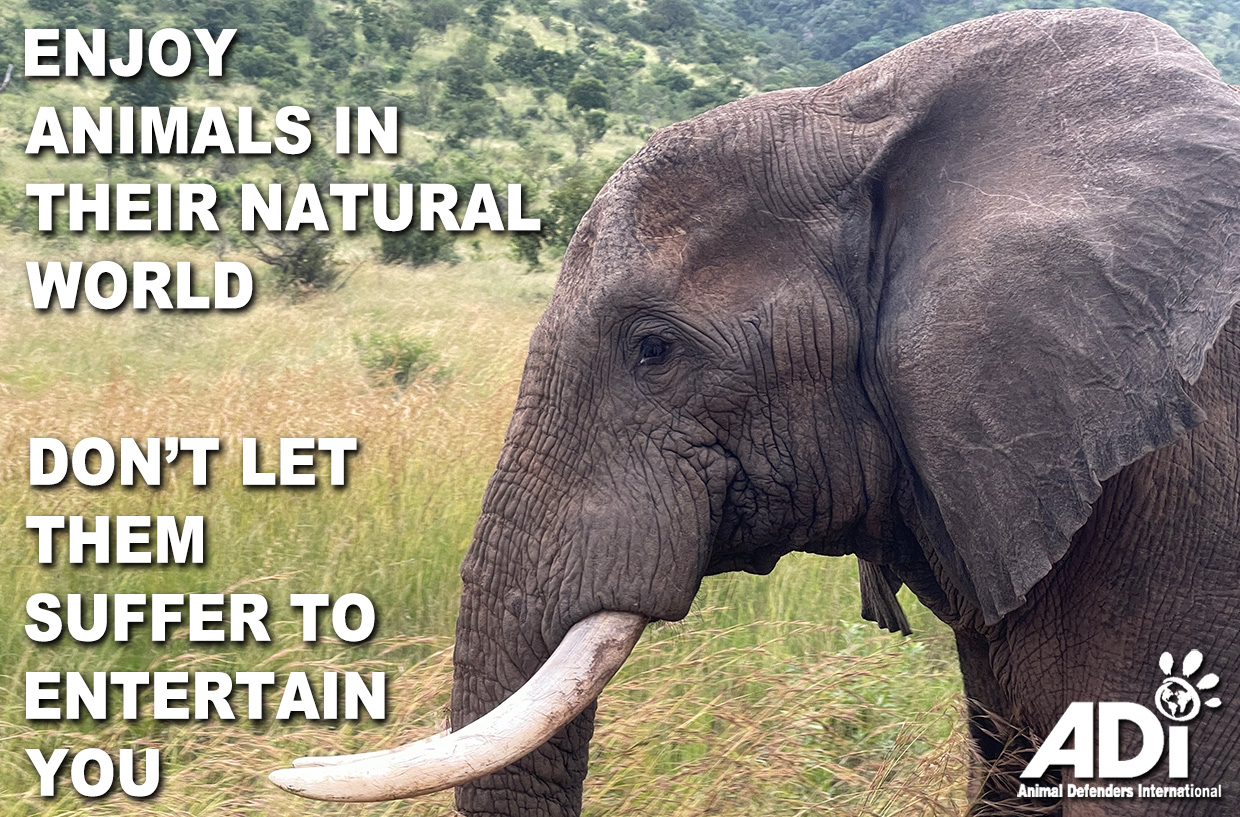
The summer holidays are here and for many, this will be a chance to enjoy nature and wildlife. There are plenty of ethical options, supporting wildlife and nature reserves at home and abroad, and helping wildlife rescue. Just getting the chance to get out in your own yard, fill the bird baths and feeders, then sit back and enjoy the local wildlife is a joy.
The summer holidays bring a chance to see the world, wildlife, other cultures, but don’t be fooled into supporting cruelty. Here’s a few things to watch out for.
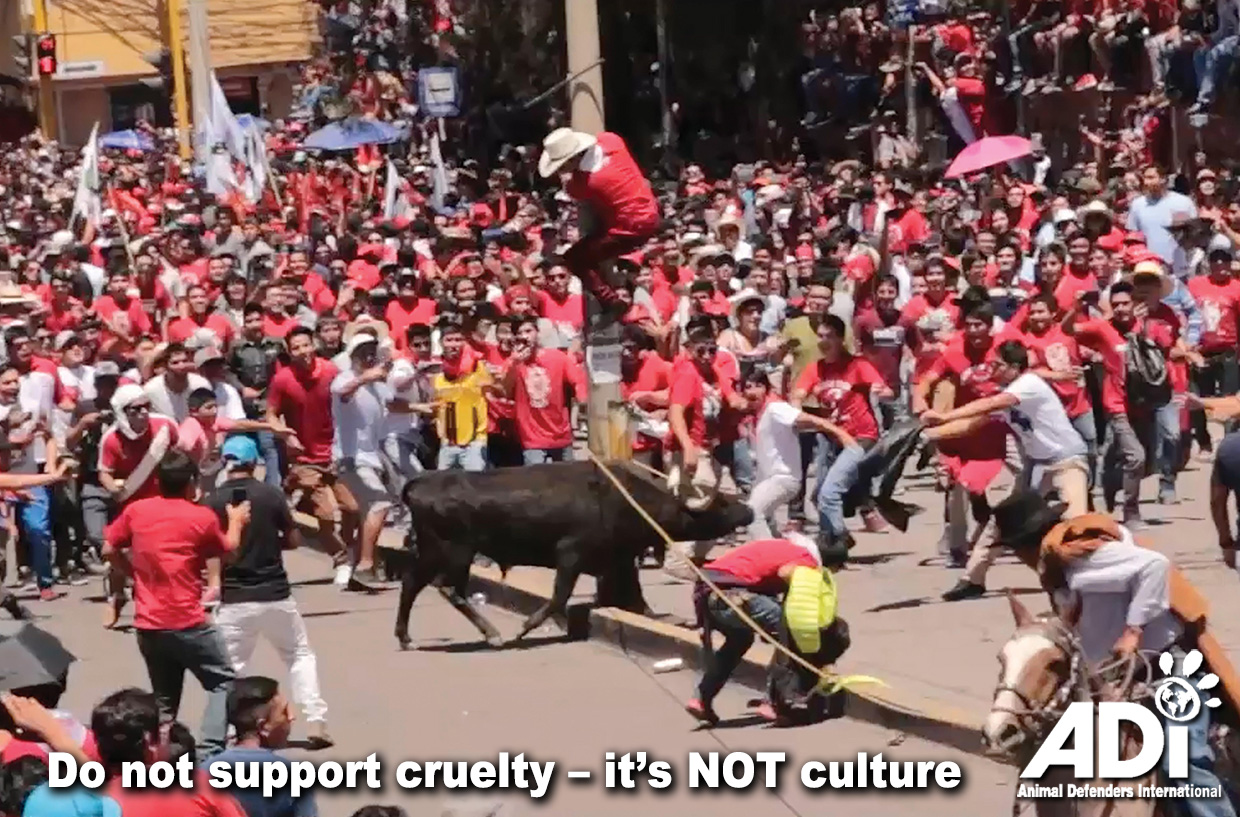
Dressed up as ‘tradition’, bull running appeals to (often drunk) aggressive, thrill seekers. The Pamplona bull run attracts up to a million spectators as terrified bulls race through the streets. Our investigators have filmed these events in Peru and Colombia, as bewildered animals are released from trucks and, blinking in the bright sunshine, are immediately set upon by drunken mobs and punched, kicked, hit and spat on, with this open viciousness promoted as ‘culture’. There is nothing cultural or admirable about such thuggery. Colombian public opinion overwhelmingly (85%) supports the ban on bullfighting, which comes into force in July 2027 – it is not Colombian culture. Yet the organizers of these violent events try to claim it is culture!
So-called bull ‘fighting’ (which is public torture, not a fight), and indeed, rodeos use the same excuses. It is entertainment for cowards and bullies, enjoying acts of cruelty and violence in public, against naturally gentle species – cows, bulls and horses, bringing shame on the whole community. Never support bullfighting, bull running, rodeos, or similar events.
That sunset elephant ride isn’t romantic, it’s abuse. ADI investigations blew the lid off the cruel training methods in the biggest elephant training centers in the US, with animals beaten, jabbed with metal bars, electric shocked, and crying out in pain. Again, the cowardly bullies choose a gentle species. Footage in the training camps in Asia of baby elephants isolated in the crush device so they can’t escape, then mercilessly beaten into submission, are sickening. ADI has filmed similar training and techniques to instill fear around the world, and ADI footage showing how seemingly ‘affectionate’ strokes and pats given in public are, in fact, a reminder and warning ‘Keep doing as you are told, or you know what’s coming.’ You can see the disturbing footage here.
Despite their incredible strength, elephants’ backs are simply unsuitable for people to ride; with prominent vertebrae, upward-pointing protrusions and little cushioning, being ridden by people is uncomfortable for them and causes severe damage and pain. Never support elephant rides or contact experiences, such as bathing with elephants.
The rule to know and tell your friends and family is – any activity involving human contact with wild animals involves some kind of constraint, altering their natural desires and behaviour / behavior, and involves punishment, brutal training in order to make the animal obedient, all to keep the HUMAN safe from harm. That is the cost of the ticket.
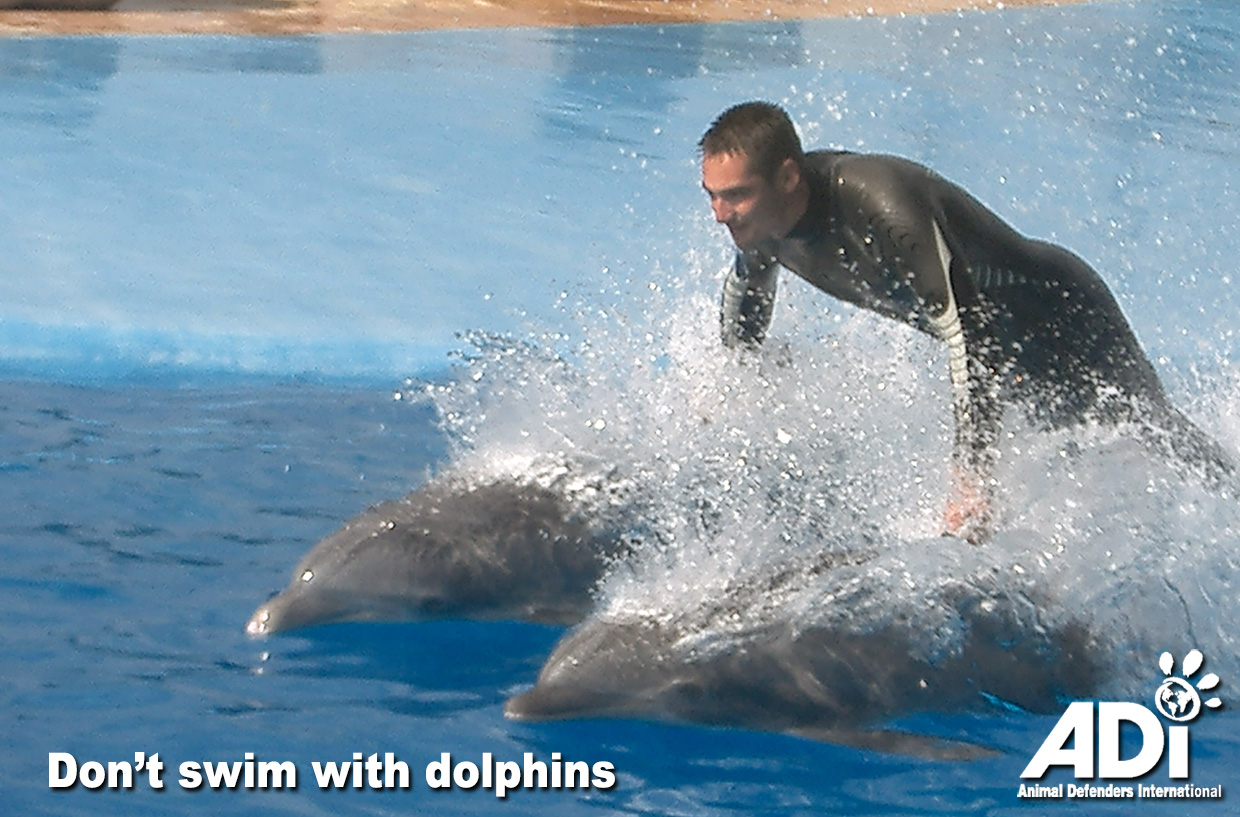
A lifetime of suffering for a holiday experience. If you are lucky enough to be snorkeling or diving and are joined by a pod of wild dolphins, it can be the experience of a lifetime. That is very different to paying to be in contact with dolphins who have been captured, confined, trained, and their families broken up. All to be ready, on demand, for the next tourist. Don’t be fooled by how natural the setting is made to look, if it’s not the open ocean, it’s not freedom. Wild dolphins don’t want to kiss people or drag them through the water by their fins – those are tricks they are trained to tolerate, not signs of affection. Behind the scenes, dolphins are kept hungry in small pens. They interact with tourists for the chance to eat. Interacting with people is not a choice, it’s survival. Never support the captivity of dolphins and whales.
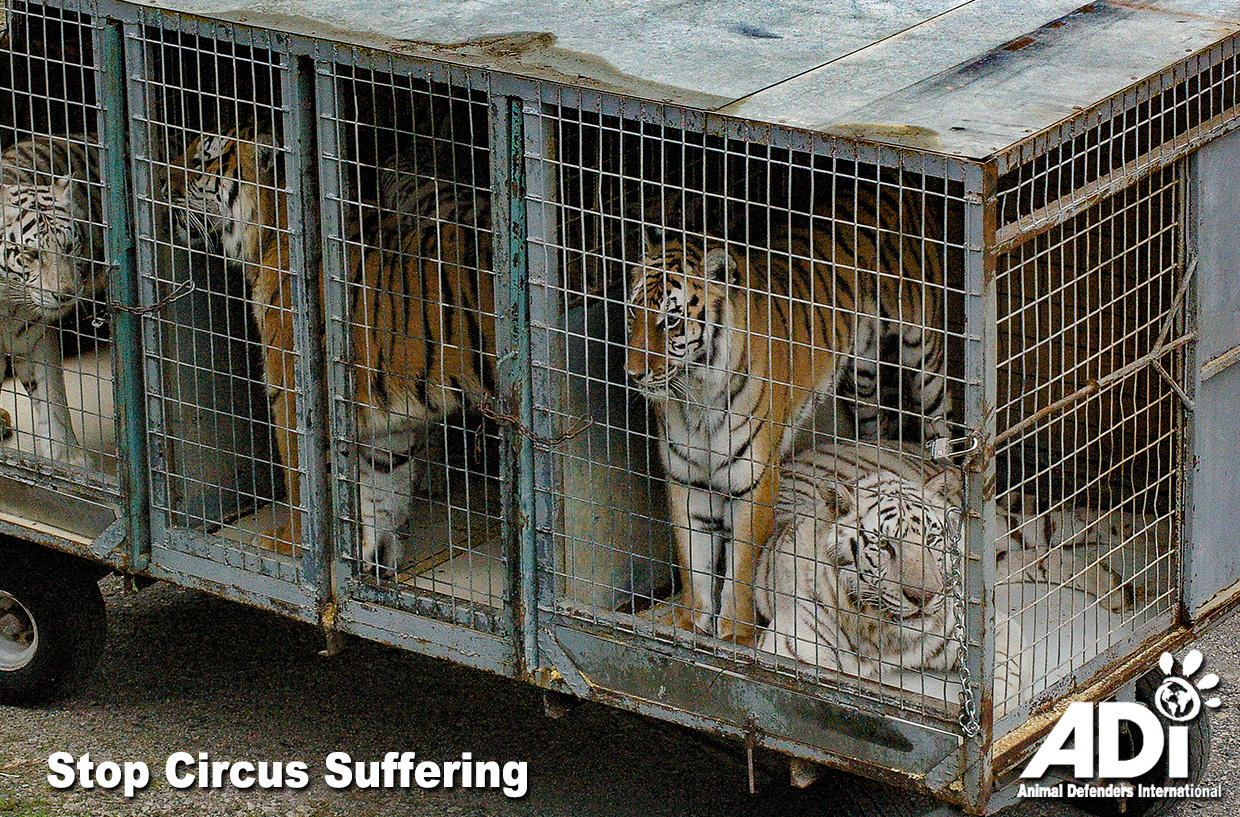
Circus cruelty continues. ADI’s Stop Circus Suffering campaign has seen more than 50 countries ban wild animals in circuses over the last 30 years, launched with the first deep undercover investigation of the industry. More than a quarter of the nations on earth is good, but there is still a way to go, and many countries allow this archaic cruelty – including much of the United States. Eight US states have passed bans, so far. Forty-two to go. Now is not the time to pause, we must keep going, again and again. These casual public shows involving abused animals, aimed at children, are teaching children the wrong view of other species – seeing them as objects of enjoyment and entertainment, instead of a living, intelligent, emotional individual with the right to their own life on earth.
Our studies show how circuses keep their animals confined in small, barren, spaces for most of their time, deprived of the right to move around, explore, run, play, be with their family groups. Chained, tethered, most of their time shut away; unable to eat at will, or seek out natural fresh water sources. Everything that, for all of us, makes life worthwhile. And then there is the brutal training, with violence, intimidation, deprivation.
This has been an important campaign worldwide, as these tacky shows are teaching children that it is OK to dominate and beat another living being for our amusement, just because they do not look like us, live like us, or communicate in the same way.
Support circuses with ONLYhuman acts. NEVER go to circuses with animal acts.
State and County Fairs can be fun for families or hell for animals. There can be plenty of fun with motorized rides, games, cotton candy, and more. Yet they also use llamas, camels, zebras and other animals confined, standing around all day, in the heat. These species have evolved over thousands of years to travel in family herds over miles of open land, exploring, crossing rivers, deserts, grassland, forests. Intelligent, emotional, protective of their family groups, their constant movement maintains a healthy body, and the challenges stimulates their minds. If they were human, the conditions in these fairs would be considered a form of torture.
Worst of all, are attractions like Sea Lion Splash, where marine mammals tour closed in containers as opposed to the freedom of the seas, or the Banana Derby (pictured) where monkeys are strapped to the backs of dogs to race around a track, a world away from their forest homes and the culture they understand.
Check what’s on show and let the organizers know you won’t be attending if there’s animal suffering, when animals are treated as props or toys for fun. If you see anything of concern, take photos/videos and send to ADI so we can make complaints and publicize it.
Social media is flooded with photographs of people cuddling exotic animals, from tiger cubs to baby monkeys. Using them like props. Behind every snapshot and selfie is a lifetime of suffering for the individual animal, and we must let people know that they have created this trade by taking the photos.
Traffickers kill families to capture baby monkeys. Claims that baby animals have been “rejected by their mothers” are lies. To keep them compliant, captors isolate and often drug these animals. Monkeys suffer their teeth being broken off to stop them biting and they are terrorized to perch obediently on people’s shoulders.
Cheap thrills at the expense of animals. Captive-bred lion and tiger cubs are torn from their mothers so young that they should still be suckling, to be passed from one person to the next. As they get too big to handle, they may go to zoos or circuses. Young lions are also used for tourists to walk alongside them in natural looking settings, but their natural instincts are suppressed, they are forced to be compliant, and life is short if they step out of line.
ADI is working to help the Government of South Africa to end the lion farming industry, which is seen as a stain on their conservation efforts. The farms constantly breed lions for tourist cub petting entertainment, and as the cubs grow, they go to canned hunting operations where they are placed in small spaces for trophy hunters to get an easy kill. Their bones are also sold as an ingredient for ‘traditional medicine’. Data seen by ADI shows hundreds of farmed lions going from Free State, North West Province and others, up to Limpopo in the north, famous for its ‘safaris’. Lions that have been captive bred and fed all their lives by humans are easily lured into an enclosed area, and bewildered by suddenly being in a new location, they are an easy target for cowardly tourists to kill. Cub petting is not harmless.
City streets in blazing sun is no place for animals, let alone to be hauling tourists. Once romanticized, following one horrific incident after another and the recent death of a teenager, the New York City carriage rides are under considerable pressure. ADI Policy Advisor Drew McCormick testifies next week at NYC Council hearing on a horse drawn carriage ban, which is backed by the Mayor. Other cities around the world have already passed similar bans including Lima, Malaga, Prague and recently Philadelphia – come on New York!
When animals are turned into a tool to pull heavy loads, suffering follows. Several holiday companies are no longer promoting camel rides in destinations like Egypt, but camel and donkey rides are common in many places. Tim and I once spent hours going up and down the 588 steps in Santorini, Greece to the town of Fira, in order to document the miserable lives of the donkeys and mules hauling tourists up and down to see the town. It was exhausting, depressing, hot, and animals were beaten to keep them moving. Since then, the authorities have at least restricted the weight of the tourists the poor donkeys must carry, but the depressing business continues. Come on, if you can’t walk, use the cable car!
ONLY SUPPORT GENUINE SANCTUARIES. When I show people around the ADI Wildlife Sanctuary (ADIWS) on our social media live events, I make a point of saying we may not be able to see the animals. Our habitats are several acres and so the lions and tigers can disappear if they want; this is their land, their home. If a resident chooses, they can come to the fence and check out the humans, but it is their choice. Unfortunately, there are now increasing numbers of captive wildlife establishments claiming to be sanctuaries, but are, in fact, pseudo sanctuaries, places of entertainment.
Here’s how to spot a True Sanctuary, like ADIWS (we and some other South African sanctuaries operate this code):
Rescued animals provided with the space and environment necessary to express their natural behaviors and feel safe. (Meaning they have private space).
No breeding.
No public contact or interaction with the animals; inc. harassment for “selfies”.
No animal shall be mishandled, chased, frightened, or harmed in any way.
No unescorted public visitation or contact.
No removal of wild animals for exhibition, education, or research.
No invasive or intrusive research.
No commercial trade in animals or their body parts.
The best way of seeing wildlife is in the wild, wherever you are. Enjoy your local wildlife and turn your garden/yard into an oasis and place of safety. If you are travelling, check out the wonderful wildlife protected in preserves from Africa to the Americas and further away (check their policies).
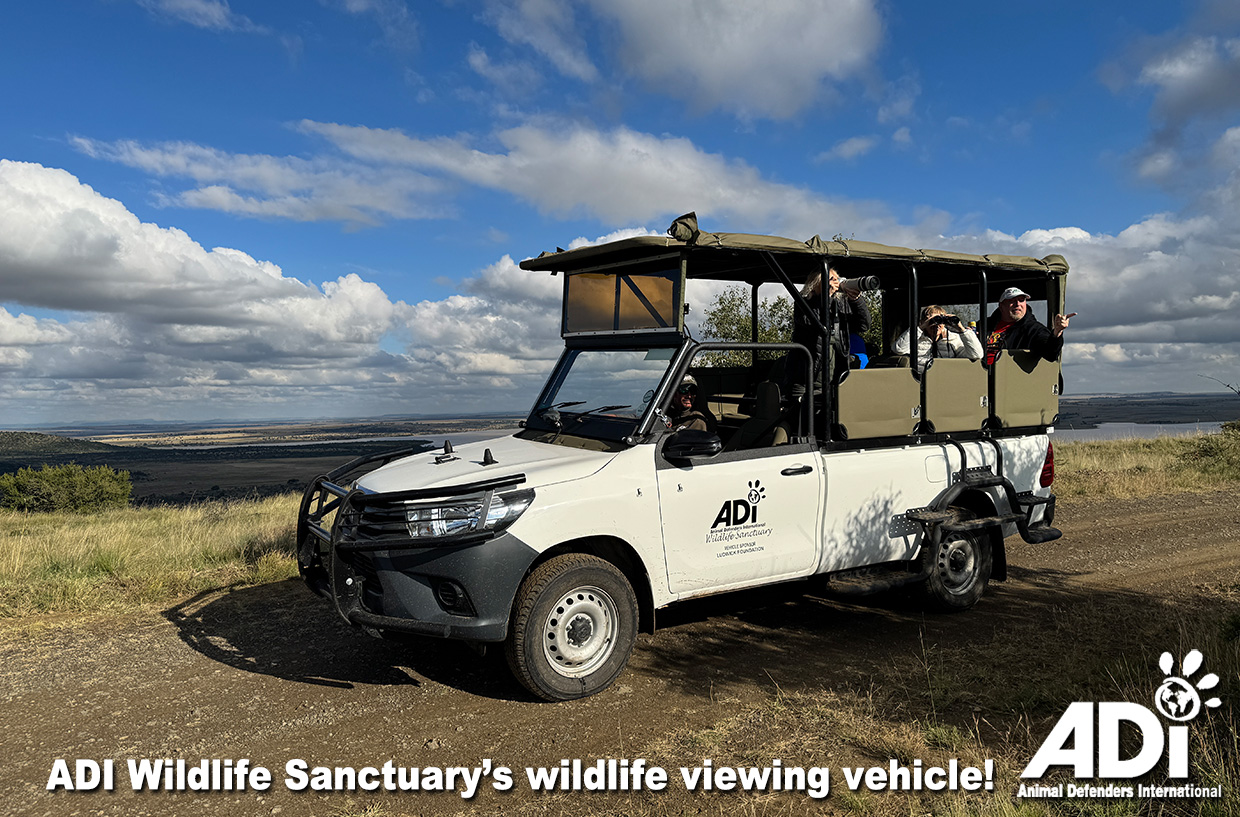
We have been building the ADI Wildlife Sanctuary since 2018 and construction work for the residents’ habitats, and staff accommodation has been intense, along with roads, storm drains, power, sewage and water systems. So, we have not yet been open to visitors. Next year, we will have limited space available for guests in the newly refurbished Chris L.C. Lee Guest Lodge. You’ll be able to see the animals you’ve helped rescue – lions and tigers from circuses and zoos, as well as antelope, tortoises, birds, pigs, cows, horses and donkeys. Nearby, we have one of South Africa’s national parks, with resident rhino, elephant, buffalo, giraffe, zebra, monkeys, baboons and many more. Please email if interested and we will let you know about accommodation, prices and our opening date. Email: usa@ad-international.org / info@ad-international.org
As you travel this summer holiday season, you’ve heard the DON’Ts now enjoy the DOs
Enjoy wildlife in the wild – take home pictures and memories.
Support travel companies with ethical policies that do not promote cruel animal activities and/or captive wildlife entertainment – tell companies why you won’t be booking with them.
Support the local economy, artists and crafts with ethical souvenirs – never buy products made from animal parts
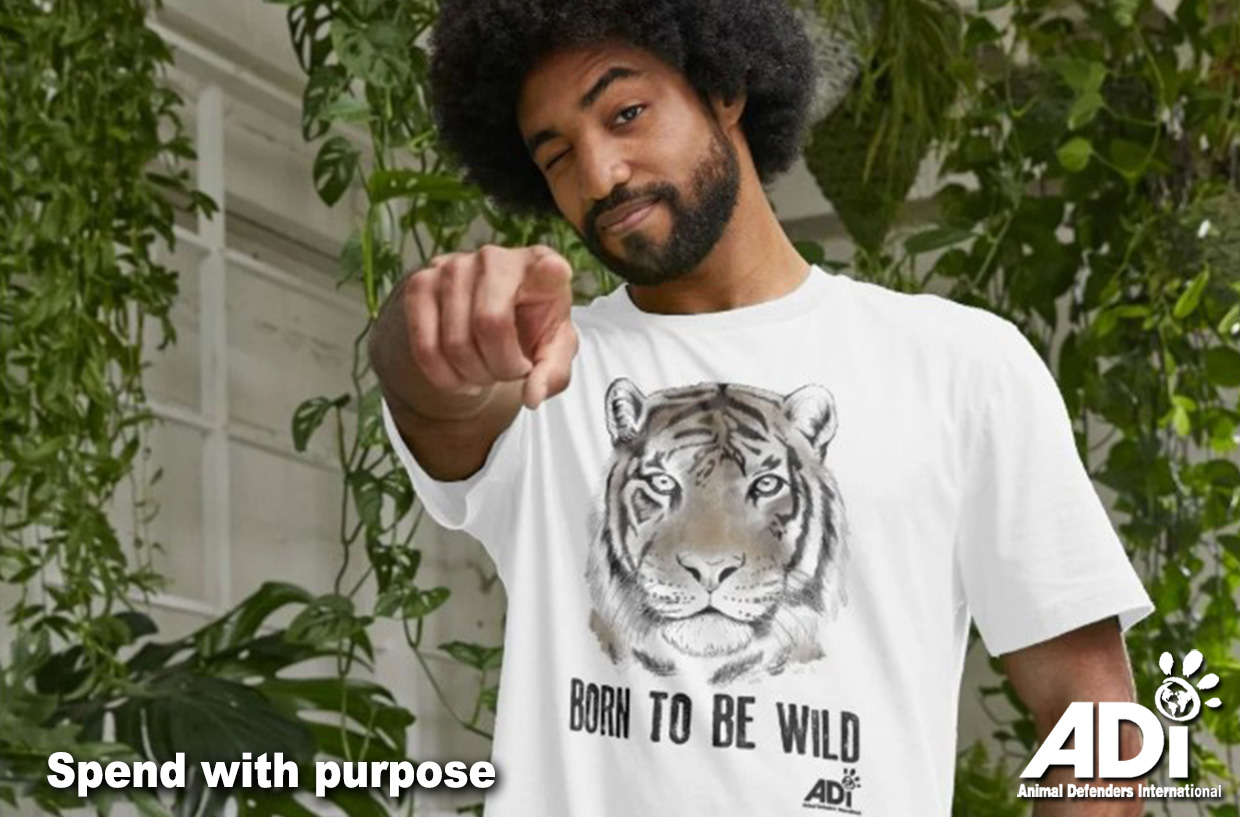
Dress with a statement with one of our vibrant, sustainably made T-shirts, sweatshirts, and hoodies from our US store / UK store.
Remember most of the wonderful entertainment, art and genuine sport doesn’t involve animal suffering, the World Cup doesn’t even use leather footballs now! Let’s all enjoy life and end animal suffering.
ADI is entirely reliant on donations, to help us keep fighting to end the bullfighting and bull running; the elephant rides, animal circuses, carriage rides, dolphin and whale shows, and to shut down the lion farms, please donate here, with your actions and support we are winning.
As our ADI US team and supporters celebrate their Independence Day tomorrow, I wanted to take a moment to thank you for giving so many animals their very own Independence Day through your support for ADI.
But first, I have some very special news….
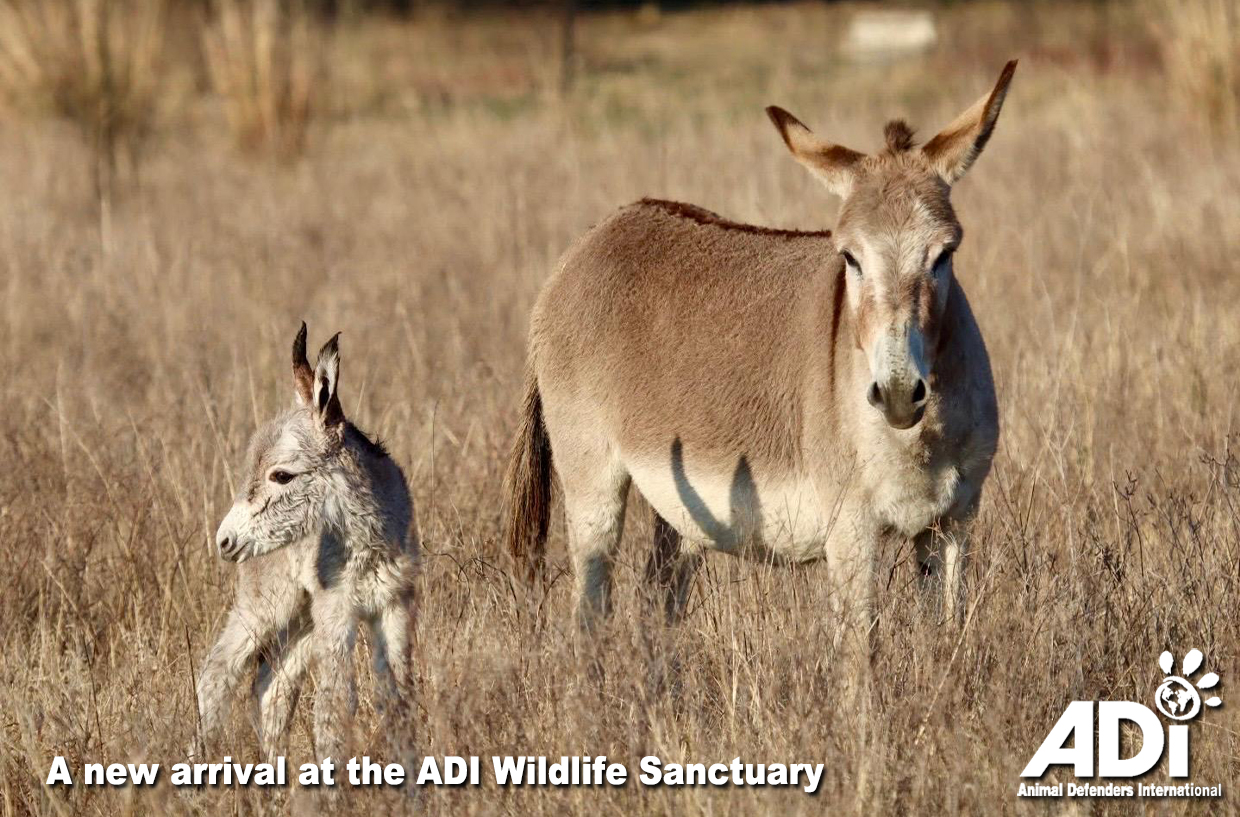
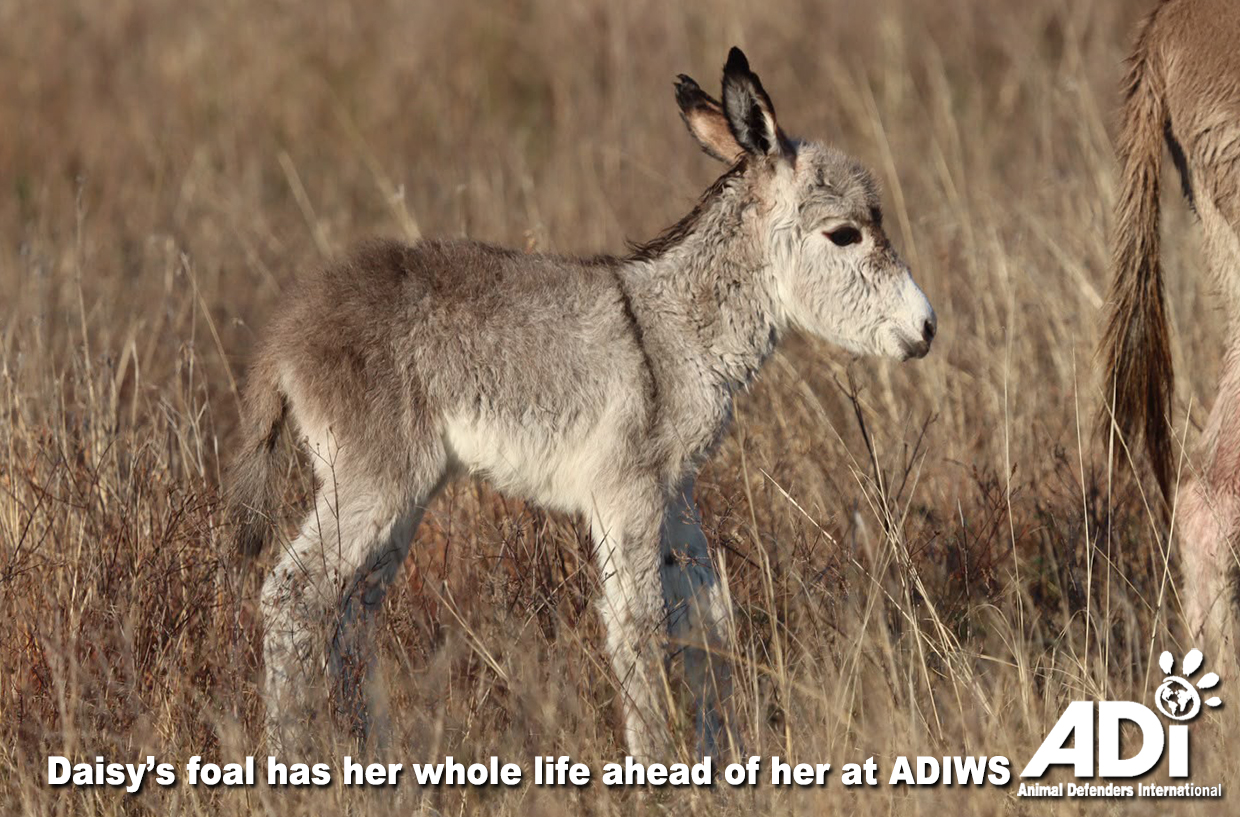
Early on Wednesday morning, Daisy donkey gave birth to a beautiful foal. Within minutes the baby was on their own feet, feeding, soon happily exploring the Sanctuary alongside mother. The resident herd of uncle and auntie donkeys gathered around, with Daisy keeping her body between them and her newborn, as a protective mother should. She turned her back on them, shuffled her feet in gentle warning, not to come too close for baby’s first steps. They were all very respectful and, as we know, the herd is incredibly protective of young animals.
Eleven months ago, Daisy and her family were walking on a road and her mate was hit and killed by a truck. Daisy was found at the roadside with her son. The owners agreed to surrender the donkeys to the ADI Wildlife Sanctuary.
ADIWS follows the True Sanctuary policies, therefore does not allow breeding. Males are neutered, but donkey pregnancies can last 14 months and it slowly became clear Daisy had arrived with a baby already on the way. This is the third occasion a female has arrived pregnant, the earlier babies being Nugget and Eeyore, who have grown up in freedom.
We are keeping our distance from mother and foal and so do not know their sex yet, but do you have any suggestions for a name, boy or girl? We must provide lifetime care for the newborn, and a donkey can live up to 30 years. Can you contribute to a special ‘Baby Shower’ to help secure the future of our latest arrival? Donate US $, CA $ | Donate UK £, Euros, Rand
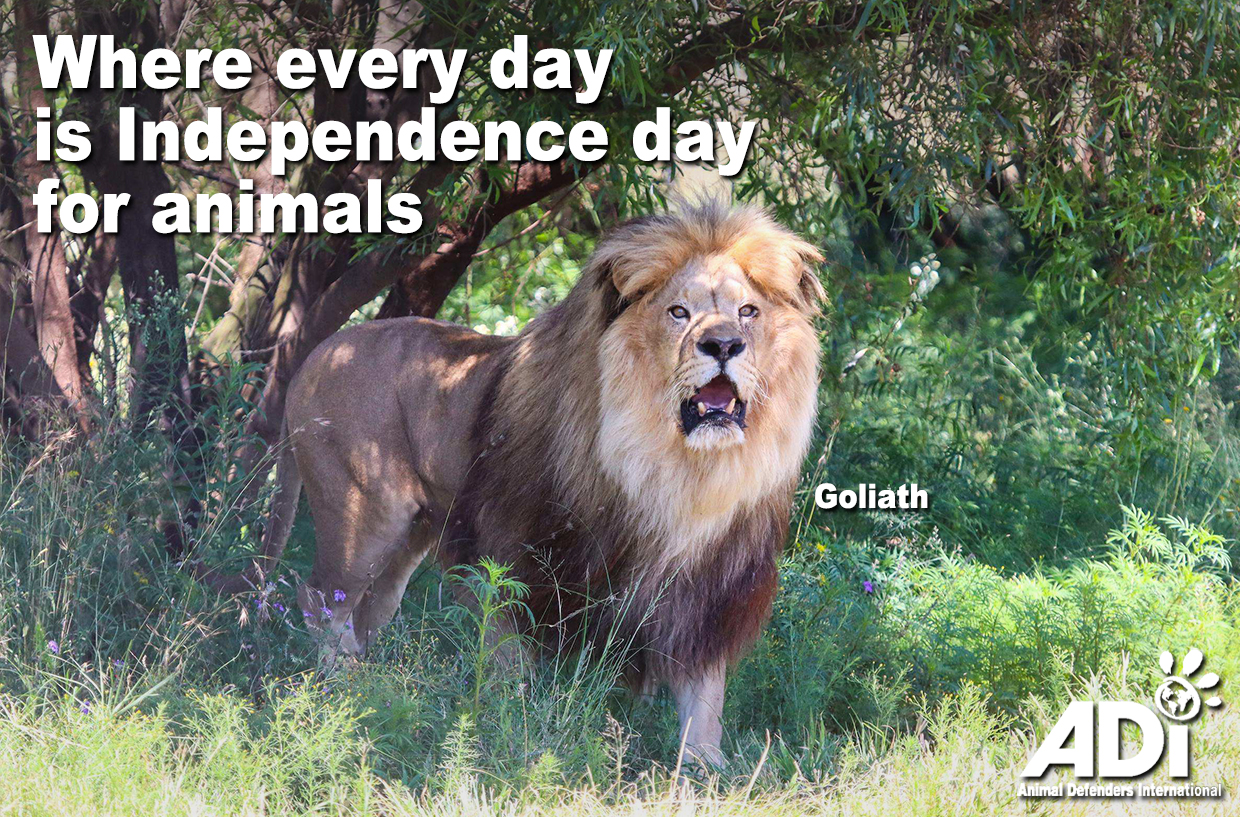
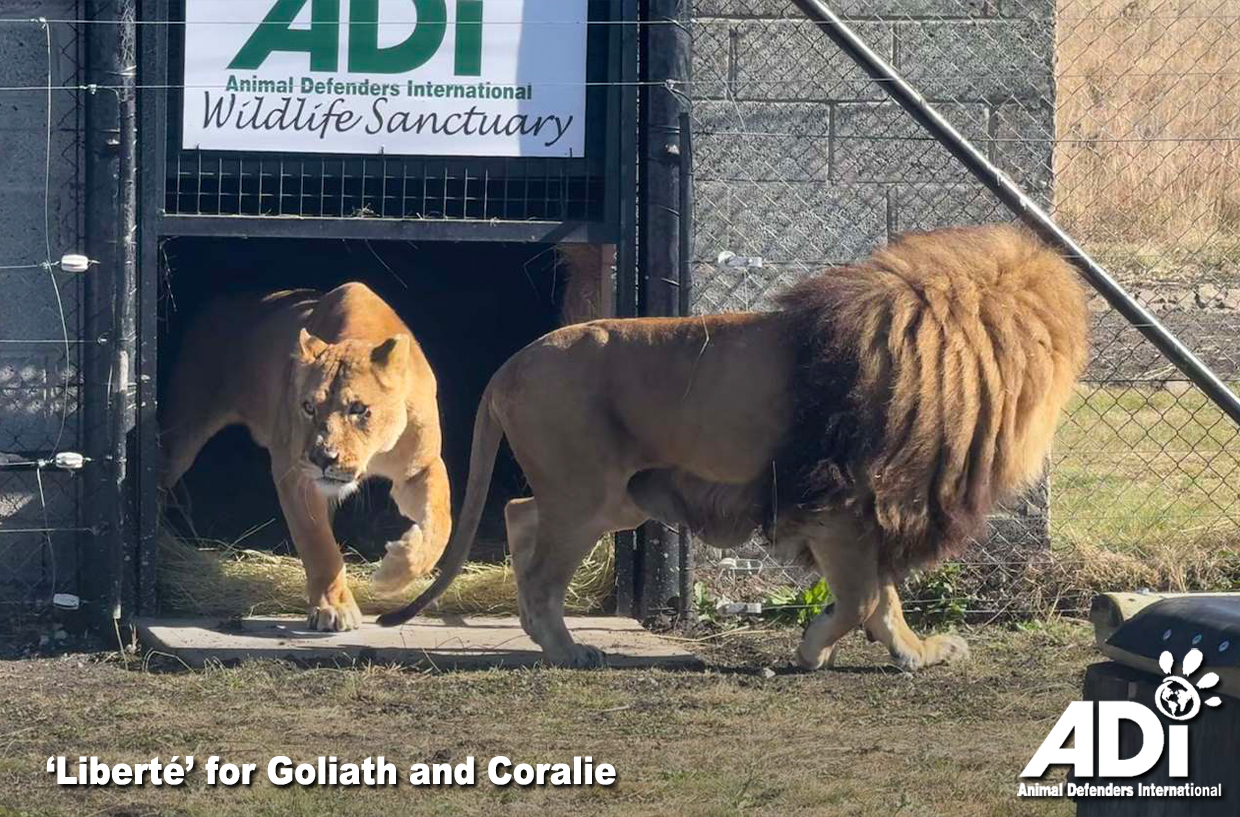
It is always emotional when I see the lions we save take their first steps on African soil. For Coralie and Goliath, that was a year ago and marked the end of a decade in a tiny French circus cage. Now they were back in the land where they belong, enjoying acres of natural space – that’s what I call a real Independence Day!
Coralie and Goliath also represent two of the first animals saved as France begins emptying its circus cages. There will be no wild animals in circuses in France by the end of 2028. No one will suffer again as Coralie and Goliath did – that’s why ADI’s campaigns for permanent change are so vital.
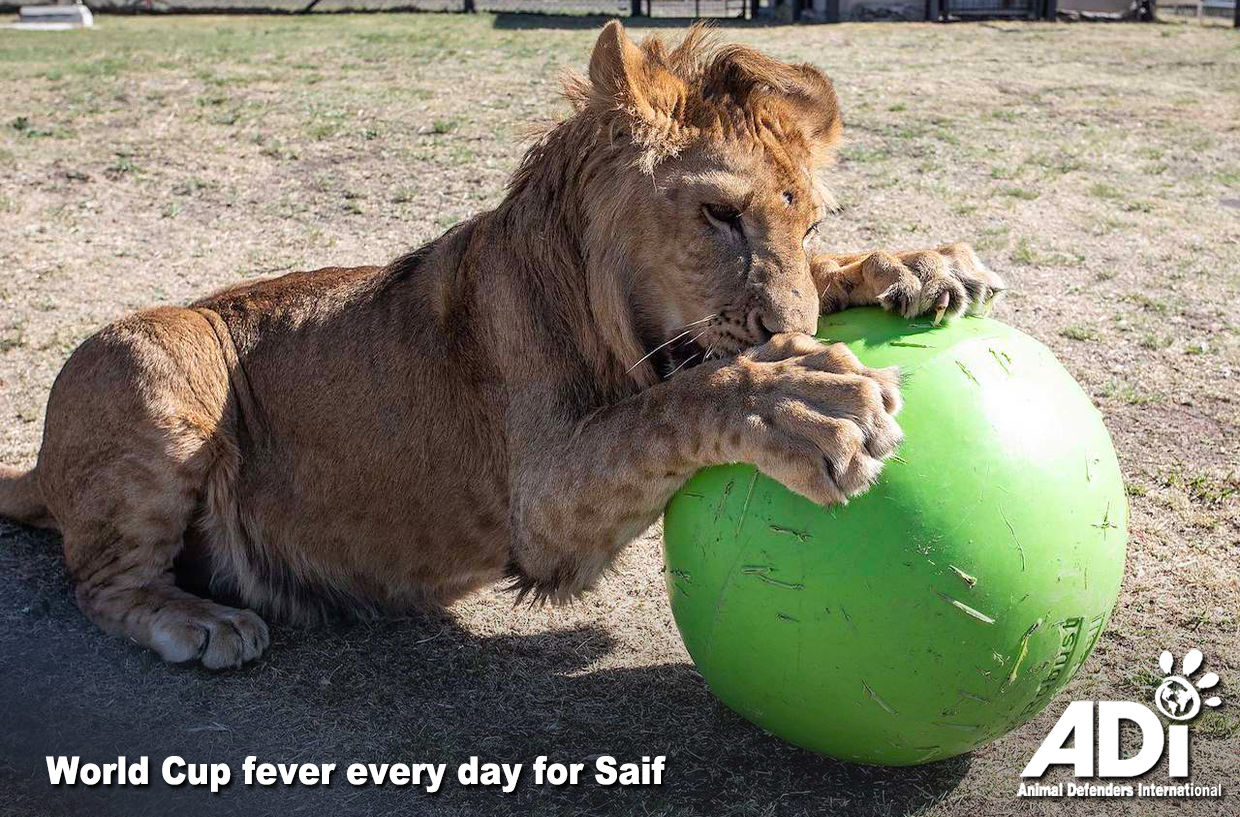
Almost to the day a year before Goliath and Coralie’s arrival, Tim and I landed in South Africa with the with the six young lions saved from the illegal trophy pet trade in Kuwait– Muheeb, Shujaa and Saham, Aziza, Dhubiya, and Saif. Who can forget Saif and Dhubiya playing football (pictured above)?
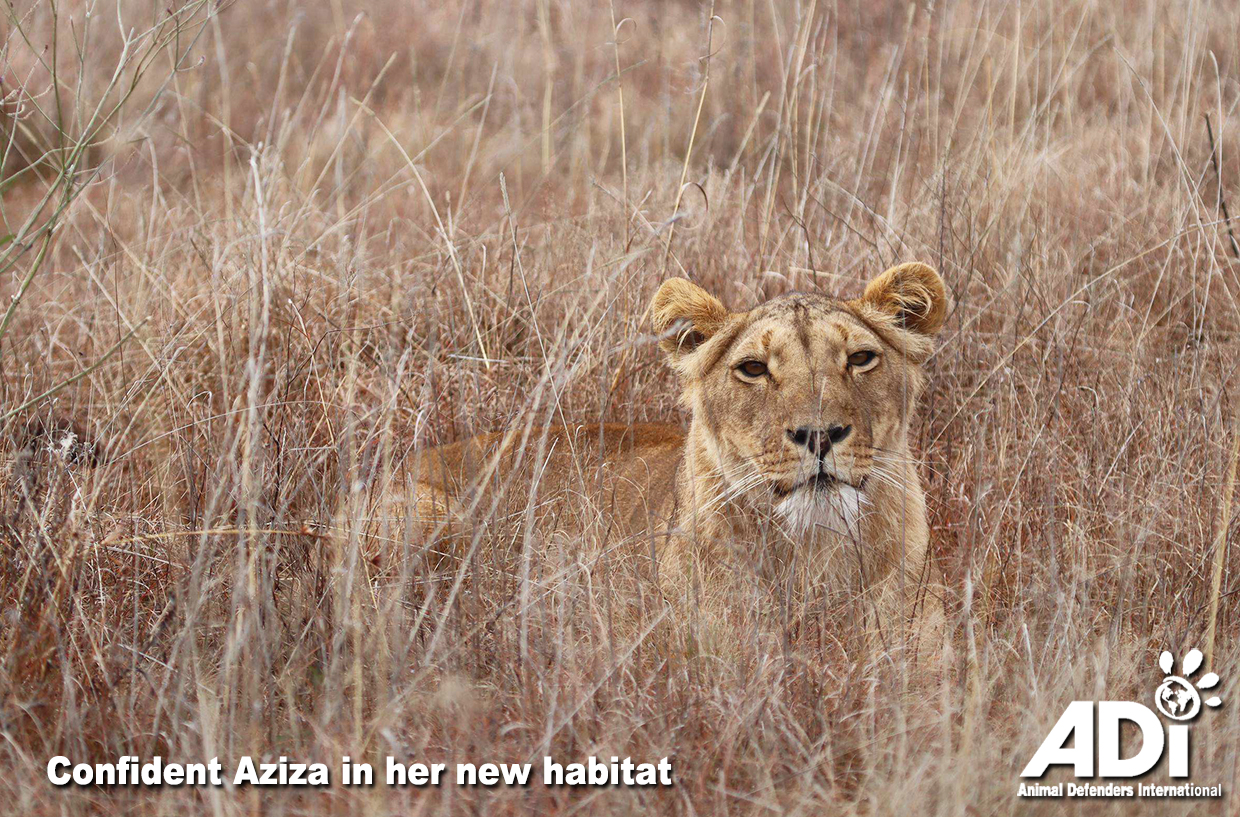
They have all grown so much. Shujaa and Saham are very loud, big boys. Saif is developing a magnificent mane, and Aziza is the most transformed of them all. Gone is that frightened, anxious animal, pacing frantically, we encountered in Kuwait. In her place a confident, powerful and friendly lioness.
Saif, Dhubiya and Aziza have recently moved to the 6+acre Sam & Eric Habitat where we have built a new three-room house and hope to full integrate the three as a pride. Aziza has been excitedly digging for rabbits but hasn’t caught any! Watch their move to their new home and their excitement…
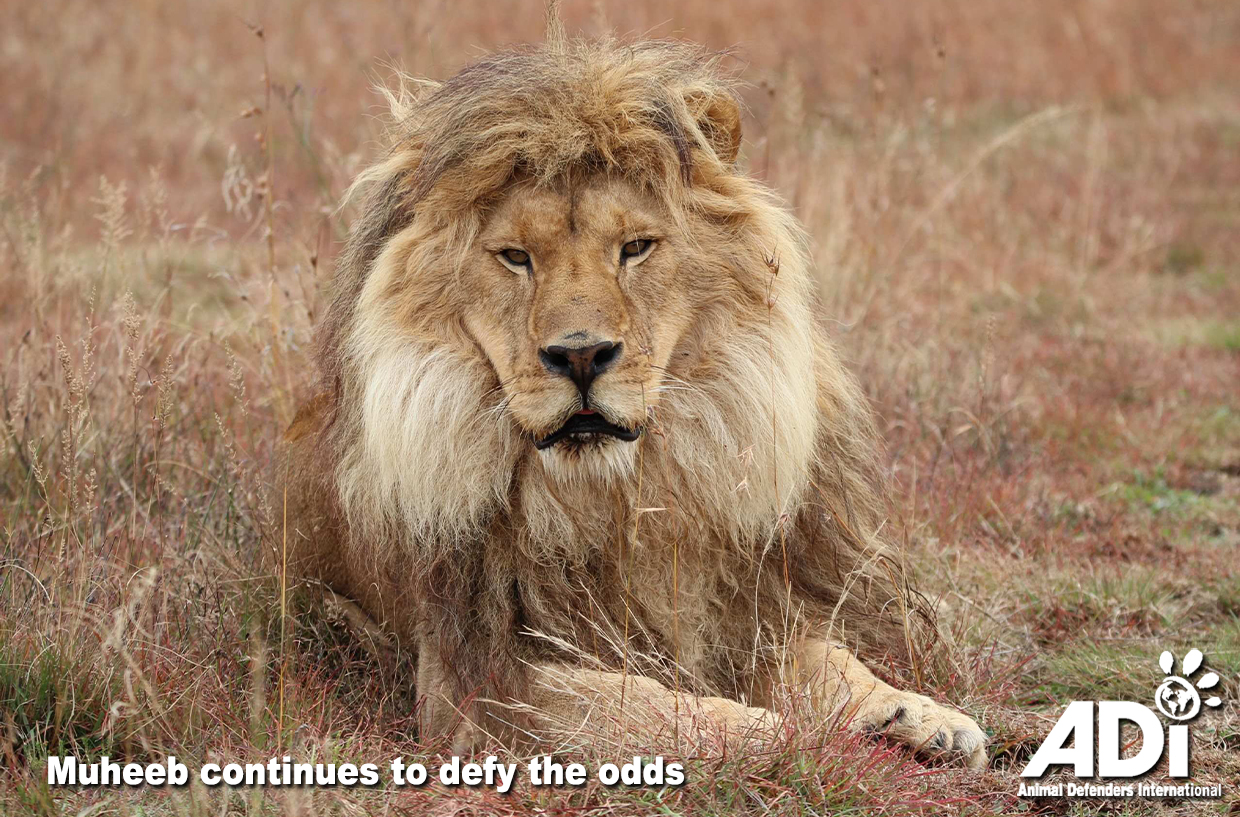
Six months after the Kuwait 6 arrived, Muheeb suddenly began to lose weight, he was taken into hospital and the diagnosis was devastating – cancer. Eighteen months on, after treatment by Dr Caldwell, Muheeb appears to be in remission. He continues to seize life with both paws, devours his meals and is maintaining a healthy weight, plays with toys and roars with the other lions.
We have built a new 2.5-acre habitat with a two room house for Muheeb, alongside Aziza, Dhubiya, and Saif, so he remains next to his friends from Kuwait. He galloped out into his new home and raced alongside his new neighbor, Smith, who lives next door.
For most of the animals we rescue, it is not possible to return them to the wild. Years of captivity leave deep scars—they are inbred and often cruelly maimed, their teeth broken, and toes cut off to stop claws from growing. They are stripped of the tools they need to survive on their own.
So, it is extra special for us when a wild future is possible. We have released monkeys, birds and hundreds of confiscated tortoises into the wild. Right now, four orphaned barn owl chicks are being hand reared at the ADI Wildlife Sanctuary. The next step will be to put them in an aviary in our new Non-Predator Reception Area and then they will be freed. We will be building owl boxes on our barn. Nothing quite says ‘Independence Day’ than a cage being opened and a bird flying into the distance!
Where animals cannot be returned to the wild, ADI works to give them a life as close to what nature intended as possible – preferably in their natural habitat.
We fund the care of dozens of monkeys, kinkajous, coatimundis and bears rescued from circuses, restaurants, illegal zoos and wildlife traffickers. These live in enclosures built at two rainforest sanctuaries in Peru.
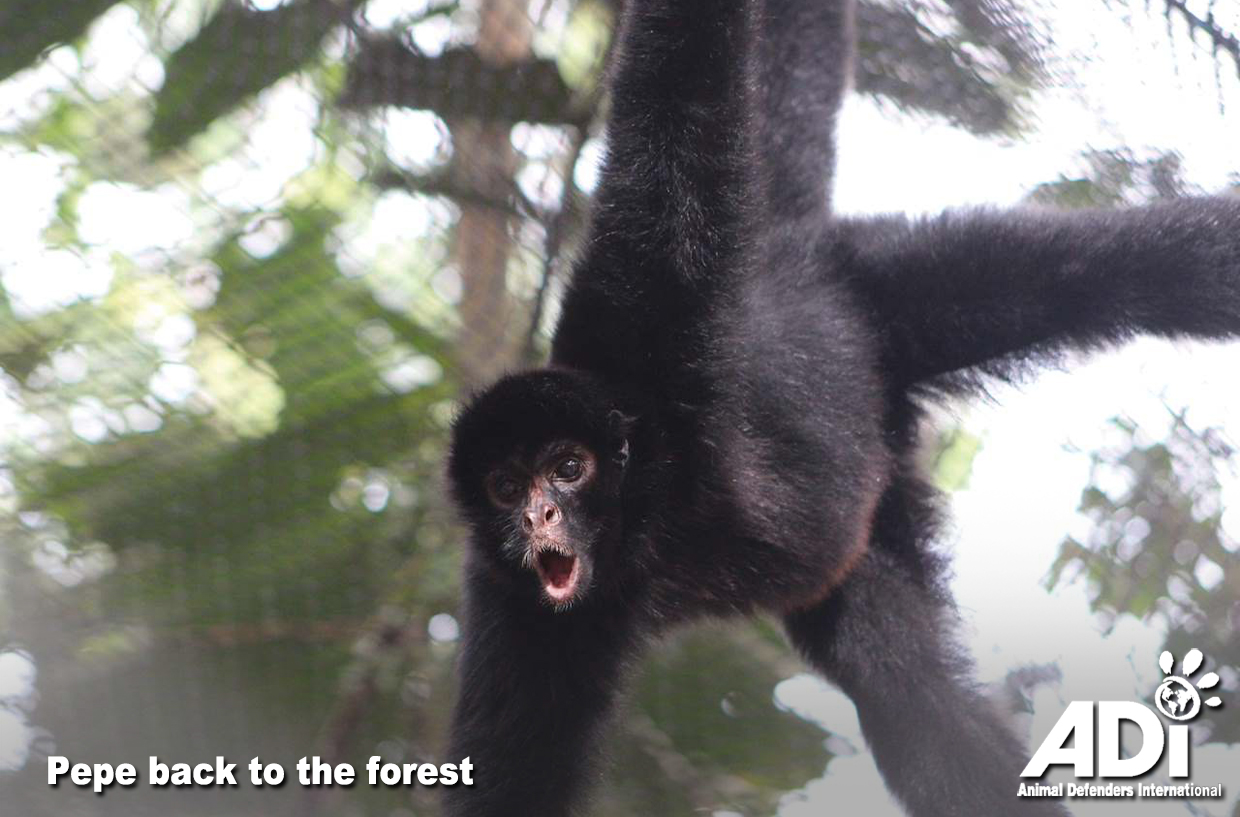
I will never forget the day we returned spider monkey Pepe and his family into their forest home. I opened Pepe’s travel crate, he looked out, climbed onto the top, hugged me and then swung away, into the trees with the other monkeys.
ADI’s most important rescue missions have been the huge operations enforcing circus bans and rescuing all the animals in Bolivia, Colombia, Guatemala and Peru – approaching 200 animals saved. We airlifted 29 lions out of Bolivia, a staggering 33 lions on one aircraft from Colombia and Peru, and 20 tigers and lions flew to new lives from Guatemala to South Africa.
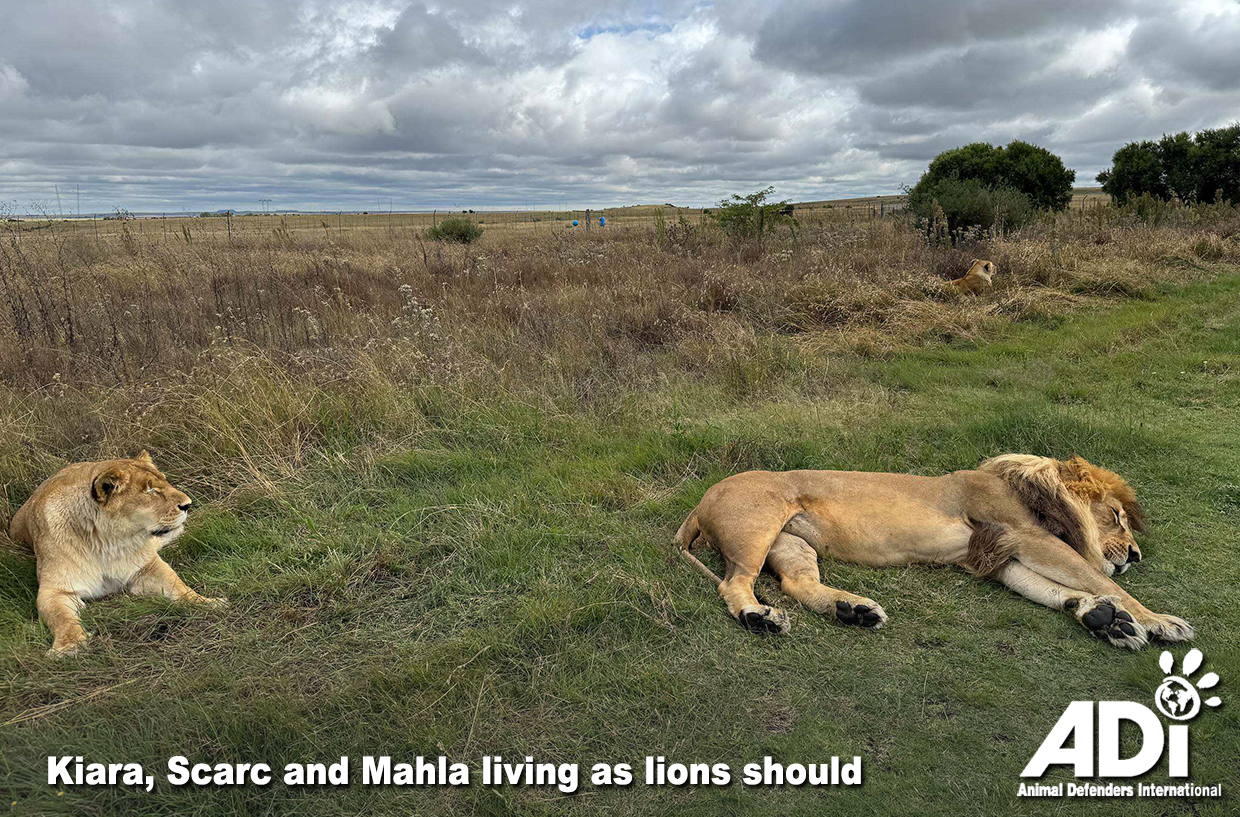
Many of these animals continue to enjoy wonderful lives at the ADI Wildlife Sanctuary, like Kiara, still with her cubs Scarc and Mahla 12 years after we reunited the family when we rescued them from a circus in Peru. Those residents who have now passed on, like dear Tarzan and Tanya, got to enjoy their golden years with grass beneath their feet in the African sunshine.
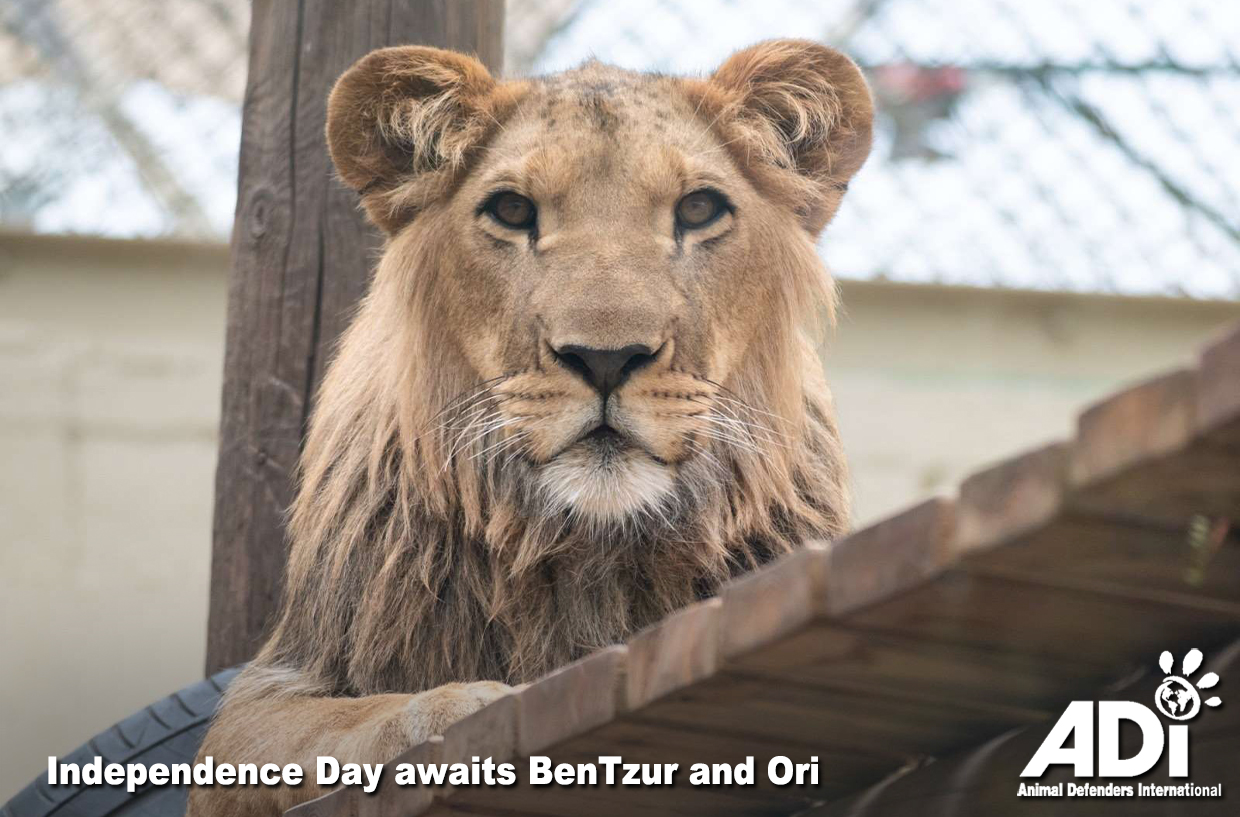
Ben Tzur and Ori have been stranded for months due to the war. Saved as cubs by Israeli wildlife officials from the illegal pet trade – BenTzur was found tied to a tree in a yard – they are now the equivalent of teenagers.
But with your help their Independence Day will come.
Today, I have been in touch with our shipping agents in Israel and South Africa and we are working hard to move the boys at the end of July or early August. Everything is in place for them at ADIWS, where we have reconstructed the old habitats of Saif, Dhubiya, Aziza and Muheeb into a single habitat with a new 2-room house, to make a forever home for BenTzur and Ori.
Independence Day for all of these animals means giving them back their lives.
As you know, the war has caused the cost of the rescue of BenTzur and Ori to escalate massively. The flights cannot be donated by airlines this time, we must pay for them. I want to thank everyone who has contributed, but we must raise more to cover the costs.