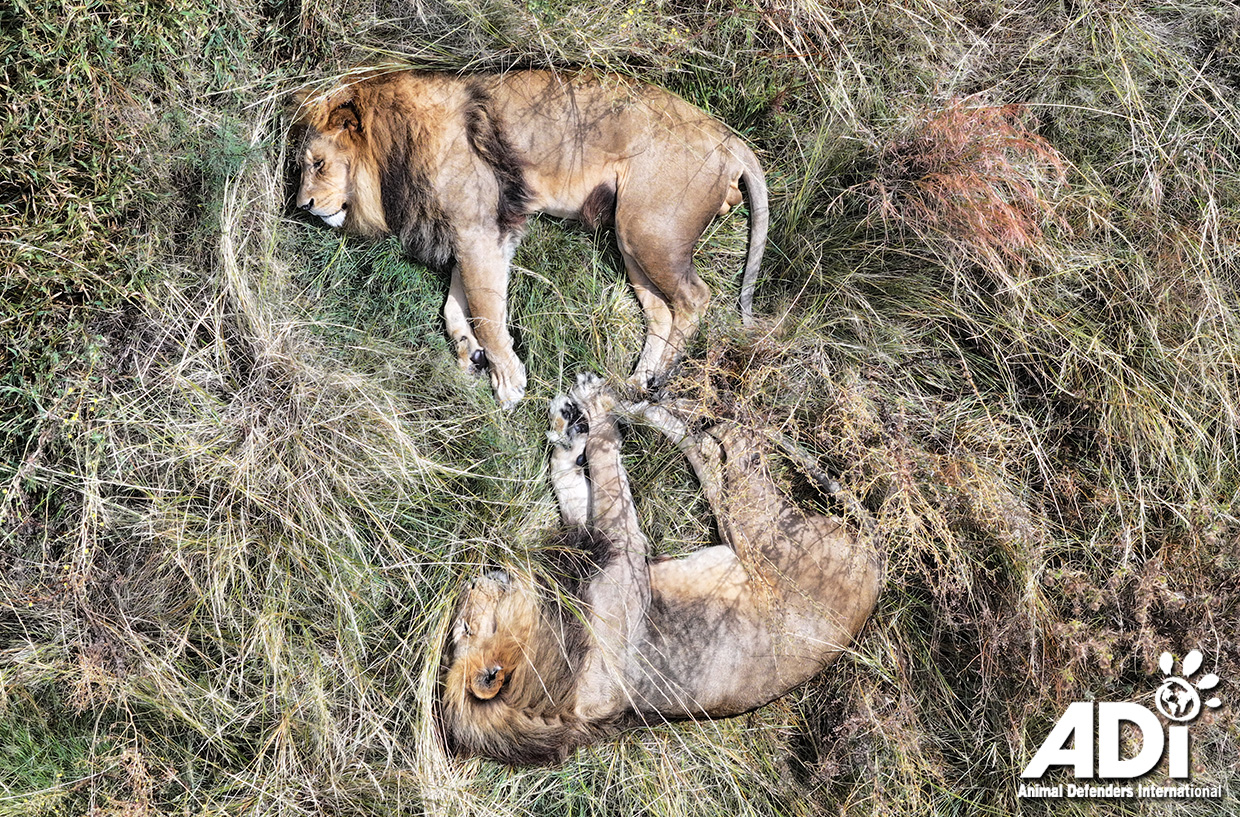
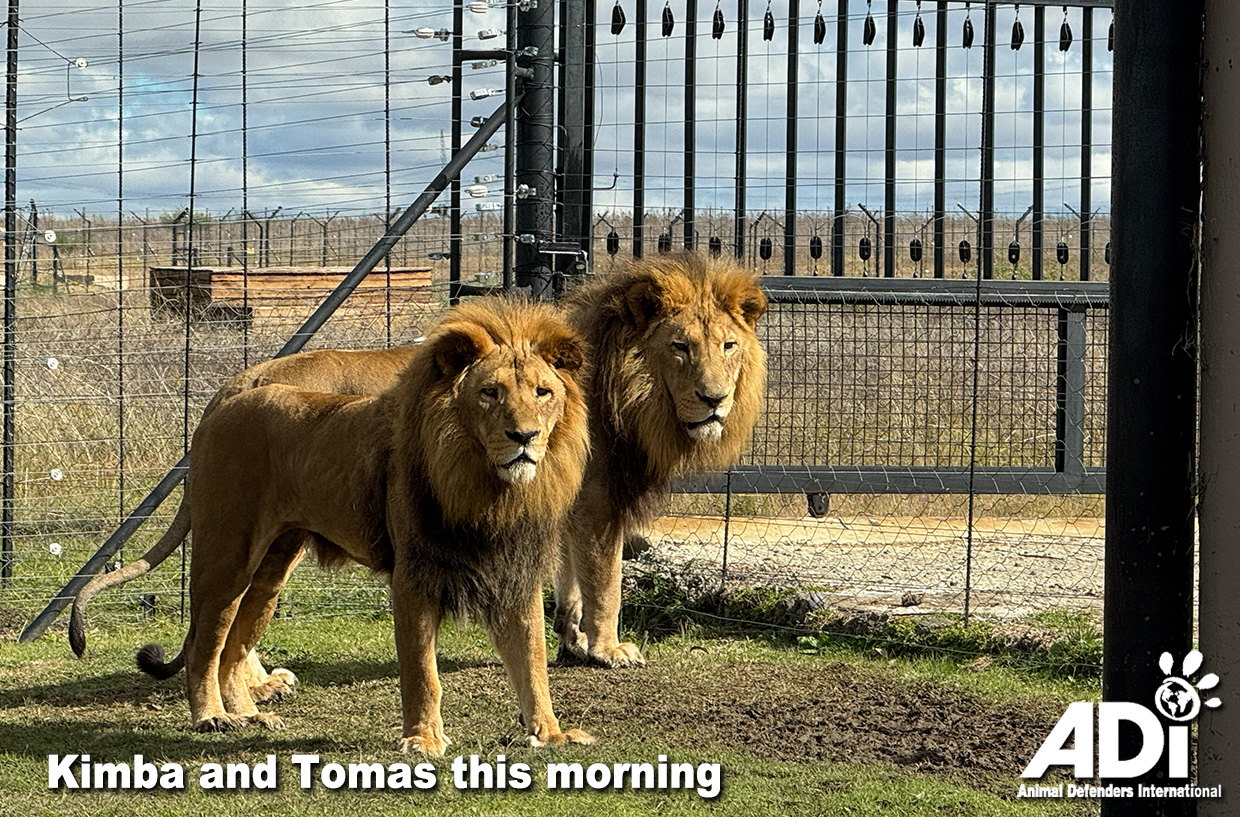
I wanted to share this wonderful picture of Tomas and Kimba dozing in the grass at the ADI Wildlife Sanctuary – a perfect picture of the tranquil life they now enjoy.
The boys were born in a circus in Guatemala and lived in cages smaller than a double bed. Eventually, Tomas was sent to a local zoo and the circus kept Kimba. Then ADI’s campaign to ban animal circuses swept Latin America, and Guatemala joined the growing list of countries banning animal circuses. Kimba was rescued by ADI as we enforced the law and emptied the country’s circuses. It looked like Tomas had missed his chance and would live out his life in a Guatemalan zoo.
Then, a few weeks after the seizures of the animals had started, the zoo surrendered Tomas to us (giving us 20 minutes notice), but we had a space near his brother. So, at the end of the mission we airlifted 17 tigers and lions to the ADI Wildlife Sanctuary in South Africa, where we reunited Tomas and Kimba.
The boys are rarely apart in the 2.5-acre Avi Habitat, and often sleep cuddled up together. Our large habitats mean our residents can disappear into the bush, so the drone is a useful tool for locating them. As you can see in this picture, we fly high, so not to disturb our sleeping beauties!
It has been an extraordinarily busy time for animals and animal welfare not only here at the ADI Wildlife Sanctuary but all over the world. Here is a quick look at many of the issues happening now and progress that has been made. We must keep pushing forward!
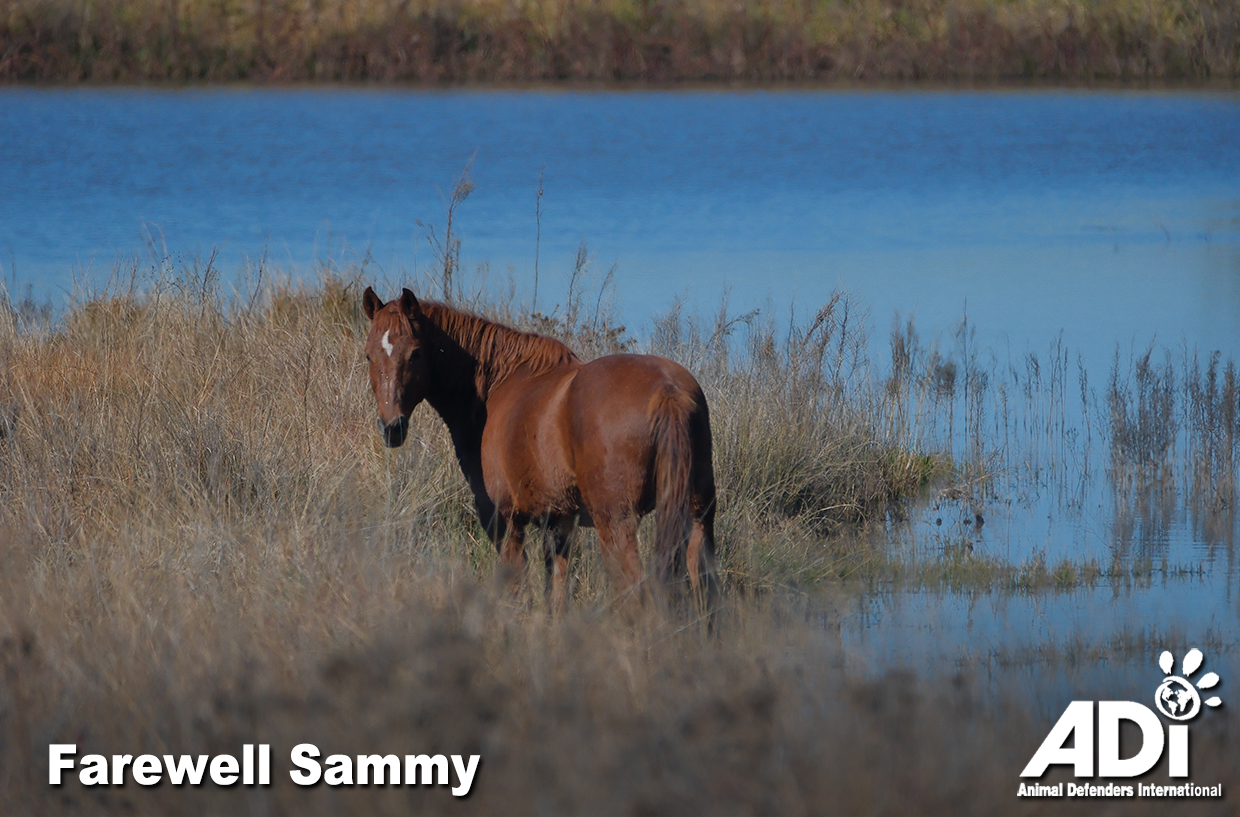
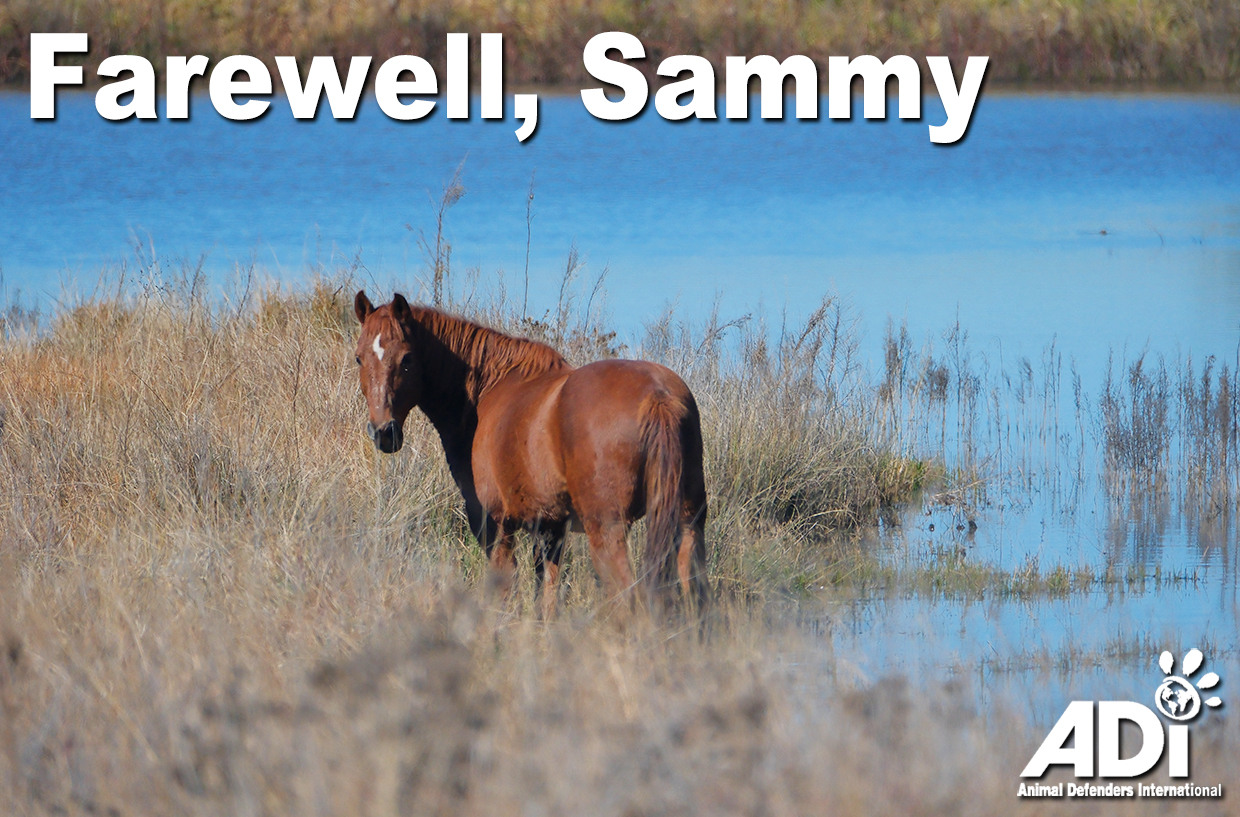
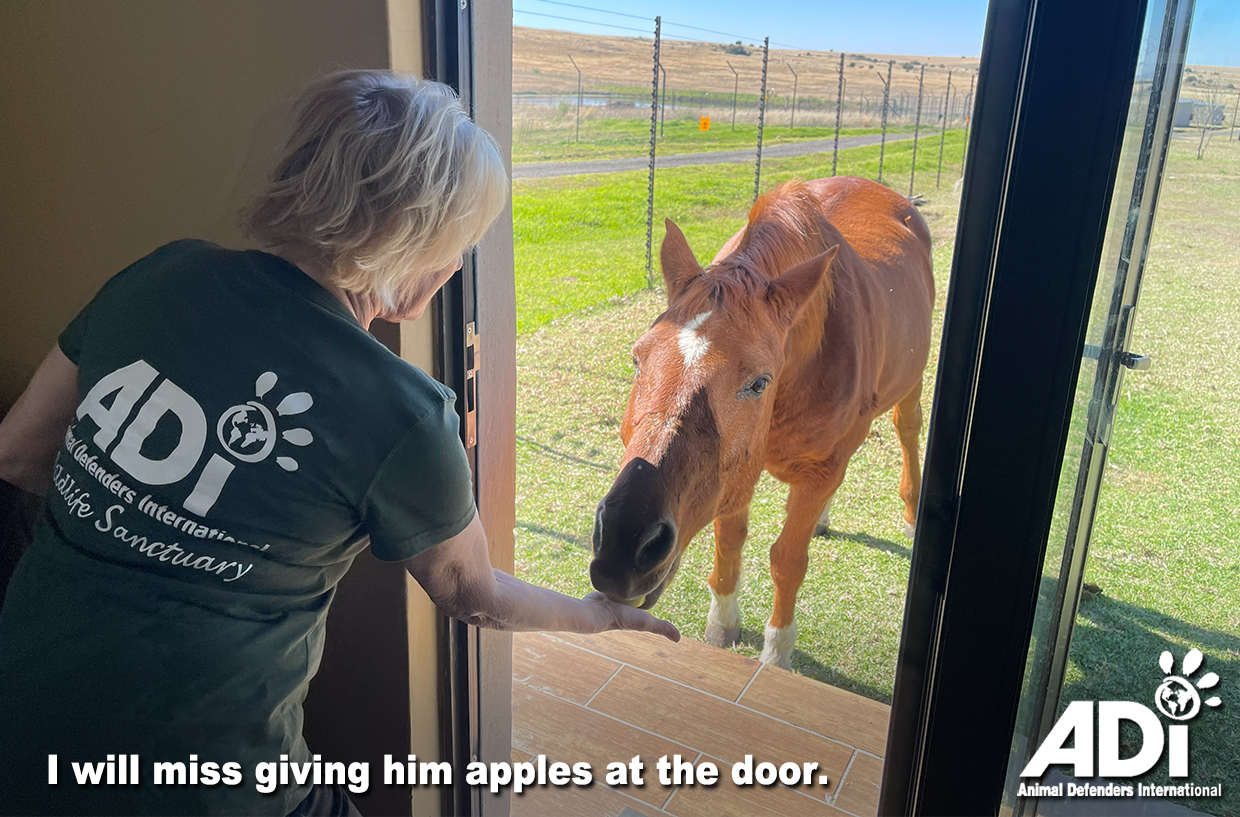
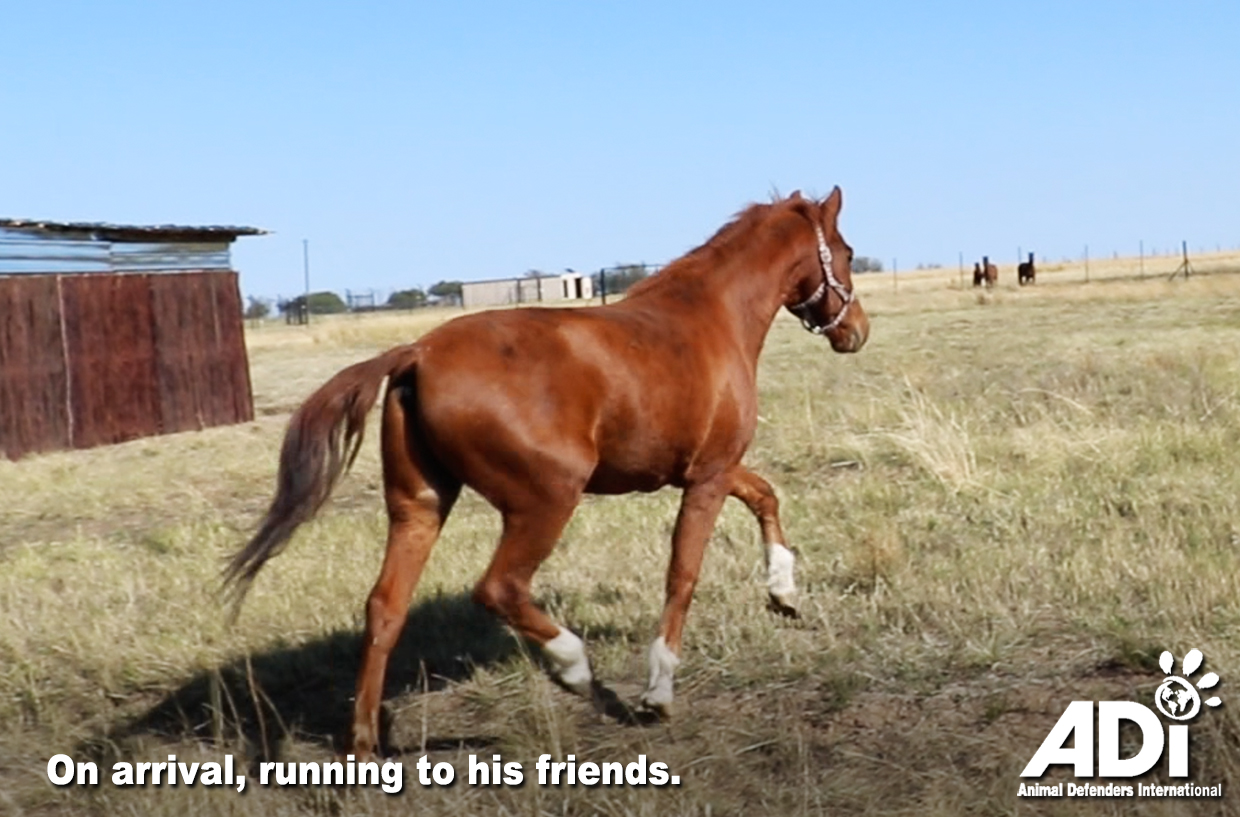
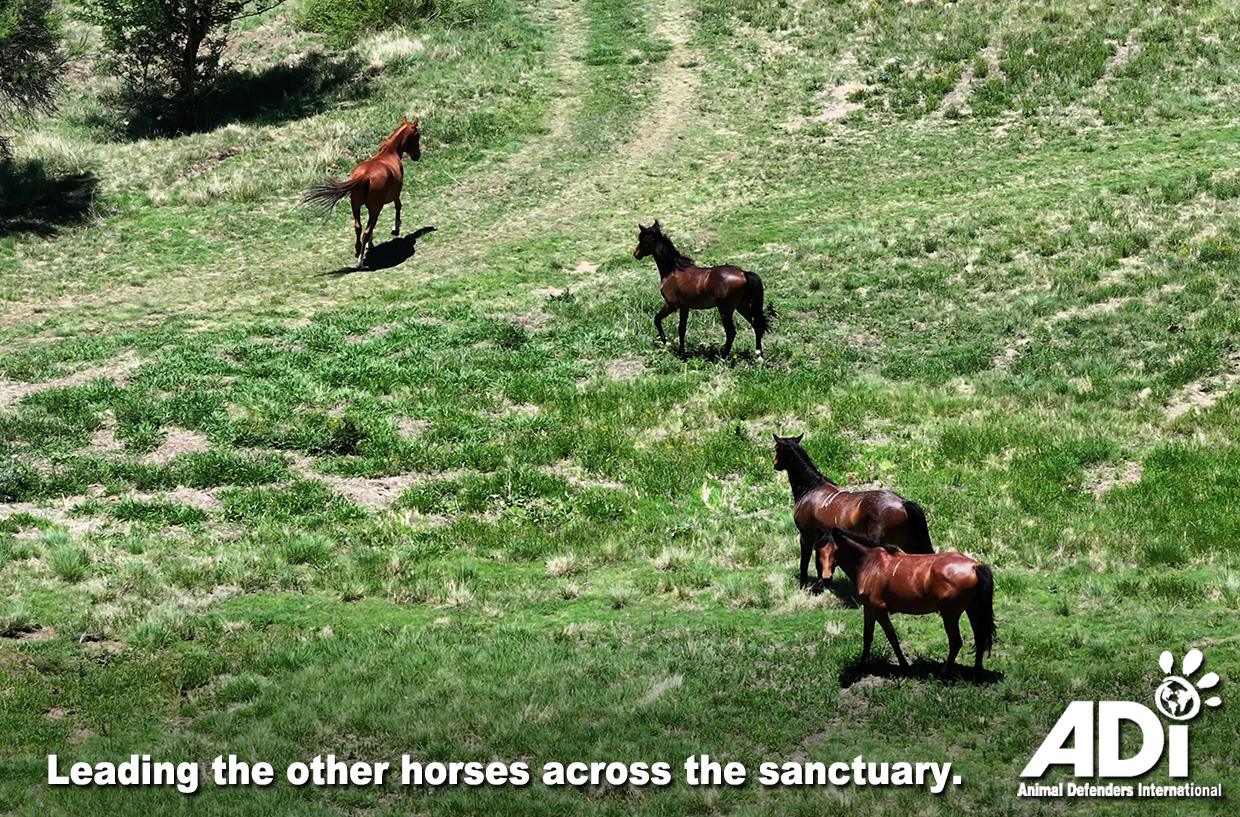
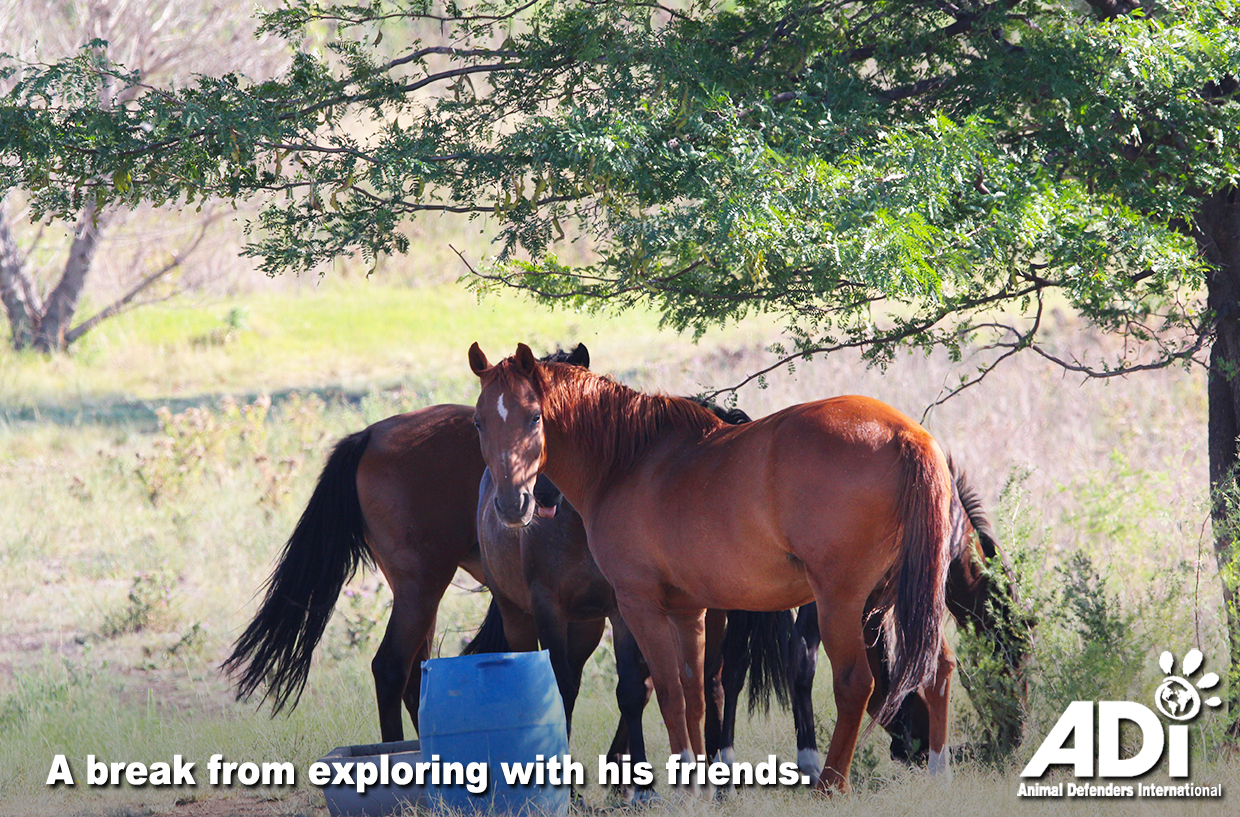
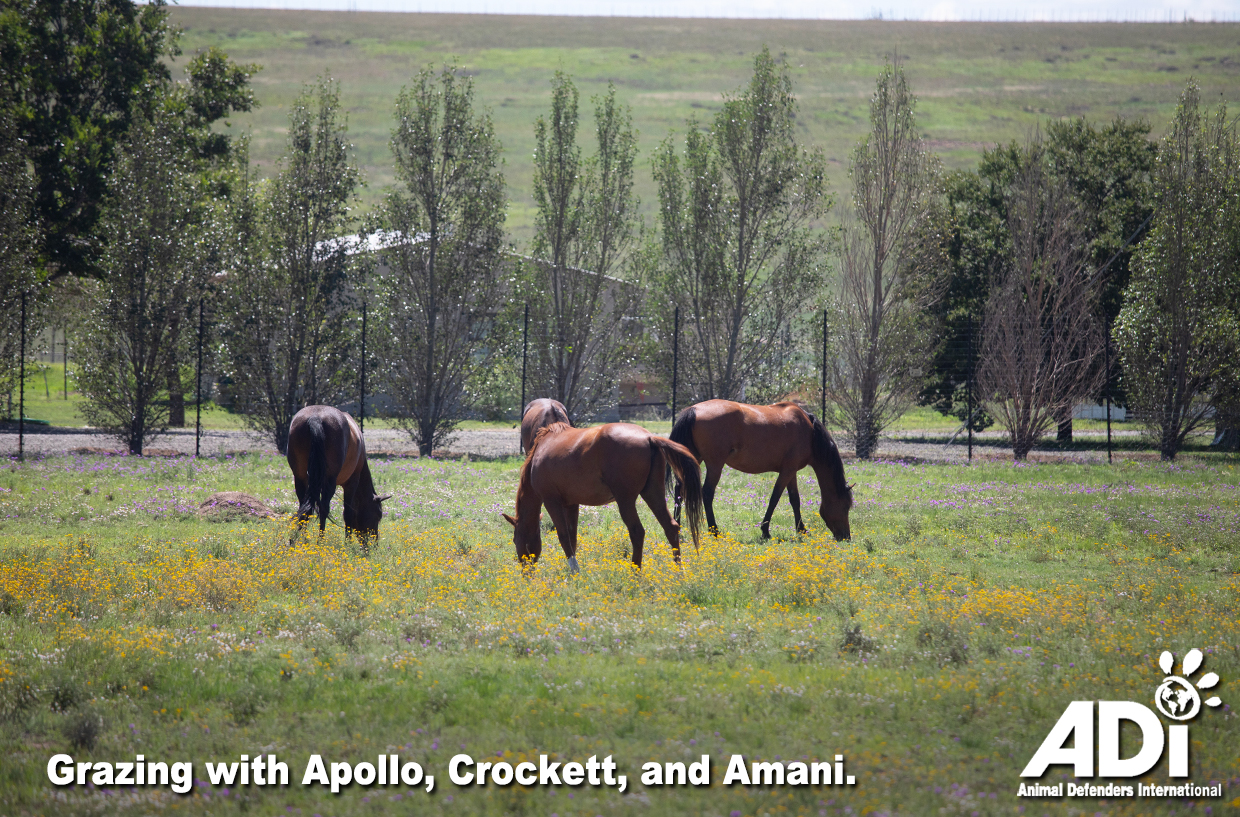
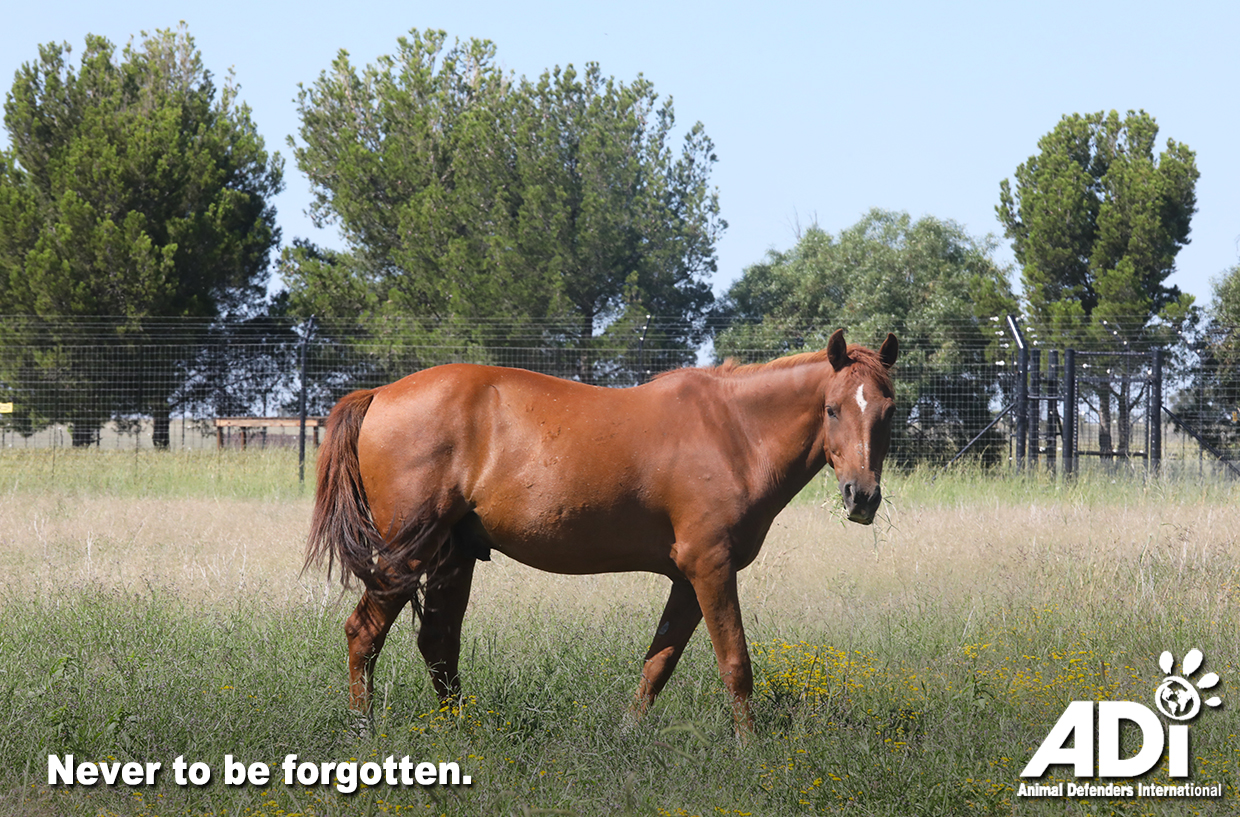
We are heartbroken to have reported that one of our horses, dear 11-year old Sammy, passed away this month. Two years ago, Sammy entered our lives, stepping from an SPCA trailer, calling joyously as he ran to his friends – Apollo, Amani and Crockett. Two wonderful years followed with fond memories of Sammy coming to the door for apples with the others – the best of times.
Each day the horses would roam the 455-acre ADI Wildlife Sanctuary and come into the paddock at night. The sight of the four galloping across the hillside was magical. Freed from tethers and brutal hobbling, they were living as horses should, running free.
While we still mourn the loss of Sammy, today we celebrate this gentle giant and remember the wonderful life that ADI supporters gave him at the ADI Wildlife Sanctuary. Enjoy the sight of him in this video running free with his friends.
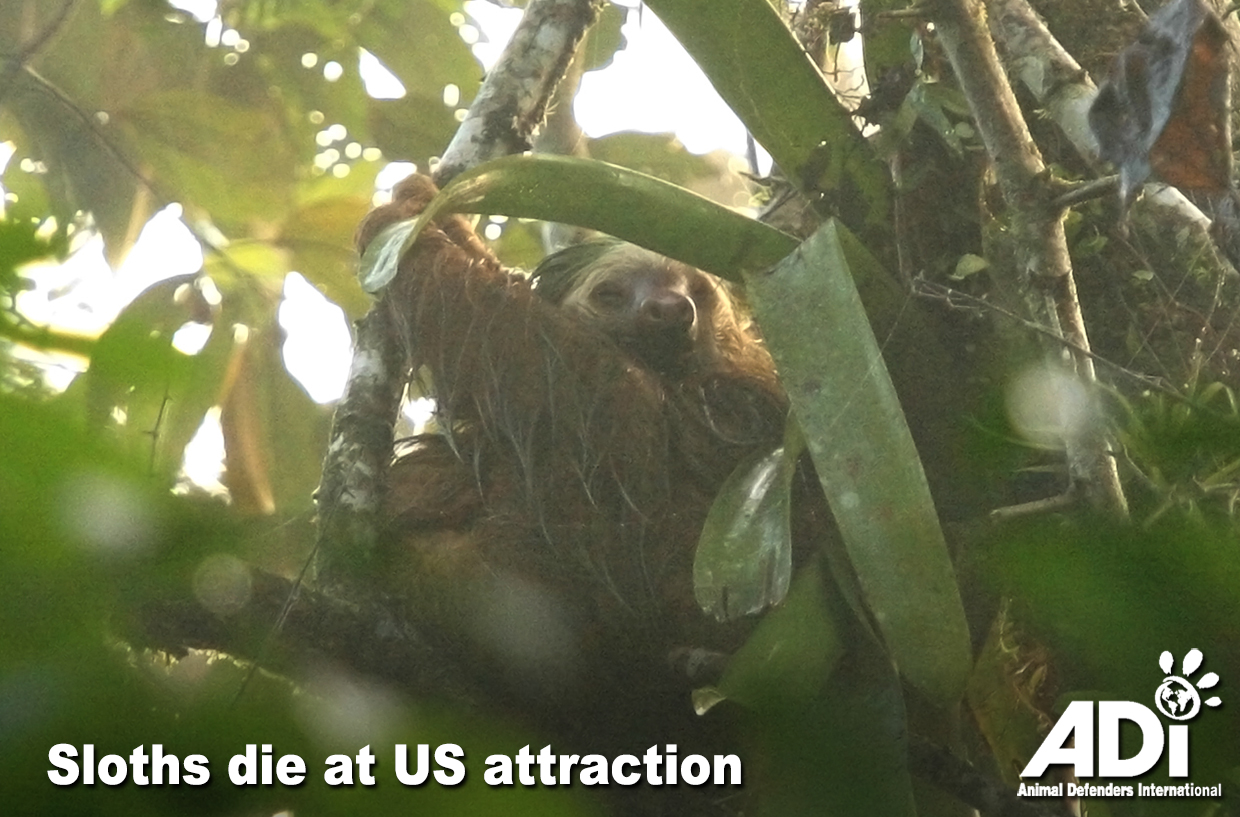
Sloth World Florida, which planned to be the world’s only ‘Slotharium’, recently closed before ever opening to the public after a minimum of 31 sloths died. Some estimate as many as 51 sloth deaths.
ADI contacted Florida state and federal agencies to push towards a full criminal investigation and to strengthen laws regarding facility licensing and the importation of sloths and exotic animals.
Florida’s attorney general James Uthmeier has since confirmed a criminal investigation is ongoing.
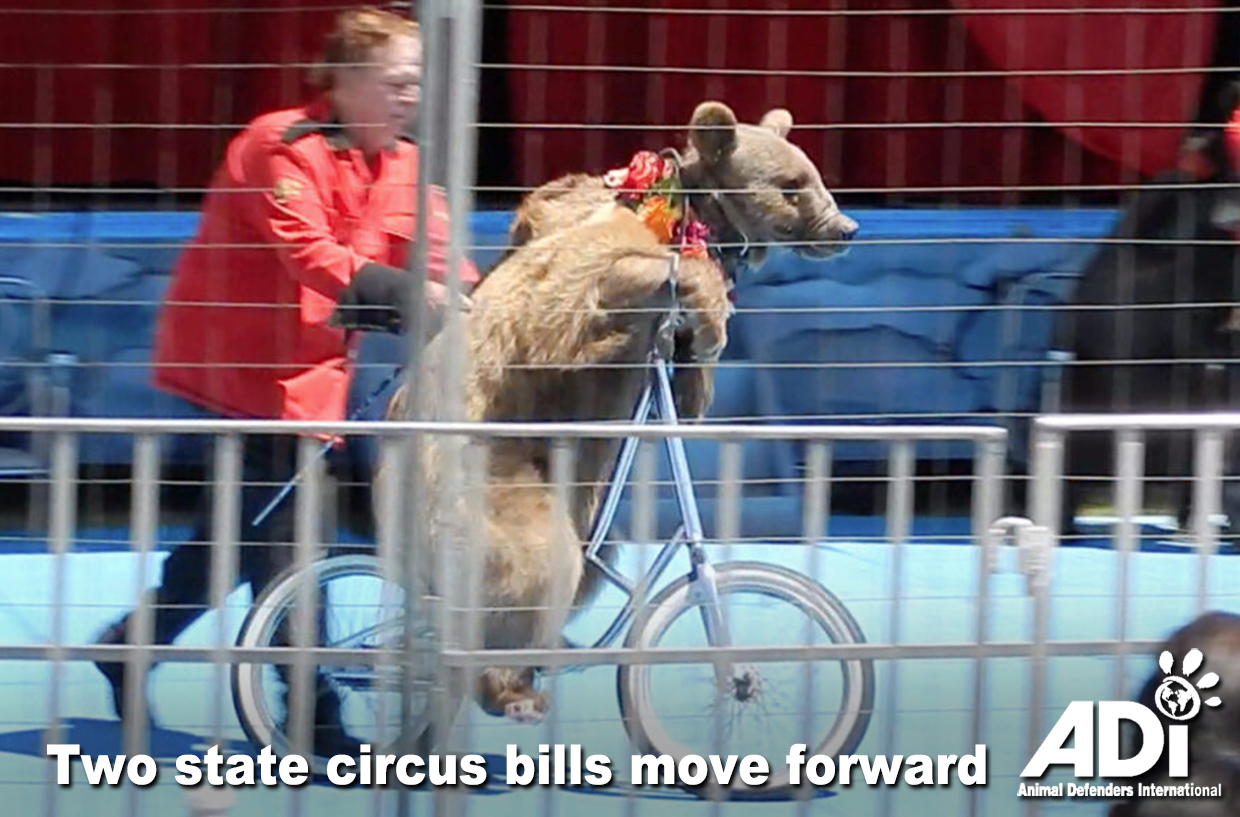
EXCITING UPDATES – New York state bills A05850/S3629A, to prohibit the use of kangaroos, big cats, primates, bears, and wallabies in a traveling animal act, have passed both houses! After some procedural steps, the bills will go to the Governor’s desk for signature.
Illinois banned the use of elephants in traveling animal acts back in 2017. HB 4255, to expand this list to include cougars, jaguars, leopards, lions, tigers, primates, and bears, passed the Senate (51-4) this week and now awaits the Governor’s signature.
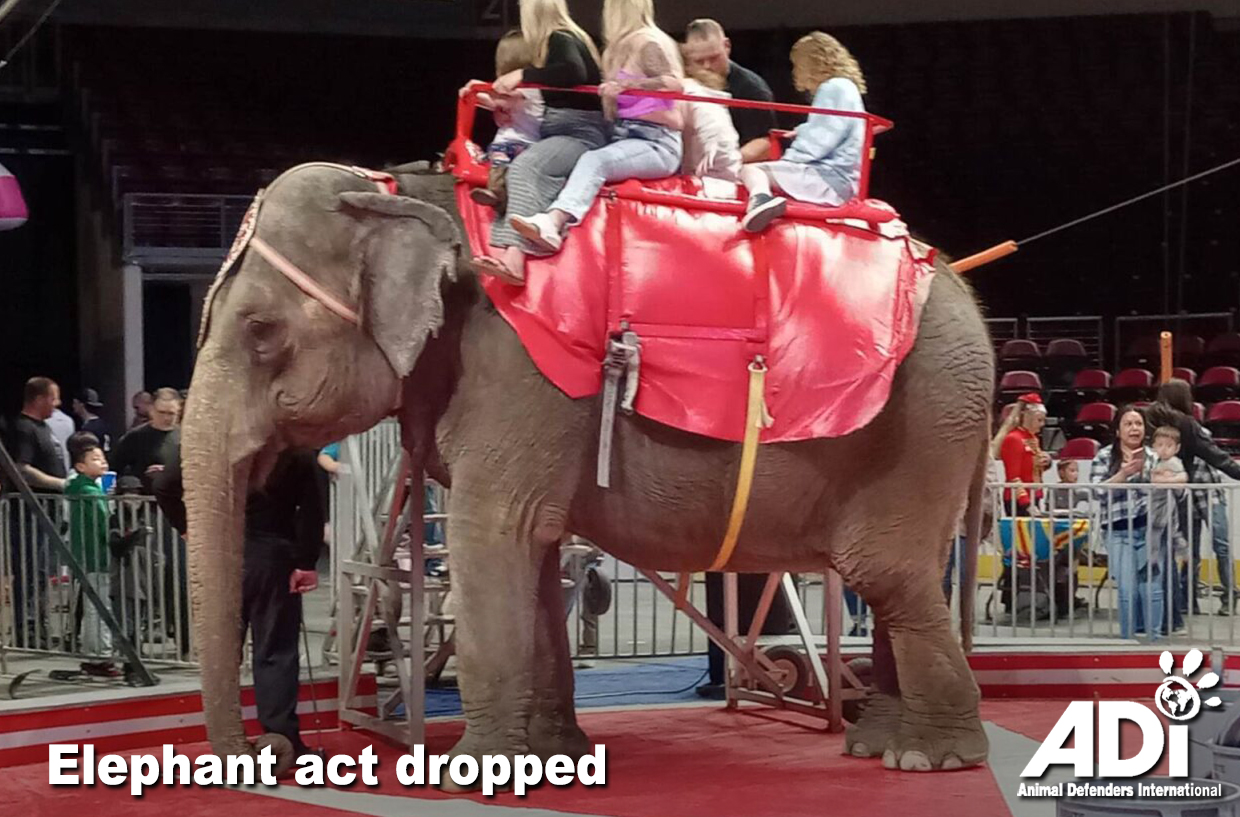
Following decades of campaigning, protests, and mounting public outrage, Jordan World Circus has dropped their elephant act. ADI brought global attention to the rampant abuse elephants suffered in circuses in its 2014 Out of Control Video. The undercover footage at Jordan World Circus showed elephants used for rides fighting while workers frantically tried to control them with bullhooks, metal bars, and stun guns. The video highlights both the danger to the stressed elephants as well as to the public when wild animals are forced to perform for so-called entertainment. A huge thanks to all who spoke out, protested, called venues, and continue to push for legislation to stop circus suffering.
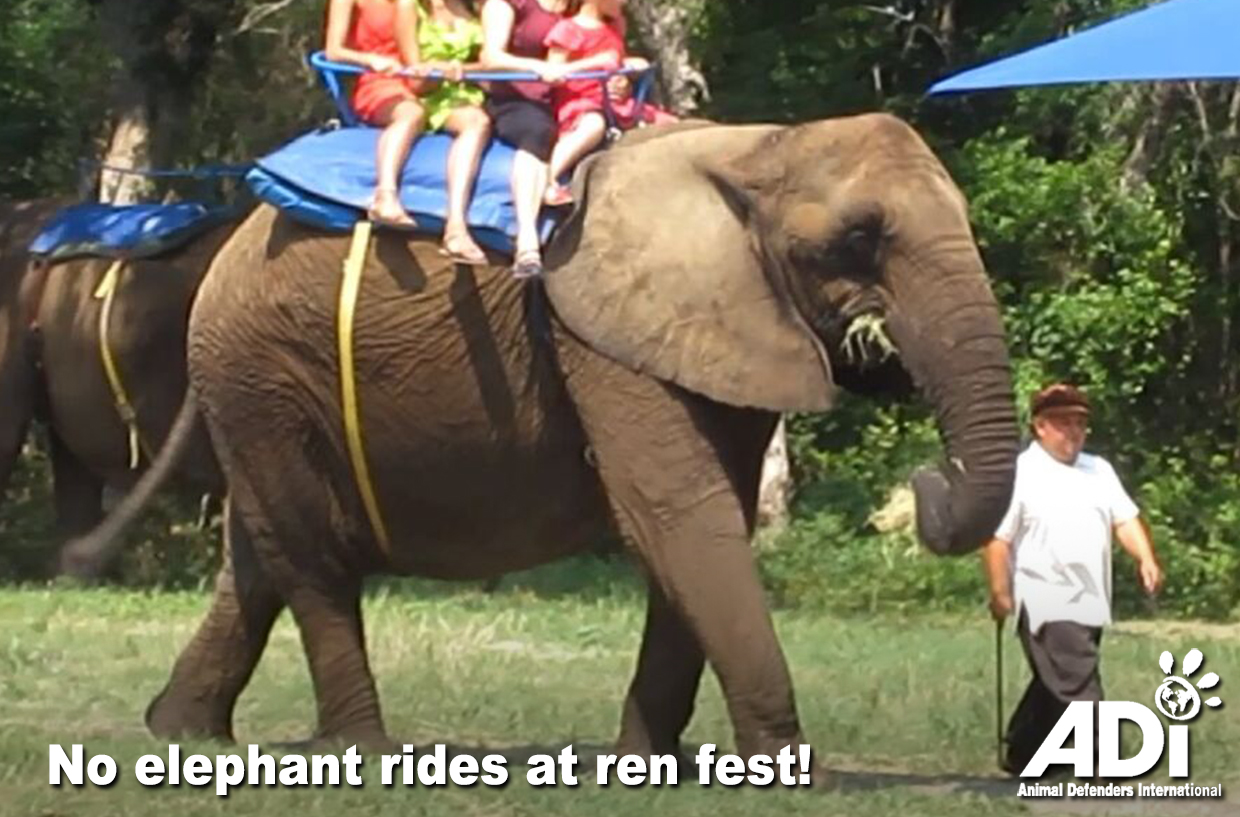
In more good news, there are no elephant rides at the Scarborough Renaissance Festival in Texas! After years of urging the venue and sharing with them ADI evidence of supplier Trunks and Humps beating and shocking their animals, we are delighted that the Scarborough Renaissance Festival did not have elephant rides this year. These intelligent, social animals endure a lifetime of suffering for these brief rides.
Let’s make sure these rides remain a thing of the past! Please thank the festival for its decision and urge them to make this a permanent policy. Call: 972-938-3247 / Contact form.
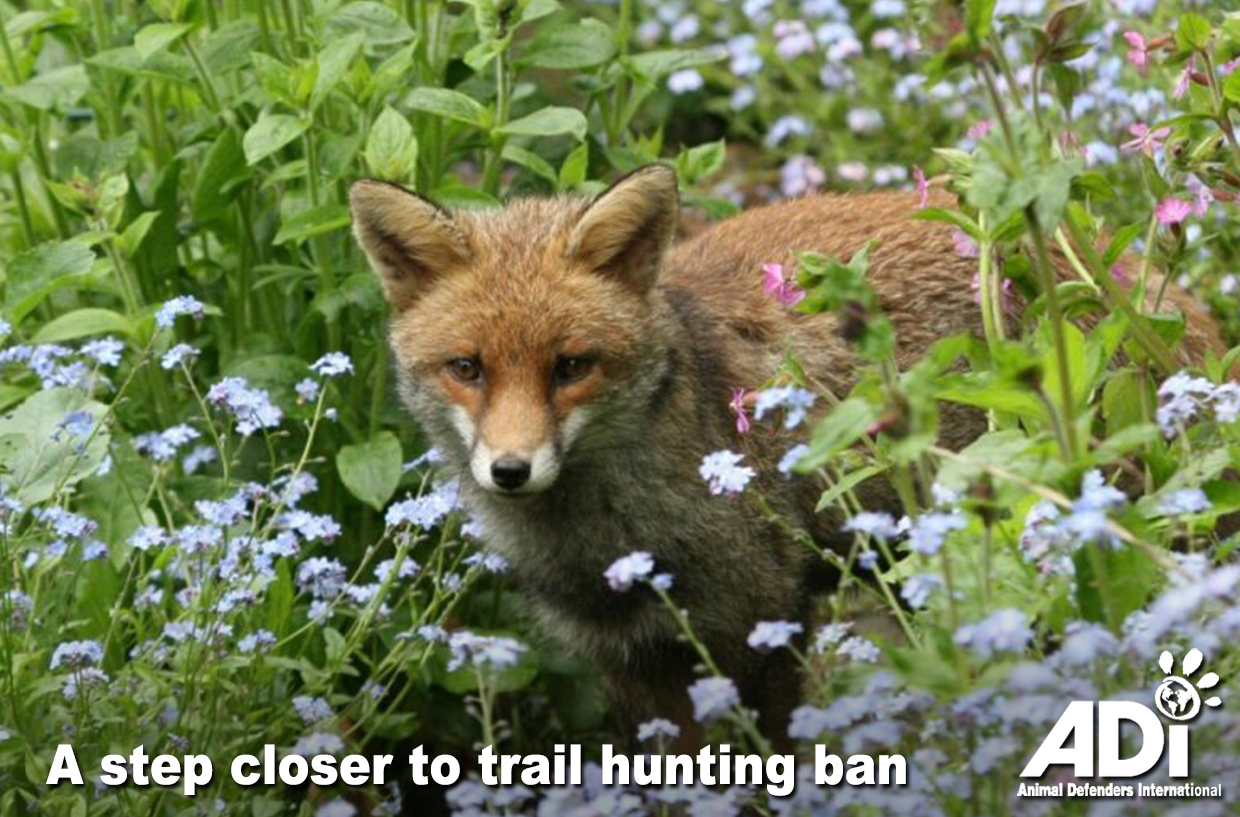
The UK government has launched a public consultation on trail hunting — a practice repeatedly used to circumvent the ban on fox hunting (the Hunting Act 2004). This is an important opportunity to close the loopholes and strengthen protections.
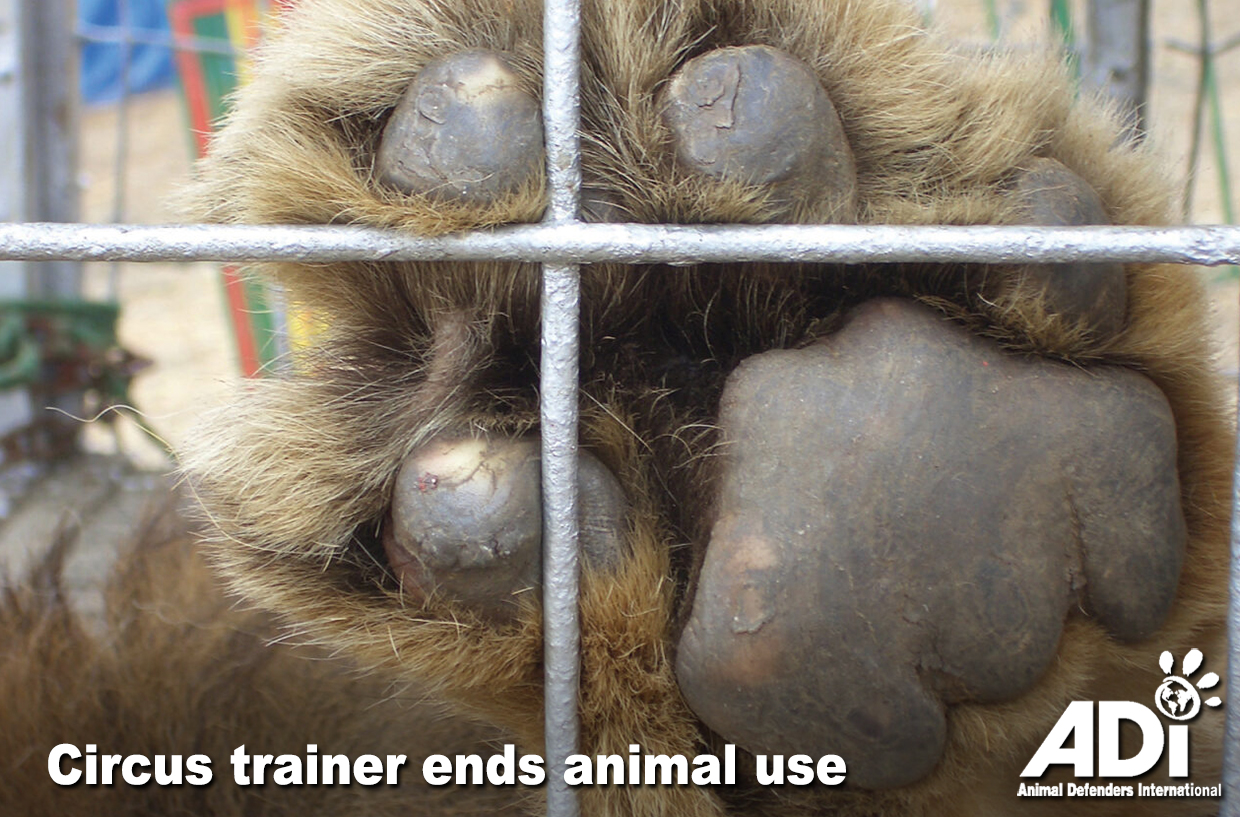
The Italian animal trainer/presenter Stefano Orfei announced that he will no longer perform with animals. His last performance with a big cat act was at the Rony Roller Circus in Italy in February. It has been reported that he has handed over four lionesses to the Animanatura Wild Sanctuary in Italy. A ban was passed following a campaign ADI was part of including a screening of Lion Ark in the Congress. However, the ban has yet to be enforced. Until this happens, we urge local action and for presenters and circuses worldwide to stop using animals.
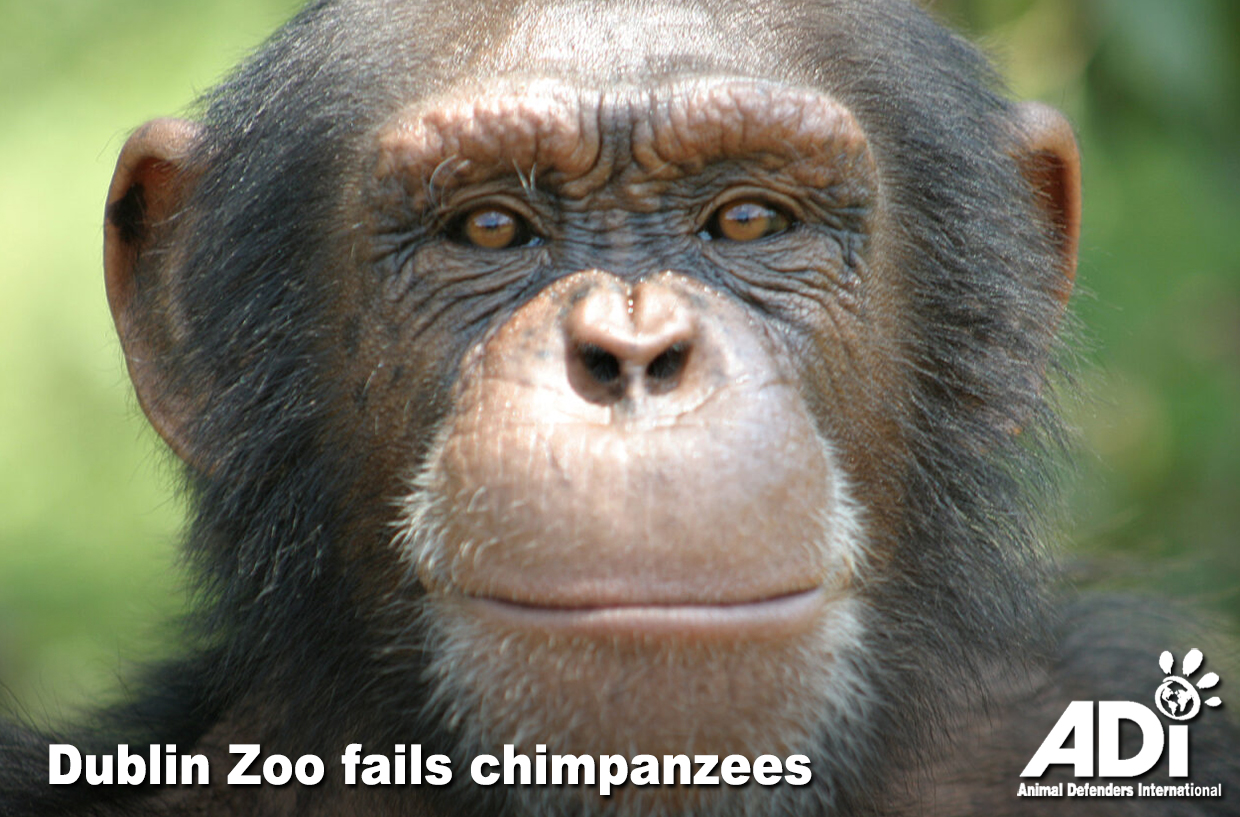
Since 2022, two chimps, Austin and Bossou, have been separated from their troop at Dublin Zoo after the introduction of a laboratory-reared male. They remain isolated, deprived of normal social interaction, and housed in an environment that does not reflect their natural habitat.
Chimpanzees are a highly social species and restriction from social interactions impacts both psychological and physical health. ADI is also concerned that the limited environmental complexity in their current habitat is restricting natural explorative behaviors. The zoo has admitted that the situation is “far from ideal” with plans to find a solution in a 2025 report. There has been no update since.
ADI has written to Dublin Zoo but received no response to date. Ask Dublin Zoo directly for an update on the situation.
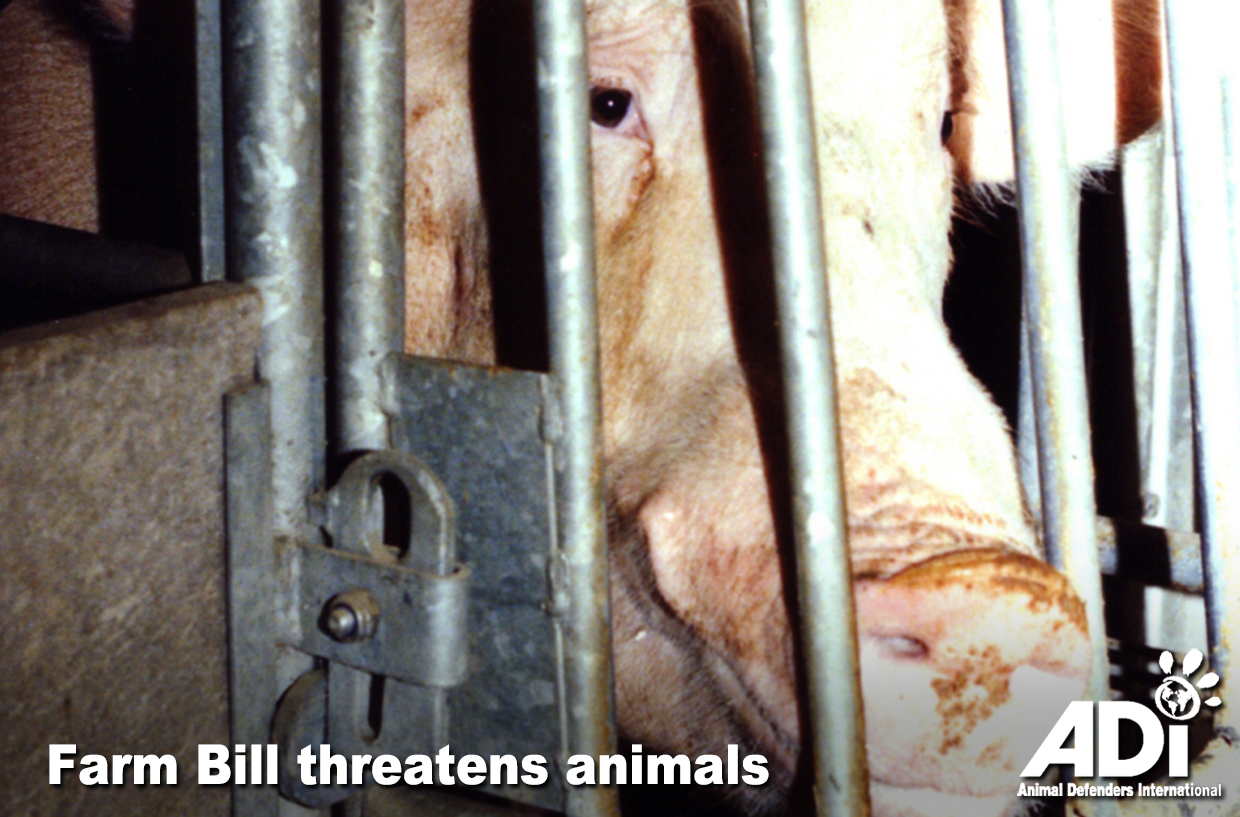
The Farm Bill passed the House, containing multiple threats to animals, and is now in Senate committee.
ADI opposes: Section 12006 uses language from the Save Our Bacon act (previously the EATS Act) to prevent states from prohibiting the cruel confinement of farmed animals.
Rep. Gosar’s wolf Amendment would undermine protections for wolves by making it easier for ranchers to claim wolf depredation despite lacking evidence.
The fight is not over. The bill must still pass in the Senate Committee on Agriculture, Nutrition and Forestry Committee and then the entire Senate. Take action here!
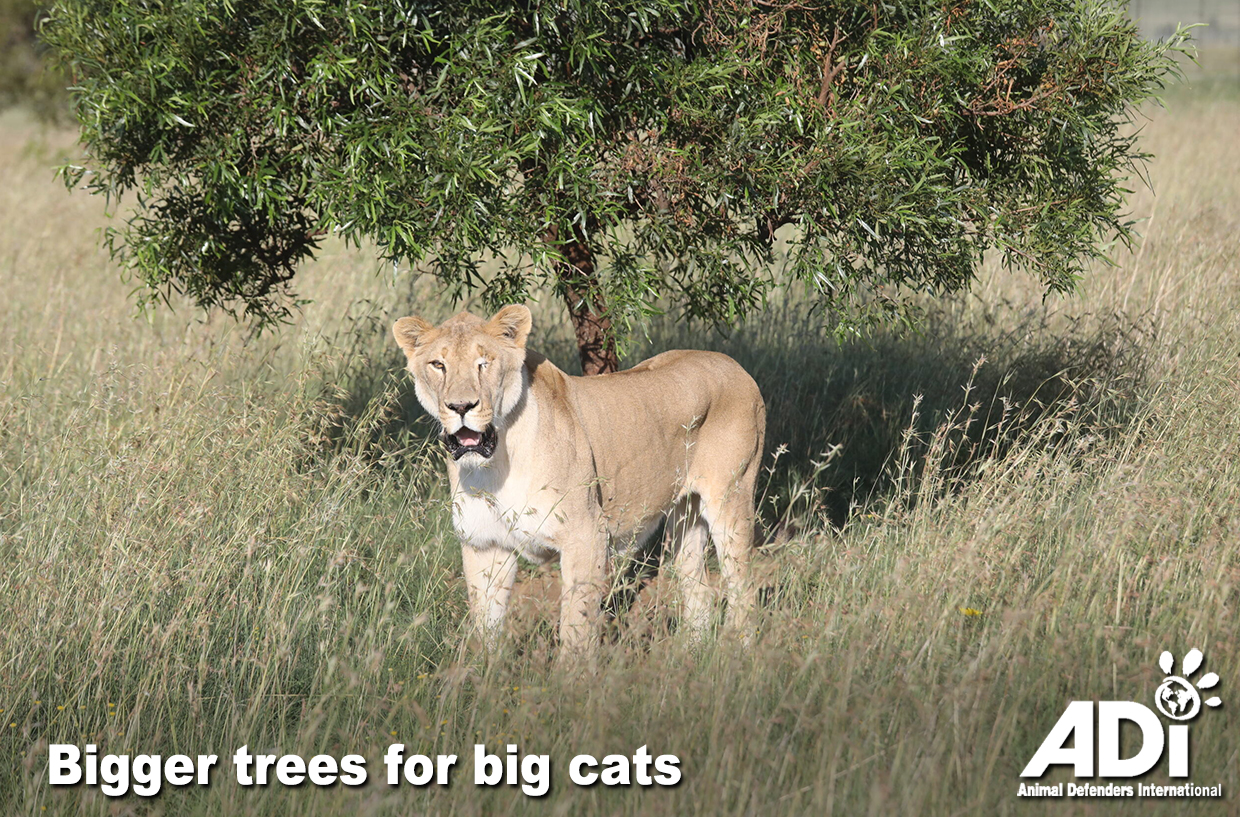
When we purchased the land for ADIWS much of it was denuded by agriculture and grazed out. As well as building habitats for our rescued lions and tigers we have been steadily re-wilding the land. We have planted over 200 trees and continue to see an explosion in wildflowers, wildlife, birds, and insects.
Trees must be tall and strong to be a scratching post for a lion or tiger. That’s why we’re hoping to plant more structural trees at ADIWS. Please sponsor a tree for the animals and the environment here! US $, CA $ | UK £, Euros, Rand
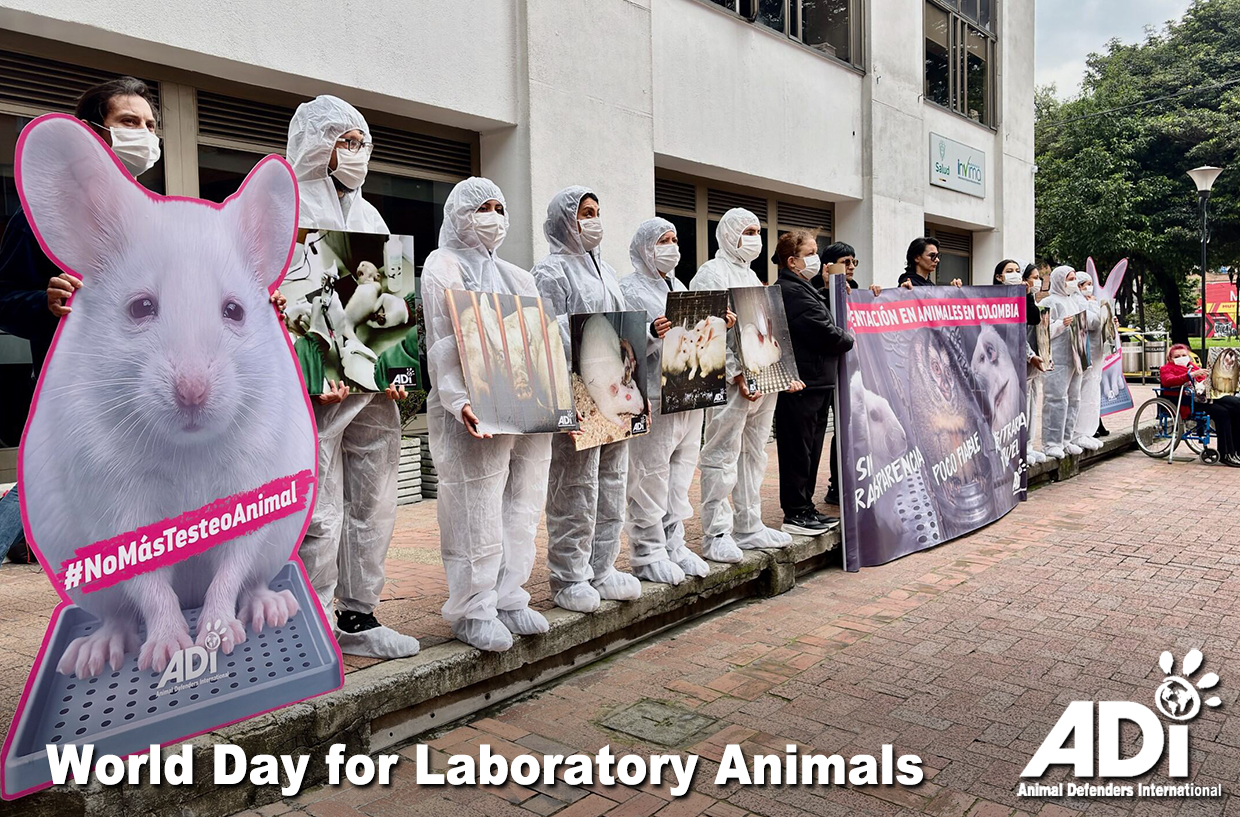
The suffering of laboratory animals goes on in secret, behind high-security doors, in commercial testing laboratories, government facilities and universities. Tests on animals are UNRELIABLE, UNETHICAL AND UNNECESSARY, due to species differences, and the impact on results caused by laboratory conditions.
This year for World Day for Laboratory Animals, we urged supporters to contact elected representatives, asking for urgent replacement of animal tests with advanced, non-animal methods.
In Bogotá, ADI Colombia protested outside the headquarters of the National Institute for Food and Drug Surveillance (INVIMA) using images from ADI investigations. They drew attention to the lack of transparency and oversight regarding animal experiments in Colombia and the failure of the Institute to respond to requests for information. The ADI campaign in Colombia is at a critical stage with the implementation of the ban secured on cosmetics testing on animals, which includes a requirement to use non-animal methods in all areas of research when available.
As seen in our video, around the world, animals are burnt, blinded, poisoned, infected with diseases, and mutilated. They live their lives in small, barren cages, suffering fear, pain, and death in experiments when advanced, human-relevant methods are available.
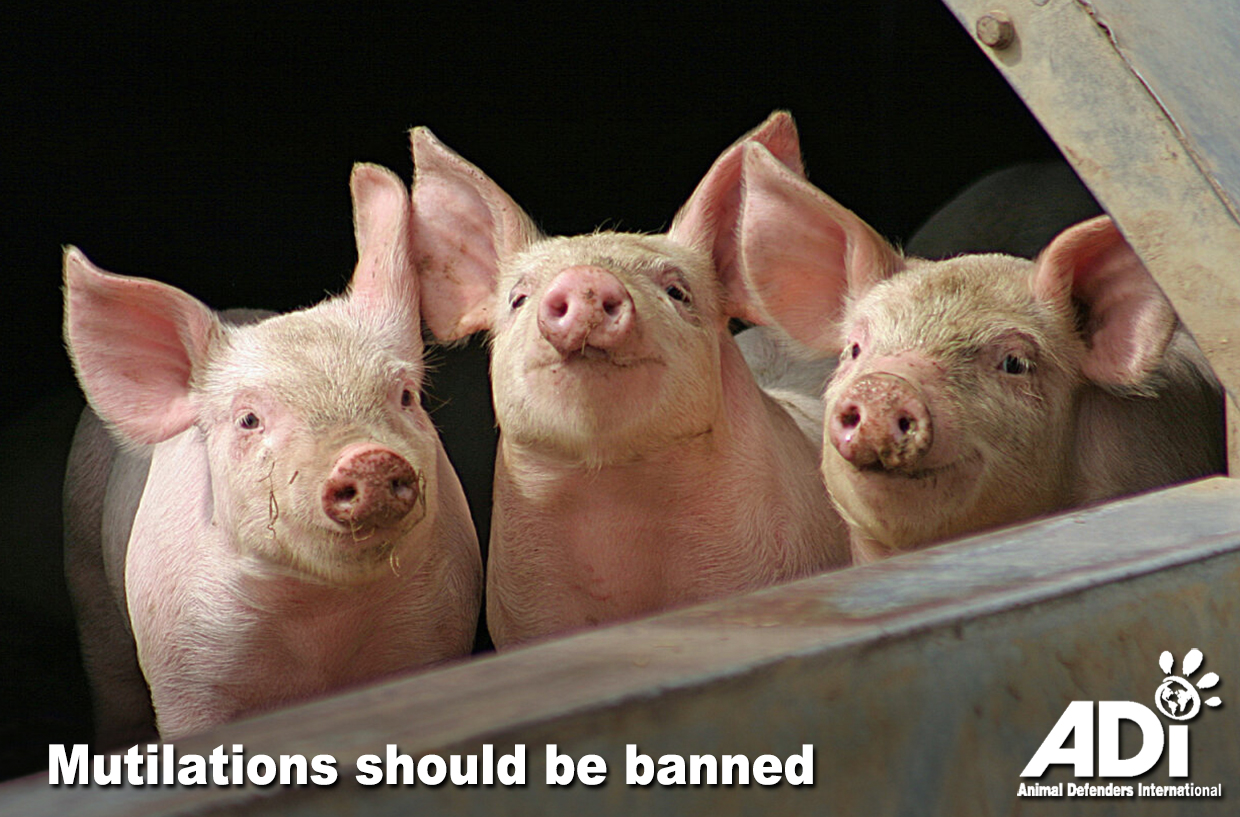
The UK government states that it wants to “encourage farmers” to move from mutilation exemptions such as tail docking. This is a painful process that many farmers perform on piglets without any anesthetic. However, encouragement isn’t enforcement. UK law states tail docking should be a last resort, yet it occurs on around 85% of farms. Other countries, including Finland and Sweden, have prohibited tail docking. This proves change is possible. If all mutilation is banned, then welfare standards will be forced to improve. ADI has written to MPs demanding clarity and enforcement regarding the animal welfare strategy.
You can help too. Write to your MP to demand enforcement, not exemptions. See also our webpage for a detailed overview of ADI’s response to the government’s animal welfare strategy and more ways to help push for change.
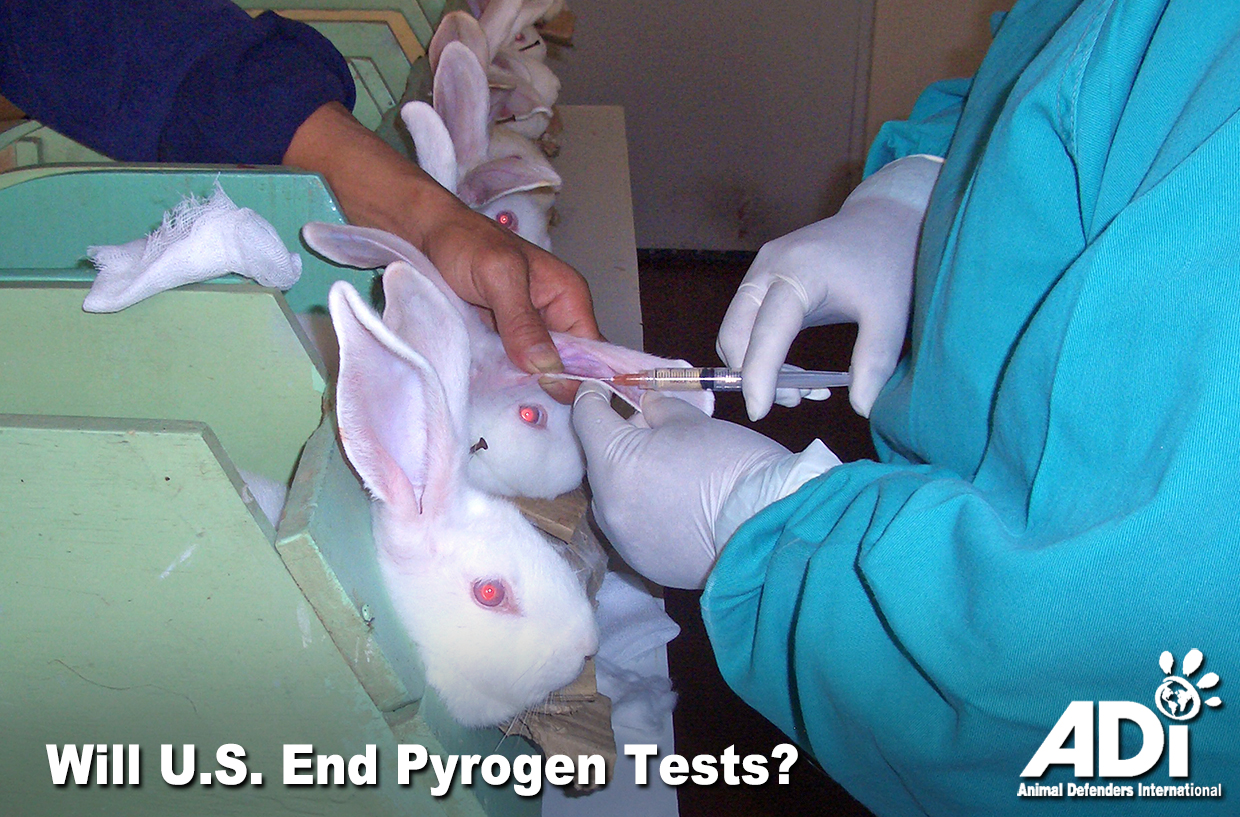
ADI has submitted a proposal to the United States Pharmacopeia (USP) calling for the phase-out of outdated animal-based drug safety tests. These include the rabbit pyrogen test (RPT) and horseshoe crab blood test, which are still used to detect contaminants that cause fever.
Modern human-relevant alternatives now exist, including the Monocyte Activation Test (MAT) and recombinant Factor C (rFC), which are more accurate, sustainable and humane.
With the RPT already removed from the European Pharmacopeia, we are urging the U.S. to not fall behind.
ADI is also drafting letters to the FDA and Congress to push for wider regulatory change.
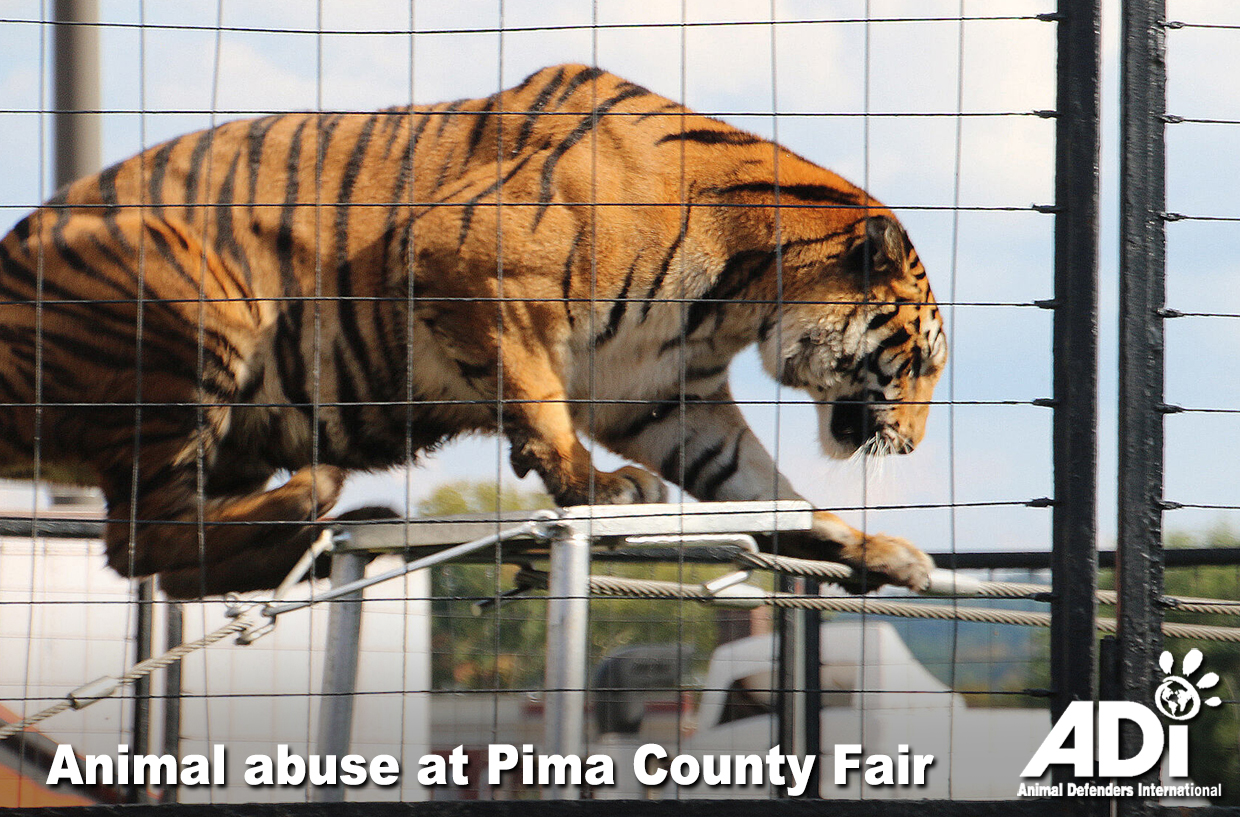
The 2026 Pima County Fair in Tucson, Arizona, hosted a number of cruel animal acts: Sea Lion Splash, pig races, pony rides, bird and reptile shows, and a petting zoo. Horrifyingly, this year they also invited back Brunon Blaszak and his tigers. Blaszak claims his demeaning cat act is educational. A tiger walking a tightrope or performing other tricks does nothing to teach people about the intelligence, sentience, and communications of tigers, or how they live in the wild and what they need. This is not the life nature intended for any of these animals.
Help us stop this suffering! Please contact the Pima County Fair today and ask them to no longer host wild animal acts. Call: 520-762-9100 / Email / Facebook / Contact form
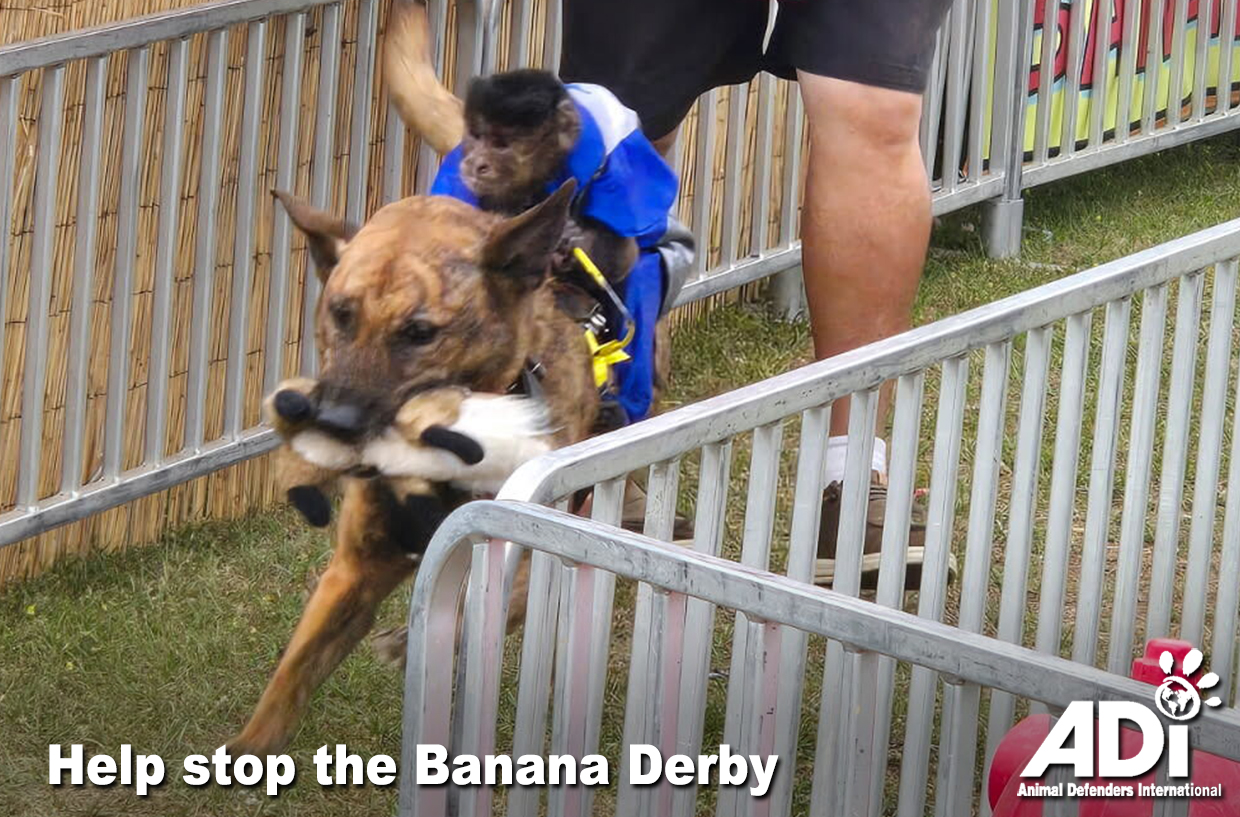
The Banana Derby is a cruel spectacle featuring capuchin monkeys strapped onto dogs “like jockeys” as the dogs race around makeshift tracks. Monkeys belong in trees, not tied to the backs of dogs. Disappointingly, the Lawrenceville Spring Fair hosted this horrific event at the Gwinnett County Fairgrounds in Georgia. Contact the fair, fairgrounds, and city government and urge them not to host the Banana Derby anymore and to adopt an animal-free entertainment policy!
Gwinnett County Fairgrounds: Call: 770-963-6522 / Email
City of Lawrenceville, GA: Call: 678-407-6675 / Email / Contact form
Also, please urge your Congress members to support and co-sponsor the Captive Primate Safety Act, to ban public contact with and the keeping of primates as pets, as well as ban foreign and interstate trade of such species in the US.
Contact ADI if you see Banana Derby or similar acts coming to your hometown.
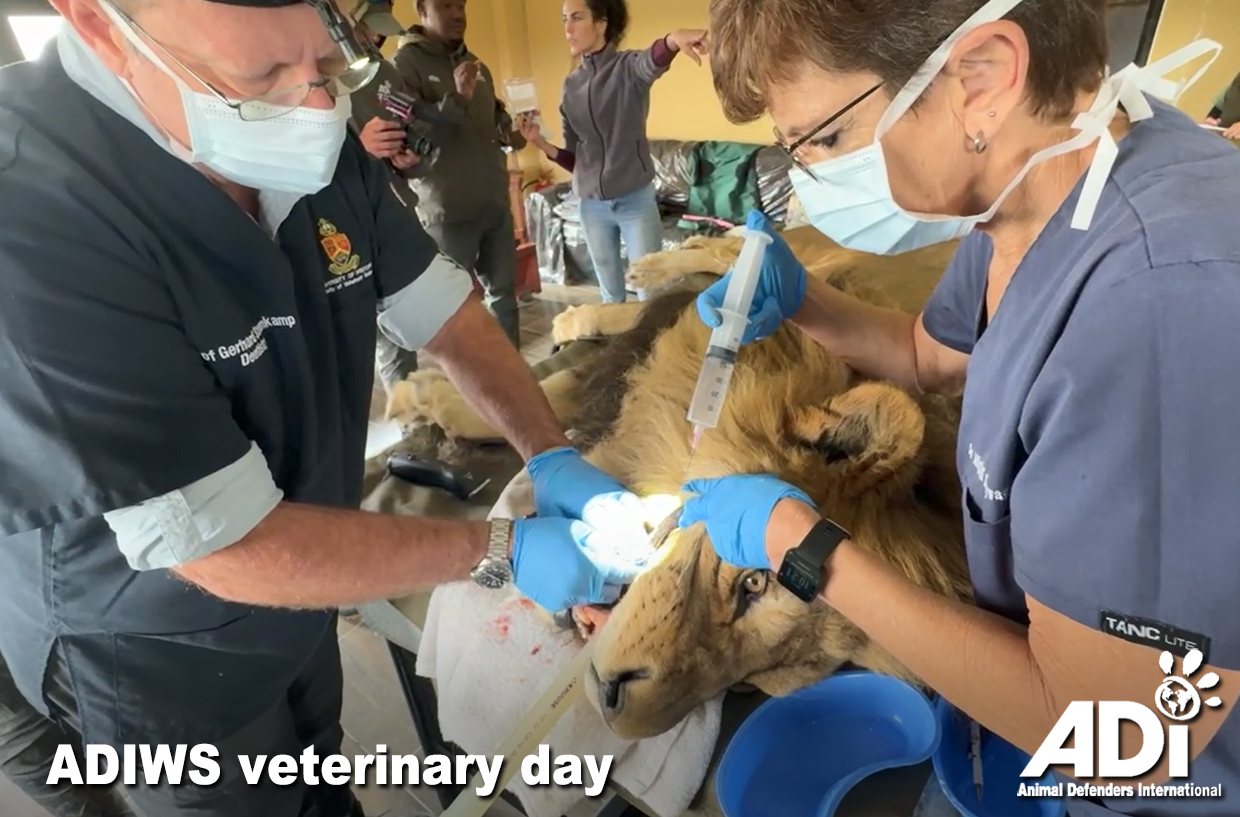
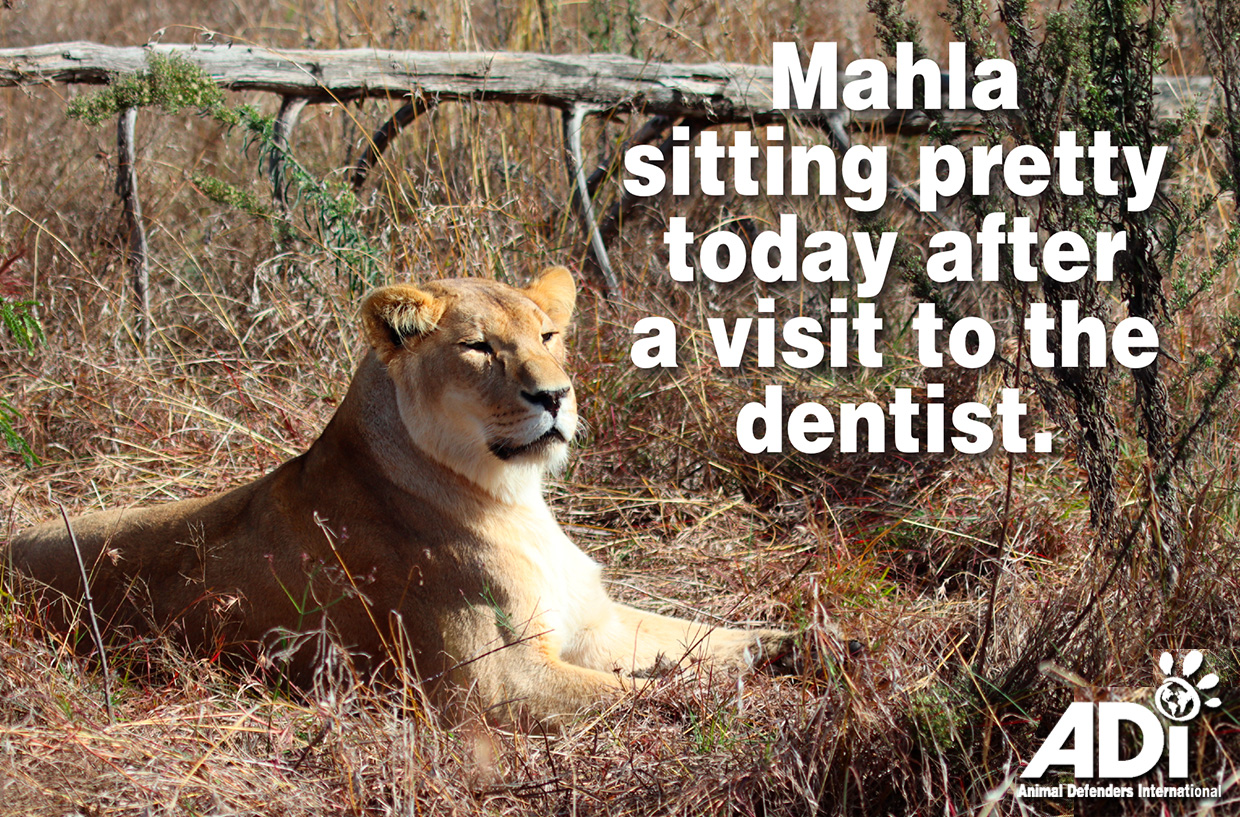
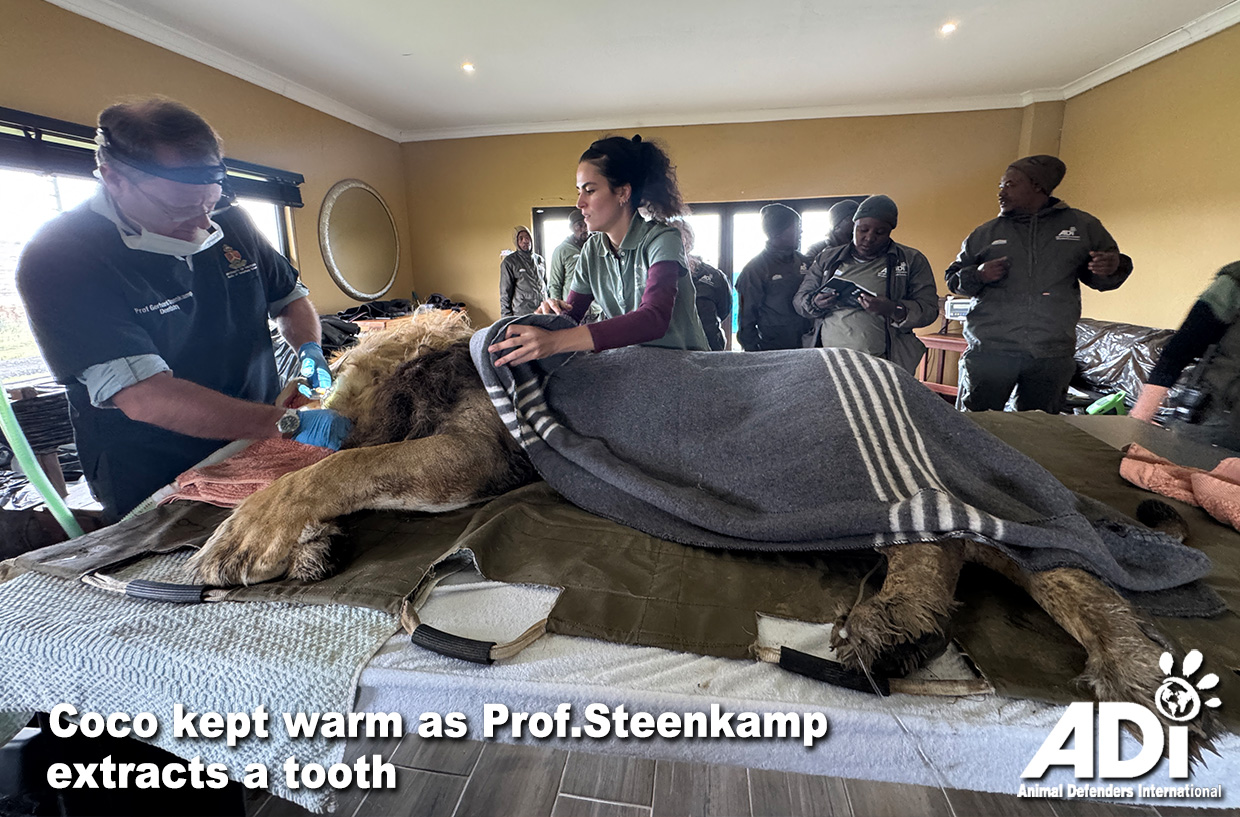
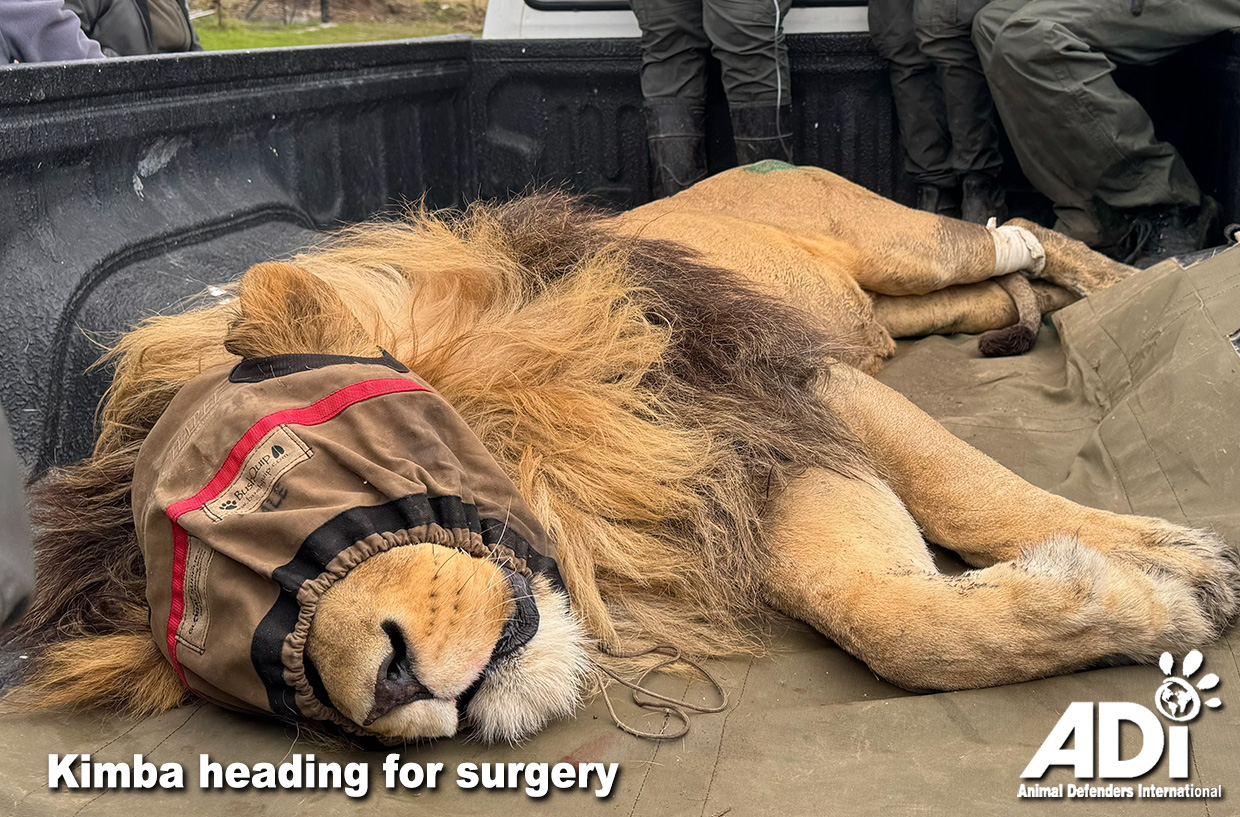
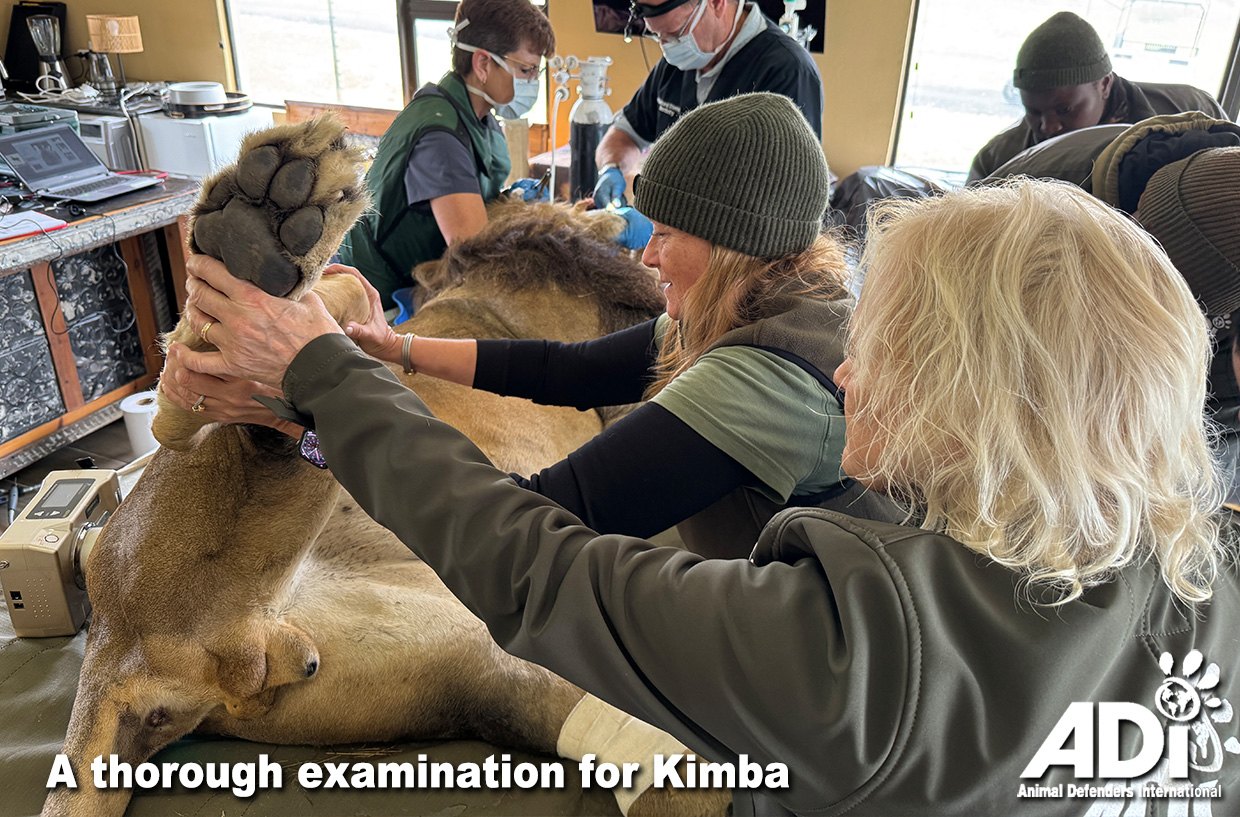
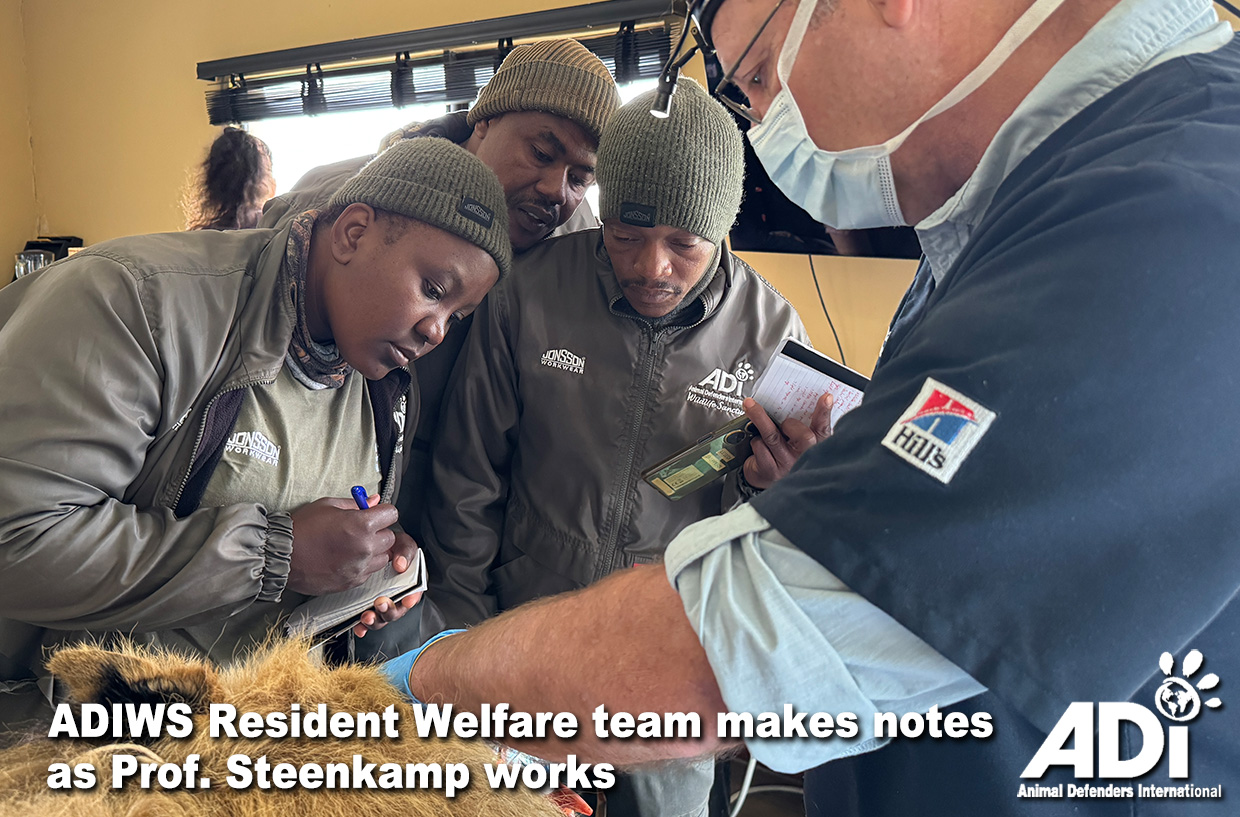
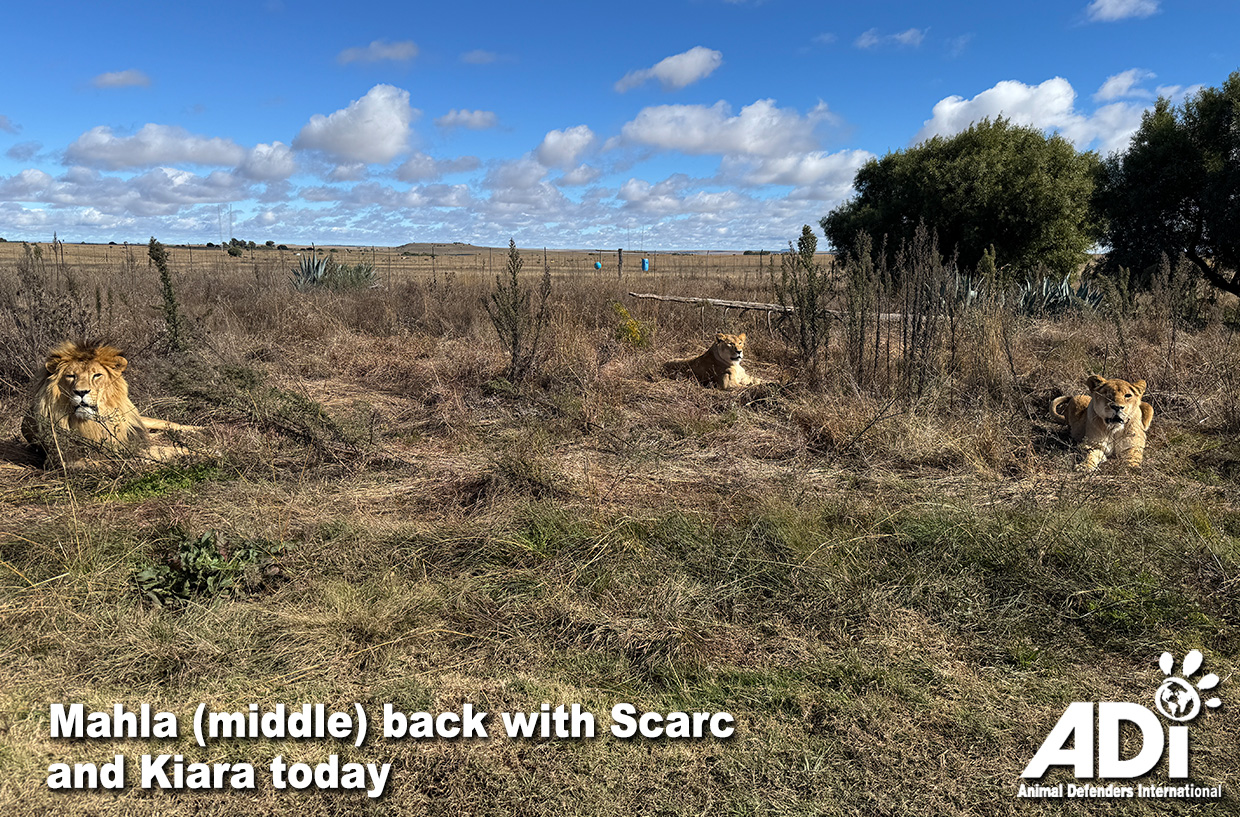
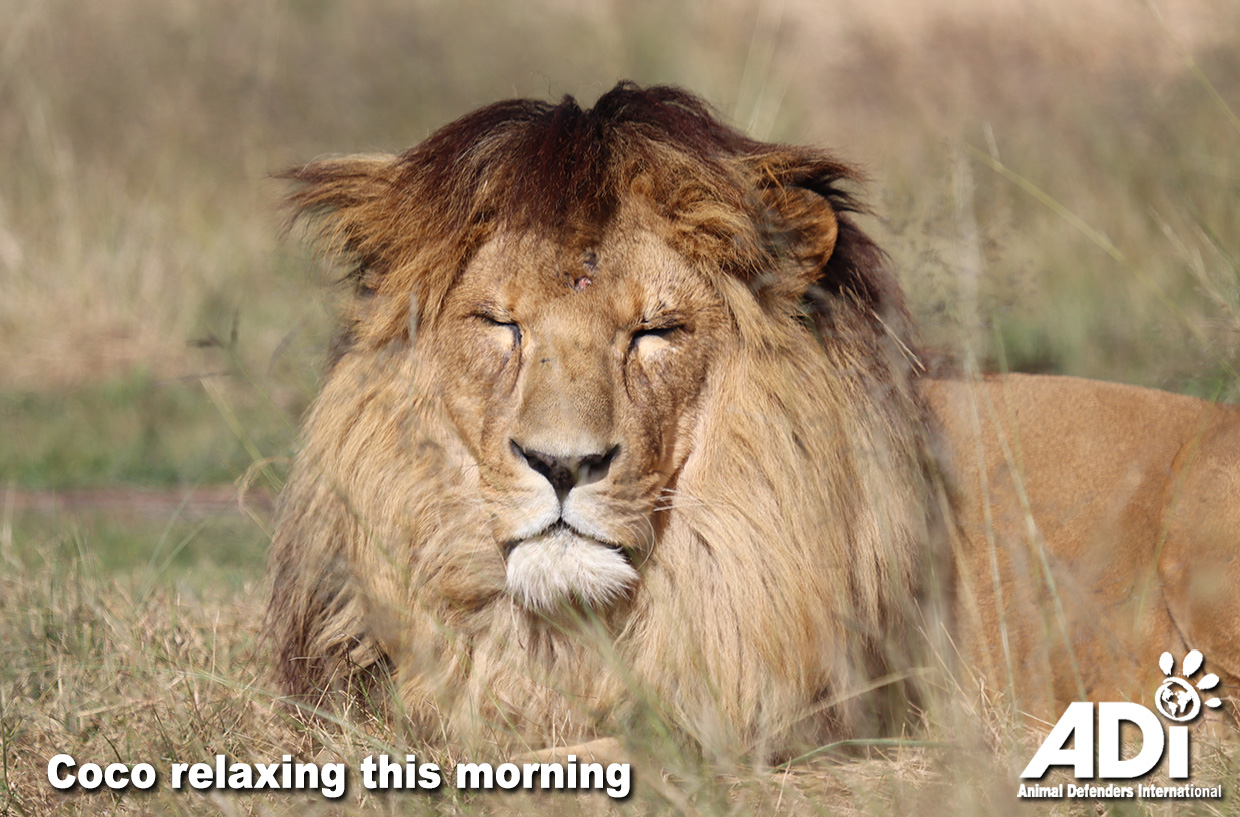
ADIWS recently had a veterinary and dental day with Dr. Peter Caldwell and Prof. Gerhard Steenkamp performing procedures on Kimba (pictured), Coco, and Mahla.
The three lions, rescued from different circuses in Guatemala and Peru, had their teeth cleaned and polished and Kimba and Coco each had a damaged incisor tooth removed by Prof. Steenkamp. Dr. Peter Caldwell darted the lions for the procedures, performed thorough veterinary examinations, took blood samples, and gave vitamin and supplement injections. Kimba also had an eye examination and was referred to a specialist for review.
It was a day of routine health care and maintenance for lions rescued from years of abuse in circuses, which leaves them with lifelong compromised bodies. If you missed it, you can catch up on our YouTube channel here.
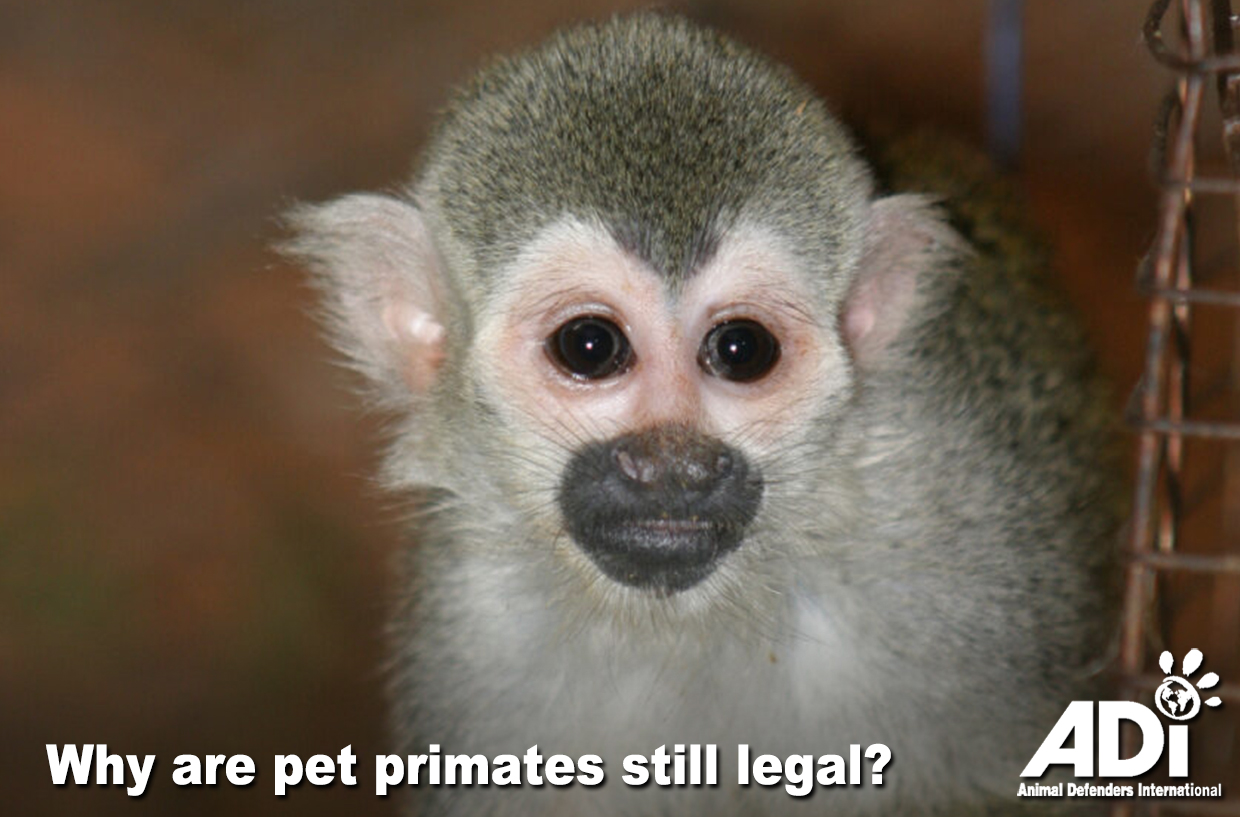
Last year the UK government finally announced licences for private ownership of primates with the aim of making standards comparable to those of zoos. These came into effect on April 6th, 2026. ADI remains disappointed that the government failed to enact stronger measures, systematically phasing out primate pets instead of attempting to regulate this unnecessary industry. There are no conservation or welfare benefits to keeping these intelligent animals confined for private entertainment in a country with an unsuitable climate. Yet the government has chosen to take on the cost of regulating a practice which neither benefits animals nor people.
ADI considers every primate species to almost always be unsuitable for private ownership due to complex social, behavioral and dietary needs.
If you are aware of any privately owned primate pets, please let us know.
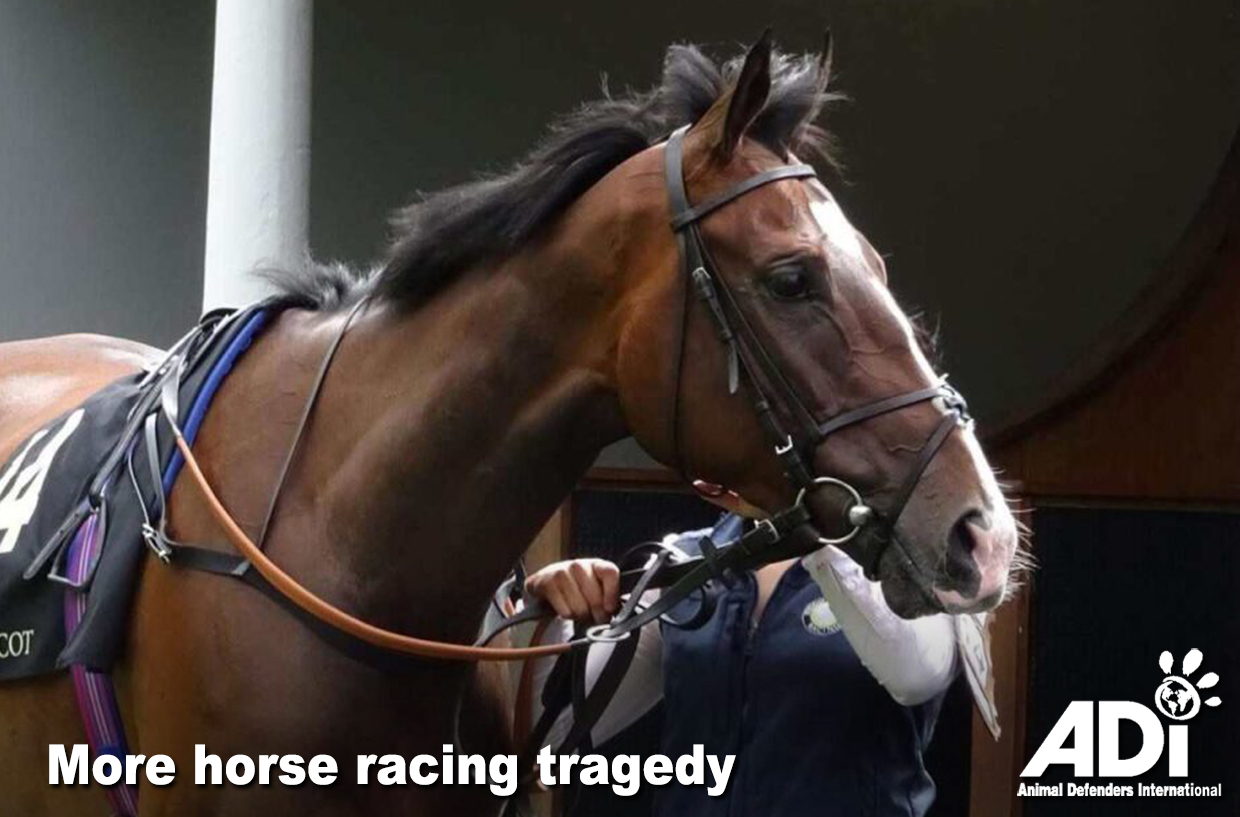
In the UK, two horses needlessly died at the three-day Grand National Festival and not long after another was sadly euthanized at Sandown. In the U.S., three horses died at Keeneland racetrack during the track’s recent festivities leading up to their Derby Day. This is the disturbing and tragic reality of this cruel sport, while these beautiful, sentient individuals are being pushed to literally race for their lives. Please say no to placing a bet on horse races and encouraging others to do the same.
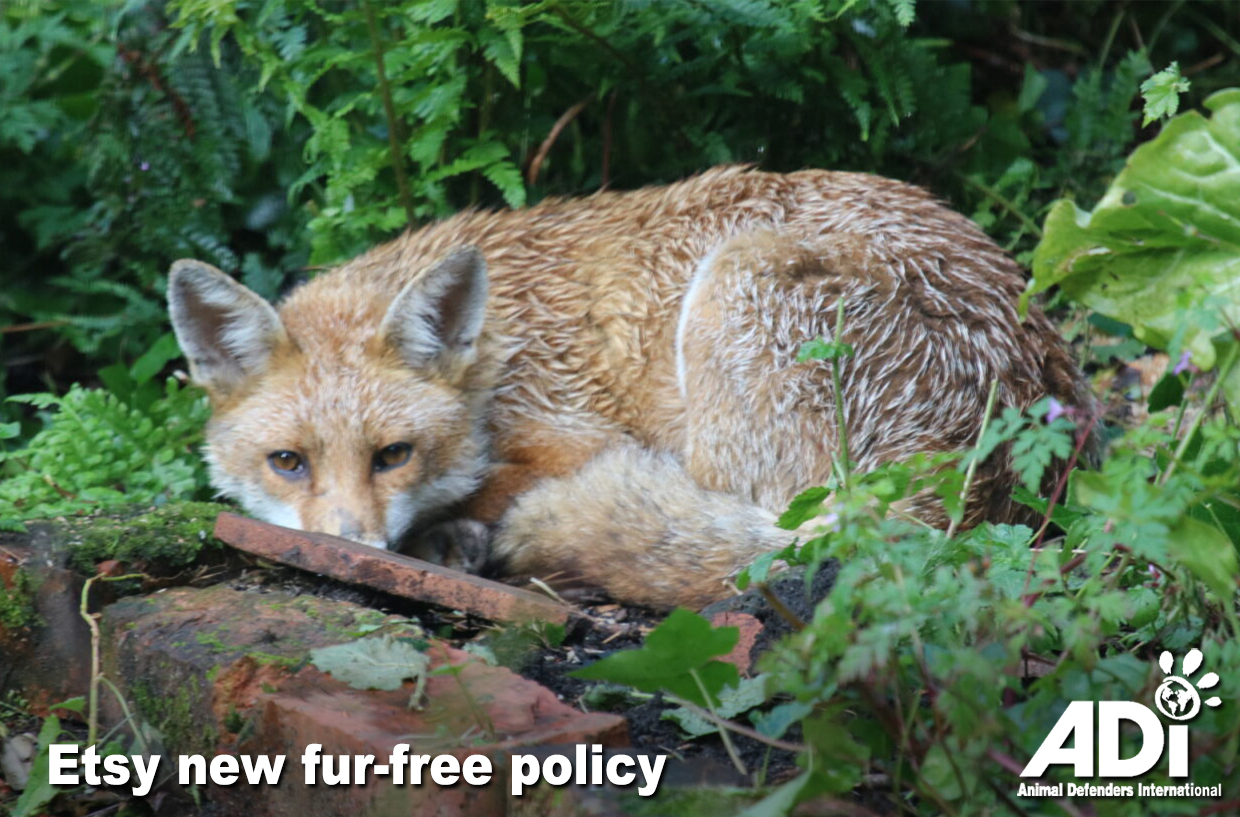
Etsy announced that as of August 11, 2026, vendors will no longer be allowed to sell fur products on the platform. This announcement came in addition to another policy update that also prohibited products made from animal species designated as threatened or endangered. These are important steps forward for protecting animals and moving towards a fur-free, cruelty-free world.
Unfortunately, there are some exceptions to these new policies that will allow the continued sale of a host of animal-derived oddities. Though many might think of Etsy as a marketplace for small trinkets, jewelry, art, and the like, they also have listings for collections of eyeballs in jars (bobcat, coyote, raccoon, cow, etc.), wet specimens (baby otters, baby rabbits, lambs, piglets, octopus, etc.), bulk baby chicken heads, animals posed in crude ways or using crude substances, and much more.
Ask Etsy to take a stand for ALL animals and to extend their new Animal Products Policy to encompass these other ‘products.’
Message Etsy on Facebook and message their CEO Kruti Patel Goyal on LinkedIn.
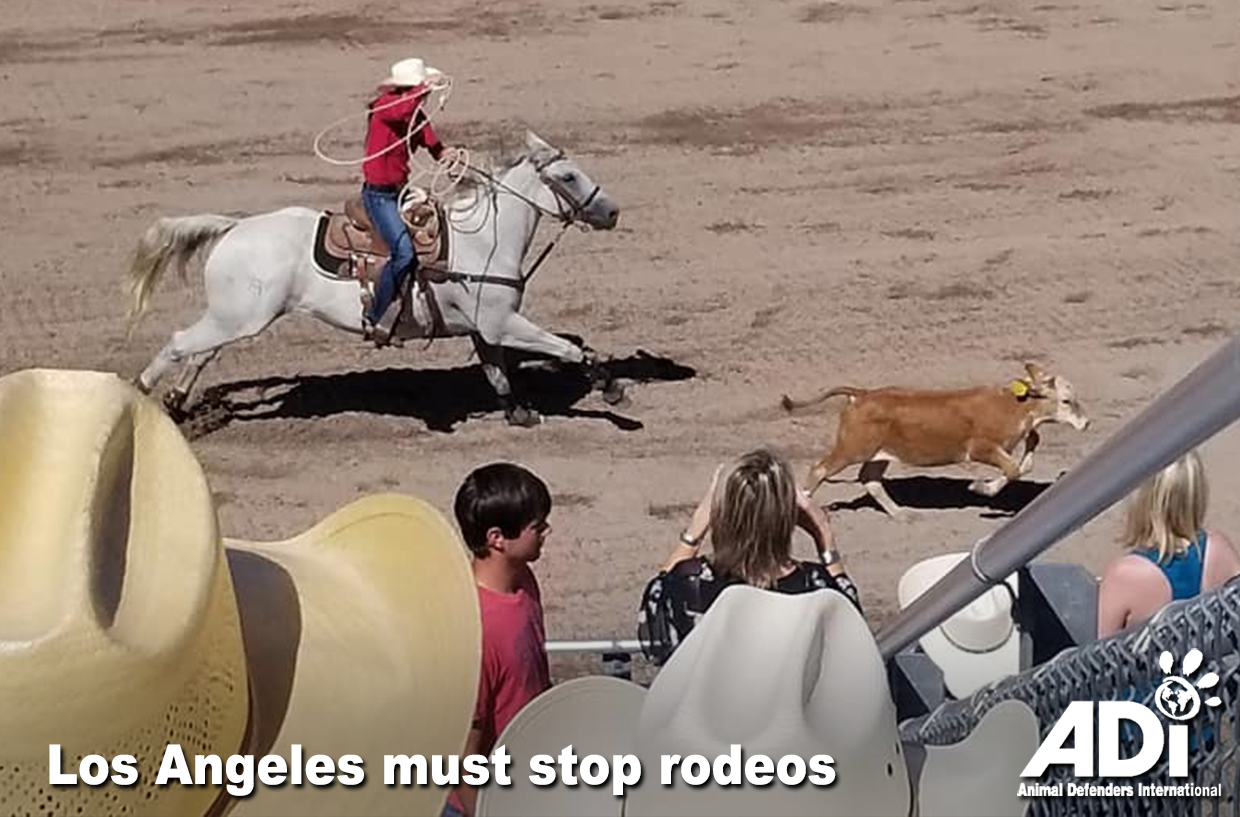
LA has been on the verge of confirming a rodeo ban since it passed the council unanimously in 2023. Rodeos using animals are already banned in other Californian cities, including Pasadena, Irvine, Laguna Woods, and Chino Hills. Alameda and Clark Counties have also passed specific bans related to rodeo activities. Help us end this cruelty, such awful displays of brutality to animals should never be entertainment.
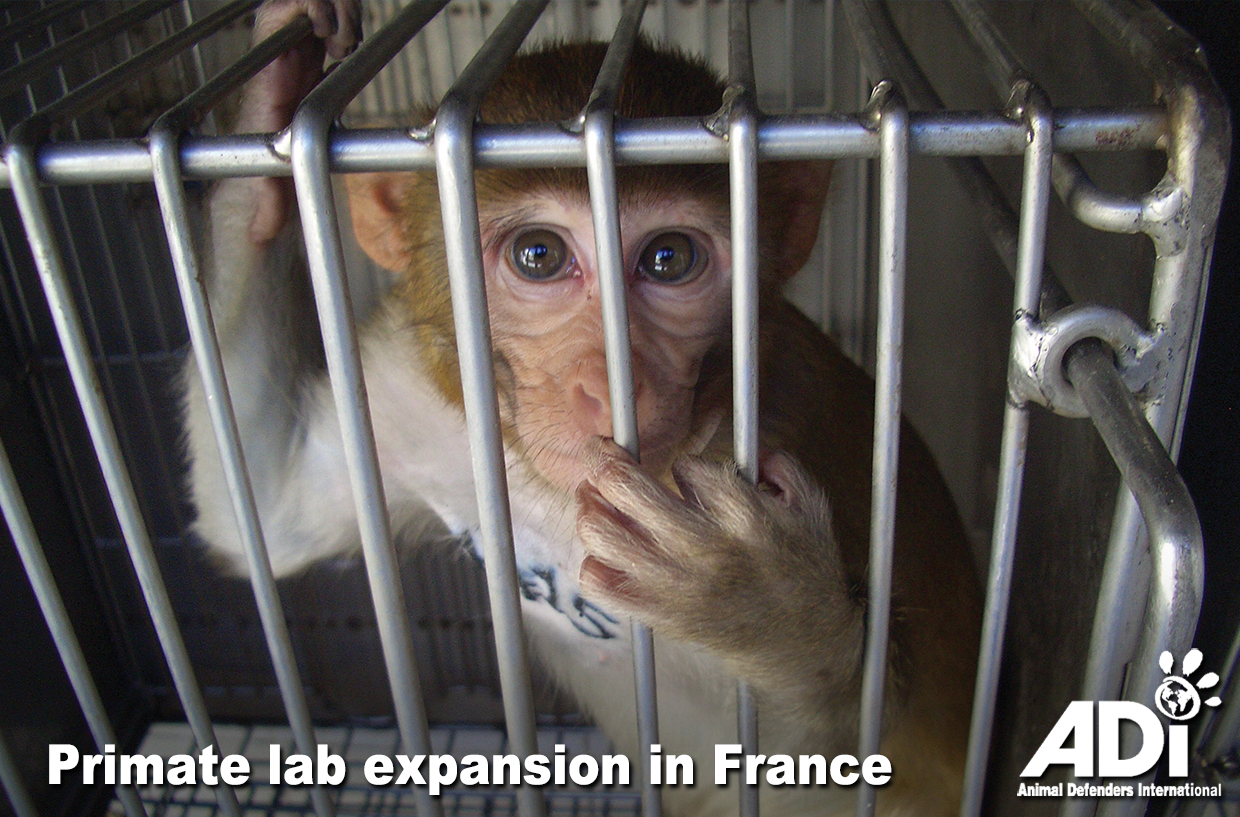
The majority of the French public want to see an end to animal testing. Additionally, the EU has committed to ending experiments on primates and instead utilizing advanced non-animal methods (NAMs). Despite this, the French Government continues to plan on expanding the Rousset Primatology Station into a national primatology centre. This expansion would triple the station’s capacity to 1,800 primates for testing, cost €31 million which could be used to create a centre to validate NAMs, just as the UK recently announced, and commit France to outdated methods for years to come. ADI has written to French officials urging them to reconsider this expansion which goes against the majority of their people’s beliefs.
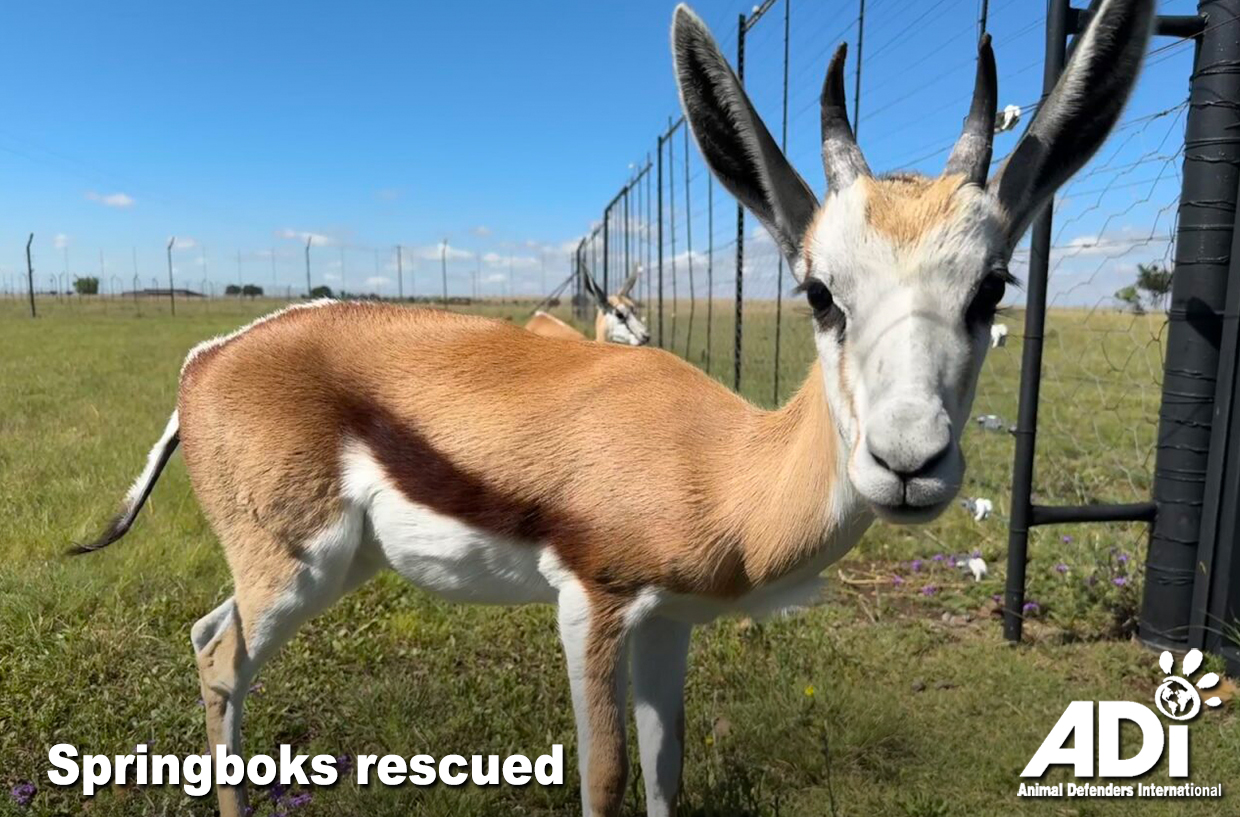
Percy and Daisy were found injured and frightened in a ditch – Percy’s leg was badly broken and he was rushed to Johannesburg Wildlife Hospital where they were able to mend the break. Then, thanks to your contributions, these two adorable springboks were brought to the ADI Wildlife Sanctuary’s new Non-Predator Reception Area (NPRA) to recover!
Due to their injuries, being imprinted on people, and where they came from being unclear, they will not be able to be released into the wild, but when they are fit enough Percy and Daisy will be able to roam freely across the Sanctuary enjoying hundreds of acres of natural habitat alongside our other free-ranging antelope, horses and donkeys.
These small, gentle, antelope, closely related to gazelles, are often the targets of cowardly trophy hunters seeking to mount their heads or horns on a wall or use their hides as rugs.
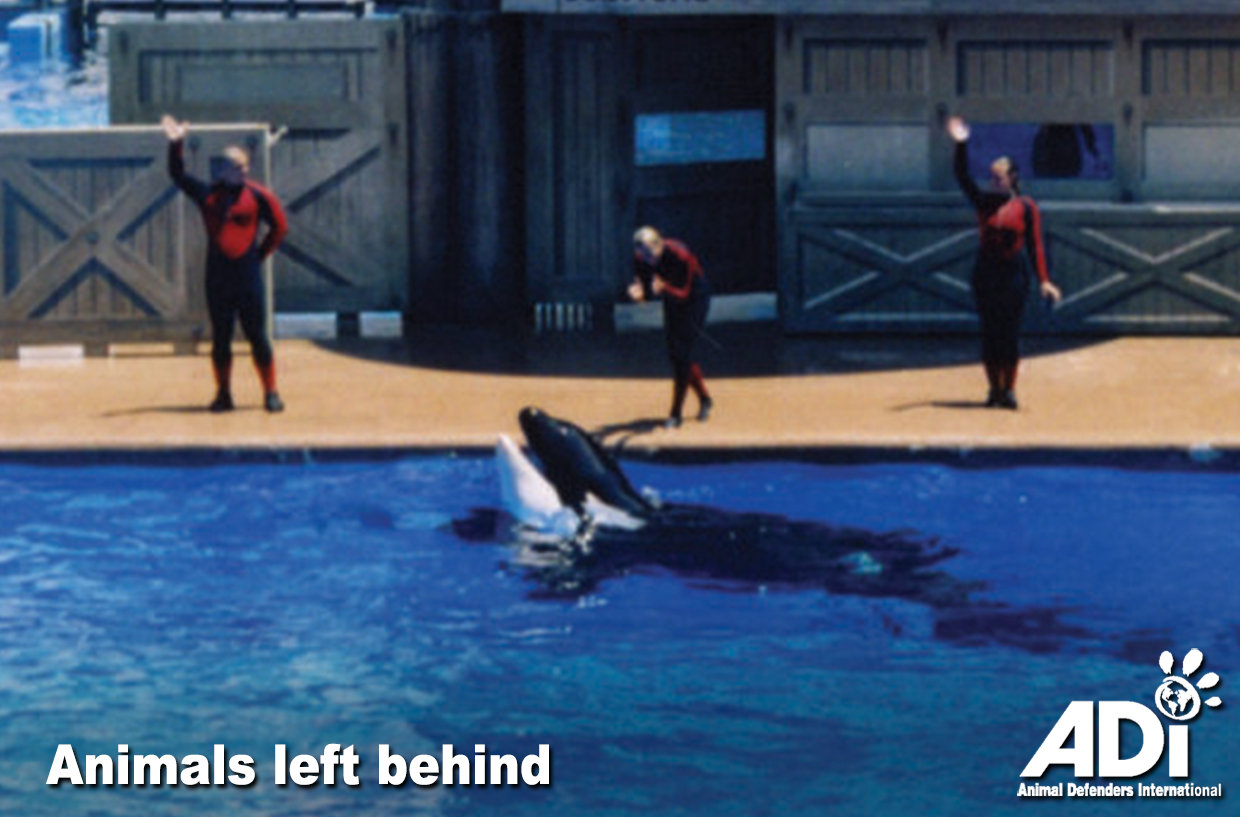
Orcas Wikie and Keijo and 12 bottlenose dolphins have been left stranded in the now closed Marineland Antibes. Over a year since the park’s closure, not only are the tanks deteriorating but so is the welfare of these forgotten animals. Whilst the banning of cetacean (dolphins & whales) shows in France has been celebrated as a huge win for these species, there has been no clear contingency plan for the relocation of the animals still inhabiting the abandoned park.
In February, ADI wrote to the French Ministère de la Transition écologique offering advice and support on the fate of Wikie and Keijo and the dolphins and getting them sent to sanctuary, with no response. A statement released in February noted a decision would be made by the end of March. With this deadline having passed ADI followed up, again with no response. Several proposals for translocation have been denied due to varying political variables. The Minister for Ecology Mathieu Lefèvre has now announced plans to transfer Wikie and Keijo to Loro Parque in Spain by the end of June, citing the situation as a vital emergency. This is not a rescue, it is the continuation of a life in captivity. Learn more about the cruelties of cetacean captivity here.
Help us continue with our campaigns and rescue work.
Yesterday was a veterinary and dental day at the ADI Wildlife Sanctuary with Dr. Peter Caldwell and Prof. Gerhard Steenkamp performing procedures on Kimba, Coco, and Mahla.
The three lions, rescued from different circuses in Guatemala and Peru, had their teeth cleaned and polished and Kimba and Coco each had a damaged incisor tooth removed by Prof. Steenkamp. Dr Peter Caldwell darted the lions for the procedures, performed thorough veterinary examinations, took blood samples, and gave vitamin and supplement injections. Kimba also had an eye examination and referred for specialist review.
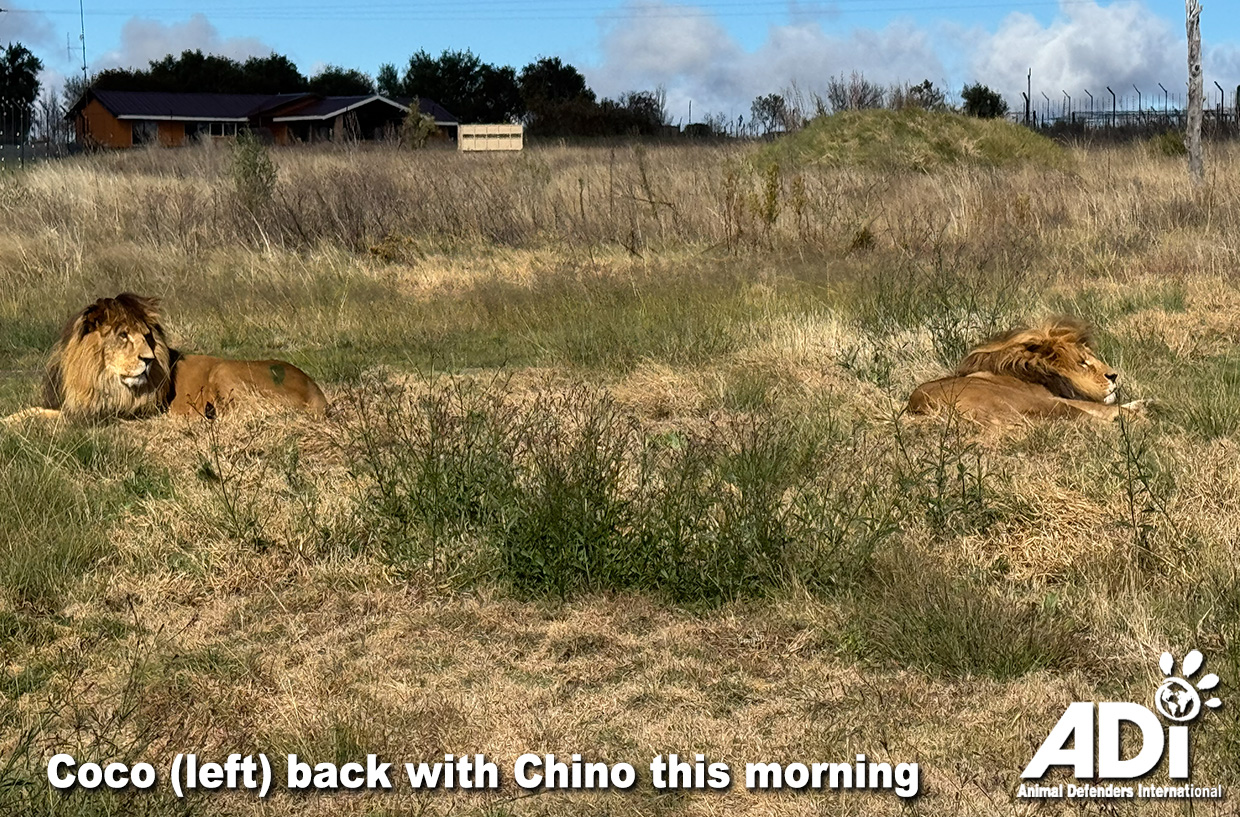
The day allowed us to tackle the basic wear and tear on the animals’ teeth – Mahla and Coco were rescued by ADI almost 12 years ago and Kimba 8 years ago – a reminder of how the vital work caring for these animals continues long after they are rescued, and inevitably, the cost of that care of their bodies compromised by early-age malnutrition and inbreeding.
Many animals in captivity suffer for years in painful silence, due to broken and infected teeth. Teeth are deliberately smashed with metal bars when animals like lions challenge trainers, and are broken as they desperately bite the bars to try to escape their tiny prisons.
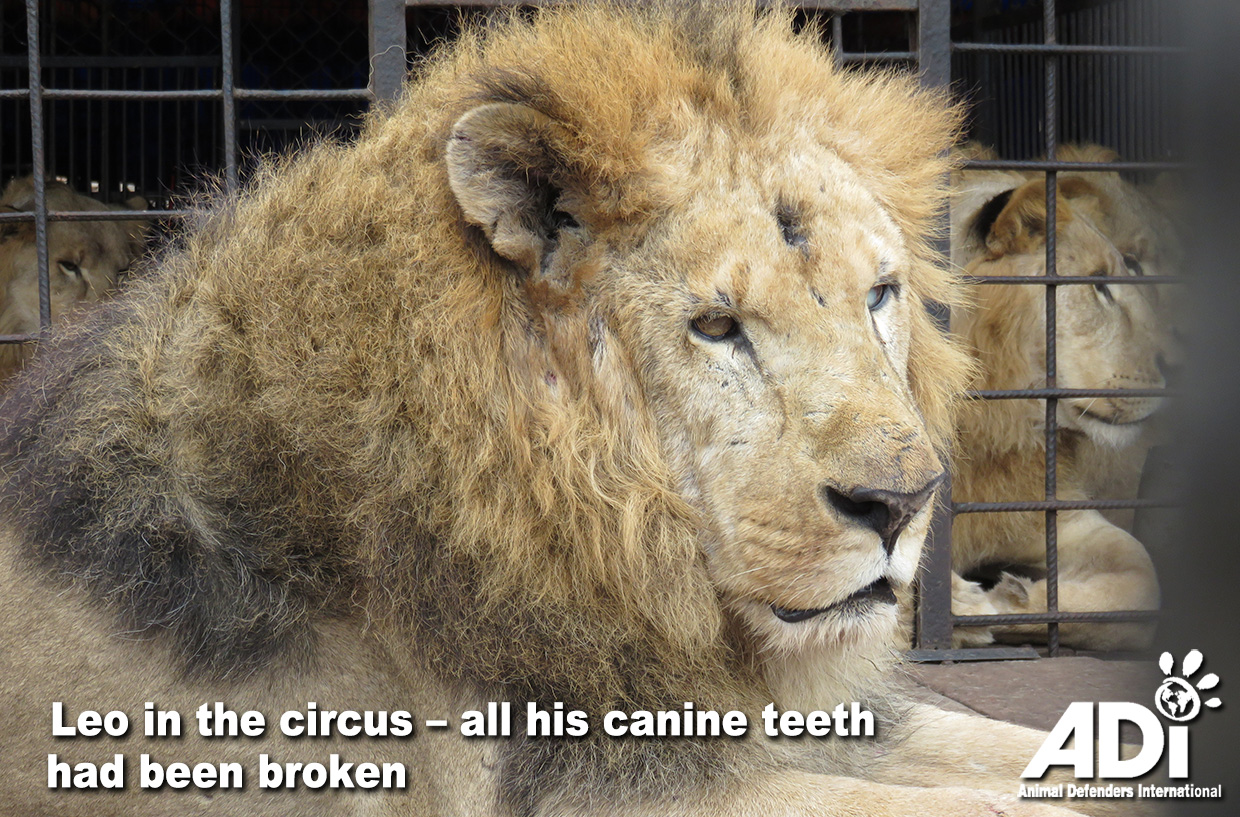
We remember dear Leo, who lived to old age at the ADI Wildlife Sanctuary, had suffered all four canine teeth broken off in the circus, and who can forget Colo Colo, the angry star of the film ‘Lion Ark’ whose pain was finally relieved by renowned veterinary dentist Dr Peter Emily.
Aside from the pain these animals endure, untreated, the infections can be lethal. I remember a small capuchin we saved from a Peruvian circus who had pus erupting under each eye from infected teeth, which had been deliberately snapped off in the circus. Lion Junior was in a similar state, pus erupting from his face – emergency surgery saved both.
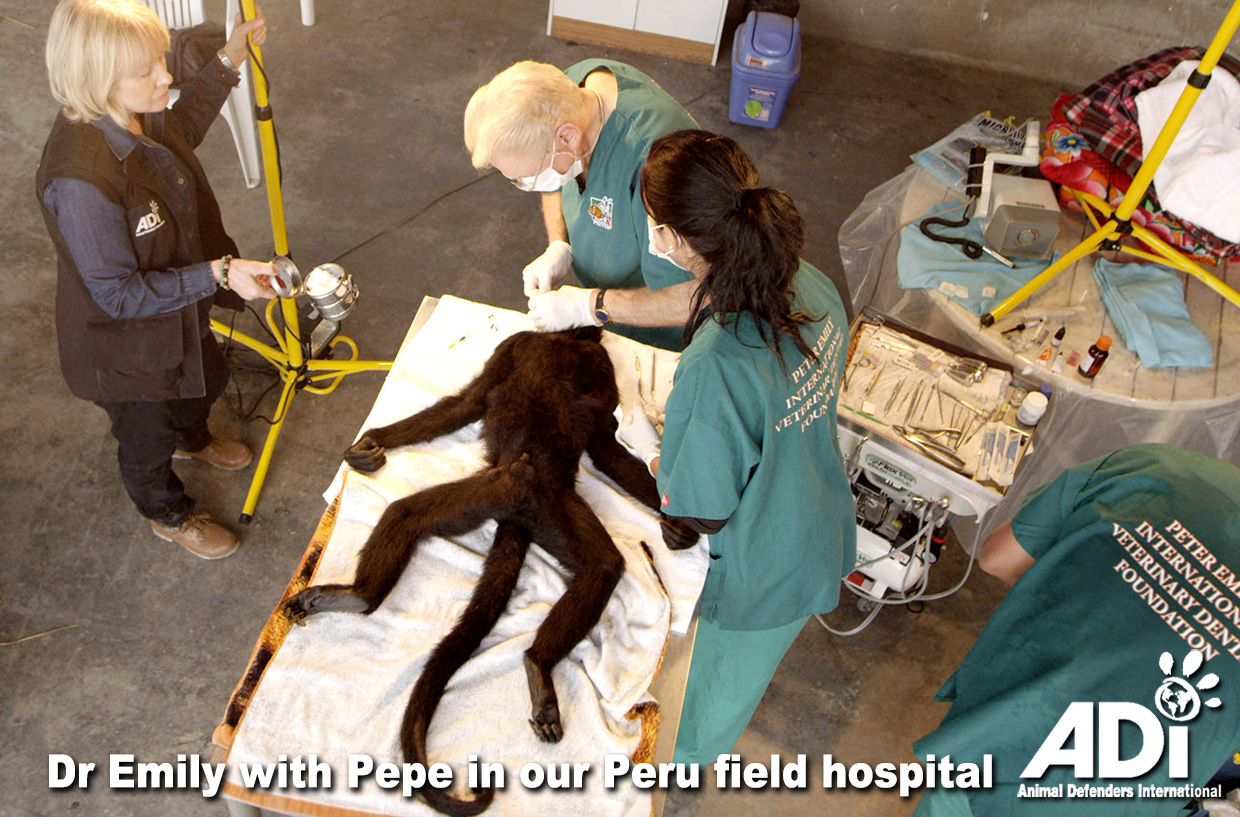
Our dental teams will perform dozens of root canal procedures following our rescues, like the hours of surgery with tiny root canals on Pepe the spider monkey, whose canines had all been snapped off by the circus to prevent him from biting his abusers; and the much larger, similar procedures on old Leo.
This care of these animals does not end after the seizures from a lifetime of abuse, the airlifts, and stepping free on African soil. It is ongoing, for decades.
It has been eight long years of struggle since we started building the ADI Wildlife Sanctuary. The rescues and campaigns for legal protection for animals had to continue across continents as we built our forever home for the survivors of the entertainment industry. We had to save many animals in a relatively short space of time, while completing construction of basic facilities. As we look to the future, and support our campaigns for ending the use of animals in entertainment with the ADIWS as a safe, secure home where our residents rights, intelligence, emotions and physical needs are respected, we are now looking towards having our own on-site veterinary facilities at the Sanctuary.
Yesterday’s procedures were performed in a makeshift surgical area but our goal is to have the funds to build a fully equipped veterinary clinic at the ADI Wildlife Sanctuary. At present we must travel 3 hours to take animals to hospital, we want to provide the best wildlife veterinary care on site enabling veterinarians and their assistants to come here.
What price relieving an old warrior like Kimba of toothache?
More details will follow, and we will launch major appeals for each aspect of the plans for the facilities, but please consider a donation today, to invest in long term veterinary care at the ADI Wildlife Sanctuary, our place of loving kindness for those we have rescued from the horror of the abuse and cruelty of circuses and other entertainment. We hope to also utilise the veterinary surgery for outreach to the local community about animal care, and also, as part of our future education programme/program.
PS: Don’t forget adopting one of our residents is a great way of helping with their day-to-day needs, including veterinary care, find out more here: ADI US store | UK store adoptions
I am deeply saddened that one of our horses, dear 11-year old Sammy, passed away this week. After two blissful years at the ADI Wildlife Sanctuary, Sammy’s body was breaking down from the injuries he sustained before his rescue, we had to make the kindest decision for him, while the hardest on all of us.
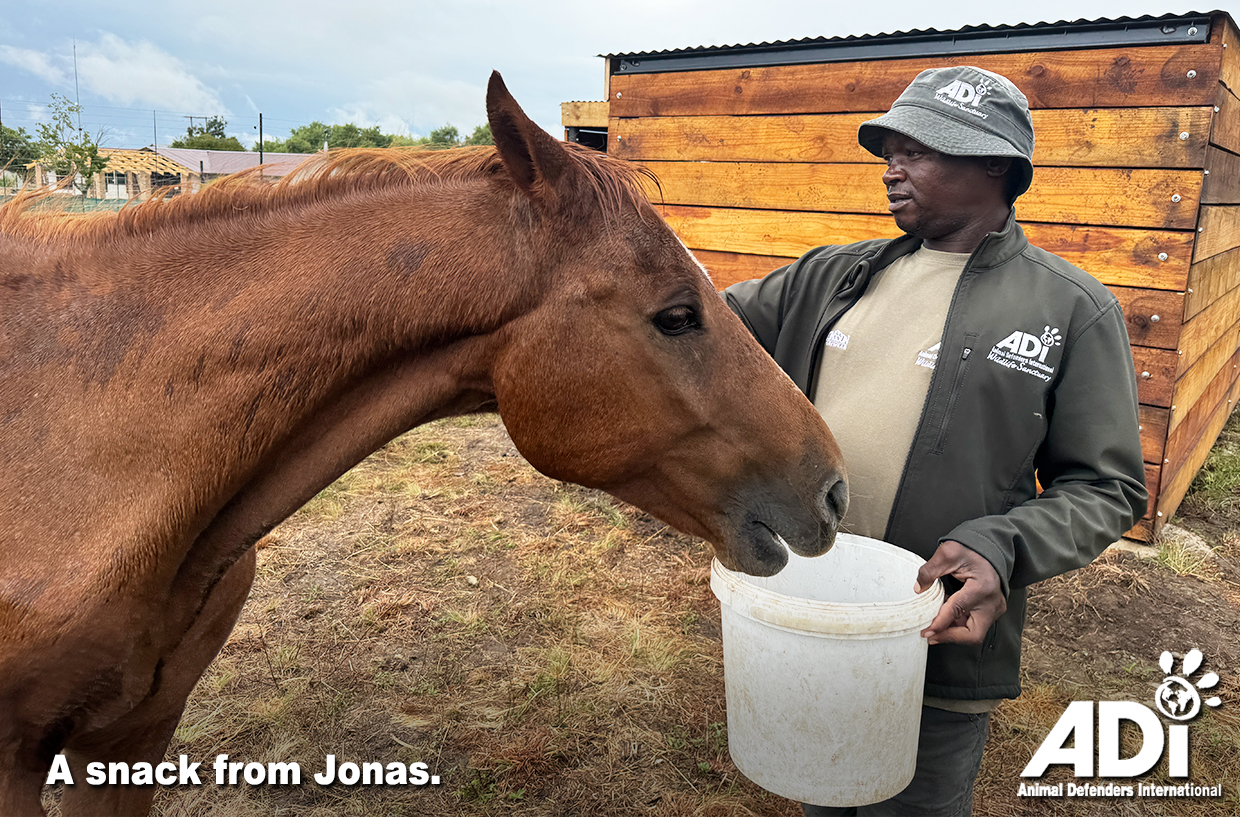
Two years ago, Sammy entered our lives, stepping from an SPCA trailer, calling joyously as he ran to his friends – Apollo, Amani and Crockett. I shall miss the sight of him gently grazing nearby, roaming the sanctuary with his friends, and coming to our door to ask for apples – the best of times.
When he was younger, Sammy was found with a broken fetlock, abandoned near the mines. Virginia SPCA rescued him, fixed his fetlock as best possible, and gave him a nice paddock where he lived for nine years. Then, two years ago, they had an emergency seizure of three horses being cruelly treated in a local township. With only temporary space for three more horses, they asked if the ADI Wildlife Sanctuary could take Apollo, Amani and young foal, Crockett. We said yes, and the three came to ADIWS, but there was a twist.
That evening as our new horse residents grazed at ADIWS, we received a call from the SPCA. Sammy was distressed, he was missing his friends. We said “yes, of course he must come with his friends”, so the next morning, the SPCA horse box was back. Sammy stepped out and as he turned and saw the others he called out, ran to them, rubbing noses with Apollo in greeting. Our gentle giant found his forever home.
Each day the horses would roam our 455-acre sanctuary and come into the paddock at night. The sight of the four galloping across the hillside was magical. Freed from tethers and brutal hobbling, they were living as horses should, running free.
Watch the video of Sammy’s arrival and, best of all, the four horses charging across the hillside at ADIWS, truly running free.
However, several months ago, Sammy’s fetlock began to break down. We provided regular veterinary attention and restricted his activity, at first bringing him in earlier than the others, and eventually keeping him in the paddock in the new Non-Predator Reception Area, where he would be joined by his three friends every evening, until morning. By March, we realized dear Sammy’s time would be limited, as the veterinarian said with the right care, he could have a few more quality months. Sadly, it was not as long as we had hoped, and Sammy’s overall health deteriorated. We knew it was time to say “goodbye”.
All of us who have animals in our lives, especially those that have be saved from abuse, know that it can be the hardest decision to make to end their suffering and let them pass with dignity, but it was the kindest thing to do for Sammy. He was loved.
We informed Virginia SPCA who kindly said “Thank you for the beautiful life Sammy lived with ADI. We will always be grateful.”
These powerful animals are often treated as beasts of burden, run to exhaustion for ‘sport’, and used in circuses, they suffer in stoic silence. If you would like to make a donation to care for the horses at ADIWS in memory of Sammy, please click here: US $, CA $ | £, Euros, Rand.
We will never forget Sammy, his strong, calm presence, and the sight of him running with his herd, grazing amongst the flowers, or wading through the lake. Our thanks to all the ADI supporters who helped give this gentle, battered horse a chance at a new life, running free for his final years.