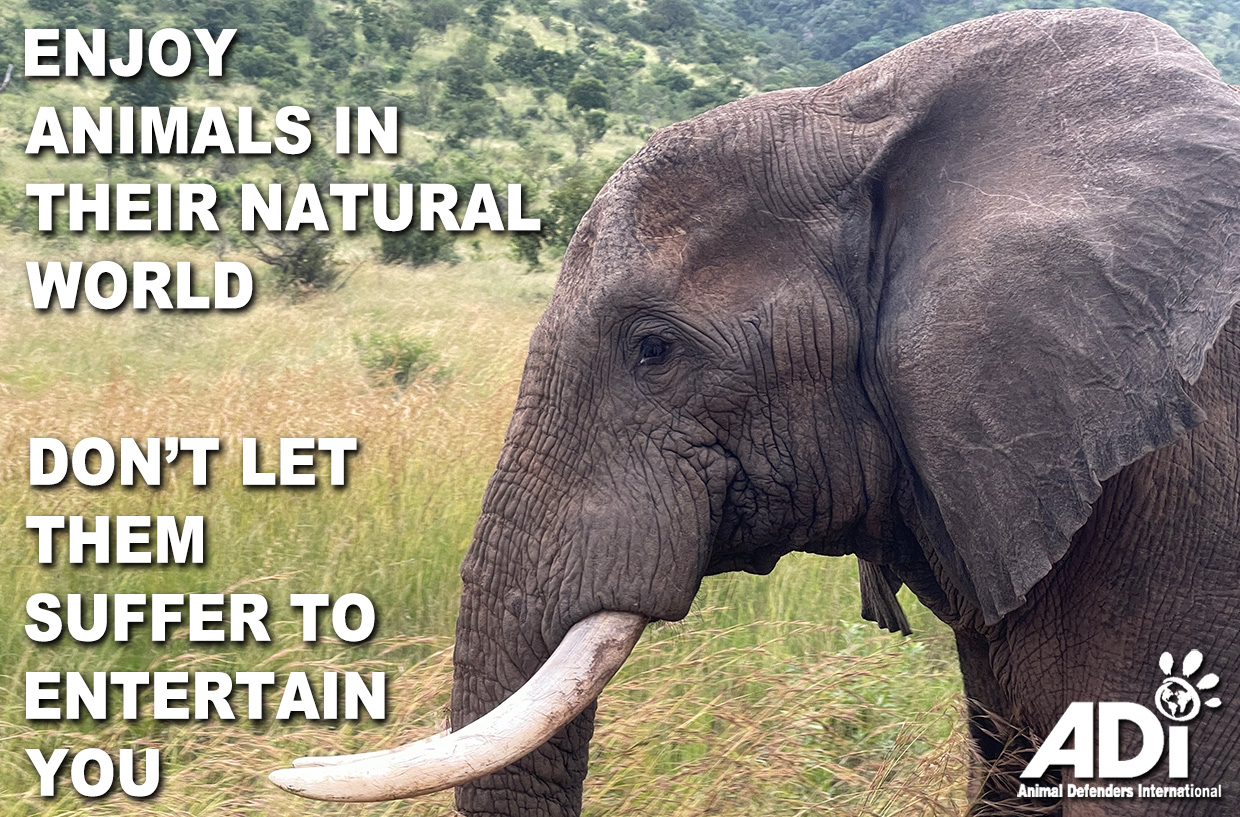
The summer holidays are here and for many, this will be a chance to enjoy nature and wildlife. There are plenty of ethical options, supporting wildlife and nature reserves at home and abroad, and helping wildlife rescue. Just getting the chance to get out in your own yard, fill the bird baths and feeders, then sit back and enjoy the local wildlife is a joy.

The summer holidays bring a chance to see the world, wildlife, other cultures, but don’t be fooled into supporting cruelty. Here’s a few things to watch out for.
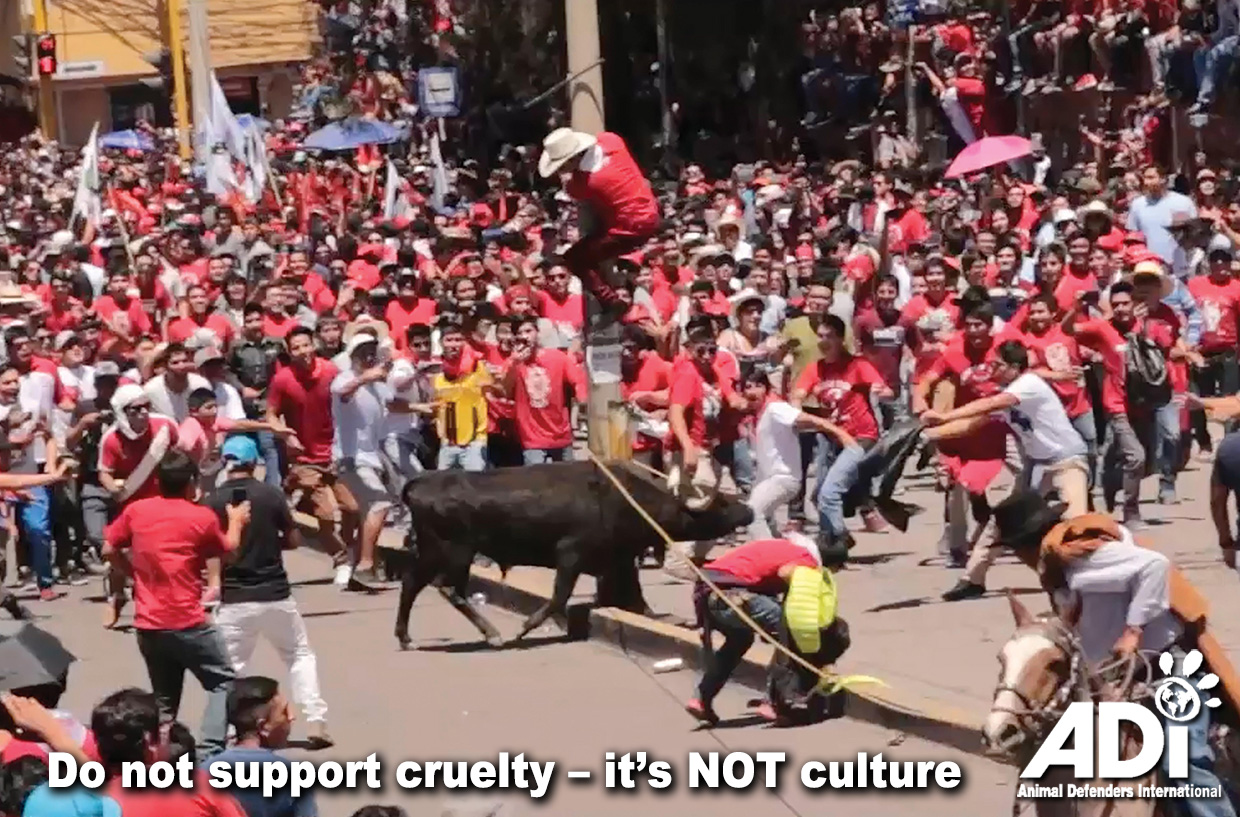
Dressed up as ‘tradition’, bull running appeals to (often drunk) aggressive, thrill seekers. The Pamplona bull run attracts up to a million spectators as terrified bulls race through the streets. Our investigators have filmed these events in Peru and Colombia, as bewildered animals are released from trucks and, blinking in the bright sunshine, are immediately set upon by drunken mobs and punched, kicked, hit and spat on, with this open viciousness promoted as ‘culture’. There is nothing cultural or admirable about such thuggery. Colombian public opinion overwhelmingly (85%) supports the ban on bullfighting, which comes into force in July 2027 – it is not Colombian culture. Yet the organizers of these violent events try to claim it is culture!
So-called bull ‘fighting’ (which is public torture, not a fight), and indeed, rodeos use the same excuses. It is entertainment for cowards and bullies, enjoying acts of cruelty and violence in public, against naturally gentle species – cows, bulls and horses, bringing shame on the whole community. Never support bullfighting, bull running, rodeos, or similar events.

That sunset elephant ride isn’t romantic, it’s abuse. ADI investigations blew the lid off the cruel training methods in the biggest elephant training centers in the US, with animals beaten, jabbed with metal bars, electric shocked, and crying out in pain. Again, the cowardly bullies choose a gentle species. Footage in the training camps in Asia of baby elephants isolated in the crush device so they can’t escape, then mercilessly beaten into submission, are sickening. ADI has filmed similar training and techniques to instill fear around the world, and ADI footage showing how seemingly ‘affectionate’ strokes and pats given in public are, in fact, a reminder and warning ‘Keep doing as you are told, or you know what’s coming.’ You can see the disturbing footage here.
Despite their incredible strength, elephants’ backs are simply unsuitable for people to ride; with prominent vertebrae, upward-pointing protrusions and little cushioning, being ridden by people is uncomfortable for them and causes severe damage and pain. Never support elephant rides or contact experiences, such as bathing with elephants.
The rule to know and tell your friends and family is – any activity involving human contact with wild animals involves some kind of constraint, altering their natural desires and behaviour / behavior, and involves punishment, brutal training in order to make the animal obedient, all to keep the HUMAN safe from harm. That is the cost of the ticket.
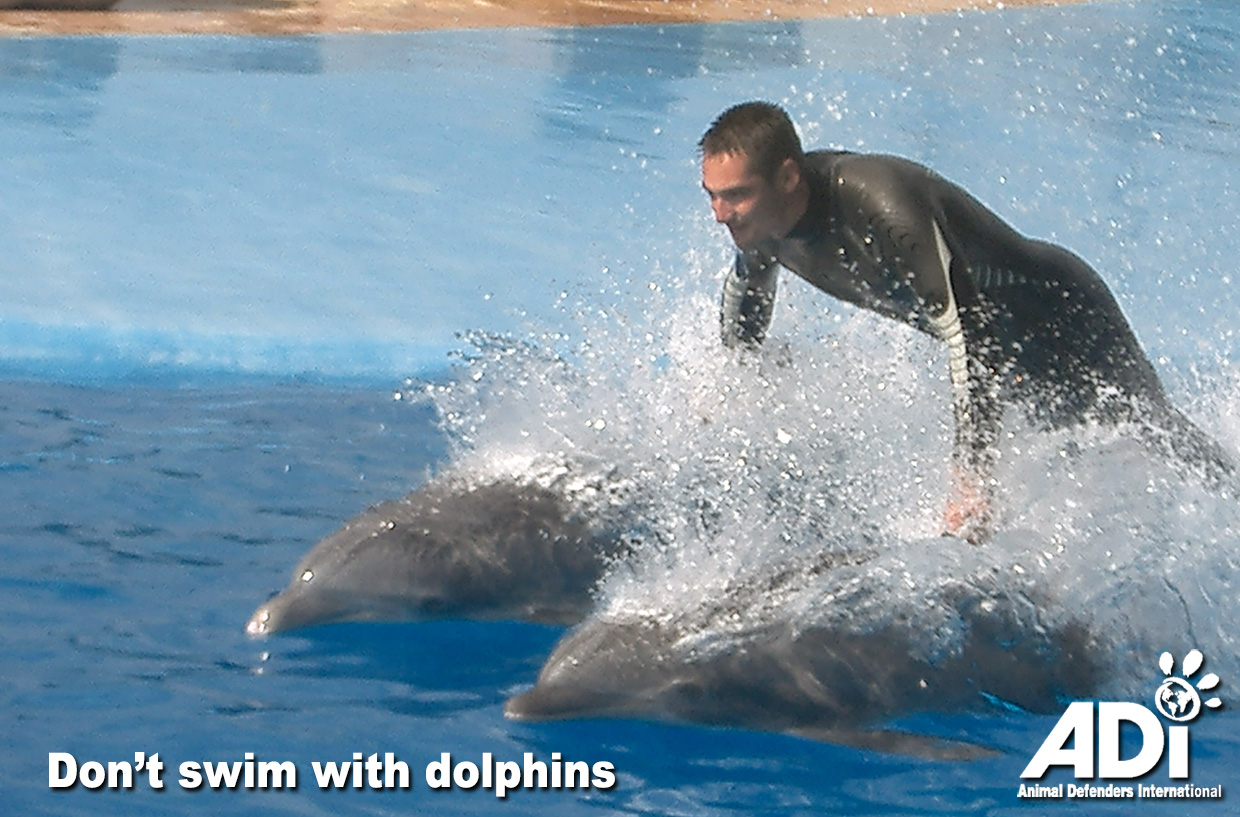
A lifetime of suffering for a holiday experience. If you are lucky enough to be snorkeling or diving and are joined by a pod of wild dolphins, it can be the experience of a lifetime. That is very different to paying to be in contact with dolphins who have been captured, confined, trained, and their families broken up. All to be ready, on demand, for the next tourist. Don’t be fooled by how natural the setting is made to look, if it’s not the open ocean, it’s not freedom. Wild dolphins don’t want to kiss people or drag them through the water by their fins – those are tricks they are trained to tolerate, not signs of affection. Behind the scenes, dolphins are kept hungry in small pens. They interact with tourists for the chance to eat. Interacting with people is not a choice, it’s survival. Never support the captivity of dolphins and whales.
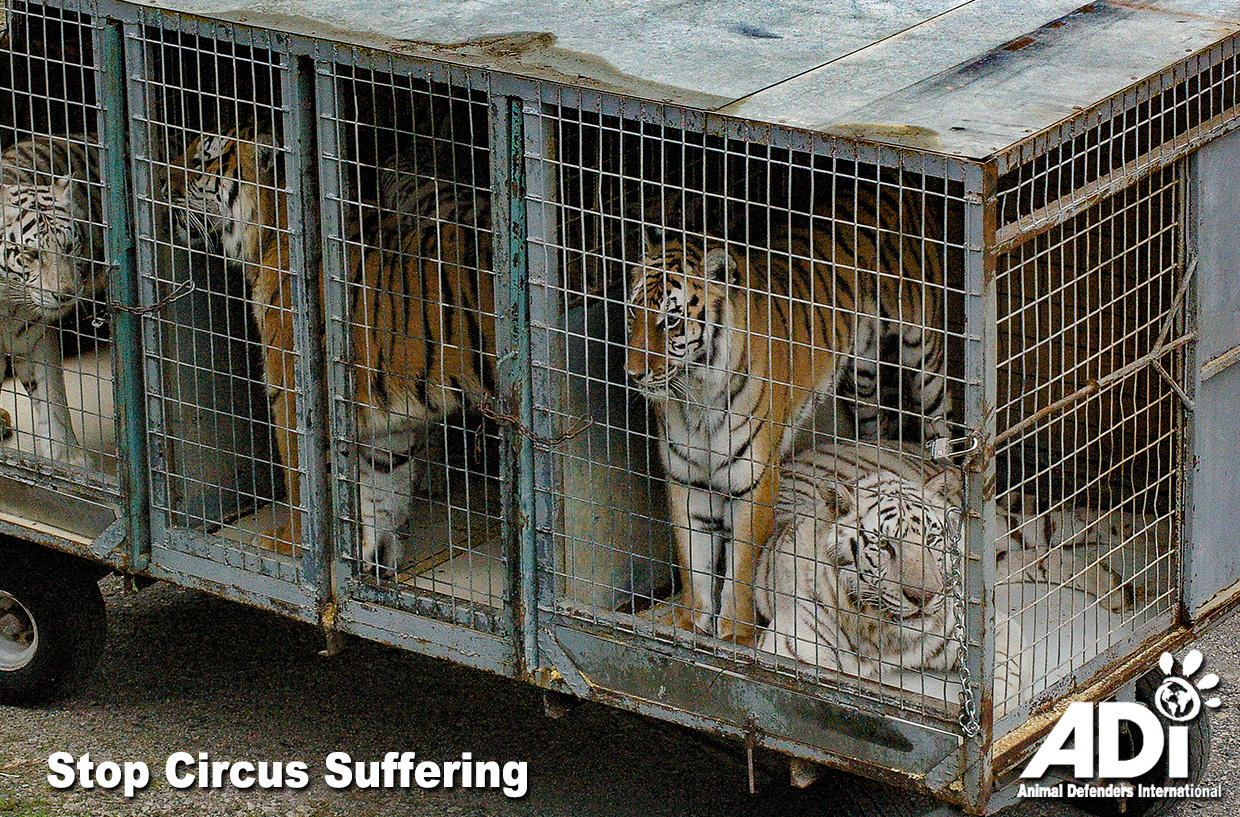
Circus cruelty continues. ADI’s Stop Circus Suffering campaign has seen more than 50 countries ban wild animals in circuses over the last 30 years, launched with the first deep undercover investigation of the industry. More than a quarter of the nations on earth is good, but there is still a way to go, and many countries allow this archaic cruelty – including much of the United States. Eight US states have passed bans, so far. Forty-two to go. Now is not the time to pause, we must keep going, again and again. These casual public shows involving abused animals, aimed at children, are teaching children the wrong view of other species – seeing them as objects of enjoyment and entertainment, instead of a living, intelligent, emotional individual with the right to their own life on earth.
Our studies show how circuses keep their animals confined in small, barren, spaces for most of their time, deprived of the right to move around, explore, run, play, be with their family groups. Chained, tethered, most of their time shut away; unable to eat at will, or seek out natural fresh water sources. Everything that, for all of us, makes life worthwhile. And then there is the brutal training, with violence, intimidation, deprivation.
This has been an important campaign worldwide, as these tacky shows are teaching children that it is OK to dominate and beat another living being for our amusement, just because they do not look like us, live like us, or communicate in the same way.
Support circuses with ONLY human acts. NEVER go to circuses with animal acts.

State and County Fairs can be fun for families or hell for animals. There can be plenty of fun with motorized rides, games, cotton candy, and more. Yet they also use llamas, camels, zebras and other animals confined, standing around all day, in the heat. These species have evolved over thousands of years to travel in family herds over miles of open land, exploring, crossing rivers, deserts, grassland, forests. Intelligent, emotional, protective of their family groups, their constant movement maintains a healthy body, and the challenges stimulates their minds. If they were human, the conditions in these fairs would be considered a form of torture.
Worst of all, are attractions like Sea Lion Splash, where marine mammals tour closed in containers as opposed to the freedom of the seas, or the Banana Derby (pictured) where monkeys are strapped to the backs of dogs to race around a track, a world away from their forest homes and the culture they understand.
Check what’s on show and let the organizers know you won’t be attending if there’s animal suffering, when animals are treated as props or toys for fun. If you see anything of concern, take photos/videos and send to ADI so we can make complaints and publicize it.

Social media is flooded with photographs of people cuddling exotic animals, from tiger cubs to baby monkeys. Using them like props. Behind every snapshot and selfie is a lifetime of suffering for the individual animal, and we must let people know that they have created this trade by taking the photos.
Traffickers kill families to capture baby monkeys. Claims that baby animals have been “rejected by their mothers” are lies. To keep them compliant, captors isolate and often drug these animals. Monkeys suffer their teeth being broken off to stop them biting and they are terrorized to perch obediently on people’s shoulders.

Cheap thrills at the expense of animals. Captive-bred lion and tiger cubs are torn from their mothers so young that they should still be suckling, to be passed from one person to the next. As they get too big to handle, they may go to zoos or circuses. Young lions are also used for tourists to walk alongside them in natural looking settings, but their natural instincts are suppressed, they are forced to be compliant, and life is short if they step out of line.
ADI is working to help the Government of South Africa to end the lion farming industry, which is seen as a stain on their conservation efforts. The farms constantly breed lions for tourist cub petting entertainment, and as the cubs grow, they go to canned hunting operations where they are placed in small spaces for trophy hunters to get an easy kill. Their bones are also sold as an ingredient for ‘traditional medicine’. Data seen by ADI shows hundreds of farmed lions going from Free State, North West Province and others, up to Limpopo in the north, famous for its ‘safaris’. Lions that have been captive bred and fed all their lives by humans are easily lured into an enclosed area, and bewildered by suddenly being in a new location, they are an easy target for cowardly tourists to kill. Cub petting is not harmless.

City streets in blazing sun is no place for animals, let alone to be hauling tourists. Once romanticized, following one horrific incident after another and the recent death of a teenager, the New York City carriage rides are under considerable pressure. ADI Policy Advisor Drew McCormick testifies next week at NYC Council hearing on a horse drawn carriage ban, which is backed by the Mayor. Other cities around the world have already passed similar bans including Lima, Malaga, Prague and recently Philadelphia – come on New York!
When animals are turned into a tool to pull heavy loads, suffering follows. Several holiday companies are no longer promoting camel rides in destinations like Egypt, but camel and donkey rides are common in many places. Tim and I once spent hours going up and down the 588 steps in Santorini, Greece to the town of Fira, in order to document the miserable lives of the donkeys and mules hauling tourists up and down to see the town. It was exhausting, depressing, hot, and animals were beaten to keep them moving. Since then, the authorities have at least restricted the weight of the tourists the poor donkeys must carry, but the depressing business continues. Come on, if you can’t walk, use the cable car!

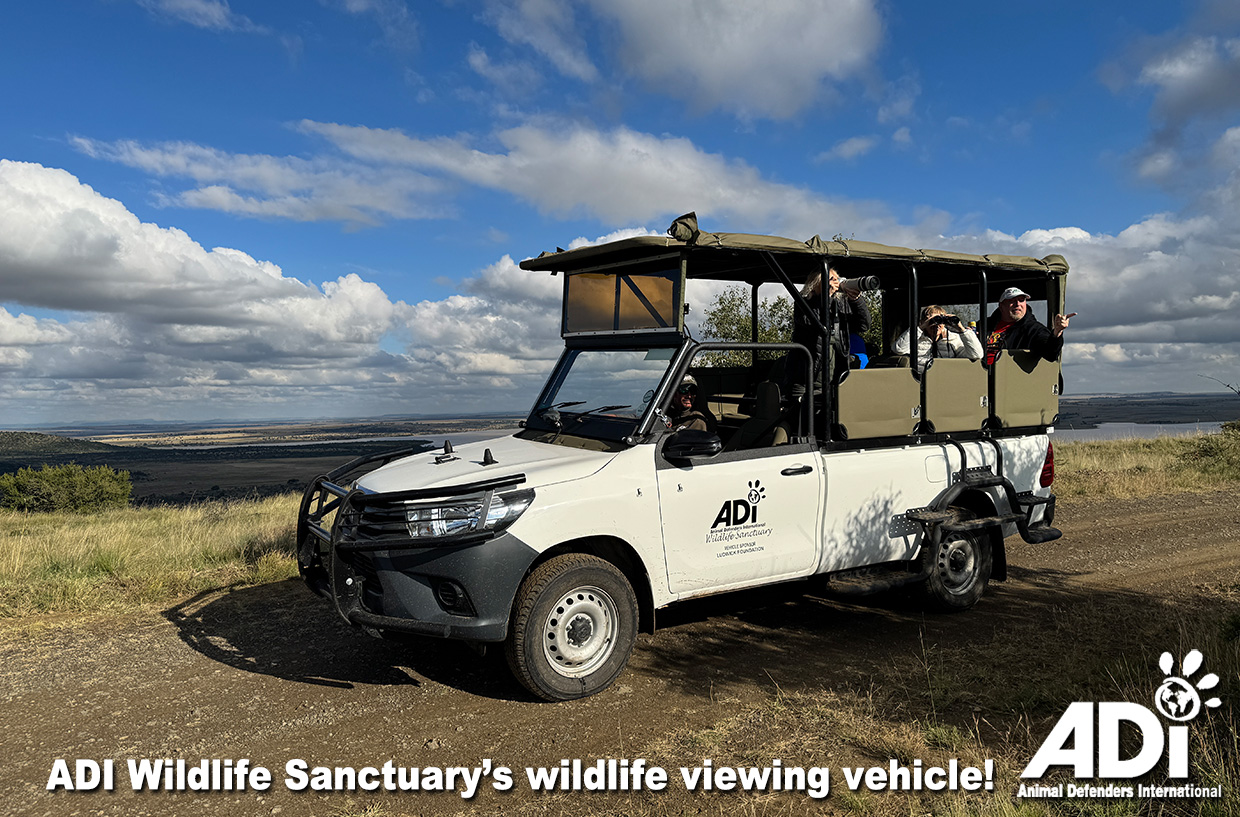
ONLY SUPPORT GENUINE SANCTUARIES. When I show people around the ADI Wildlife Sanctuary (ADIWS) on our social media live events, I make a point of saying we may not be able to see the animals. Our habitats are several acres and so the lions and tigers can disappear if they want; this is their land, their home. If a resident chooses, they can come to the fence and check out the humans, but it is their choice. Unfortunately, there are now increasing numbers of captive wildlife establishments claiming to be sanctuaries, but are, in fact, pseudo sanctuaries, places of entertainment.
Here’s how to spot a True Sanctuary, like ADIWS (we and some other South African sanctuaries operate this code):
- Rescued animals provided with the space and environment necessary to express their natural behaviors and feel safe. (Meaning they have private space).
- No breeding.
- No public contact or interaction with the animals; inc. harassment for “selfies”.
- No animal shall be mishandled, chased, frightened, or harmed in any way.
- No unescorted public visitation or contact.
- No removal of wild animals for exhibition, education, or research.
- No invasive or intrusive research.
- No commercial trade in animals or their body parts.
The best way of seeing wildlife is in the wild, wherever you are. Enjoy your local wildlife and turn your garden/yard into an oasis and place of safety. If you are travelling, check out the wonderful wildlife protected in preserves from Africa to the Americas and further away (check their policies).
We have been building the ADI Wildlife Sanctuary since 2018 and construction work for the residents’ habitats, and staff accommodation has been intense, along with roads, storm drains, power, sewage and water systems. So, we have not yet been open to visitors. Next year, we will have limited space available for guests in the newly refurbished Chris L.C. Lee Guest Lodge. You’ll be able to see the animals you’ve helped rescue – lions and tigers from circuses and zoos, as well as antelope, tortoises, birds, pigs, cows, horses and donkeys. Nearby, we have one of South Africa’s national parks, with resident rhino, elephant, buffalo, giraffe, zebra, monkeys, baboons and many more. Please email if interested and we will let you know about accommodation, prices and our opening date. Email: usa@ad-international.org / info@ad-international.org
As you travel this summer holiday season, you’ve heard the DON’Ts now enjoy the DOs
- Enjoy wildlife in the wild – take home pictures and memories.
- If you spot cruelty, report it to holiday reps, Trip Advisor and ADI (usa@ad-international.org / info@ad-international.org) with pictures and details.
- Support travel companies with ethical policies that do not promote cruel animal activities and/or captive wildlife entertainment – tell companies why you won’t be booking with them.
- Support the local economy, artists and crafts with ethical souvenirs – never buy products made from animal parts
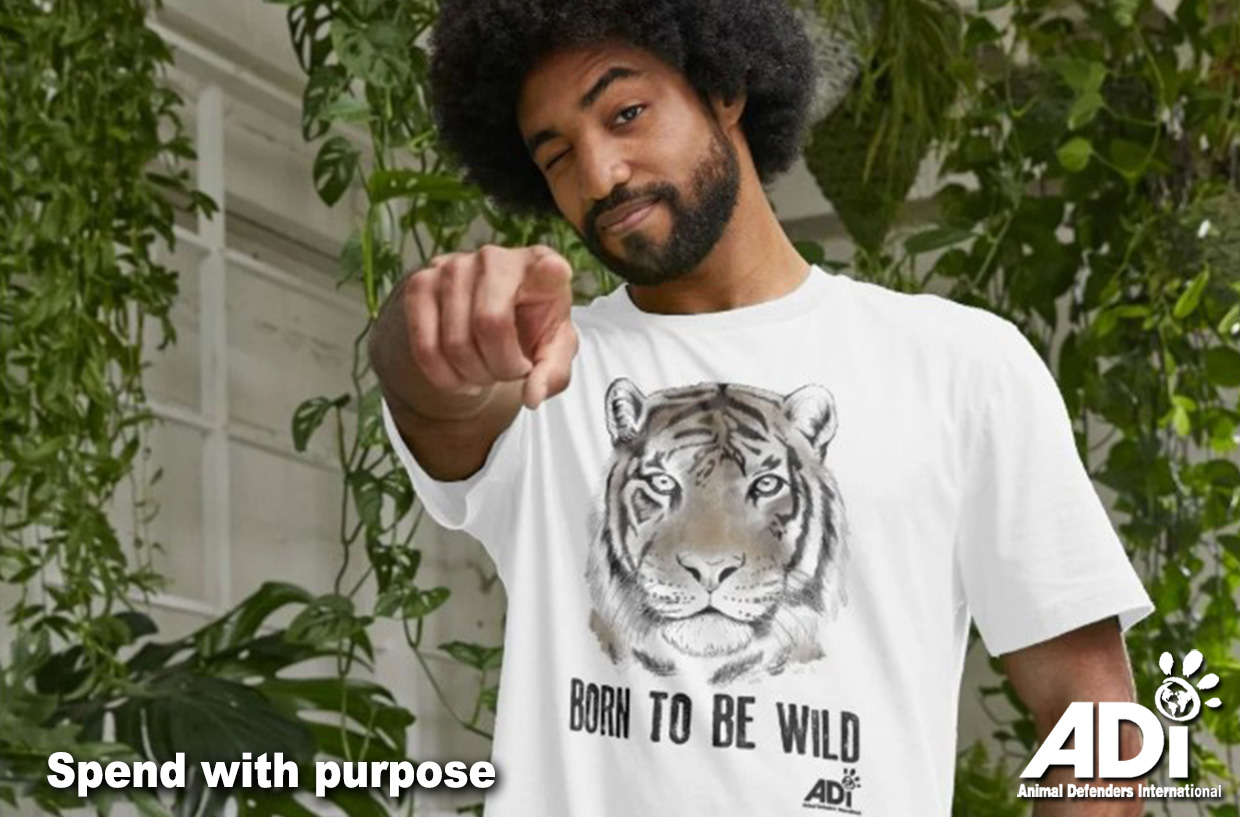
- Dress with a statement with one of our vibrant, sustainably made T-shirts, sweatshirts, and hoodies from our US store / UK store.
Remember most of the wonderful entertainment, art and genuine sport doesn’t involve animal suffering, the World Cup doesn’t even use leather footballs now! Let’s all enjoy life and end animal suffering.
ADI is entirely reliant on donations, to help us keep fighting to end the bullfighting and bull running; the elephant rides, animal circuses, carriage rides, dolphin and whale shows, and to shut down the lion farms, please donate here, with your actions and support we are winning.
 Jan Creamer