Donkey rescue and animal news from around the world

Before I start this month’s round-up of ADI campaigns around the world, I have some great news. A family of six donkeys (above), one male, three females and two foals, that were abandoned when a lodge went into administration, started a new life at the ADI Wildlife Sanctuary (ADIWS), South Africa yesterday!

The SPCA Bloemfontein asked if we could help and when we said “YES”, collected and brought the donkeys to ADIWS. The family bounding off the transporter will surely be one of the magical moments of 2023. They are currently in a four-acre enclosure while we settle them in but will eventually be able to roam freely around the sanctuary. The male will be castrated to prevent breeding.

The export permit for Ruben to leave Armenia and travel to South Africa has been issued. Lonely Ruben, who was left in a deserted private zoo for five years after it closed, is a big step closer to hearing the roars of other lions again at the ADIWS. Ruben will remain in the FPWC bear sanctuary, Armenia, until the move. A special habitat is ready at ADIWS, and we await his South African import permit. Please help Ruben’s big move.
Please help Ruben’s big move.

Dame Joanna Lumley, Alexandra Paul, Mena Suvari and Tonya Kay joined ADI’s call for government action on April 24 to replace the 115 million animals used in experiments worldwide each year with advanced non-animal scientific methods.
Here’s what they had to say.

ADI Colombia marked World Day for Laboratory Animals with a protest outside the Ministry of Health in the capital Bogota. The protestors displayed pictures of animals from ADI investigations inside labs.

This week four lions escaped from a storm-damaged circus cage in Pakistan. They entered a plaza in Lahore, causing panic, and a group of men, reportedly armed with sticks and weapons, set out to kill them. Police and circus staff captured the animals after a few hours on the loose. A month ago, two lions escaped from a circus during a performance in China and were recaptured in the car park. Two weeks ago, a boy was fatally mauled by a lion at a zoo in Gaza after climbing through safety barriers. These are dangerous animals and should not be kept in circus cages or brought into close contact with people.
Email the Pakistan Prime Minister Shehbaz Sharif and urge him to ban the use of wild animals in circuses and travelling acts: info@pmo.gov.pk

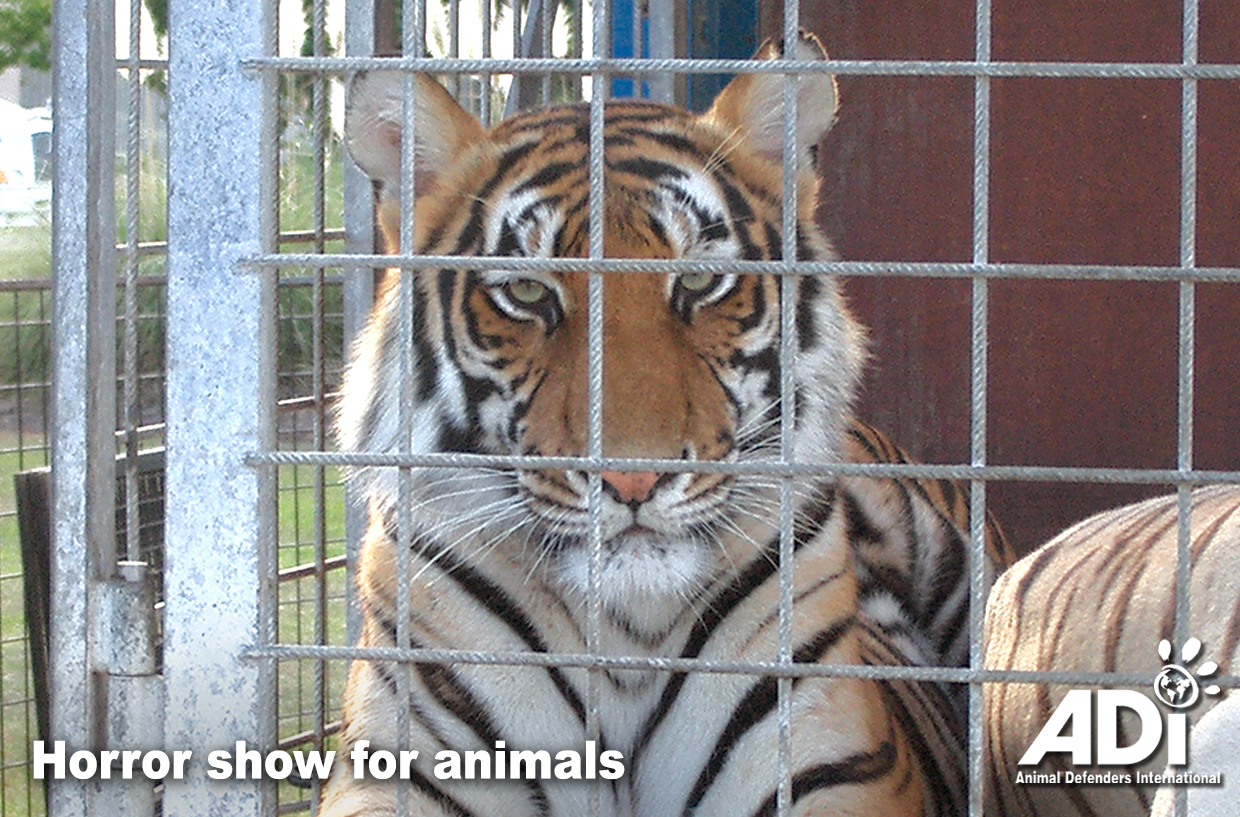
As Culpepper and Merriweather Circus toured Indiana and Ohio with its big cat act, supporters called on the circus to adopt an animal-free policy. To stop all wild and exotic animal acts nationwide, please ask your legislators to reintroduce TEAPSPA. Take action here.
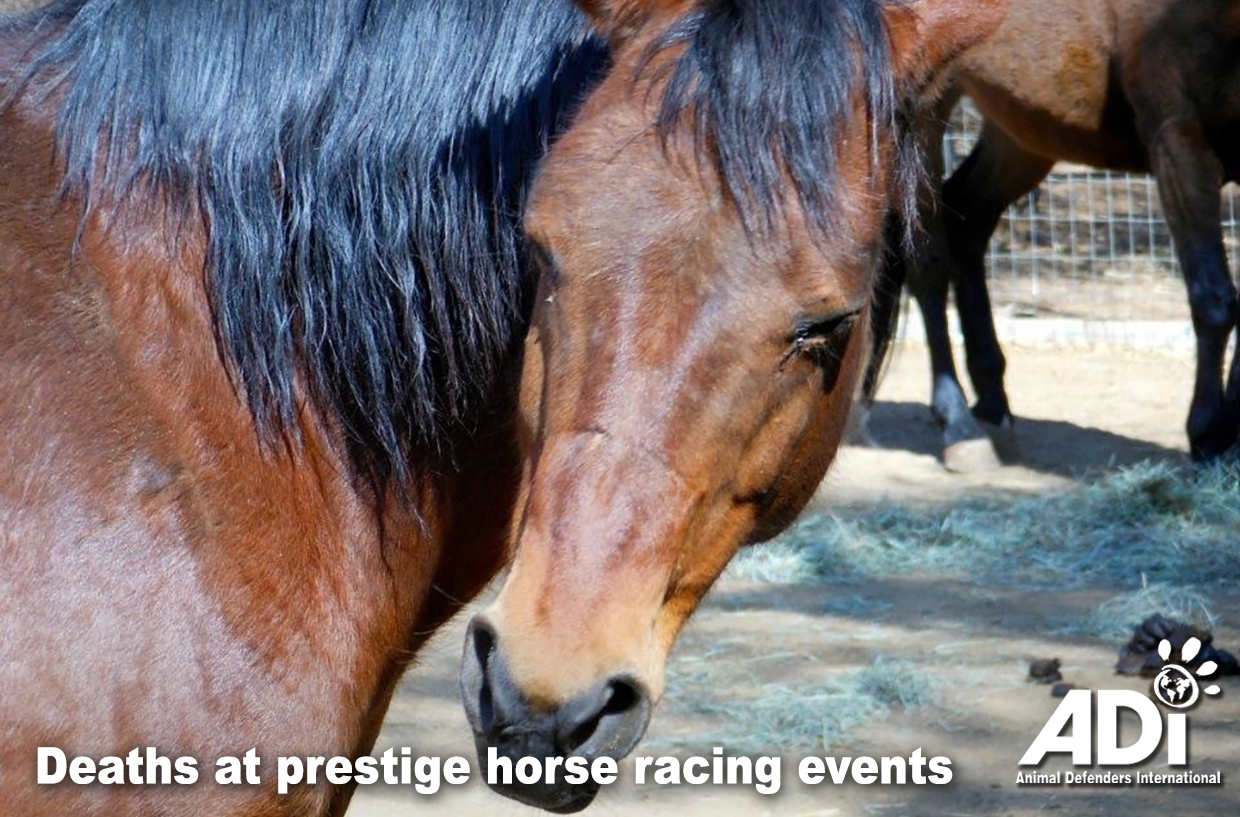
The world’s two most famous horse races, the Grand National and Kentucky Derby, saw the deaths of three and two horses respectively. A further seven horses died at the home of the Kentucky Derby in the build-up to the race and there have now been 60 deaths at the Grand National event since 2000. This year, at least 100 racehorses have died in the US, while over a year around 200 horses will die on British racecourses.

Please send your love, thoughts, and prayers to Smith, who we rescued from a circus in Peru (he has no mane because he was castrated in the circus). The huge, beloved lion remains in the hospital where Dr Caldwell has concluded that the root of his ill health issues this year is a heart problem. As our pic shows, Smith is relaxed and eating, but his condition is serious, and Dr Caldwell will do what he can for our boy. We dearly hope that he will be back at the ADI Wildlife Sanctuary soon.
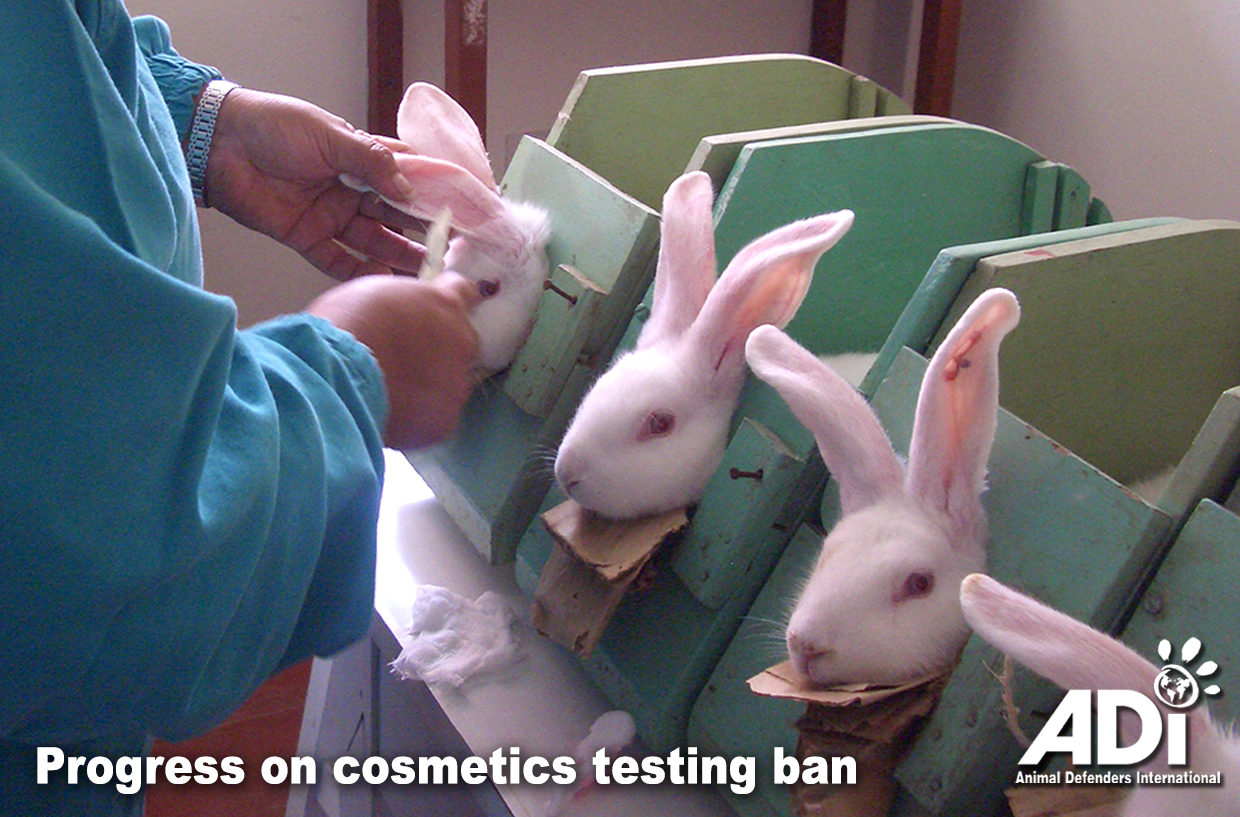
Bill to ban animal tested cosmetics in Oregon (HB3213) passed the state’s House of Representatives and Senate committee stage and currently awaits a vote on the Senate floor.

A bill to ban the sale of fur in Hawaii passed the House and Senate but ran out of time before the end of the session. A ban on the sale of fur products in Rhode Island is currently held in committee for further study. Similar bills are under consideration in Massachusetts, New York, and Washington D.C.
Find out how you can help.
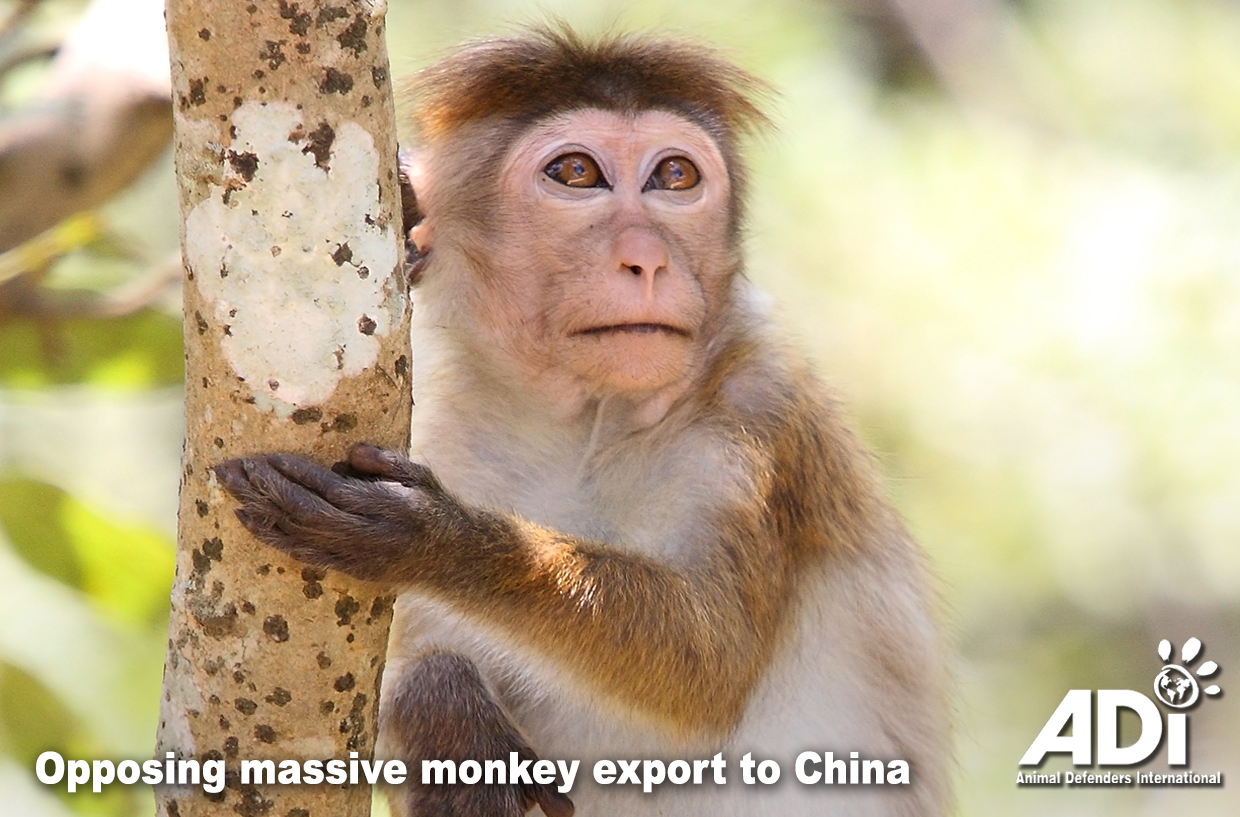
ADI is opposing plans by the Sri Lankan government to export 100,000 endangered toque macaque monkeys to Chinese zoos, although it is feared such a huge number means they are destined for experiments.

A key member of the ADI team for 20 years, Alexis Diaz Limaco tragically passed away in April aged just 50. A new video with interviews with Alexis shows some of the work he played such an important part in. It is an inspiring account of some of ADI’s successes in Latin America, a reminder of the impact that each of us can have for animals, and a chance to hear again the laughter of our friend and colleague.
Watch our video tribute to Alexis.

Climate change is the greatest threat to the environment and survival of many species. To save our planet we need to dramatically reduce global carbon emissions, and the ADI Wildlife Sanctuary is stepping up with plans to be fully solar powered this year. Already, lion and tiger habitats, water pumps, motorized gates, security cameras, and lights are solar powered. Next, a huge installation of almost 100 solar panels at the heart of the sanctuary will power our sanctuary, including feed preparation areas, freezers, offices, accommodation, and in future our education center and film theatre.

Please support this important development which will be good for the planet and provide energy and security for the sanctuary.

You can help all of the diverse aspects of ADI’s work here.

Another Month on the frontline for animals

Another month of ADI campaigns and activity around the world has flashed by. Here’s the news on how together, we are changing the world for animals:

Two decades ago, ADI sent a team to investigate the circus industries of Spain and Portugal. Our investigators moved across the country, monitoring and working inside circuses, securing horrific images of elephants being jabbed in the face with bullhooks, animals whipped and beaten, a dead tiger was dragged from its cage, beheaded, and skinned in front of his cage mates. NOW THE MISERY IS OVER. ADI’s campaign in Portugal won the first ban, and now Spain’s new animal welfare law includes a ban on wild animals in circuses – joining 50 other countries. Isn’t it time the US joined them? Support the reintroduction of TEAPSPA to prohibit wild animal acts in the US.

Two rescued wild tortoises have joined our native leopard tortoise population on the ADI Wildlife Sanctuary, after their rescue from wildlife traffickers. Stolen from the wild, the SPCA saved the tortoises when they were up for sale on the internet and asked ADI to help.
Did you know: ADI has rescued and returned to the wild more tortoises and turtles than any other species (mainly in seizures from traffickers with Peru wildlife officials)?

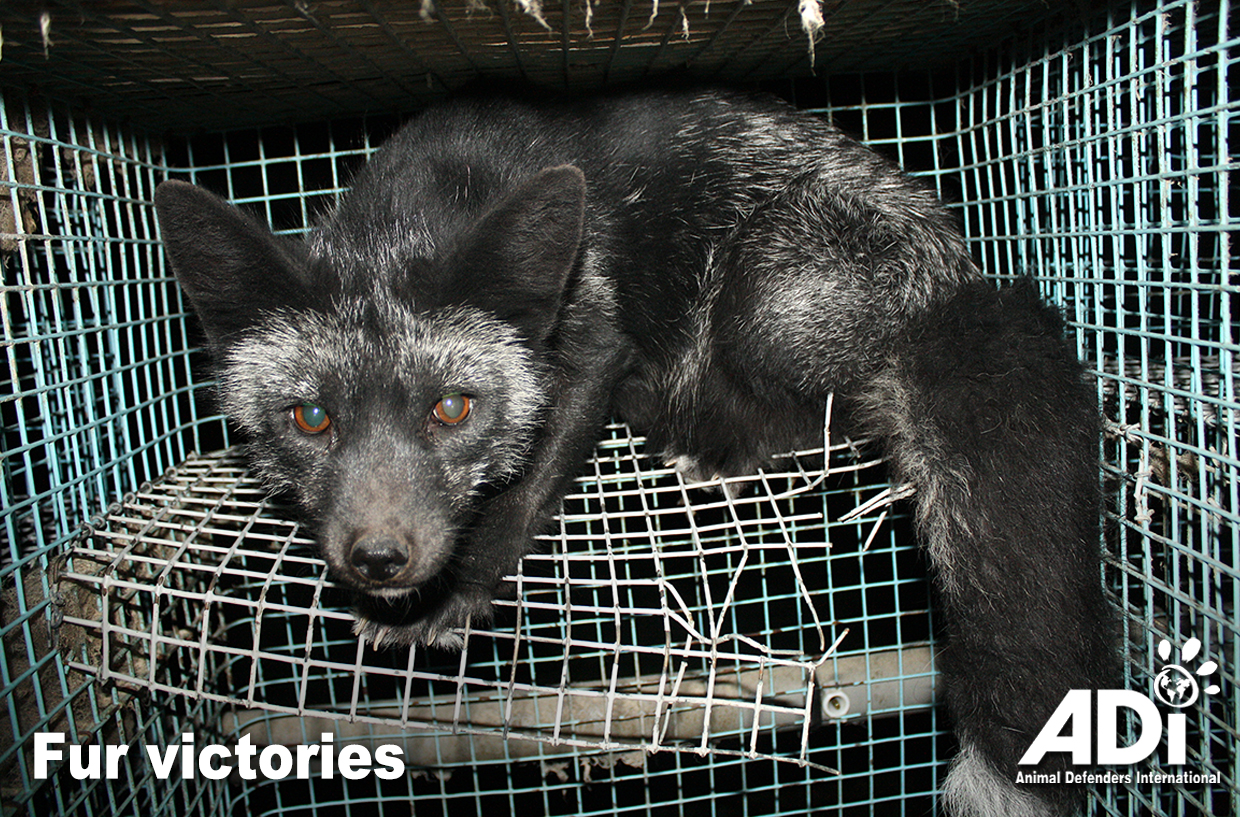
A symbolic victory saw the 300-year-old Hudson’s Bay Company, once the heart of the global fur industry, go fur-free. In Massachusetts, Lexington became the state’s sixth municipality to ban the sale of new fur products, and in Hawaii, ADI is backing a fur sales ban which has passed the state Senate and House and now goes to conference, where the House and Senate must agree on the amendments made to the bill. Other state bills to ban fur sales are being supported in Washington DC, New York, and Massachusetts. If you live in one of these states, find out how you can take action here. In Europe, the European Citizen’s Initiative (ECI) to end fur farming and stop the sale of farmed fur products closed with 1.7 million signatures. The European Commission must now respond.

For the third reading of the UK Hunting Trophy (Import Prohibition) Bill, we joined Ranulph Fiennes, Charles Dance, Vicki Michelle, Peter Egan, Felicity Kendal, Eddie ‘The Eagle’ Edwards, and Marc Abraham at a parliamentary reception with Ban Trophy Hunting. The bill was passed and moves to the House of Lords.
The same day, The Animals (Low Welfare Activities Abroad) Bill, to stop UK advertising of cruel animal attractions overseas like bullfights and elephant rides, also passed its third reading.

ADI’s worldwide investigations of monkey factory farms has exposed miserable welfare, brutality and how western lab importers seem to turn a blind eye. In another twist, eight people, including two Cambodian officials, have been charged in the US with smuggling wild endangered monkeys for experiments and passing them off as captive bred. Now the US Department of Justice has subpoenaed Charles River Laboratories in its investigation into Cambodia’s primate supply chain. In addition, Quebedeaux’s Transport has been shut down by the US Department of Transportation for illegally transporting monkeys. Last year one of the company’s trucks crashed and macaques imported from Mauritius escaped, later captured, and killed.

ADI investigators and lawyers have been working intensely in Ayacucho, Peru to prevent the return of the horrific Jalatoro bull run. ADI previously exposed the event, where drunken, baying mobs punched, kicked, spat at, and tormented terrified young bulls in the streets. Last year’s ban was a huge victory, but ADI learned of plans to stage it anyway this year. ADI Peru has been speaking with members of Congress and officials and held press conferences with former Congressman Urquizo (instrumental on Peru’s animal circus ban) and community leaders, to stop the event proceeding. The campaign appears to have been successful, but ADI is now investigating reports of small, illegal events in the region.

A new anti-bullfighting mural in Bogota will greet members of Congress when they return after the Easter recess. ADI Colombia and Colombia sin Toreo coalition lobbied and staged events at Congress until recess and will be back when Congress resumes work. The bill to ban bullfighting was passed by the Senate and is supported by President Gustavo Petro. It now goes before the House of Representatives. This is a huge battle, with Congress divided by a powerful lobby working to block the ban.

As part of a study of Africa, I had a 45-minute Zoom call with pre-k and kindergarten students from New Jersey’s Lacordaire Academy. The students were able to get up close with our Cusco family (Kiara, Amazonas, Scarc, and Mahla) as I talked through their stories, rescues, and characters. They also got to meet our Resident Welfare Team, who care for our residents every day. Education and awareness are a huge part of ADIWS work, and later this year we will be ready to start the development of the Jean Warner Sprague Education Center, where we will welcome South African schools to study animals and the environment. We are always happy to do live talks to students like this from ADIWS. Get in touch if you are interested.

The UK’s Online Safety Bill aims to place more responsibility on social media platforms to moderate/restrict illegal and harmful content to protect children and vulnerable people. We’re calling on the government to include online animal cruelty content within its scope. This can include dog fighting, to terrorizing animals in fake rescues, to staging puppies or kitten being eaten by snakes. A study has shown children who witness animal cruelty are up to 8 times more likely to abuse animals themselves.

Pima County Fair in Arizona (April 20-30) is to feature a tiger show, sea lions, petting zoos, and a reptile show. Email them at office@pimacountyfair.com and America@pimacountyfair.com. If you’re on Facebook message them here.

A ban on live animal exports and the keeping of primates as pets was promised by the UK Government and the Kept Animals Bill was introduced to parliament in 2021. However, the Bill has not moved since May 2022. ADI is calling for the Leader of the House of Commons and Secretary of State for Environment, Food and Rural Affairs to bring back the Bill. Please contact your MP to press the government to include online animal cruelty in the Online Safety Bill.

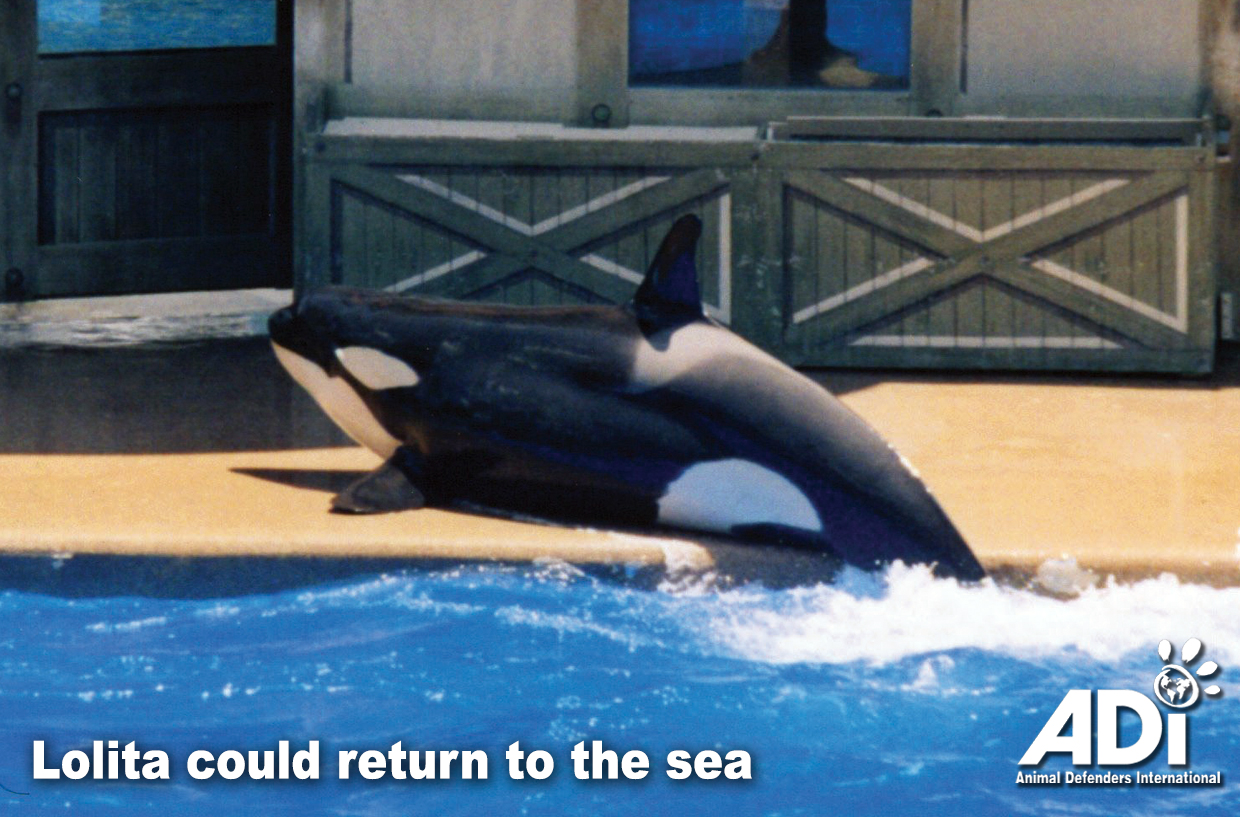
After five decades living in Miami Seaquarium’s tiny tank, the company has announced that 57-year-old orca Lolita could be returned to the ocean. The plan is to airlift Lolita to a sea pen in the waters off Washington state, where she will learn to feed herself again, under 24-hour care. Whether it will be possible for her to learn to fend for herself or not, a sea pen will hopefully be a vast improvement on a concrete tank – perhaps she may be able to communicate with other orcas. Her loneliness is hard to imagine. We await developments on this desperately sad story.

With a million species threatened with extinction, the world is facing a biodiversity crisis. Yet, since the Convention on International Trade in Endangered Species of Wild Fauna and Flora (CITES) came into force in 1975, wildlife trade has increased ten-fold. In a joint letter, ADI and others have called on CITES Parties and Secretariat to play a more effective role in tackling the crisis.

More positively, the UN High Seas Treaty has been signed, to protect 30% of the ocean by 2030. This provides a legal framework to establish and manage marine protected areas in the high seas and could prohibit or limit commercial fishing, oil or gas drilling, and other damaging human activities to protect the ocean from biodiversity loss, pollution, and climate change.

Held on April 24 each year, World Day for Laboratory Animals (Lab Animal Day / World Day for Animals in Laboratories) commemorates the suffering of animals in laboratories and it’s an opportunity to show the problems of species differences and how advanced scientific non-animal methods are the way forward for research and testing. This World Day we’ll be calling for positive change to help lab animals and hope we can count on your support! Find out more here. Contact your elected representative and ask them to support a move to advanced technology to replace animals – better for humans and animals.

In a horrific development, there are plans to establish the world’s first industrial octopus farm in Gran Canaria, Spain, with plans to rear a million animals. These complex, intelligent, and sentient animals will suffer terribly. ADI supports the call for an EU wide ban on octopus farming.

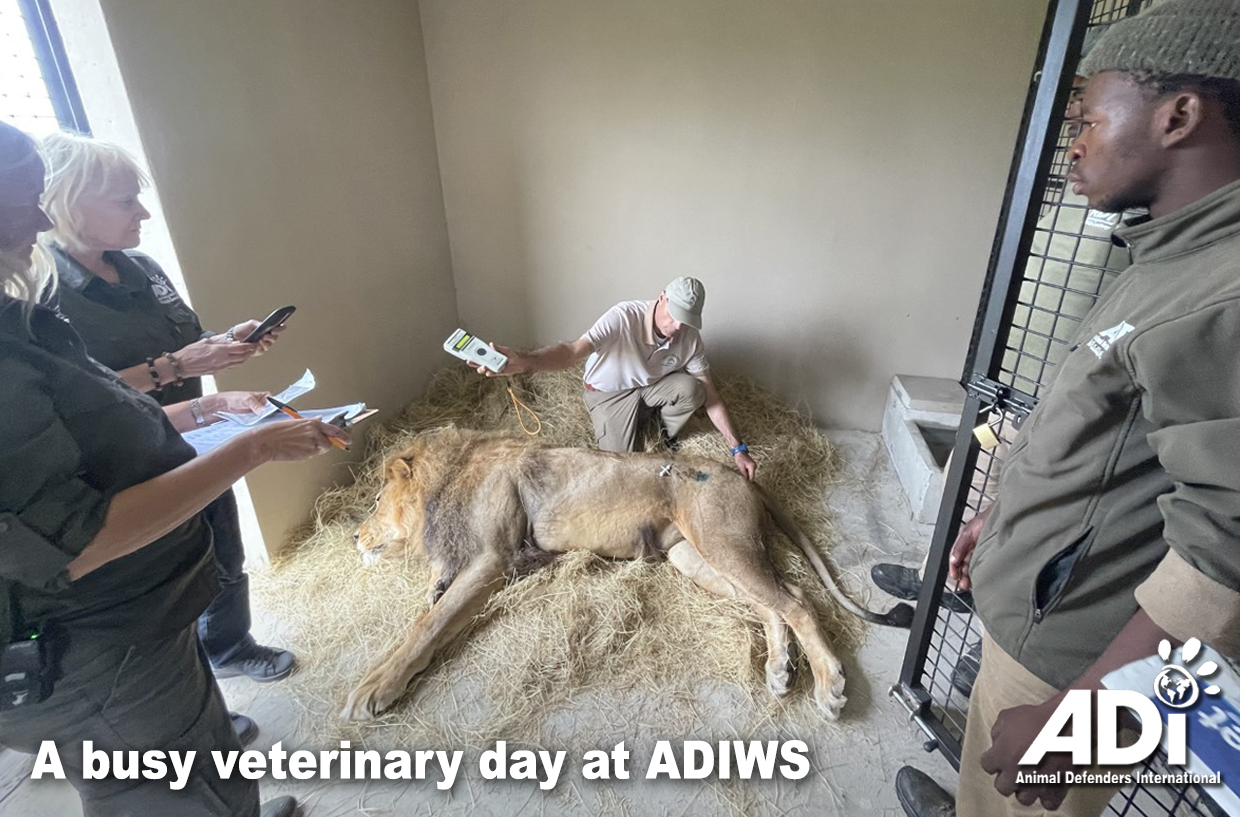
In March, we were live on Facebook all day as Dr Peter Caldwell and Dr Gerhard Steenkamp examined animals and performed dental surgery. Rey Cusco and David both had dental surgery while Tarzan, Tanya, Sasha, Kimba, and Tomas were sedated, examined, and moved to beautiful new habitats. The key events from the live broadcasts have been compiled into a video giving a great insight into the sanctuary. It has the added bonus of seeing the animals in their new homes at the end. Watch here.

AND FINALLY – Welcome to Milo!
Many of you will be familiar with our lovely sanctuary protector, Rollo, the lovely Anatolian/cross dog who came with the property and monitors the humans, ducks, chickens, turkeys, and guinea fowl to ensure we are all in order. We always planned for Rollo to have a rescued friend, but the COVID shutdown put all our plans on hold. We are delighted to welcome a new rescue, Milo, who has proved to be a great friend for Rollo and learning his guard dog duties.

As usual there is not enough space to cover all the campaigns to protect animals here, but do follow us on Facebook, Instagram, and Twitter, where we publish daily updates.
​​​​​​​
Our campaigns are vital for bringing lasting change and enabling us to rescue animals, please keep us on the frontlines for animals with a donation for this essential work. Donate here.