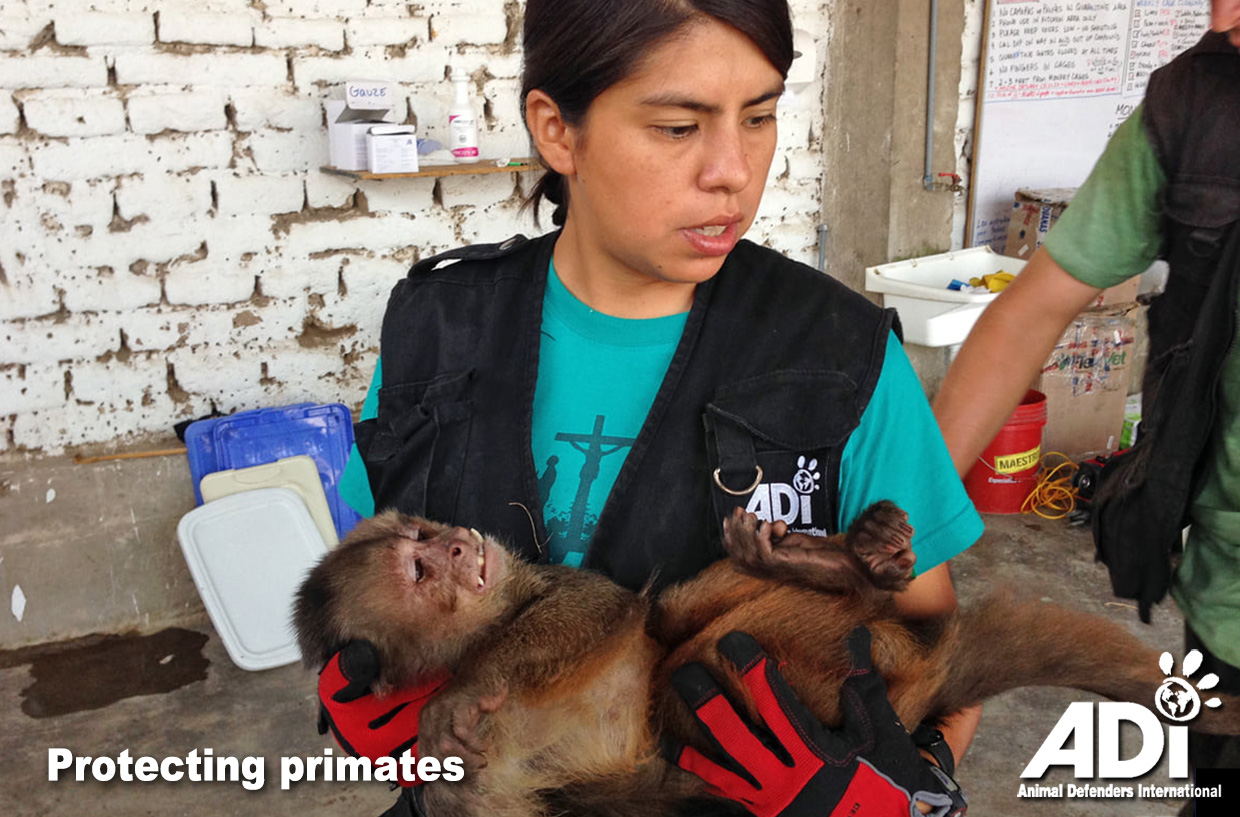
There is something especially magical about seeing our rescued monkeys home in the Amazon rainforest. Climbing through the trees, watching butterflies, swinging on ropes, picking through the undergrowth, tasting things, finding treats, always so inquisitive, examining anything new, grooming each other, and just being together in their family groups.
We save these animals from horrific abuse. Captured from the wild, terrified, they are taken to live lives of isolation, chained, abused, and many have their teeth snapped off to stop them biting. I have seen horrific infections from these crude mutilations, which would have been fatal had we not been there in time.
For these animals who have endured so much, our aim is to always try to give our rescues a life as close as possible to what nature intended. The life they lost. We have successfully returned monkeys to the wild, but for many, the physical and emotional damage from abuse has left them in need of special care for the rest of their lives. That’s why I need your help today.
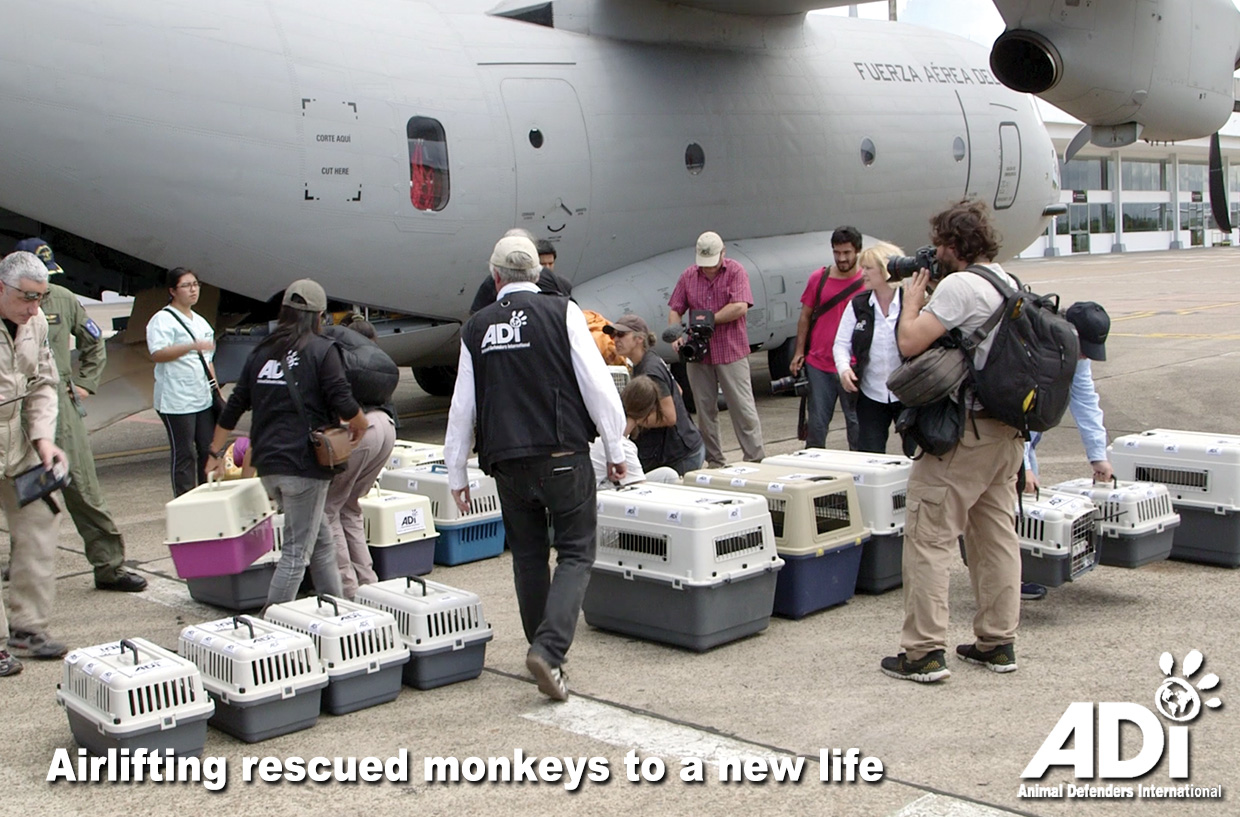
It is now ten years since ADI supporters, like yourself, helped us to build our complex of monkey habitats in the Peruvian rainforest at Pilpintuwasi – one of the most challenging construction projects we have faced – but also the most innovative, like when we decided the little white capuchins would enjoy having a stream run through their habitat and needed to build the fence under water, into the rocks. Within days of completion of the homes, we took our first 39 primates, coati mundis, and kinkajous – cut from chains in circuses, restaurants, and taken from wildlife traffickers – home to the rainforest. Watch them return to the jungle here
Since then, this safe haven has been a lifeline for many animals, like baby Chaska, a woolly monkey saved from traffickers, living her best life in her natural habitat, reunited with her own kind.
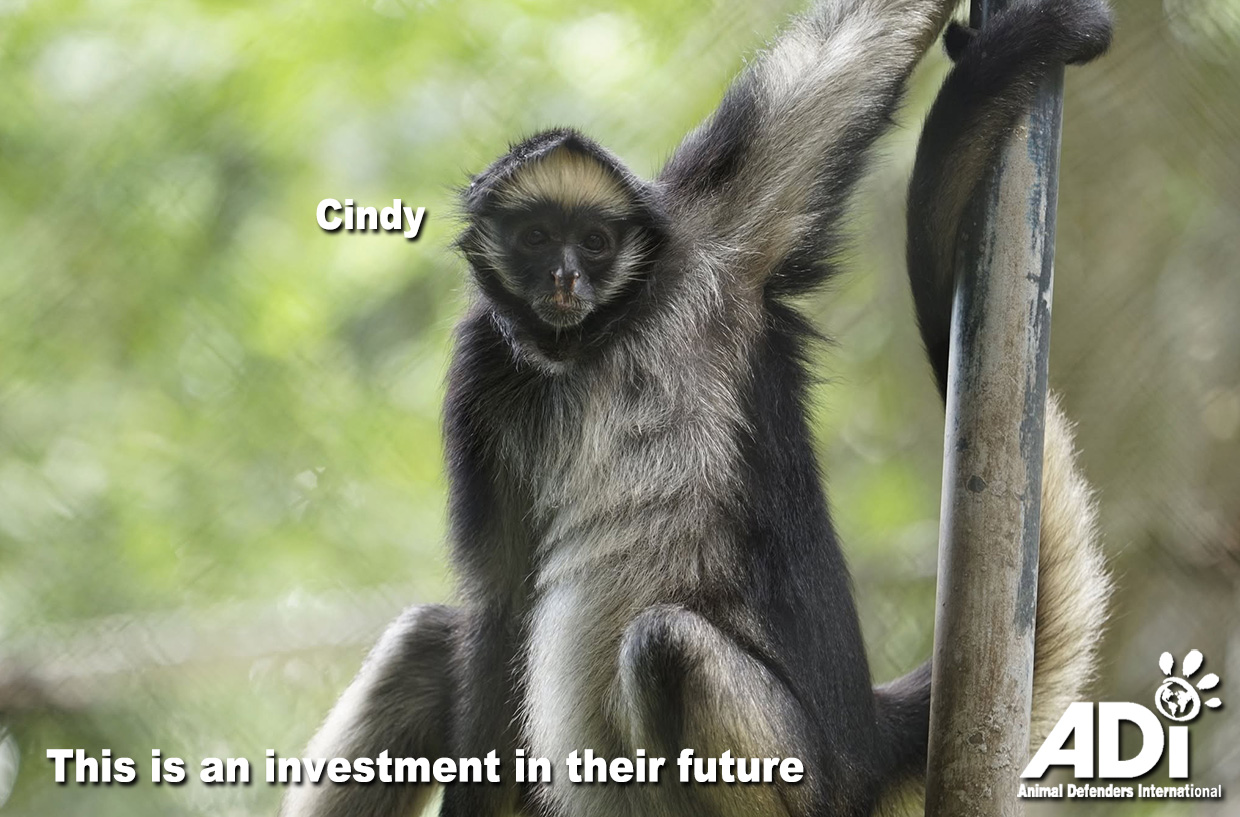
That said, caring for animals in their natural jungle habitat, humid, with regular heavy rainfall, comes at an extra cost. And of course, it is often the busy, inquisitive, dexterous efforts of our primates themselves which results in weakening of the habitat fencing, while swinging through the trees at great speeds, leaping onto houses and other structures and landing with force, that takes a toll on enrichment structures. Some of our residents will be with us for 30 years or more.
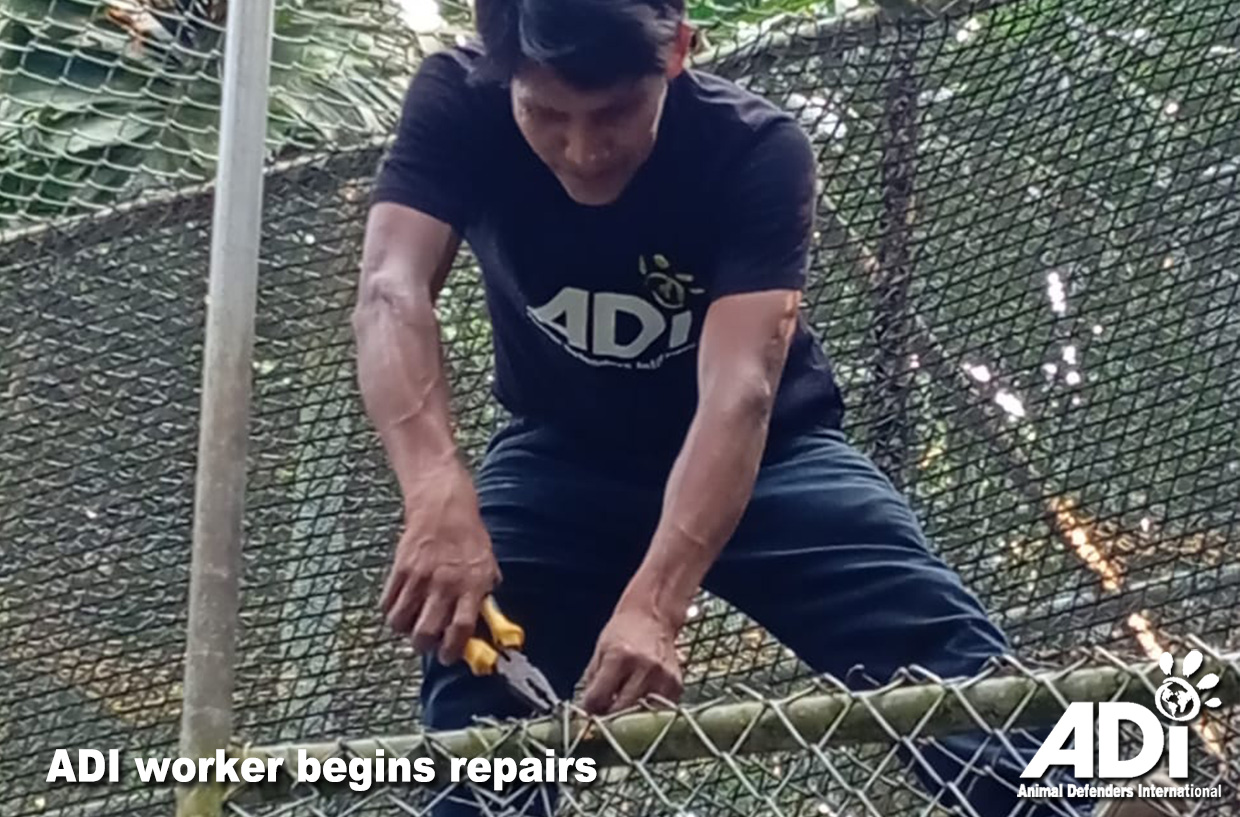
Ten years of repairs to withstand enthusiastic monkey pounding has brought us to the point that we need to undertake some major work and replacements to fencing and structures.
Can you help us to raise $10,000/ £8,000 for comprehensive repairs and improvements to this beacon of hope in the Peruvian forest, a lifeline for so many animals?
We have undertaken some of the most urgent repairs but need your help now – for more rolls of mesh, metal poles, concrete, wire, wood, and other materials. We have a limited window to get all of these in place because we are moving into the season where the river will begin to drop, making it very difficult to get everything to our remote location.
Together, we have given these animals the closest thing to the natural life that was stolen from them. We have reunited them with their own kind, ended their loneliness and created families, allowing them to swing through the trees again and be monkeys.
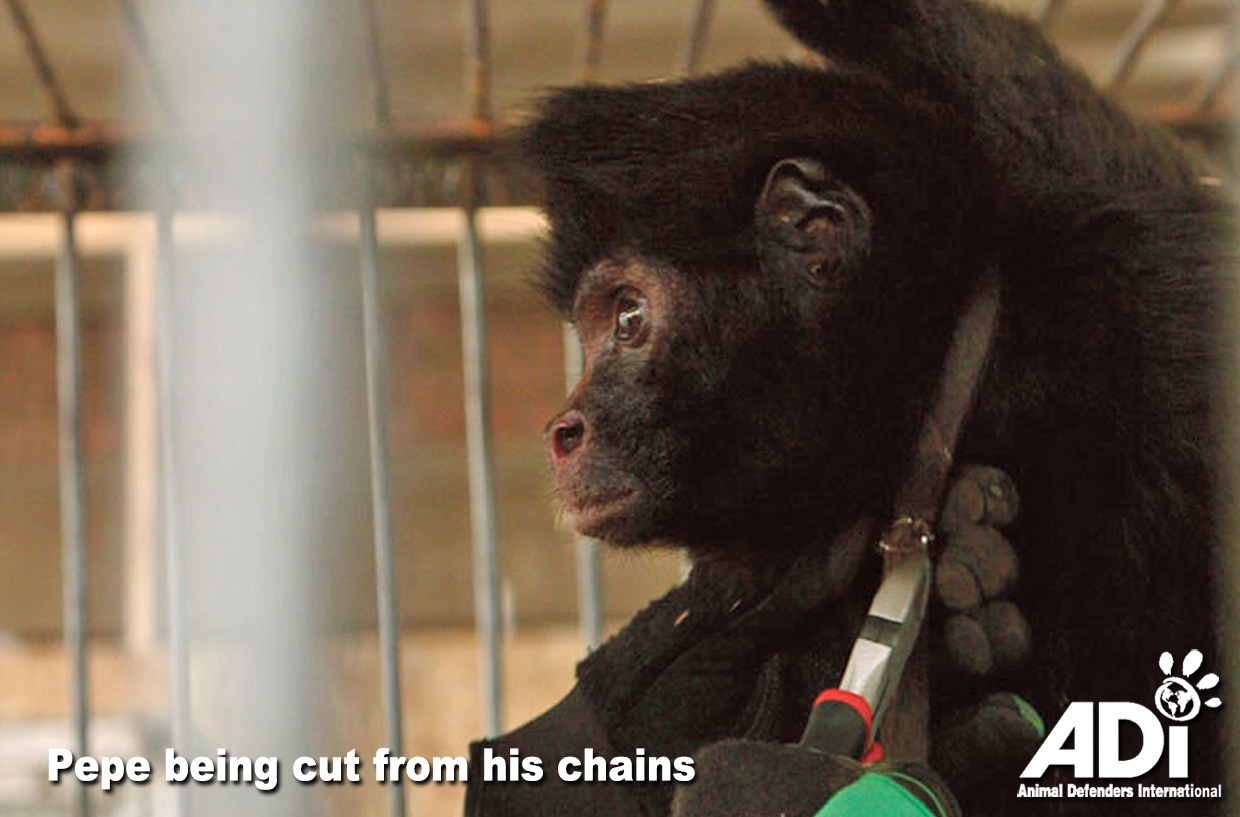
Spider monkey Pepe was chained in a circus for eight years until ADI rescued him. I’ll never forget the day he looked into our eyes as we cut him from his chains, nor the time we waited anxiously for him to come around after hours of dental surgery to repair his teeth, brutally broken by the circus, and deeply touching, when he was first reunited with his own kind, meeting the beautiful Valerie with her blue eyes, followed by many more spider monkeys; then his final hug to me, before bounding into his new forest habitat.
Pepe is 19 now, and a spider monkey can live to 40 years old. He will grow old in the forest with his own family of spider monkeys. That is how important this special rainforest place of safety is, for these monkeys.
The clock is ticking for us to get everything delivered for these vital repairs. Will you help raise the $10,000 / £8,000 we need?
Please make a commitment for the monkeys in our care and for the many more who have not yet been saved, with a donation today.
The hardest thing about rescuing animals from abuse is when it is time to say goodbye. When we save an animal, they dominate our thoughts, time and energy, a bond develops as we work to take them to freedom and a new life, but we have to acknowledge, both physically and psychologically, they cannot entirely escape their past. It is with great sadness I must report the passing of Jade, one of the young tigers from a Guatemala circus, who has passed away after an aggressive, fast-growing cancer was diagnosed. Our vet Dr Caldwell advised there was nothing to be done, and trying to treat it would cause more suffering. It was time to say goodbye.
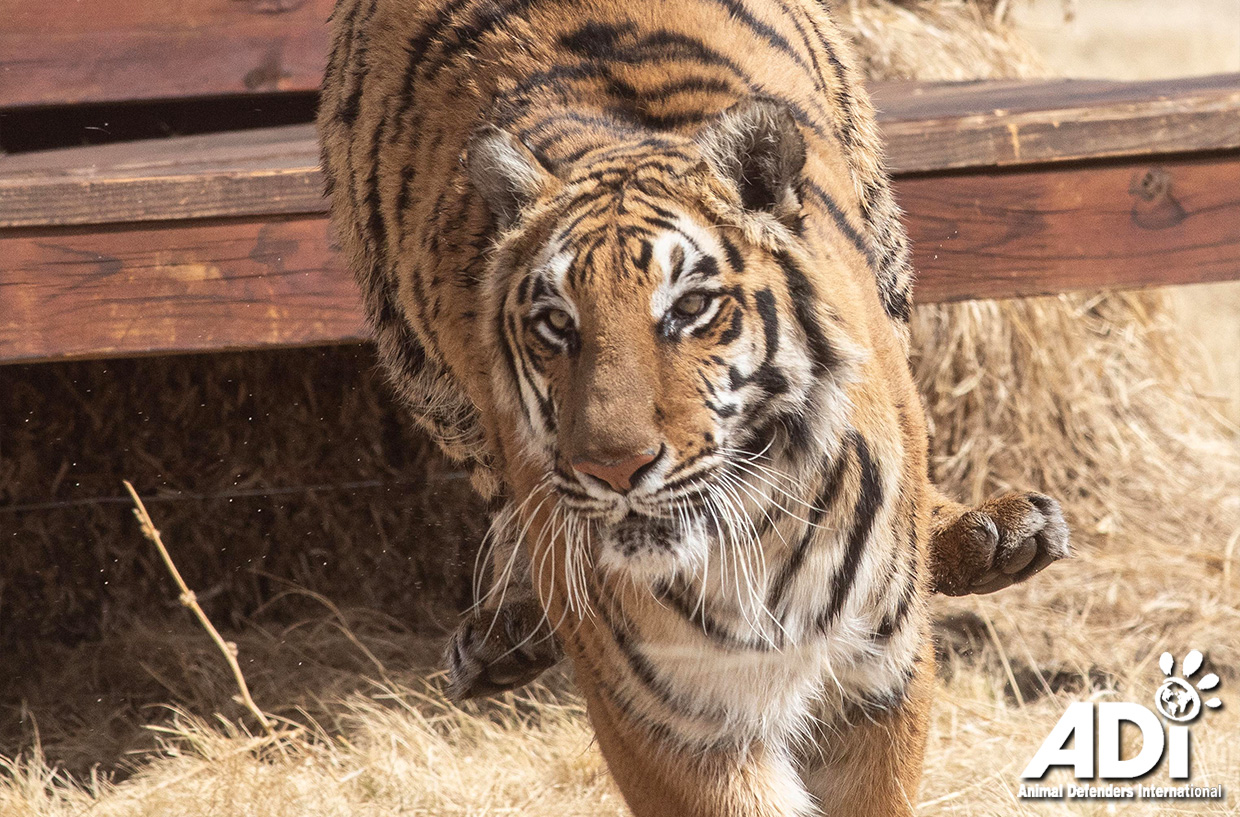
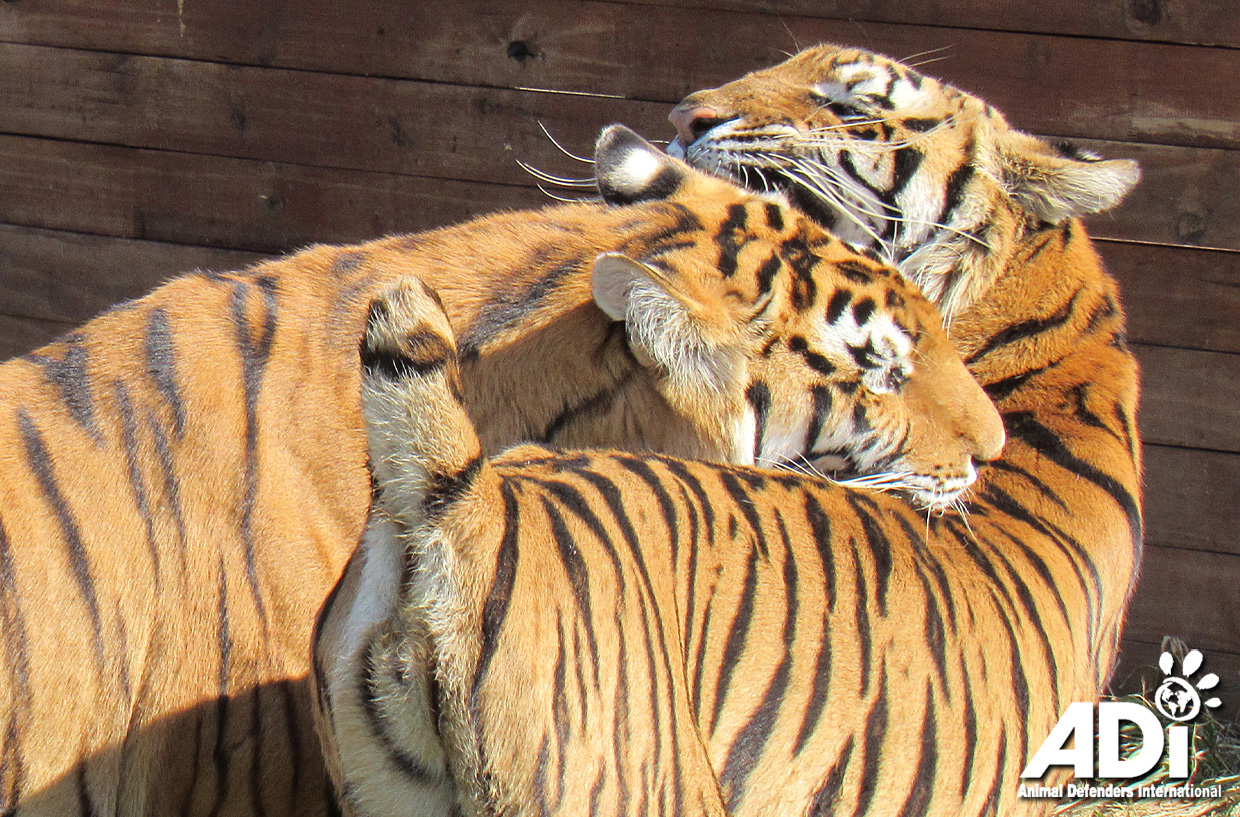
Jade was the smallest of the group of young tigers we call the Spice Girls, but with a huge personality and quick mind which made her their leader. She was the live and soul of the group. Jade was the one who raced around and got her sisters playing, sometimes bounding up and getting them up, even when they were sleeping. For almost seven years, despite a terrible start in life in the circus in Guatemala, this small tiger had inspired us all with her boundless energy, lust for life, intelligence, sense of mischief and enthusiasm. She leaves a huge gap at the ADI Wildlife Sanctuary.
Now, through the sense of loss, we celebrate what precious years ADI supporters gave to dear Jade, and how very different her life would have been . The support for her and her family let them all know real joy.
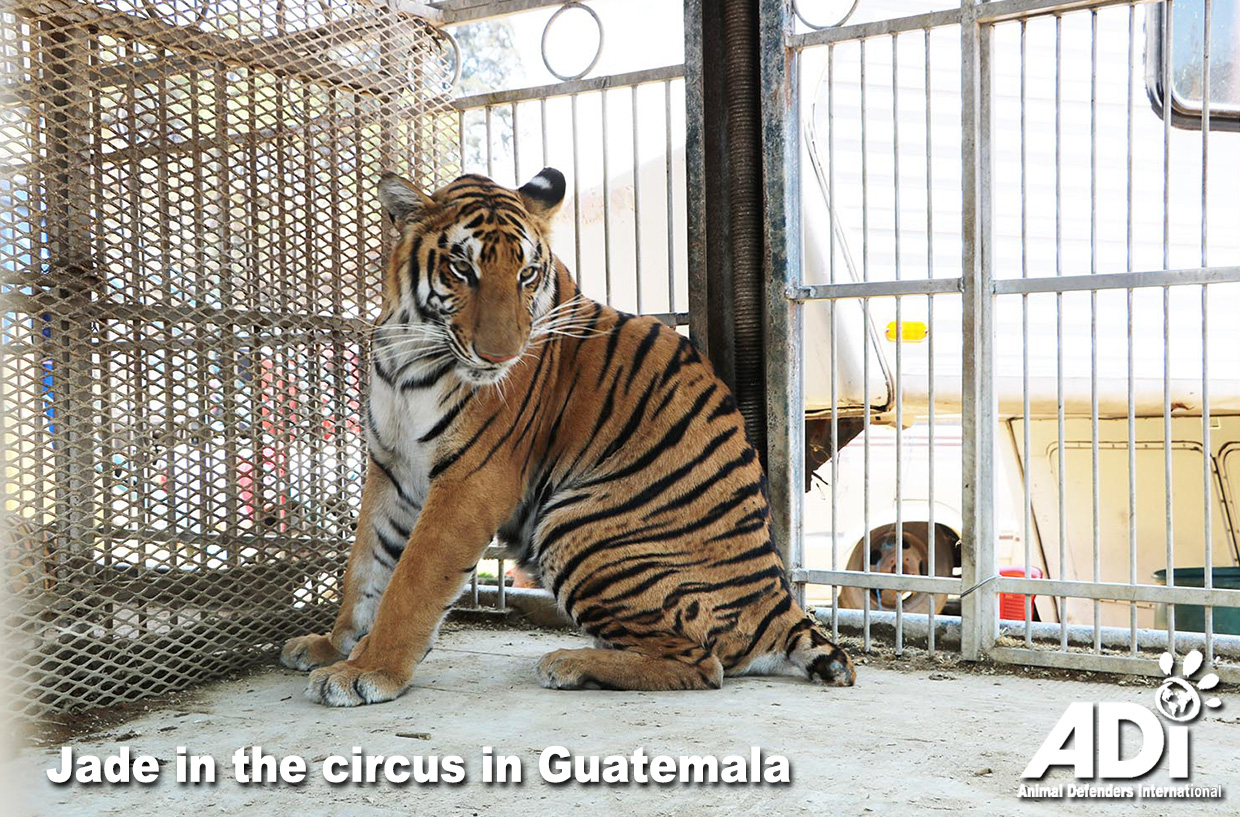
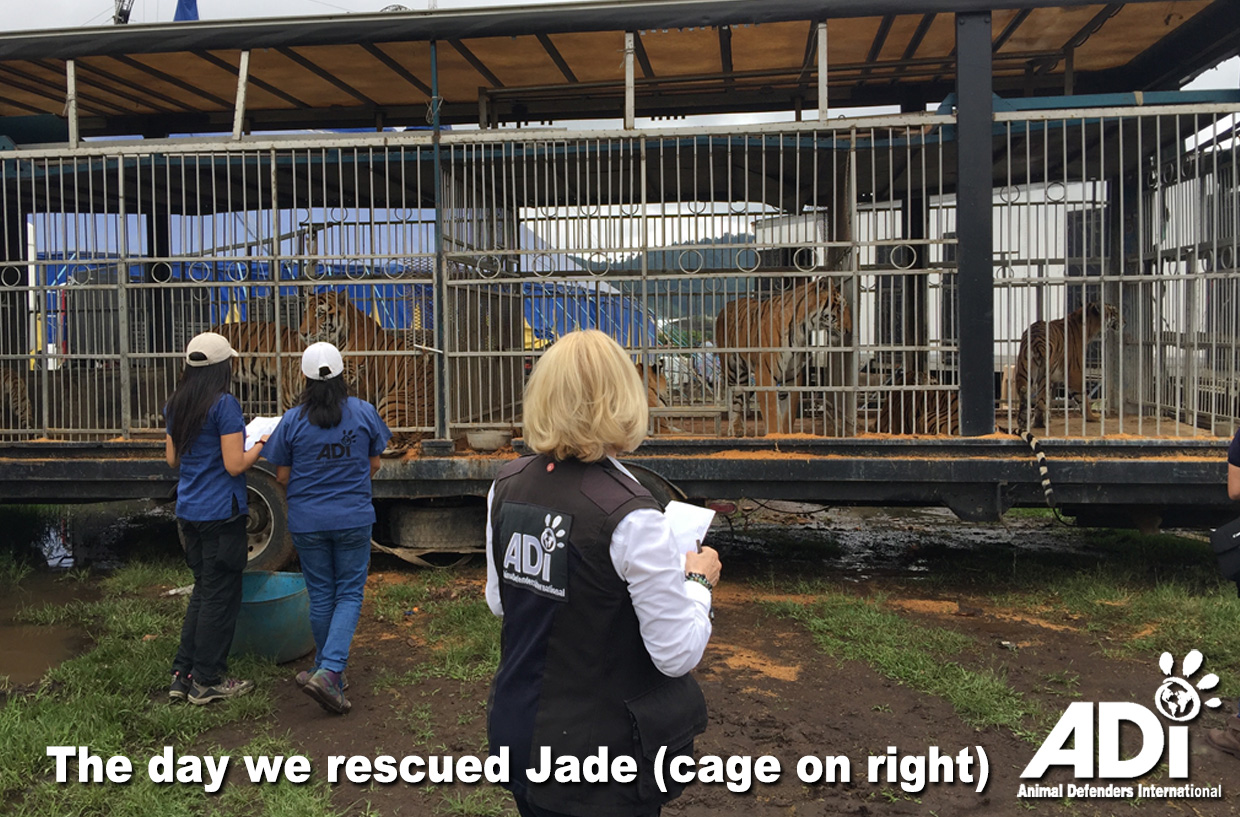
The picture of Jade, above, was the day I first met her in the circus. It was a sweltering hot summer’s day in 2018, and the circus was refusing to comply with the Guatemalan Government’s ban on animal circuses. They were aggressive, shouting and blocking our way. Jade and her sister Luna shared a small bare cage, the size of a queen-sized bed. In the other cages were 13 other tigers and two lions (Tarzan and Tanya). Their lawyer blocked us that day, but over the course of the next five months, we kept pressing ahead and eventually, saved every one of them.
Jade and sister Luna were 18 months old at the time, and in our ADI Temporary Rescue Unit (TRU) in Guatemala, we united them with 6-month-old siblings from another litter, Sun and Moon. The group became known as ‘the Spice Girls’, because of their rambunctious behaviors. Our TRU in Guatemala was basic, but this was where the girls first ran and played on grass. Nobody who saw it will ever forget their first time playing in water. We had made a small pool for them – they raced in, water went everywhere, and within minutes it was full of mud, half the water splashed out and the whole area soaked. Everyone was laughing, enjoying their antics.
However, as always, the inbreeding, malnutrition and confinement of the circus would be harder to leave behind than the cages we had emptied. The members of the tiger family have all proved to be in the worst health of any animals we have rescued – 4 have already passed away due to neurological malfunctions (seizures) related to lifelong malnutrition and inbreeding. Jade was undersized and suffered spondylosis – the cause was similar to the ones who suffered seizures – malformed bones meant the nerves between her brain and spine were unable to function properly, in Jade, causing a goose-stepping walk.
The difference can be seen with Sun, Moon, Max, and Stripes – all rescued from the same circus but at just 6 months old, so they benefited from the enhanced ADI feeding regime, with extra vitamin and mineral supplements. They are all larger, strong, and not showing any neurological problems.
Jade had also lost her tail in the circus, with just a small stump left. This is a common injury in circuses when animals are chased through drop doors between cages and doors are dropped on their tails. Similarly, Tanya (from the same circus) has no fluffy tip to her tail. An ADI investigator filmed this happening in a British circus (before the ban).
In our grief at the loss of a family member, it is hard not to feel rage that circuses not only confine these animals in barren cages and take all the joy from their lives, but also break their bodies, causing lifelong damage. But they never broke Jade’s spirit.
Despite being the smallest of the Spice Girls, Jade was clearly the boss, and the one who energized the group to go out and play – she always raced to investigate everything first. It may have been sheer force of character, but it may also have been because she was so smart. Something she demonstrated to us with the puzzle game.
The ADIWS team built a play center for the residents, which was moved from habitat to habitat for different residents to play with and try to solve the puzzle (a ball inside a tunnel), while also enjoying the scent of other residents who had previously enjoyed the structure. The puzzle challenge was to get a small green ball around a corner and out of a small gap. While many residents at the ADIWS had pawed at it and tried to tug it out, Jade worked out the puzzle; she rolled in along the tunnel, around the corner, using her nose and paws, until the ball popped out.
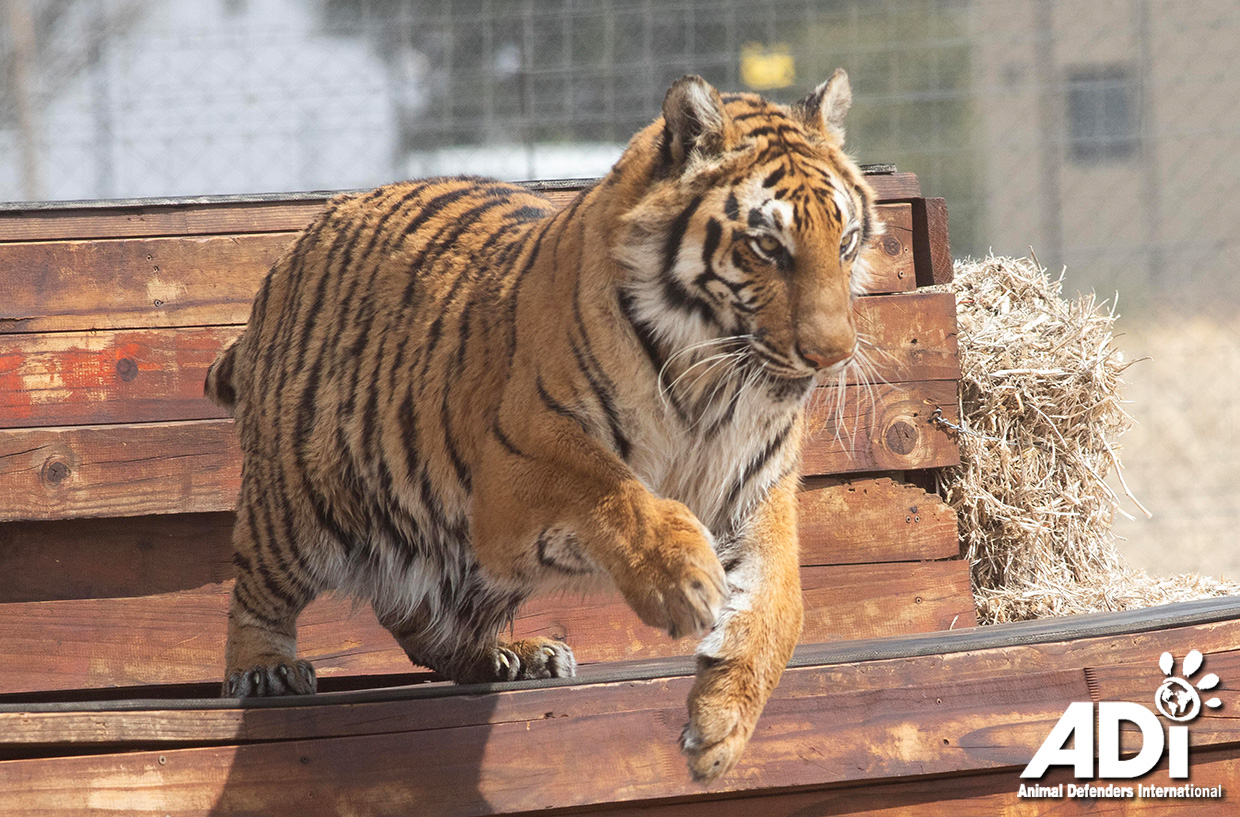
When the family arrived at ADIWS, it was Jade who led them out. In part due to the spondylitis caused by the circus, and perhaps in part due to her character, she didn’t so much run, but rather bounced everywhere. She always appeared to be endlessly bouncing around the entire perimeter at high speed. It was magical when she first entered her big habitat at ADIWS when they arrived in 2020, just running and running and leaping on and off the big platform den, with such joy.
Jade always led the Spice Girls into the charge out of the houses and get the fun going. Classic Jade was also when seen she would be snoozing in the pool and then wake up, deciding it was time for everyone to get up, and race from one to another of the girls to rustle them up to play.
Jade was an inspiration to all, a bright star who brought joy and a smile to us all for seven wonderful years. A huge loss to her family and the whole Sanctuary. For seven years this small bundle of energy was a huge character at ADIWS.
Jade, you were loved and will be missed.
While we mourn Jade, just think of how very different her story would have been if ADI had not been on the ground for those long hot months in Guatemala, battling to empty the cages? Never forget how your support really does transform the lives of animals.
You may like to consider a donation in memory of Jade, to help care for her sisters, and to ensure that others like her get their chance to experience the life Jade enjoyed. Donate UK £, Euros, Rand | Donate US $, CA $
The past month has been an emotional rollercoaster, as we received news of Muheeb’s cancer diagnosis, but saw him active and playful after arriving home at the ADI Wildlife Sanctuary from the hospital – his whole attitude is one of a fighter, who is determined to enjoy the best of his new life.
To support the work of the Sanctuary, where animals saved from suffering can enjoy their life as close to nature as possible: Donate UK £ | Donate US $.
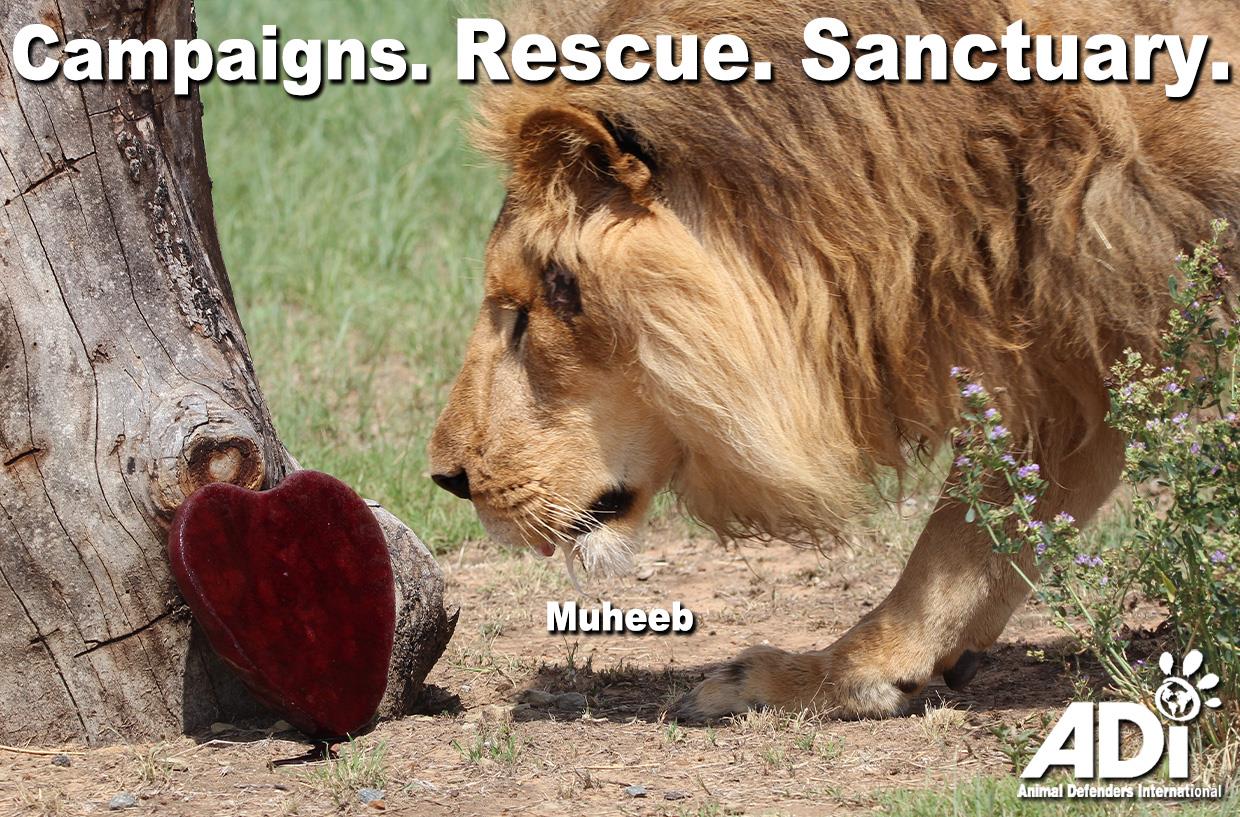
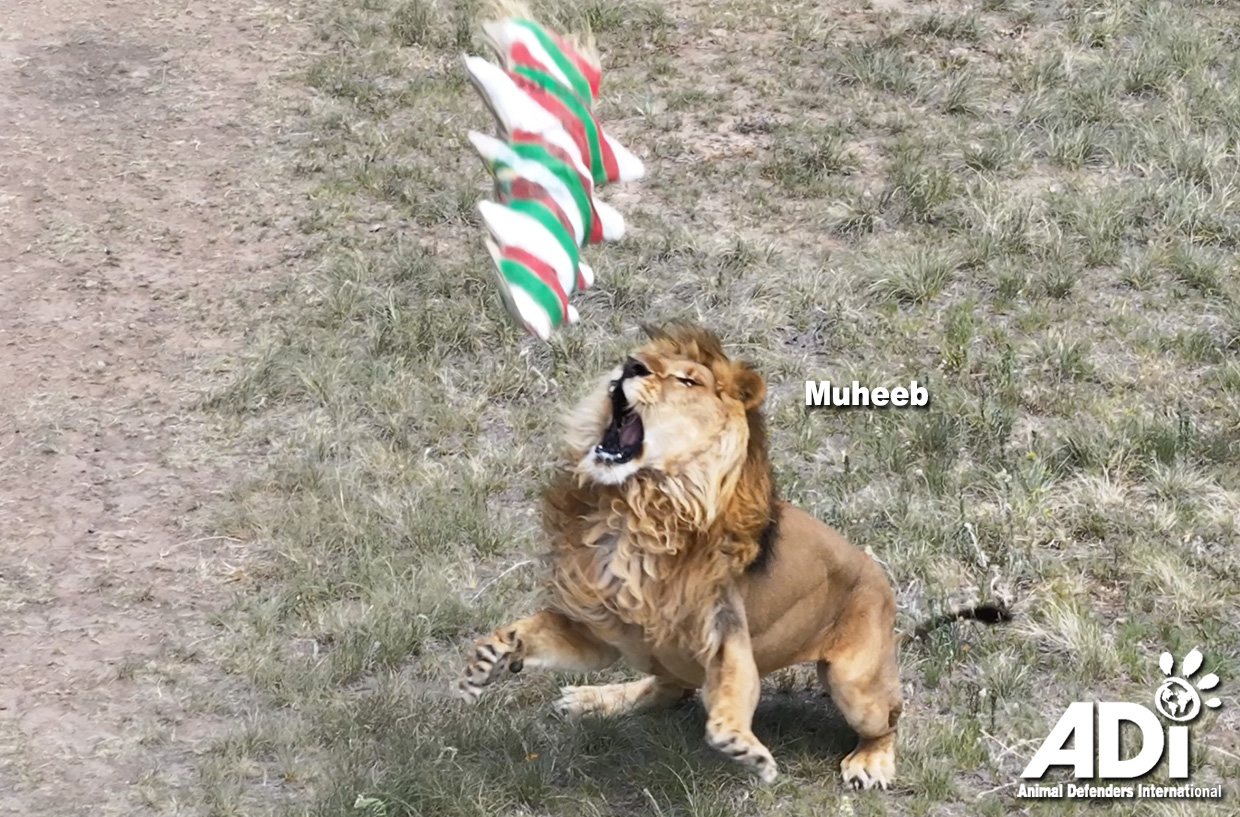
Muheeb’s cancer is a diffused intestinal lymphoma which has spread along his intestine and there is no potential surgery and no cure. He is not in pain and enjoying a good quality of life and will be monitored by Dr Caldwell, and us, to ensure he remains comfortable for as long as possible, with as many toys, enrichment and treats as he wants. On his arrival back home after his diagnosis, he amazed us all with a huge display of energy and enthusiasm with his orange playball. Dr Caldwell is pleased with his energy and appearance, and he is now on two small meals per day, to maximise the nutrition he can get from each meal. Our thanks for the incredible outpouring of love our supporters have given him, see Muheeb with his ball here.
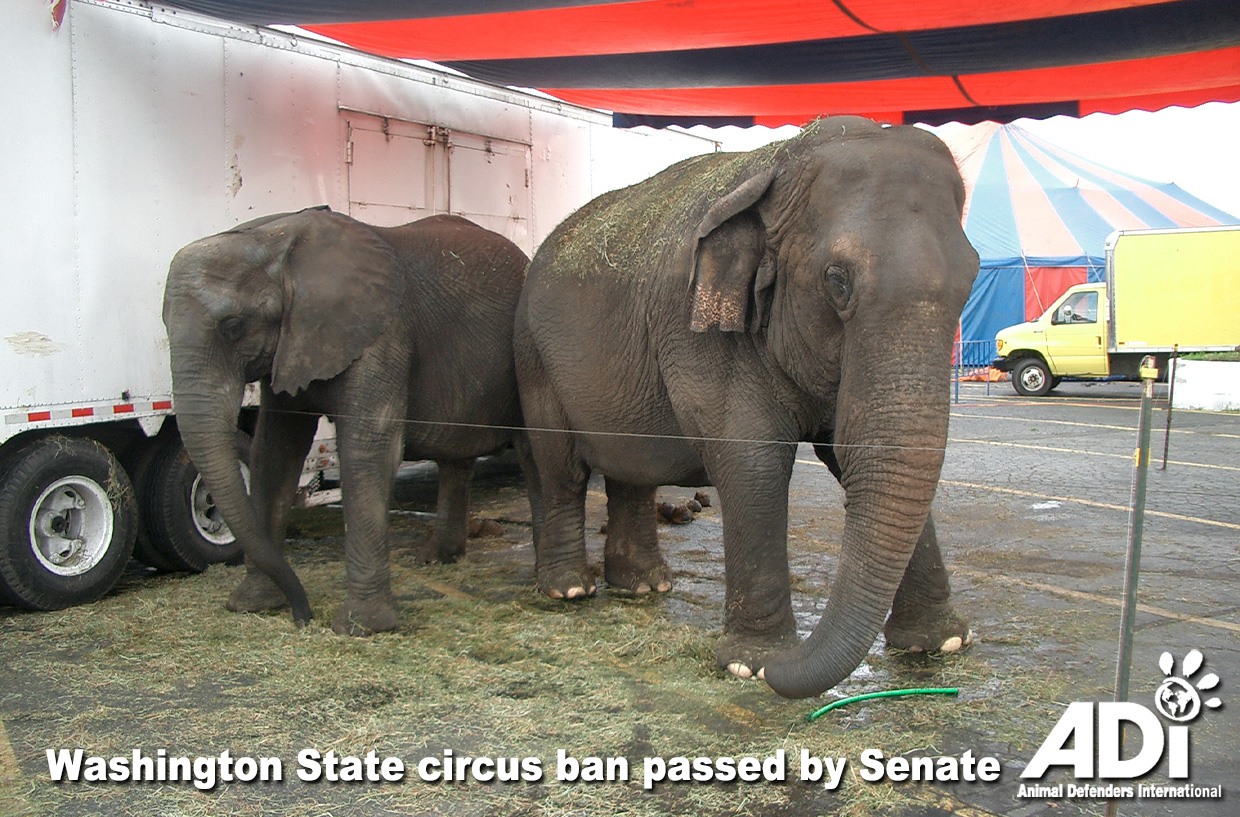
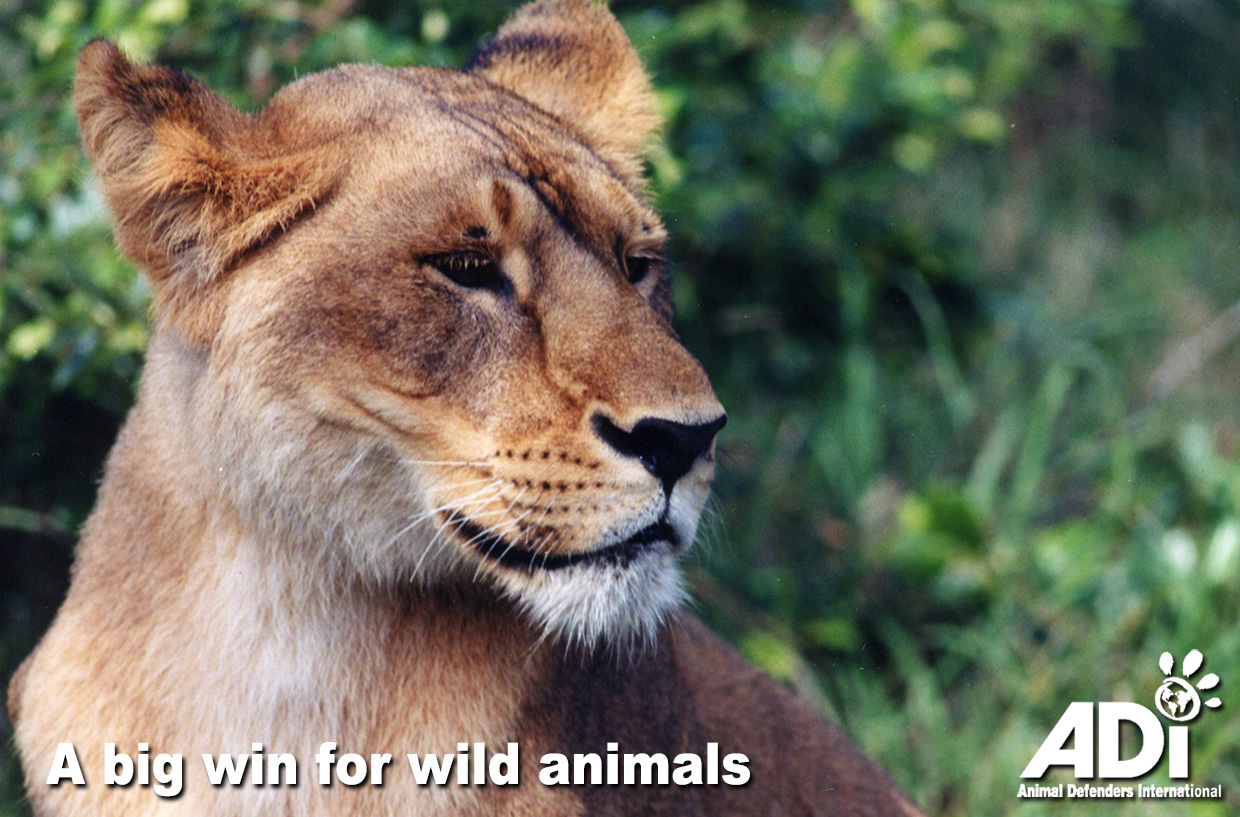
GREAT NEWS! SB5065 to prohibit the use of elephants, big cats, non-human primates, and bears in traveling acts in Washington state, has passed the Senate with a clear majority of 30-19 votes! The bill now goes to the House Agriculture & Natural Resources Committee. Drew McCormick, ADI Public Policy Specialist, presented evidence in support of the Bill.
If you live in Washington, send a comment to your State Legislators TODAY! Find your Legislators with this easy-to-use form: https://app.leg.wa.gov/pbc/bill/5065 Simply fill in your contact details, and click SUPPORT. You can then add a comment to let them know why this is important to you.
In the US, contact your Congress Members and urge them to support the reintroduction of TEAPSPA, to ban traveling animal acts nationwide: bit.ly/SupportTEAPSPA
Los Angeles finally got some much-needed rain to contain the massive fires that swept the area. Our thoughts remain with those impacted by the fires, which ripped through LA County, driven by unusually high winds, displacing wildlife, families, and their pets. As LA begins picking up the pieces, we launched an appealto provide assistance on the ground and deliver resources to individuals and organizations whose voices are perhaps not heard above the other emergency calls for help. Our LA office will get help to where it is needed most.
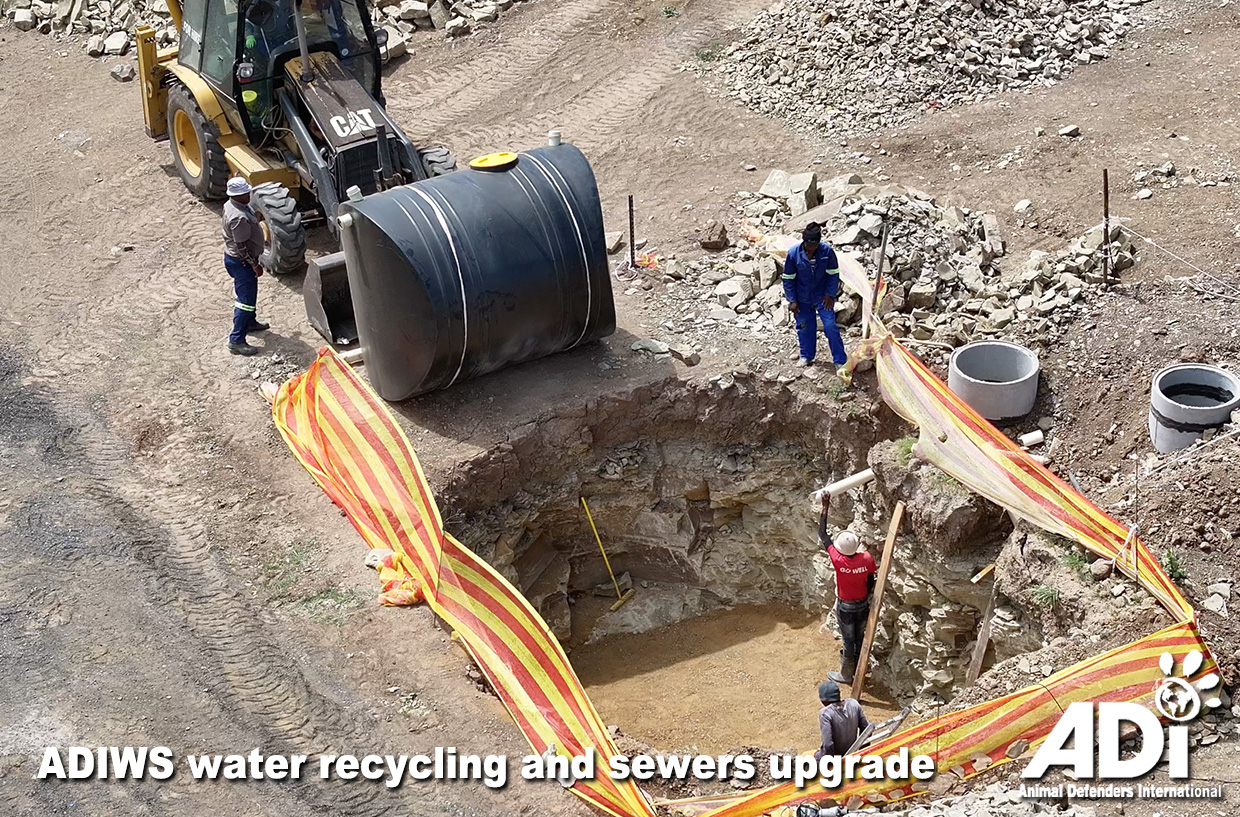
Excellent progress has been made on the new system of sewage and grey water recycling management at the Sanctuary. Five new septic tanks are being installed alongside four ‘grey’ water filtration tanks and water storage tanks. Once fully installed, all grey water (from showers, sinks, etc.) will be filtered for use for watering plants, firefighting, washing cars, etc. This preserves our supplies of fresh drinking water for the humans, lions, tigers, and other animals. We have tested the older boreholes on the property for water supplies and will reopen new wells where possible. The Sanctuary has just been through another drought during rainy season, where our lake dried up completely for the first time since we arrived five years ago– fortunately we are getting rain now and the sanctuary is turning green again. Global weather cycles are changing, and the first rains have arrived months later than normal, it will take months for the lake to recover. This, and the horrific fires in Los Angeles have been a shocking reminder of the impact of climate change. Water security will be critical to the Sanctuary’s growth and capacity to save more animals.
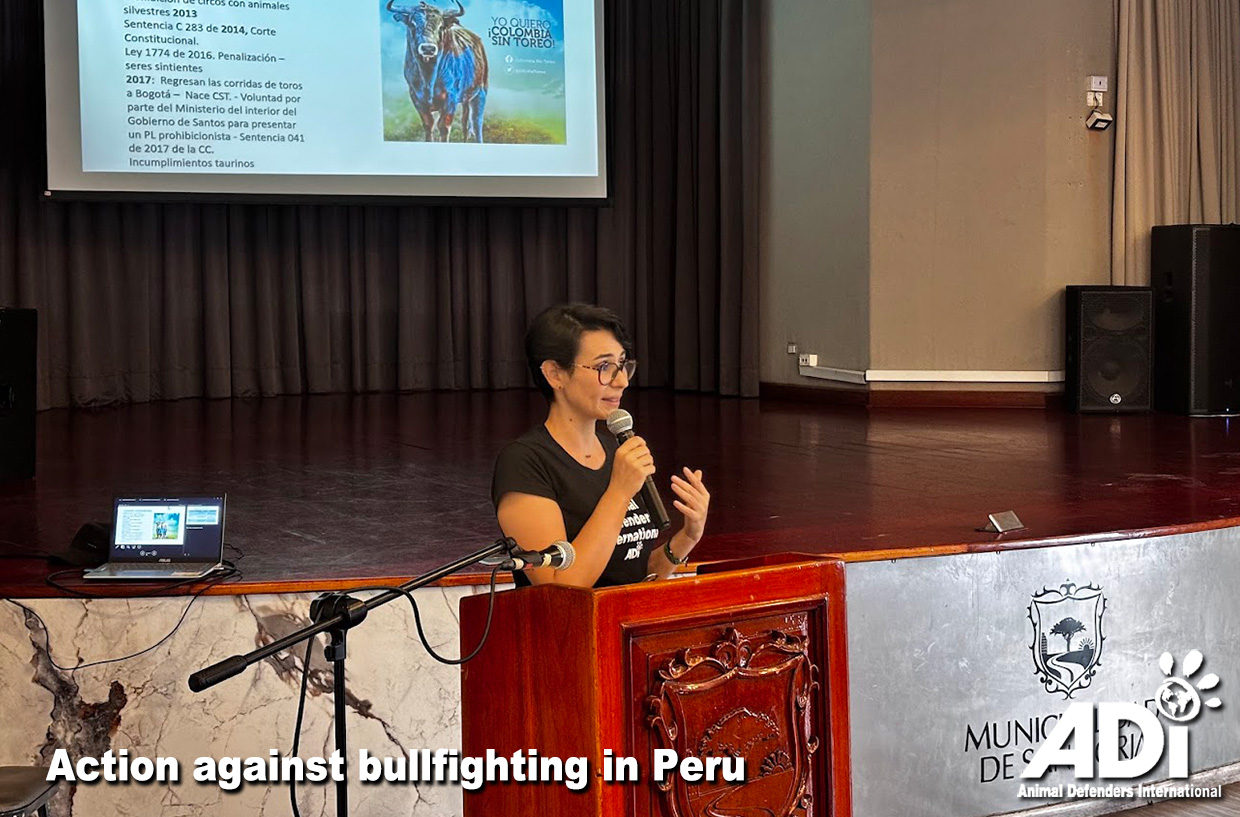
In an attempt to counter legislation to end bullfighting and cockfighting, Peruvian Congressman Juan Bartolome Burgos has launched bill 2828/22, declaring these cruel events ‘cultural’. The bill has already been approved in the first debate in the Culture Committee of the Peruvian Congress despite negative reports from the Ministry of Culture, the Bar Association and animal rights activists. Following the law banning bullfighting in Colombia, ADI recently met with activists and congressmen in Peru, to stop the initiative and end the suffering once and for all (pictured: ADI’s Yani Mateus address a meeting in Peru).
To help, please contact the Peruvian Embassy in your country hereand urge them to join other countries in promoting protection of animals, and also support the campaign for a #PeruWithoutToreo.
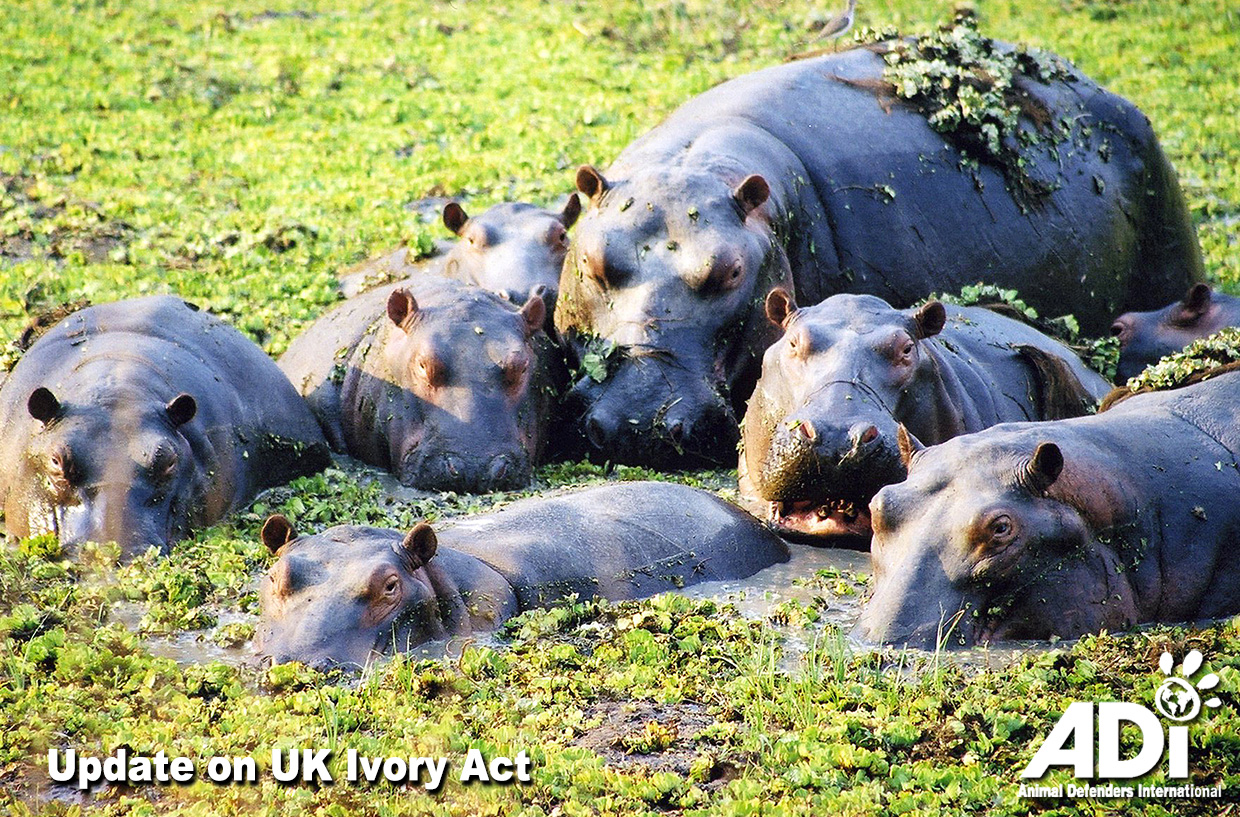
Following approval of amendments by the UK House of Lords in November, hippopotamus, narwhal, killer whale and sperm whale now have greater protection under the UK’s Ivory Act. Also, strengthened penalties mean offenders face up to five years in prison and unlimited fines.
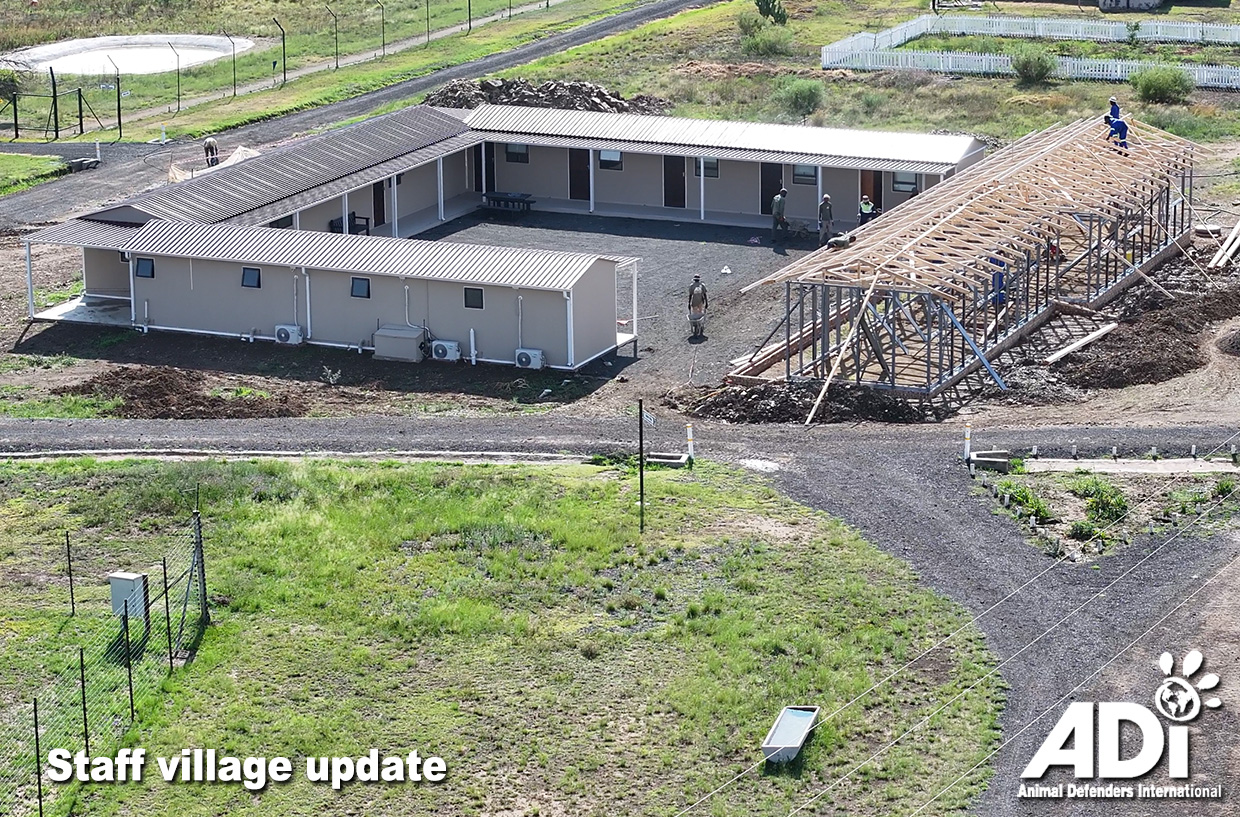
We’ve built a lot of houses for lions and tigers, now we are nearing completion of accommodations for the humans who care for them each day. Work on the final wing of the Tohir Staff Village began last month and is making great progress. Once complete, the complex will house 15 Resident Welfare carers at the heart of ADI Wildlife Sanctuary, on duty 24/7. Thank you to everyone who has helped get us this far.
Five years ago last month, the last circus animals to perform in Guatemala, 17 tigers and lions, arrived at the ADIWS. It had been a volatile, challenging 18-month operation to empty the country’s circuses. Then flight restrictions through several countries meant a two-day journey via Mexico, Belgium, Qatar before finally reaching South Africa – perhaps you were one of those cheering us on and following the live updates at every stop? Little did we know at the time, we were just weeks away from a global pandemic which would have left the animals stranded in Guatemala. Watch the video to re-live one of the greatest animal escapes and enjoy the incredible moments when the lions and tigers stepped out into their new home, to more space than they had ever known.
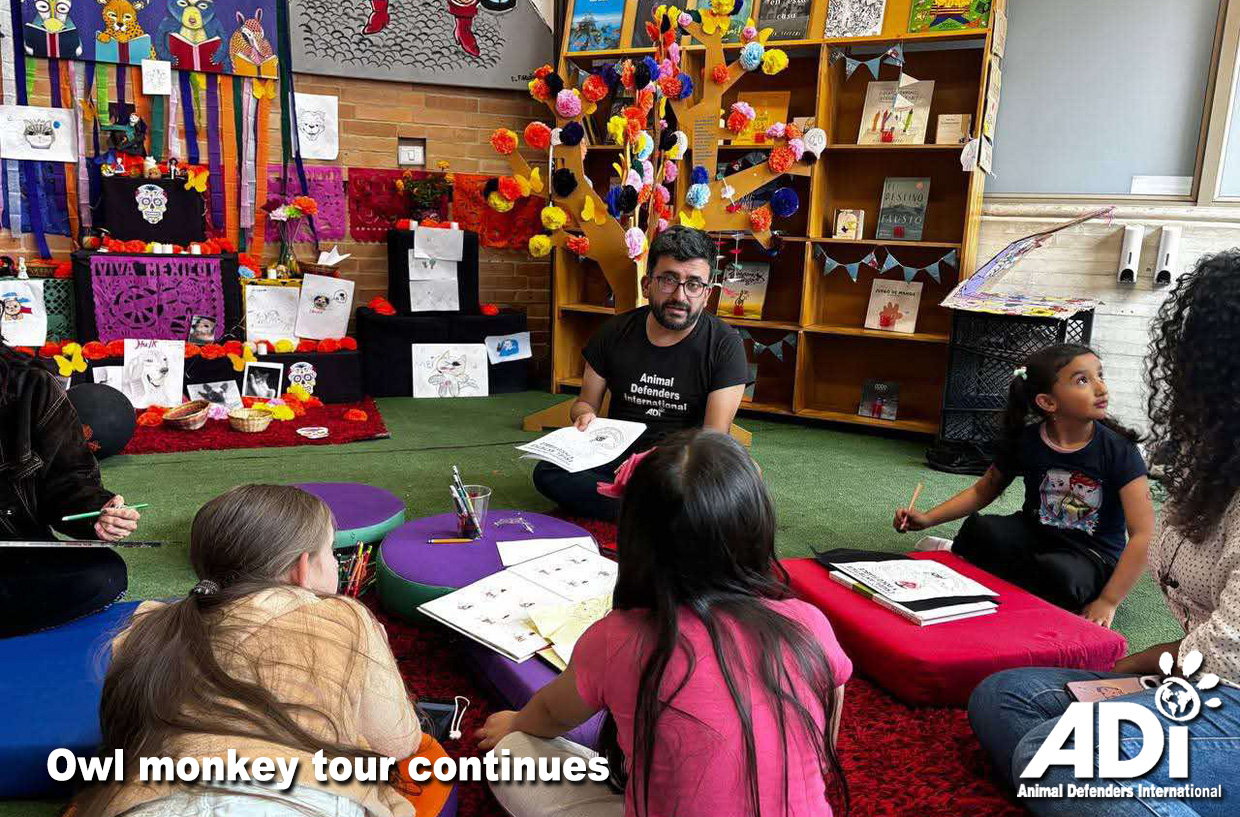
ADI’s inflatable owl monkey continues traveling Colombia, generating empathy and awareness in schools, fairs, libraries and streets. The friendly 4-meter-tall monkey is highlighting ADI Colombia’s campaign to end the use of animals in laboratories. We recently attended a festival of independent publishers organized by the Fondo de Cultura Económica at the Gabriel García Márquez Cultural Center, where we hosted workshops for children and attendees. The message is clear, animal testing is unreliable, unethical and unnecessary.
For decades there were live shows with dolphins and whales at the Antibes facility. The shows were banned in 2021 and the park has finally closed. The 4,000 animals are to be sent to different parks in Europe. France’s Inspector General had determined the best option for Wikie and Keijo, the last orcas in captivity in the country, would be the Whale Sanctuary Project’s Nova Scotia sanctuary. However, in a disturbing development, the Ministry of Ecological Diversity has rejected the application, the attraction Loro Parque in the Canary Islands is now an option.
Tekwe, the smallest of our rescued goats, was treated for ticks by veterinarian Dr Eksteen before quickly rejoining her pals. Tekwe is named after the place from where she was rescued. A reminder that as well as the lions and tigers, the Sanctuary has many other rescues, and they all need our care.
ADI Colombia joined colleagues in Mexico to support the citizen’s initiative seeking a ban on bullfights in Mexico City. Proposed by our Cultura Sin Tortura and Mexico Sin Toreo (ADI is a member), if the citizen’s initiative is successful, a ban will be debated and a vote held in the Congress of Mexico City.
ADI Colombia, Cultura Sin Tortura and Mexico Sin Toreo have launched a campaign of public support – letters, postcards, lobbying – to persuade the city’s deputies to ban the archaic, cruel and violent bullfights in the city.
Supporters have been asking what President Donald Trump’s Executive Orders mean for animals and the environment. ADI is analysing their potential impact, and at this stage, there does not appear to be any good news, mainly several concerns.
For example, we do not know yet the full implications of EC 14192 ‘Unleashing Prosperity Through Deregulation’. Regulation is frequently decried as “unnecessary” and presented as bureaucratic over-reach, but regulations are often the only line of protection animals have. They stop hunters from killing wildlife, provide animals in laboratories or on farms with the little protections they have against the worst suffering, or prevent destruction of habitats and dumping waste into the natural world. Deregulation and cuts in departments like the Environmental Protection Agency may have a significant impact.
Four of the Executive Orders look like bad news for the environment and wildlife, with a drive for more fossil fuel production (despite US oil production already hitting a record high under President Biden) – ‘Declaring a National Energy Emergency’, ‘Unleashing Alaska’s Extraordinary Resource Potential’, ‘Unleashing American Energy’ and ‘Putting America First in International Environmental Agreements’; the last Order removes the US from the Paris Climate Agreement, which heralded a global approach to tackling climate change. Signed by over 190 countries and representing the overwhelming scientific consensus, the Paris Agreement is a rare worldwide initiative to try to protect and preserve our planet. Now, the USA joining Iran, Libya, and Yemen outside of this agreement represents a significant setback in the battle to prevent, or slow, climate change.
Finally, supporters will also have seen the order “Ending Procurement and Forced Use of Paper Straws”, which raises the question, do we really need more plastic do dispose of for such a trivial use? And does nobody think the US is capable of manufacturing effective paper (or other alternative) straws?
If you missed our special Valentine’s compilation of the Sanctuary residents having fun with their special treats, sit back and enjoy here.
With your help, we are continuing to make a difference for animals. To support our work you can make a one-time donation, or consider a monthly gift, here: Donate UK £, Euros, Rand | Donate US $, CA $.
Our very best wishes for a peaceful and successful New Year!
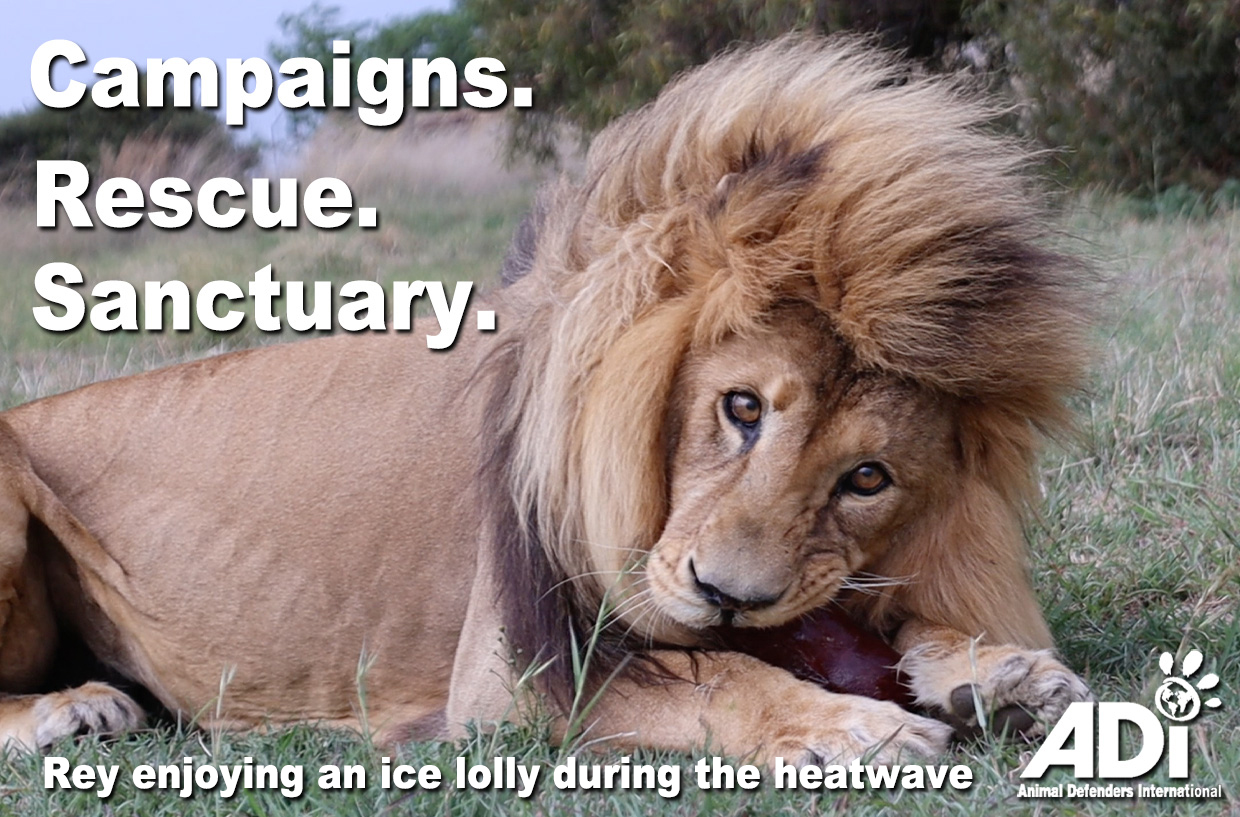
Muheeb has been taken to hospital this week, for Dr Caldwell to examine him and undertake more tests to establish the reason for his weight loss. One of the #Kuwait6 lions, rescued from the illegal trophy pet industry, Muheeb has a friendly, playful nature, and since his arrival at ADIWS, has developed a loud roar and is now a regular voice in the daily chorus with Chino, Coco, Kesari, Simba and Rey. You may recall that Muheeb was sedated before Christmas for blood tests – the Christmas break delayed results, but they were inconclusive. We hope to hear further results soon. In the interim, his food, dietary supplements and vitamins have all been increased, and he has been given a broad-spectrum antibiotic. Although his weight stabilized, he has not yet gained weight, which is what we need to see. As a precaution, he is under strict quarantine. This does not appear to have impacted his playful nature, he wrestles with any form of enrichment and remains engaged with his carers, enjoys his blood/water ice lollies (to keep his fluids up), and continues to roar with his neighbours. We are all hoping for the best for Muheeb.
ADI Wildlife Sanctuary (ADIWS) Our journey building the ADI Wildlife Sanctuary to provide a safe and loving home for our survivors of circuses, zoos and private ownership is now in its seventh year – and what a journey it has been! This coming year, we hope to be ready to bring schools and other visitors to learn how they can help change the world for animals. In the meantime, the campaigns to end suffering of animals in entertainment have secured many more circus bans, as well as other entertainment.
I am delighted to bring you the latest news of our fundraiser to install the state-of-the-art waste disposal and grey water recycling and filtration system to conserve precious water at the ADI Wildlife Sanctuary in South Africa. Since our pre-Christmas update, we have now raised the remaining $21,764 / £17,799 of our $125,600 / £100,000 goal. THANK YOU to everyone who has supported this important appeal, and to Big Cat Rescue for their generous $50,000 / £40,000 match fund. WE DID IT and, with your help, the Sanctuary will enjoy water security for years to come, and work is already underway!
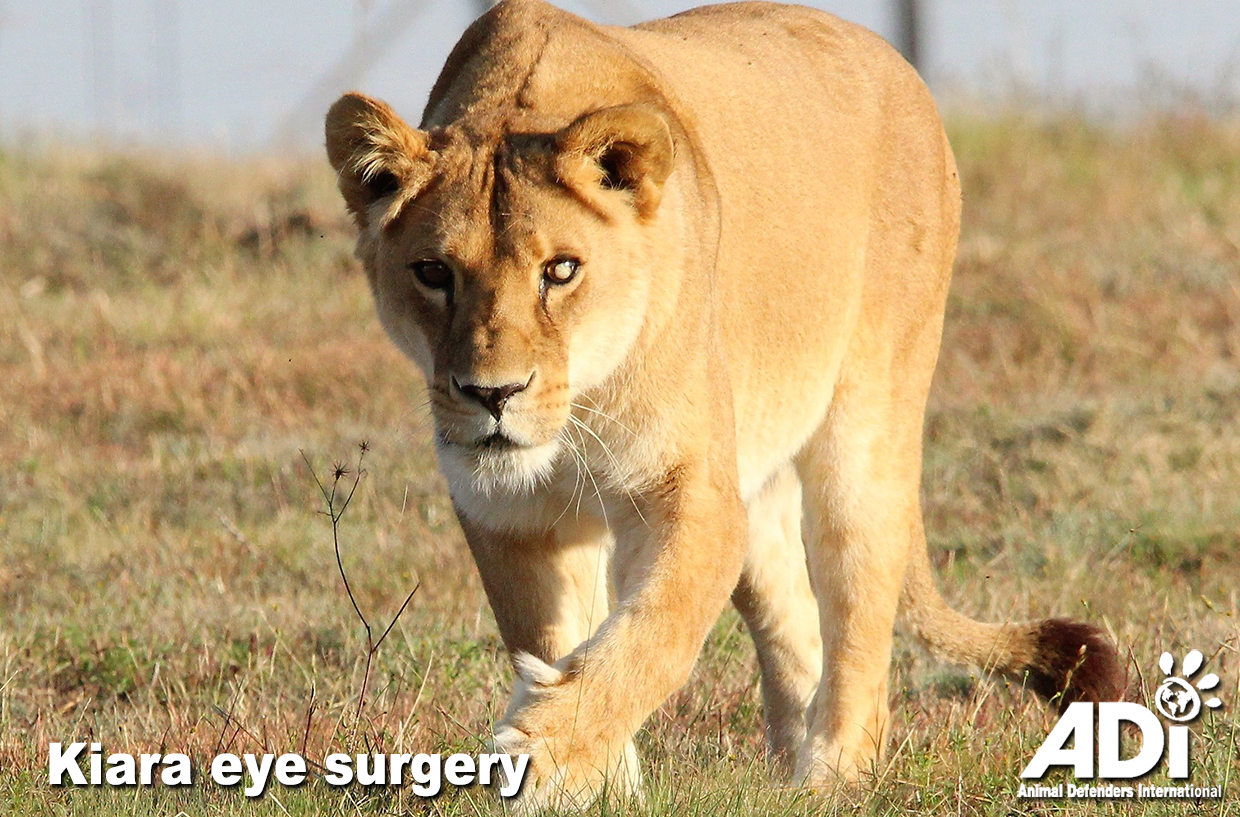
It has been over three years since the cataract on Kiara’s left eye began to significantly impact her vision and she now has very little, if any, vision in that eye. The ADIWS team constantly monitor for any inflammation and discomfort, so it can be treated quickly. Dr Peter Caldwell examined Kiara and determined that the eye will need to be removed at some stage. Now around 15 years old, ADI rescued Kiara from a circus in Peru ten years ago. Eye problems are common in rescued circus animals due to early age malnutrition, and it is often a case of holding the damage at bay for as long as possible. Over the years, several of our lions (Leo, Kiara Cusco, Smith) have needed surgery to remove an eye due to cataracts, which can become infected and painful. All have coped well and resumed life as normal following the surgery.
A barrage of lawsuits is before the Constitutional Court in Colombia in efforts to stop Law 2385/2024 banning bullfighting coming into force. The bullfighters argue the law violates fundamental rights such as culture, work, and personal freedoms, among others. ADI has filed a brief in defence of the law, citing the public’s strong opposition to violence towards animals in cultural events and that social norms and standards have evolved beyond such events. The public wishes to leave such activities in the past. The passing of Law 2385 has involved a colossal effort by ADI and other Colombian groups, and now we will defend the law until abolition of bullfighting becomes a reality.
ADI Colombia attended the 16th International Summit Against Bullfighting in Mexico City. The Summit, convened by CAS International, is an opportunity for campaigners across Latin America to exchange experiences, news, and strategies to help colleagues in the few countries in Latin America which still allow the barbaric bullfights. During the Summit, ADI and other Colombian groups, along with Senator Esmeralda Hernandez and House Representative Juan Carlos Losada, were recognized for their work to pass the Colombia bullfighting ban with an award from the Defenzoores Organization. ADI Colombia’s Eduardo and Yani are pictured with the award.
Our hearts and thoughts are with Los Angeles as wildfires in the area continue to rage. Taken from the ADI office, this image shows the fires starting to blaze, driven by exceptionally high winds. Members of our team and friends were under evacuation orders, and we were heartbroken to hear that some close friends lost everything. Our gratitude to everyone who has helped those still fighting the fires, and the wonderful people helping the animals. Our thoughts are with all affected. We are familiar with defending our Sanctuary in South Africa against wildfires but, thankfully, nothing of this magnitude.
Washington State: A new bill to prohibit the use of elephants, big cats, primates, and bears in traveling animal acts has been introduced in Washington State. This week, ADI testified in support of SB5065, which passed its first committee and now heads to the Rules Committee. The only way to stop the suffering of animals in circuses is to get prohibitive measures like this passed, so please join ADI in supporting them every step of the way, and until they become law.
The New Zealand government is to phase out greyhound racing with a ban from 2026. This allows time for the rehoming of dogs and for workers to transition to alternative jobs. In 2021 alone, 232 greyhounds died and 900 were injured on New Zealand’s tracks. ADI is hoping to see other countries, including the UK, Ireland, Australia, and the US—follow New Zealand’s example.
The Bern Convention’s Standing Committee has voted in favour of an EU proposal to downgrade the status of wolves from ‘strictly protected’, to ‘protected’. The Convention is a binding international legal instrument, and this is a step in the wrong direction for biodiversity and conservation. ADI with Eurogroup for Animals argue for the wolf to remain ‘strictly protected’. Scientific studies have shown culling is not an effective measure to reduce attacks on farmed animals. This decision will leave wolves in Europe vulnerable to hunting.
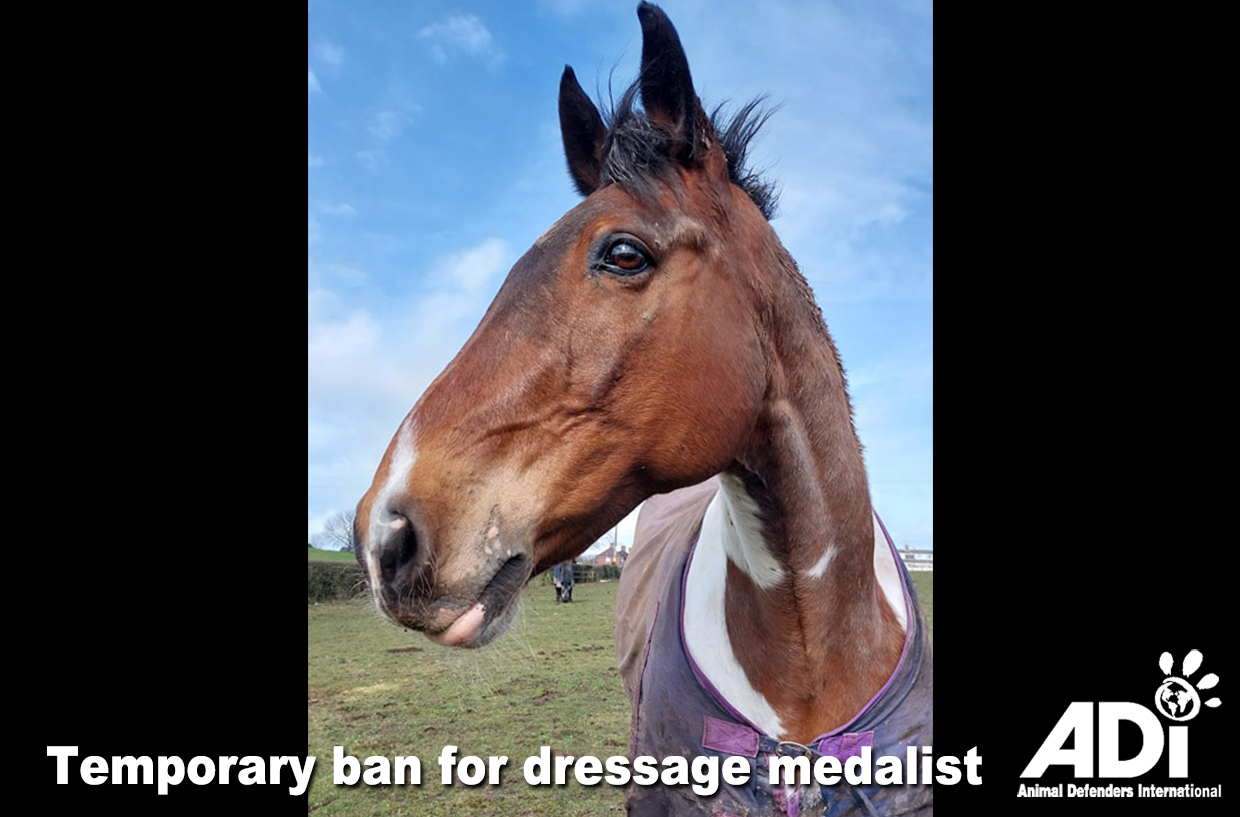
Olympic dressage gold medallist Charlotte Dujardin was fined 10,000 Swiss Francs and banned for one year after being found guilty of ‘engaging in conduct contrary to the principles of horse welfare.’ The Team GB medallist withdrew from last year’s Olympics after video emerged of her hitting a horse 24 times. Since the ban is backdated, Dujardin is eligible to compete again as early as July as well as at the next Olympics. Horses are the only animals used in the Olympics and ADI is supporting a petition to drop equestrian events from future Games, to stop horses being subject to intense training, travelling, competing, and physical abuse. Sign the petition here.
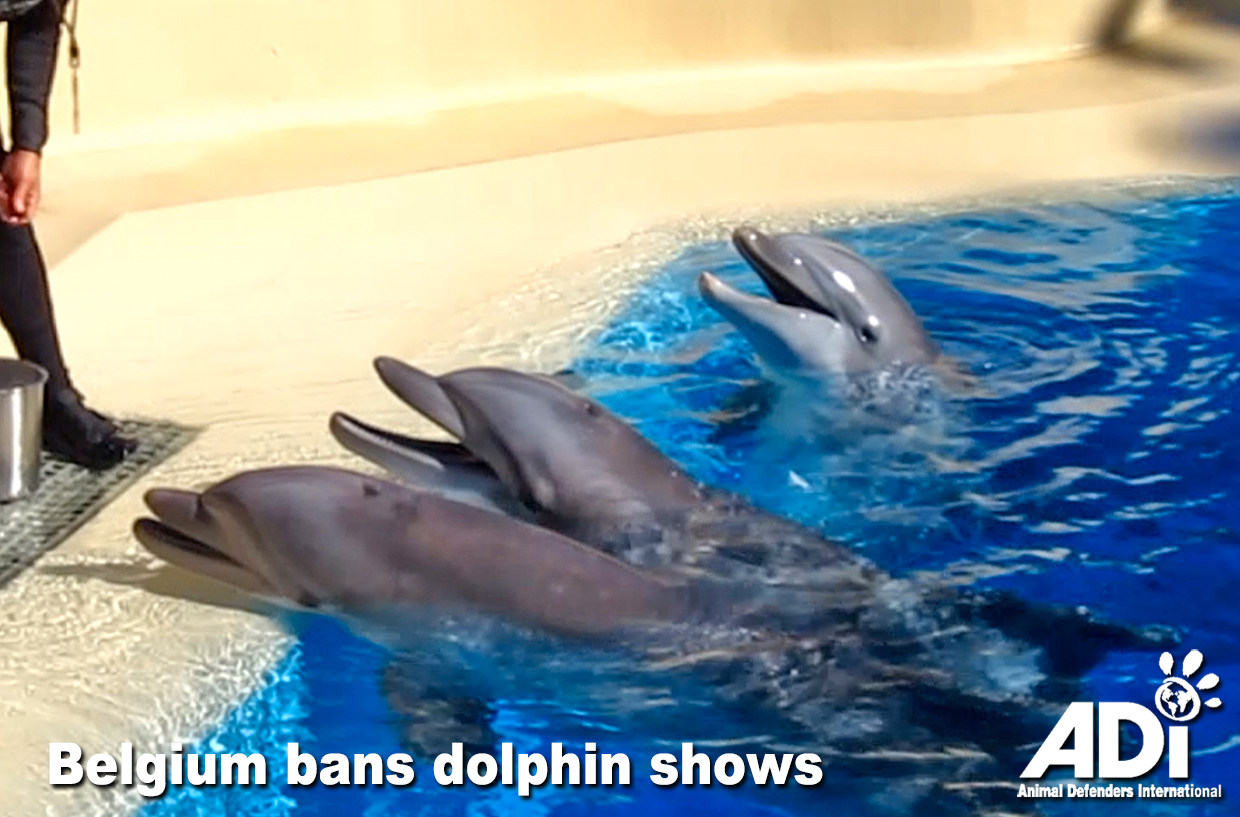
Animals in entertainment: Belgium has become the fourth country in Europe to ban dolphinaria, with a plan for the seapark in Bruges to close by 2037. It is hoped that improvements will be made to the conditions for the dolphins until they can return home. Provisions include a mandatory ban on breeding and import, and regular welfare evaluations to be conducted. Dolphins are highly intelligent and communicative, they live in family groups and have been known to show compassion, even for humans. The world’s oceans are their home – confinement in small concrete tanks is mental torture for such individuals, deprived of their family and the rich environment of the sea.
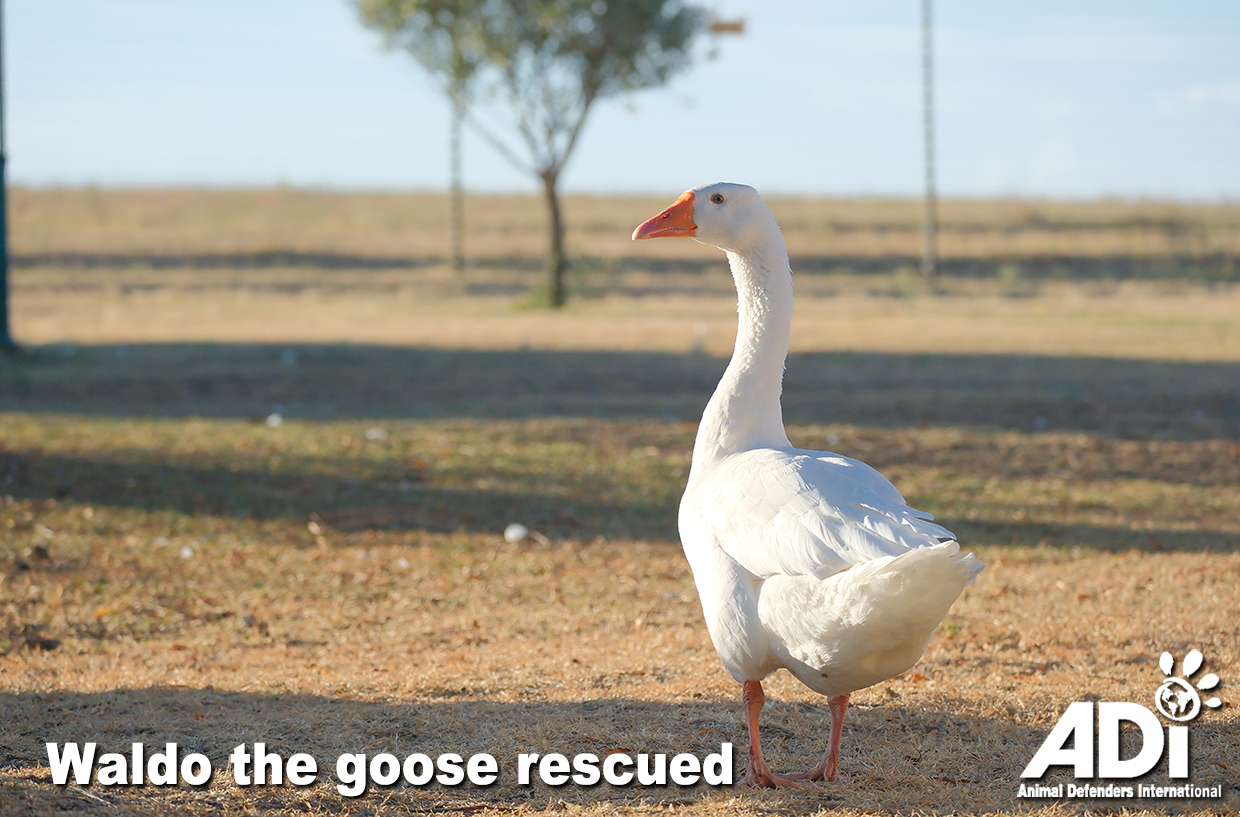
Over Christmas, Waldo the goose joined the gaggle at ADIWS after he was found caged and in appalling conditions in Bloemfontein by the SPCA. Of course we offered a home! Our rescued Pomeranian geese Hoity and Toity honked as they greeted the new arrival and the three now patrol the Chris Lee Lodge (volunteer housing) gardens and swim in the pool together.
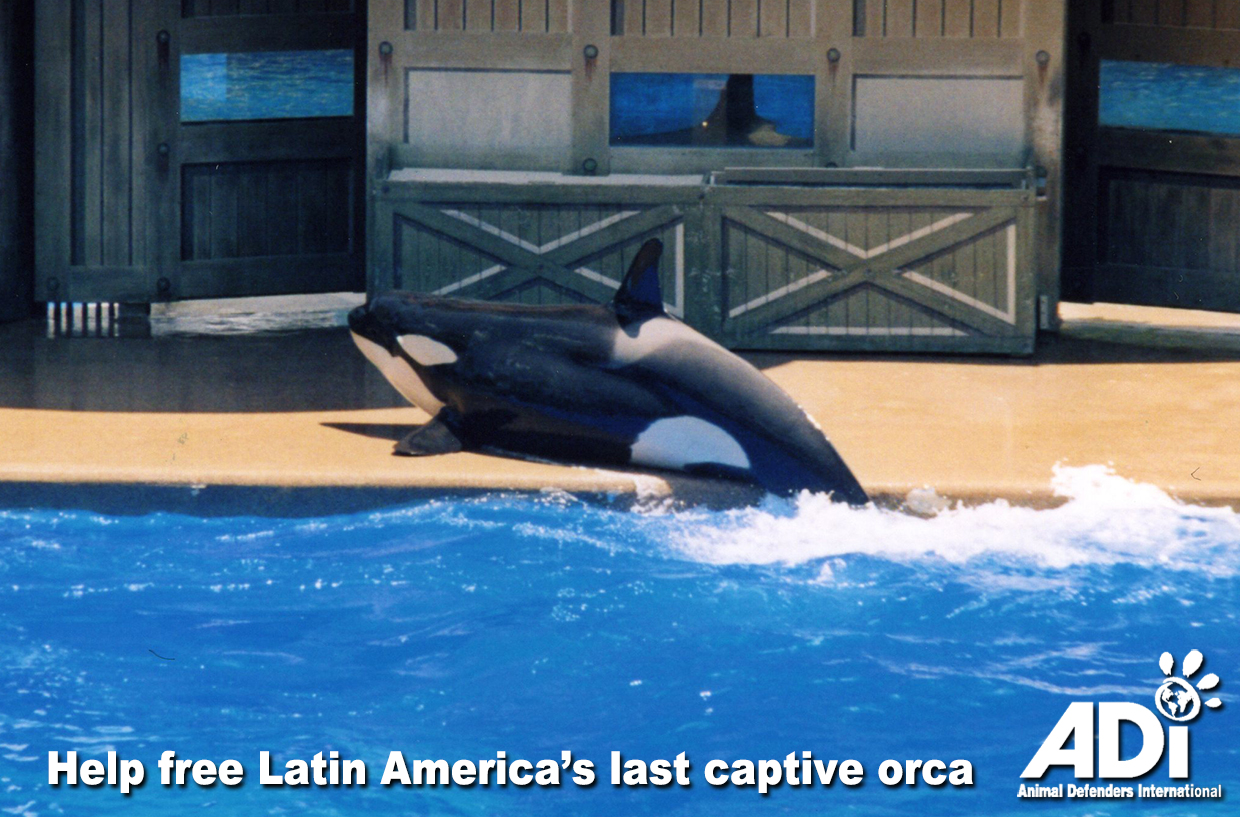
Orca Kshamenk has been confined to a small concrete pool in Argentina’s Mundo Marino aquarium for over 30 years. Viral footage showing the male orca lying motionless has reignited the global outcry for his release. Although Mundo Marino insists he is “healthy” the scientific evidence is clear: captivity harms orcas, leading to abnormal behaviours and shortened lifespans. ADI is supporting a petition calling for his release. Help us push for the Kshamenk Law, a bill to ban captivity of marine mammals for shows in Argentina and demand rehabilitation or reintegration into the wild. Sign the petition here.
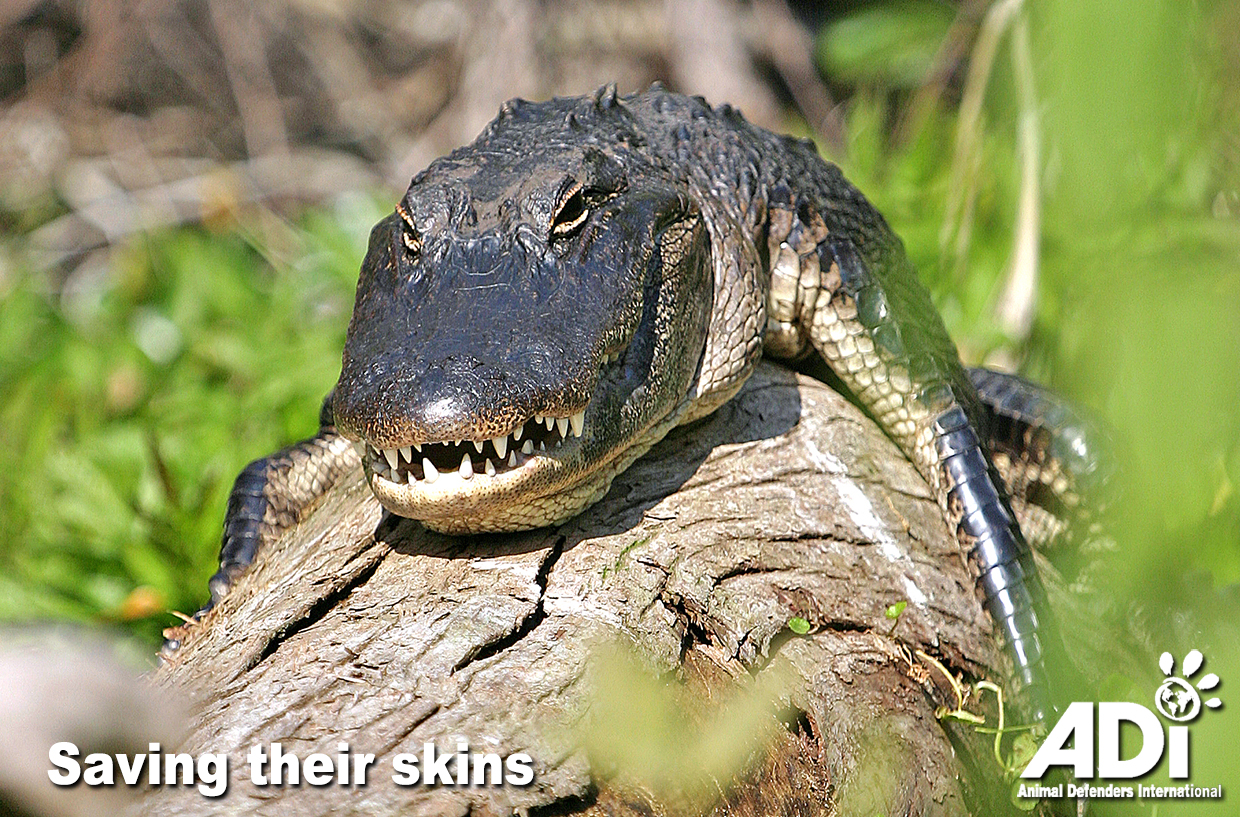
Good news. After banning fur from its catwalks, London Fashion Week has taken the next step, ending the use of exotic animal skins this year. Leading the way, collections will no longer feature the skins of animals such as alligators and snakes.
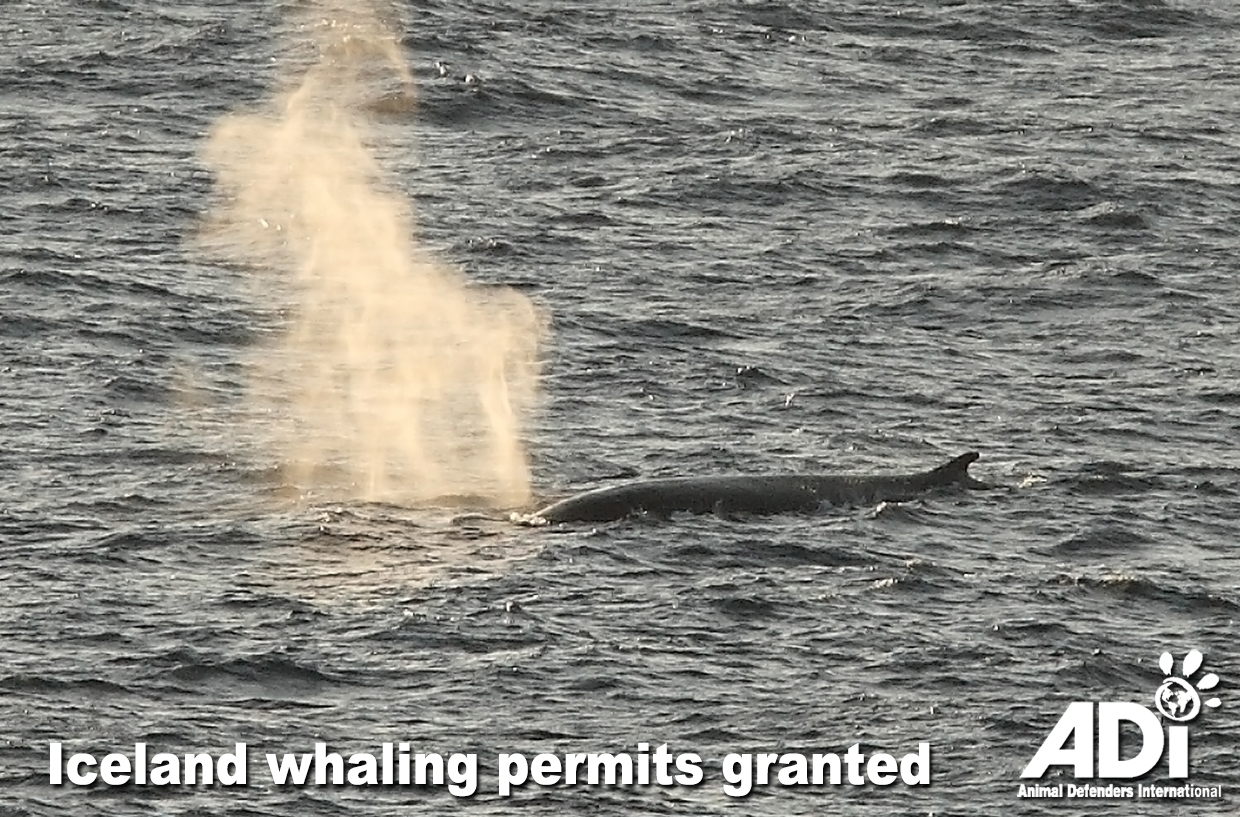
Widespread condemnation has followed the decision of Iceland’s outgoing government to grant 5-year whaling permits to two companies, Hvalur hf and Tjaldtanga. This will allow over 400 whales (209 fin whales and 217 minke whales) to be caught each year until 2029. Isolated in allowing such cruelty, only Iceland, Japan, and Norway are issuing whaling permits. Thank you to those who have taken action and spoken out against the killing. Please keep up the pressure and urge caretaker president Bjarni Benediktsson to end the hunts, see here.
Jordan World Circus will continue touring with animals this year, despite repeated calls to end animal performances. In 2024, one of their female Asian elephants, Viola, escaped after being spooked by backfire from a truck. She ran through the streets of Butte, Montana for 15 minutes before being caught and returned to the circus, put back in the ring and even giving rides to children. Loomis Brothers are also set to hit the road later this month. Help us to get TEAPSPA reintroduced in Congress in 2025 and ban the use of wild animals in traveling acts in the US.
If you missed our special video of the ADIWS residents enjoying their catnip stockings, stars, gingerbread men, elves, Santas, and other gifts over Christmas, you can watch (or watch again!) here.
Our rescued monkeys and bears, saved from circuses, wildlife traffickers, restaurants, and illegal zoos in Peru, received some special treats too. Watch them receiving these here.
With your help, we are continuing to make a difference for animals. We love to celebrate the victories each year, but we know in this fast-changing world, animals are suffering, tormented and under threat all over the world. Like us, you have chosen to step up and speak for the animals – please keep doing that.
To support our work over the coming months and year, please make a one-time donation, or consider a monthly gift, here:Donate UK £, Euros, Rand | Donate US $, CA $.
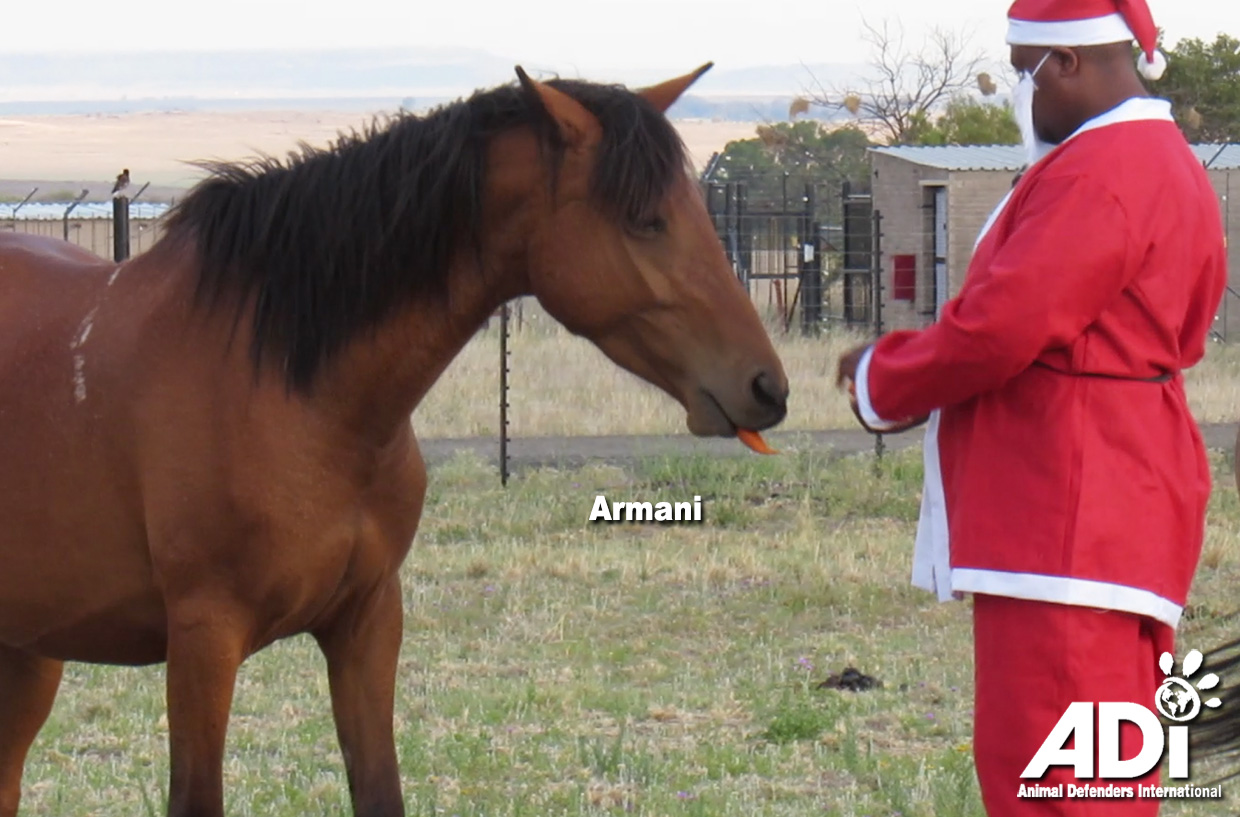
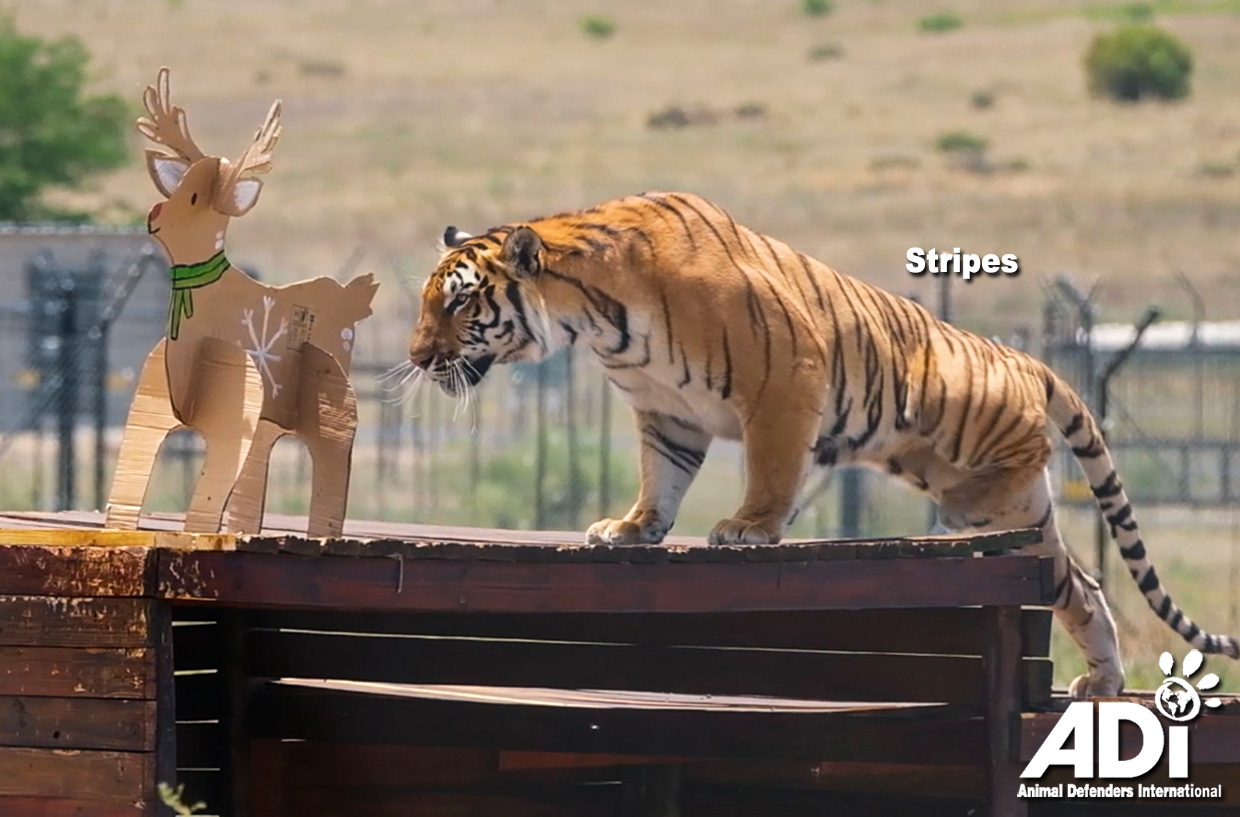
As we count down to Christmas, the lions, tigers, horses, pigs and other residents at the ADI Wildlife Sanctuary are enjoying more presents than ever before – from gingerbread men, stars, and stockings made from recycled coffee bags filled with hay and catnip, to cardboard trees and reindeer, and cardboard boxes to tear open.
Please enjoy these pictures as a special THANK YOU for helping to transform the lives of these animals – taking them from tiny circus cages or discarded trophy pets, to their new lives in Africa. On Christmas Day, check out our special video of all the fun http://www.youtube.com/ADITV-animals
SANCTUARY FUNDRAISER UPDATE: Huge thanks to every one who donated to our appeal for waste disposal and ‘grey’ water recycling and filtration systems at the ADI Wildlife Sanctuary. Including the wonderful $50,000 match fund from Big Cat Rescue we have raised $103,583 towards our total of $125,600. We still need to raise $21,764. The Rick and Michele Palmer Animal Relief Fund has now offered an additional matching grant $1250 – so all donations received before December 31, 2024, can now be matched to this.
This week the sun has been blazing hot at the ADI Wildlife Sanctuary (ADIWS) with the temperature hitting 44 degrees Celsius / 111 degrees Fahrenheit, and, with an alert of two wildfires in the area, there couldn’t have been a more vivid reminder of the importance of water security for our residents at the ADIWS. So, I want to start with a very special thankyou to everyone who has contributed to our latest fundraiser to install state-of-the-art waste disposal and grey water recycling and filtration systems to conserve precious water.
This huge project will impact the daily life of the Sanctuary for years to come and the total cost will be $125,600. Thanks to your support, we have raised $53,835 and thanks to the generous match fund of $50,000 from Big Cat Rescue, we have $103,583 and just $21,764 to raise. The first phase of the project is already under way, with Chris Lee Lodge (volunteer accommodations), the temporary resident food kitchen, and the big barn (will be new Resident Care Center and J.Jarie Jensen Veterinary Center), and the Tohir Staff Village all fully serviced with waste disposal and water recycling. Our Resident Welfare Team will finally move into their new accommodations by Christmas!
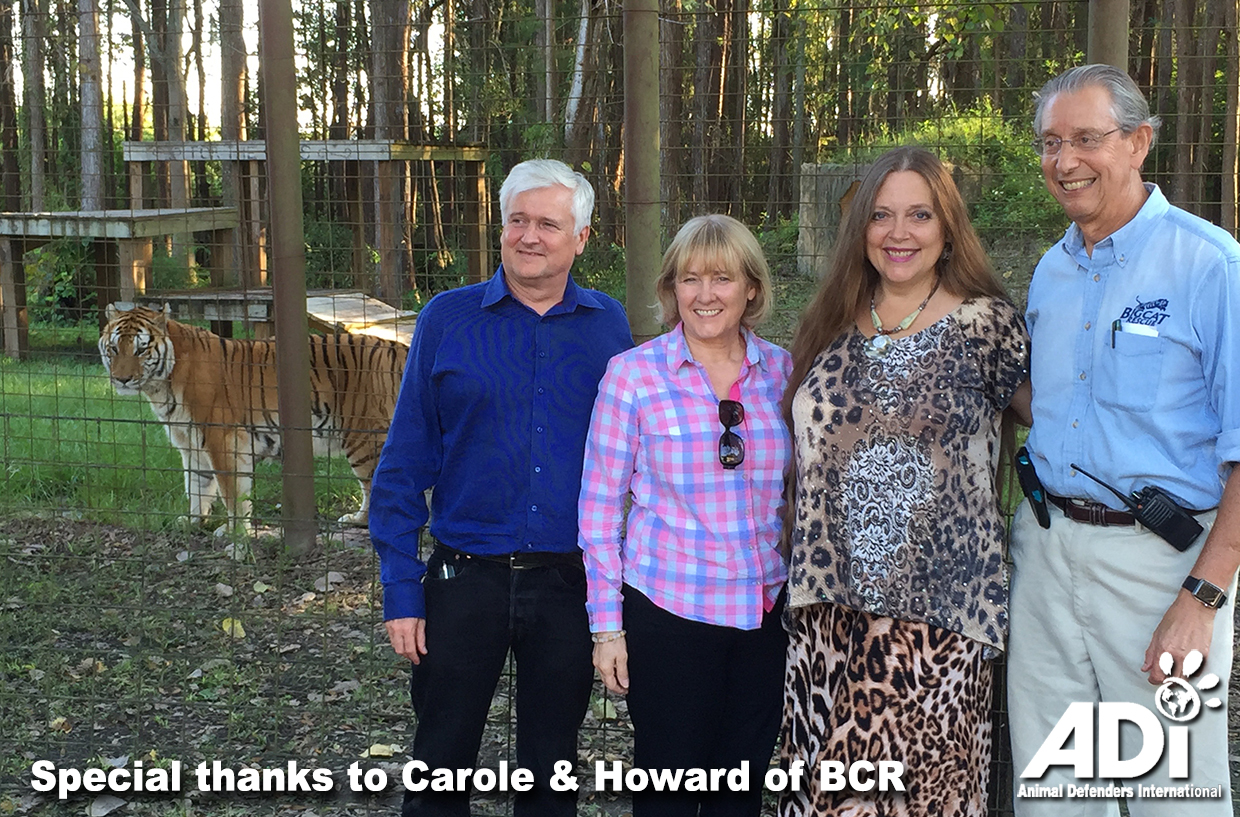
I am truly grateful to Carole and Howard Baskin of Big Cat Rescue (BCR) for helping get this daunting project underway with their match fund. We first began working with BCR in 2015 (above) planning the rescue and relocation of Hoover tiger, who we rescued from a circus in Peru. BCR later supported our circus rescue in Guatemala and provided a home for tigers Simba, Kimba and Max, as well as working together for TEAPSPA and the Big Cat Public Safety Act. BCR has now closed as a sanctuary, with Simba, Kimba and Max transferred to Turpentine Creek, and Carole and Howard are now focused on big cat conservation projects. With decades of experience running a sanctuary, they immediately understood the importance of water security and clean waste disposal – thank you.
Can you help get us to the FINISH LINE with this hugely important water security project for ADIWS?
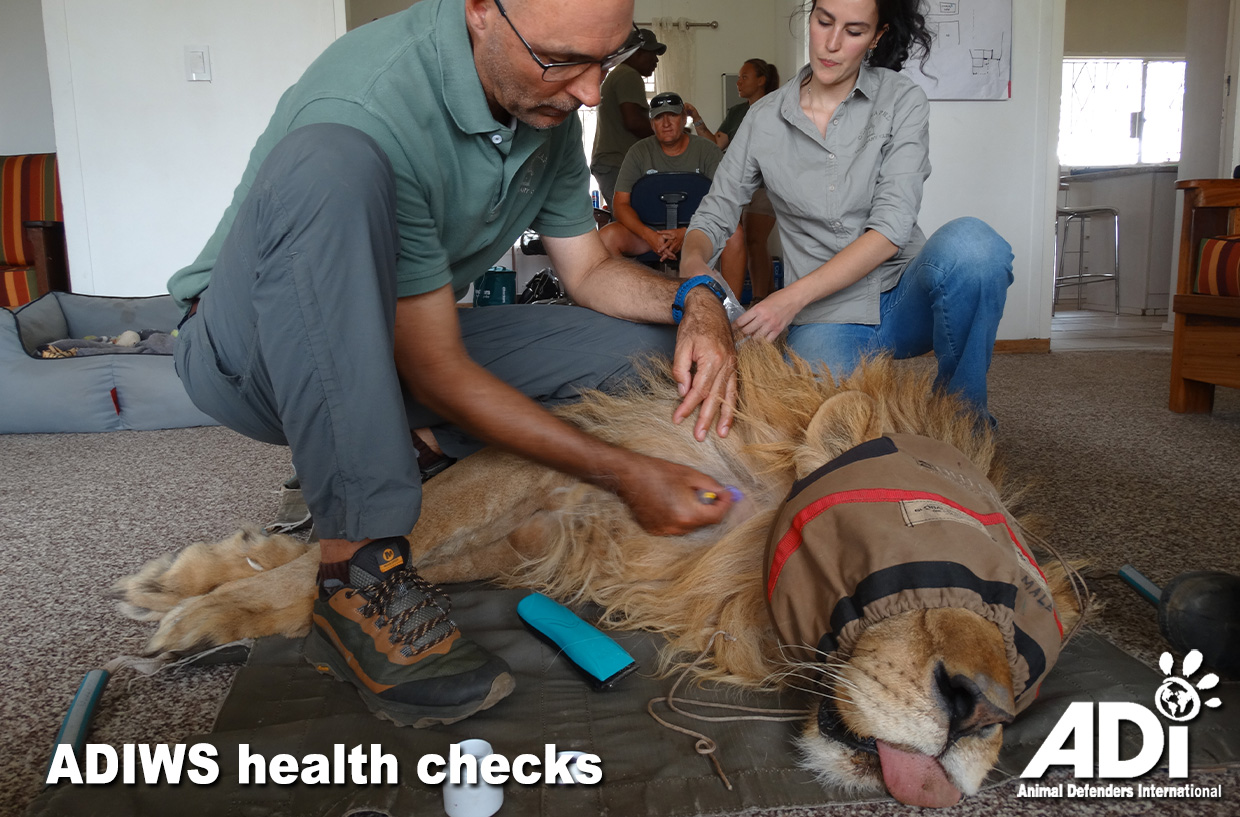
Last week, Dr Peter Caldwell came to the Sanctuary for annual health checks and vaccinations. He sedated four lions: Chino had a small umbilical hernia checked, which Dr Caldwell determined was not troubling him and did not need action; Tarzan’s vitamin levels were checked, and he is being treated for a kidney infection; Saif and Muheeb had blood and urine samples taken. We are concerned about Muheeb (pictured) losing weight, but we await lab results. In the meantime, Dr Caldwell has given him additional vitamins, supplements, and antibiotics and his food is monitored and adjusted as needed, each day.
Two UK women have been sentenced to prison for two years and fifteen months respectively, under the Serious Crimes Act (2007) for distributing hundreds of monkey torture videos and images on Telegram. The videos were filmed in Indonesia and the ground-breaking conviction was the first time offenders have been charged for animal cruelty offences committed abroad. Monkey torture content has been growing over the past few years, ADI is working with the Social Media Animal Cruelty Coalition (SMACC), and the UK’s Ofcom regulator, to crack down on such online videos. Please let ADI know when you see cruel or suspect content, for example, fake rescues, where animals are deliberately placed in danger (for example for fake rescues).
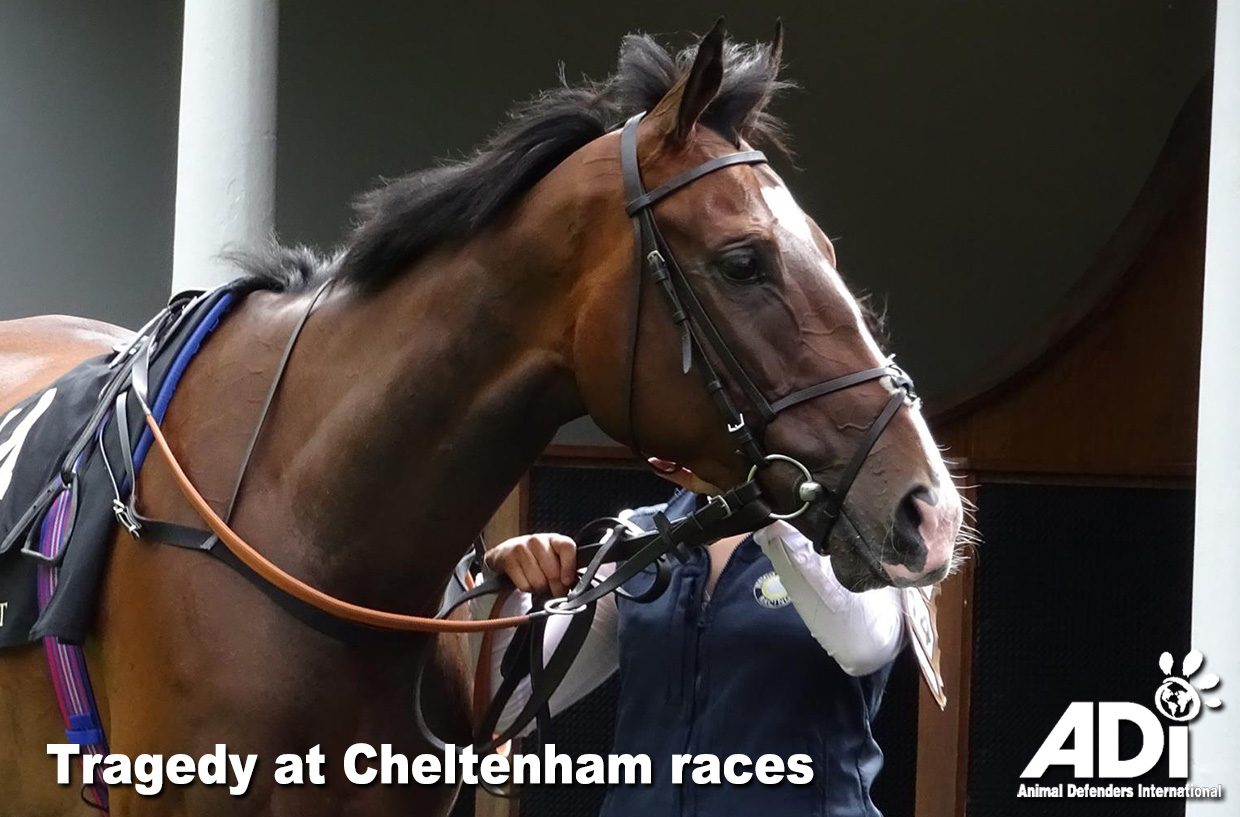
Three horses – Abuffalosoldier, Bangers And Cash, and Napper Tandy – died at the UK’s Cheltenham races. Abuffalosoldier had just won his race when he collapsed and died. The on-course vet stated it was a cardiovascular issue, possibly a heart attack, adding there was high-risk in elite athletes whether they are horses or human, whenever there is exertion. While humans have a choice, the horse racing industry pushes these animals to run their hearts out, and when they are no longer wanted many are sent to slaughter. Don’t attend or bet on horse races and spread the word to help raise awareness.
In a historic move, Berkeley in California became the first city in the US to ban factory farming, with 60% of voters voting in favor of a prohibition on Concentrated Animal Feeding Operations (CAFOs). We hope others will follow this landmark decision.
The UK Ivory Act, which prohibits sale of elephant and rhino ivory, has been amended to include the common hippopotamus, killer whale, narwhal, and sperm whale (walrus ivory is already covered by other regulations). Opponents claimed this will impact the sale of antiques and lead to ivory being thrown away. However, the amendment was passed with the majority view that protecting wildlife from the devastating impact of the ivory trade (including using ‘legal’ ivory as a cover for poached ivory) must override the trade in antique goods.
YOU DID IT! ADIWS now has a fleet of four fully electric Blitz Cruiser vehicles for animal care and maintenance, each powered by a solar panel roof, as well as custom-made fire-fighting tanks for battling wildfires. The vehicles are proving a huge success, improving efficiency, quiet around the animals, non-polluting and no fuel costs! Another step towards being a green Sanctuary and minimizing our impact on the environment in the face of climate change. THANK YOU OUR ADI SUPPORTERS WHO MADE THIS POSSIBLE.
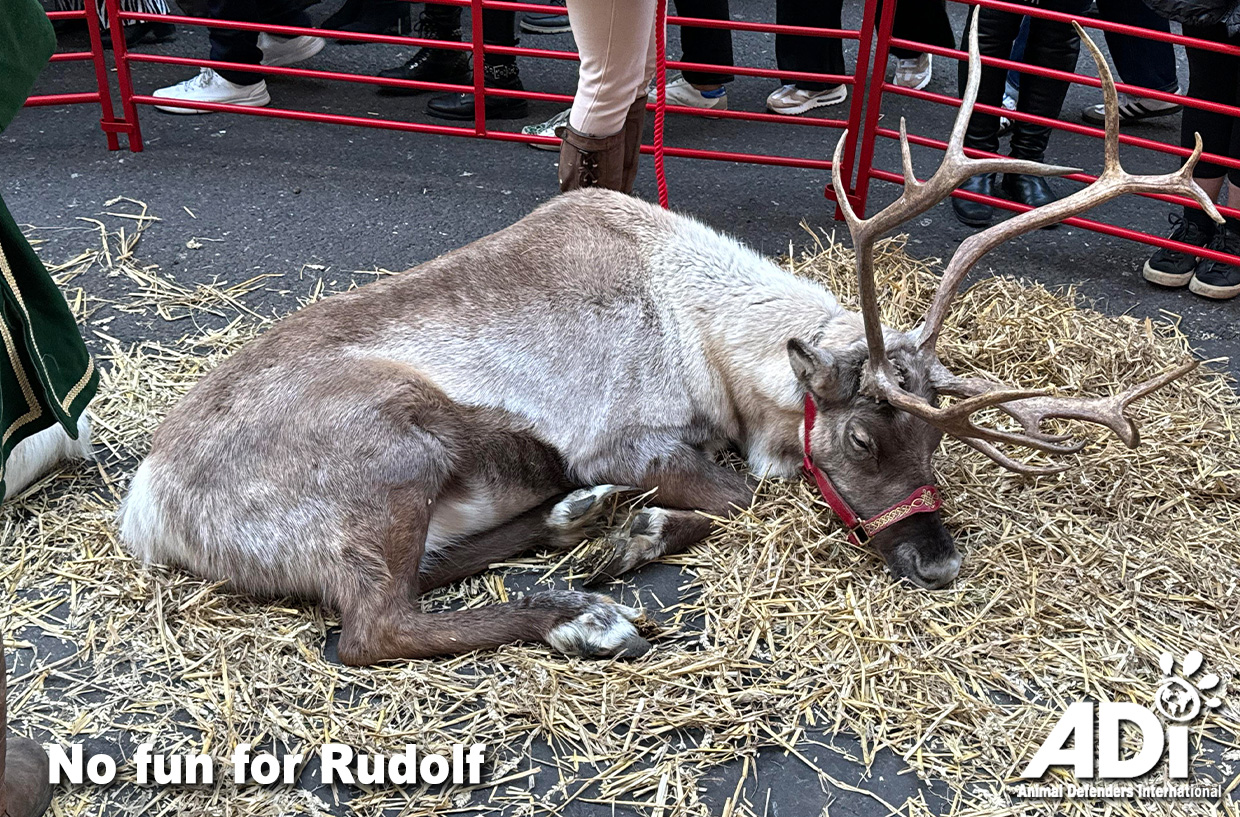
It’s that time of year again, when naturally shy, wide roaming reindeer, are loaded into transporters and taken to city centres and other inappropriate venues to be surrounded by crowds for Christmas events. Despite requests from ADI, Novikov restaurant in central London again used live reindeer as decorations for their Christmas market.
In the US, please contact ADI if you see live reindeer acts in your area.
Orca Keto, who spent 18 years in captivity at Loro Parque in Tenerife, has died. Born 29 years ago at SeaWorld in Orlando, Florida, Keto’s mother was the first captive-born orca at the park, while his father was captured from the wild near Iceland in 1978. Tragically, his father died when his skull was crushed by a metal gate. Keto was repeatedly moved between SeaWorld locations in the U.S. before being flown across the Atlantic with three other young orcas to Loro Parque. For his entire life, Keto was confined to a small tank and made to perform tricks for entertainment. Intelligent and social, he was denied the freedom of the world’s oceans, natural communications, stimulation and enjoyment of his family group. Another victim of cheap entertainment with no thought to the suffering caused.
In the US, please urge your Congress members to support the Strengthening Welfare in Marine Settings (SWIMS) Act, S3694 to ban the taking and breeding of certain cetacean species for public display, and their import/export. You can use this form to contact them – enter your address to send a message to your Congress members.
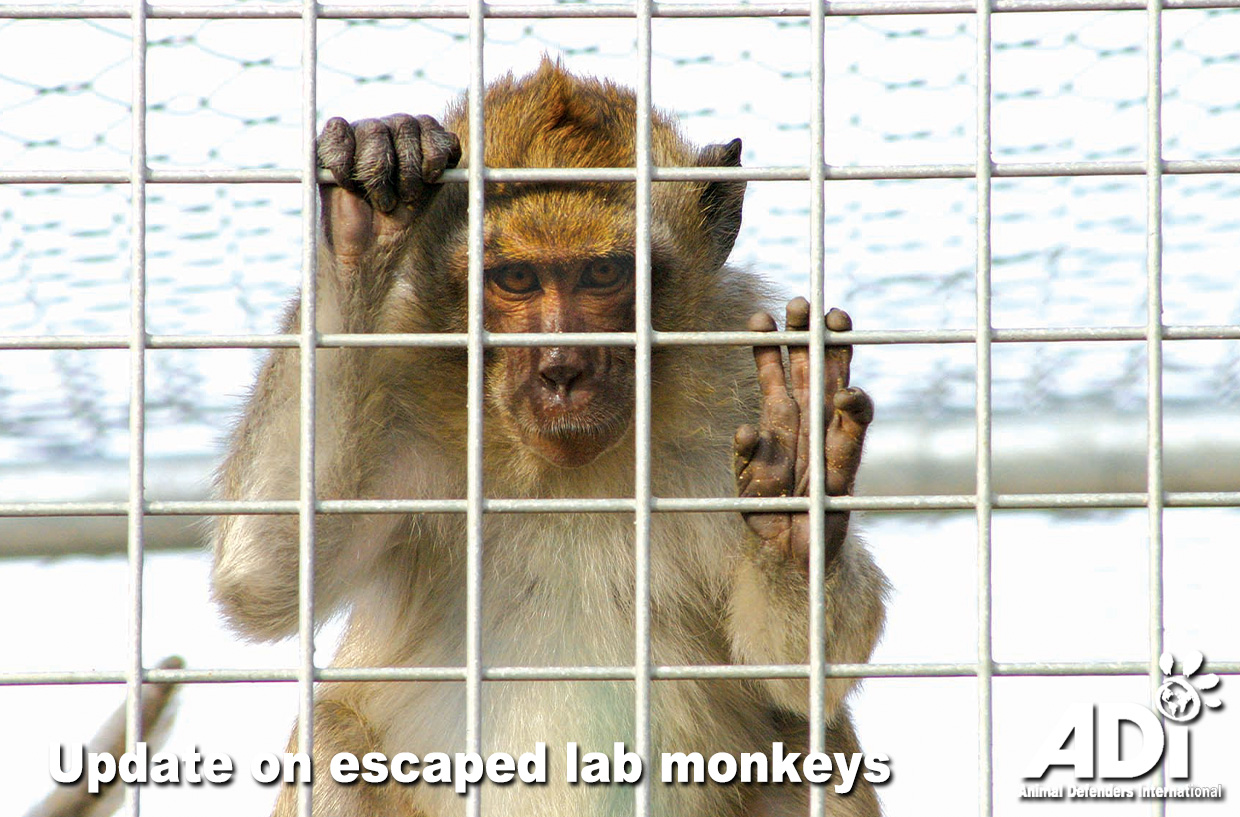
We previously reported on the escape of 43 young macaque monkeys from a laboratory facility in South Carolina. Most have now been recaptured, with reports of four still at large. Their escape has led to concerns about the facility’s operations, questions about the substantial funding it has received, its history of ethical violations, primate escapes, and the potential danger posed to both human and animal communities.
Please urge Alpha Genesis to release the monkeys to a suitable sanctuary and replace animal use with advanced scientific methods – faster, cheaper, more relevant to humans. Email them at info@alphagenesisinc.com.
Zoo vets believe a baby red panda at Edinburgh Zoo died after choking on her own vomit due to the stress of exploding fireworks on Bonfire Night. Studies have shown that approximately 45% of dogs show fear and anxiety during fireworks, cats often hide or run away, and birds and bats often abandon their nests, with some flying up to 500 km to escape the noise, leaving them exhausted. Regulations are urgently needed to limit firework access, use, and to set noise limits. Please support better ways to celebrate, like laser shows, drones, candles, sparklers, and urge firework outlets to either drop their sale or only sell low impact (reduced noise) fireworks. In the UK, Sarah Owen MP has introduced a private members bill (the Fireworks Bill) which would provide stricter rules for sellers and a 90-decibel noise limit for fireworks. The bill will have its second reading in January. Please urge your MP to support. Read more about the impact of fireworks on our website here.
It’s beginning to look a lot like Christmas and our Luna and Jade cards are selling fast, so if you have yet to place an order through our UK / US stores for your festive goodies, be sure to do so by December 18 in the UK or December 16 in the US to receive in time for the big day!
With your help, we are continuing to change the world for animals, with education, legislation, rescues.
At the ADI Wildlife Sanctuary (ADIWS), our pride and joy are the huge natural habitats where our rescued lions and tigers can run free and express themselves – there’s no sight in the world quite like seeing a lion or tiger run full speed across acres of space. Sheer joy for life!
Equally important, though, is the infrastructure that makes our Sanctuary tick, which nourishes and protects our residents – internal roads, solar power pumping water, solar fencing for protection, vehicles for animal care, etc., all are investments in the future for saving more animals.
This Giving Tuesday, we need your help to raise $75,600 (£60,000) for an unusual development – one of our most important projects to date.
Our remote location provides a paradise for animals, and benefits from natural spring-fed boreholes for drinking. However, it also means we must ensure we (a) recycle ‘grey’ water (from showers, washing machines, etc.), to re-use it for watering trees, washing cars, etc., and (b) dispose of our waste into a natural, healthy, septic tank system. This is critical to how many animals we can rescue and maintain in future.
With your help we will install state-of-the-art ‘grey’ water recycling, along with a modern sewage and septic tank system, provision of hygienic public facilities which meet public health standards, so we can welcome groups of schoolchildren and other visitors.
What we will do:
Waste from toilets (black water) will be processed through five new septic tanks (a natural disposal process).
The new sewage system includes separate ‘fat traps’ for residents’ food preparation areas.
‘Grey’ water from washing, showers, sinks, etc., will be filtered in four water recycling station, and recycled water will be used to flush toilets, water trees, clean vehicles, fight fires, etc.
This system will conserve use of spring water, protect our environment and give us long-term water security, allowing us to save more animals.
We must raise $125,600 (£100,000) for this huge project – can you help? But you may ask, why is our target only $75,600 (£60,000) this week?
THE GREAT NEWS: Big Cat Rescue has offered a $50,000 (£40,000) MATCHING GRANT for this project. So, every donation up to $50,000 (£40,000) will be DOUBLED – $10 becomes $20, $100 becomes $200, $1,000 becomes $2,000 ….
Every contribution will make a difference – even the cost of a cup of coffee will add up quickly, thanks to this match fund. We cannot hit our target and secure the match fund without your help.
We know our ADI supporters appreciate the practicalities of rescuing and saving animals, the facilities, security, and meeting their needs. That’s why this Giving Tuesday we are talking sewers, water recycling, plumbing, knowing you completely understand what it takes to give a new life to animals in need and keep them well, safe, and happy for years to come.
I cannot stress enough, how important this project is to every facet of the Sanctuary, from animal care to our educational and campaigning work – please help in any way you can.
Another busy month has gone by, with one highlight at the ADI Wildlife Sanctuary being Halloween! Thanks to our wonderful help of supporters like you, our residents had treats a-plenty to get stuck into – including Muheeb, below.
Also, in case you missed The Dodo‘s video about Muheeb’s rescue, you can watch here, how Muheeb was an illegal pet abandoned in Kuwait City but saved and brought to the ADI Wildlife Sanctuary – it has been viewed 9.1 million times.
VICTORY FOR THE ANIMALS: Romania’s parliament has voted to ban fur farming from 2027, closing the last of the farms breeding and killing minks and chinchillas. ADI investigations in fur farms around the world have exposed horrific suffering and brutal killing methods, but country after country is now ending the suffering
It’s time the US caught up, please urge your members of Congress to support the Mink VIRUS Act (HR3783) the federal bill to phase out mink farming and protect public health.
ADI joined forces with 80 animal protection organisations and elephant experts calling for a halt to wildlife culls in Southern Africa. The Namibia and Zimbabwe Governments have announced large culls, including elephants, to ease ‘food insecurity’. Conservation experts have advised governments to focus on regenerative crop farming, rather than the short term slaughter of their countries’ wildlife assets. Sign the petition here.
We had a scare recently with tigress Lupe, who had another seizure. Dr Caldwell has reviewed her medication, and she was back to her old self in time for Halloween! Tragically, malnutrition, in-breeding and severe confinement in the circus in Guatemala has left the older family members with health issues. It is heart breaking that even after they are rescued, their past follows them. Fortunately, Lupe’s sons Max and Stripes were rescued at just 6 months old, and the better nutrition and welfare appears to have saved them from the same issues, they are much larger and hopefully will remain healthier than their parents.
Fireworks continue to cause companion animals, livestock and wildlife distress, injuries, even death. They also release toxic chemicals, and contribute to air pollution. It’s time for a change, to end the overuse of fireworks by limiting their sale to organised public displays as well as low noise/low-impact fireworks or alternatives such as laser light shows. ADI is contacting retailers to commit to only selling low impact fireworks. Read more here.
A new member of the ADIWS family, Freya was found in a sewer, stinking, dirty and in terrible condition. The SPCA asked if we could help, and how could we say “no” to that face? Two years old, she appears to have been a stray for her whole life. She spends her days racing around the garden at Chris Lee Lodge (our upcoming visitor/volunteer housing) before collapsing at night on the bed of one of our team. She has already made friends with Rollo and Milo, and we anticipate much high spirited mischief.
UZBEKISTAN BANS PRIVATE OWNERSHIP WILD ANIMALS, AND ALSO THEIR USE IN CIRCUSES. Coming in to force on January 1, 2025, the new law prohibits private citizens from keeping certain wild animals, including lions, tigers, leopards, bears, chimpanzees, wolves, turtles, spiders, snakes and more, and bans their use for entertainment in public and travelling circuses. All wild animals currently in private or circus ownership must be transferred to licensed zoos or wildlife sanctuaries with government permits before January 1, 2026.
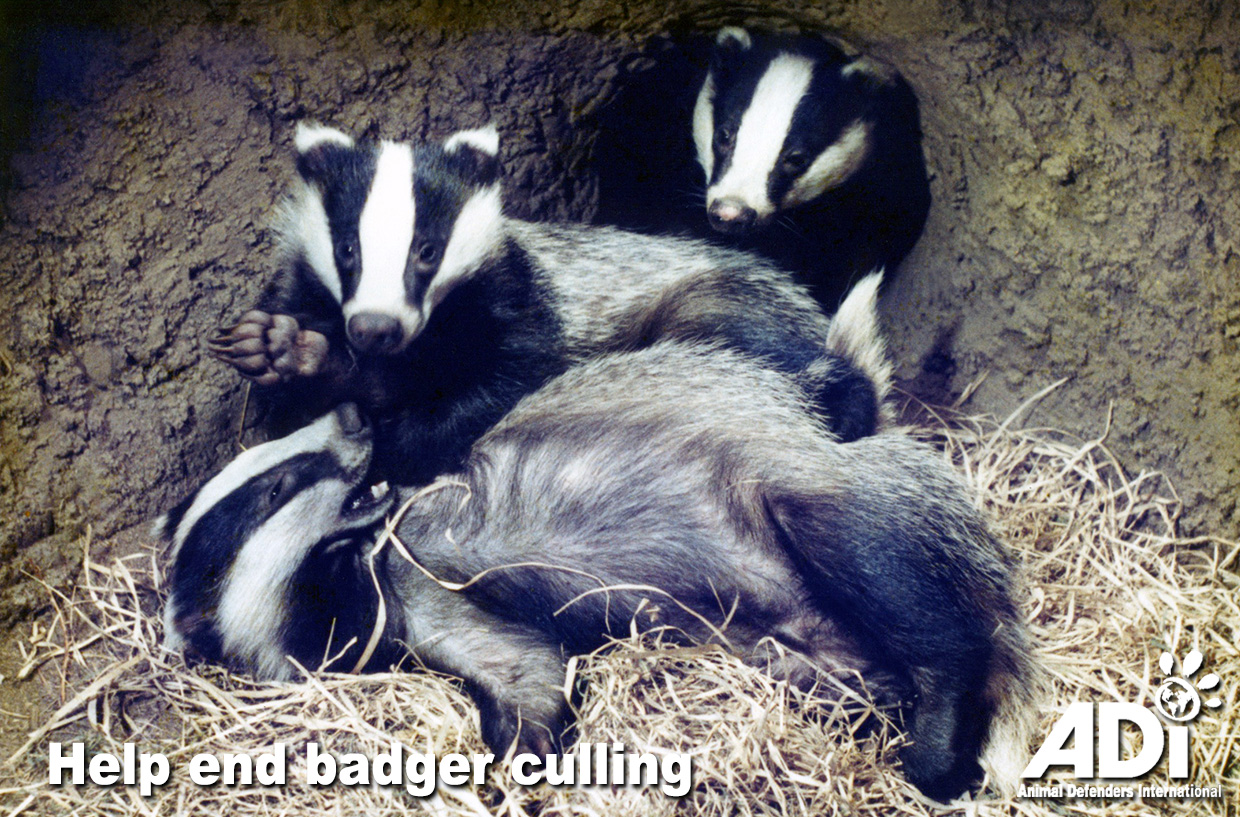
A new TB eradication strategy has been launched by the UK government in a move towards ending the badger cull. Plans include boosting cattle testing, reducing the spread of TB through managing cattle movements, and deploying badger vaccinations. A new population survey will also be carried out this winter. However, the killing will continue as new measures are rolled out. KEEP UP THE PRESSURE. Please take action here to help put a stop to the killing.
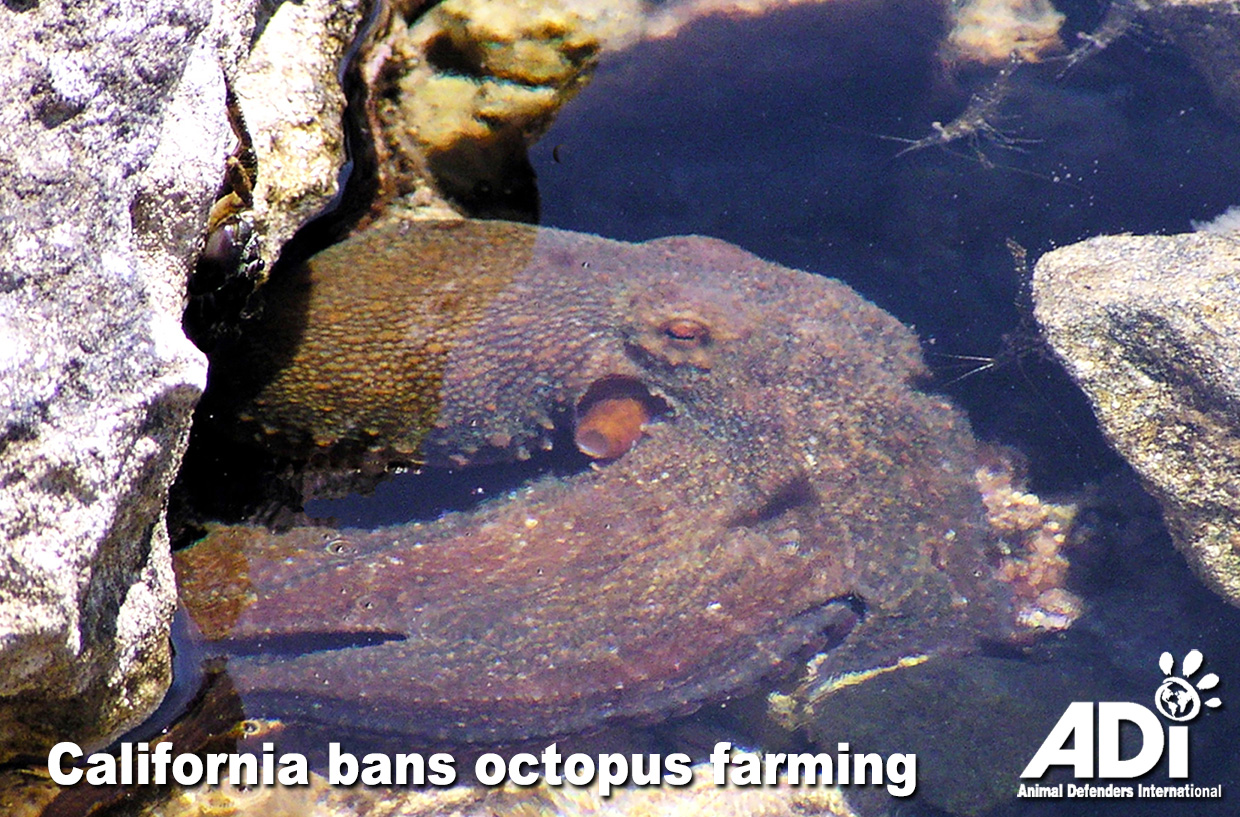
California has followed Washington State, prohibiting octopus farming and sale of commercially farmed octopuses. These highly intelligent, communicative animals suffer greatly when confined in stressful, intensive, unnatural conditions. The Governor of California signed the Oppose Cruelty to Octopuses Act – a huge step forward. ADI celebrates this great news, and we hope more states follow suit.
In the US, please urge your Senators to support the Opposing the Cultivation and Trade of Octopus Produced through Unethical Strategies (OCTOPUS) Act, to ban commercial octopus farming in the US and prohibit imports of farmed octopus from abroad.
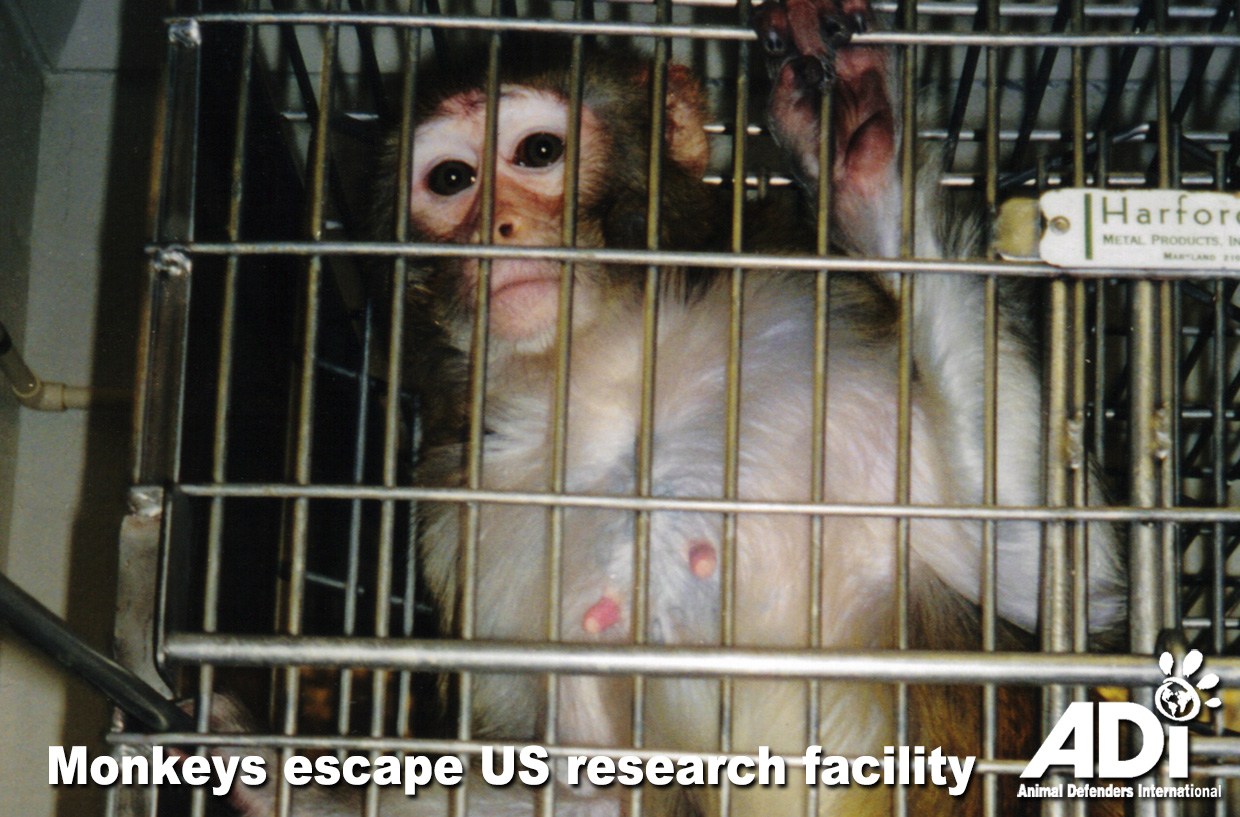
Forty-three young female rhesus macaques recently escaped from a research facility in South Carolina, after a worker failed to secure doors during routine cleaning and feeding. After a few days in nearby woods, the majority of the monkeys have been recaptured. ADI urged Alpha Genesis to show mercy and let the monkeys live out their lives in a sanctuary. Please join us and email info@alphagenesisinc.com.
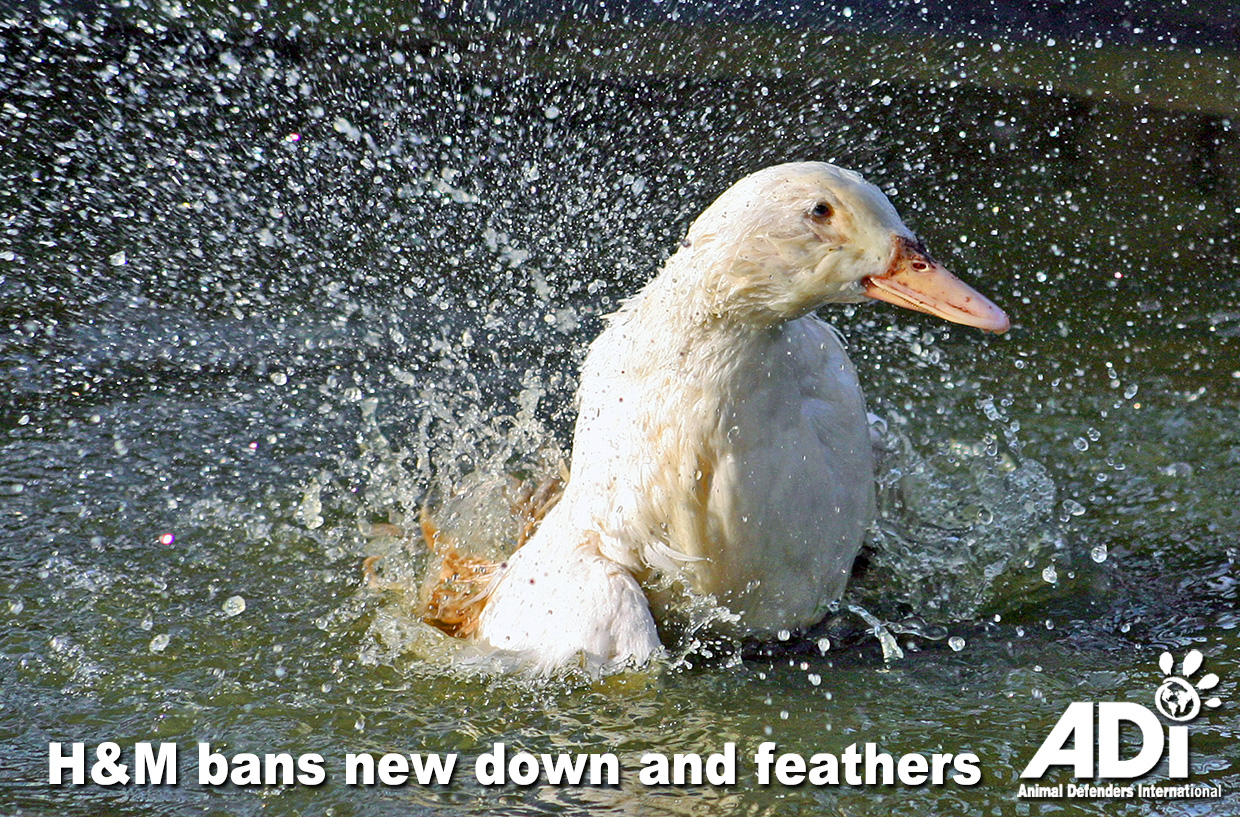
Fashion giant H&M will stop using new down and feathers for its products worldwide by the end of 2025. Ducks and geese suffer the cruel production process and slaughter for this industry. ADI supports H&M’s decision which we hope will influence other retailers to adopt humane alternatives.
A huge ‘Thank you’ to everyone who contributed to our appeal for Blitz Cruiser electric vehicles for the ADI Wildlife Sanctuary. The first two are already doing the rounds and two more are on the way. Our residents are happy as they are quiet around them, and we are happy because they run for no cost, thanks to being solar powered. They are already improving efficiency. We have also received delivery of our custom-made firefighters for the Cruisers, which gives us four extra water tanks for the wildfires.
With your help, we are changing lives around the world for animals – legislation – rescue – new lives.
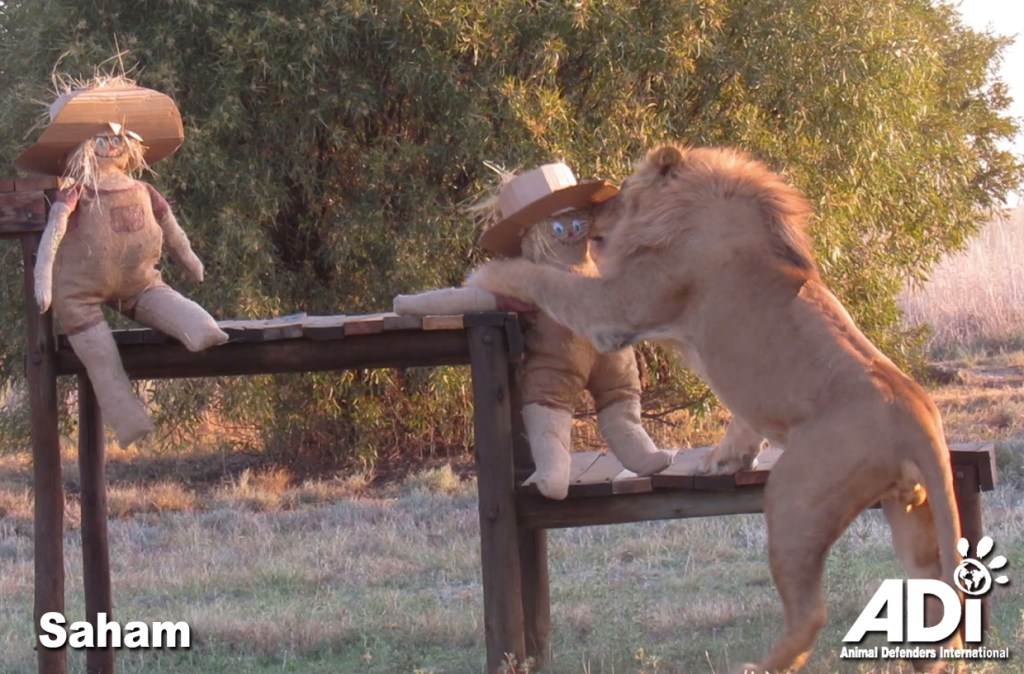
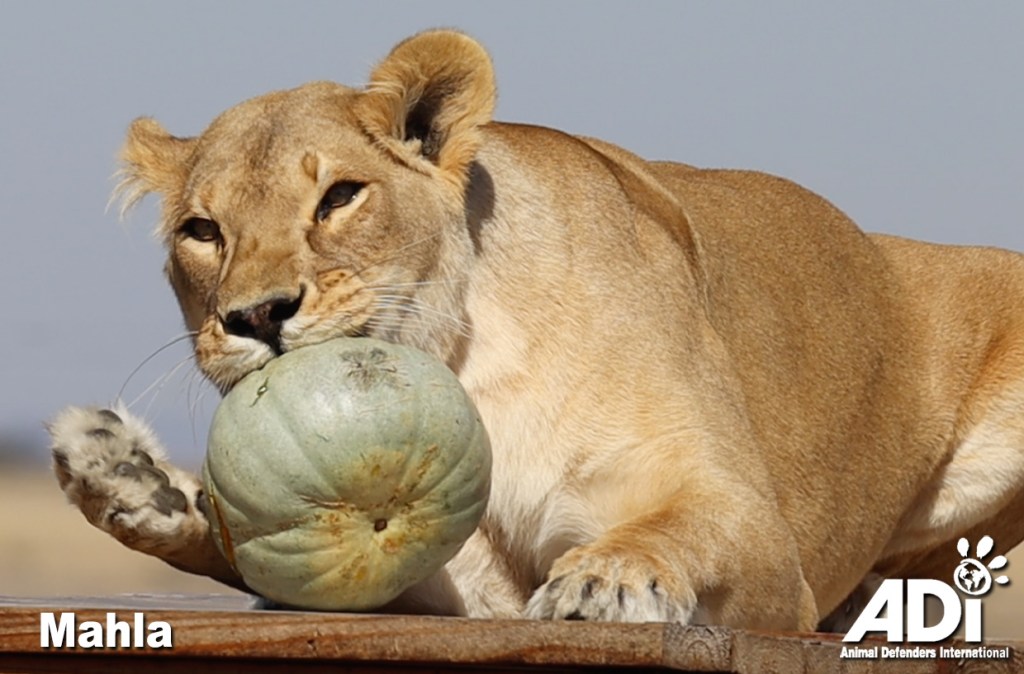
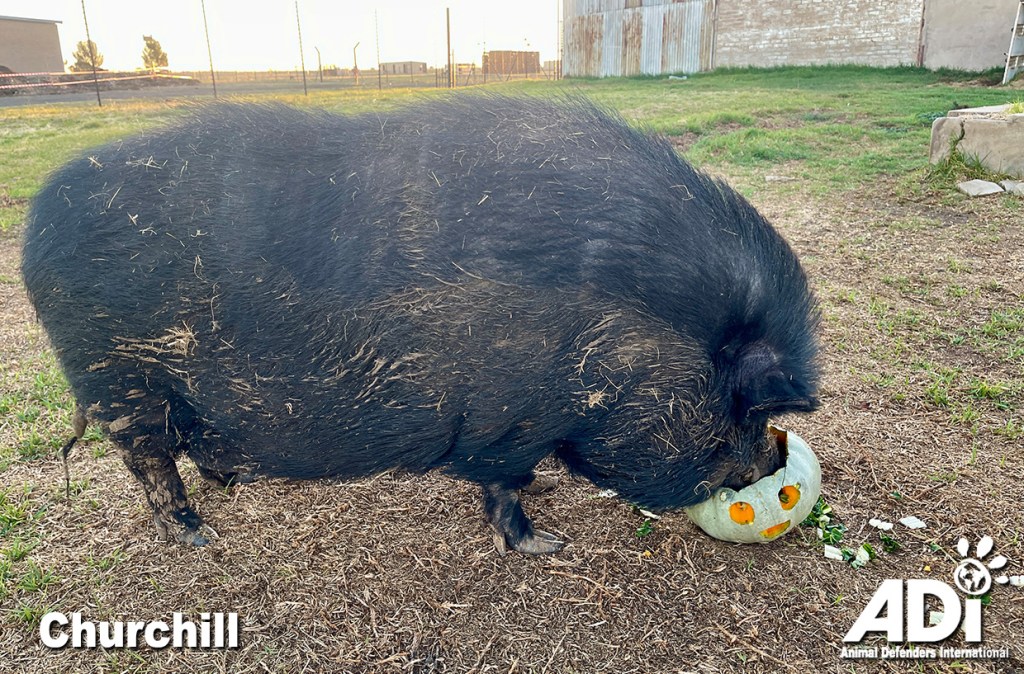
Thanks to our wonderful supporters, like yourself, our rescued lions, tigers, horses, pigs and others have been in fun paradise at the ADI Wildlife Sanctuary with pumpkins, hay bale castles and catnip scarecrows and we will be able to keep the fun going this month.
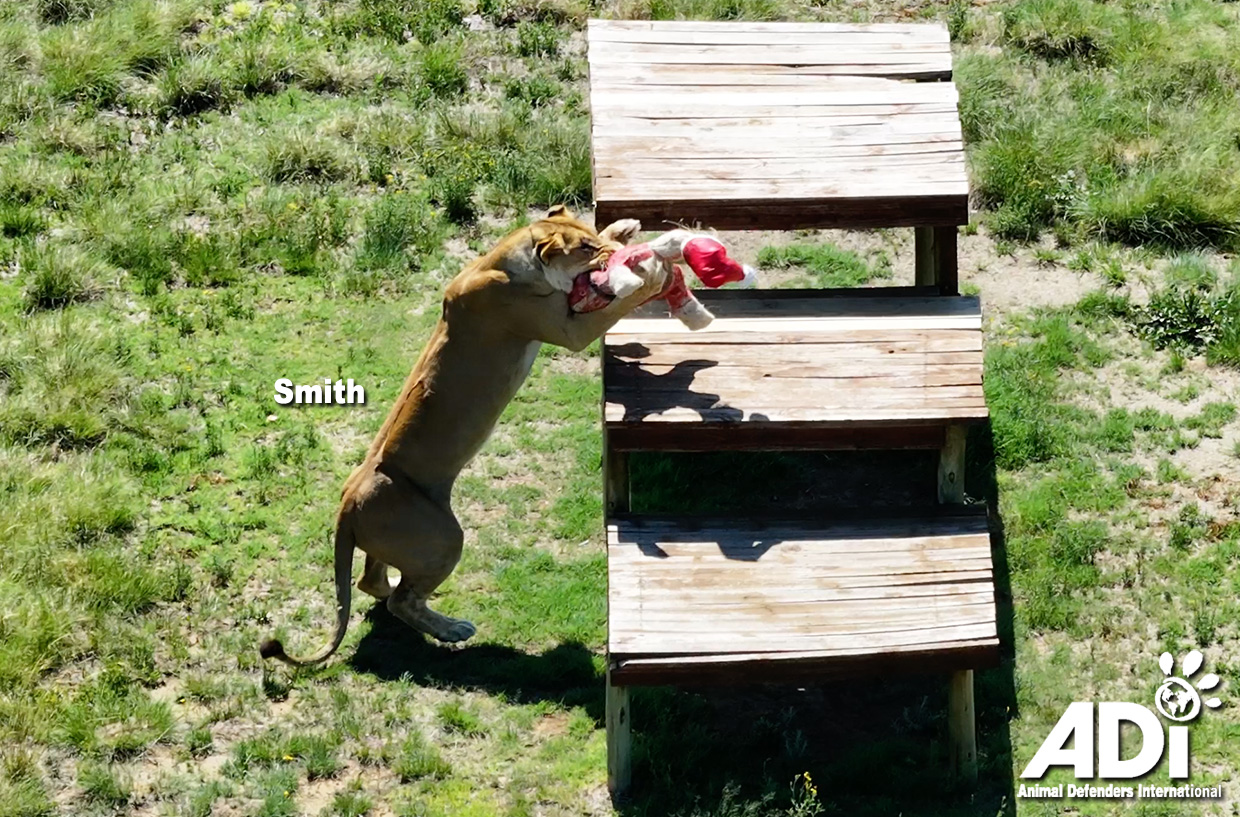
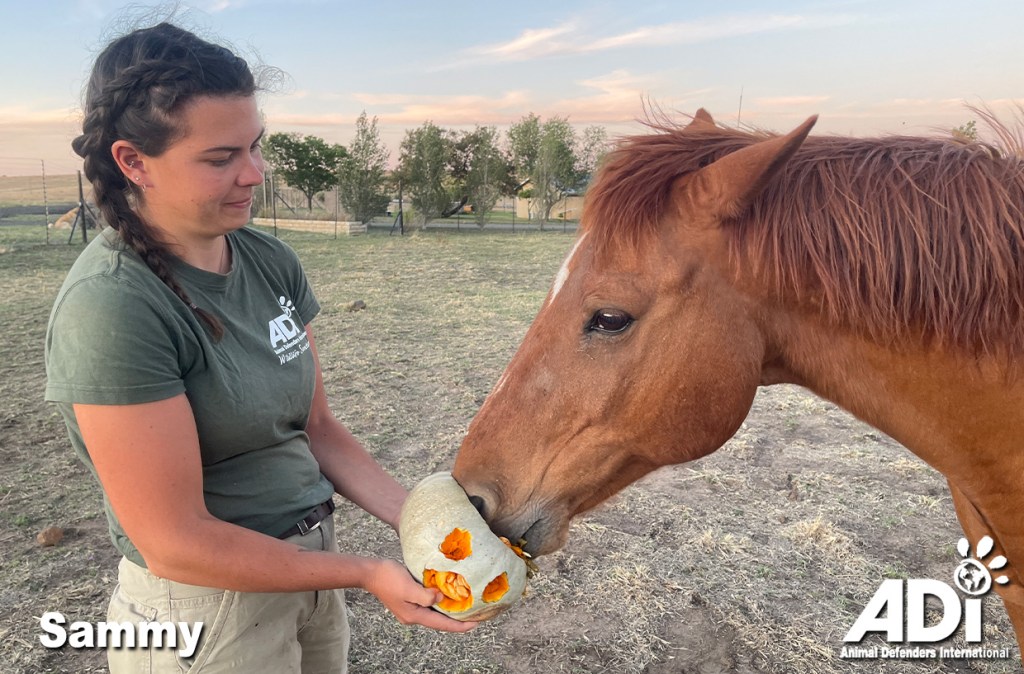
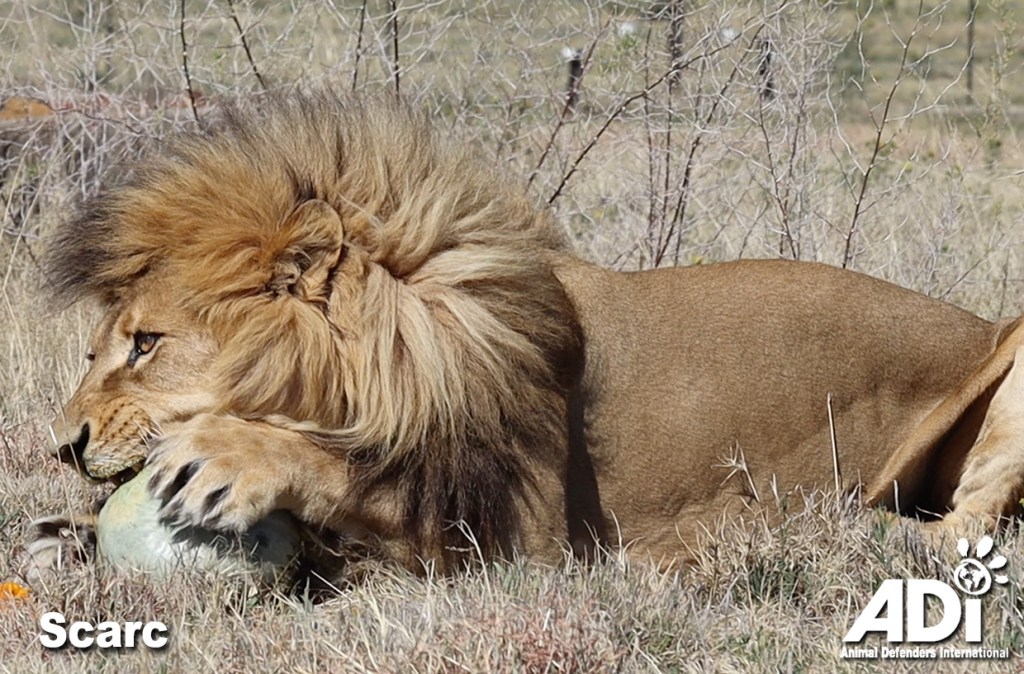
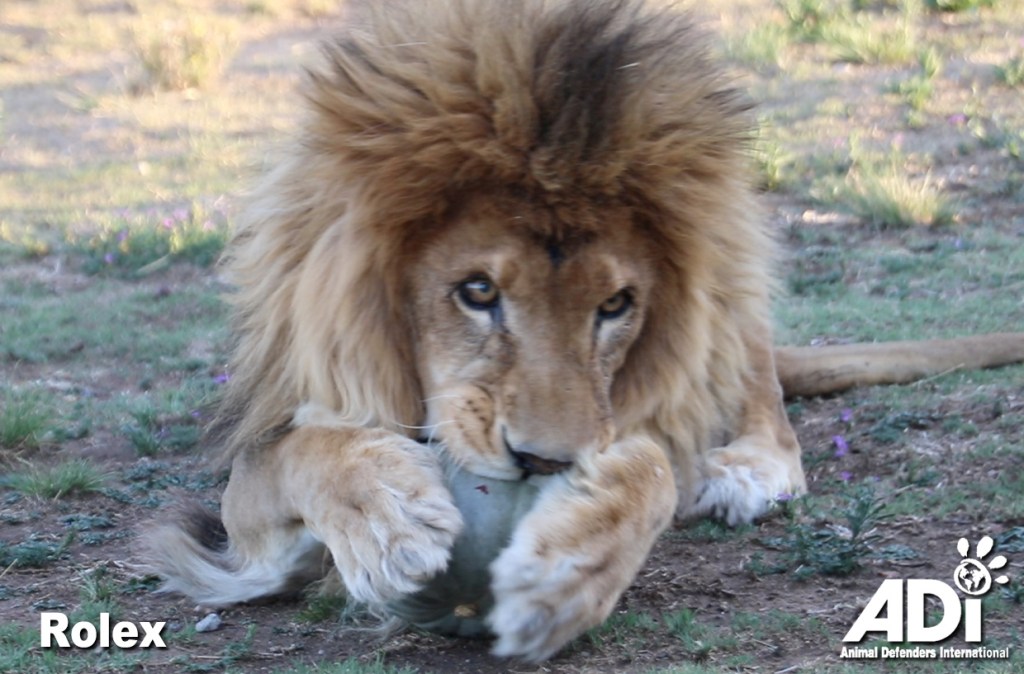
Our sanctuary has large natural habitats, but the animals still love playing with and investigating new things. Our enrichment includes boxes of hay and catnip, catnip punchbags, watermelons, coffee sacks stuffed with hay and catnip, ice lollies, and at this time of year pumpkins! As the picture of Smith in full flight below shows this enrichment is vital for physical and mental stimulation and pure fun.
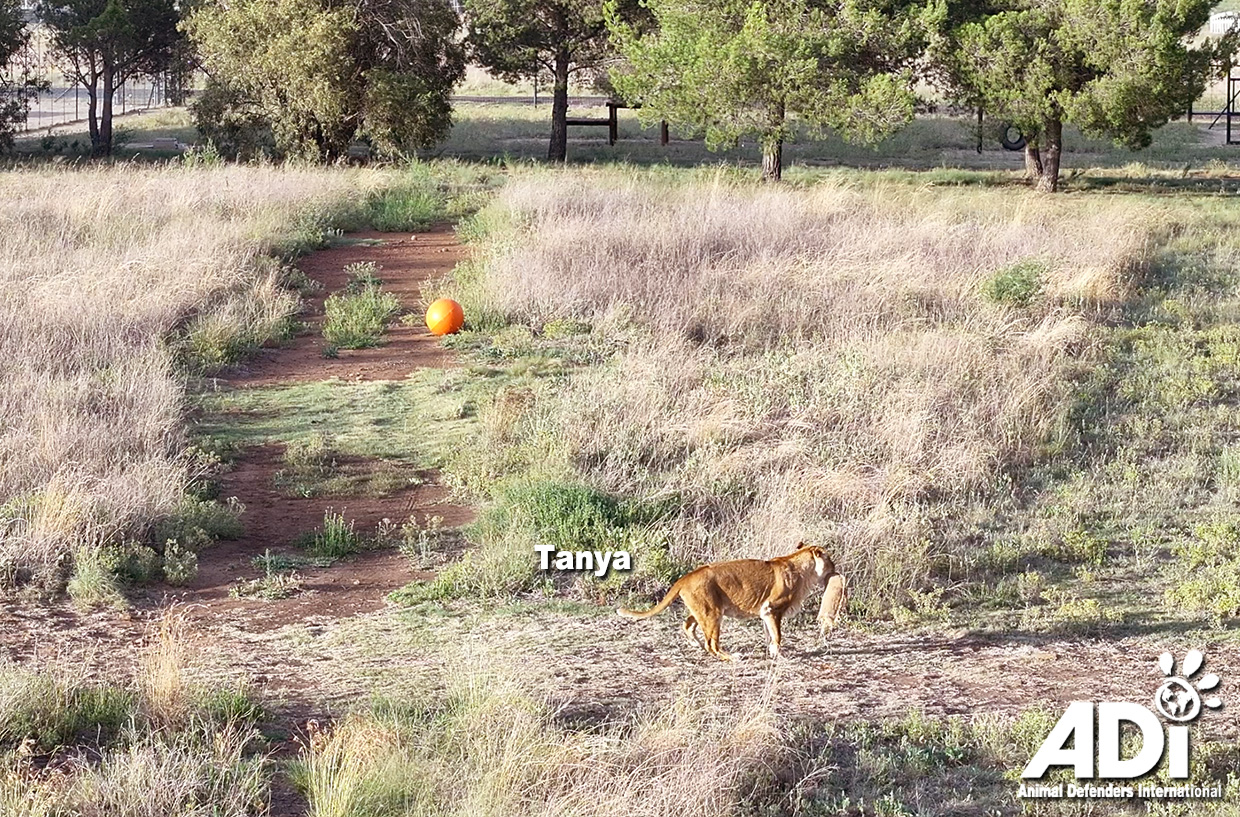
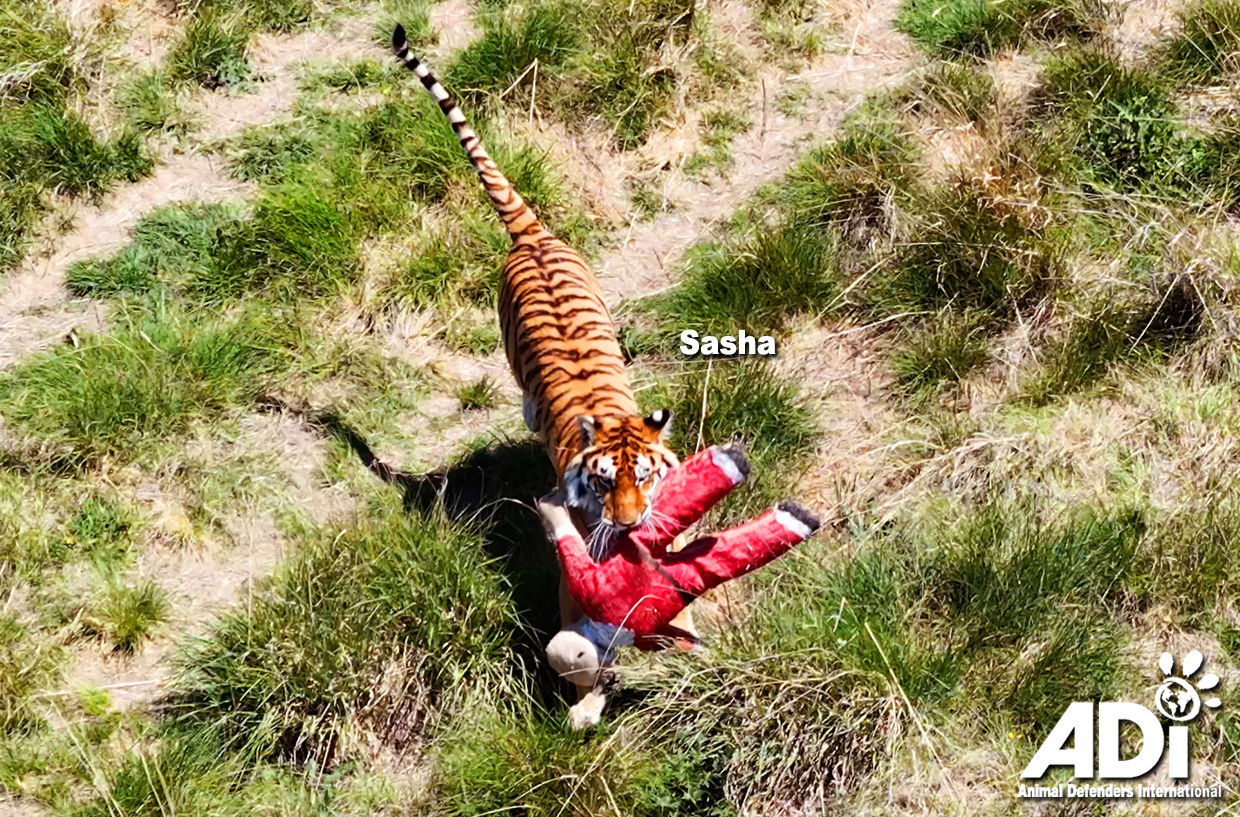
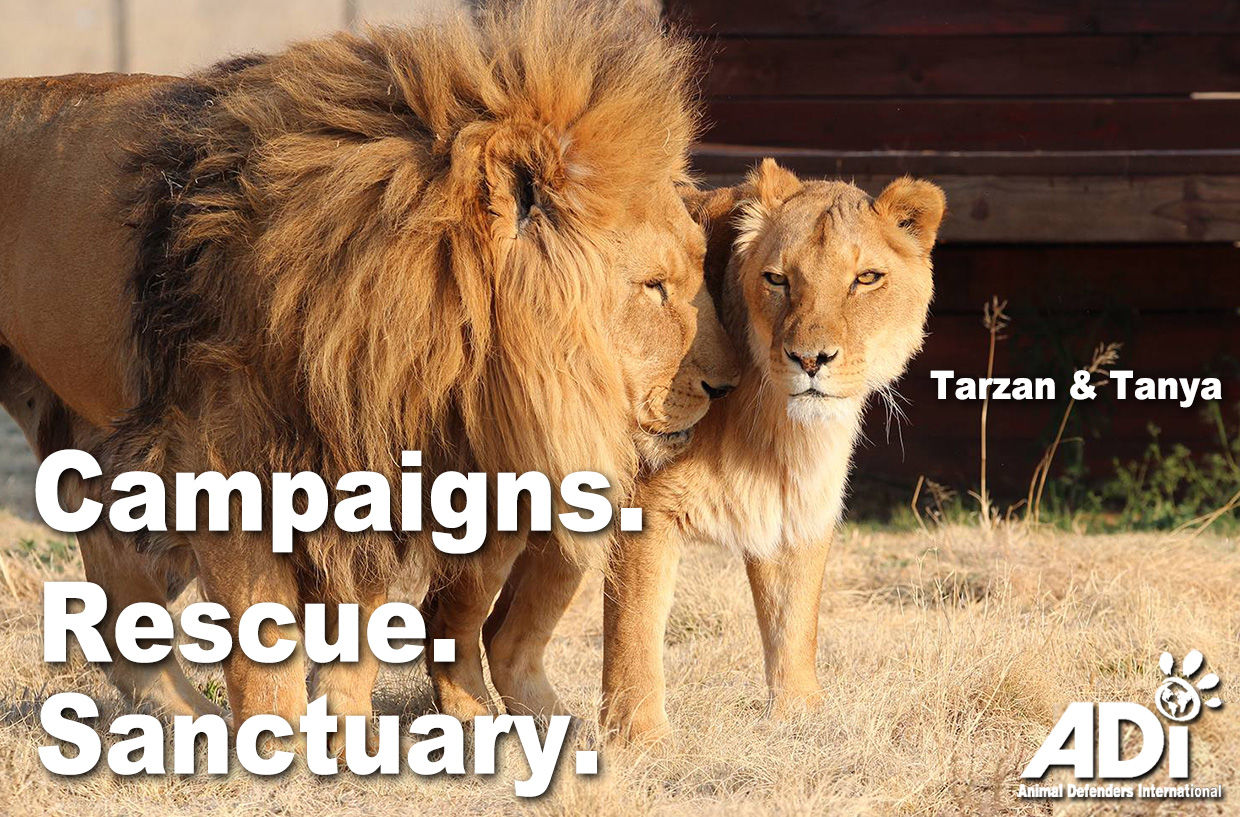
Reactions vary, there’s Mahla’s 100mph pumpkin dash; the manic play of the Spice Girls (Jade, Luna, Sun and Moon); Kimba trying to work out how to carry two pumpkins in his mouth, while brother Tomas wanders off; Muheeb grappling; to Tarzan and Tanya who really do only have eyes for each other and are rarely distracted by anything!
Here are a few highlights for ADI’s work around the world for the past month. With your help we are changing lives around the world.
ADI founded International Primate Day on September 1st in 2005 to highlight the suffering of primates and it is now marked all over the world. Our campaign has had some major breakthroughs since then including ending the use of chimpanzees and wild-caught monkeys in EU and UK labs, airport awareness drives in Peru discouraging people from purchasing primates and trafficked animals as pets; the rescue, rehoming and return to the wild of dozens of monkeys rescued from circuses, laboratories, restaurants and traffickers. There is still much to do as primates continue to suffer but with your help we are turning the tide. Right now, in the US we are calling for support of the Captive Primate Safety Act, to ban public contact with and the keeping of primates such as apes, gibbons, monkeys and lorises as pets, as well as ban foreign and interstate trade in these species. If you live in the US, please urge your legislators to sponsor this act.
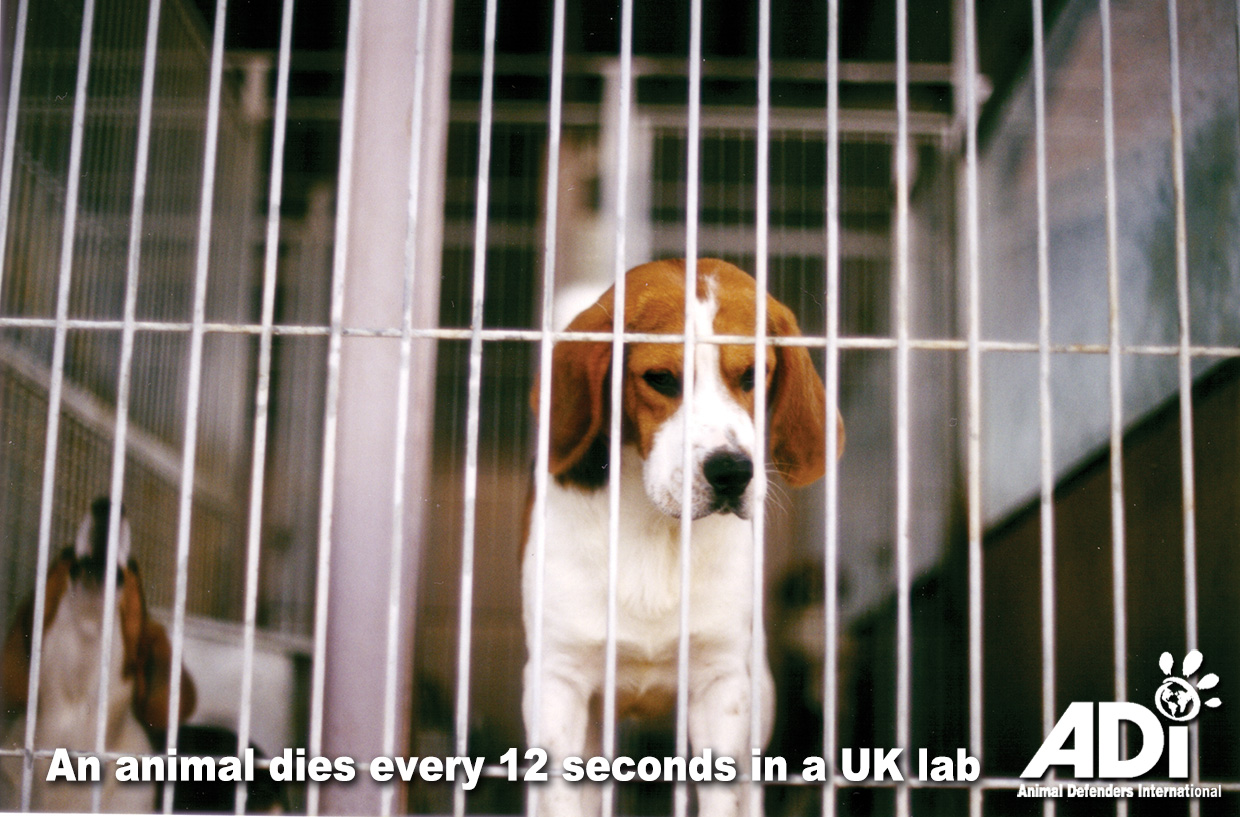
FIVE ANIMALS EXPERIMENTED ON IN BRITISH LABS EVERY MINUTE. 2.68 million procedures were performed on living animals in the UK according to the latest (2023) government statistics. 2.60 million animals were used in these experiments, including 75,588 animals who were experimented on more than once. This was the lowest number of experiments since 2001, yet still means on average 7,342 animal experiments every day, 305 per hour and 5 animals every minute, one animal experimented on every 12 seconds. ADI is raising several issues from the latest statistics with the Home Office.
ADI protested when Minnesota Renaissance Festival offered elephant, camel, pony, and llama rides throughout September. The brutal training of these animals has been exposed by ADI and at events, like renaissance fairs, these animals have a miserable existence with very limited space either tethered or in transporters. Please politely urge the festival to stop using performing animals at entertainment@renaissancefest.com.
ADI Colombia representative Yani Mateus addressed a special meeting, “Animal experiments, context and irregularities in Colombia”, held in the First Commission of the Colombian Senate in September. Magnolia Martinez from PETA also spoke at the event moderated by Javier González of the Observatorio Animalista. The meeting considered not only the suffering of animals in labs but why animal experiments are outdated and bad science. Following an ADI campaign, Colombia banned animal tests for cosmetics and their ingredients and included measures in the legislation that should help drive forward implementation of non-animal methods.
A huge THANK YOU to everyone who contributed to our appeal for a new platform den in Tohir Habitat for the Cusco family and important maintenance including painting the fence for this huge enclosure. Initial plans to fix the platform, damaged by the heavyweight family leaping onto it over the years, were abandoned when we discovered a colony of bees had made a home there. It was part dismantled, and now we have a new platform AND a home for the bees.
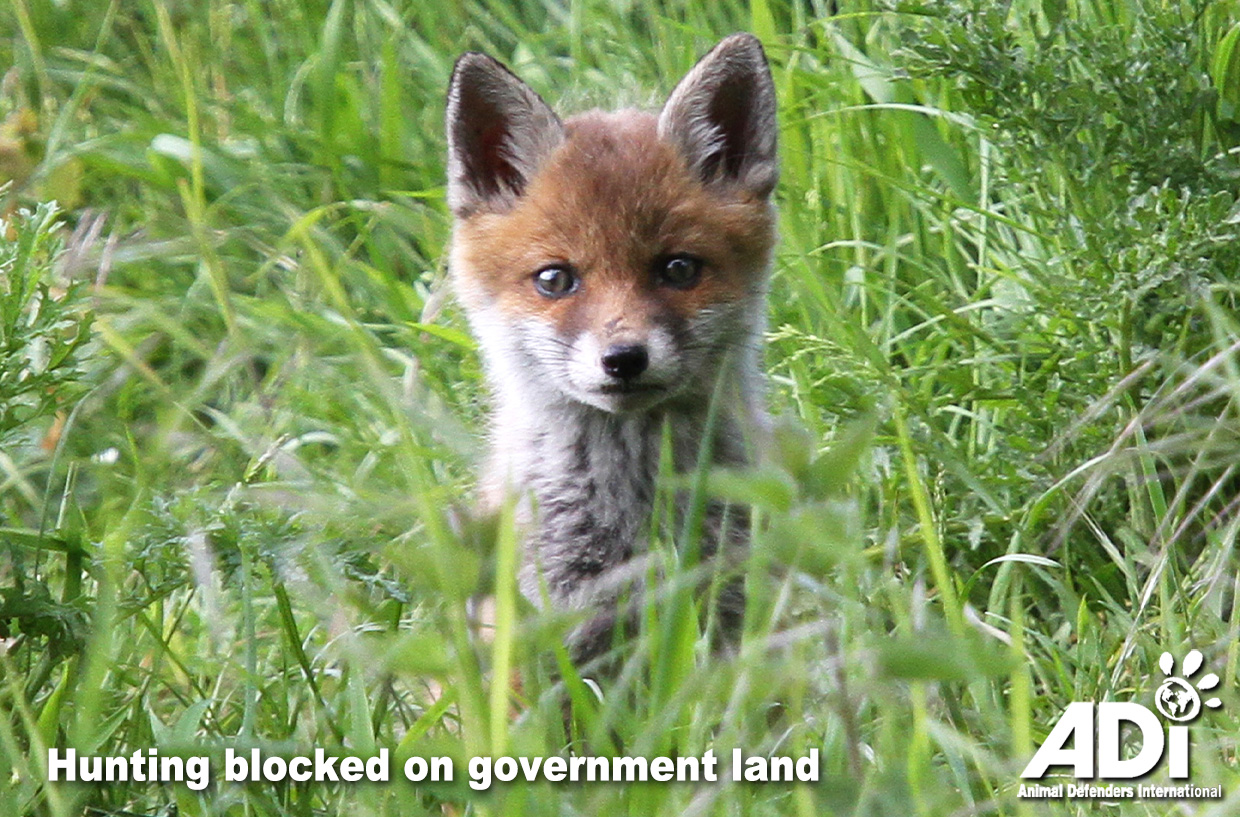
GOOD NEWS: In the UK, eleven trail hunting permits on Ministry of Defence land have been suspended, indefinitely, by the new government. Since hunting was banned over 20 years ago, hunts have used trail hunting as cover to continue hunting live foxes. ADI hopes this suspension will be made permanent and, as part of the Time for Change Coalition Against Hunting, continue to press for loopholes in the 2004 Hunting Act to be closed. In the UK, please help, write, call, speak with your MP (find their details here) and ask them to support the end of foxhunting for good!
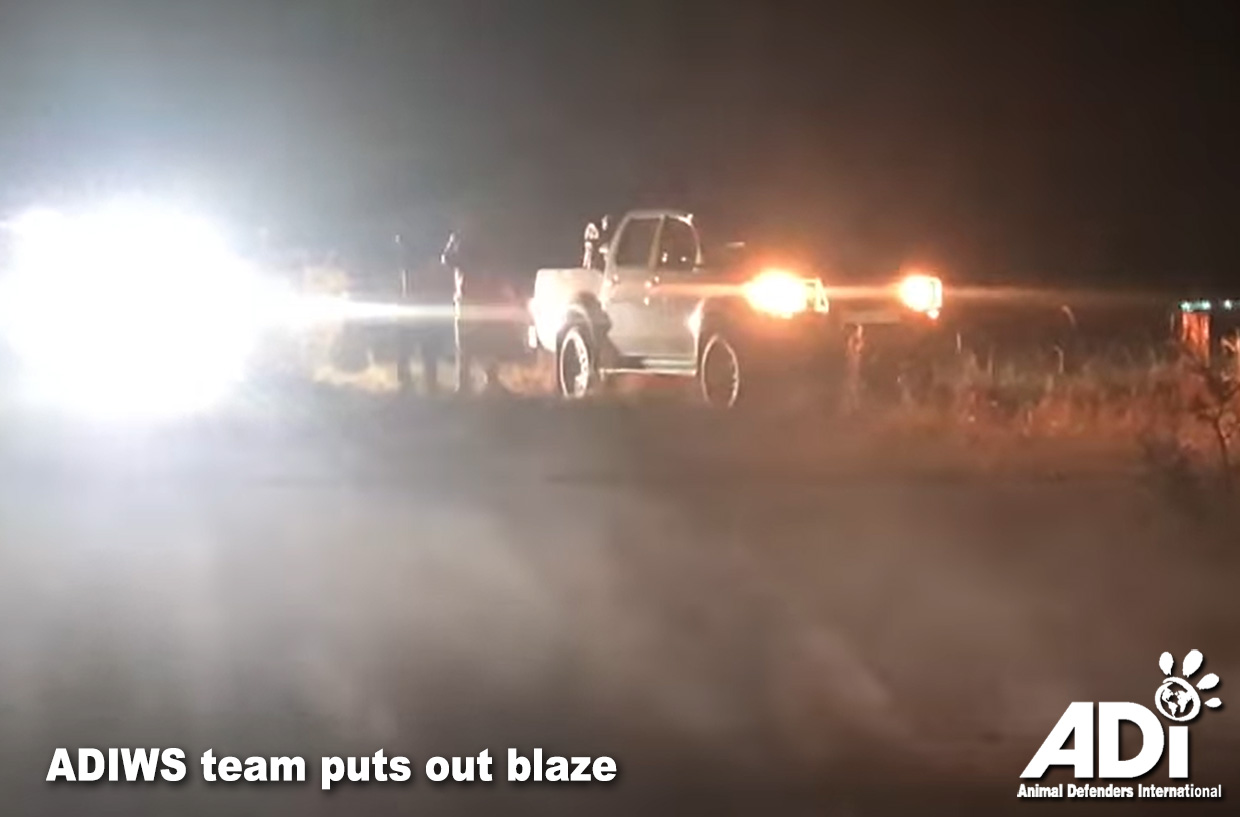
In the early hours of one morning, a fire was caused by a vehicle accident on a road running close to the sanctuary. Our night security patrol spotted it and scrambled the sanctuary. Our firefighters raced to the scene and animals were brought into their safe zones. The fire was quickly extinguished. This is the most dangerous time of the year for wildfires as it is the end of the dry season. It was a reminder of how we must be prepared to mobilise quickly and how important an addition the new electric vehicles will be to the sanctuary – see later.
A UK man gets 20 month jail sentence after posting baby monkey torture videos on Facebook. The prosecution was brought under the Obscene Publications Act rather than the new Online Safety Act. ADI and the Social Media Animal Cruelty Coalition (SMACC) are calling for the latter to be used to crack down on promotion of cruelty videos online, including the surge in fake rescues where animals are deliberately put in danger to generate views and income. Wherever you live, you can help stop these videos: 1) Don’t watch online animal cruelty content, including fake rescues; 2) Don’t engage with such posts, even to express outrage or draw attention to these videos – this will only boost reach and revenue; 3) Report content to the social media platform, and to SMACC.
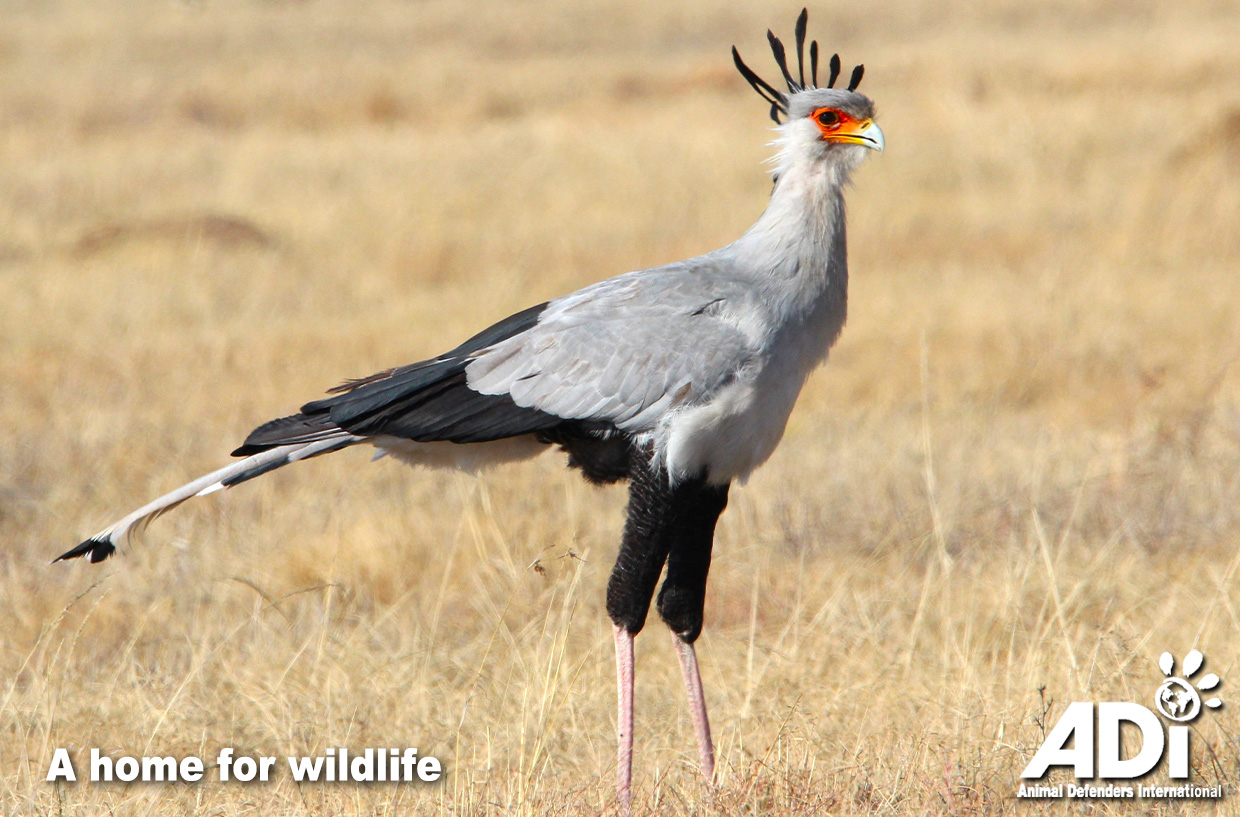
Native wildlife has exploded at the ADI Wildlife Sanctuary since we began re-wilding. We have planted over 200 trees, allowed the flowers to flourish, and added over 50 natural spring fed water sources. Little wonder there is an abundance of birdlife these days, including the endangered secretary bird. A large bird of prey with eagle-like head and stork-like legs, it is a thrill to see them walking through the long grass at the Sanctuary. We look forward to sharing new wildlife sightings with you!
It has been nearly 10 years since we rescued 4-month-old baby woolly monkey, Fausto. He was illegally captured and trafficked to a restaurant, where ADI rescued him, taking him to Pilpintuwasi sanctuary in the Peruvian Amazon. ADI funds Fausto’s lifelong care, recently paying for repairs to our monkey facilities there. When you support our work, you’re also helping us to care for our rescued animals in Peru – not just those at the ADI Wildlife Sanctuary.
YOU DID IT! OUR FIRST TWO GREEN MACHINES HAVE BEEN ORDERED: A huge thank you to everyone who contributed towards fully electric Blitz Cruisers to work on the sanctuary. We purchased the first two and are continuing to raise funds to complete our fleet of four! These will really increase mobility on the sanctuary making all of our operations from feeding to repairs more efficient, enabling us to do more for the animals, and keep us moving towards our goal of a sustainable, eco-friendly sanctuary. These green machines will be quiet around the animals, free of emissions, and free to fuel (self-charging with a solar panel roof or charged through the sanctuary’s own solar power station. You can continue donating for the final cruisers here UK I US


















































 Jan Creamer