Animal news from around the world

The Christmas holiday season is upon us and we will be racing to a new year, so this will be my last monthly review of the news for 2025. The past few weeks have seen the historic Polish ban on fur farming – the biggest fur farming industry closure ­– and the UK Government’s roadmap ‘Replacing animals in science: A strategy to support the development, validation and uptake of alternative methods’, which will certainly dominate our work in 2026. As 2025 draws to a close, progress continues to be made for animals and ADI’s role is more important than ever.

Animals in need in South Africa will get a boost thanks to ADI supporters hitting our target of $44,310 / £33,650 for a reception area for non-predators at the ADI Wildlife Sanctuary. This will enable us to continue assisting with enforcement of animal protection laws for cows, pigs, donkeys, horses and others, anti-trafficking efforts and to care for injured wildlife prior to release. We hope to begin construction in February on the area, which will have eight paddocks and stables/night houses and water supply. Special thanks to a sanctuary founder who provided a matching grant to help raise the funds.

World’s second largest fur producer bans fur farming.  While other countries have banned fur, this is a huge step, as Poland is second only to China in fur production.  All fur farms in the country will be closed by 2033 saving more than three million animals per year.  China kills 3.5 million animals per year for fur, Russia just over 1.5 million and the USA just over a million. Seven years to close the farms reflects the scale of the industry being ended and many farms are likely to close ahead of schedule as has happened elsewhere.  Many supporters will remember ADI’s harrowing exposé of fur farming in Poland which led to a successful prosecution – we can now look forward to the end of this suffering.

In the US, an estimated 250 fur farms still operate across 21 states. A federal ban is urgently needed so please support the Mink Virus Act.

The UK was the first country in the world to ban fur farming with the historic Fur Farming (Prohibition) Act 2000, but 25 years on it is still possible for products to be imported from fur farms overseas and sold in the UK. The Fur (Import and sale) Bill needs your support.

Help end the brutal fur trade here

UK government publishes roadmap to end animal testing: The UK Government’s ‘Replacing animals in science: A strategy to support the development, validation and uptake of alternative methods’ outlines a plan to phase out certain animal experiments. Unlike the US Food and Drug Administration equivalent document, which highlights the flaws of animal experiments, the UK roadmap maintains a familiar defensive position on animal use. However, the UK document sets some deadlines for eliminating certain tests – for example the pyrogen test (pictured) could be on the brink of a ban. ADI will be putting these US and UK commitments to the test in 2026 – that is when we will see the true significance of the statements. Watch out for updates.

The Conference of the Parties (COP) to CITES (Convention on International Trade in Endangered Species of Wild Fauna and Flora) took place in Uzbekistan, with representatives of almost 200 countries reviewing proposals on trade in elephants, rhinos, sharks, reptiles, big cats, and many other species. Thank you to everyone who responded to ADI’s calls to action. Thankfully COP20 resulted in some wins for wildlife – but also sadly losses. Find out more here.

Construction of the massive laboratory monkey facility in Bainbridge, Georgia remains on hold amid lawsuits and a court review. The company behind the proposal has also acquired sites in LaBelle and Hendry County, Florida, to house imported monkeys and train staff ahead of any Bainbridge operations. Contact Bainbridge city officials and urge them to reject the monkey-breeding facility and protect the community from public health and environmental risks. Link to pre-populated email including Mayor Edward Reynolds – edwardr@bainbridgecity.com

Council Members: keenan.adams@bainbridgecity.com, glennieb@bainbridgecity.com, kreggc@bainbridgecity.com, roslynp@bainbridgecity.com, sylviaw@bainbridgecity.com, donw@bainbridgecity.com

Dr Peter Caldwell had a busy day at the ADI Wildlife Sanctuary giving vaccinations and general health checks. Kesari (pictured above) was sedated for examination after the team noted our big boy had vomited and left some food. He weighed in at an incredible 447.5lbs/almost 32 stone – it took 11 of the ADIWS team to lift him!  He’s not fat, that’s all muscle, and Dr Caldwell gave him a perfect body score. Our Sanctuary matriarch, Kiara Cusco, was also sedated and declared very fit for her age (17 years old). It was heart-warming to see Scarc come to mom’s / mum’s side as she regained consciousness, watching over her until she was fully awake.

There were also visits to hospital for Sasha who has failing eyesight (see last week’s alert/Blog) and for Goliath to see dentist Professor Steenkamp, who performed two root canals. Lions Goliath and Coralie were rescued from a French circus and arrived at the Sanctuary in May this year.
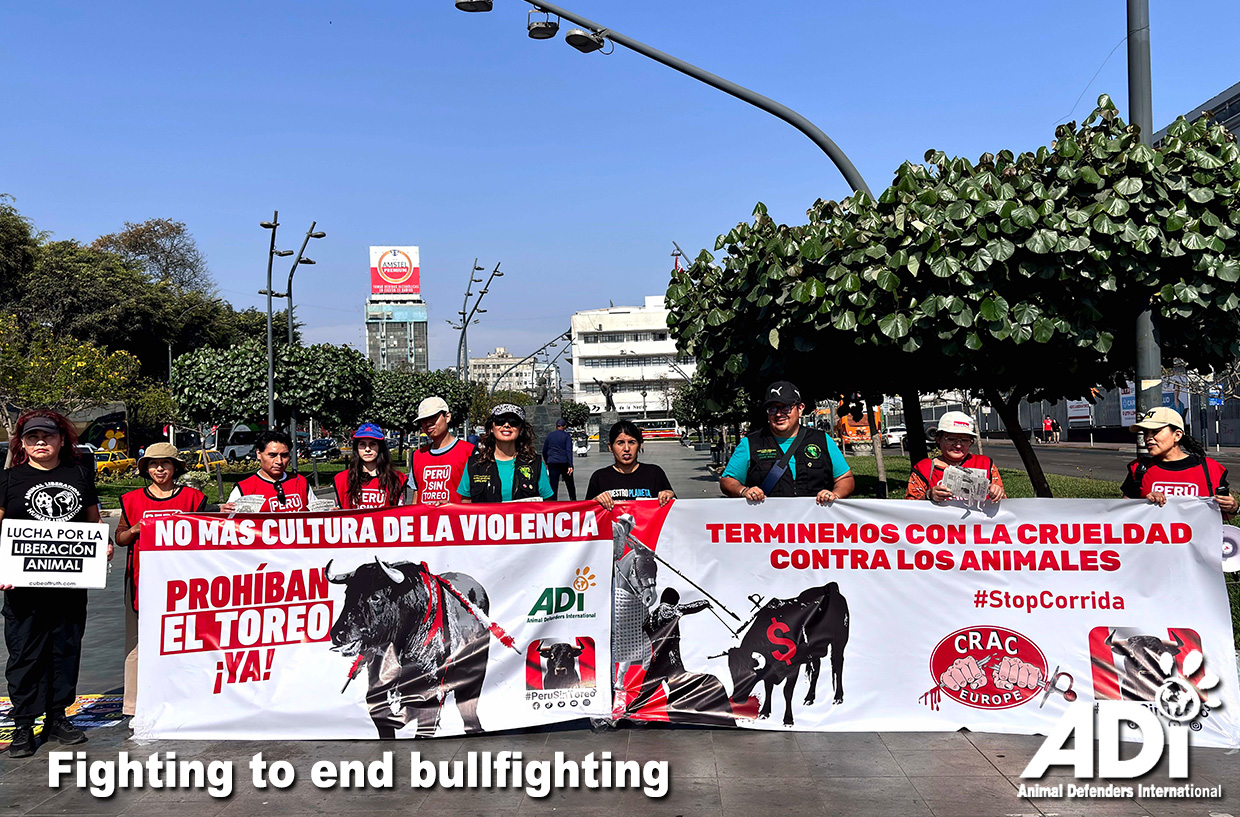
ADI has been stepping up the campaign to end bullfighting and bull running in Peru. A major demonstration planned to coincide with bullfights in the capital of Lima had to be cancelled, when the Government declared a State of Emergency prohibiting demonstrations, so smaller events were held instead.

At the International Anti-bullfighting summit in Madrid, ADI Colombia’s Yani Mateus and Eduardo Pena presented on the successful bullfighting ban campaign in Colombia. Attendees also held a demonstration at Spain’s Congress of Deputies against the recent decision to block a formal request from 700,000 Spanish citizens for a debate on ending the ‘cultural heritage’ status of bullfighting.
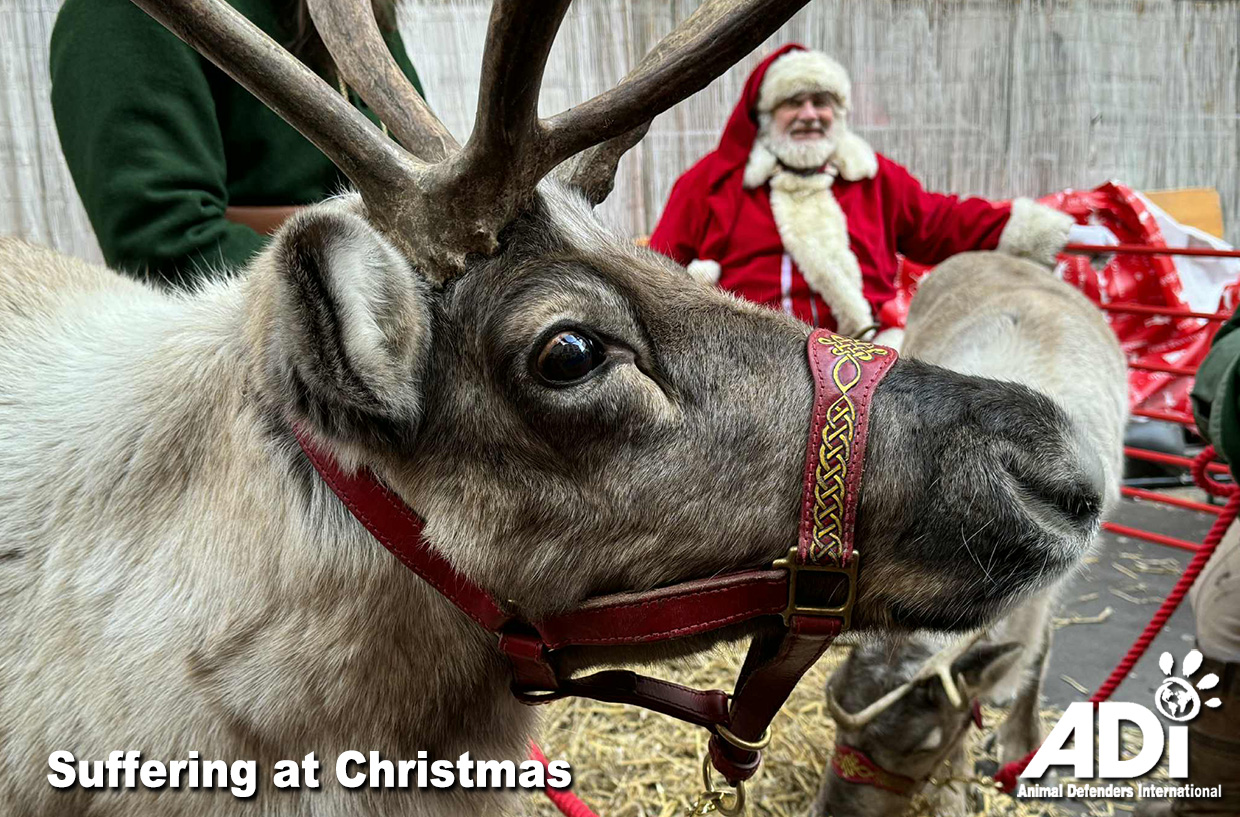
ADI again publicised the suffering of reindeer transported around the country for display at Christmas events in crowded, noisy city centre events, and wrote to venues. If you see any events featuring live reindeer, or other animals, please speak to the organisers and contact ADI. Contact us at usa@ad-international.org / info@ad-international.org.

Thank you to everyone who responded to our urgent appeal to repair damage after a large tree fell onto the ADI habitats at Pilpintuwasi, in the Peruvian rainforest. None of the monkeys we rescued from circuses, restaurants and wildlife traffickers were harmed. Funds are still needed to complete the repairs and for general maintenance of the homes for the capuchins, spider monkeys, coatis and others.

Can you help? Donate UK, Euros, Rand | Donate US $, CA $

The COP30 Climate Change Conference in Brazil was a mixed bag, failing to deliver the big breakthroughs desperately needed. Positives were that countries agreed to move forward on climate funding, including a new plan to work towards major finance goals and a commitment to triple support for climate adaptation by 2035. COP30 also delivered some practical steps to support fair climate shifts, and the first official talks linking trade and climate. But countries failed to agree on any plan to move away from fossil fuels, even though more than 80 nations pushed for it – showing, despite the overwhelming scientific evidence, just how divided the world is on this issue.
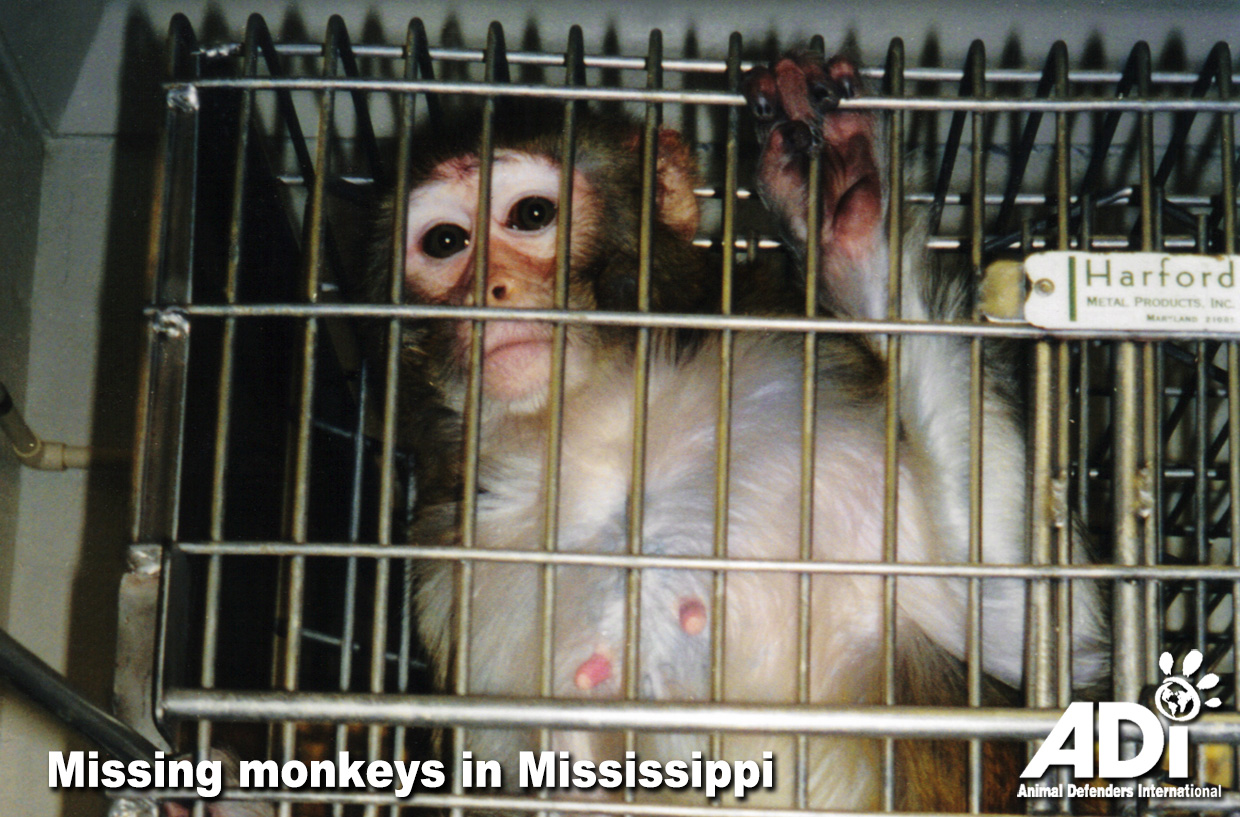
A truck transporting 21 rhesus macaques for research overturned on a highway in rural Mississippi, and eight escaped. Authorities were initially falsely informed that the monkeys were contagious and carrying hepatitis, herpes, and/or COVID-19. Before this was confirmed as misinformation, the Jasper County Sheriff’s Department had killed five of the escapees; two were later shot by civilians and the last monkey on the loose was tranquilized and recaptured. These terrified living beings wanted to escape their nightmare.

Animal experiments are unreliable, unethical, and unnecessary. You can help lab animals by telling your MP / Congressperson that you want to see urgent replacement of animal use with advanced, non-animal methods.

ADI continues to publicise the suffering caused to wildlife and domestic animals by fireworks. Two petitions to Parliament now have approaching 200,000 signatures, exceeding the threshold of 100,000 to trigger a parliamentary debate.  One seeks to limit firework sales to only those running local council approved events and the second aims to reduce noise levels for consumer fireworks from 120 to 90 decibels. BOTH ARE NECESSARY.

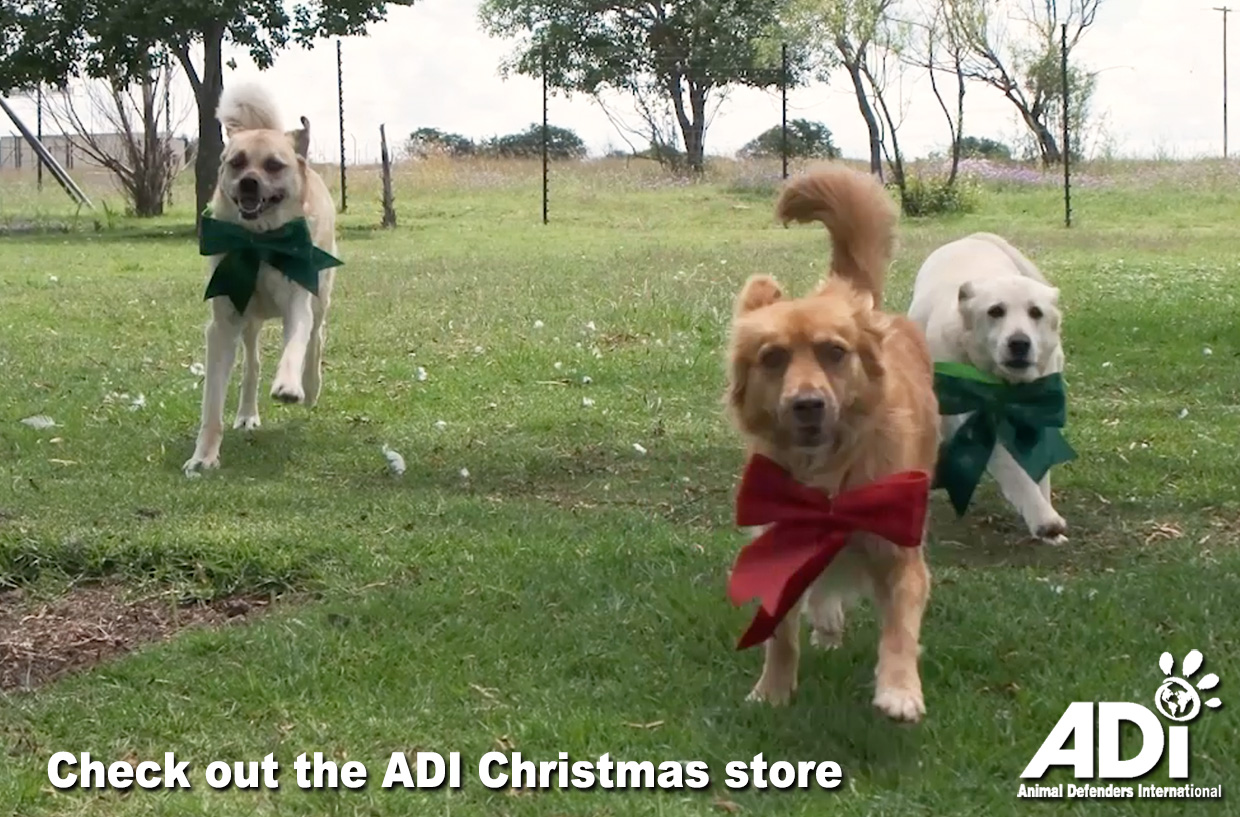
Don’t forget to check out the ADI store for festive goodies including the 2026 ADI Animal Rescue calendar featuring ADIWS residents, Christmas and greetings cards, animal adoptions, ethical bags, clothing, canvas prints, treats for your animal family (like Rollo, Freya and Milo at ADIWS above) and more. Every sale helps raise funds to support the residents at the ADI Wildlife Sanctuary, as well as our campaigns, such as closing down South Africa’s lion farm industry. Visit the UK store / US store.

Thank you for your support that makes the work featured here possible. To help us continue with our campaigns and rescue work please donate here.
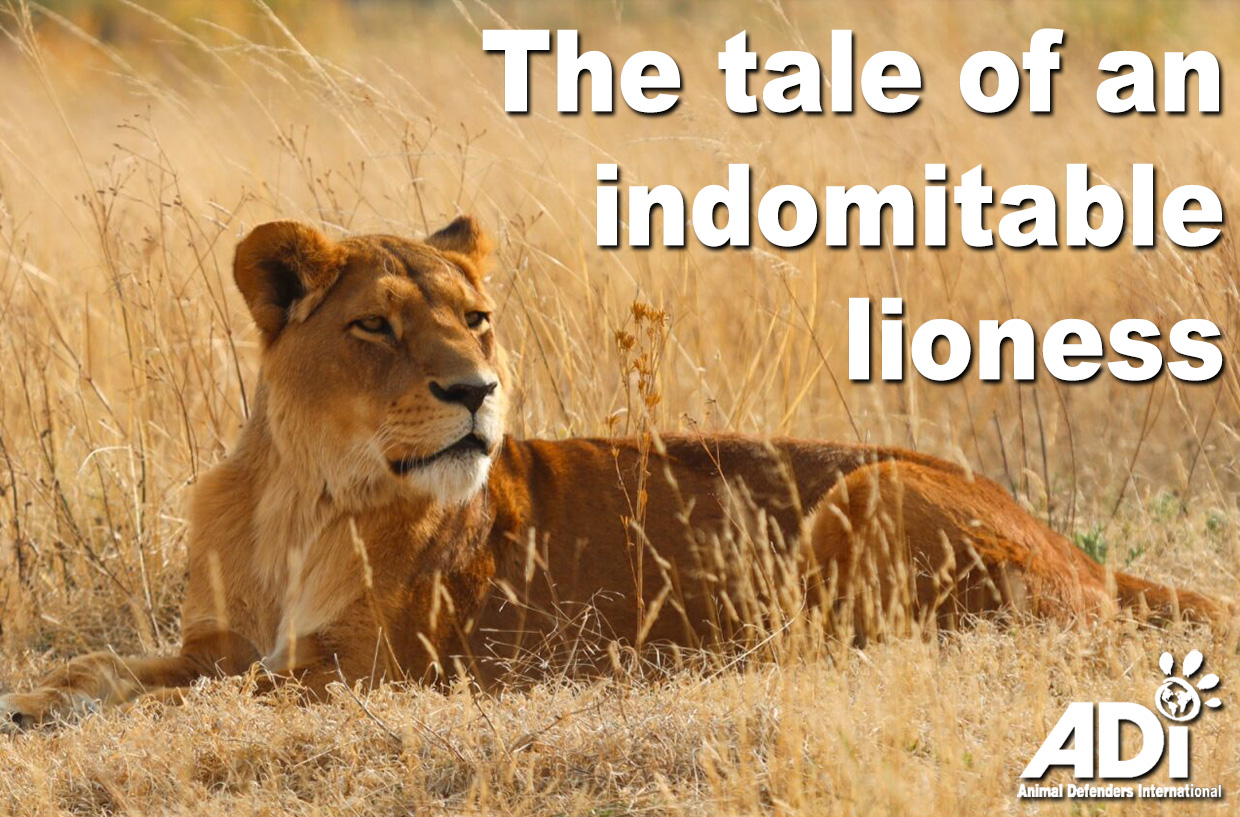
Tale of an indomitable lioness

I am constantly inspired by the animals we rescue – their loyalty, courage, resilience, love for family and lust for life, so I wanted to update on an inspirational lioness, Sasha from Guatemala, who returned from hospital this week.

It seems the world has thrown just about everything at dear Sasha, but it has never broken her spirit. I first met her in the circus in Guatemala, she was intrigued by us as we measured her cage, preparing to rescue her. She was limping, and clearly in pain. Our veterinarian got the background from the owners; they had performed a brutal ‘declawing’ operation to cut off her toes to stop her claws growing, and in the process one toe was crushed.

We took her to our Temporary Rescue Unit (TRU) where our veterinary team could take X-rays, take blood tests, and examine the damage. They found the crushed toe had been infected in the past and performed field surgery to remove the toe. Examination of the bone and tissues discovered something worse, a cancer had spread up the bone in her leg. They cleared out any sign of infection and said this would have to wait to be done in a hospital. She would have medication for the pain and to prevent further infection until we could get home to the ADI Wildlife Sanctuary in South Africa. Lions power themselves on their front legs, driving themselves forward – it is harder to cope without a foreleg than a hind leg.

Once she was settled in at the ADI Wildlife Sanctuary and Dr Caldwell had studied the reports and x-rays from the veterinary team in Guatemala, he performed ground-breaking surgery to remove the damaged bone, replacing it with a titanium implant. Since then, Sasha has been pain-free. Her limp remains, but Dr Caldwell explained this is due to the shortening of her tendons from years of limping, she is not uncomfortable and has a full range of movement, she can run and leap up onto her platforms.

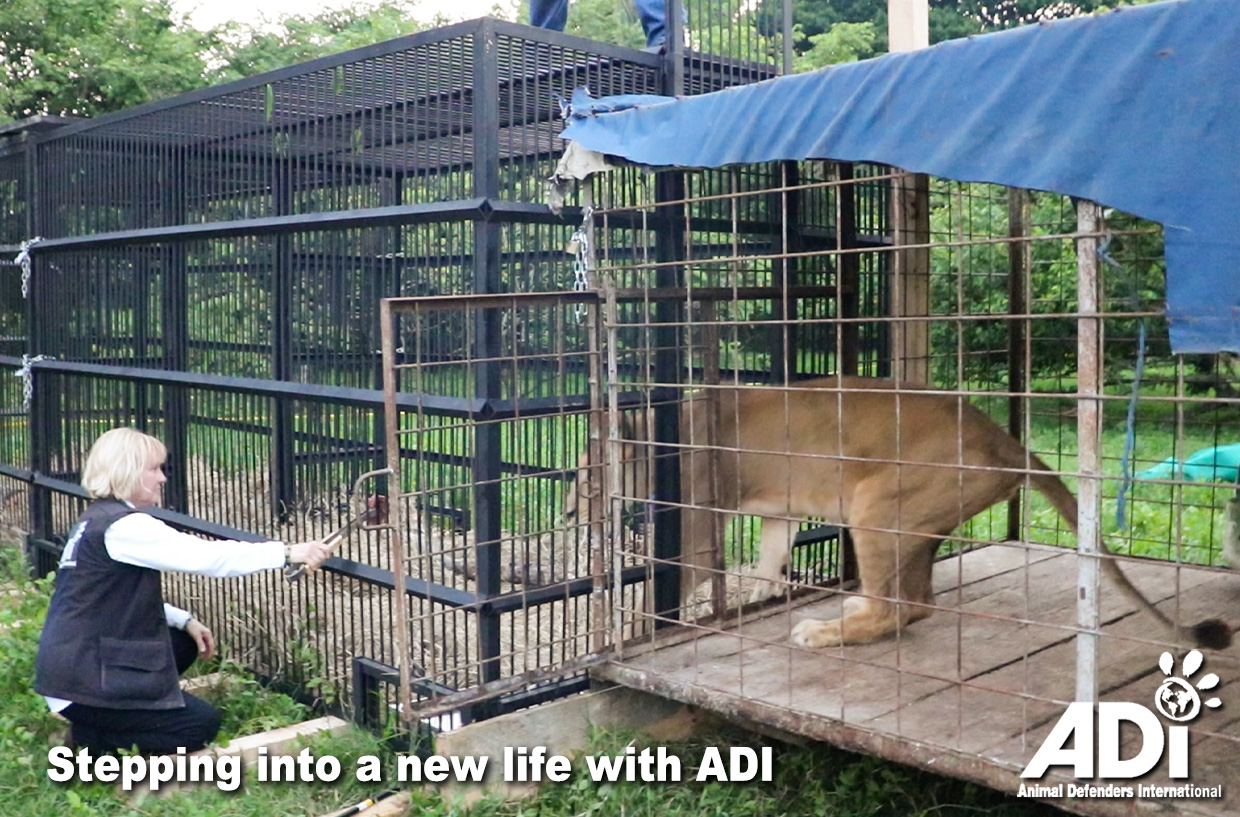
Sasha is a tough, resilient lioness, she has always been very special. Many remember her facing off with the equally feisty Tanya next door in the TRU in Guatemala. She can also be very demanding and has been dubbed ‘Princess Sasha’ by her carers at ADIWS – she likes her meals delivered in the cool of the evening, she takes her own time to do anything, people must wait. This was on display at the hospital when it was time to come home. Johannes attempted to lure her into her travel crate, but she just lay down in the entrance, yawning (she enjoyed the treats in hospital). Eventually, Dr Caldwell had to sedate her to be loaded for the journey home.

She was in hospital after our team started to spot tell-tale signs that she was having issues with her eyesight. Sadly, the prognosis is not good.  An examination by the ophthalmologist revealed retinal degeneration resulting in night blindness, very limited vision and no peripheral vision. Although the primary cause is age-related, this will have been exacerbated by a lifetime of inadequate diet, lacking in nutrition, in the circus.

It seems so unfair that our brave lioness who has endured so much, must face another challenge.

It is the nature of these animals not to reveal signs of vulnerability, and it is now clear that her eyesight has been deteriorating for some time, although she had given no indication, and has adapted to cope. Even on her return, Sasha thoroughly checked out her habitat and leapt effortlessly onto her raised platform.

The news from the ophthalmologist was not what we had hoped for, but Dr Caldwell agreed that Sasha clearly still enjoys a good quality of life, exploring, using her platforms, sitting alongside her brothers Kimba and Tomas in the habitat next door. She is not giving up, and neither will we.

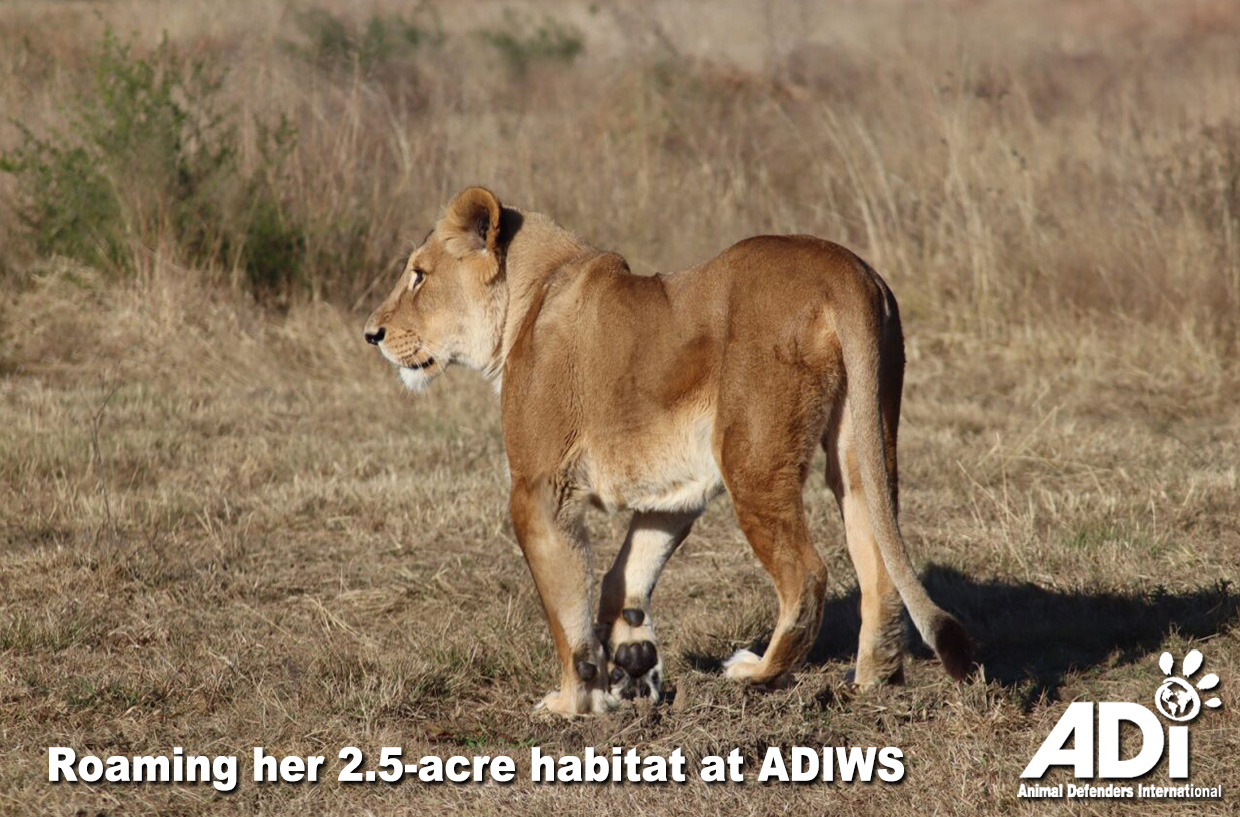
Currently she is navigating all of the 2.5 acre Jacque Habitat confidently.  We will watch, and make adaptations as needed.  Many will know how important it is for cats to have contact with their families, they love to touch and give affectionate head bumps. I find it so sad that Sasha cannot have that contact with her brothers, because she feels vulnerable, which makes her behave badly. When she spent time with Kimba, she kept beating him up, so we had to keep a fence between them – but they do love to lie next to each other.  I feel sure now that this was her feeling blind-sided by her failing peripheral vision.

So, we are going to see what we can do to adapt the fence between their habitats – remove the current fencing and make a reinforced section between her and her brothers, to allow protected contact. They would be able to rub and nuzzle against the fence, without any risk of her hurting the boys, and she would feel secure.

Sasha left her circus cage and crossed the world to come home to Africa – your support made that possible. I hope you will continue to support us in 2026 as we continue to care for Sasha and the others in our ADIWS family. 

Donate UK £, Euros, Rand | Donate US $, CA $

Nearly there – help us reach our goal to help animals in need

A huge “Thank You” to our wonderful ADI supporters who have contributed to our special Giving Tuesday appeal – including setting up their own fundraisers!  Our target for the New Arrivals Reception Area at ADI Wildlife Sanctuary, to provide care and shelter for rescued wildlife suitable for release, such as antelope and tortoises, as well as domestic species, is: $44,310 / £33,650.

We have raised $16,599.04, so far, and thanks to a generous matching grant from a Sanctuary Founder, this has been doubled to $33,198.08 – we are almost there!

If we can raise a final $10,660 this weekend, we will pass the finish line!  Can you help?

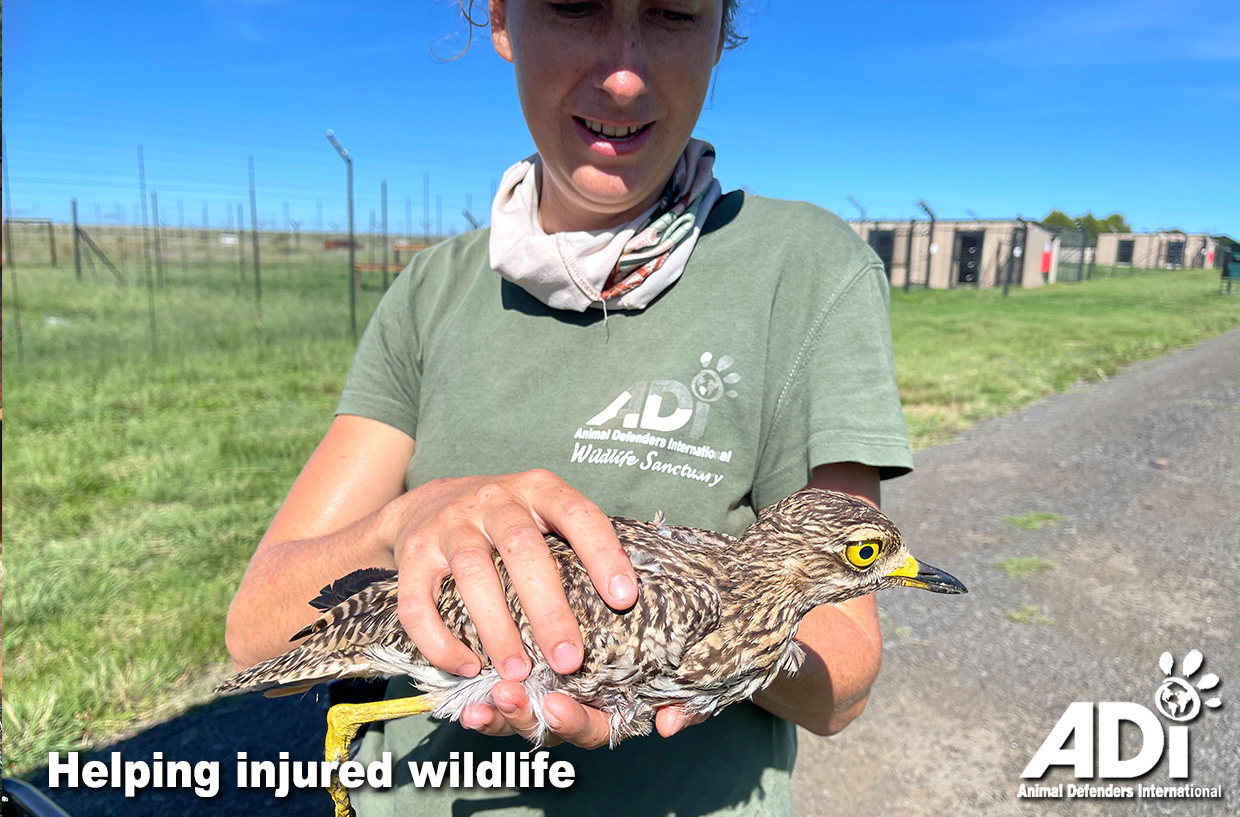
This new facility with paddocks and stables/night houses will ensure we can continue to come to the aid of confiscated and injured wildlife and abused domestic animals. ADIWS is performing an increasingly important role, in helping to enforce animal protection laws and fight wildlife traffickers.

In our new arrivals’ reception area, we can treat and help a range of species, such as tortoises, antelope, birds, as well as pigs, cows, donkeys and others. A series of paddocks, with stables or night houses, will help suffering animals to recuperate. Those well enough can be released into the wild on our property, others needing lifelong care can roam free during the day, returning to the secure night houses or stables at night.

For many animals, we are the only lifeline in our region of South Africa and so we can play a vital role in education about care and respect for animals, in raising awareness, strengthening, and enforcing animal protection laws.

Can you spare something today for the suffering horses, donkeys, pigs and wildlife of South Africa? Donate US $, CA $ | Donate UK, Euros, Rand 

One more push to build our reception units will protect animals in need.

Today is Giving Tuesday – it can be a lifeline for animals

Today is Giving Tuesday and I would like to start with a huge Thank you to everyone who has already contributed to our new reception area at the ADI Wildlife Sanctuary for domestic animals and wildlife like tortoises and antelope.

Lions Coralie and Goliath, from a circus in France, have settled into their new home in Africa but were not the only new residents we welcomed to the ADI Wildlife Sanctuary (ADIWS) this year. Two more donkeys joined our herd, as well as geese, a peacock, tortoises and three calves, as we are increasingly asked to help with cruelty cases and tackling wildlife traffickers.

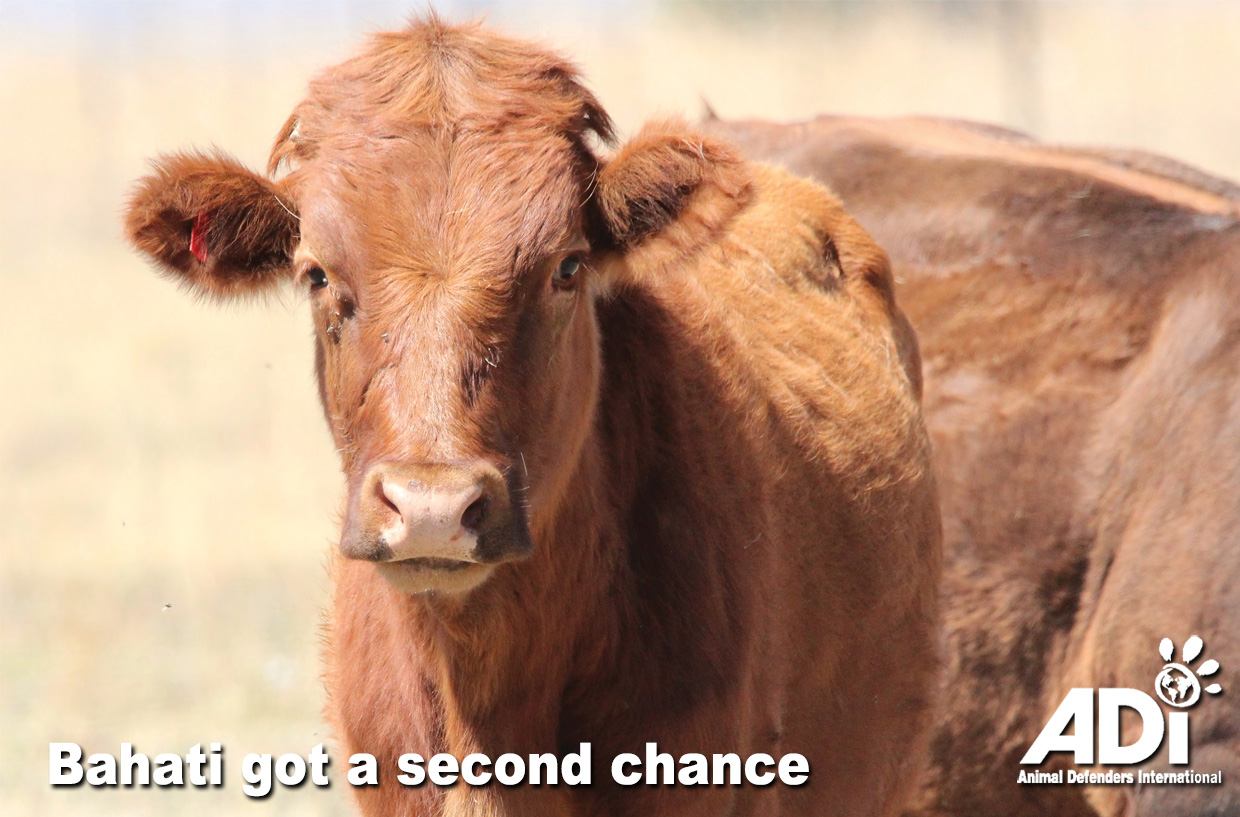
The story of a little calf, we named Bahati, found tied up so tightly in the back of a pick-up truck that she was struggling to breathe, highlighted the importance of this work, not just for the individual animal but if animal protection laws are to be effectively enforced in South Africa. If you missed it, you can read my report here.

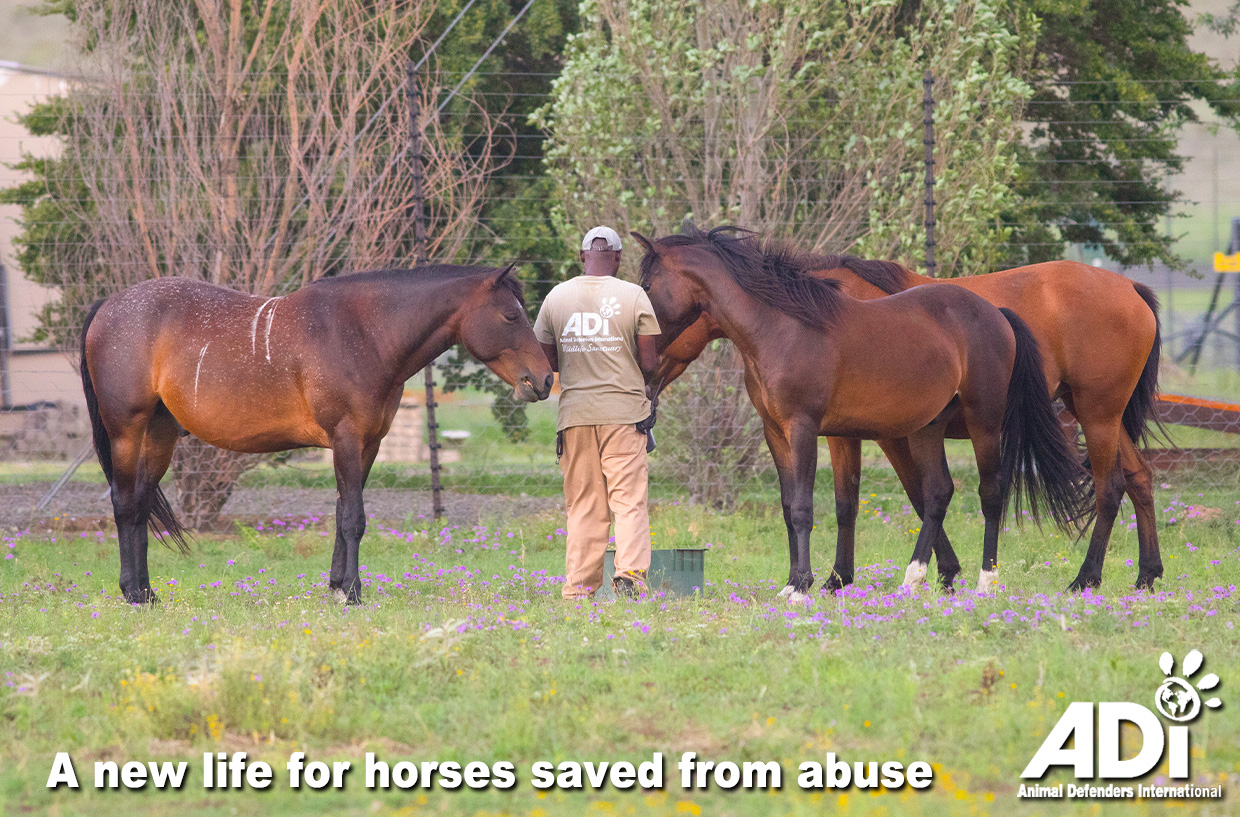
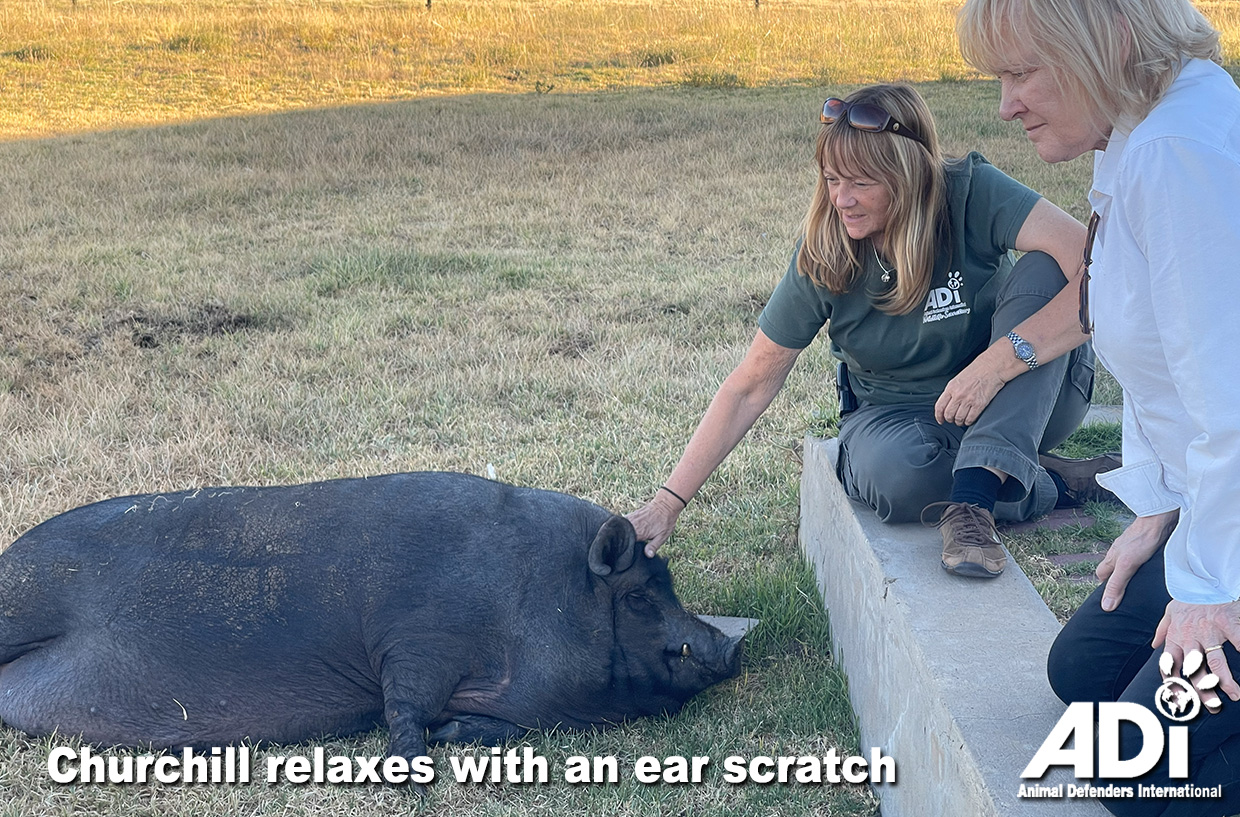
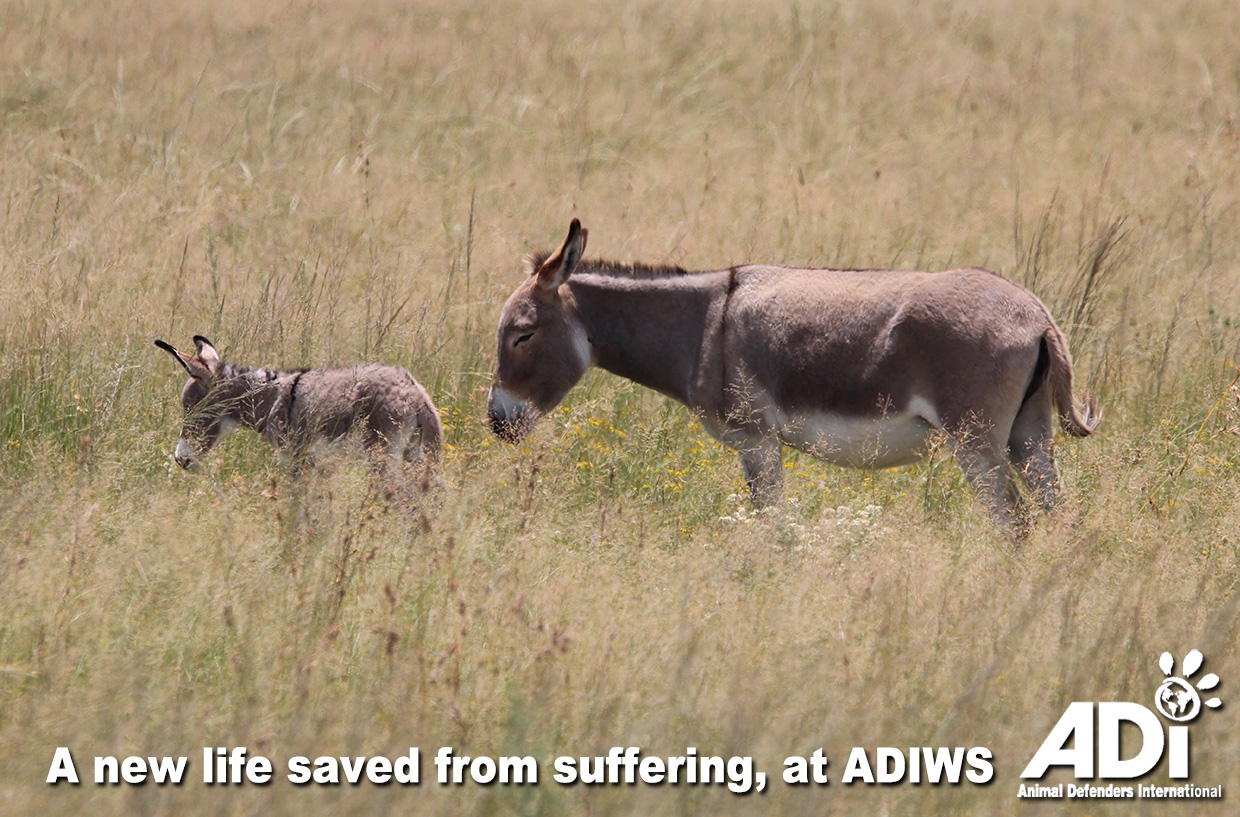
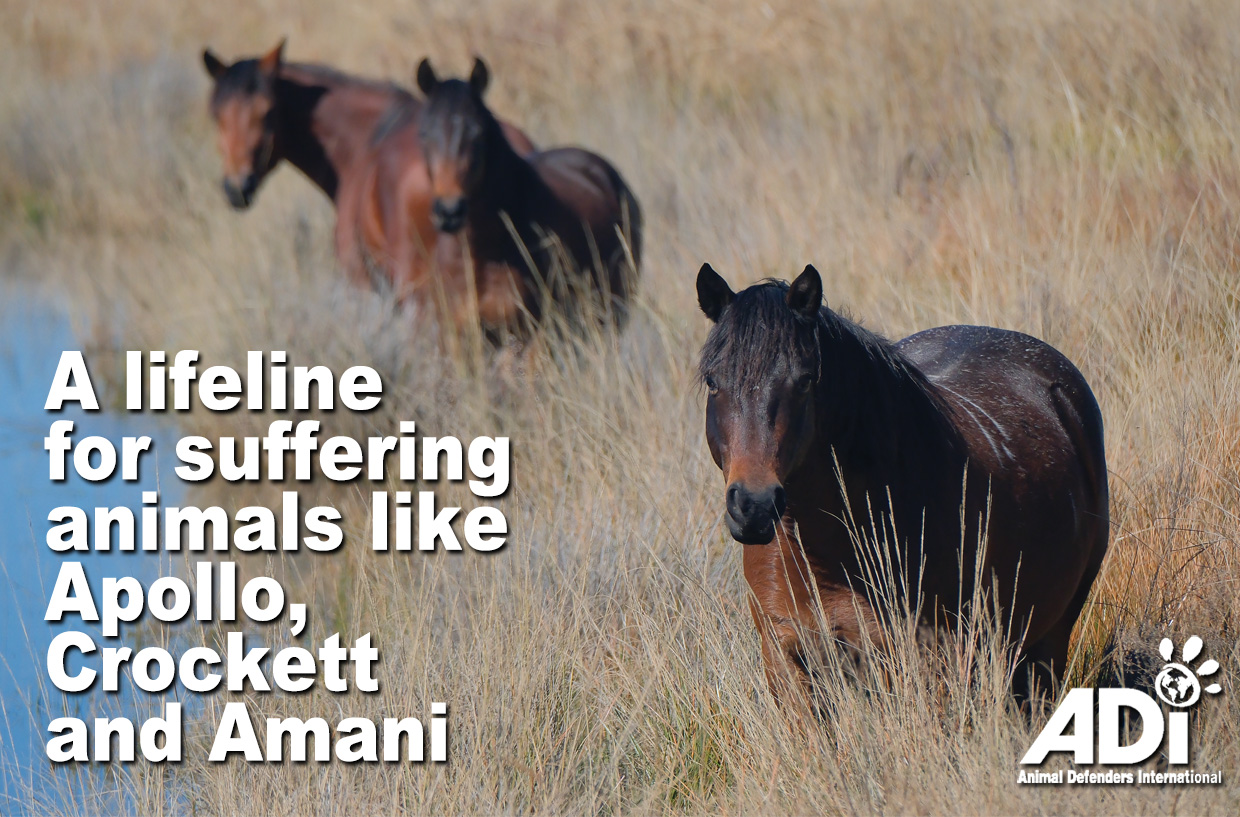
It’s possible that the ten donkeys at ADIWS have the best life of all the animals, freely roaming hundreds of acres, even wandering in and out of buildings under construction!  Our horses roam freely during the day and come in during the evenings to be fed in their paddock and our merry band of sheep goats and cows led by Matilda are led up to our north field to graze in the day and come back to their enclosure for the night.

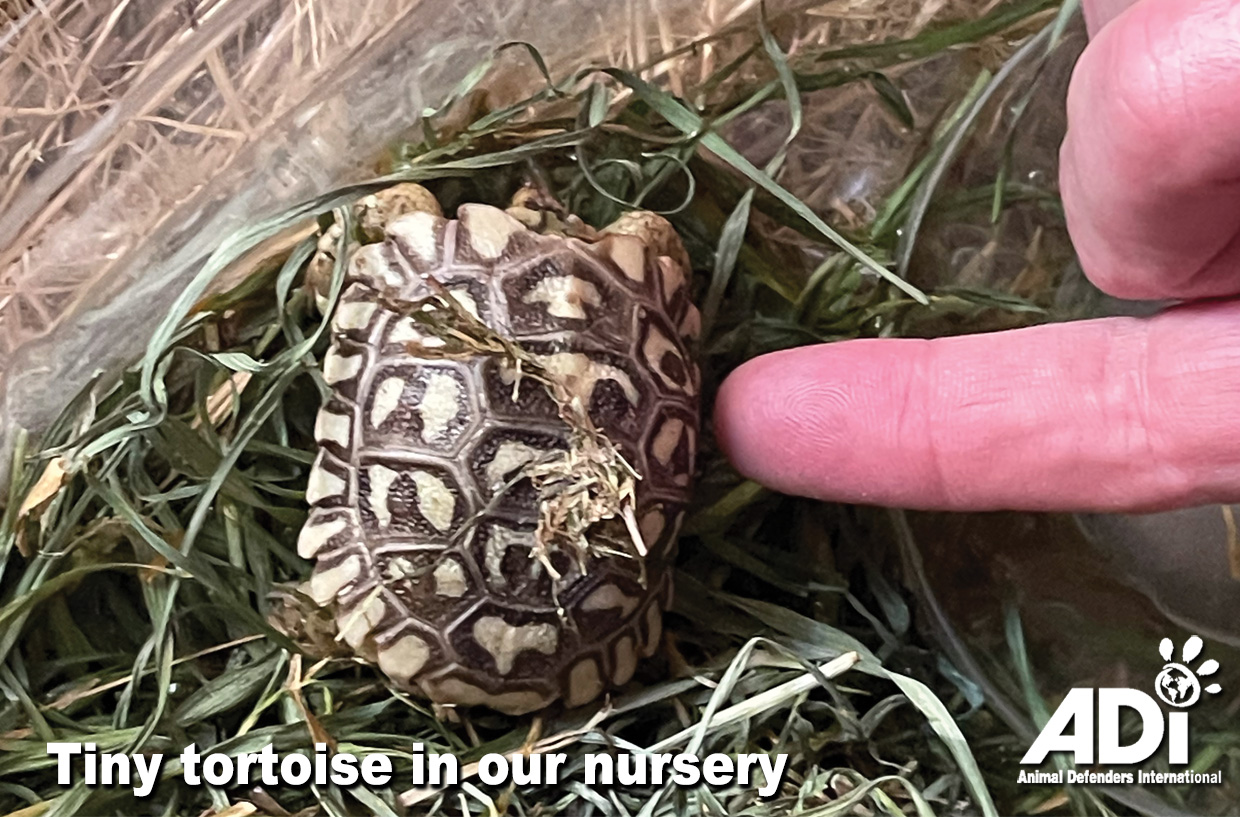
We currently have over 100 tiny tortoises in our nursery, while we have released numerous large tortoises on our sanctuary site to wander freely. These magnificent animals that can live up to 100 years old are indigenous to the region but are trafficked to be eaten, the shell used for trinkets or used in muthi (traditional medicine).

Unfortunately, we have reached a point where we cannot take any more animals without expanding our facilities.

Even with the wildlife, like tortoises and antelope that we plan to return to the wild or release on the sanctuary, we need a place to receive and assess them. That’s why this Giving Tuesday, we are raising the funds for a new Non-Predator Reception Area with four 1,600sqft paddocks and four 9,000sqft paddocks.  Each with a stable/shelter and water supply enabling us to receive and assess animals as they arrive.

For animals who roam the Sanctuary, this will also provide night and feeding quarters. For others, it may be a temporary home where they receive care before returning to the wild.

Our target is $44,310 / £33,650 and the good news is we are well on the way.

Thanks to one of our ADIWS Founders who has kindly offered a $25,000 / £18,000 MATCHING GRANT for this project, every donation up to this has been doubled.

Will you help us hit our target TODAY?

Whatever you can give, will make a massive difference for animals in desperate need.

Please help in any way you can: Donate US $, CA $ | Donate UK, Euros, Rand | Donate to our Facebook Fundraiser