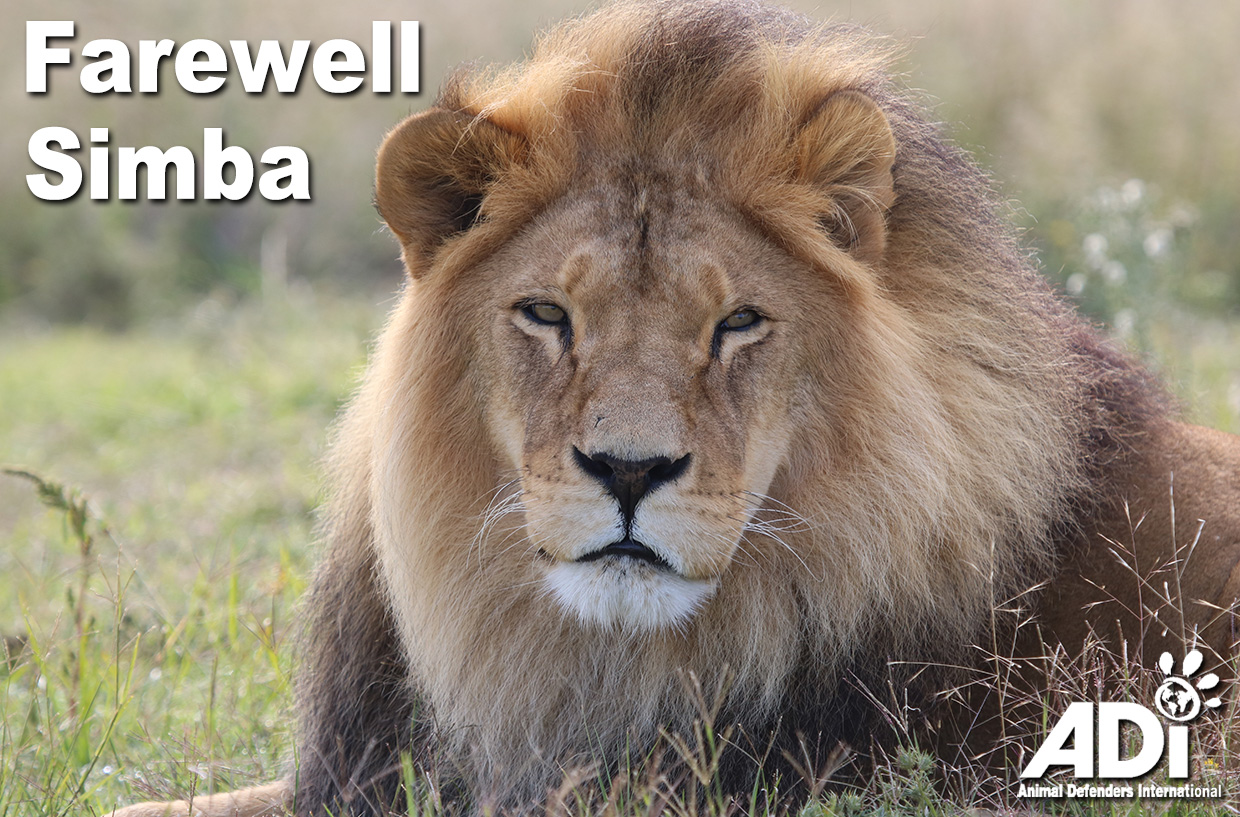
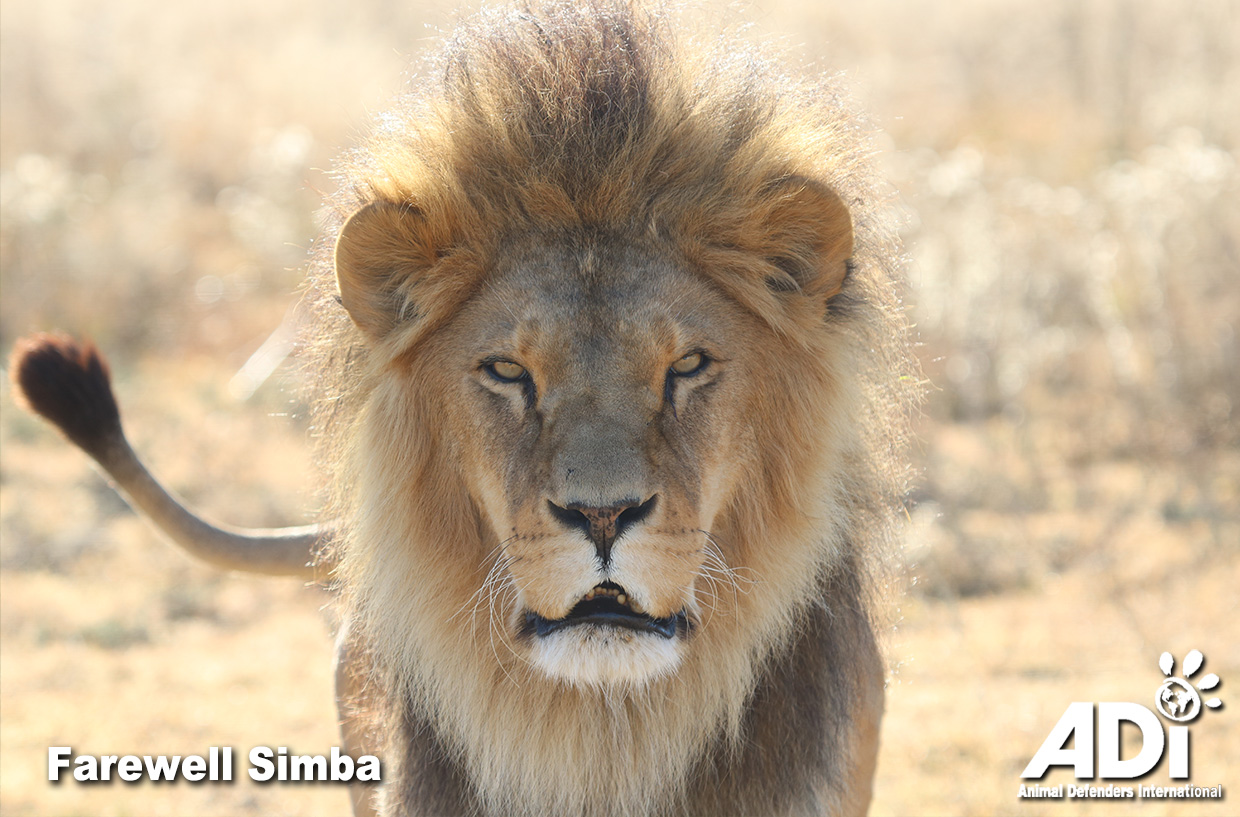
Two weeks ago, we said farewell to Simba an 18-year-old lion at the ADI Wildlife Sanctuary who had been part of my life for over 11 years, since his rescue from a circus in Ayacucho, Peru. It still seems strange this week to see his brother, Rey Ayacucho, alone.
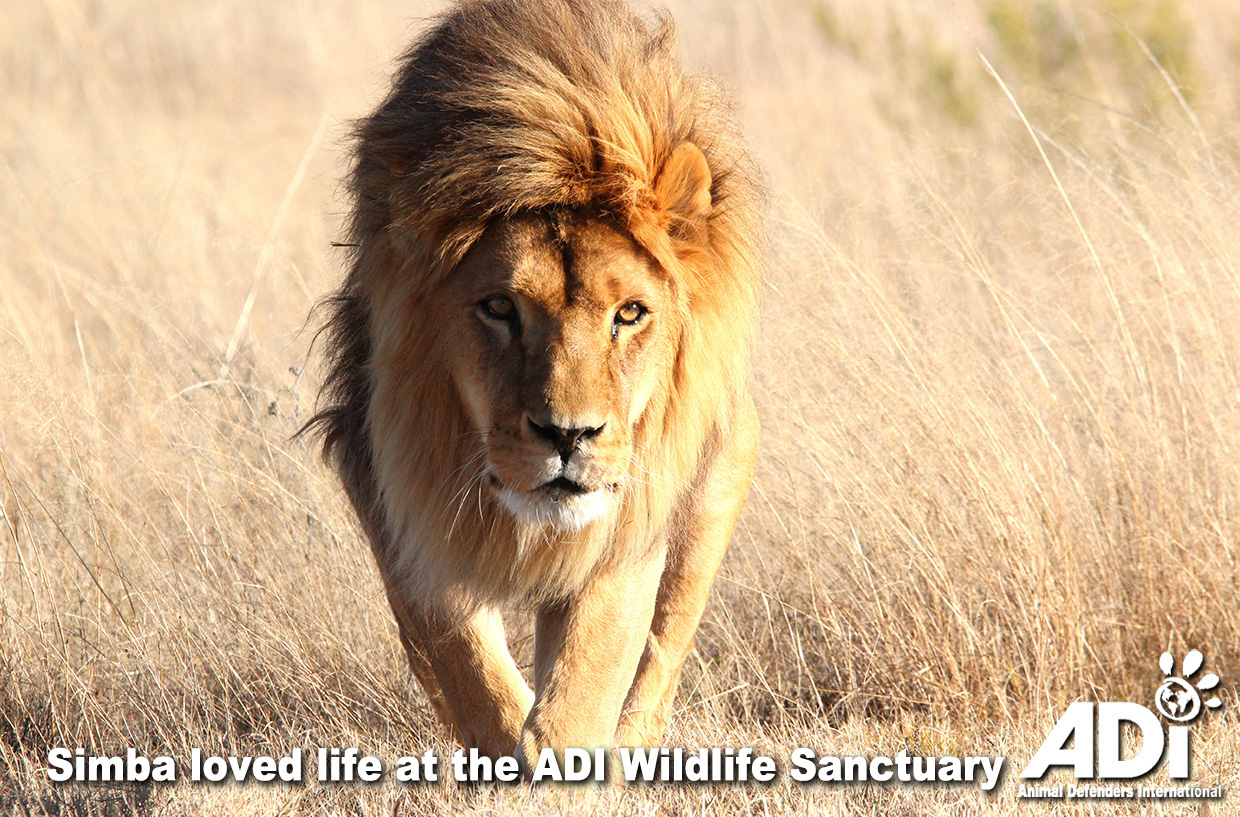
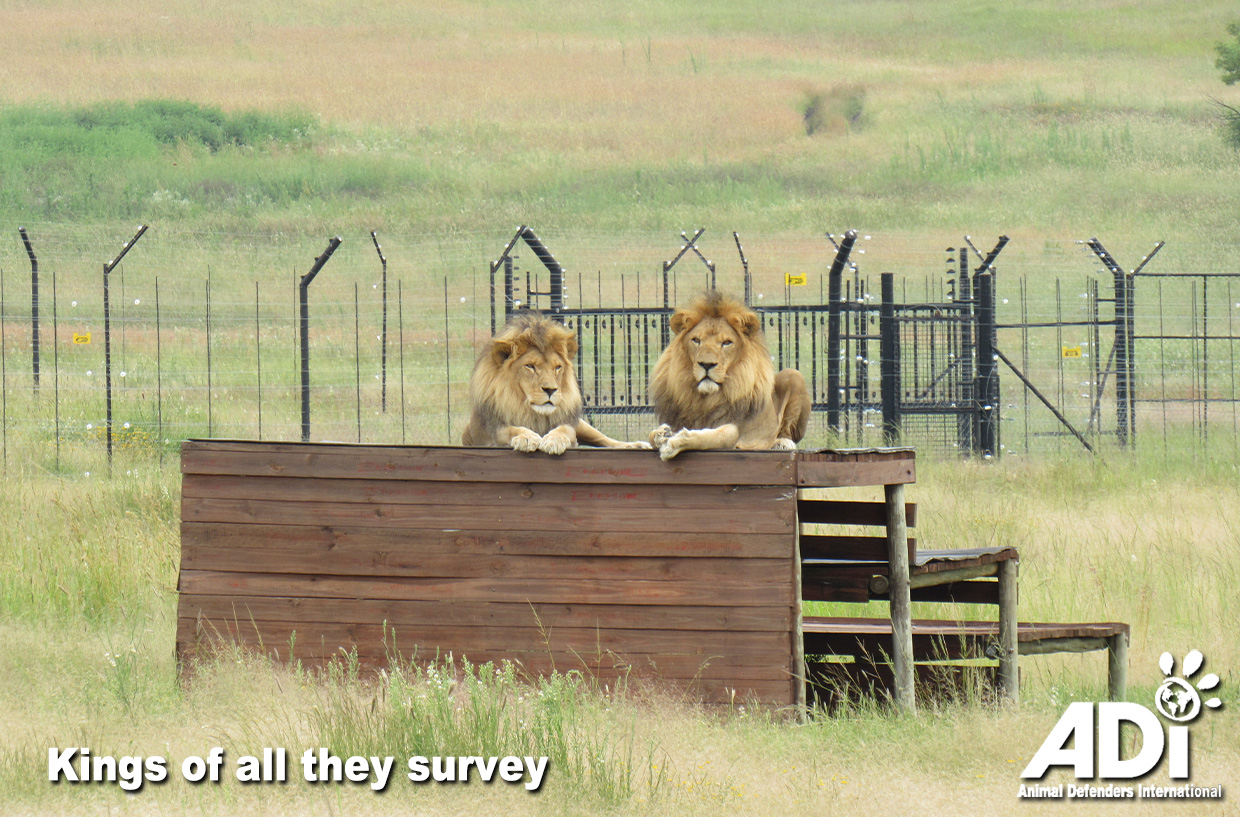
We had known it was coming – Dr Caldwell warned us a year ago that Simba’s severe arthritis was nearing the stage when there would be nothing more he could do for him – but our resilient warrior kept going, defying the odds, clambering onto his platforms with his crooked hind legs, roaring with Rey.
A family member is gone. I will miss this magnificent warrior, and I will be forever grateful for the precious years ADI Supporters gave him in Africa.
Back in 2014, we began Operation Spirit of Freedom; with police and wildlife officials, we raided a circus compound in a town north of Lima to enforce Peru’s ban on animal circuses. After a grueling day, we finally finished unloading lions Leo, Chino, Coco, and Rolex at the ADI Temporary Rescue Unit in the early hours of the morning, then headed to the airport and flew to Ayacucho – a city nestled in a valley in the Andes Mountains.
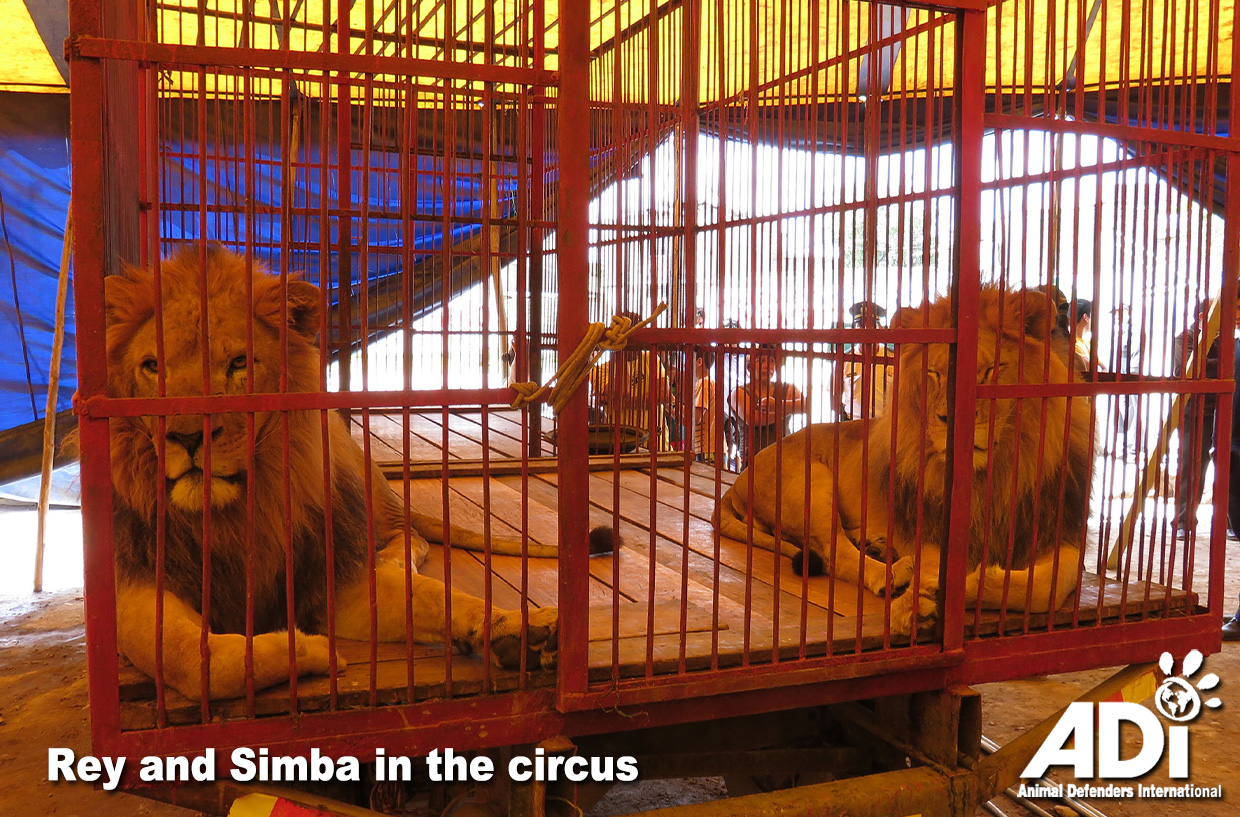
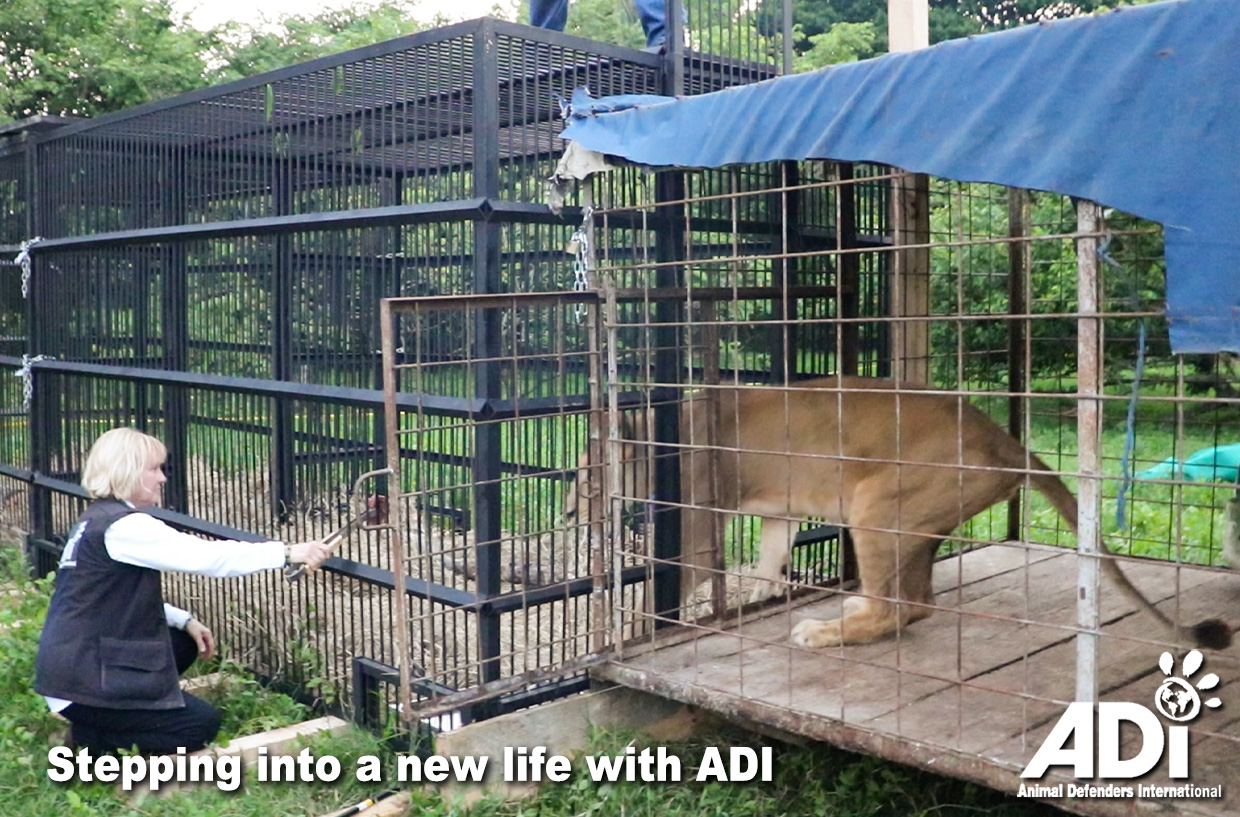
That’s where I met 7-year-old Rey and Simba. They were in a cage on wheels the size of two queen-sized beds, end to end. There was nothing inside, just bare, urine-soaked boards. Imagine your whole life like that, living those freezing nights in the Andes mountains? Little wonder that Simba developed arthritis early in life, and together with early-age malnutrition due to the poor diet in the circus, contributed to his distorted hind legs.
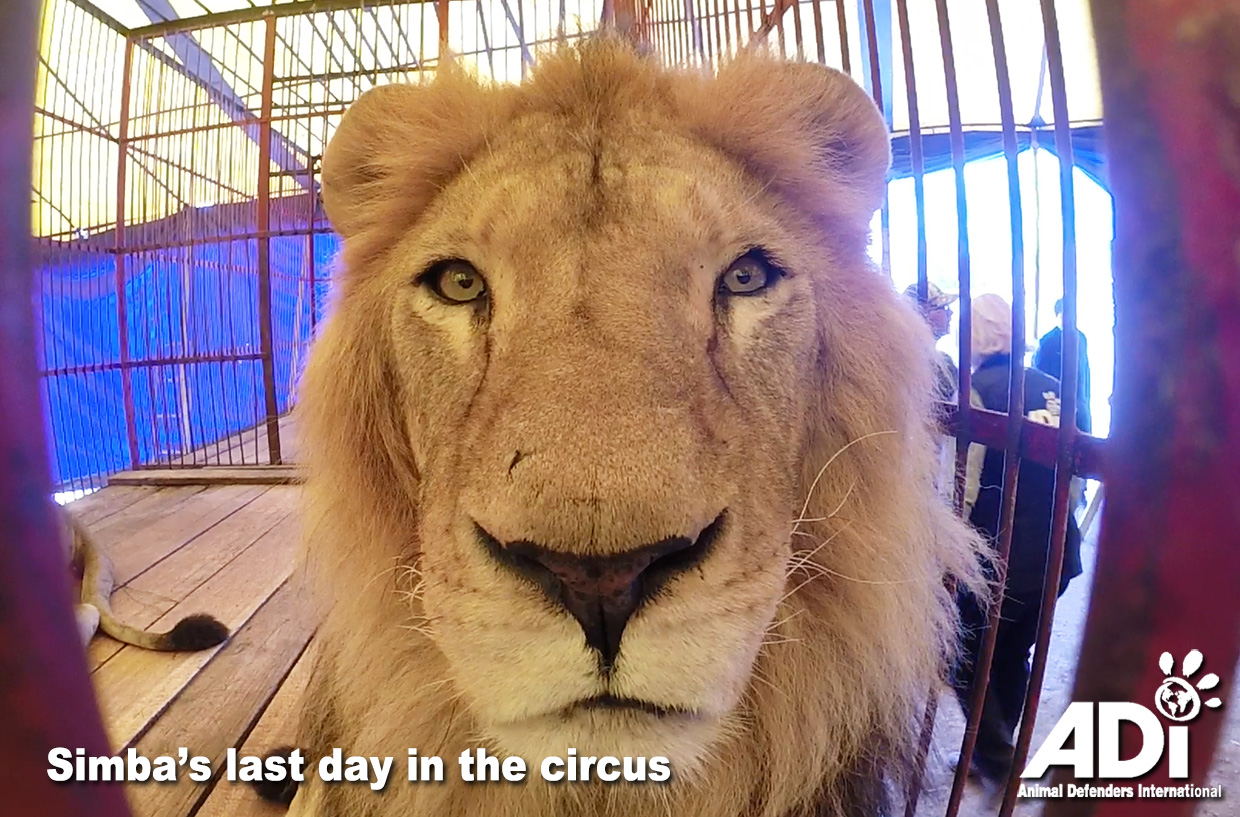
Nevertheless, Simba and Rey stood proud and dignified, stoic, watching carefully what was happening around them, the screaming, shouting and shoving between the humans.
The ADI team was small, we had relied upon support from the police and officials, but they stood back as we were surrounded by dozens of jeering circus thugs and their friends. Just as we got the boys ready to enter the ADI cage to take them away, the trainer would bang on it and send them scurrying back into the circus cage. It took several attempts to get them safely into our cage.
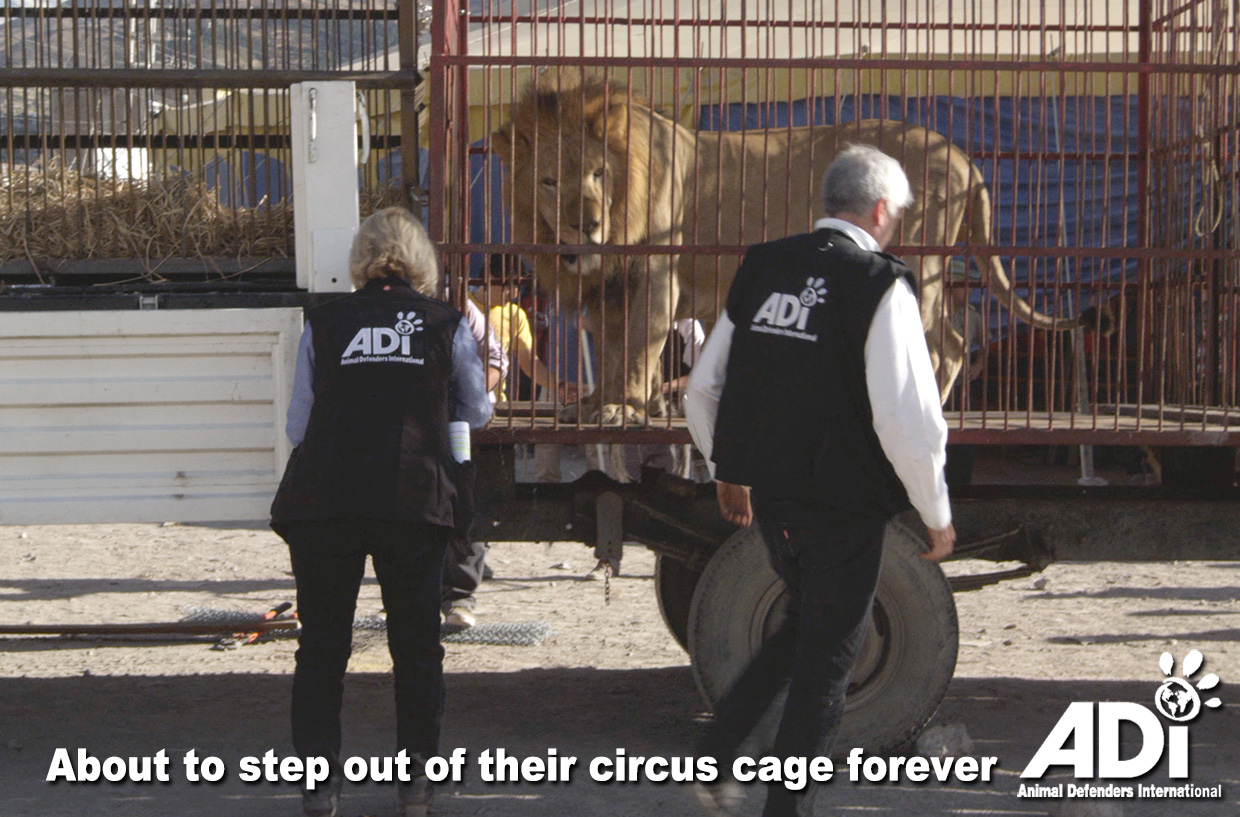
It was a 19-hour drive over the mountains through rain, sleet, and snow back to the ADI Temporary Rescue Unit (TRU) near Lima. I spent my birthday crossing the Andes with Simba and Rey – I can’t think of a better way to spend a birthday, and the best birthday present, ever!
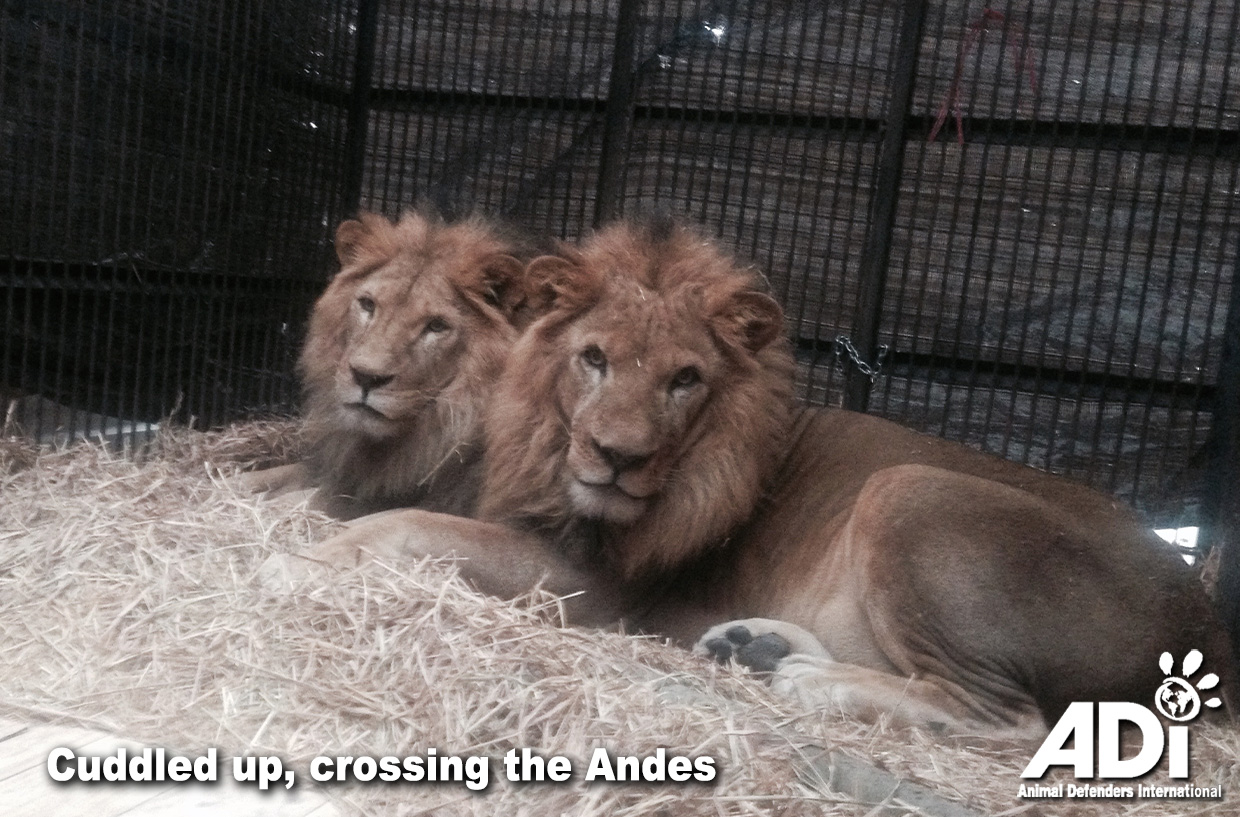
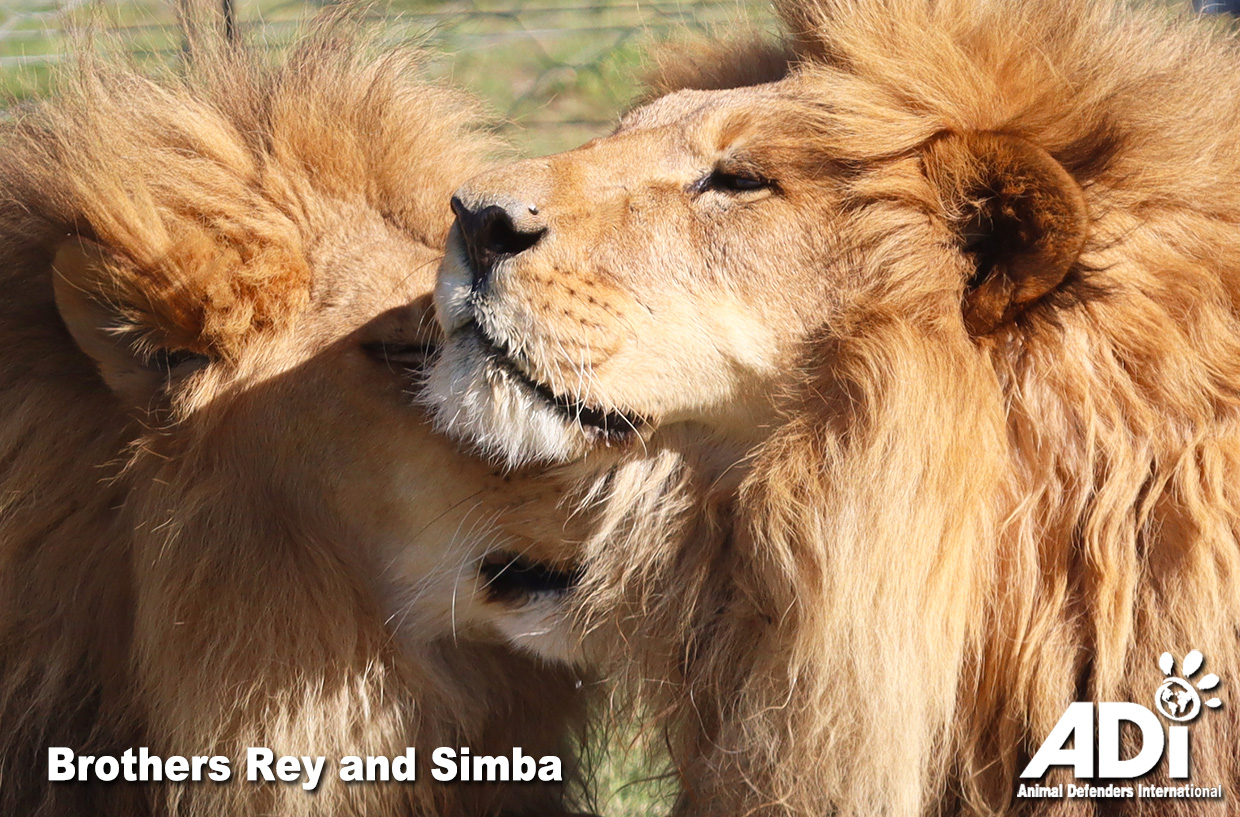
Each time we checked on them during the journey (their cage was covered) they were cuddled up together, keeping each other warm, their manes fluffed up, and they had made a nest in the deep hay – their first comfortable bed. We could see then they would always be there for each other.
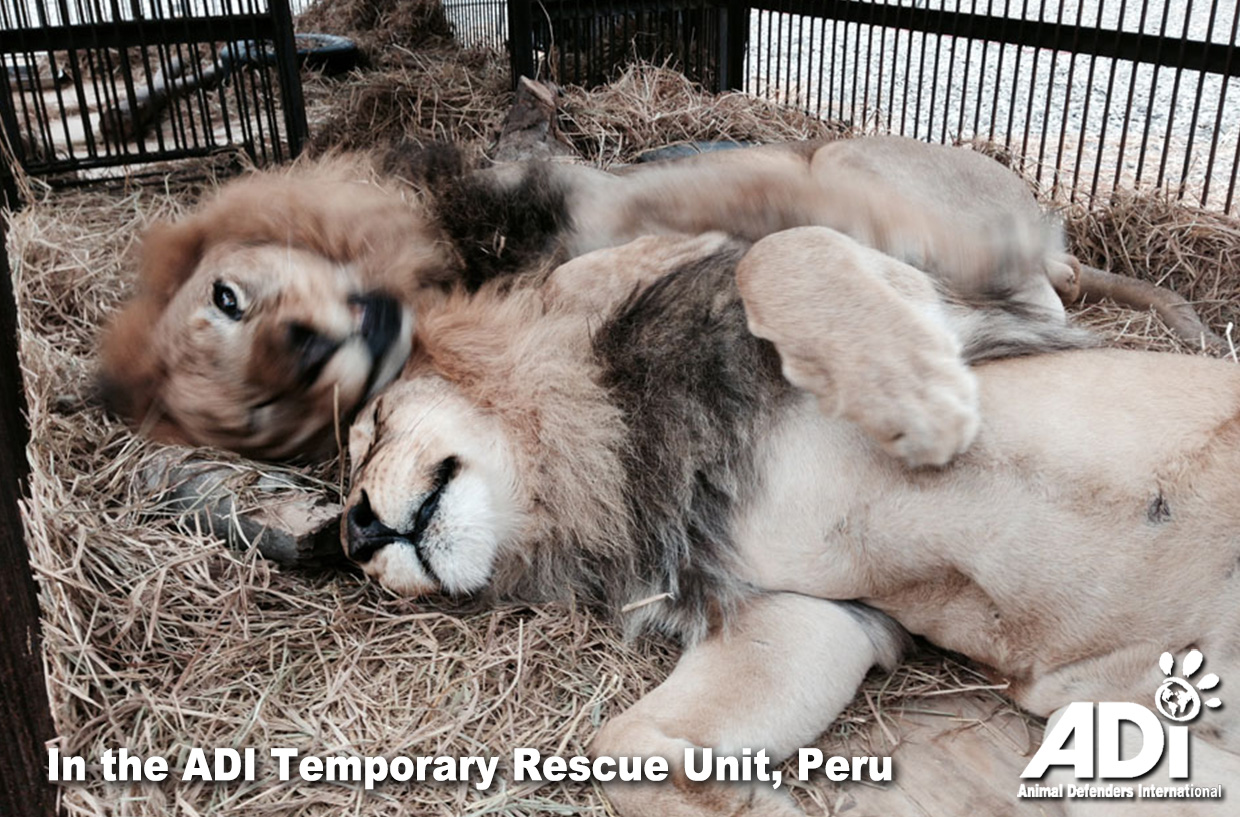
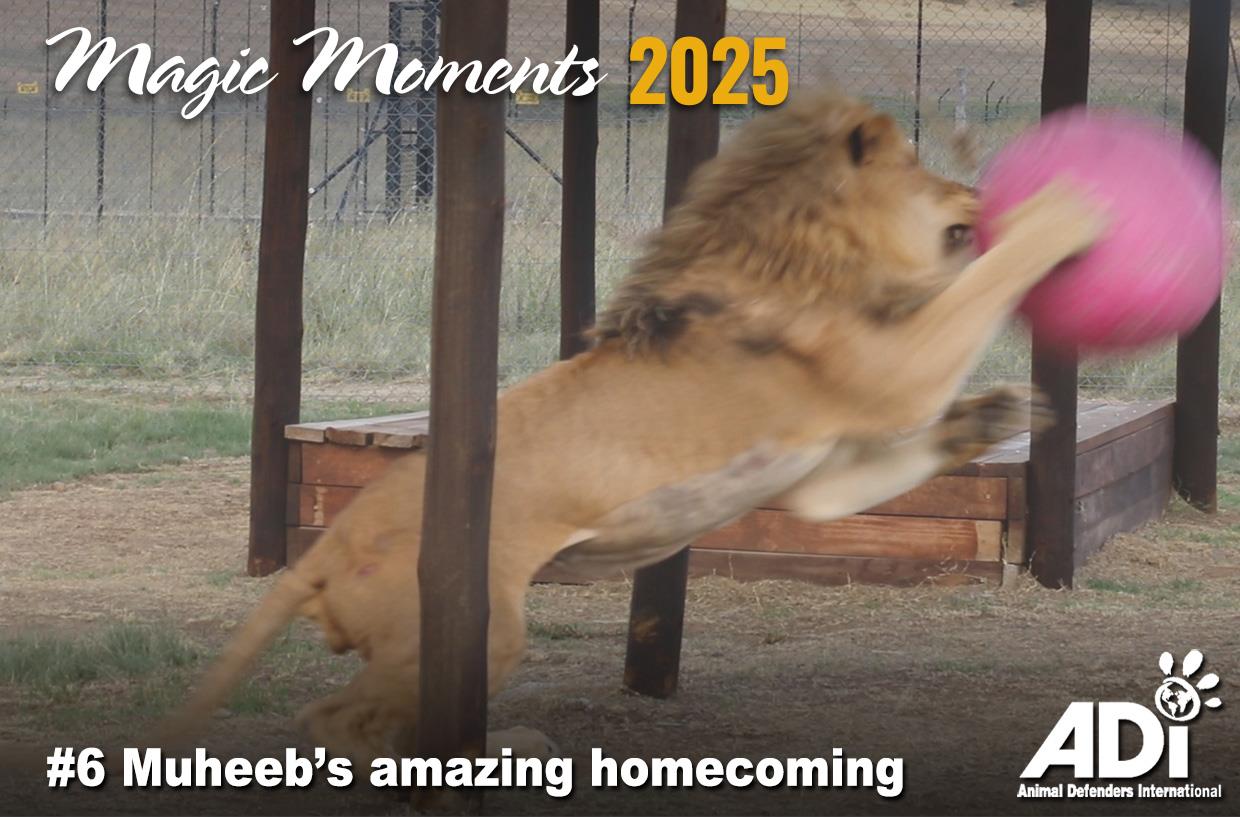
In the ADI TRU they found their inner kitten, they loved to play, especially chasing and bursting footballs. They were always together and their travel crates were side by side when we flew all 33 ex-circus lions home to Africa on the record-breaking Operation Spirit of Freedom Airlift – every lion from the circuses of Colombia and Peru came home to the land of their ancestors.
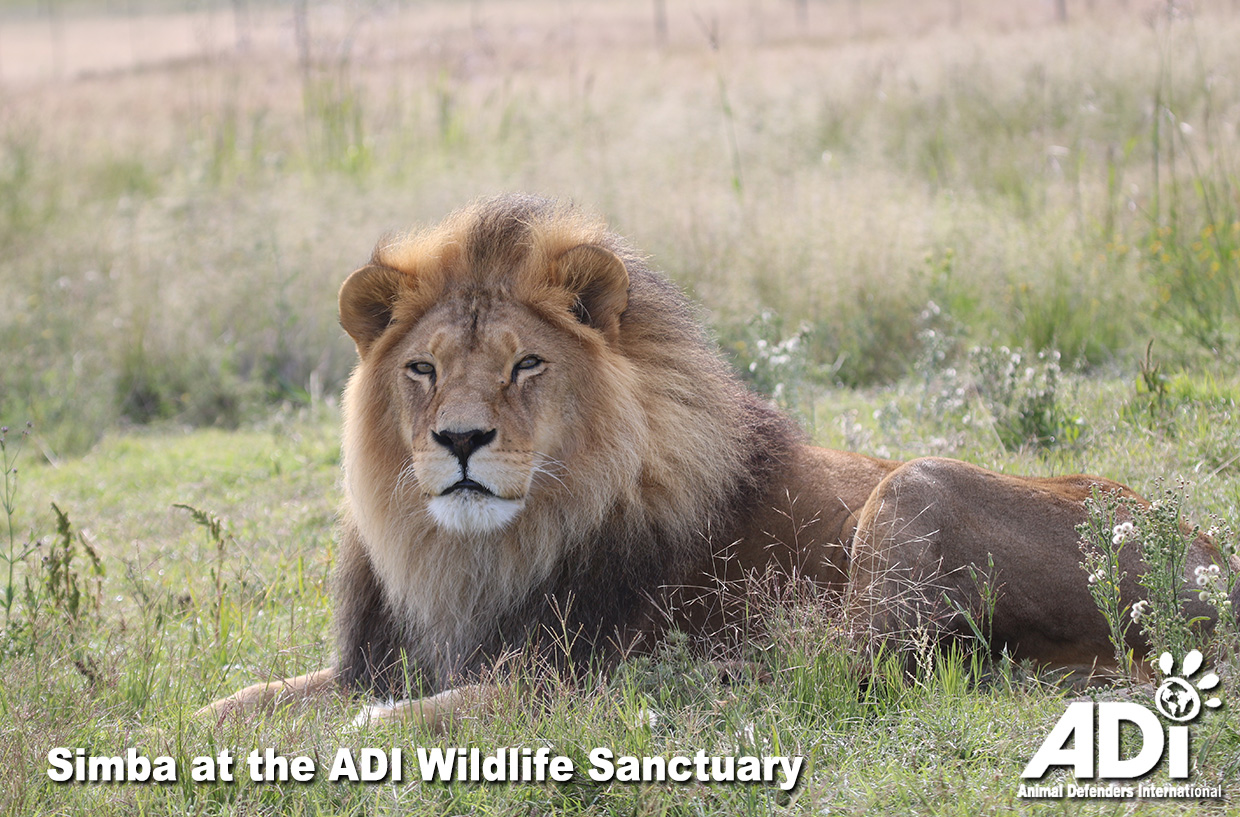
Once home in Africa, as the years passed, Simba’s arthritis grew worse and Dr Caldwell would regularly adapt his treatment. Believing Simba was struggling to get onto his platforms, we added extra steps between each level – Simba thanked us next day by leaping up and down at great speed, avoiding the steps altogether as if to say “I’m not an old man yet!”.
They had spent their entire lives always together, first in a small circus cage in Peru and then in ADI care until one day, Rey was taken ill and had to go to hospital.
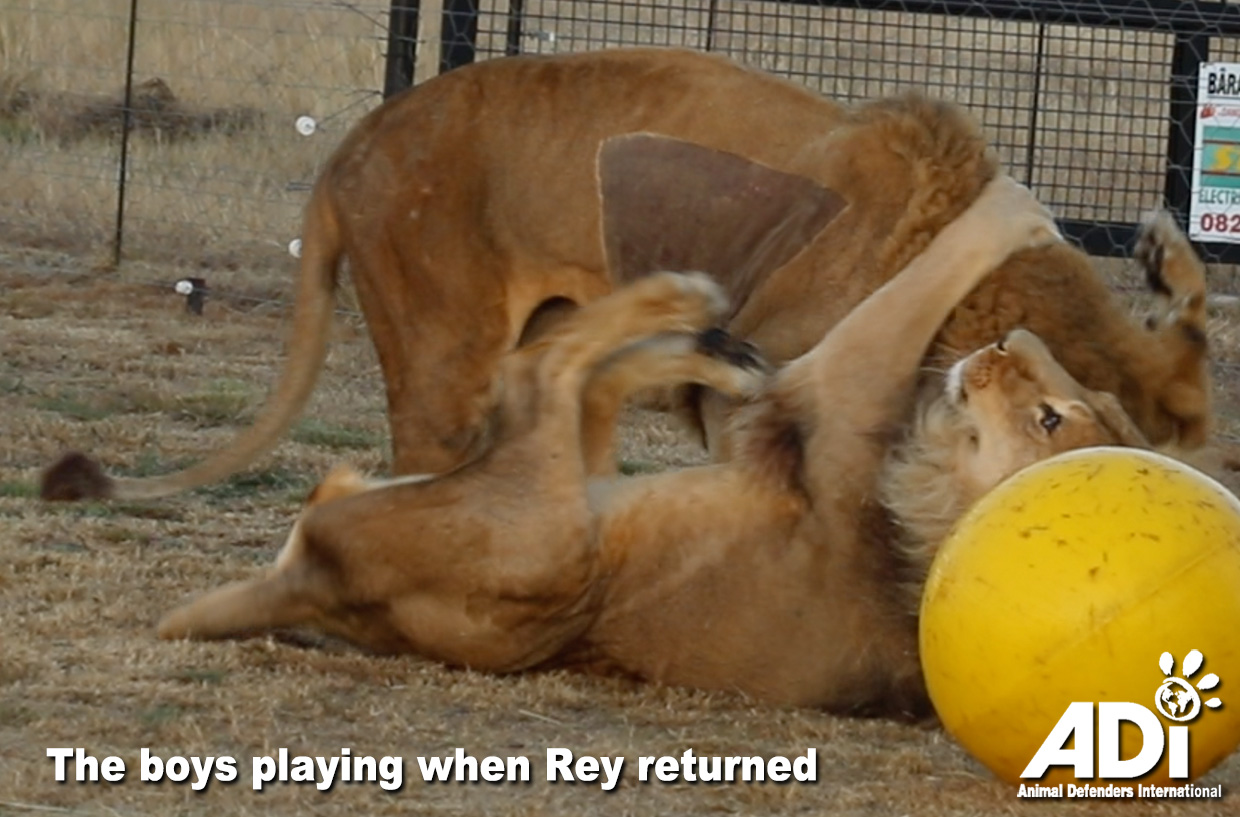
It was late at night when Rey returned. It is our practice to keep the animals separate, but within sight of each other when they return from hospital, to let them settle and if one feels vulnerable, it allows them to regain confidence. We did this, but the boys were desperate to be with each other and Simba was getting frantic.
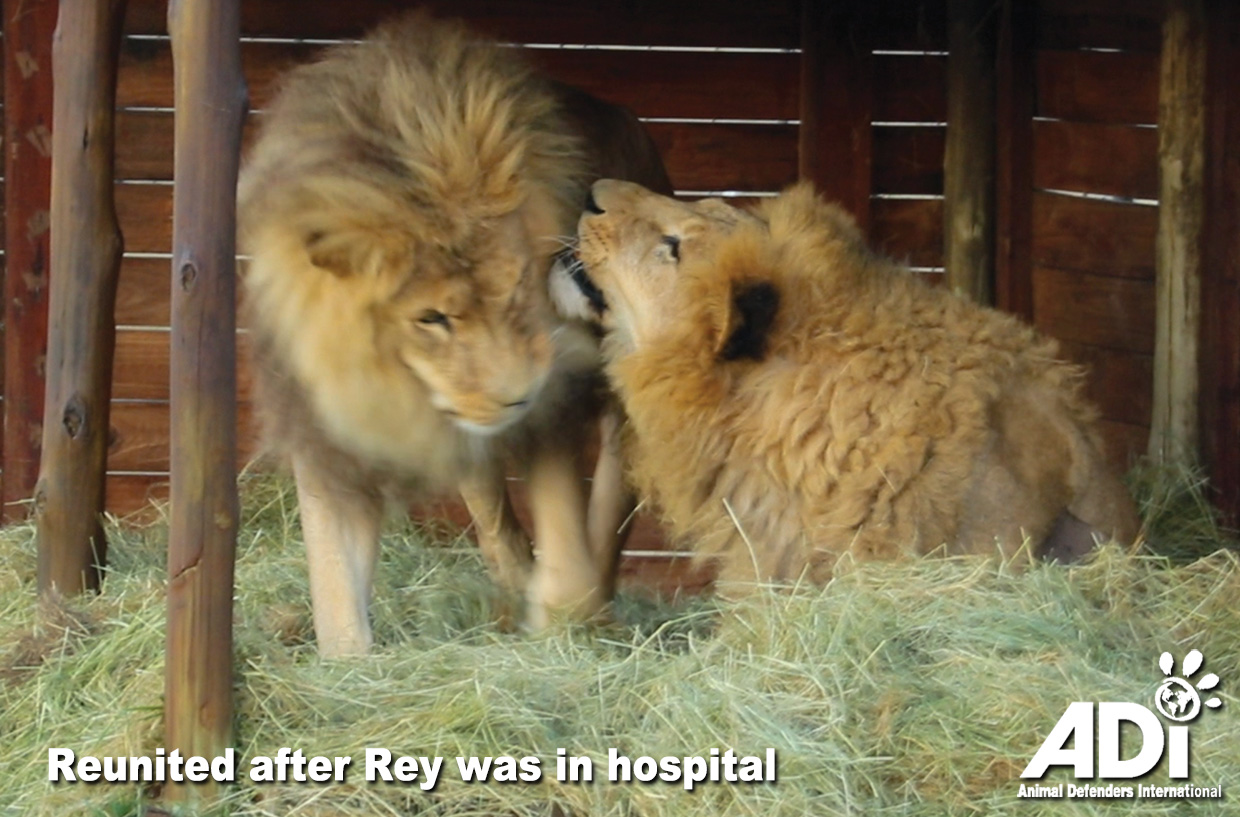
So, we put them together – they bumped heads and went straight to bed in a nest under the platform. It would only be as the sun rose that I would witness one of the most magical things I have seen in many years rescuing animals.
We took it in turns to sit watching all night. Tim’s and my shift started at about 3 or 4am. Then in the first grey light heralding sunrise the lions began to stir – nuzzling and rubbing heads. As the sun came up, they began to play. They nuzzled, head-rubbed, cuddled, wrestled, and rolled each other over. They were cubs again, and Simba joyfully skipped around his brother on his crooked, arthritic legs – in a circle, like a dog with the zoomies!
We let them out of the feeding camp and they marched down the length of Guibord-Sprague habitat, shoulder to shoulder, casually bumping their hips together. They began to roar and the other lions roared back.
In their 18 years, they were only apart again one more time, after a hospital visit for Simba last year. They would wander about and explore separately but most of the time it was always Simba and Rey together on top of the platform, in the long grass, in the shade, or eagerly watching the food preparation to kitchen to see if dinner was on the way.
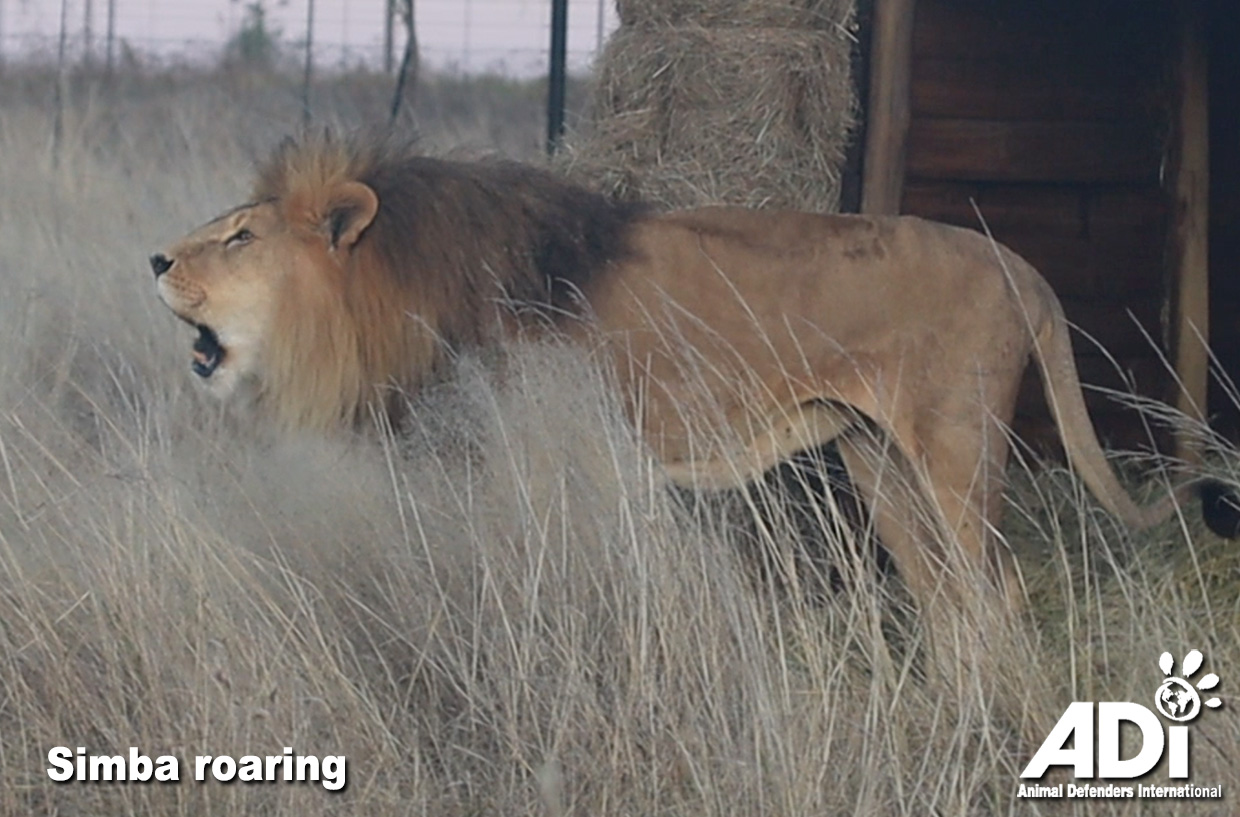
As Simba passed, Rey let out a deep roar. We left them together and when we finally drove Simba away, Rey did not stop watching until the vehicle disappeared. That night the sanctuary was eerily quiet. Rey and Simba were loud voices in the chorus roaring at sunrise and sunset, but even the other chorus voices, Kesari, Chino and Coco were silent. One of their own was gone.
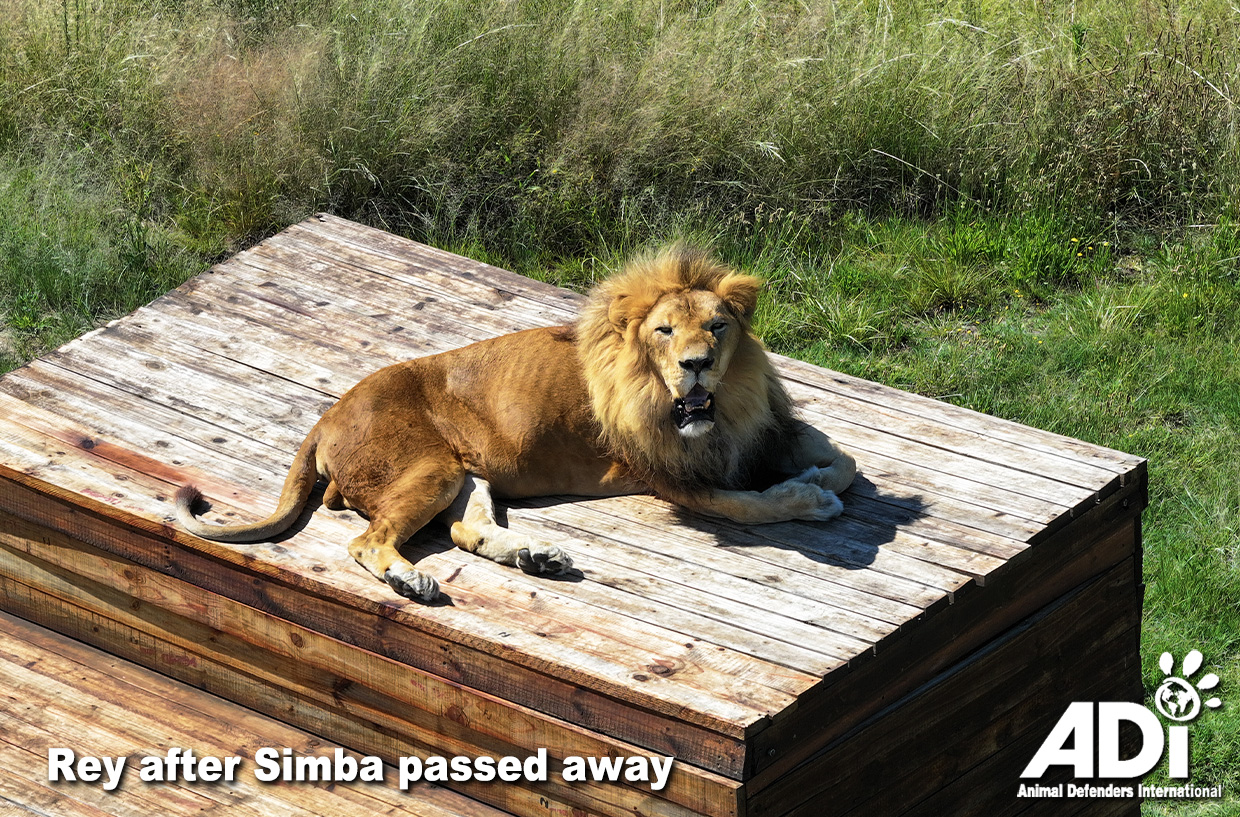
Our Resident Welfare Manager, Johannes, was designated Rey’s Grief Companion, spending time just being with him, talking to him, monitoring, adding scents and Feliway (the calming pheromone) to his favorite places and giving him treats to see him through the loss of his lifetime friend and companion.
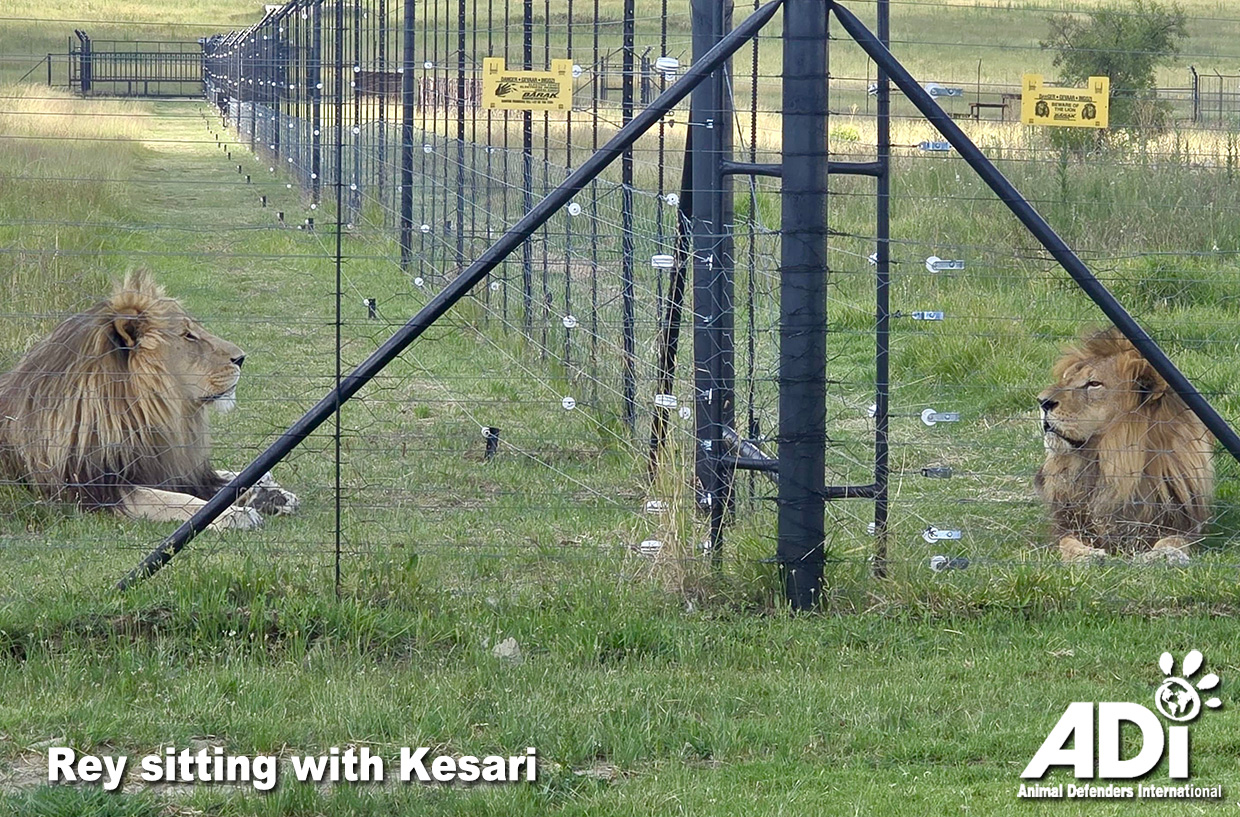
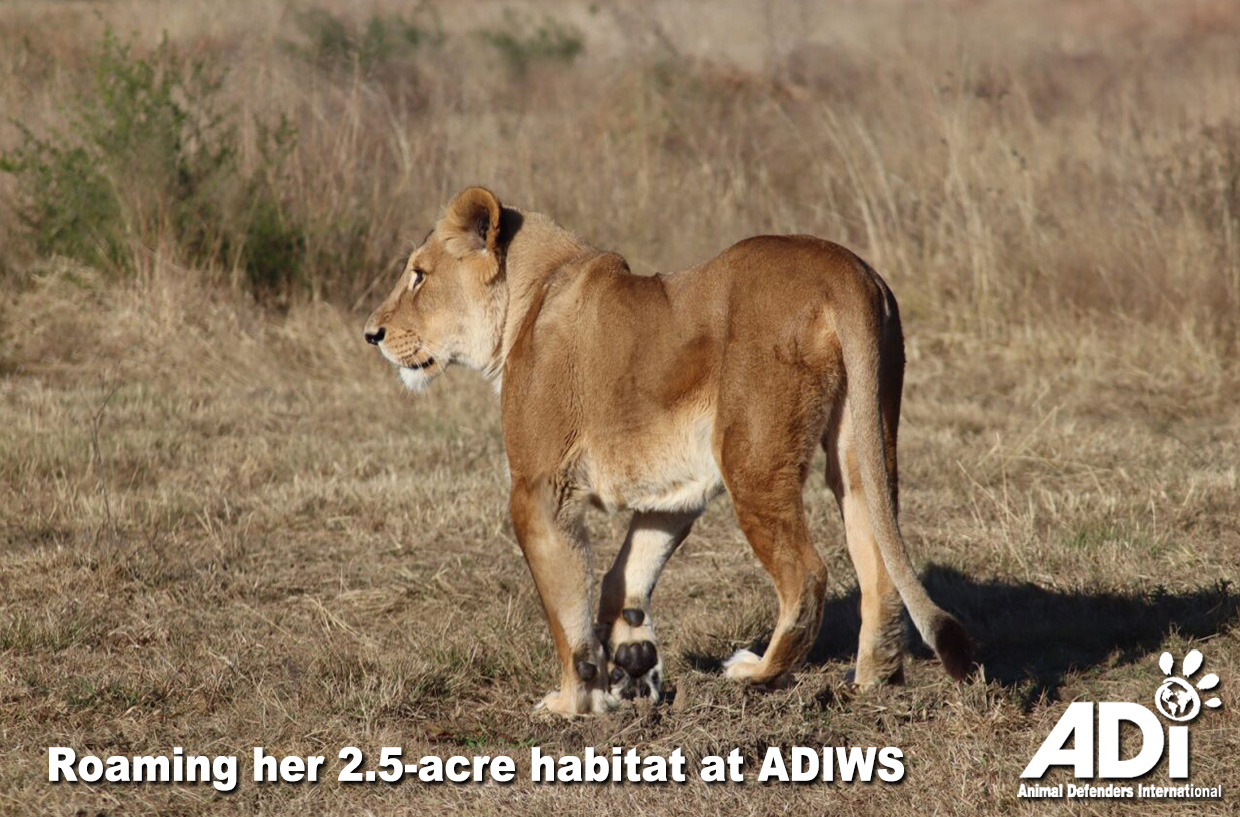
Rey has sought solace with his neighbour Kesari, and they have been lying together by the fence between their habitats. He has been eating well, engaging with Johannes, climbing onto his various platforms, and after two nights, resumed his role initiating the evening roaring chorus.
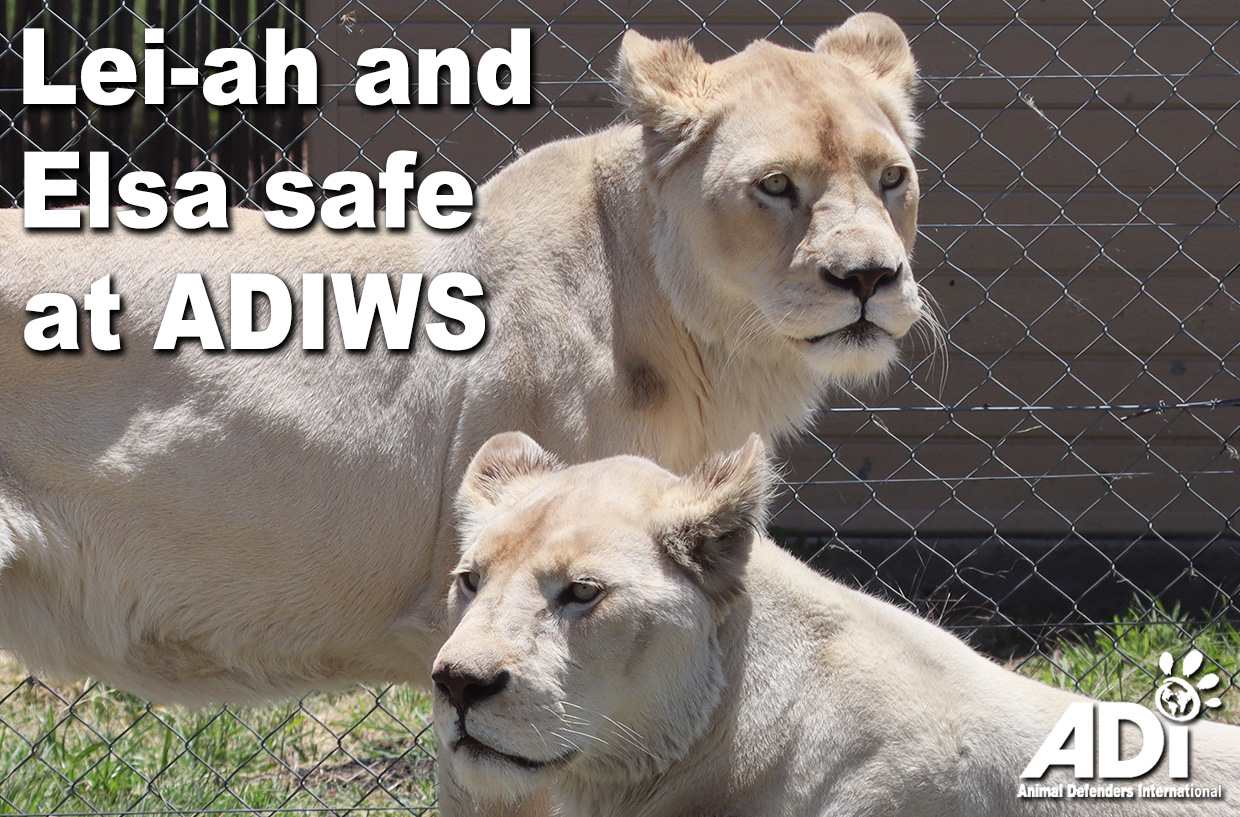
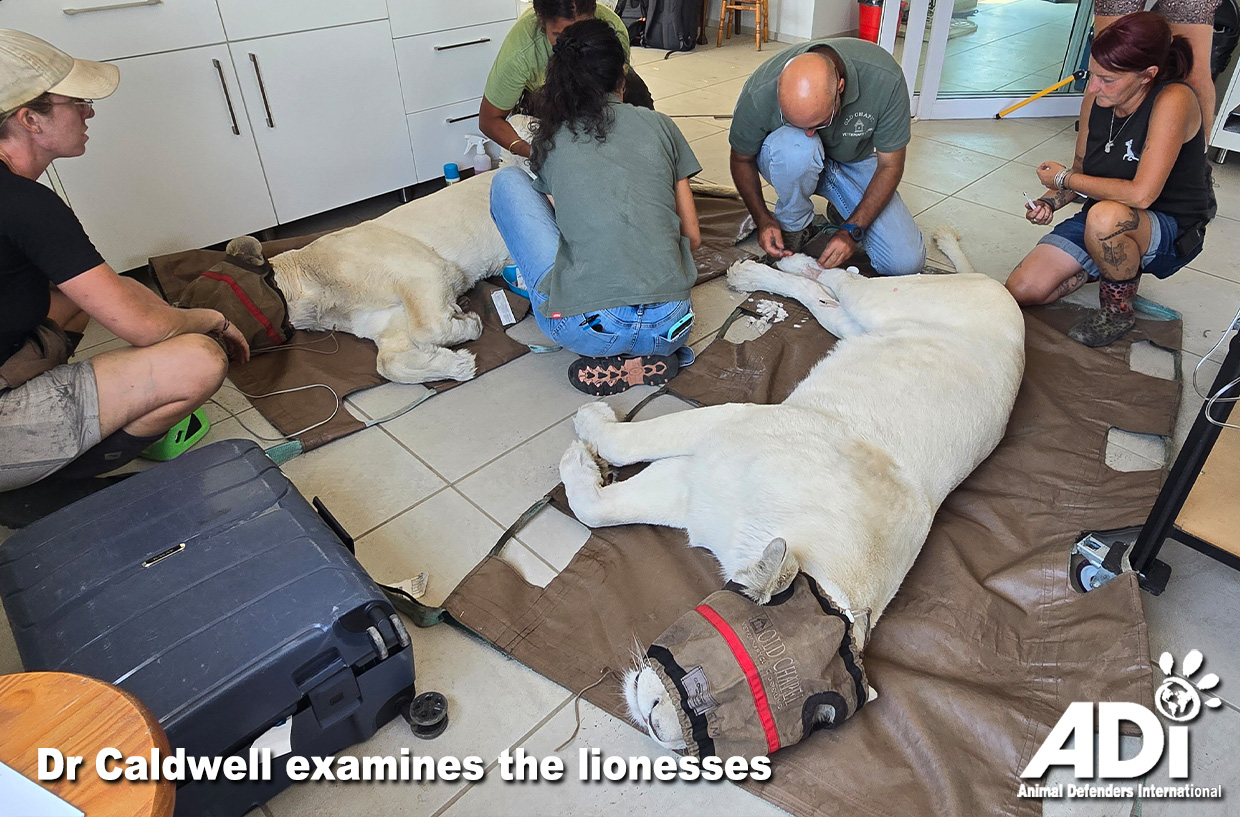
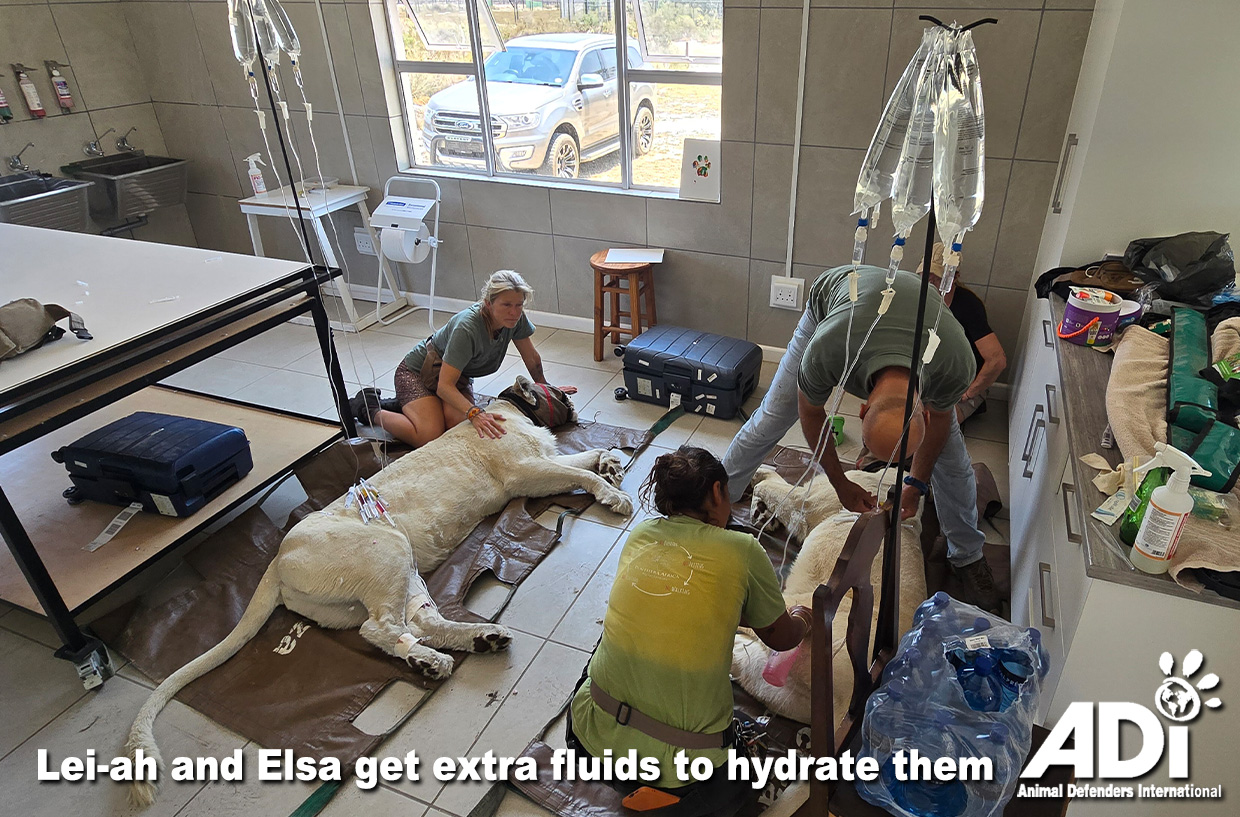
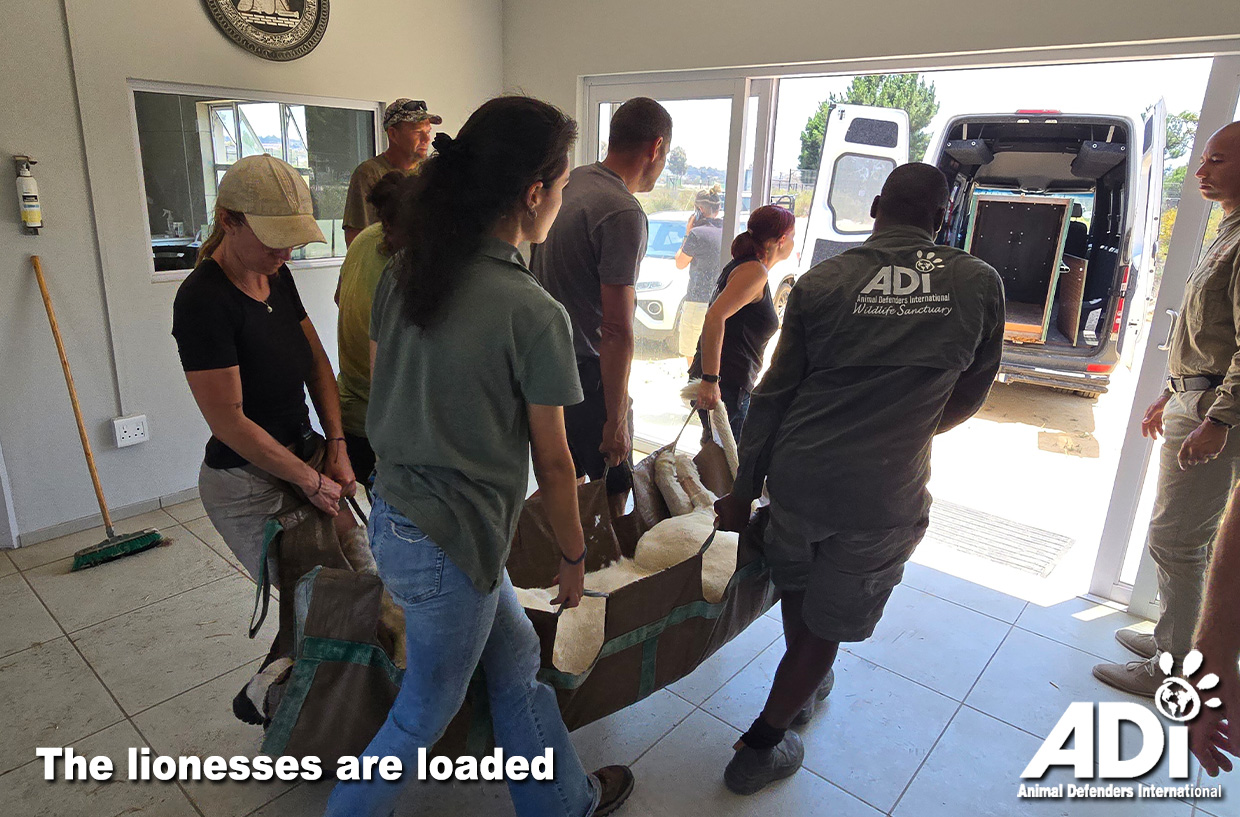
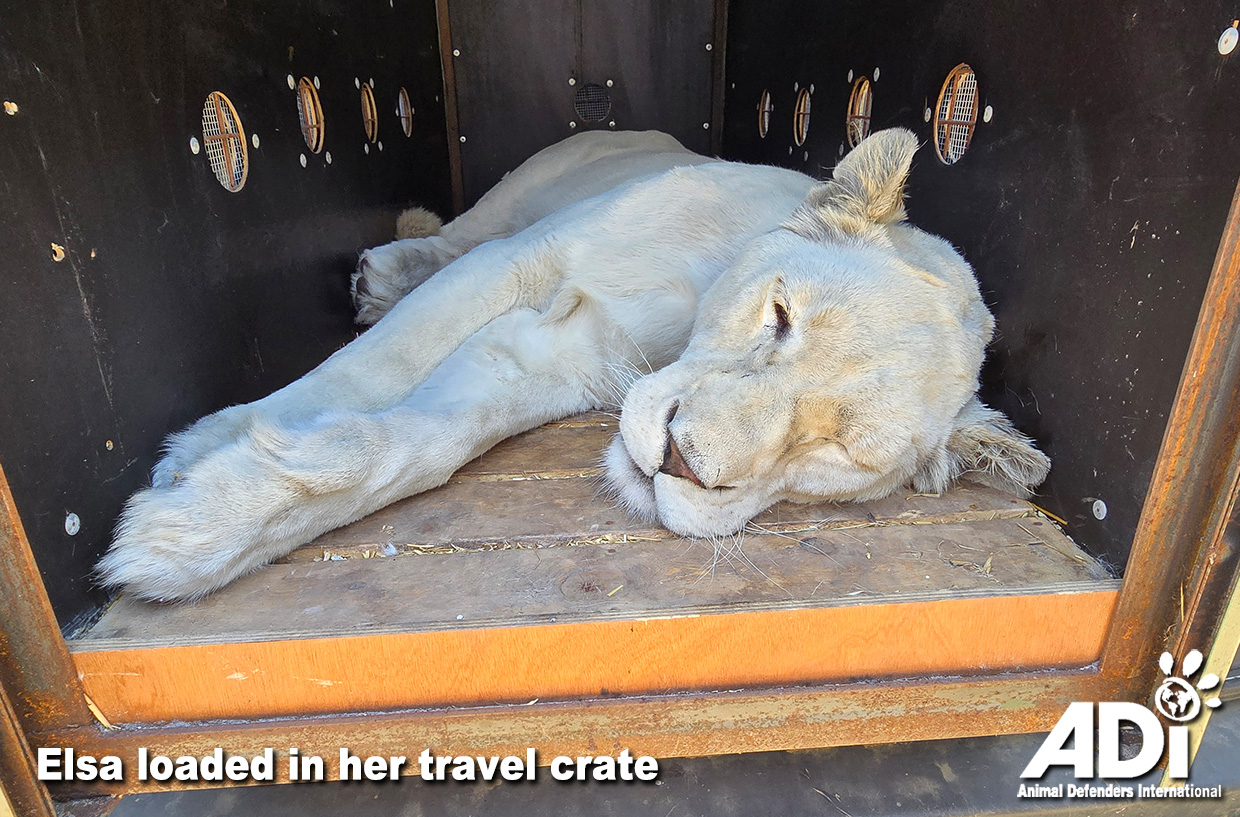
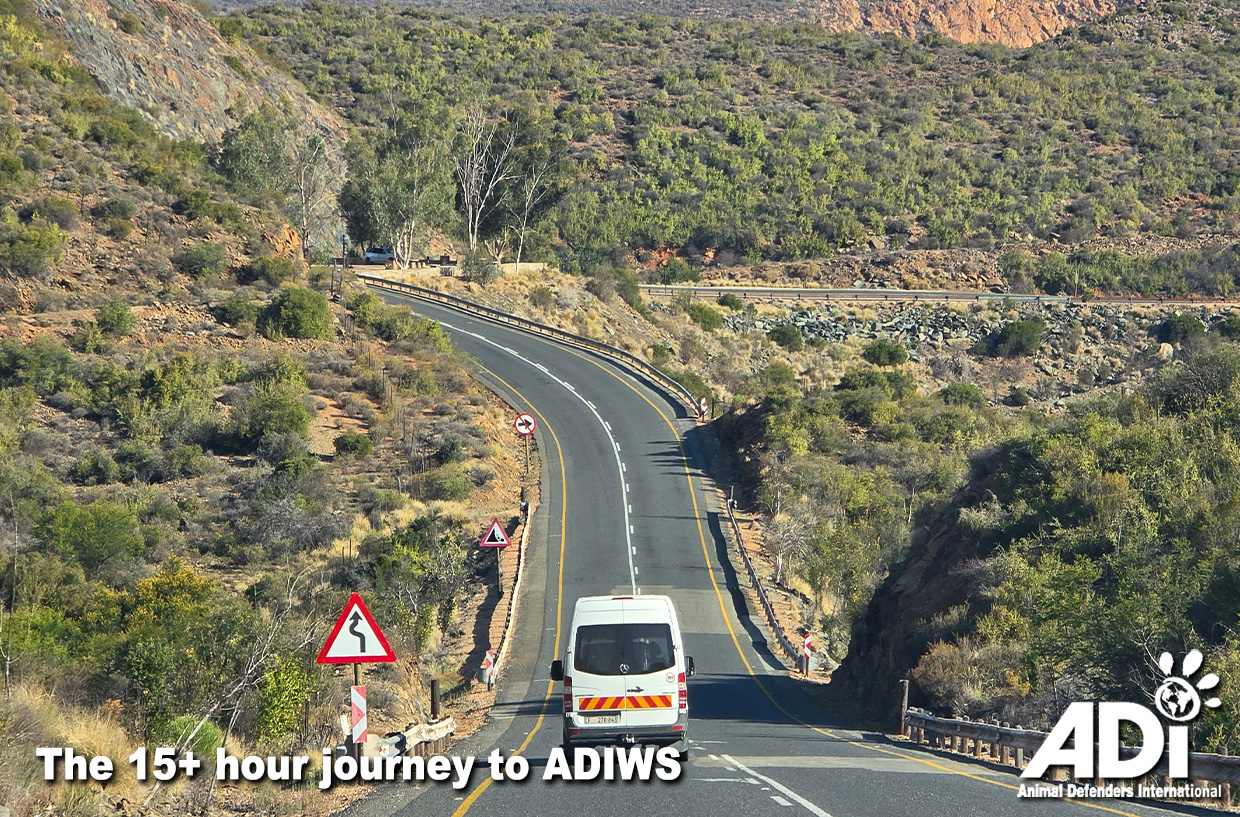
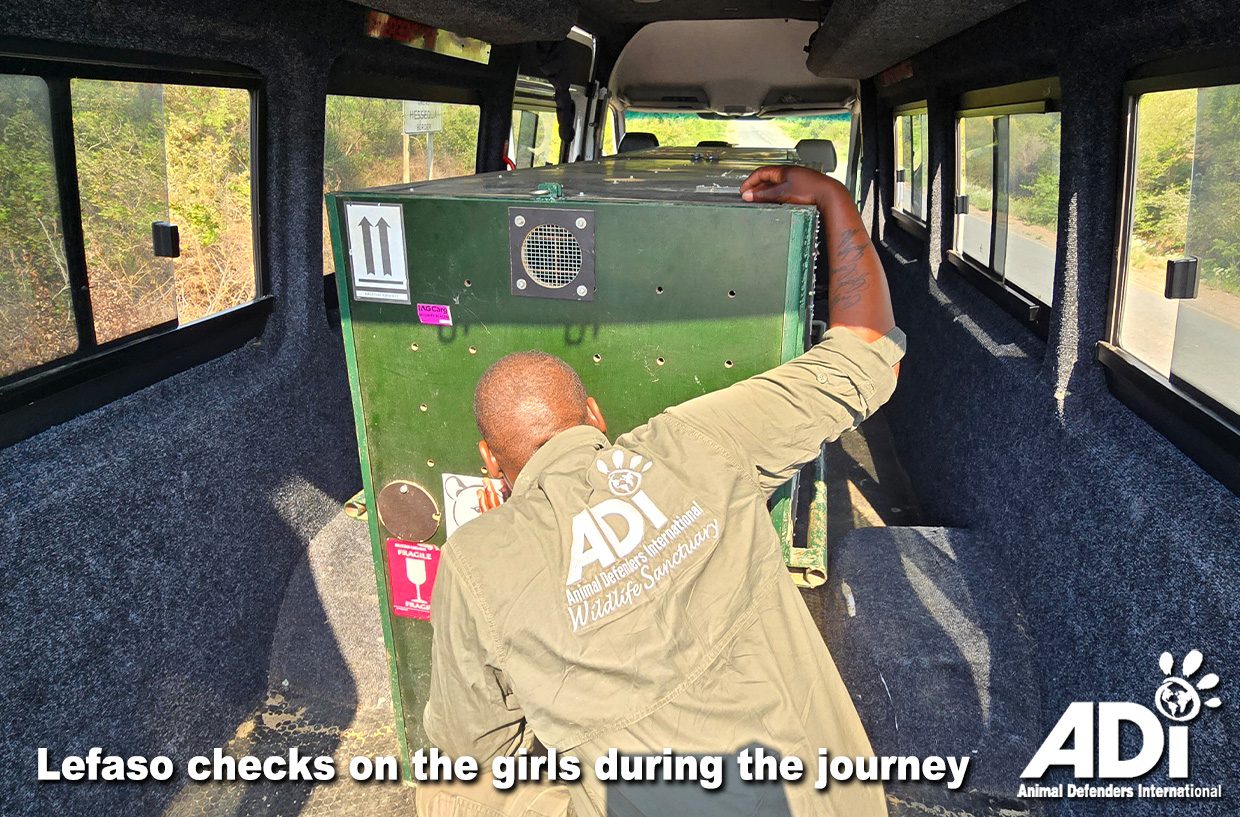
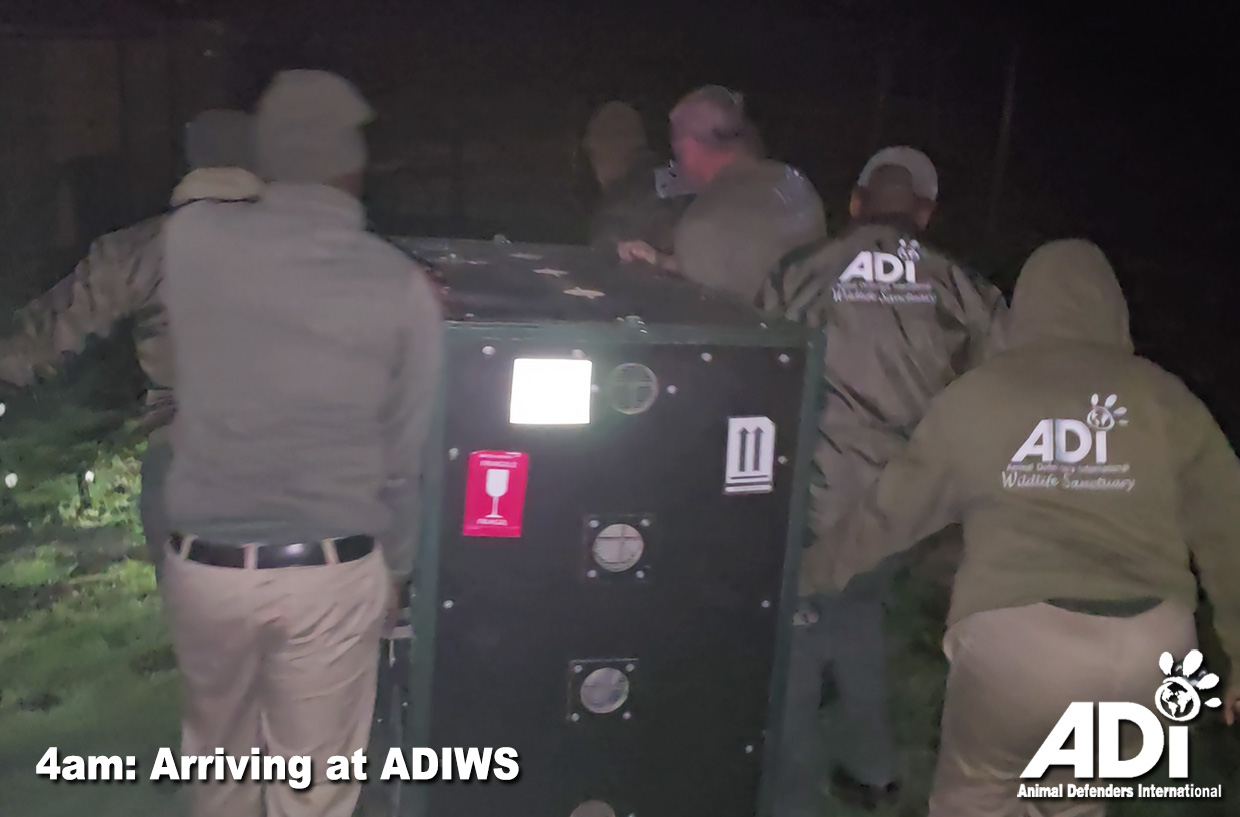
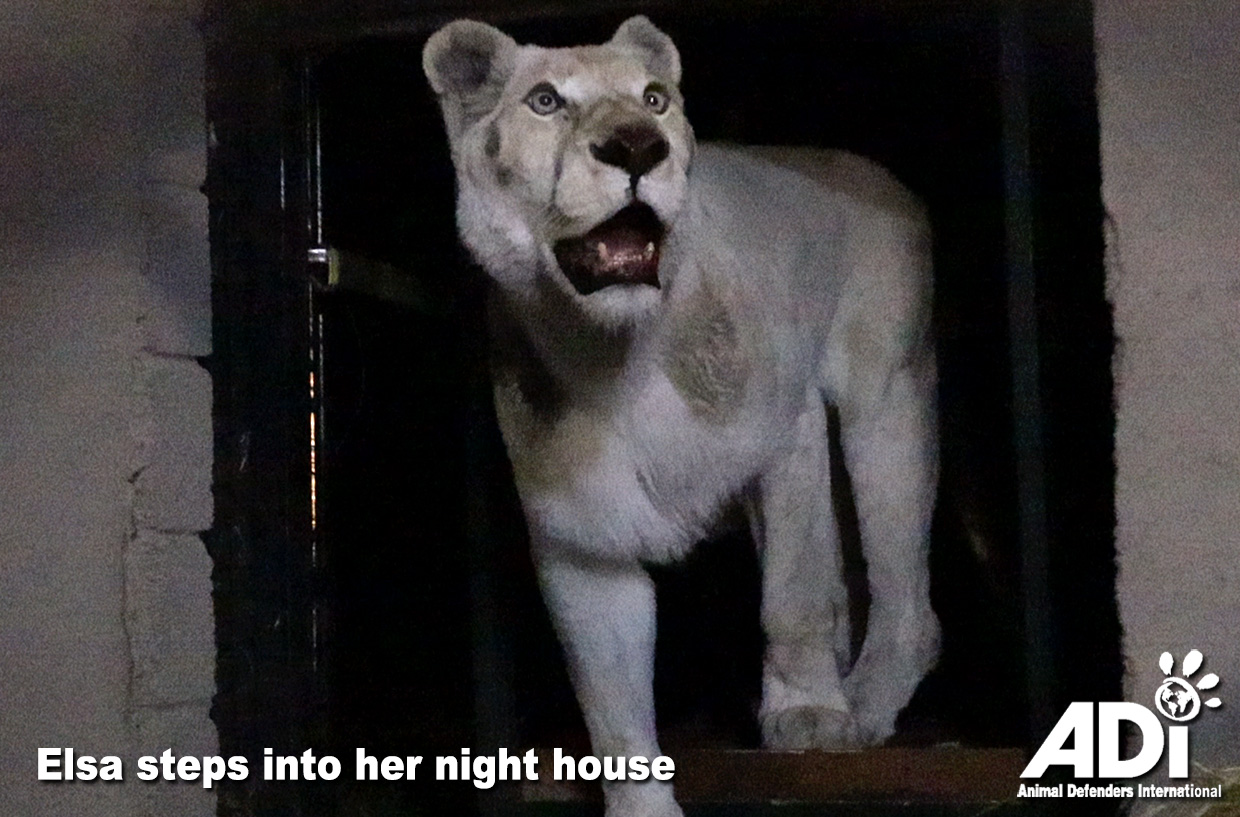
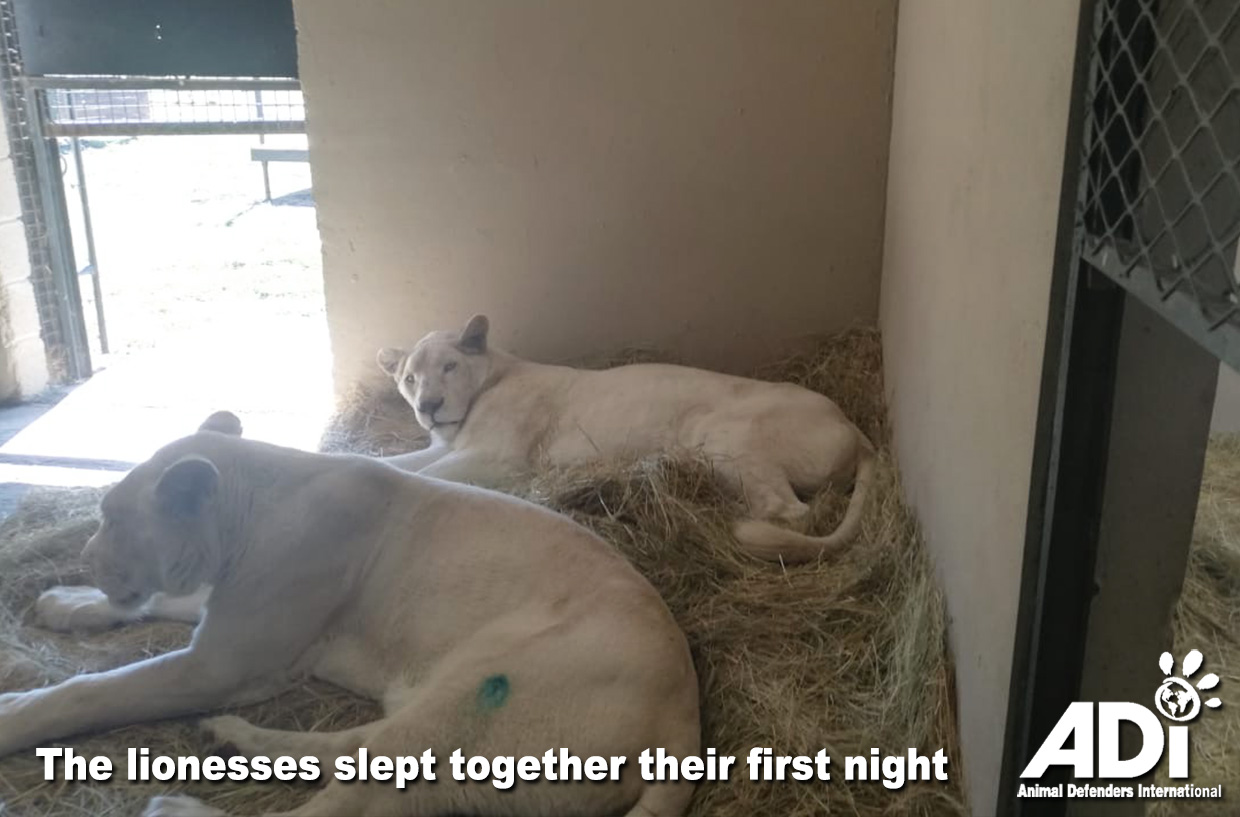
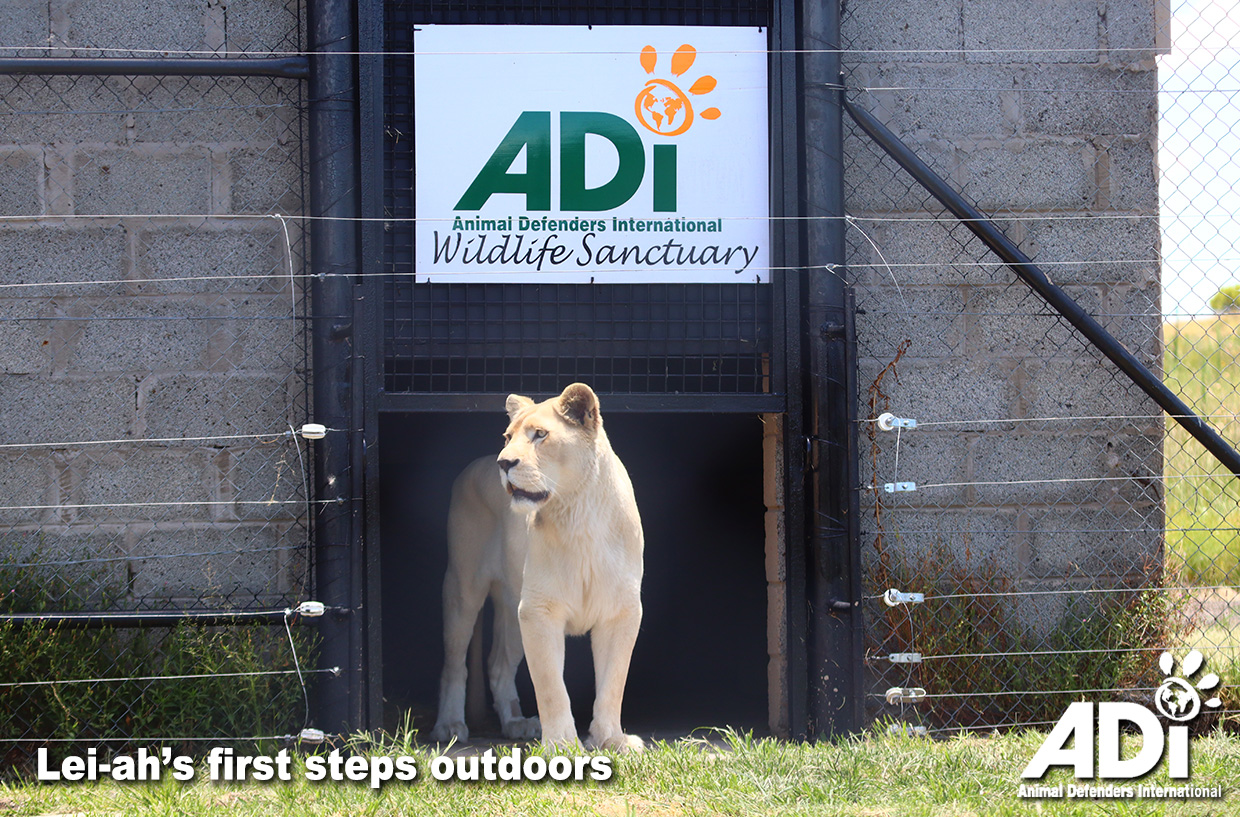
As new residents, lions Lei-ah & Elsa, arrived early last Sunday morning, Rey’s voice boomed out and his comrades joined in, welcoming the newcomers and announcing them to the whole sanctuary super-pride.
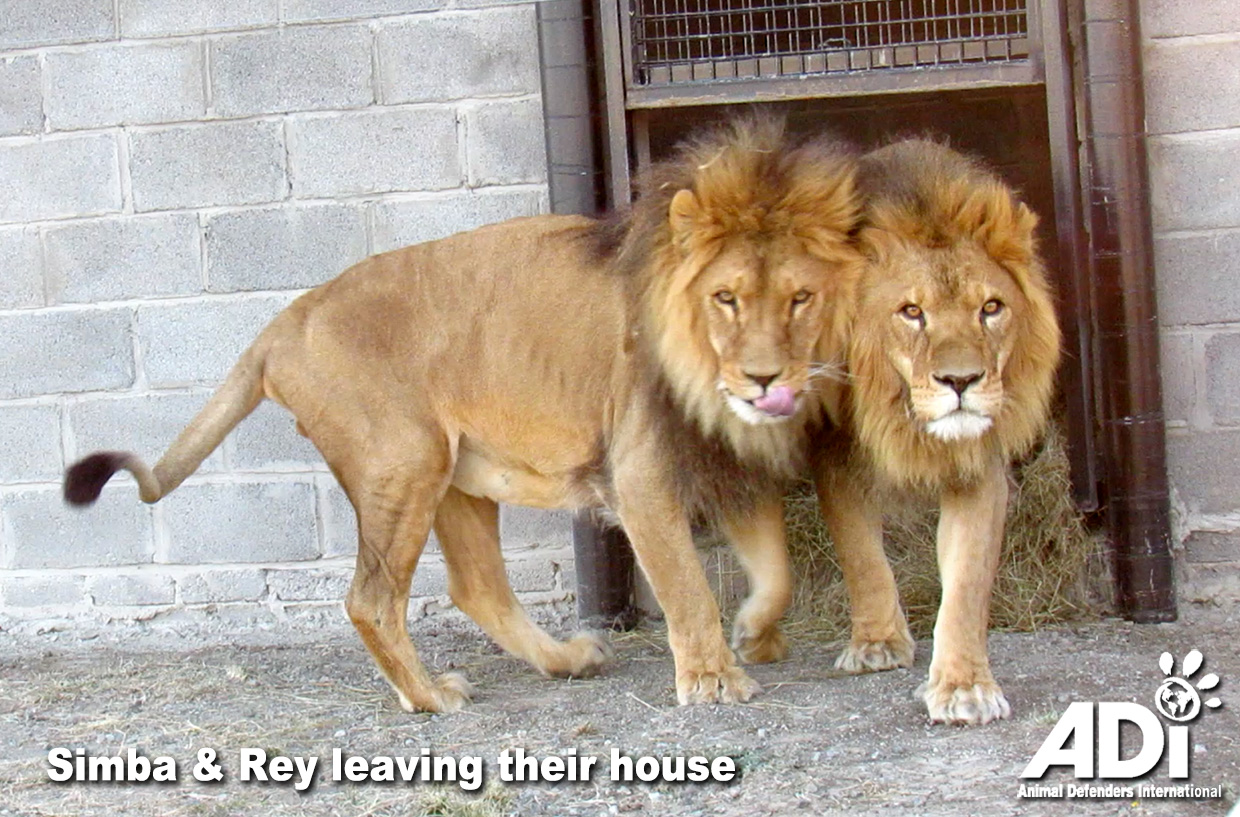
Some claim lions lack feelings, empathy, and other emotions, in truth, because it is convenient for humans, the evidence is clear – this is wrong – the problem is that humans ignore or fail to understand the communications of these incredible animals. Pretending because we don’t understand something, it does not exist. These lions display traits that we could all aspire to, including love, empathy, protection of family and high intelligence.
Like so many of the battered warriors we rescue, Simba’s resilience, determination and his loyalty and love for brother Rey will continue to inspire us.
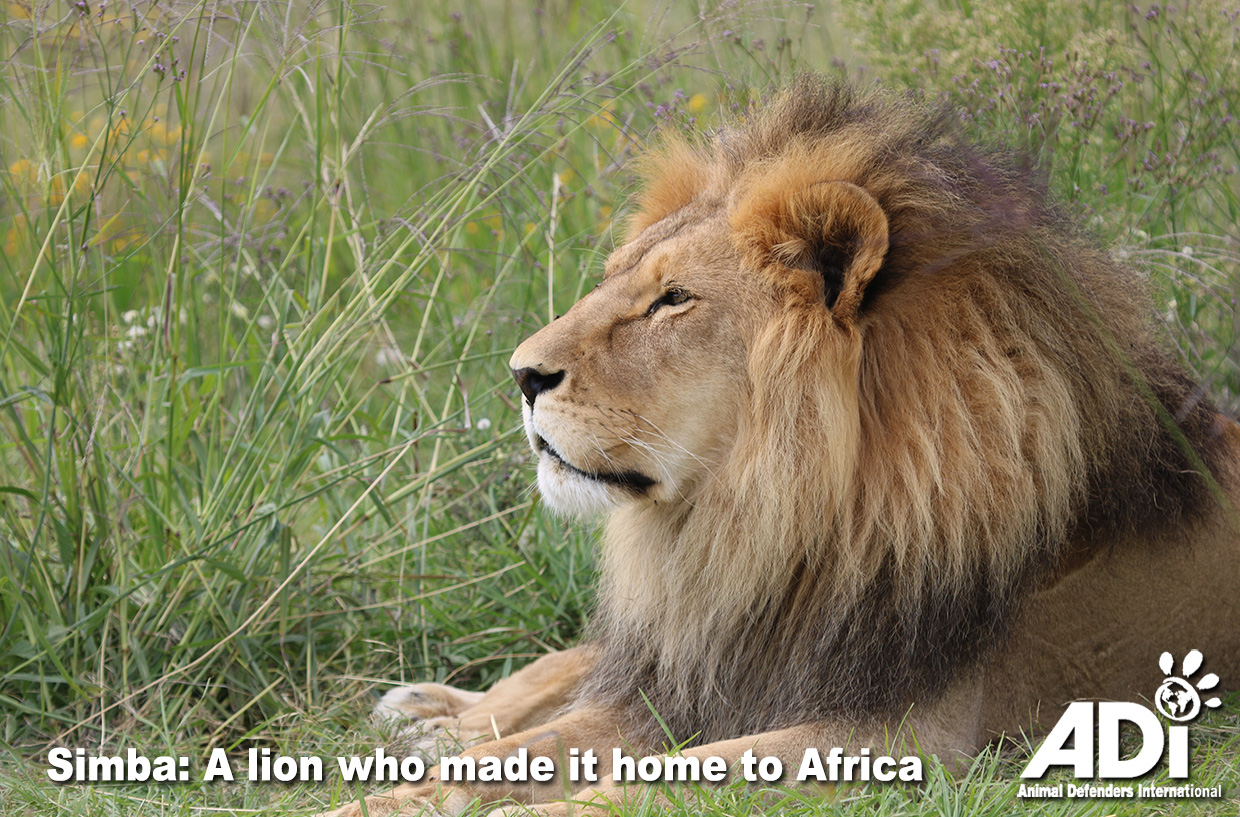
I still feel sad for the loss of one of the family, but also gratitude for the gift that ADI supporters gave him – leaving a cruel circus cage, to cross the world to come home to Africa, and for all those years living as a lion should with his mighty brother Rey at his side.
If you would like to contribute in memory of Simba for Rey A’s ongoing care and for those yet to be saved, you can do so here: Donate UK £ / Euros / Rand | Donate US $, Can $


















 Jan Creamer