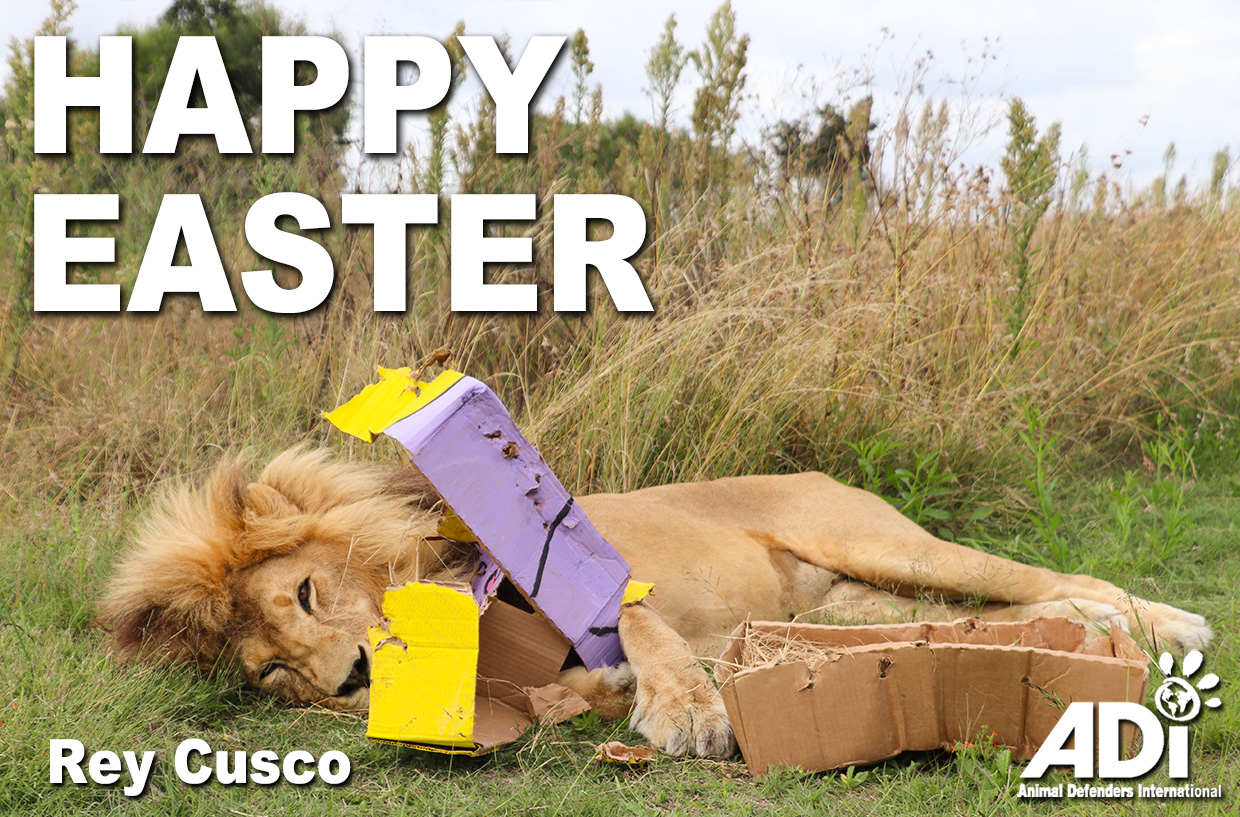
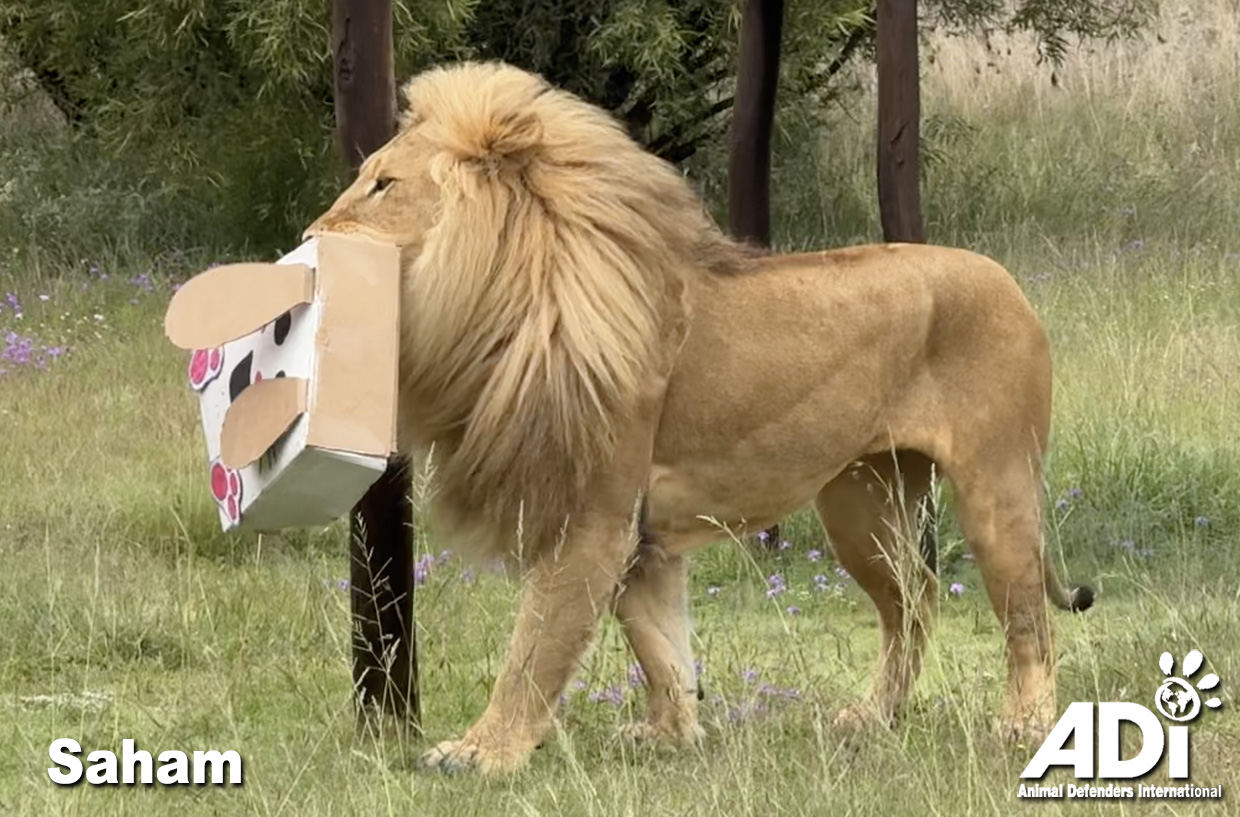
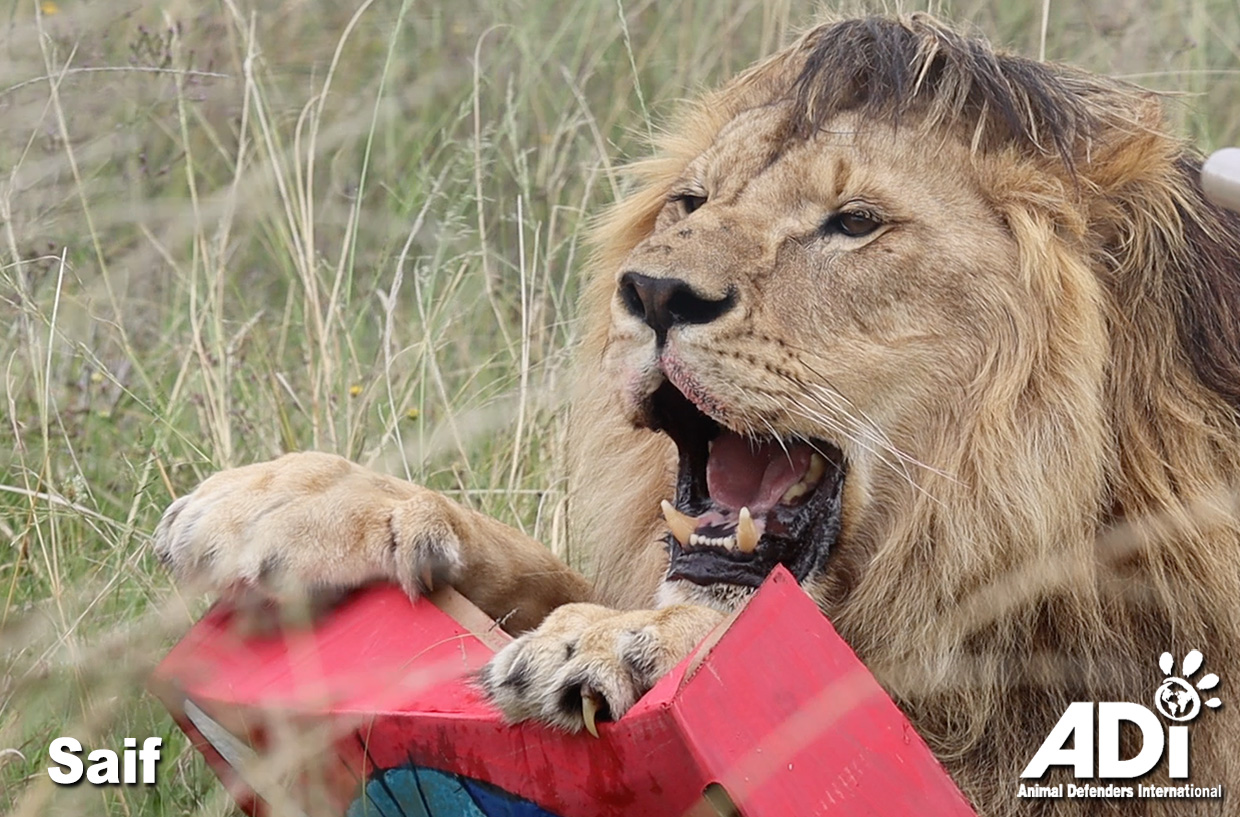
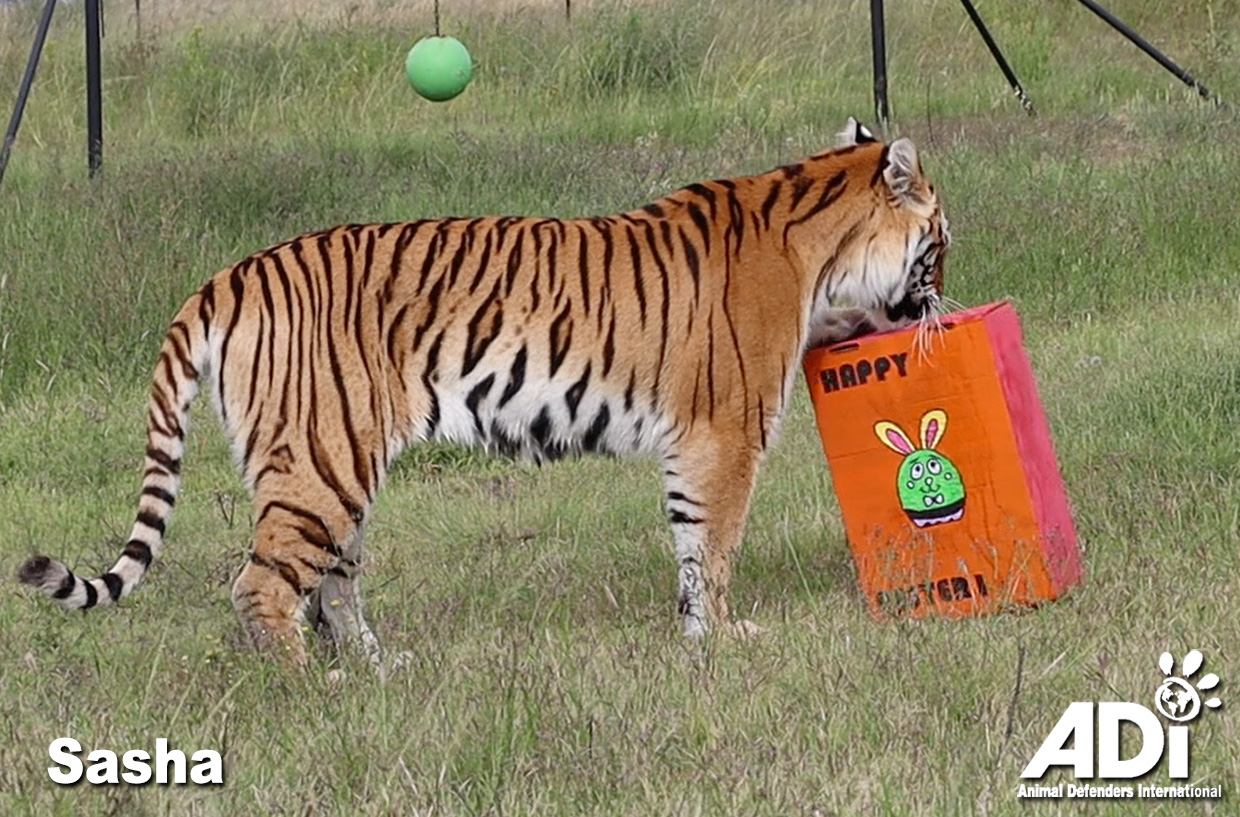
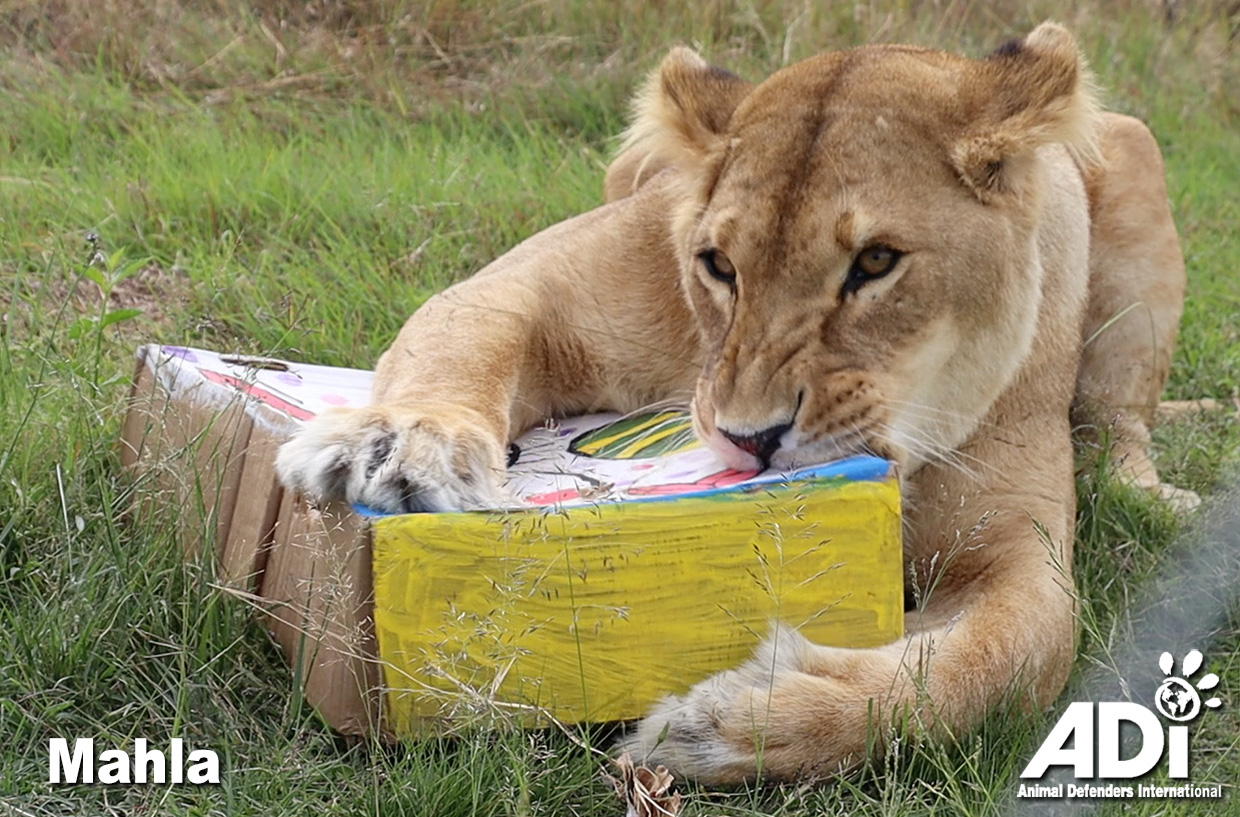
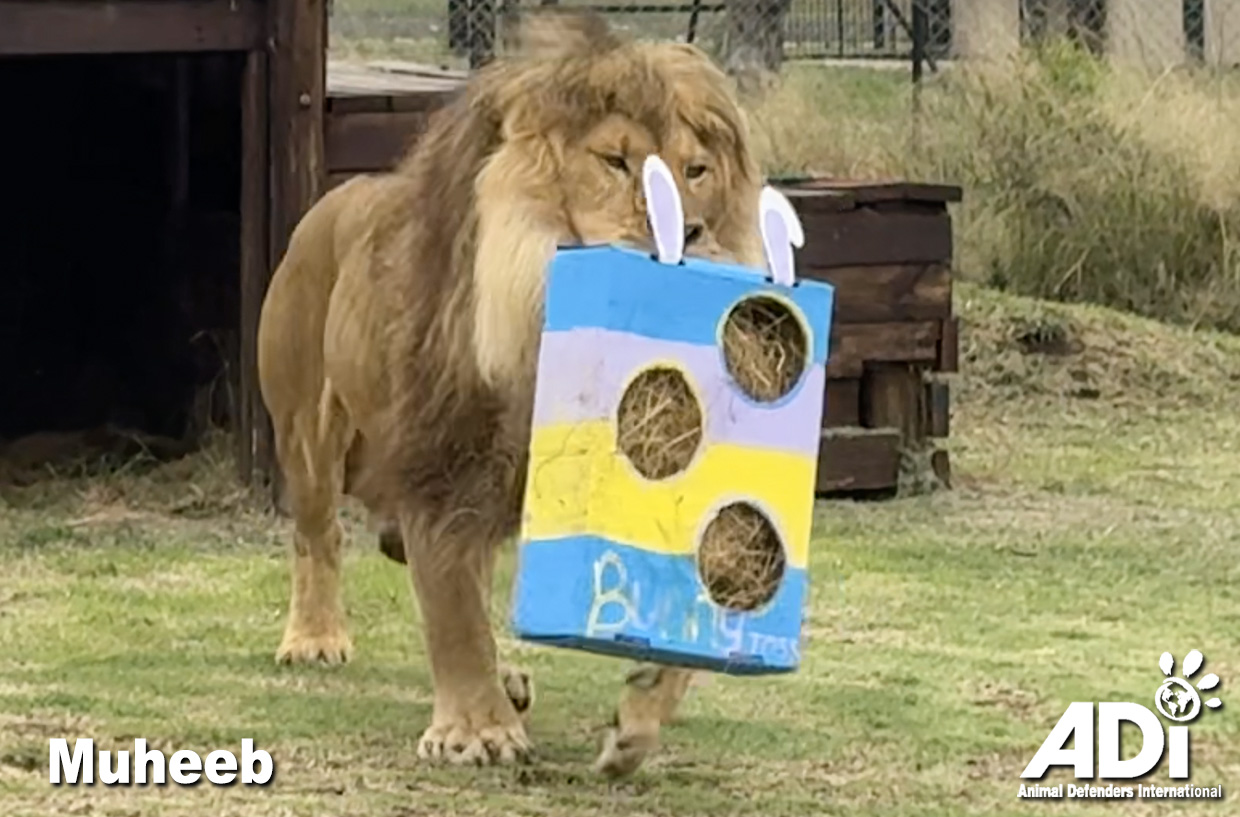
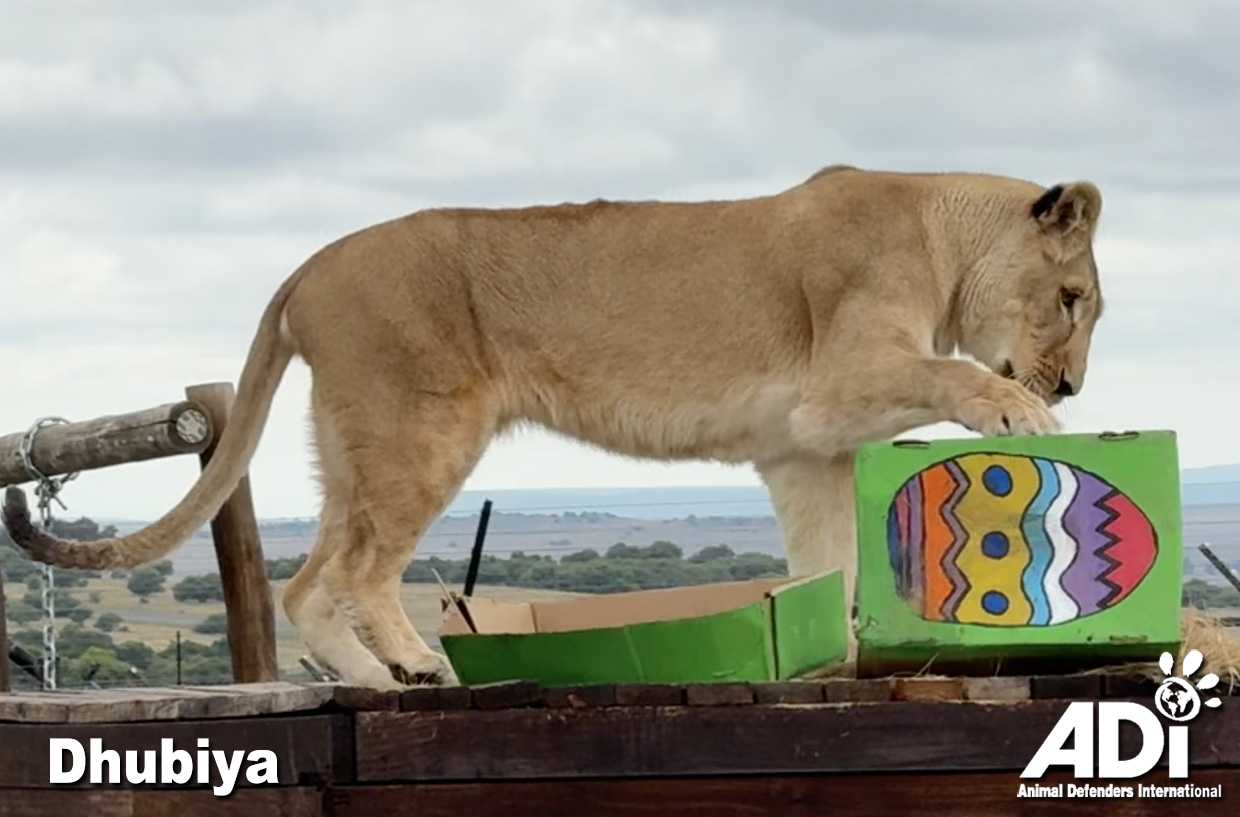
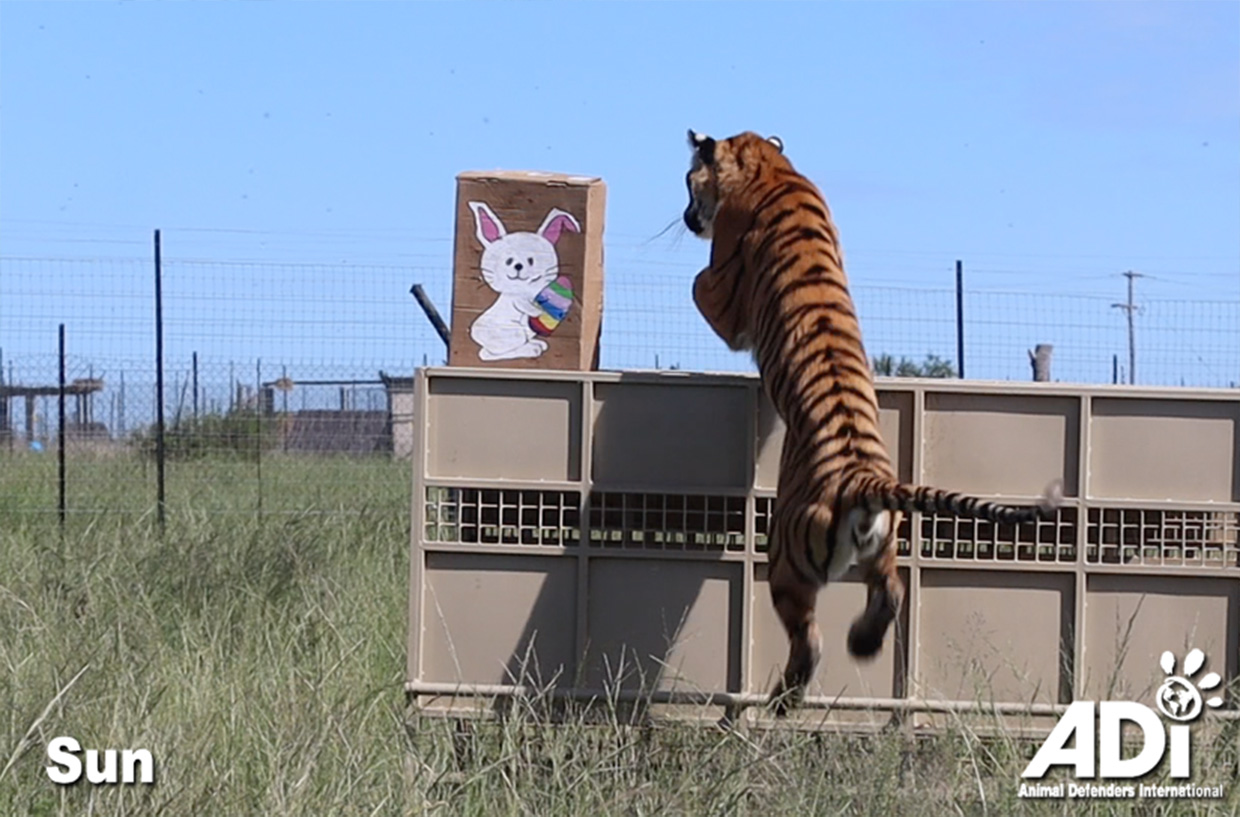
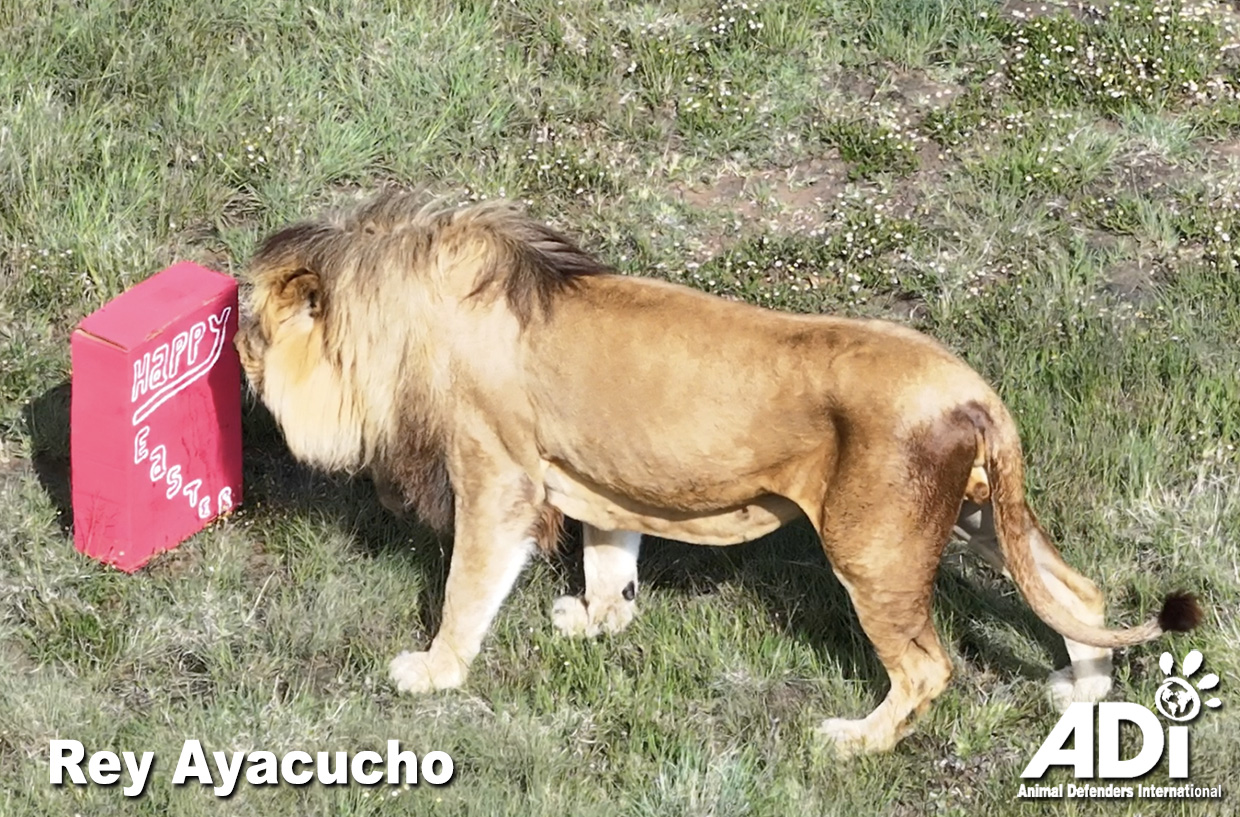
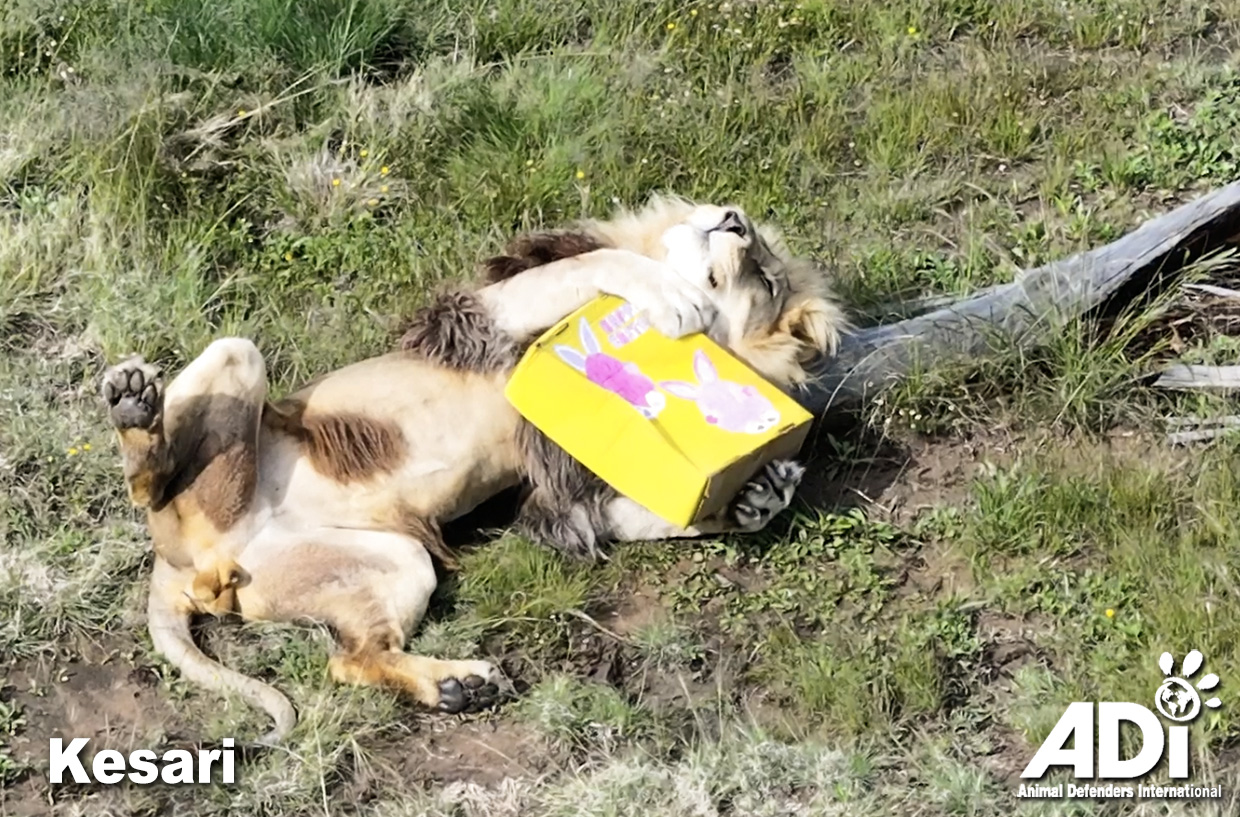
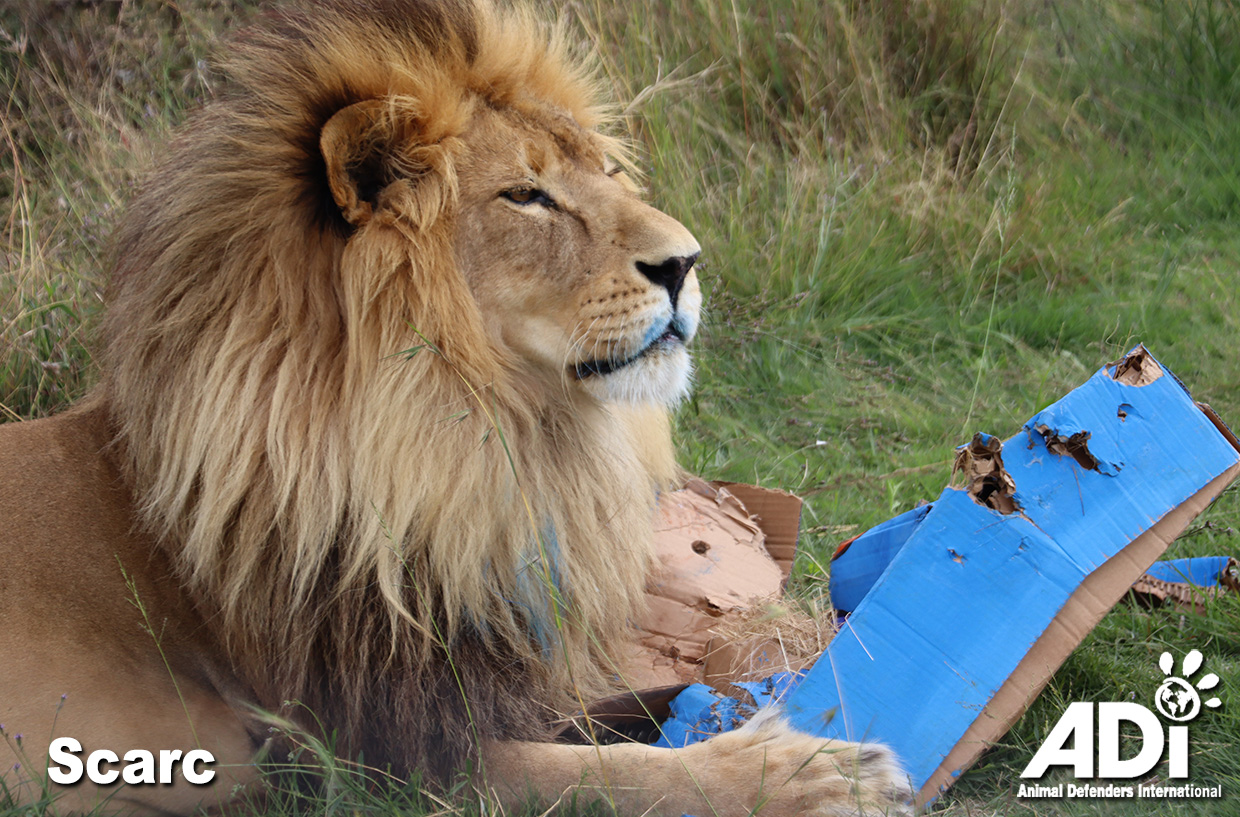
We never need any excuse for giving the rescued lions and tigers at the ADI Wildlife Sanctuary extra treats and it has become a tradition to mark special days and holidays from Valentine’s Day to Easter with themed toys.
These animals saved from suffering in circuses and the illegal pet trade are now having the time of their lives – enjoy our gallery below and check out the video here.
Wishing you and your family an Easter filled with as much joy as the lions and tigers found in their holiday treats!
To help us provide lifetime care for these sweet animals and support and help our vital education campaigns to end the suffering once and for all: donate US $, CA $ | donate £, Euros, Rand.
Sometimes, it’s worth stopping to take a breath and look back at just how far we’ve come and the legacy that ADI is creating for animals.
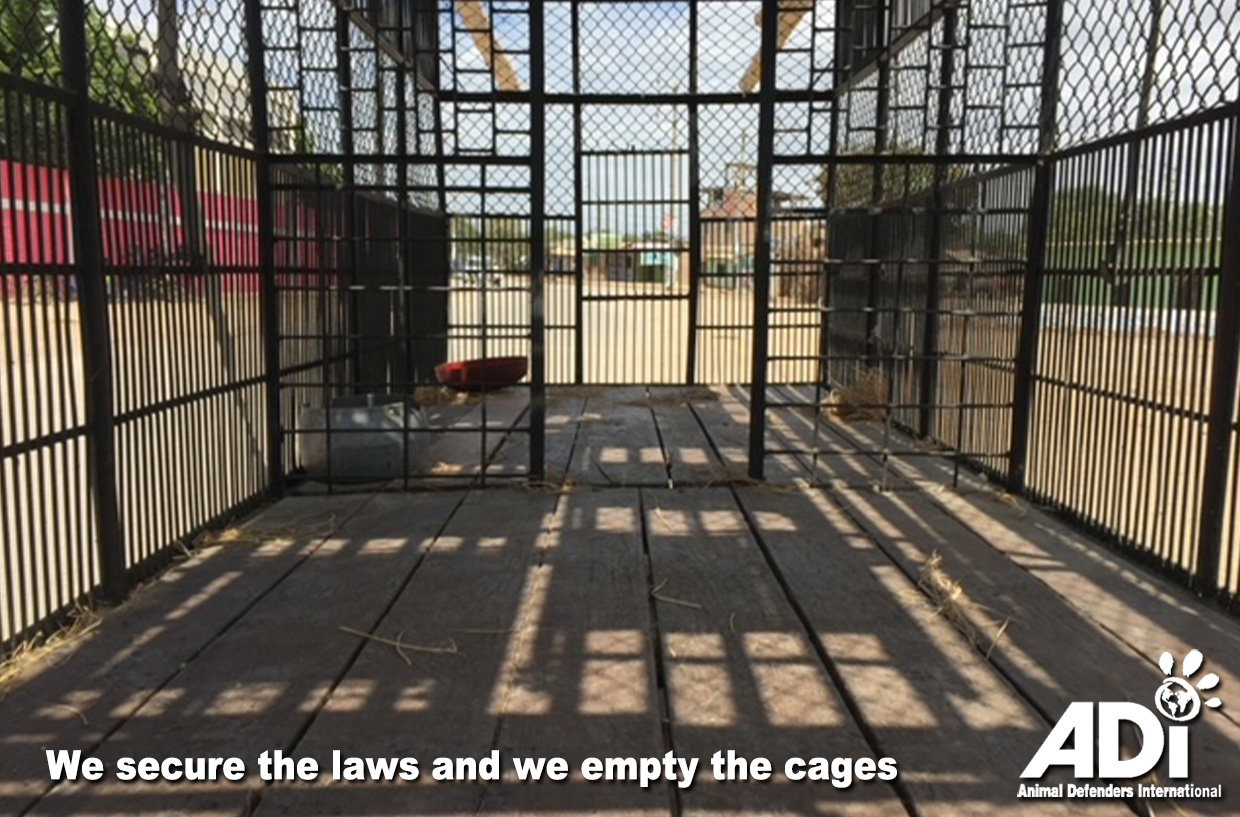
Our sanctuary in South Africa, our rescue facilities in Peru and the animals we have returned to the wild are manifestations of what we have achieved and our ongoing work for change; animals saved emptying the circus cages, from the animal traffickers, from laboratories and the illegal trophy pet trade.
But perhaps most important of all are the results of the decades doing the hard, unglamorous, essential research, investigations and campaigning that leads to lasting change for animals, saving countless animals from suffering.
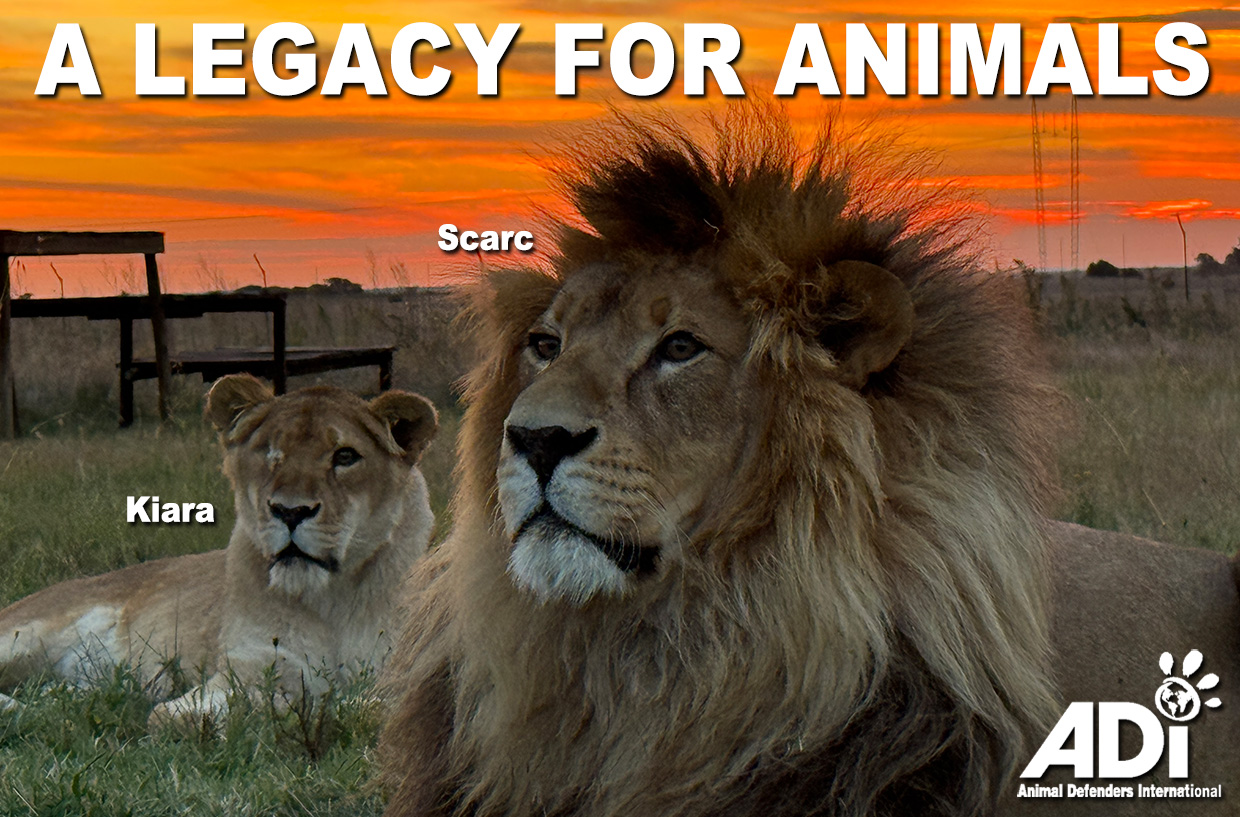
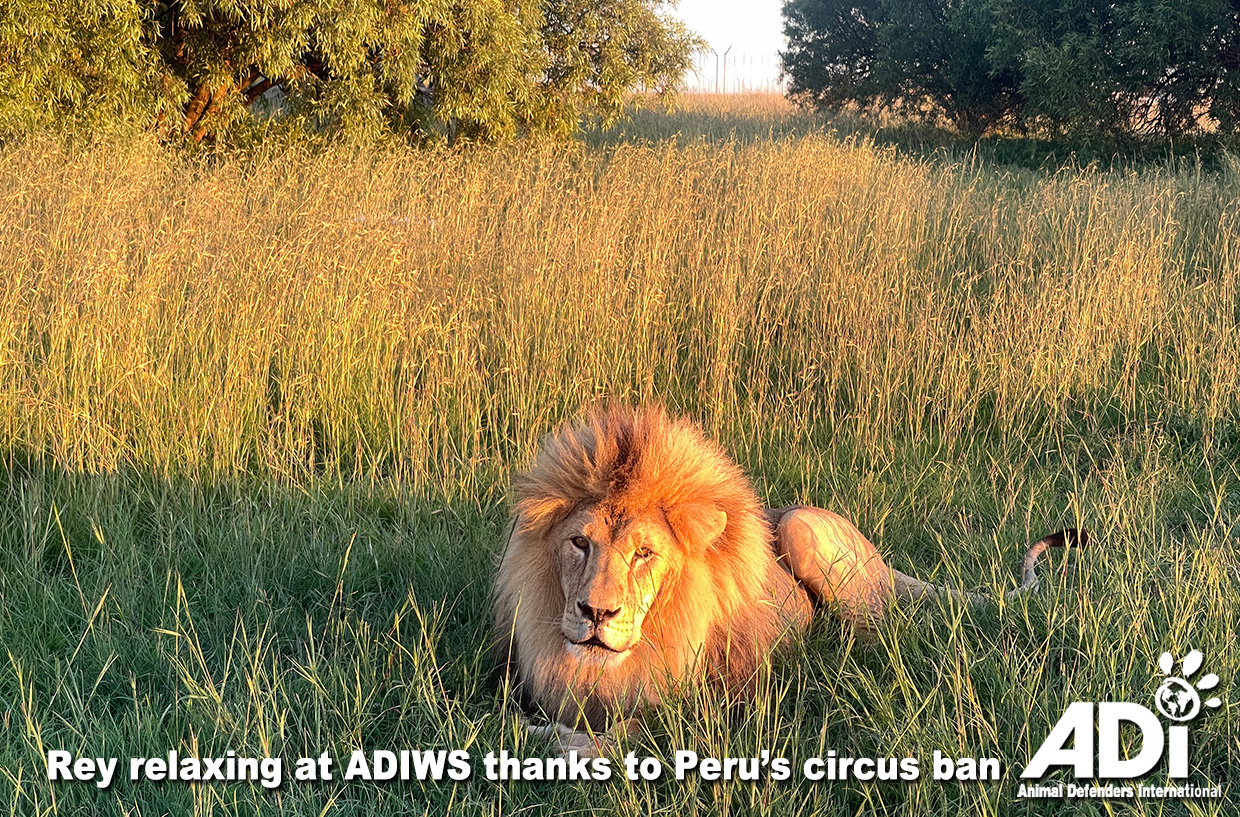
The animals at the ADI Wildlife Sanctuary like Rey Cusco, Kiara, Mahla, Scarc, Chino, Coco, Max, Stripes, Tomas, Kimba Goliath, Coralie, and many more are not with us because of a change of heart amongst the owners who caged them, but because laws were secured to end their suffering. Their cages were emptied by ADI forever.
Our supporters are part of this story and I wanted to share just some of what we’ve achieved together:
Circus bans across the world — ADI’s investigations and campaigns have secured bans on wild animals all over the world, including US states, the UK, Bolivia, Peru, Colombia, Ecuador, Greece, Norway, the Netherlands, Singapore, Costa Rica, Gautemala and many more. What once seemed impossible, is now law in over 50 countries.
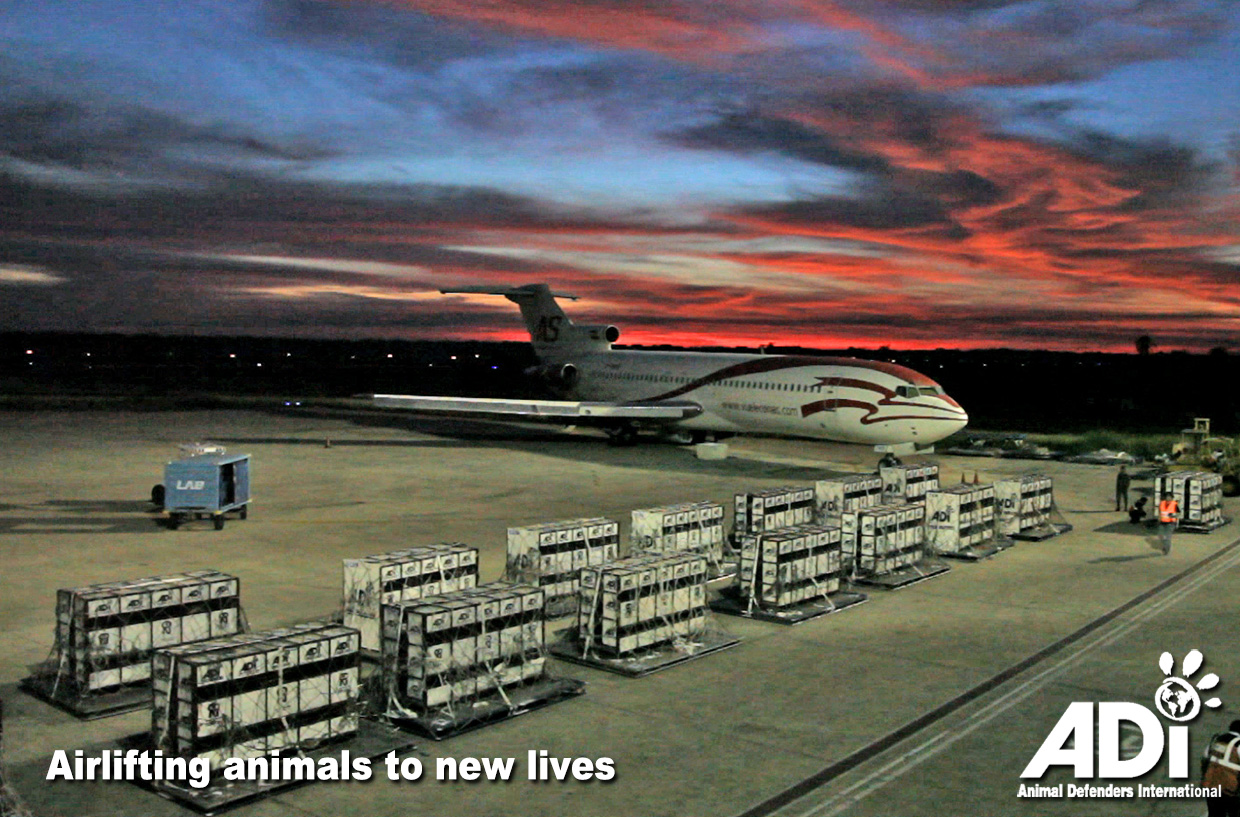
Historic rescue missions — when Bolivia banned all animals in circuses, the circuses defied the law, and ADI stepped up to do something that no one had attempted before. We set up a temporary animal facility in a country where there was none, we tracked down and raided every circus, we saved and relocated every animal. We did the same in Peru and Colombia, saving over 100 animals and airlifting 33 animals to South Africa. Then we did it again in Guatemala.
Wildlife protection and anti-trafficking work — from South America to Africa and beyond, ADI works alongside governments and law enforcement to protect wild animals in their natural habitats, saving and returning to the wild hundreds of animals – tortoises, birds, monkeys, bears. More than that, we secured regulations in over 190 countries (using the Convention on International Trade in Endangered Species) closing the loopholes circuses used for trafficking animals across borders with impunity.
Unlocking the labs — ADI ended the use of apes and wild caught monkeys in labs across the EU and has secured bans on cosmetics testing on animals in many countries. We saved millions of animals from horrific tests proposed in EU regulations, thanks to our ‘Keep animals out of REACH’ campaign which secured compulsory data sharing.
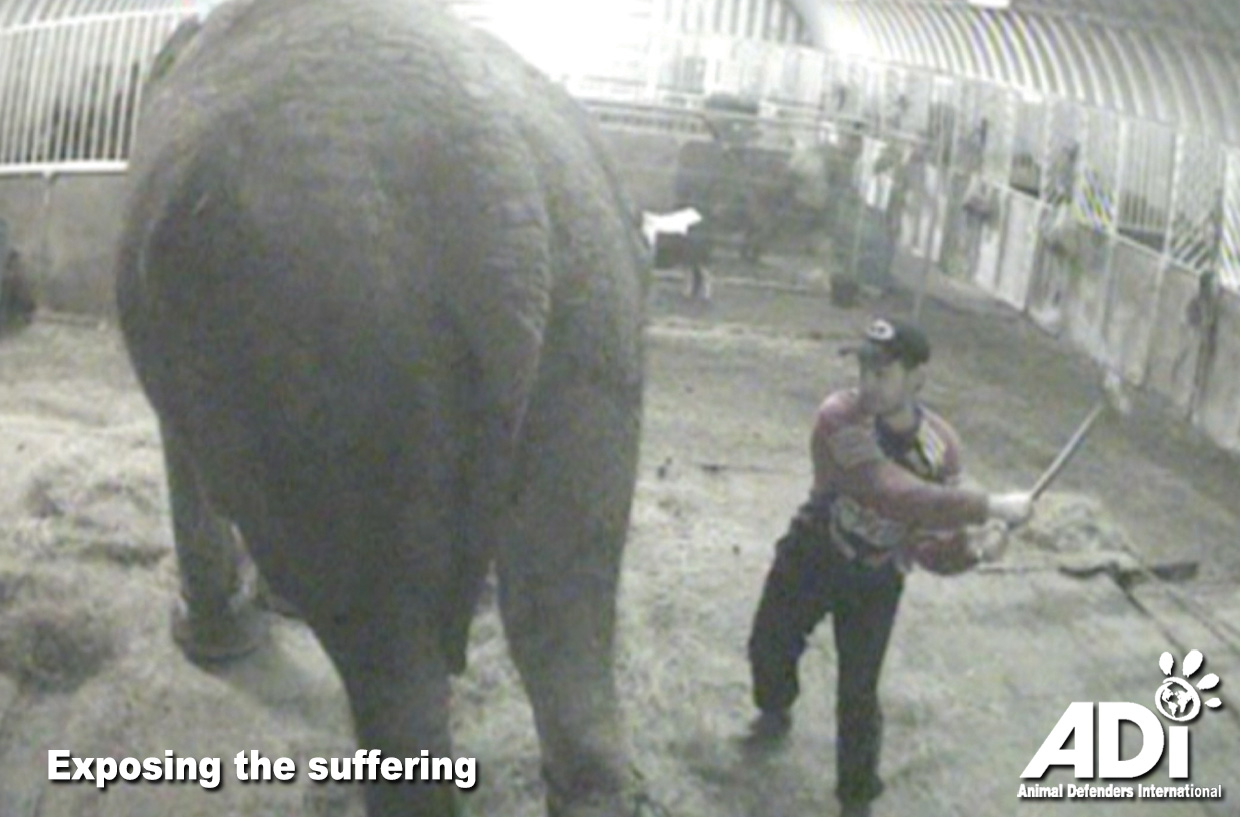
Ground-breaking undercover investigations — ADI’s footage has changed minds in parliaments and congresses, courtrooms, and dinner tables, exposing cruelty that industries hoped would stay hidden forever. Had it not been for our undercover evidence and footage, there would not be the bans on circus animals, the trappers terrorising and capturing monkeys for laboratories would still be plying their vile trade.
None of this happened by accident. It happened because people like you refused to look away.
If ADI’s work has ever moved you — if you’ve ever shared one of our rescue videos, signed a petition, or simply felt relief knowing someone was fighting for these animals — please consider making a donation today. Every contribution, large or small, funds the next investigation, the next rescue, the next law that changes everything.
Please also consider the most important thing you can do today, is to make a commitment to help animals in the future. By leaving bequest in your will, you are helping to ensure that our work continues long into the future. You are investing in a future for animals.
A legacy gift allows you to make a lasting difference without affecting your finances today.
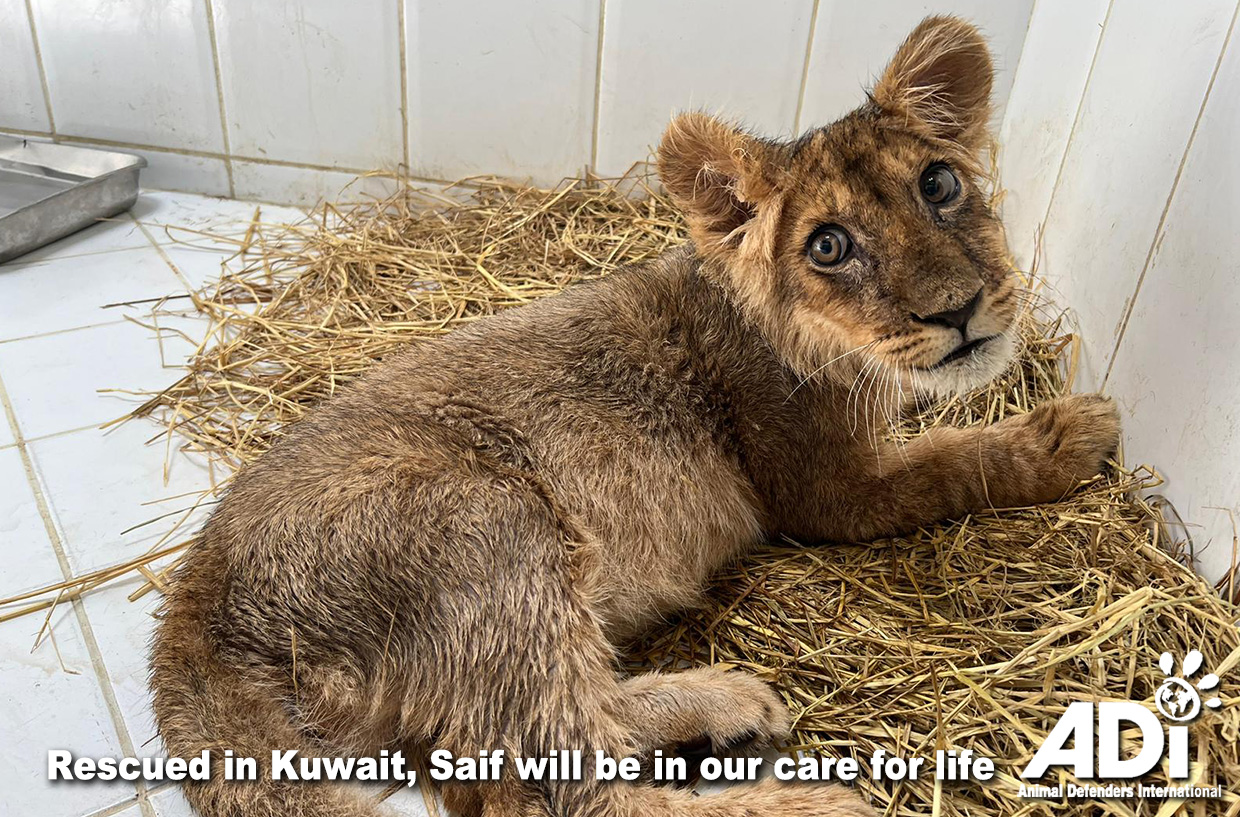
The young lions we are working to bring from Israel could be in ADI care for over 20 years, like the youngsters we saved from Kuwait – ADI must be there for them. The baby tortoises we are nurturing for release at ADIWS could outlive many of us!
I am proud of what we have achieved for animals, but there is still much more to do – that is why Tim and I have included ADI in our wills, to ensure the fight continues to end all animal suffering at human hands.
Please consider including ADI in your will and make your legacy their freedom. A bequest now will not impact you today, but could make the world of difference for animals in the future. You can find out more about leaving a legacy to animals here: UK | US (FreeWill)
I am writing from our sanctuary in South Africa where Tim and I were expecting to be making the final preparations to bring home lion cubs Ben-Tzur and Ori from Israel. That operation remains on standby as the war continues, but we urgently need help to fund this unexpected rescue. In the meantime, ADI’s life-saving work and rescue efforts around the globe are ongoing.
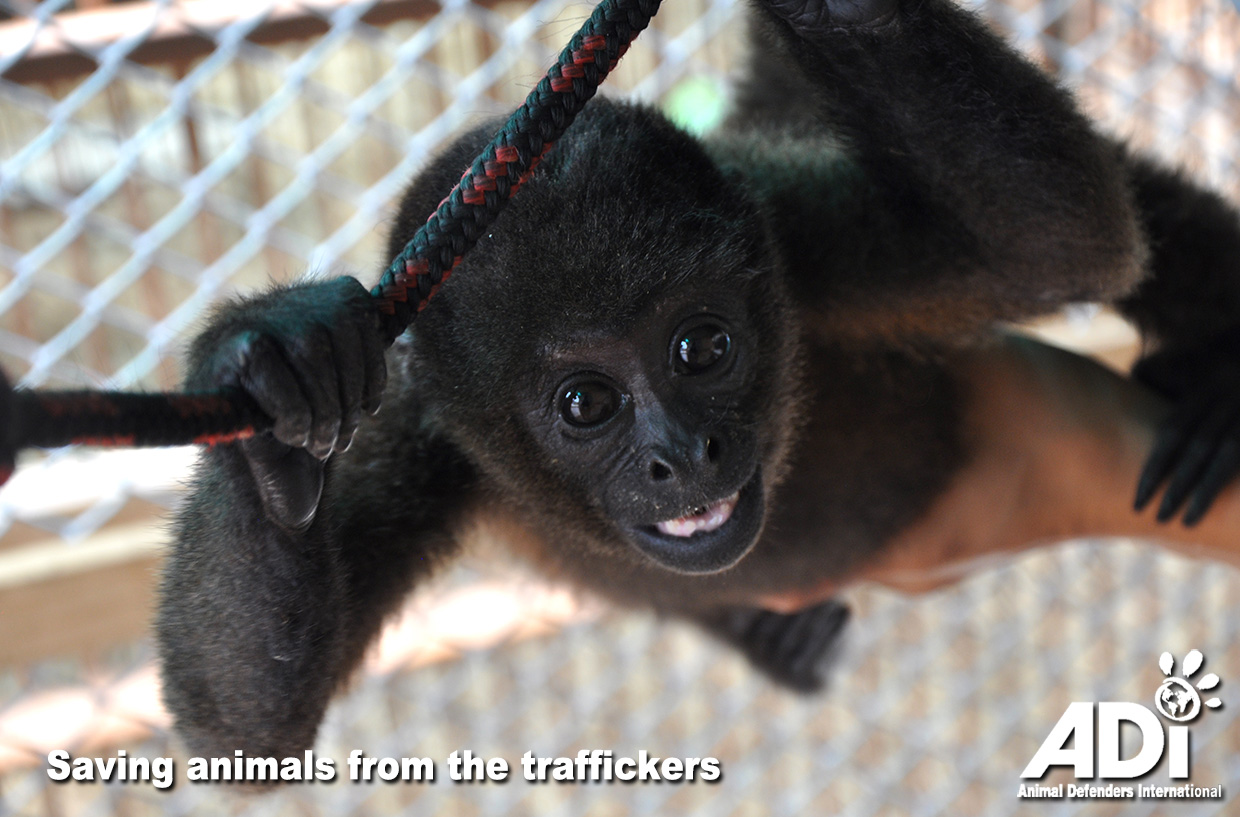
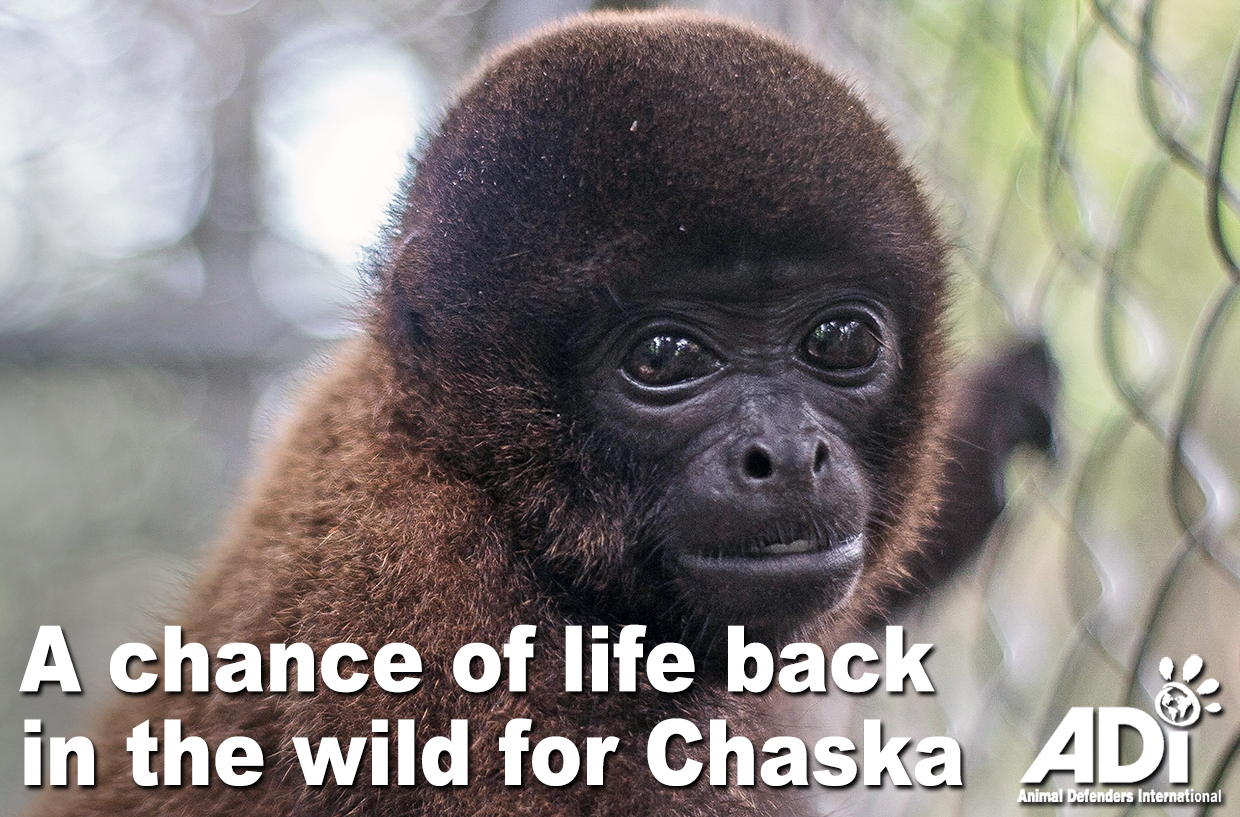
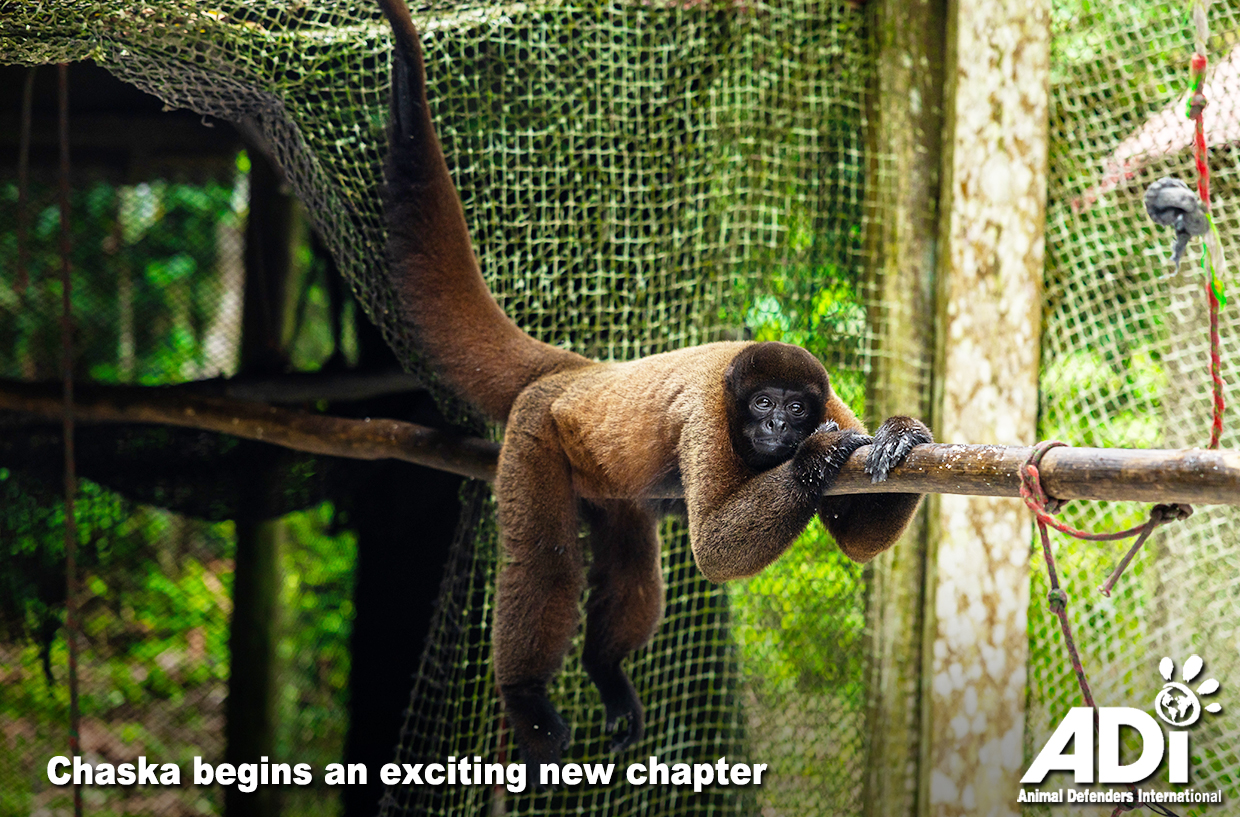
We rescued sweet Chaska (meaning ‘bright star’ in the region’s indigenous language) as a baby from wildlife traffickers in Peru. Just like the lion cubs we are rescuing in Israel, Chaska was a victim of the selfish desire to have an exotic animal as a pet – no matter how inappropriate or the suffering caused.
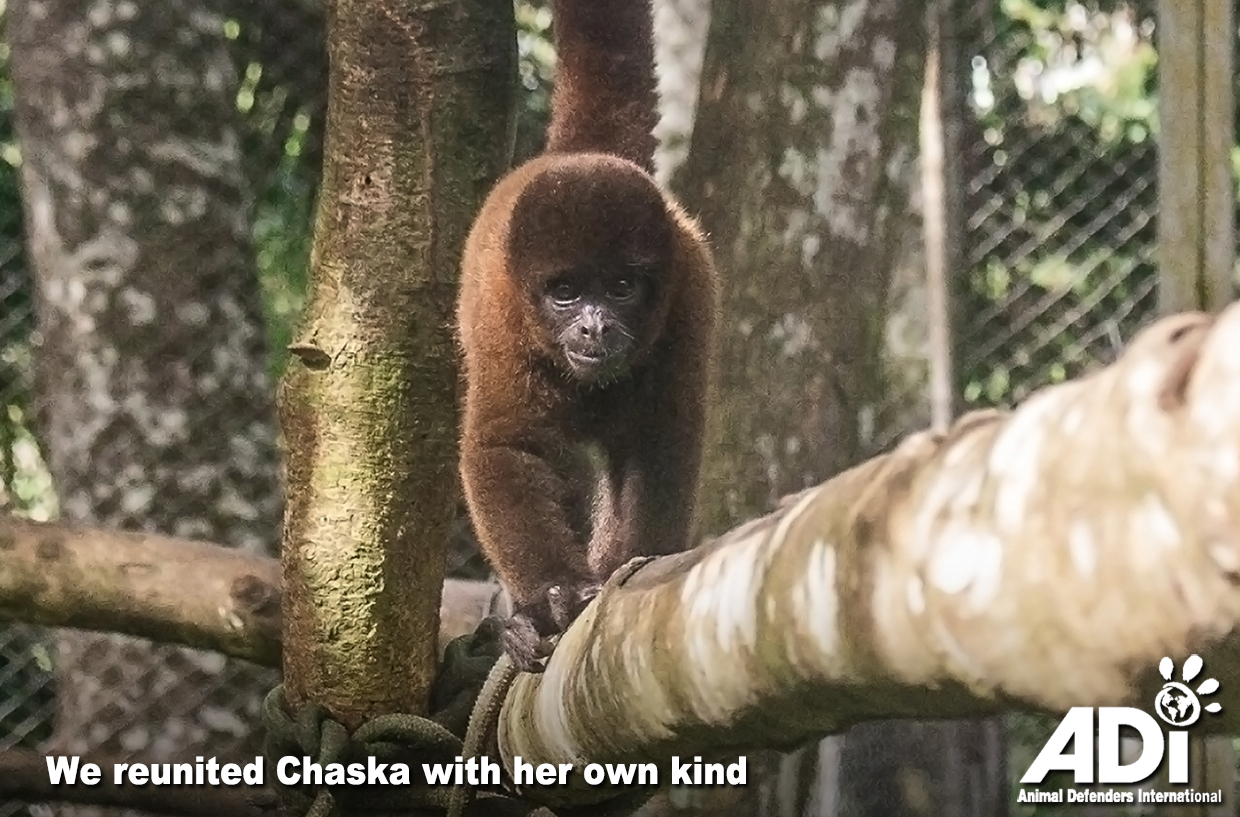
We took Chaska to the ADI monkey facilities at Pilpintuwasi in the Peruvian rainforest where we reunited her with her own kind, along with Fausto, a woolly monkey rescued by ADI from a restaurant. You can watch her rescue in Monkey’s Miracle video.
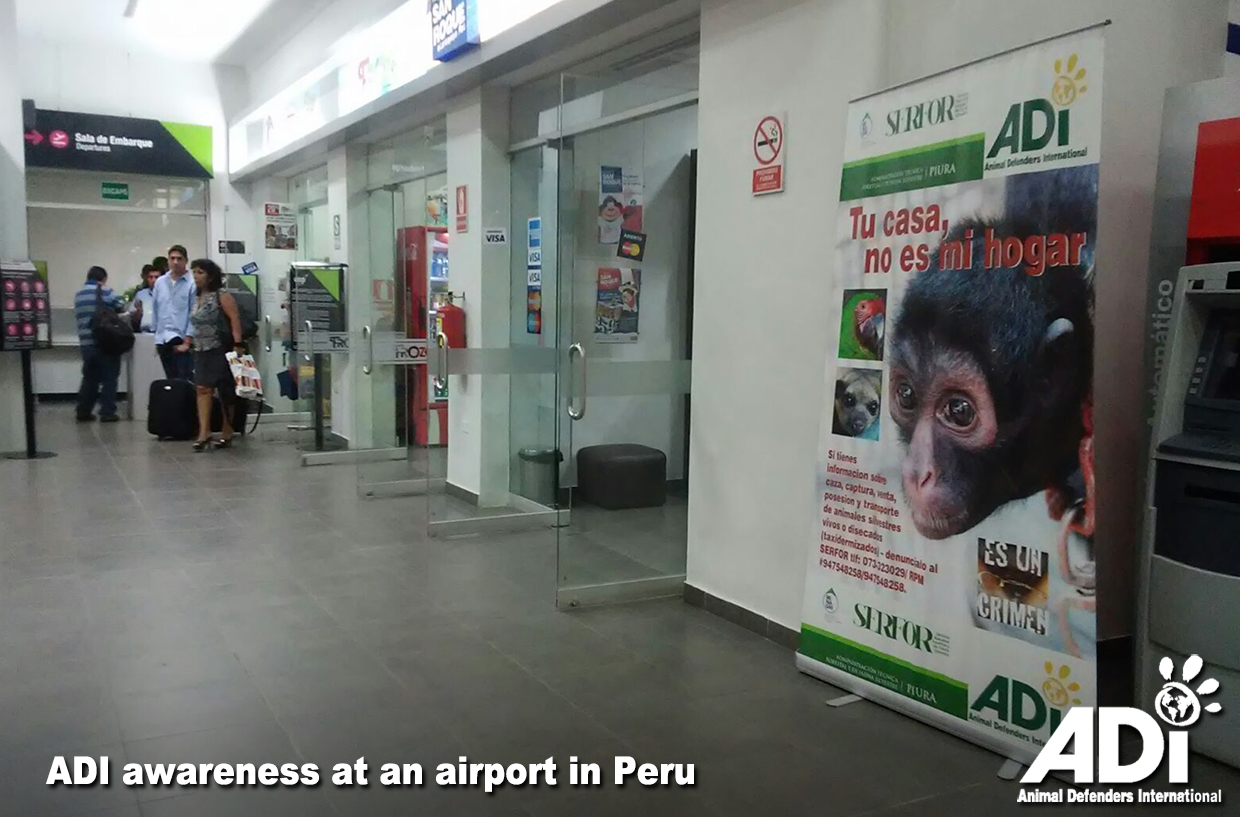
The rescue was part of ADI’s ongoing work against animal trafficking in Peru which has seen us rescue hundreds of animals, including monkeys, turtles and birds as well as running education and awareness campaigns to end the trade.
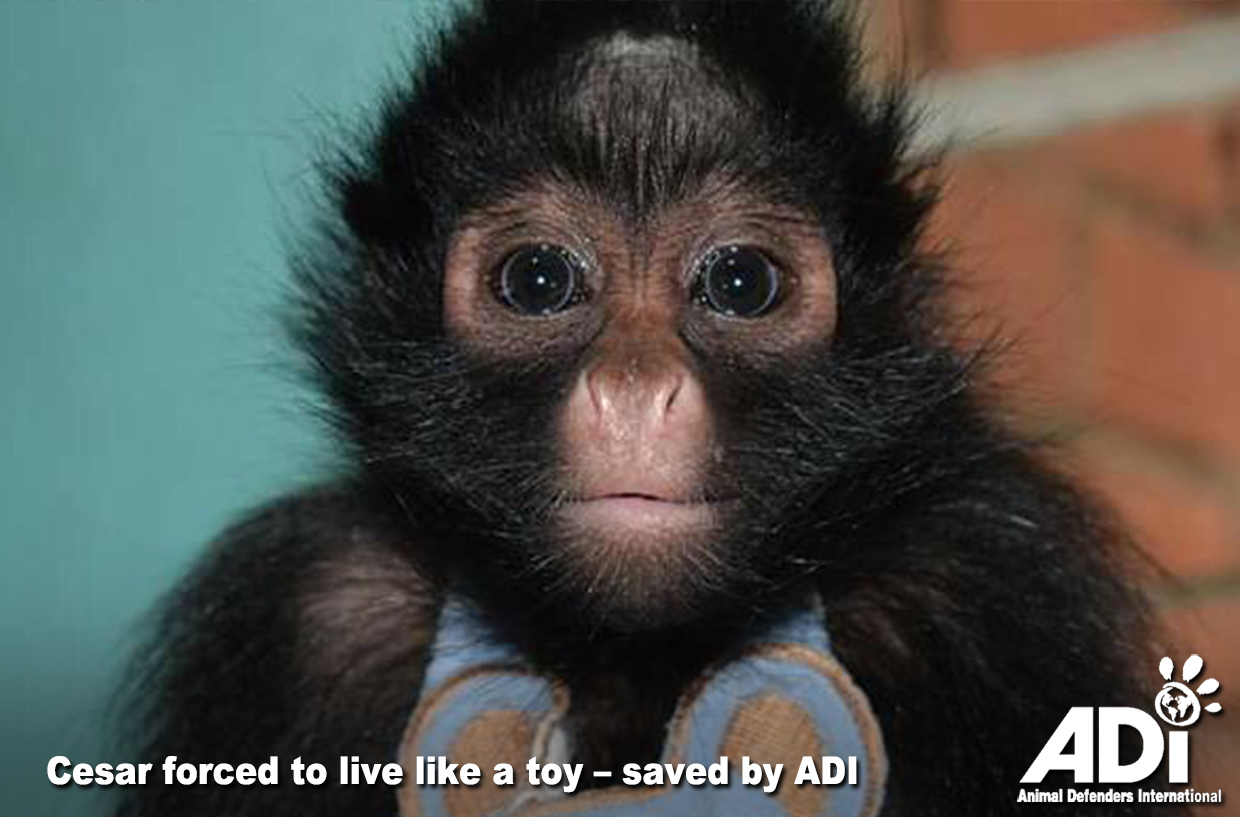
It is a cruel industry that sees baby animals like Chaska and Fausto, stolen from their mothers, who are frequently killed in the process, and taken for a life of isolation in a small cage or on a chain. Many of the monkeys we have rescued suffered their teeth being broken off to prevent them biting, as they are handed around like toys for photographs by their captors. For profit.
Sadly, Fausto passed away, and so we began to look for the best options for Chaska, and an opportunity arose for her to not only to be with her own kind, but also the chance of returning to the wild – always our dream, but rarely possible!
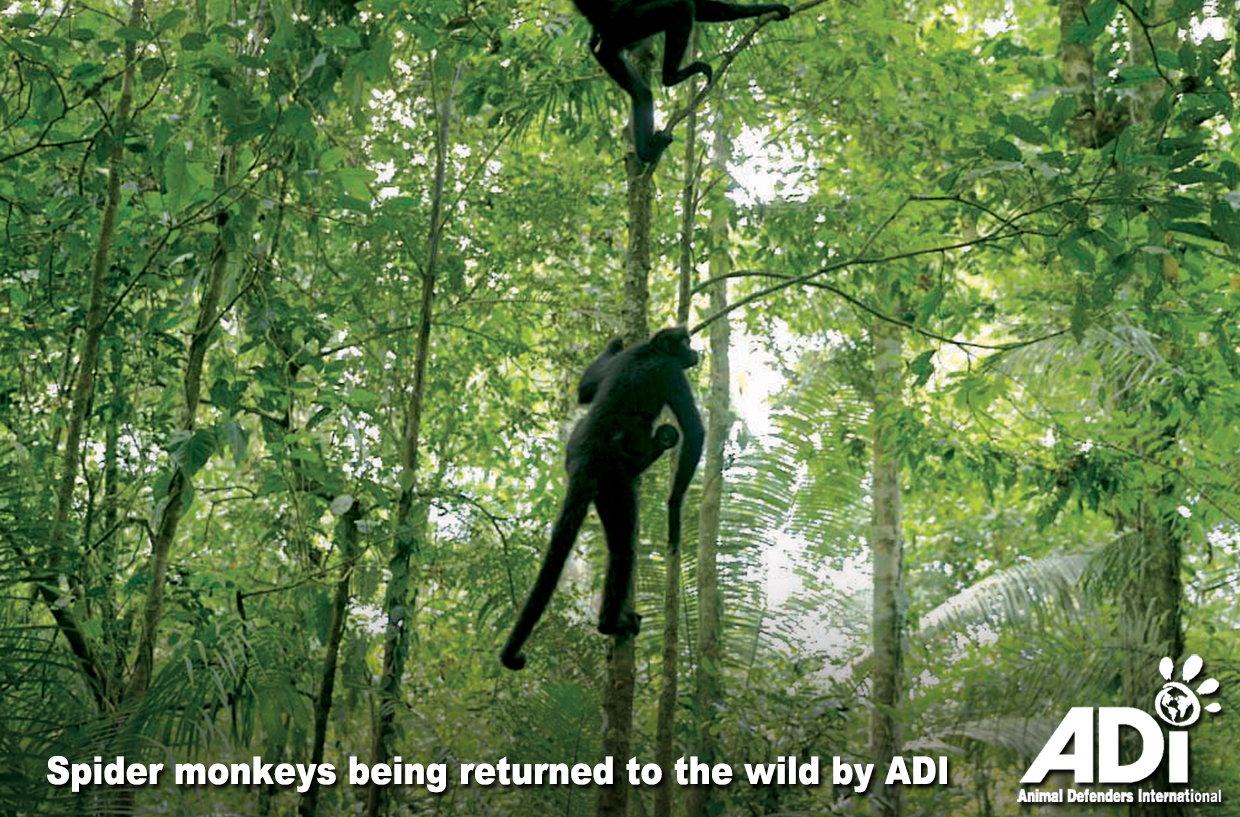
In another challenging relocation, Chaska was taken by river, road and air to Ikamaperu’s Tarangué sanctuary in the Pacaya Samiria National Reserve, Peru’s largest nature reserve in the Amazon basin. Chaska is already back with her own kind and if all goes well she will be rehabilitated into the wild with a new family. Tim and I visited the site and remember the trees full of wild monkeys as we walked through the forest around the rehabilitation location.
ADI has also rescued two more capuchins and a coati from the illegal wildlife trade in different regions of Peru.
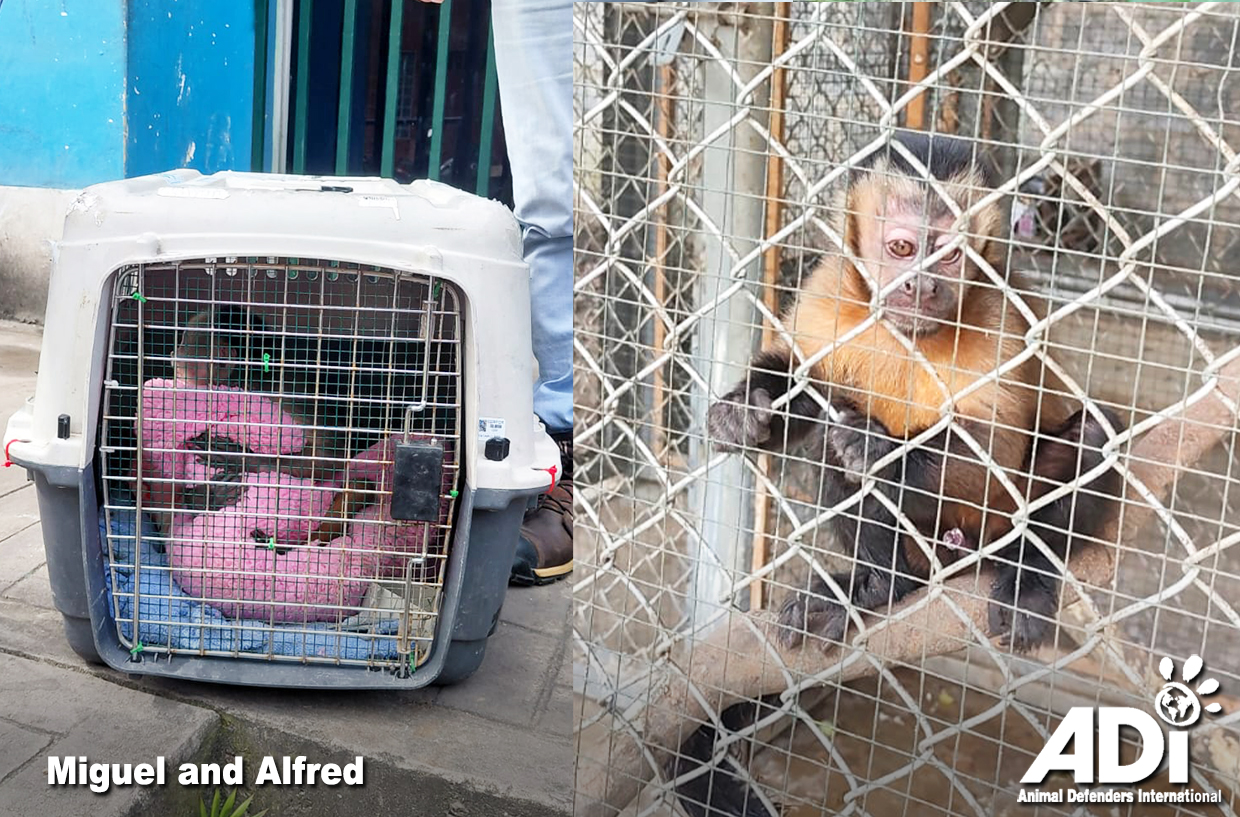
Infant white capuchin, Miguel, was found by police, alone in a building in the Yanahuara district, Arequipa, and has made the 800-mile journey to the ADI facilities at Pilpintuwasi – another baby stolen from his parents by the traffickers; he clung to his blanket throughout the journey.
Miguel has moved into Chaska and Fausto’s old home, and the good news is he will soon be joined by another young capuchin named Alfred, seized from traffickers in Chachapoyas, a town towards the western edge of the Peruvian rainforest.
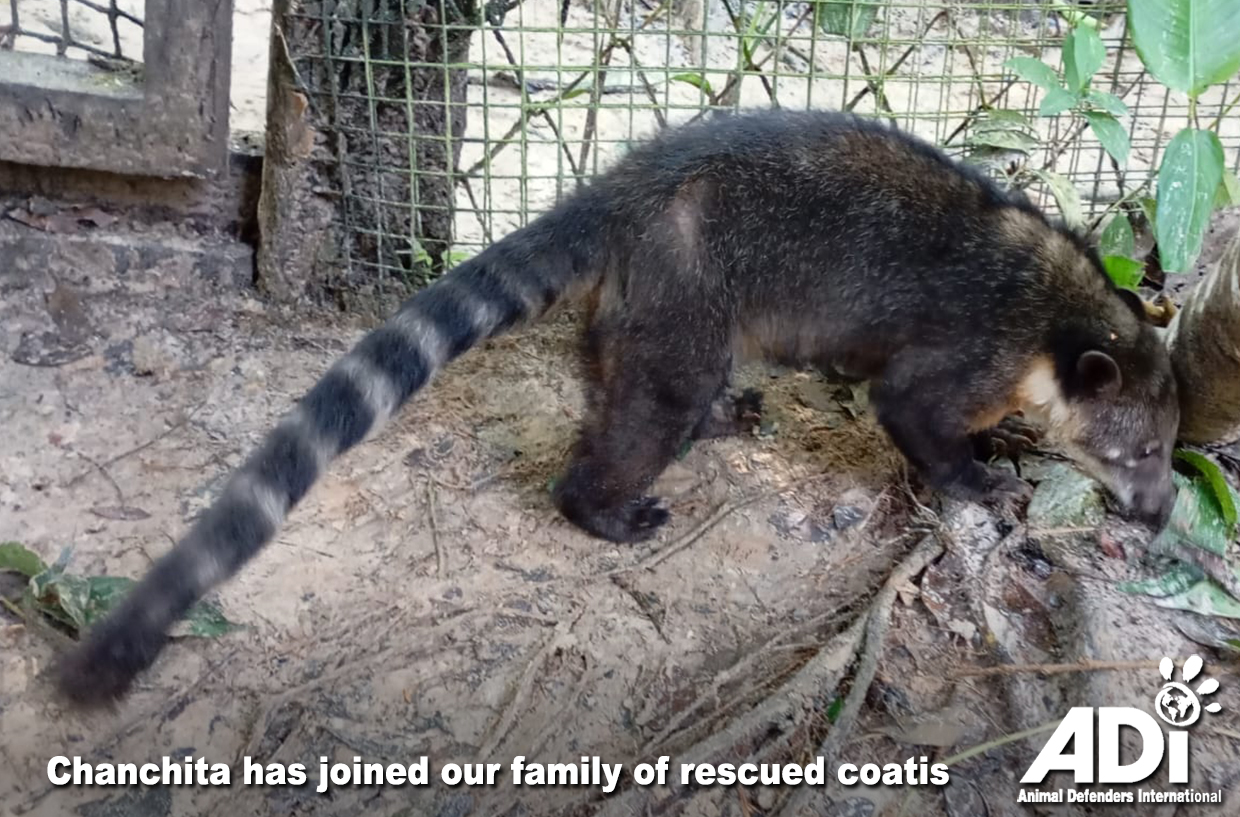
Our family of coati mundis at Pilpintuwasi has been joined by Chanchita, who was confiscated in Moyobamba on the western side of Peru’s forest, another sad reminder that wherever human populations encroach on wild spaces, wildlife is at risk and hunting and trafficking remain a serious threat to wildlife across Latin America.
However, thanks to our supporters we are fighting back for the animals, enforcing and strengthening laws and transforming the lives of animals. Chaska might be one of the very lucky ones that gets to go back to the wild.
Please help us provide lifetime care for the animals we rescue in Latin America, and fund relocations back to the wild where possible – keep supporting and helping our VITAL education campaigns to end the suffering once and for all. Donate UK £, Euros, Rand | Donate US $, CA $
I am pleased to bring you the latest on our campaigns for animals around the world and activities at the ADI Wildlife Sanctuary in South Africa. This work is only possible with your support.
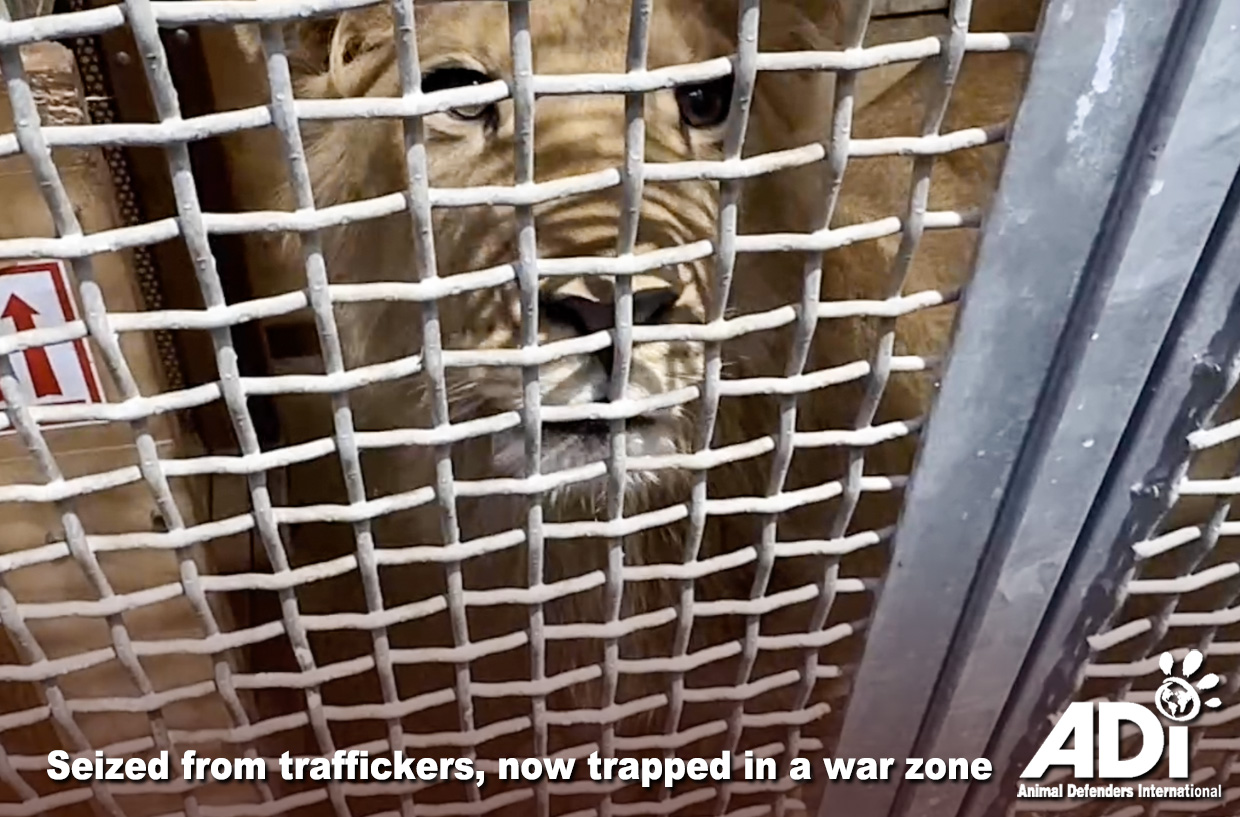
Israel lion rescue update: Since January, we have been working on the relocation of two young lions, Ben-Tzur and Ori, seized from the illegal pet trade by Israel’s Nature & Parks Authority. In early February, we visited Israel to evaluate the cubs, location, transport, and arranged purchase of two travel crates as they had outgrown the ones previously allocated to them. We were just one import permit away from securing flights and bringing them home to the ADI Wildlife Sanctuary in South Africa in March, when war broke out between the U.S., Israel, and Iran.
Air space in the region was immediately closed, flights grounded, cargo and aircraft frozen part way through routes. We are thankful we did not find ourselves stuck at an airport for days, even weeks, with two lions in travel crates.
Although it is too early to say exactly when, and how, we will do it, we will absolutely bring these boys home to ADIWS as soon as possible. The team in Israel report that the boys are safe for now, but this is a dangerous and volatile situation, so we are on standby for any opportunity. We expect the disruption in flights and a backlog of cargo may result in higher costs, but we are sure you will agree that we must seize the first opportunity to bring them home. We therefore need your support for this immediate rescue, and for the lifelong care of these lions. Please give what you can here: Donate US $, CA $ | Donate UK £, Euros, Rand.
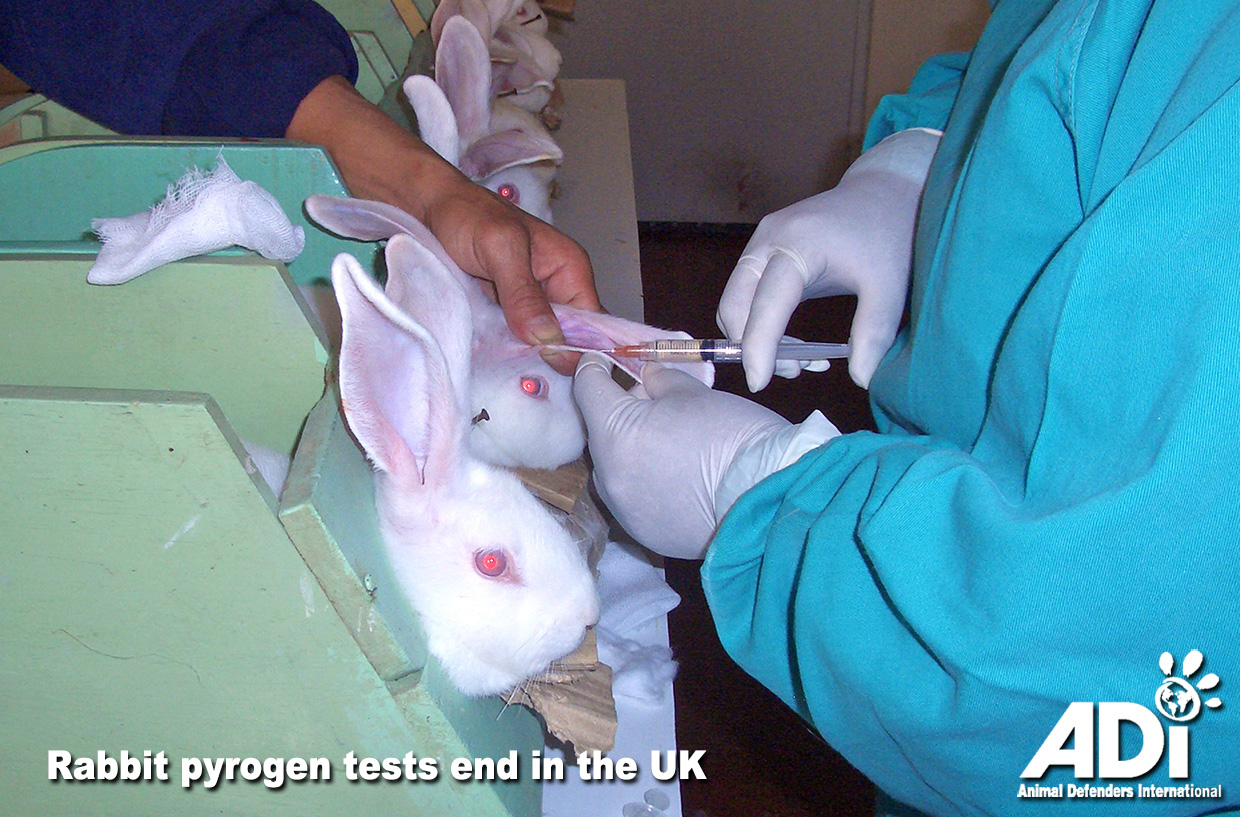
Victory for rabbits! After more than 100 years of suffering, the outdated rabbit pyrogen test is finally set to become obsolete in the UK. The test was developed in 1912 to measure what substances induce fever (pyrogens). Rabbits are immobilised in stocks and injected with substances while their temperature is monitored with a rectal thermometer. By the 1940s this crude test had been locked into regulations all over the world and so it continued, despite availability of alternatives.
Elimination of the tests by the end of 2025 was one of the first targets of the government’s ‘Roadmap’ on animal experiments, but the UK Home Office’s Animals in Science Regulation Unit (ASRU) remain a little vague as to whether this has happened. When questioned last month by ADI, they responded, “We are on track… an update will be published later this year.” Since we are two months past the deadline, “on track” does not seem feasible. Nevertheless, ADI will be pushing for the tests to be outlawed elsewhere, including the U.S. and Colombia.
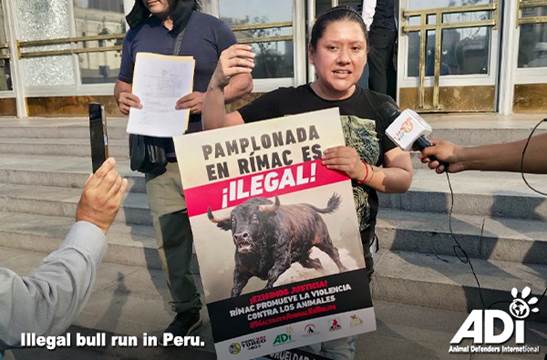
An illegal ‘Pamplonada’ (running of bulls in the streets) and bullfight took place in Peru in February, promoted by the Lima Municipality of Rímac. Large numbers of children were in attendance, contrary to repeated calls to protect children from violent spectacles such as bullfights. A lawsuit was filed arguing that the bull run violated Animal Welfare Law 30407, and members of Peru Without Bullfighting (Perú Sin Toreo) protested outside the Public Prosecutor’s Office.
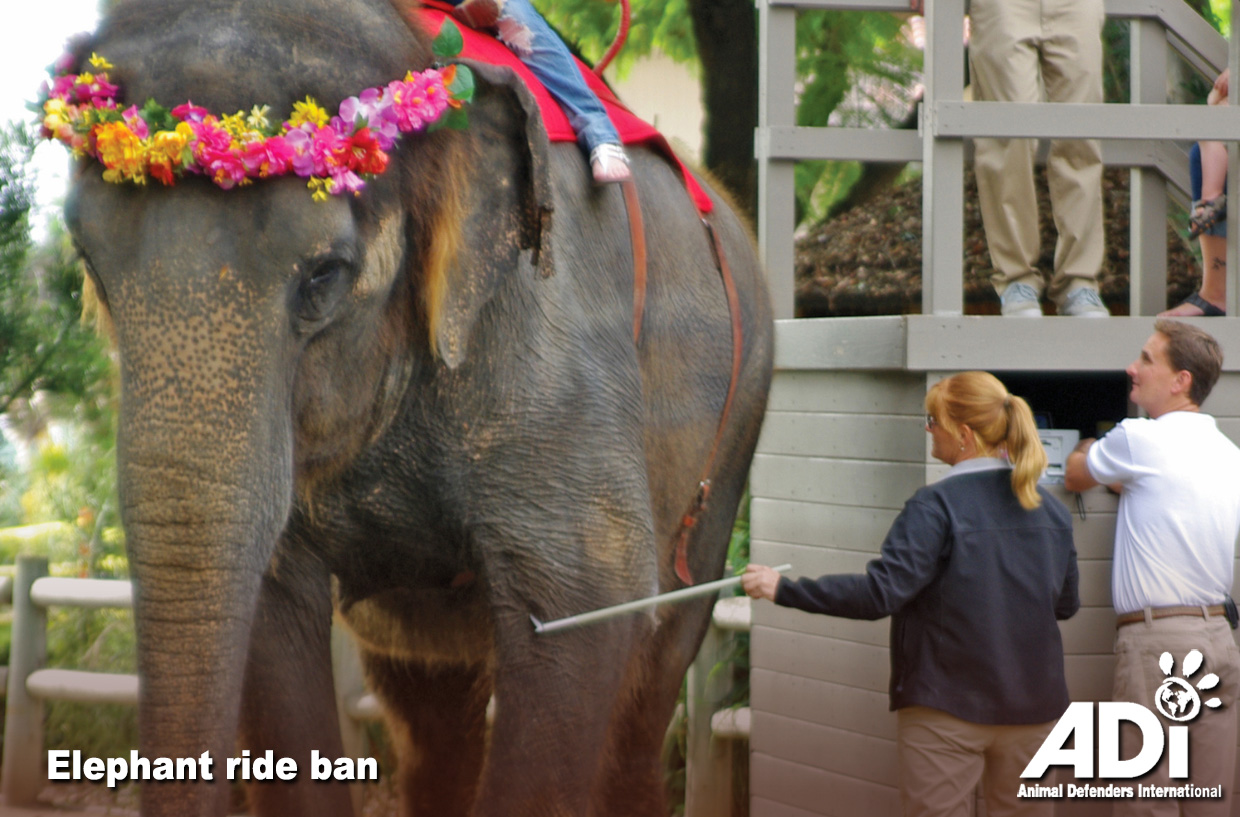
Indonesia has become one of the first countries in Asia to ban elephant rides for tourism and commercial entertainment. The ban applies to registered conservation institutions such as the Bali Zoo, where rides were a regular feature until last month. This is an important step for elephant welfare in Asia. Elephants used for rides are subjected to cruel training and control methods, leading to painful injuries, and their backs are not suited for heavy loads. ADI urges others to follow suit and for travel companies to end all promotion of elephant rides globally. Never support elephant rides.
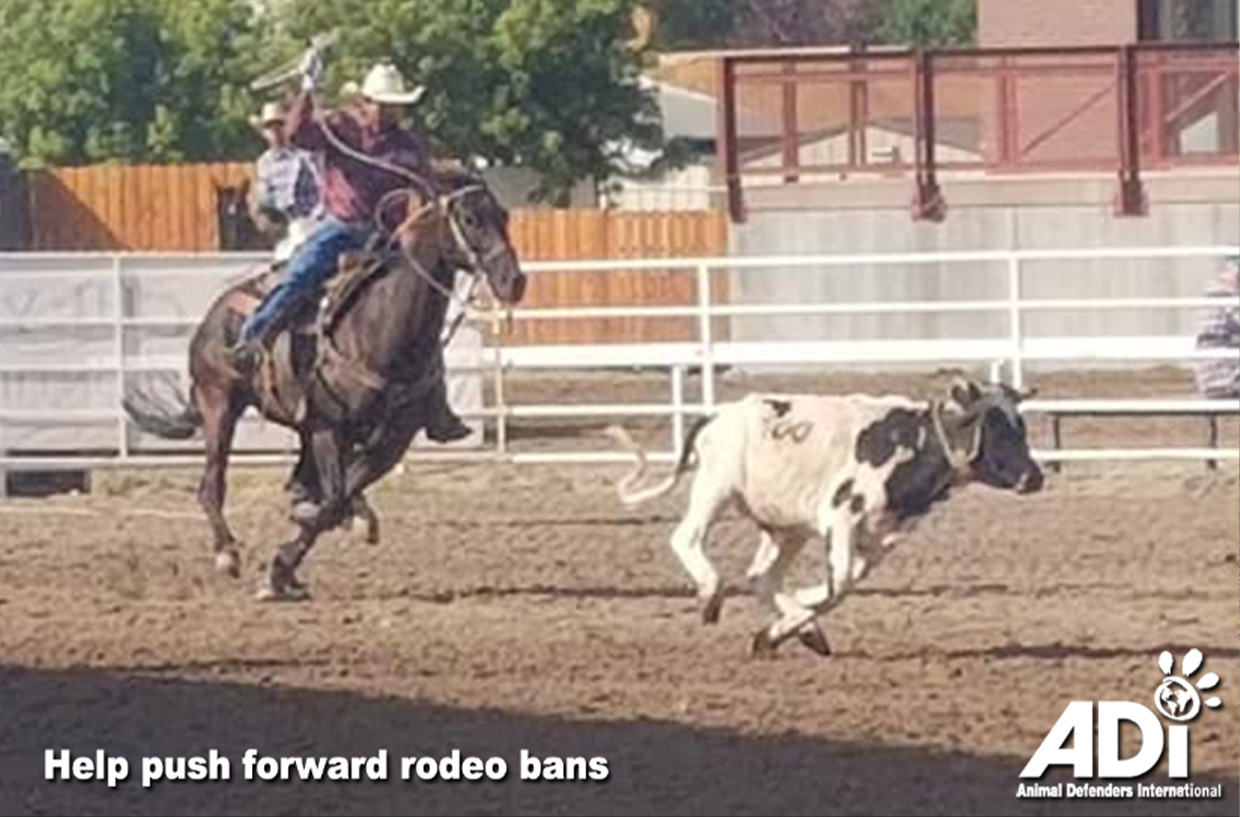
The San Diego Rodeo took place at the PETCO stadium despite increased opposition, a call for a rodeo ban, the loss of funding from the San Diego Tourism Marketing District and recent charges of animal cruelty and abuse. Meanwhile, the Los Angeles City Council voted unanimously to instruct the City Attorney to draft an amended ordinance prohibiting rodeos in December 2023, and we are still waiting for it.
If you live in San Diego, please contact the chair of the San Diego Land Use and Housing Committee, to urge them to stop the San Diego Rodeo from operating in the city: Kent Lee (Chair): 619-236-6616 / KentLee@sandiego.gov
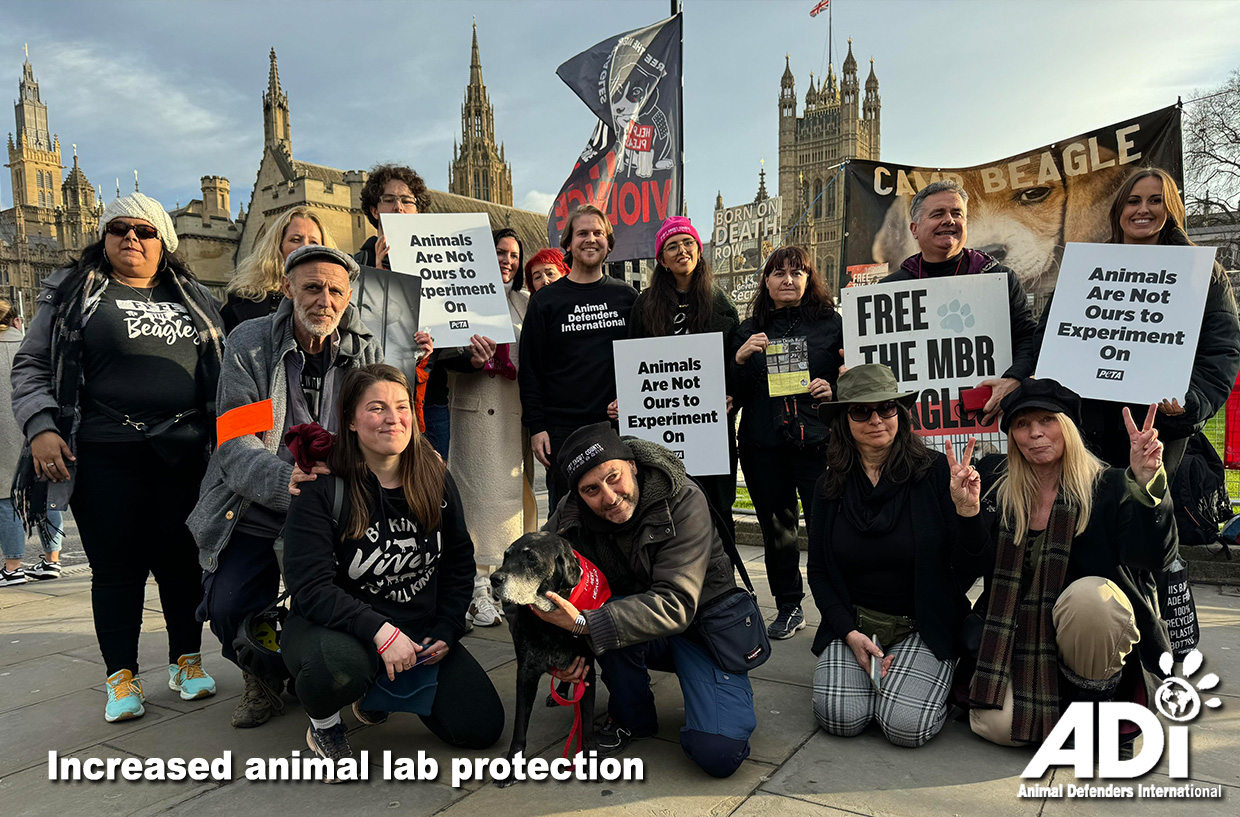
Despite strong objections, the UK government has voted to include the life sciences industry as a ‘key national infrastructure’ within the Public Order Act, providing animal testing laboratories with increased protection against protestors, who will be at risk of fines and up to 12 months’ imprisonment if deemed disruptive. ADI advocated against this draconian amendment and though this outcome is a massive disappointment, it will not silence the voices raised against vivisection.
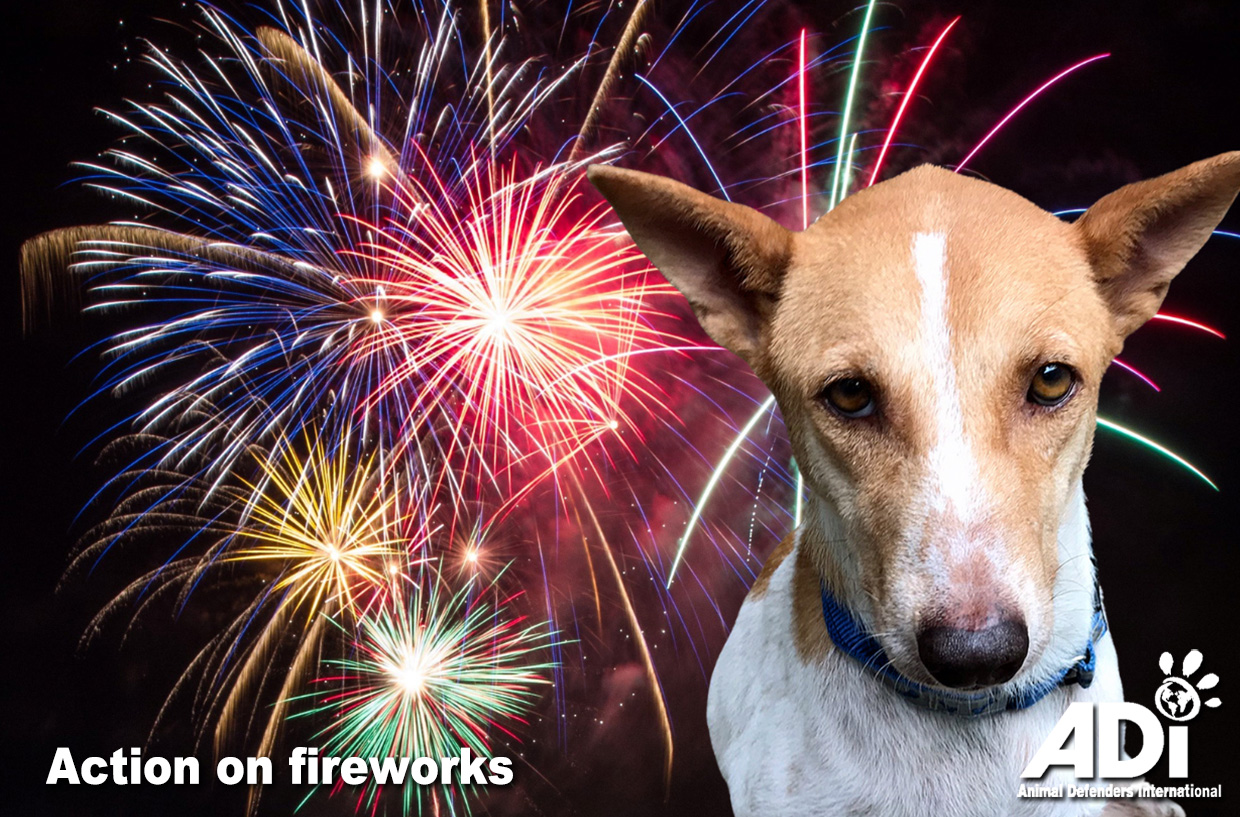
Numerous countries have restricted public access to fireworks, why hasn’t the UK/US? Such restrictions would still allow the public to enjoy fireworks on celebratory days, while minimizing the significant harms to companion and wild animals, the environment, the risk of injuries, and disturbances caused by increasingly frequent firework use. Please urge your local MP / Representative to call for action.
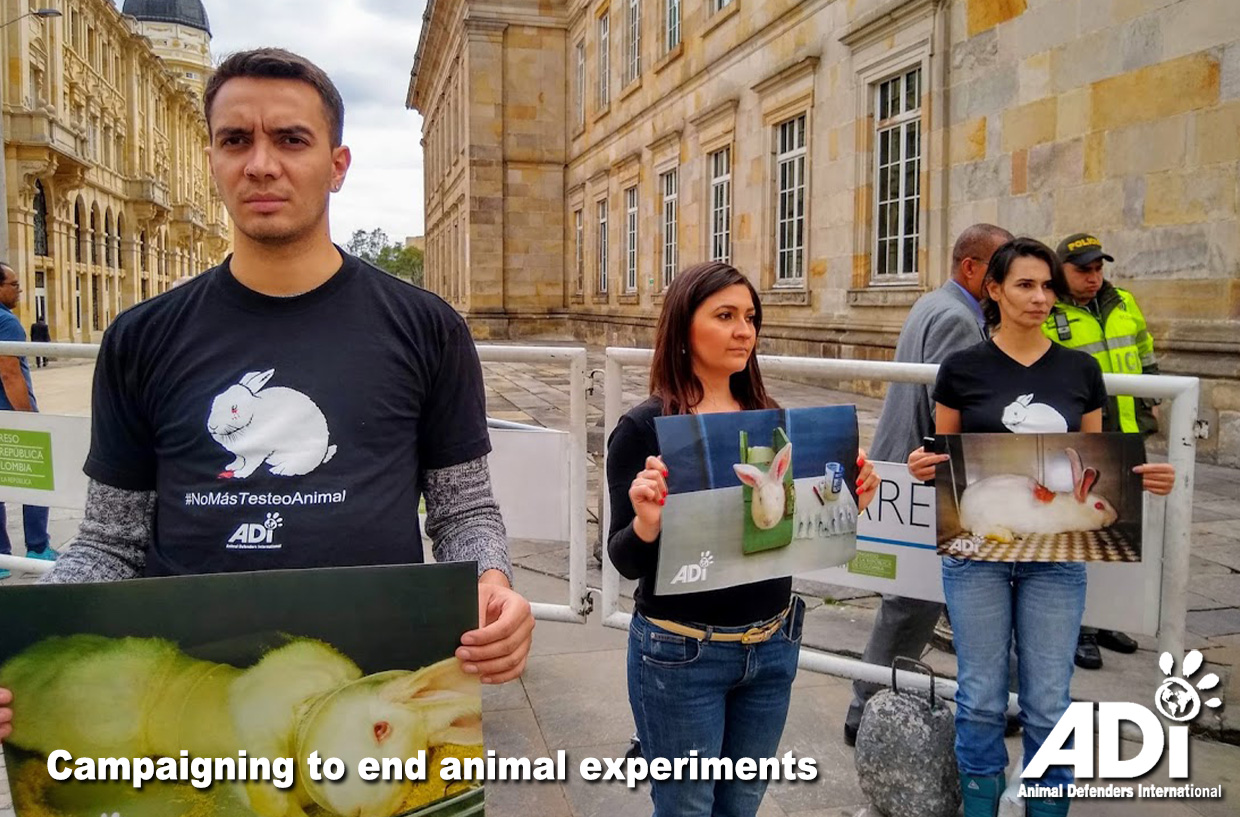
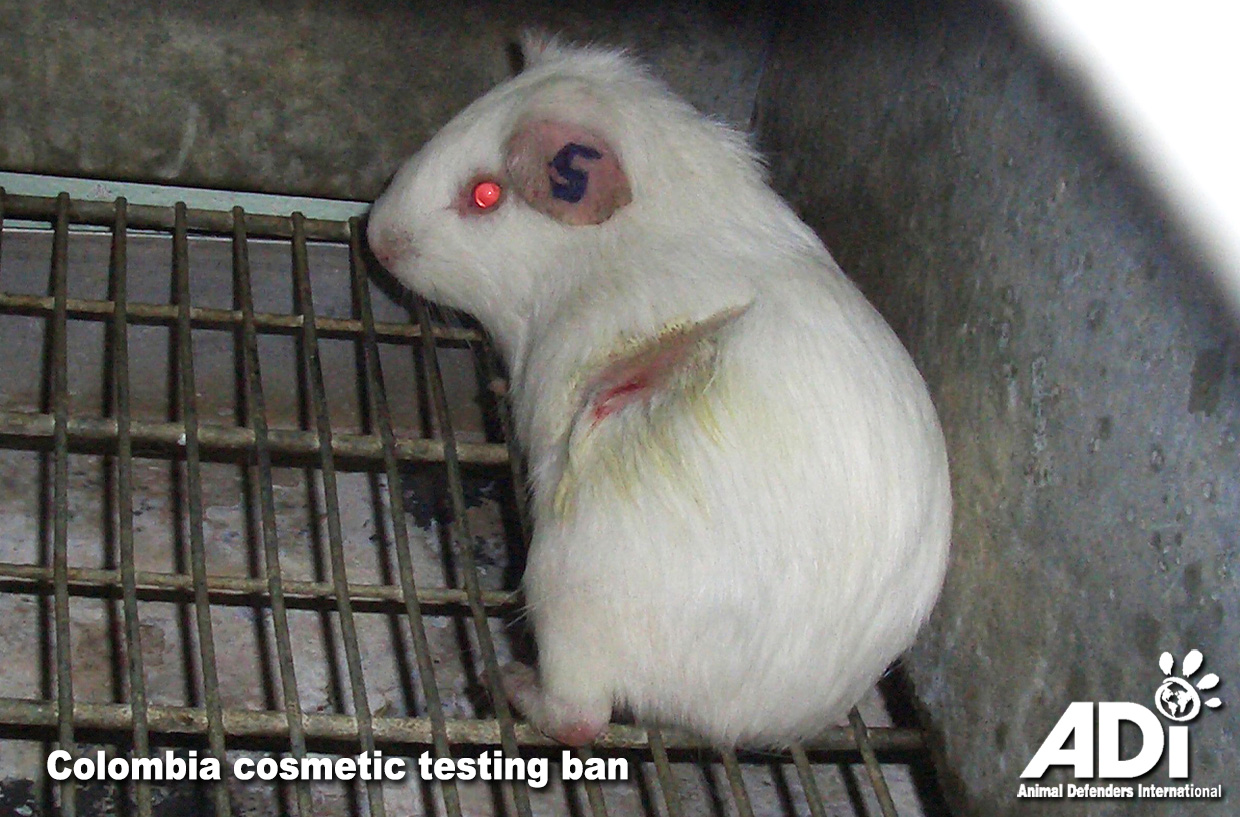
After a four-year delay, Colombia has published a draft decree to implement its cosmetic testing ban. ADI presented evidence to a government consultation to enforce Law 2047/20 prohibiting the testing of cosmetics products and ingredients on animals, and the import and sale of animal-tested cosmetics. Importantly, the law incorporates another provision, that non-animal methods to be used when available in all research, which was secured thanks to campaigning by ADI Colombia.
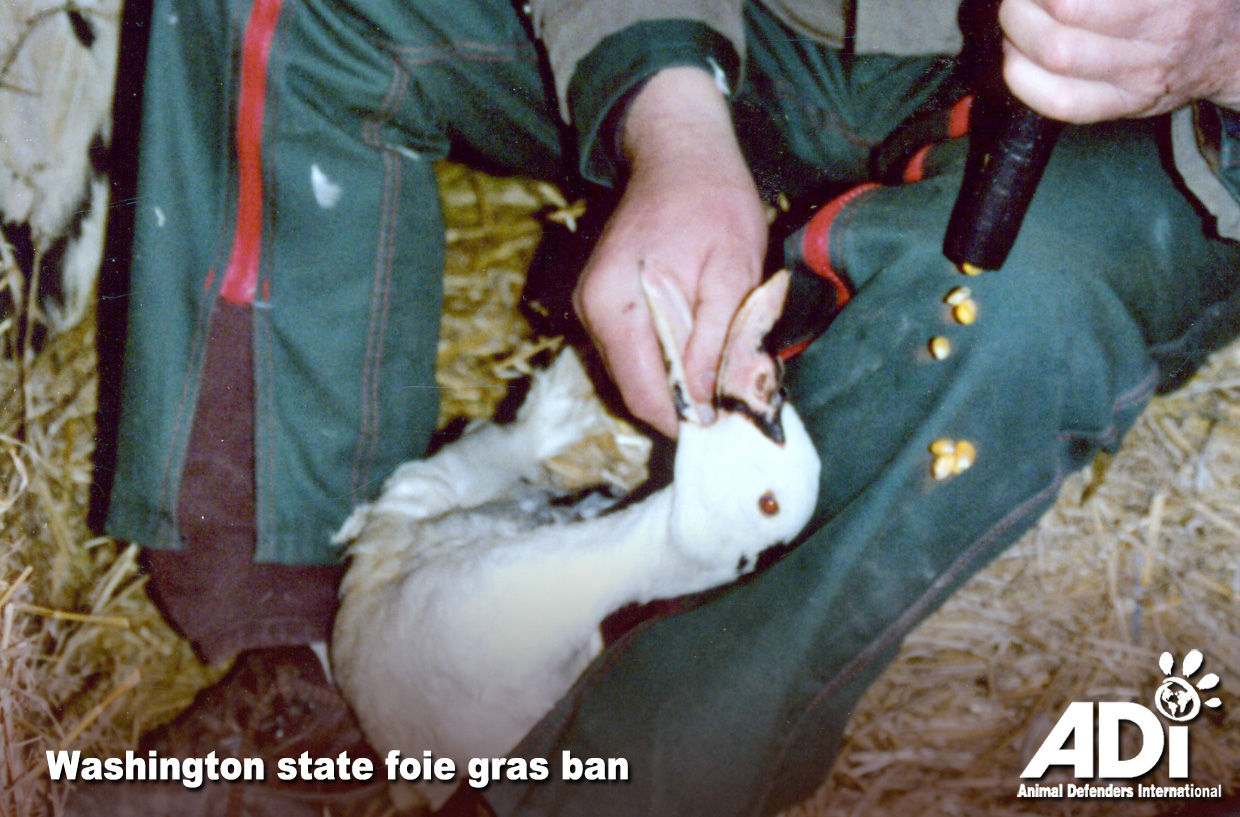
Washington State has reintroduced a bill to prohibit force feeding birds for foie gras and selling foie gras. Foie gras is one of the cruelest farming practices, with ducks and geese force-fed huge amounts of grain several times a day, causing their livers to swell up and become sick and distended. Once their livers reach twice the normal size and more than 10 times normal weight, they are killed. Immense suffering for a so-called luxury product made from a bird’s diseased, fatty liver.
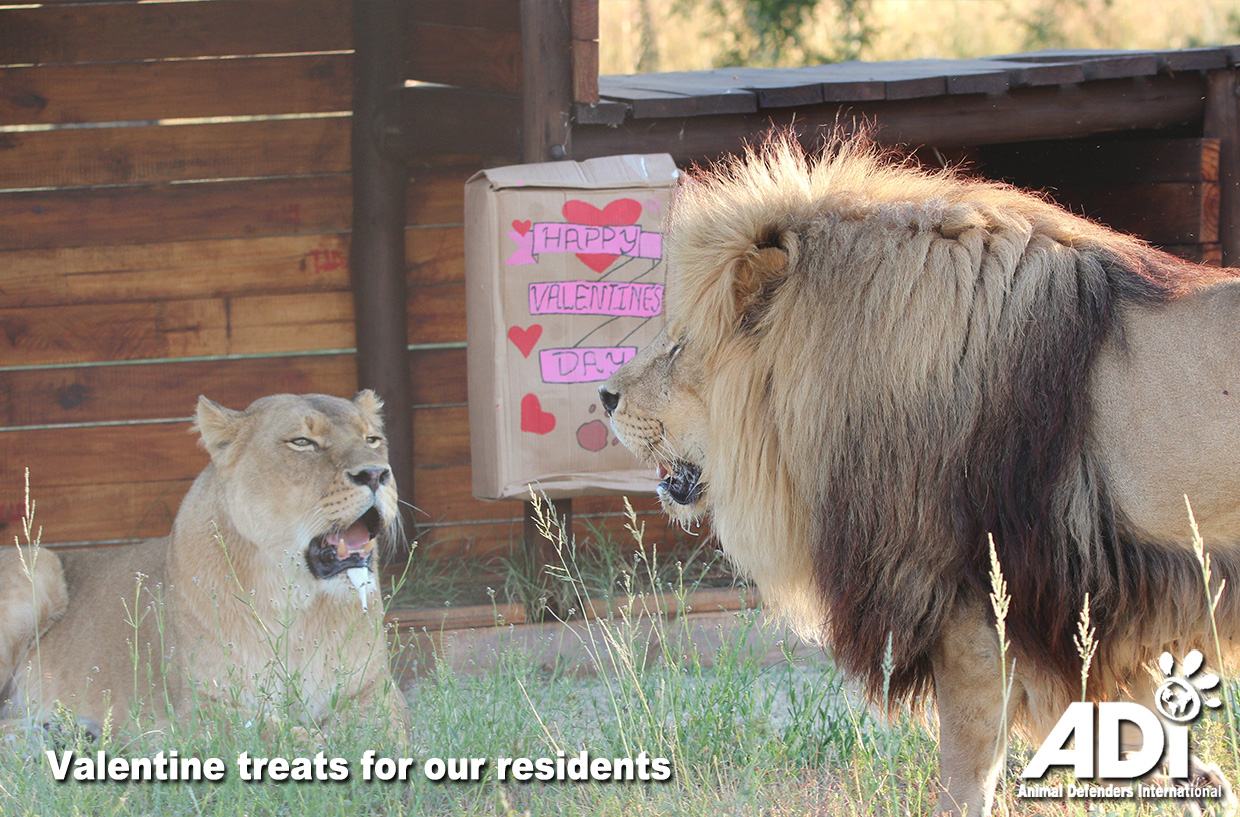
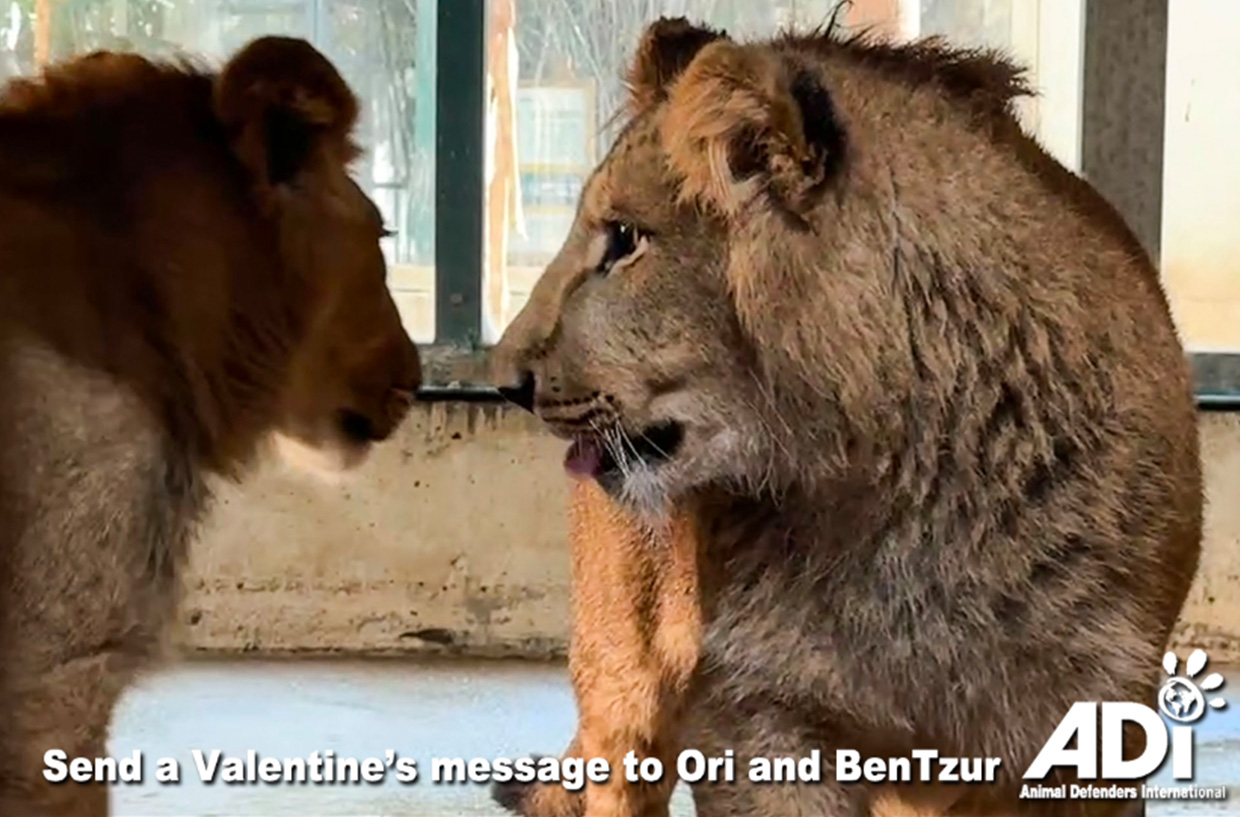
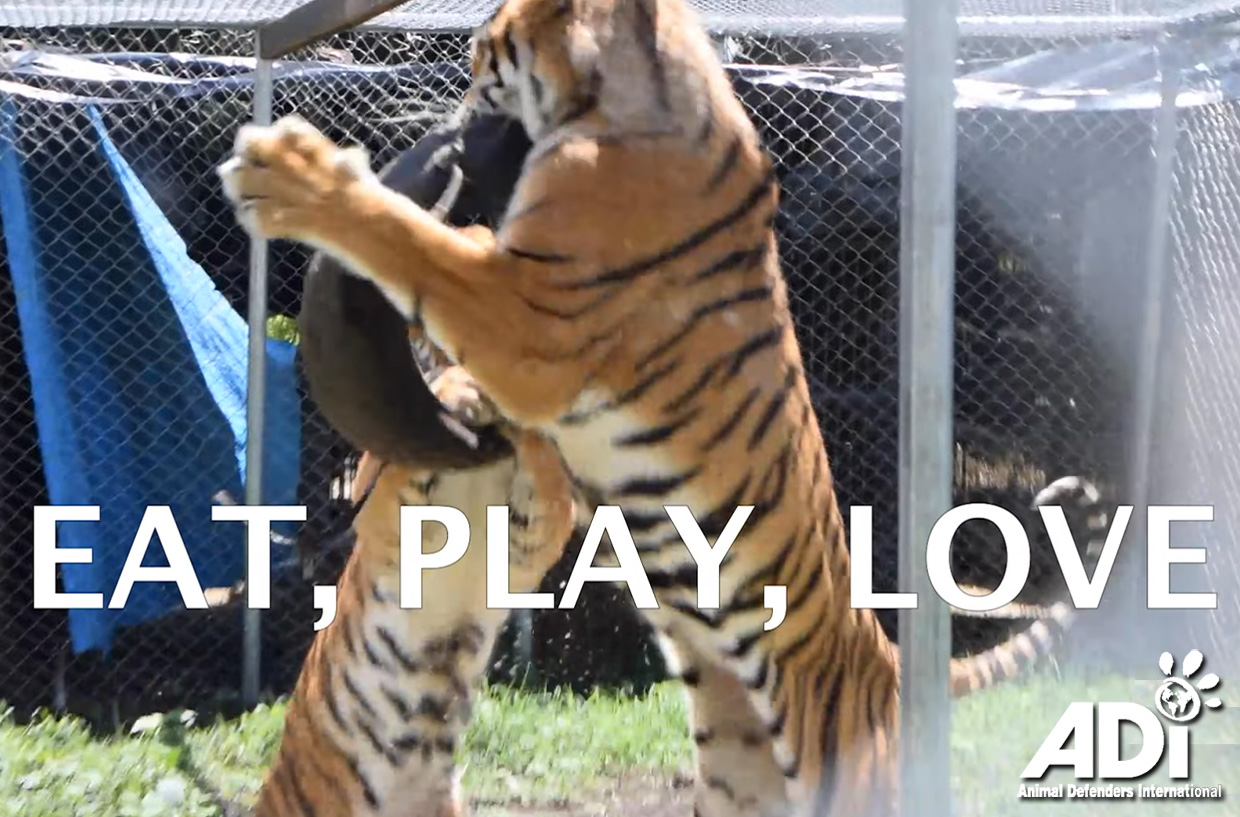
Watch (or watch again!) our ADIWS residents, saved from circuses, the illegal pet trade, and wildlife traffickers, receiving some extra love this Valentine’s. Fun-loving treats enjoyed by our lions and tigers included boxes filled with catnip, lavender, perfume, and even donkey droppings! Coralie and Goliath enjoyed their first Valentine’s Day at the Sanctuary and only had eyes for one another.
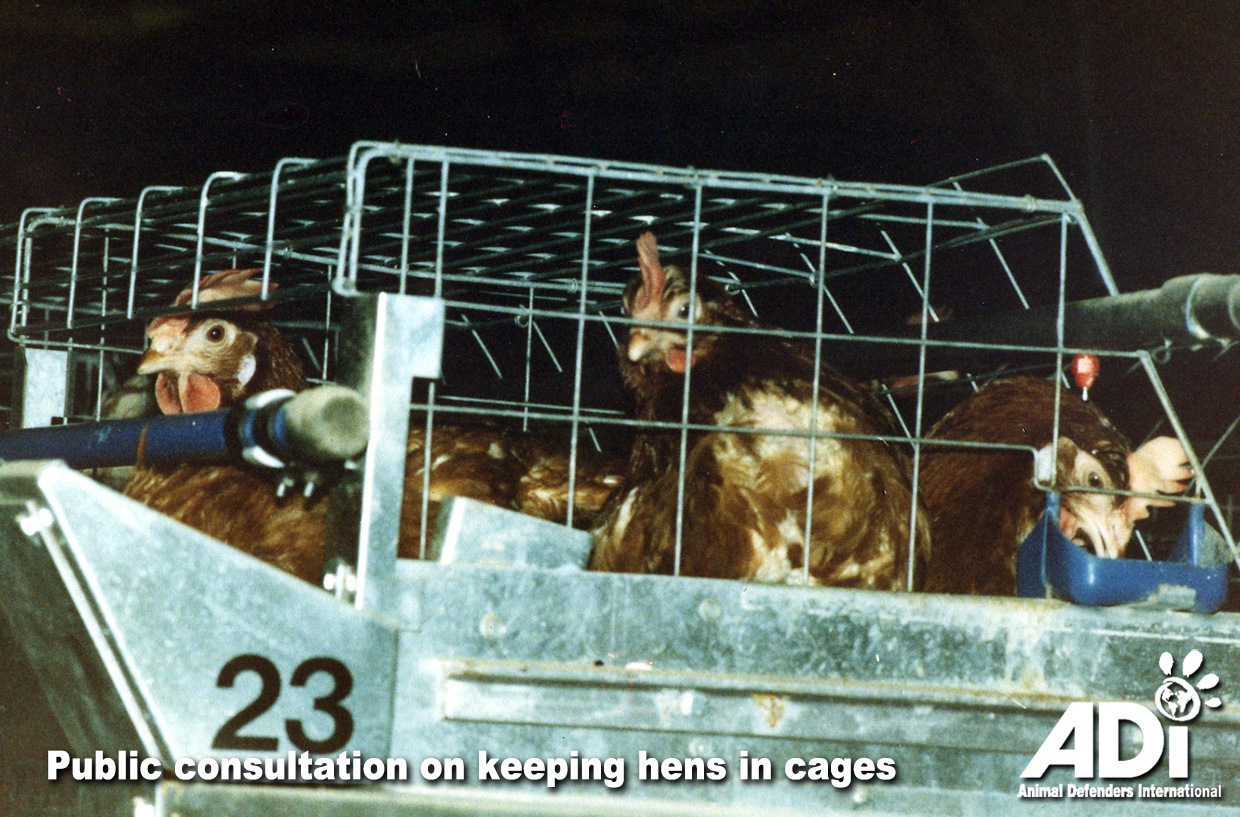
The UK’s Department for Environment, Food & Rural Affairs (Defra), is holding a public consultation regarding the caging of laying hens. Currently, only battery cages (pictured), extremely small cages which almost completely restrict movement, are banned, and only for keepers with more than 350 hens. The amendments under review aim to ban battery cages for all laying hens and to phase out enriched ‘colony’ cages by 2032. Anyone can take part in this consultation, find details here: https://bit.ly/helpcagedhens.
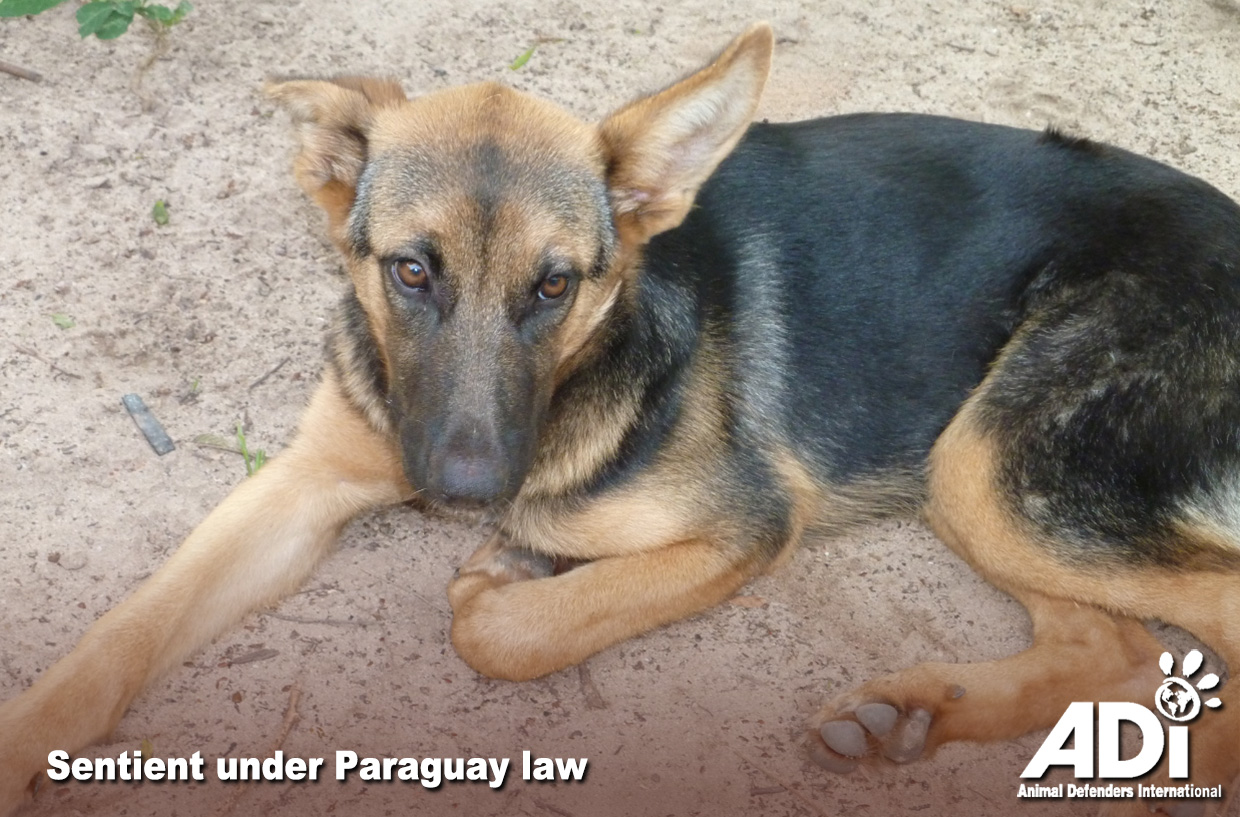
Paraguay’s new National Registry of Animal Abusers recognizes domestic animals, such as cats and dogs, as sentient and has established a framework for their protection. The new law includes that it is an offence to abandon them, prohibits their use where they would be killed, injured, or abused, outlaws bestiality, regulates certain breeding facilities selling animals, increases fines and sentences up to six years in prison for the most serious cases. This is an important precedent for the country.
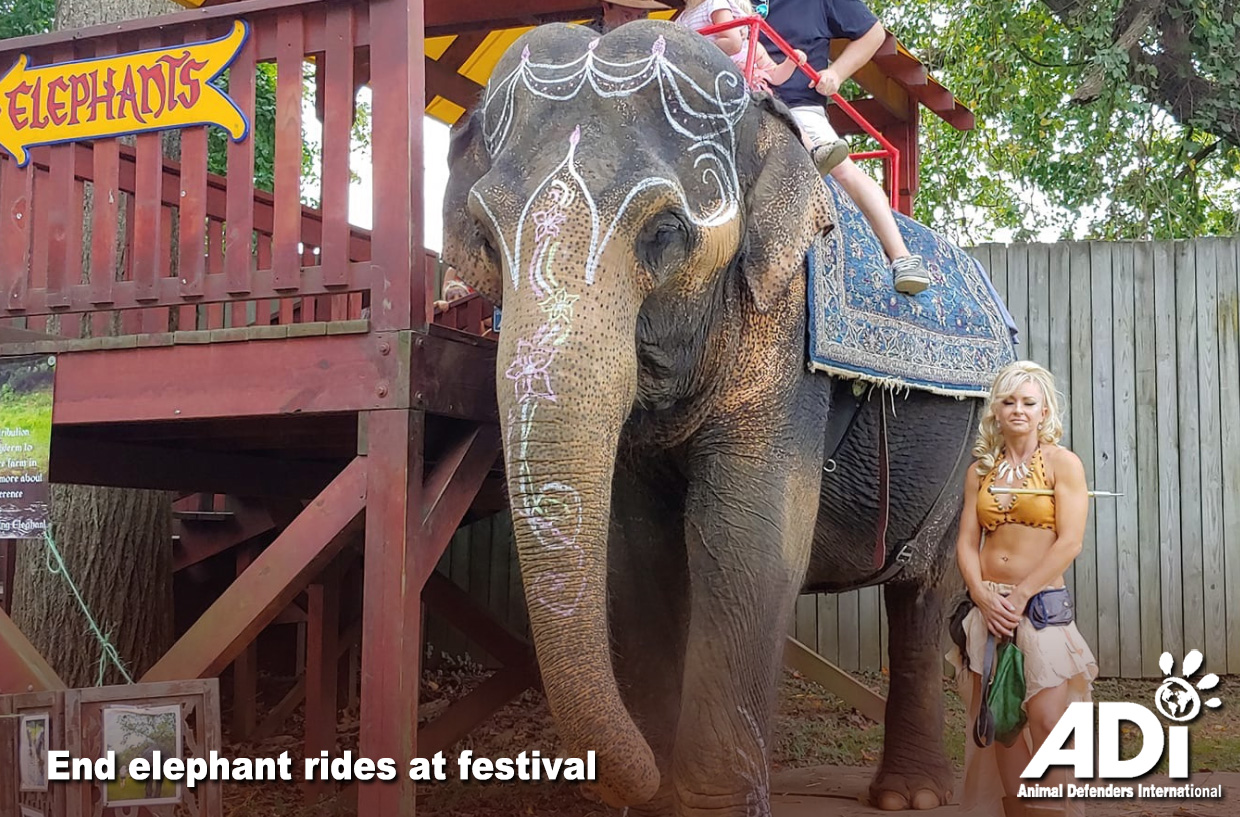
The Bay Area Renaissance Festival is underway right now and is once again offering elephant rides. It is a myth that elephants are trained with kindness and reward; the tools of the trade include electric prods, metal bars, whips, bullhooks, deprivation, and intimidation. There is nothing harmless about it. These intelligent, social animals endure a lifetime of suffering for a brief ride.
This festival continues through March 29. Please send a polite message or call them today, urging them to no longer host elephant rides and pledge to keep their festival free of performing wild animals. Call: (352) 999-5946 | Email: info@bayarearenfest.com
If you live in the area and are interested in hosting an outreach event, contact us at usa@ad-international.org.
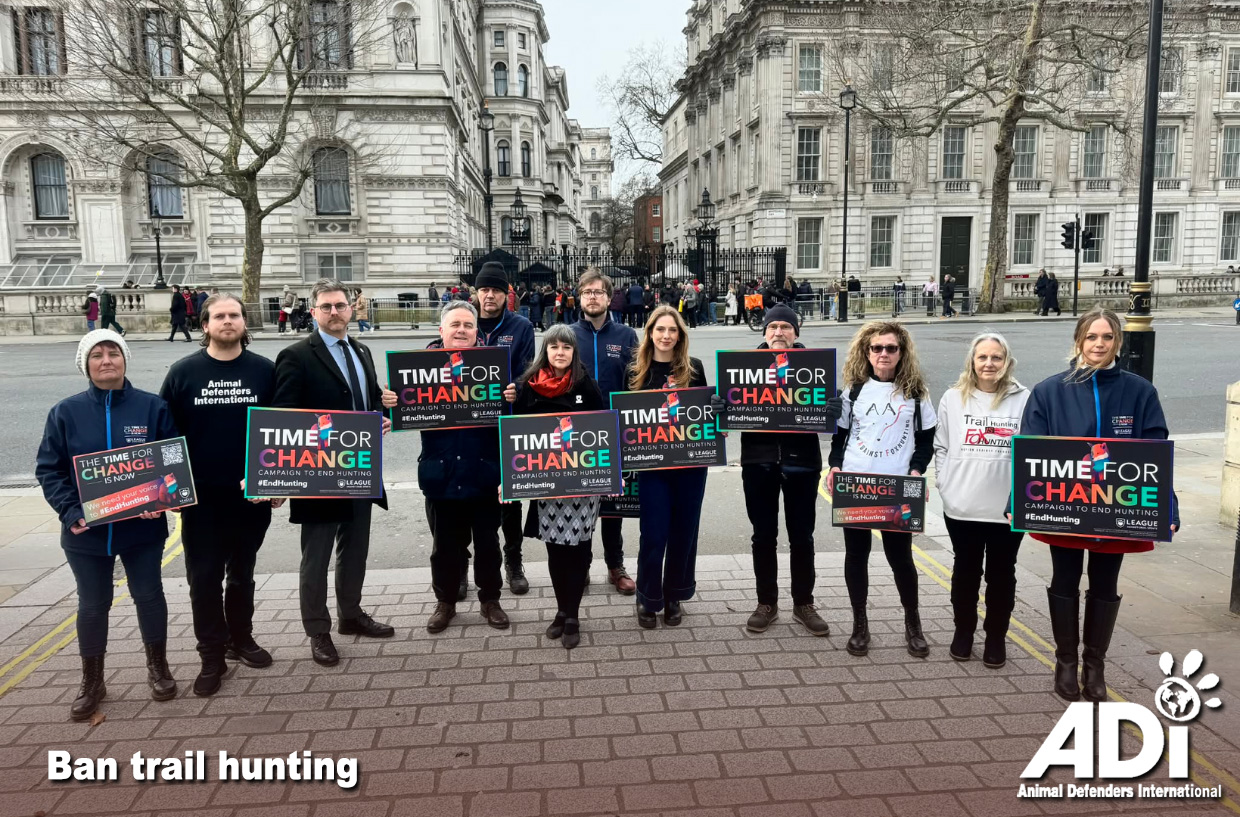
For over 20 years trail hunting in the UK has been a smokescreen for illegal hunting, undermining protections in the Hunting Act 2004. ADI and fellow members of the Time for Change Coalition Against Hunting protested outside 10 Downing Street to urge UK Prime Minister Keir Starmer to launch the government’s long-promised consultation on hunting laws, without delay. Backed by over 36,000 supporters, we delivered an open letter calling for a ban on trail hunting – time to close the loophole.
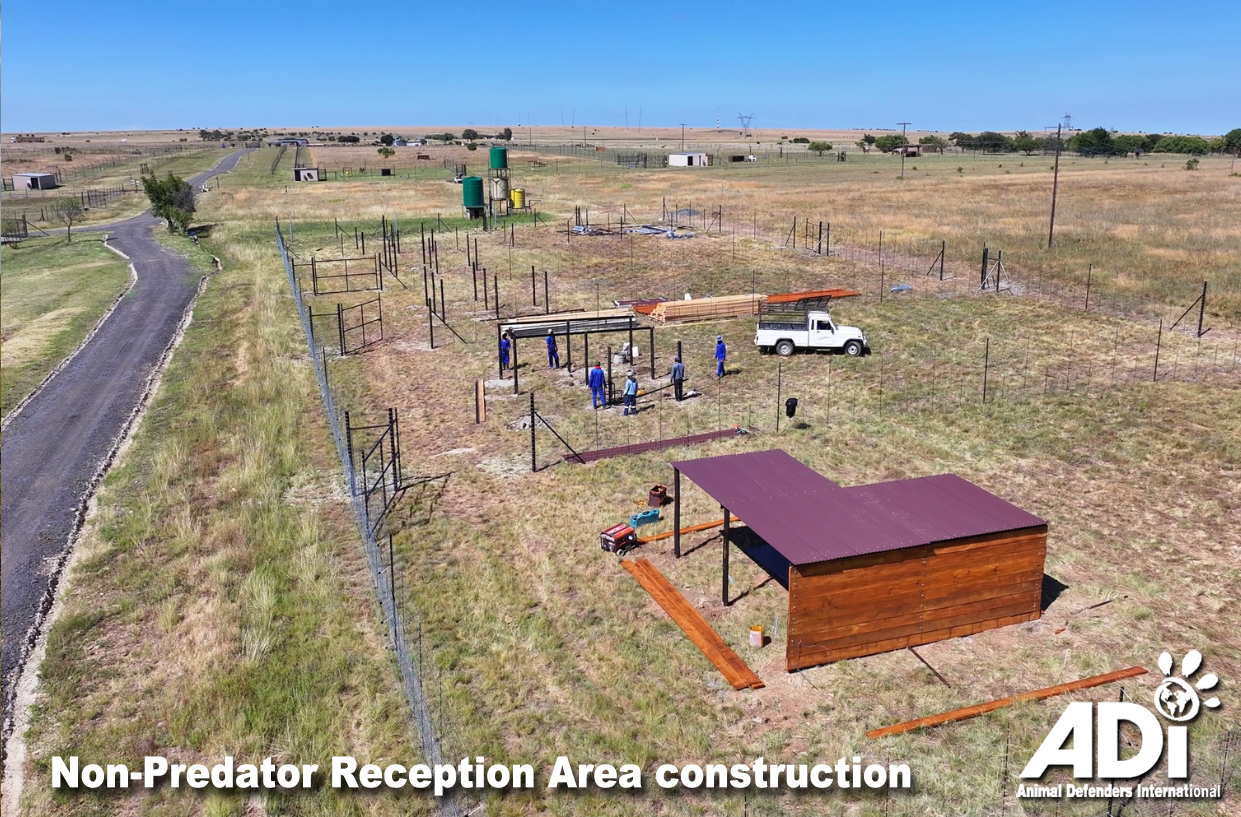
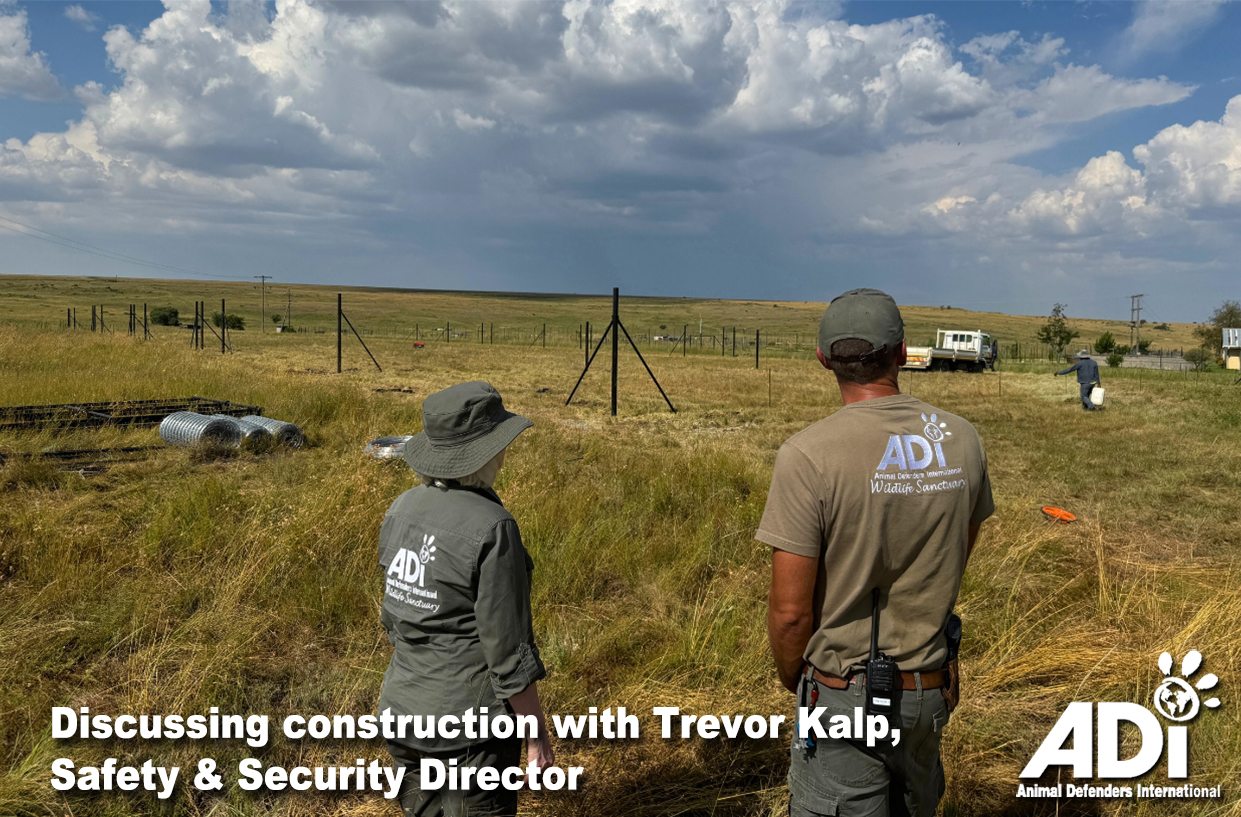
Construction of the ADI Wildlife Sanctuary’s new Non-Predator Reception Area (NPRA) for small wildlife and domestic animals is underway. This will provide a much-needed safe space to care for injured or rescued animals such as antelopes, tortoises, donkeys, pigs, and horses. We are building eight paddocks, each with a stable/shelter power and water supply. The facility will enable ADIWS to help more animals, but we will need your help looking after these rescues, for life.
ADI has been honored with one of the first Top-Rated Awards of 2026 from GreatNonprofits. A good way to learn about ADI is to know what other supporters say about us – read some of our reviews and add your own here.
To help us continue with our campaigns, rescue and sanctuary work please donate here.
As I sit here in South Africa at the ADI Wildlife Sanctuary (ADIWS), I feel a mix of emotions. There is an underlying feeling of loss outweighed by the greatness of a country rich with stunning beauty and majestic life. We remain optimistic and focus on the positive as much as possible and will do so in the latter part of this message.
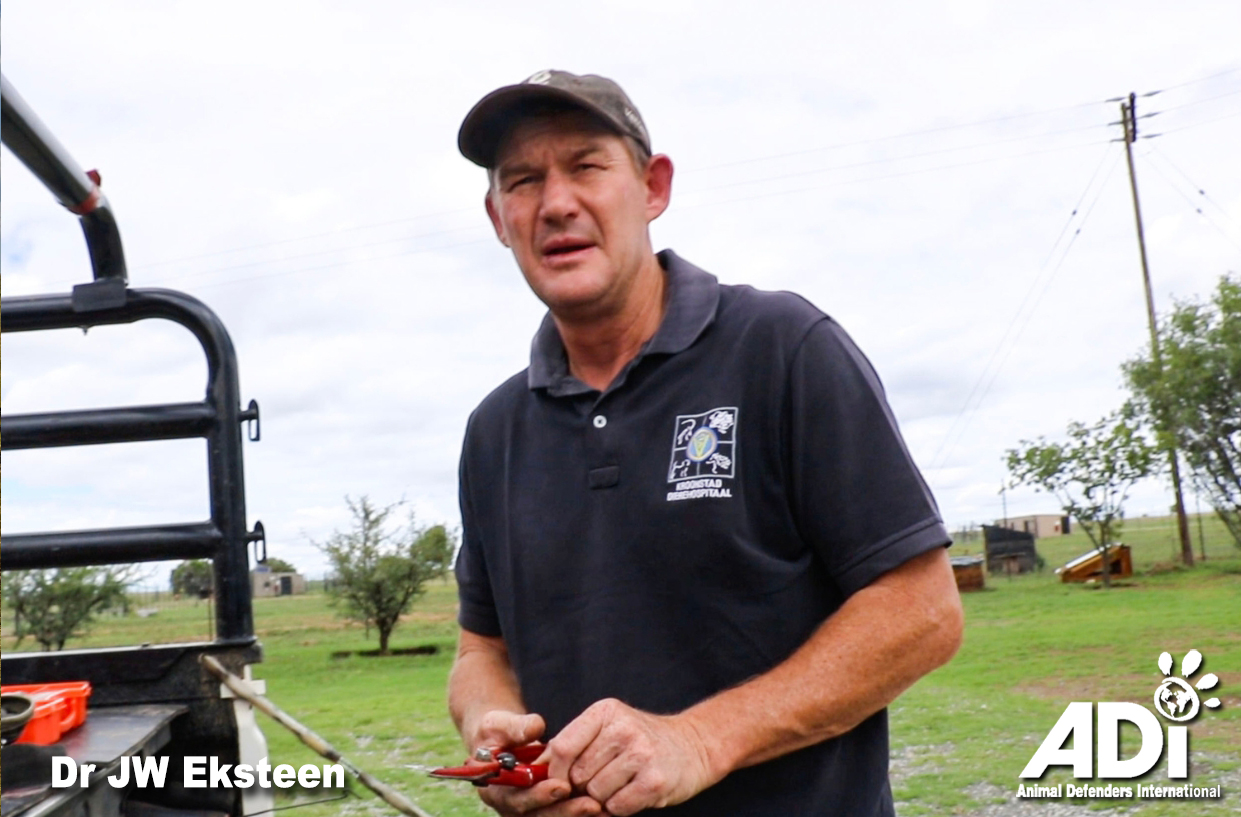
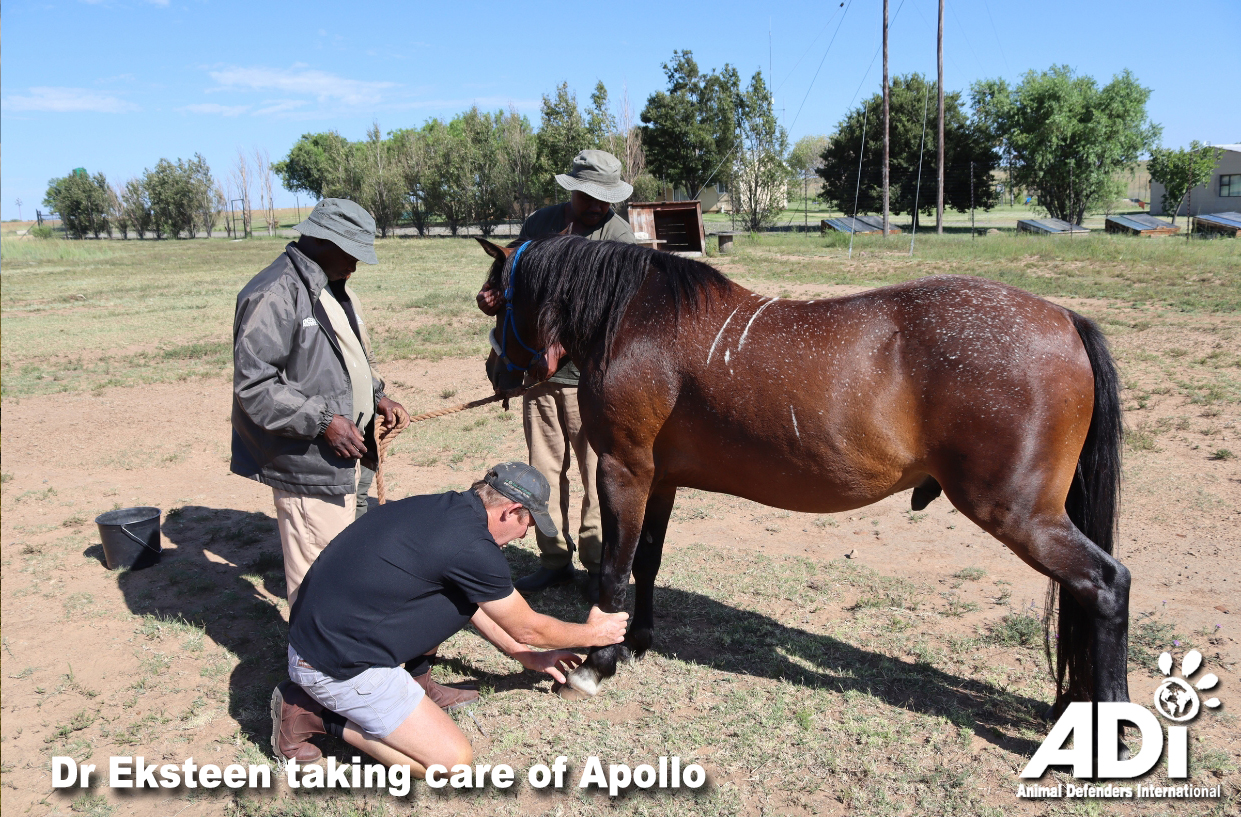
First though, it is with a heavy heart that ADI shares the news of the passing of Dr JW Eksteen, who treated our rescued smaller wildlife such as antelope, tortoises, and domestics including horses, pigs, and donkeys. Tragically, he lost his life after suffering a freak accident while treating a herd of buffalo.
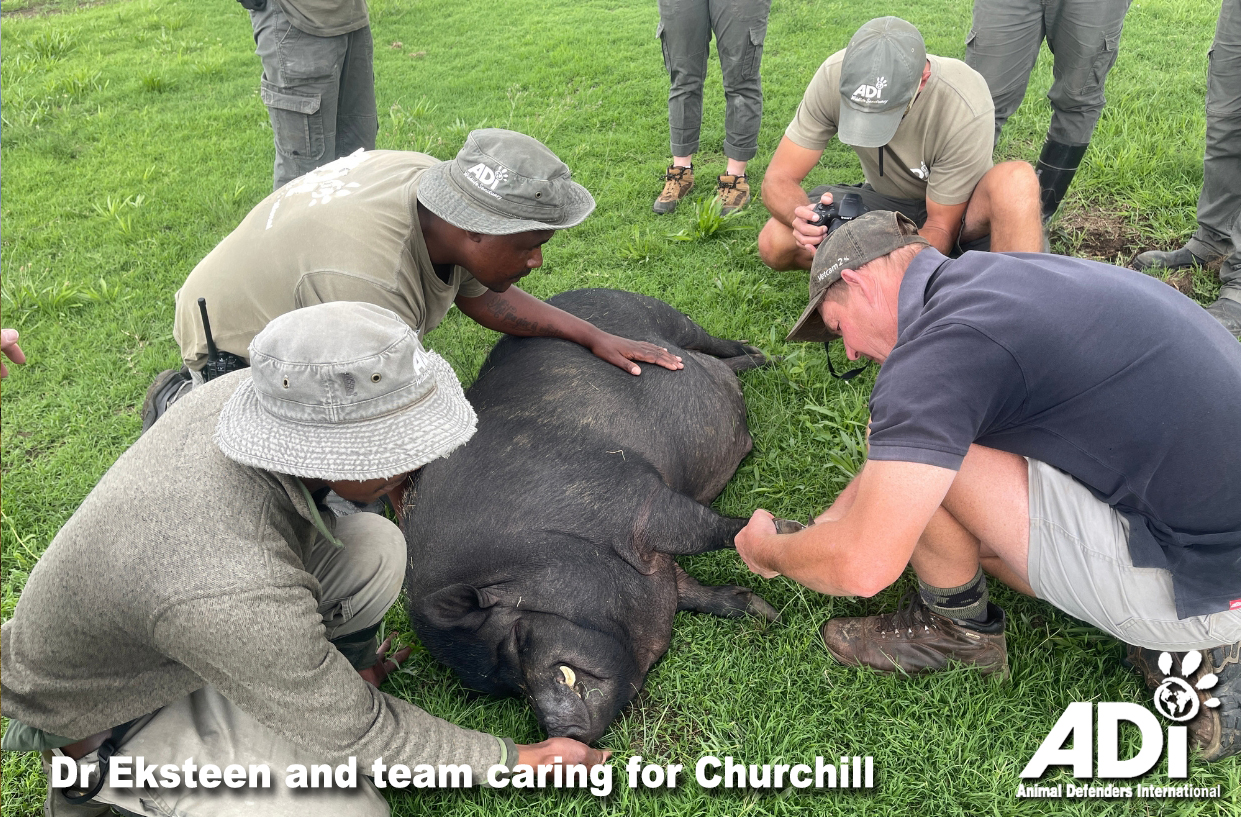
Dr. Eksteen was an important member of our team, always making himself available to help care for our animals, regardless of the hour. Most recently, Dr. Eksteen was at ADIWS to treat ailing pot-bellied pig, Churchill, and Sammy the horse. Veterinary care of these animals is not always easy, as they are often suspicious of humans after the abuse they have endured. Dr. Eksteen, however, was always kind, patient, and empathetic. We have sent our condolences to his family and the team at Kroonstad Veterinary Hospital. May he rest in peace.
As we continue to care for ALL animal survivors of abuse and trafficking, Dr. Eksteen will forever be remembered as a someone who used his skills for the animals, which in turn, has helped get us to where we are today.
Among those he cared for are those who will now find refuge in our new safe space for small wildlife and domestic animals, the Non-Predator Reception Area. Vital to changing the world for these animals, we thank everyone who generously helped support this urgently needed facility at ADIWS which is currently under construction right now, providing paddocks and stables for any animal in need. Check out our progress here!
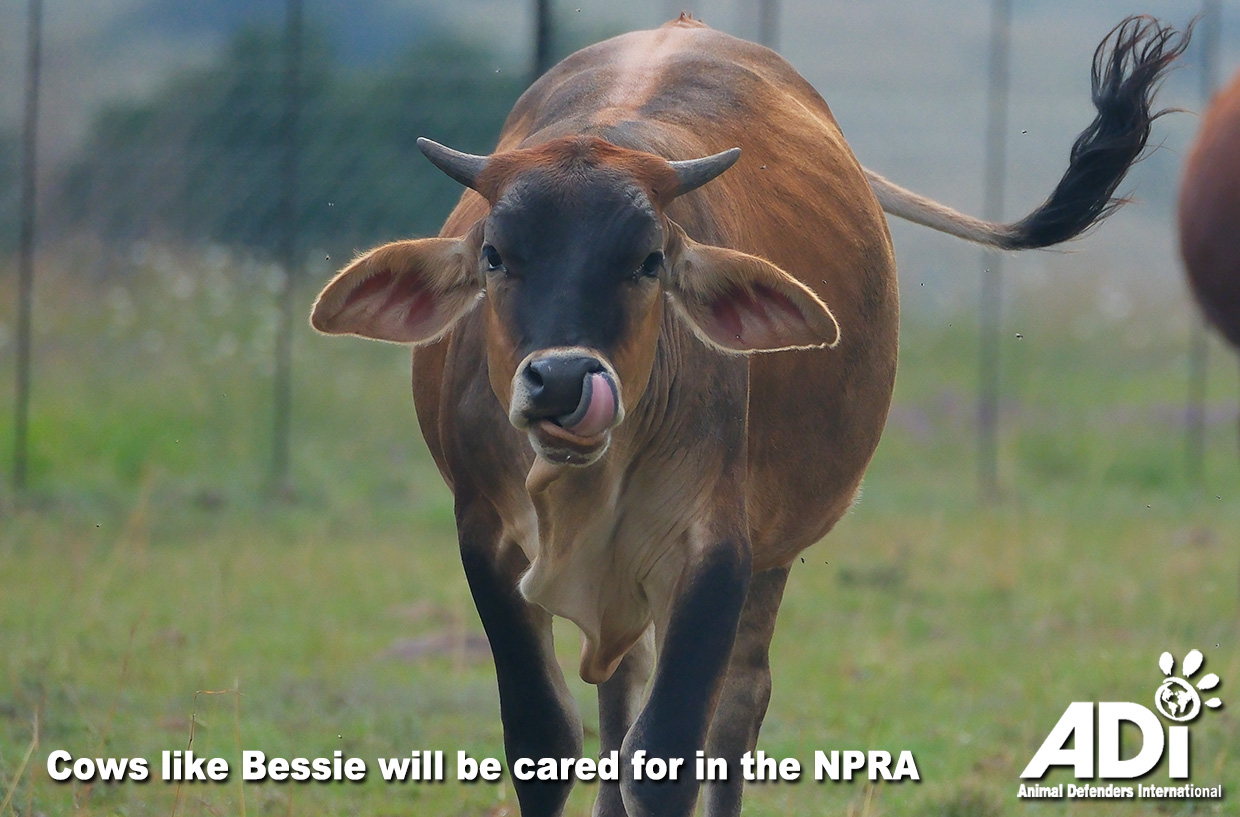
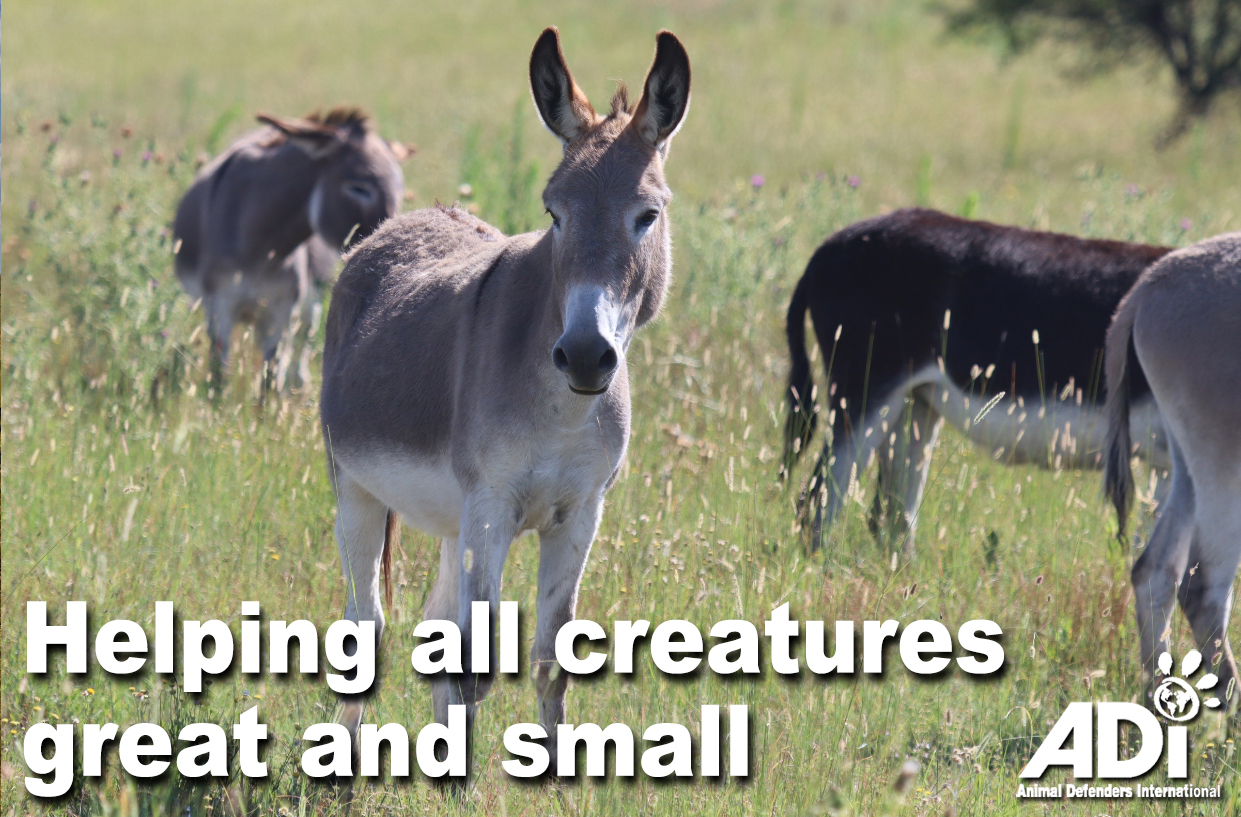
We are thrilled to share that while ADIWS may have started primarily for big cats, we have become a beacon of hope and a second chance for all creatures in need across the region, including antelope, tortoises, cows, sheep, goats, donkeys, horses, and pigs as well as a peacock and goslings.
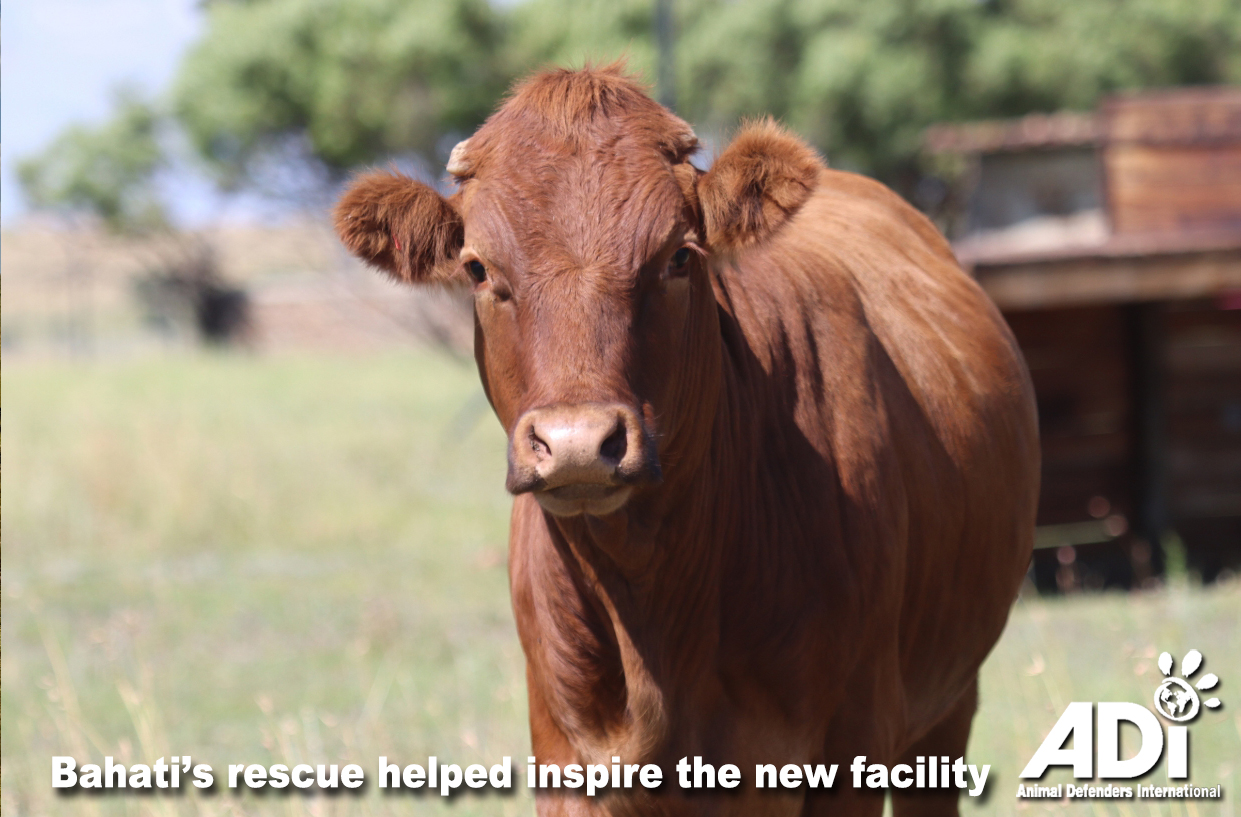
The heartbreaking story of Bahati, a young calf found cruelly tied in the back of a pick-up truck who could not even move without choking is one of many rescues that highlights how desperately we need to provide more facilities for these poor, abused animals so that they can be assessed and cared for on arrival. While the perpetrators in that case have been charged, ADIWS was the only hope of a happy conclusion for Bahati.
Thanks to your support, and the matching grant from Dr Betsy Coville, we hit our target of $44,310/ £33,650, and in January, I was delighted to mark out the site and watch the straining posts for the fences being planted.
We are now moving forward rapidly with the eight paddocks, each with a shelter/stable, and water supply.
This new facility gives us the potential to save many more injured wildlife and domestic animals, and we will need to provide lifetime care.
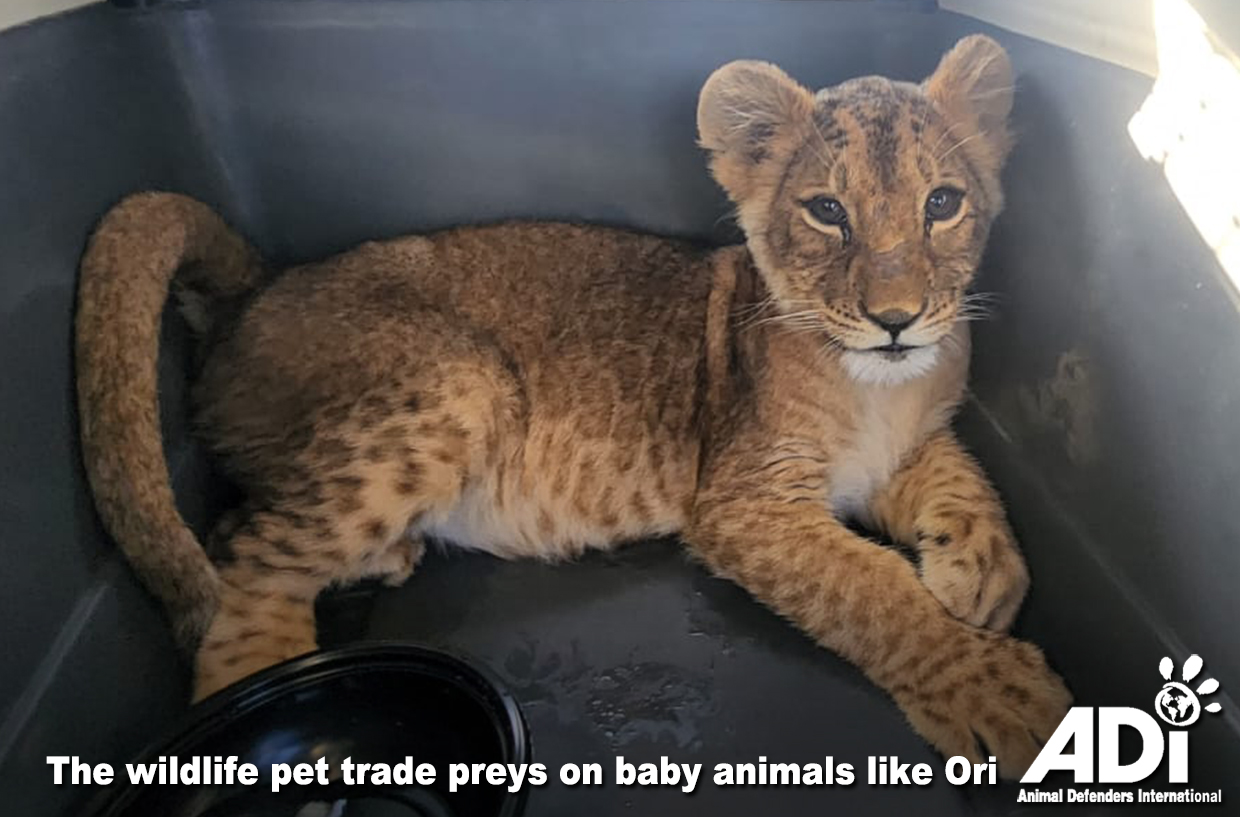
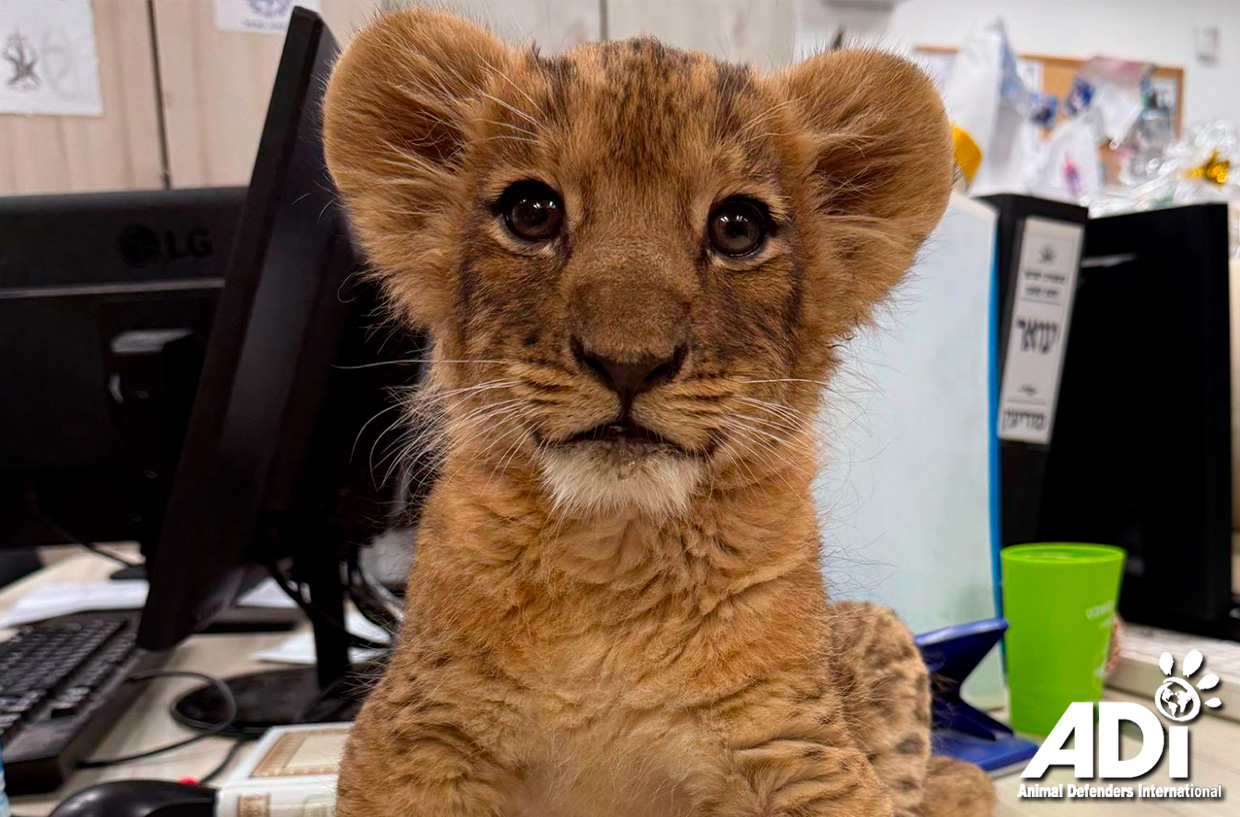
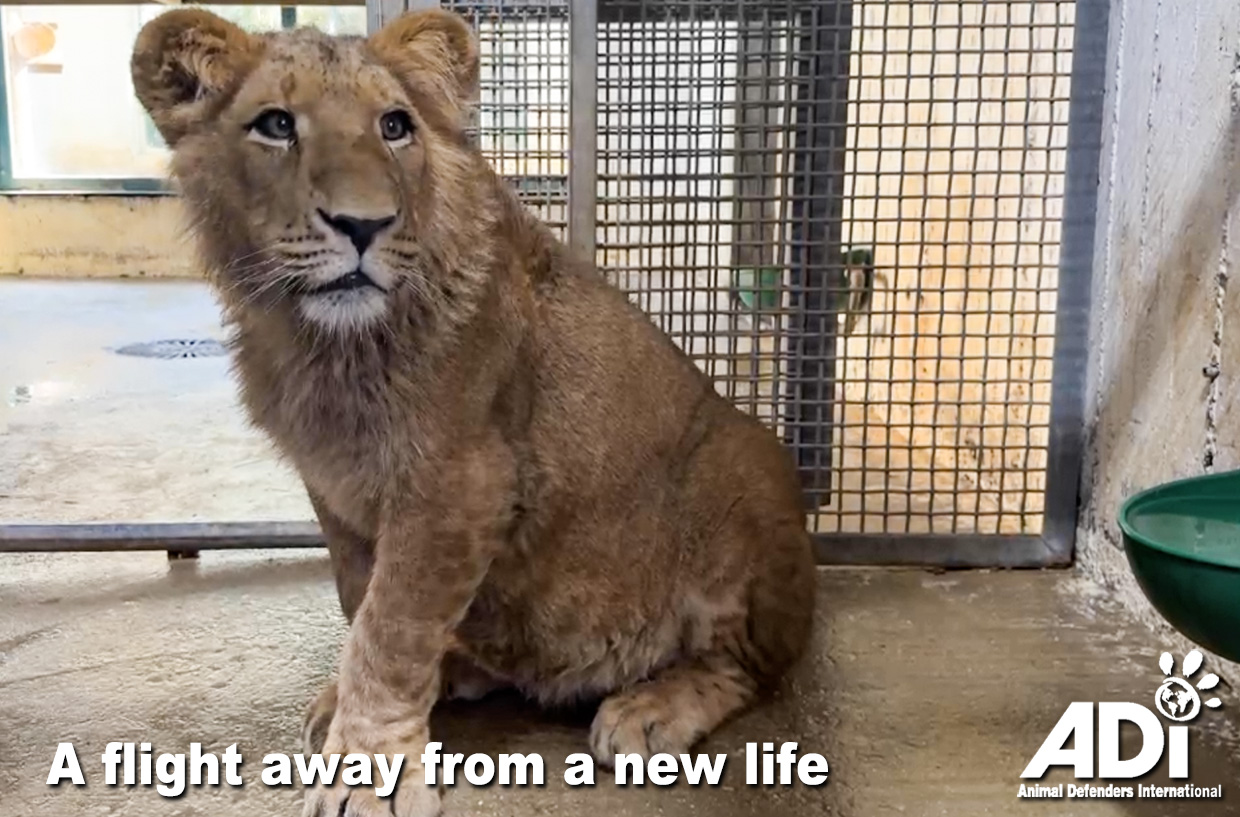
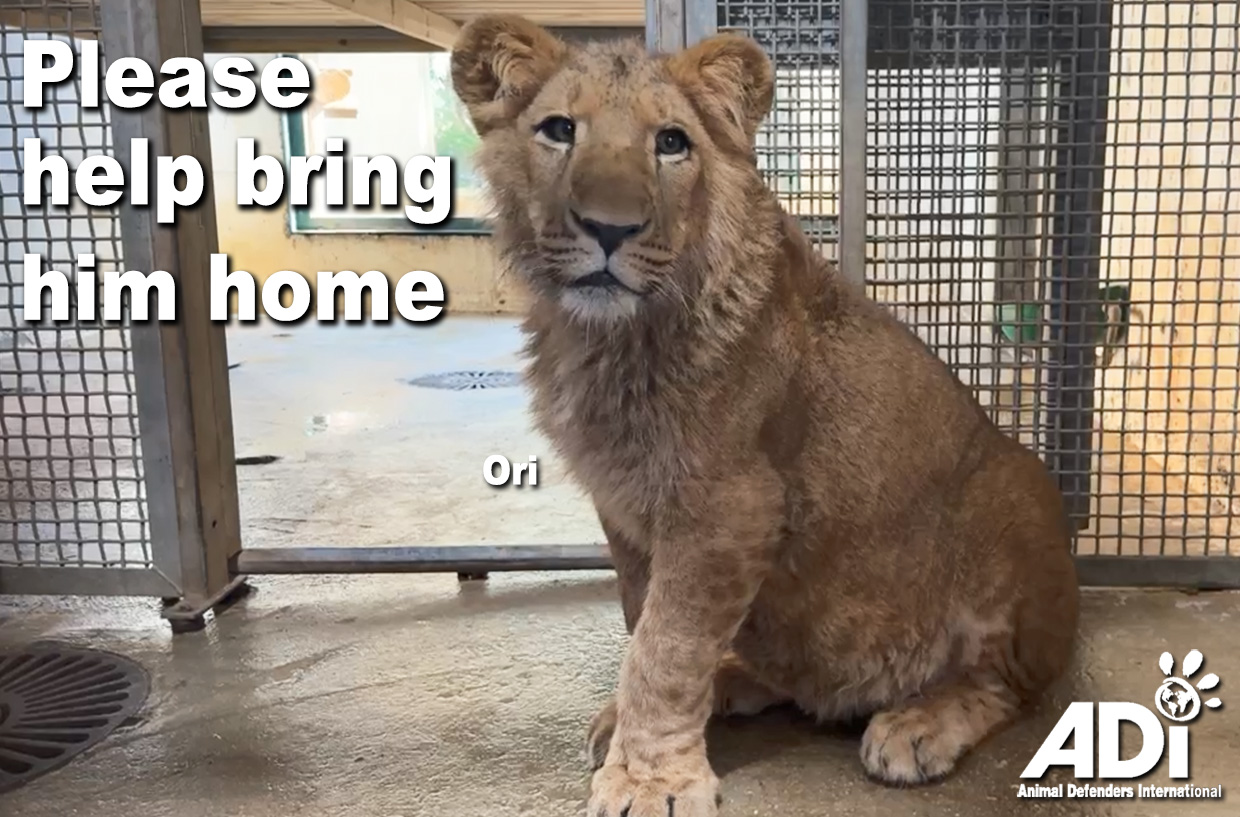
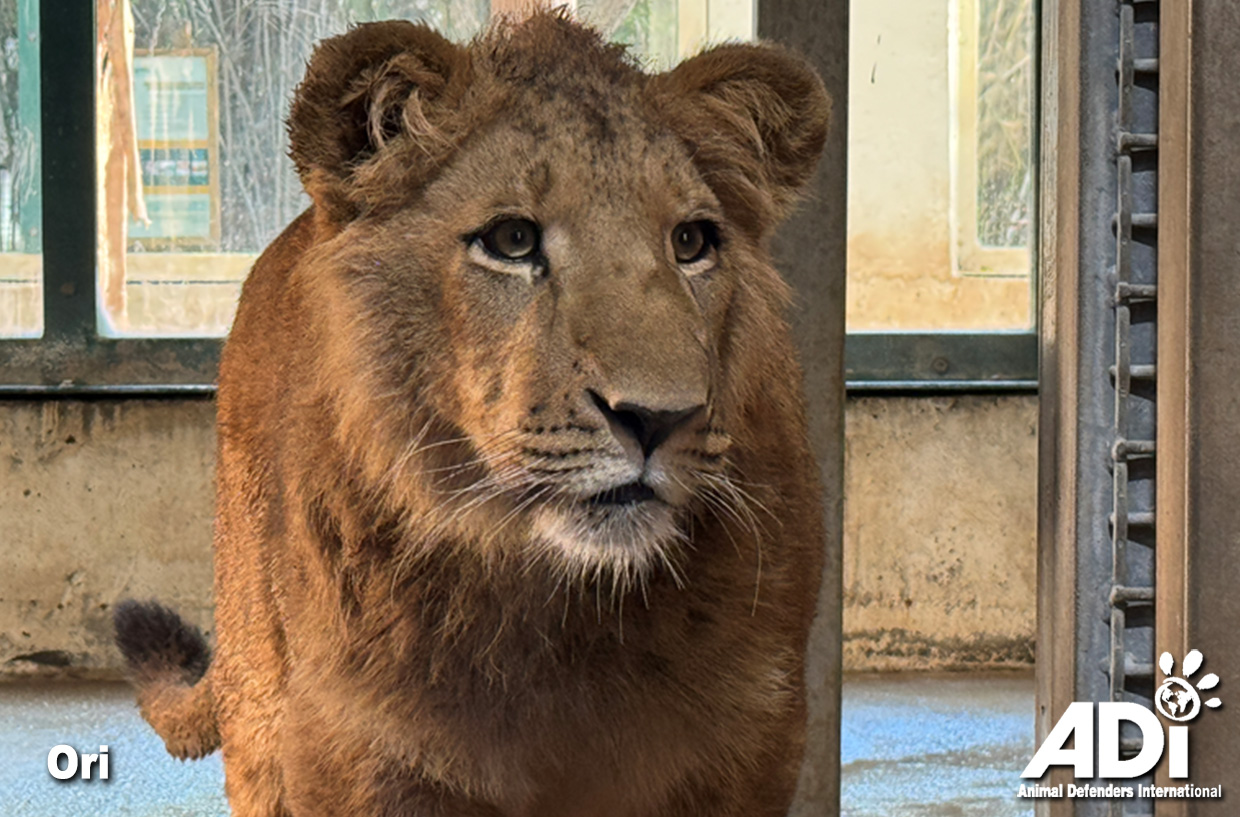
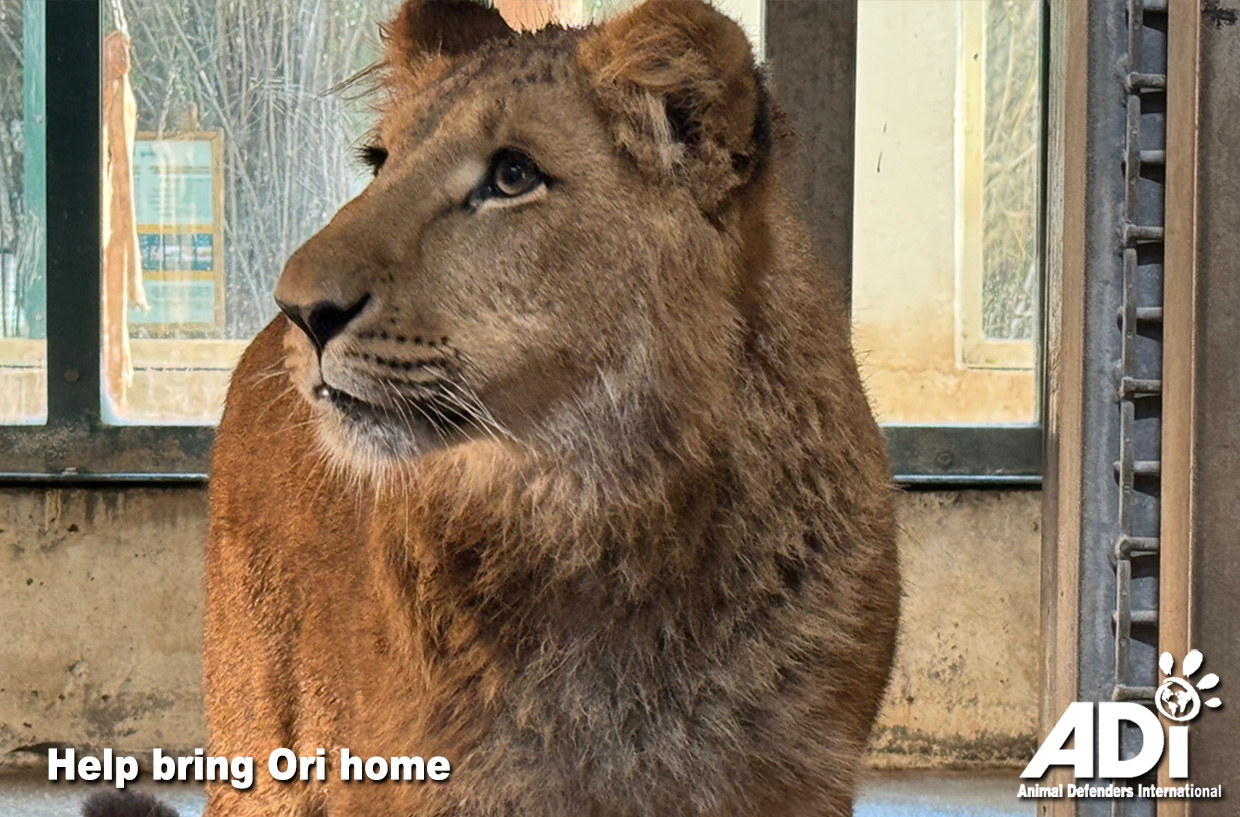
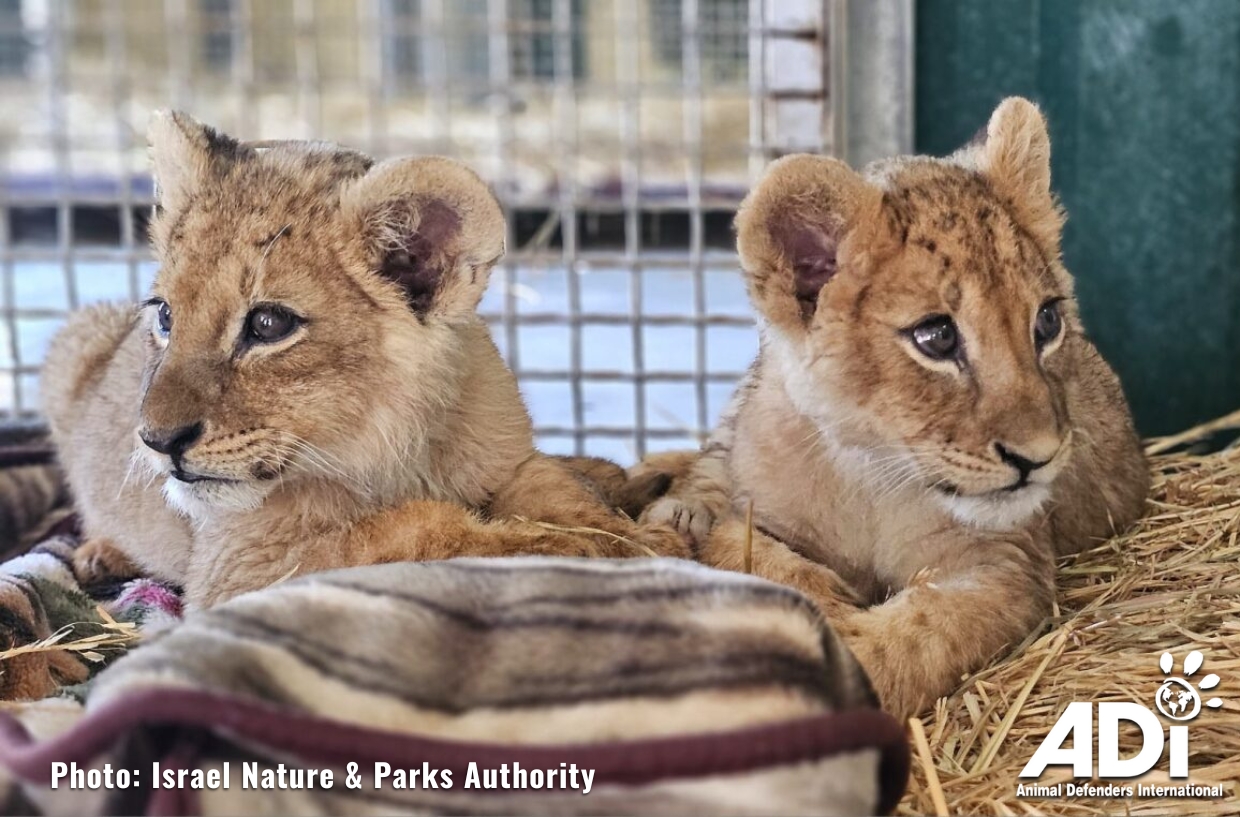
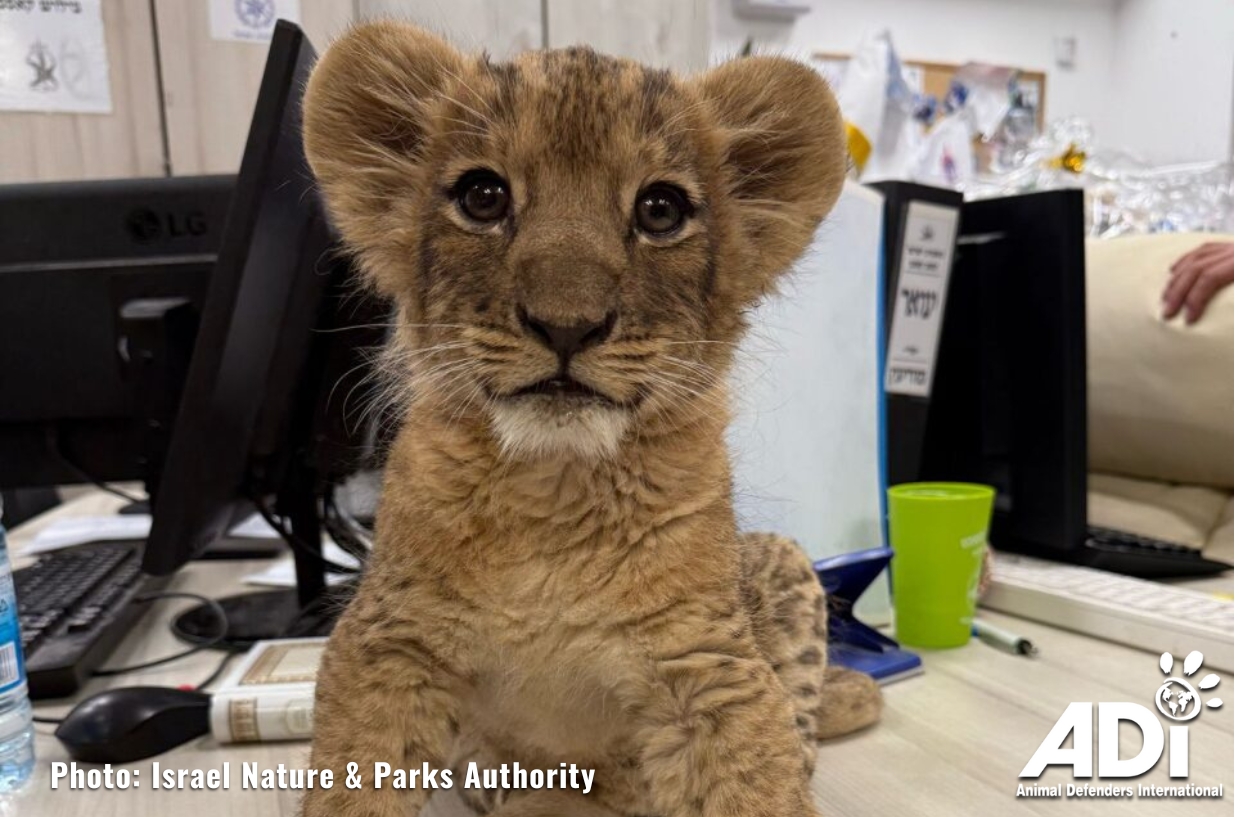
Little Ori looks adorable in the picture above, except it’s not a cute image, it’s tragic.
At this age, young Ori should still have been nursing with his mother, but instead, he was torn from her to become a product for sale in the illegal wildlife trade. He was passed from person to person, forced to be cuddled and posed with, as his owners enjoyed the status of owning a #TrophyPet lion. Deprived of everything he needed, forced into dependency on humans. But the day this picture was taken, Ori’s luck changed.
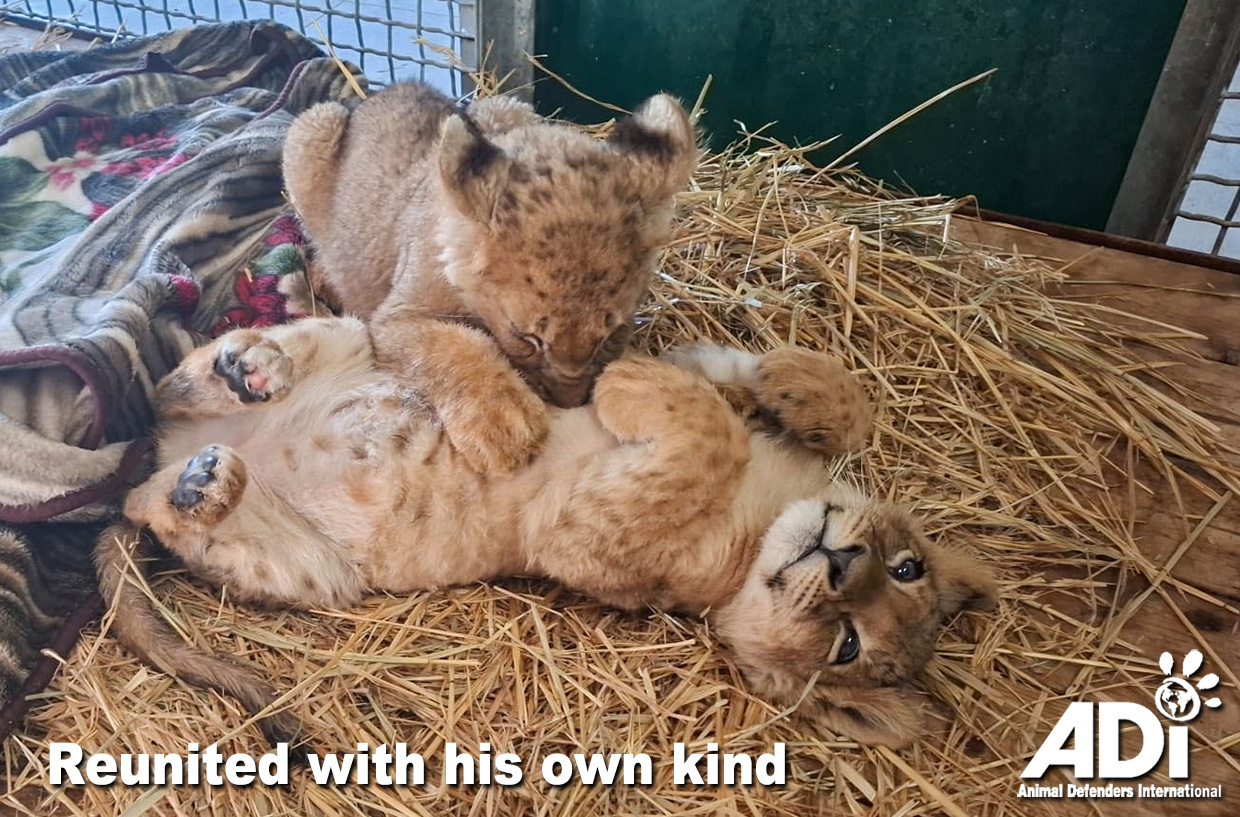
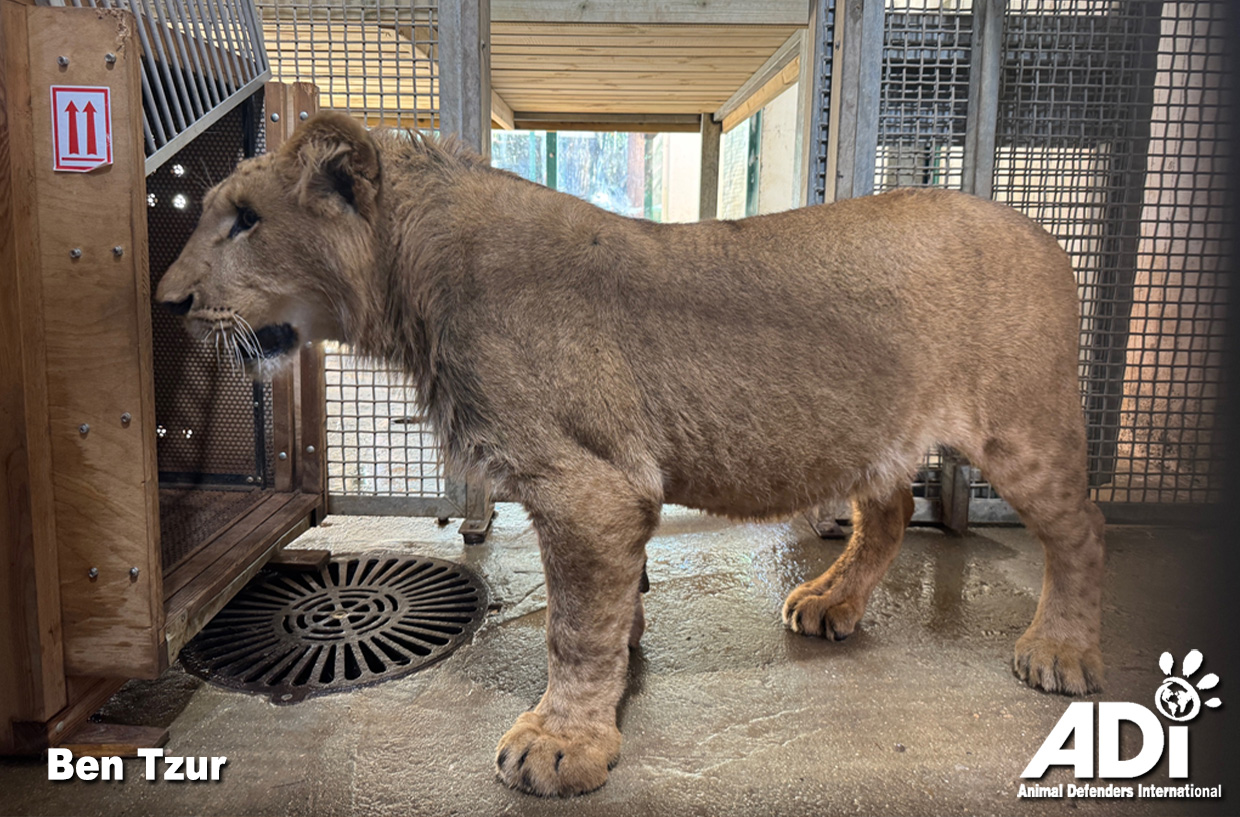
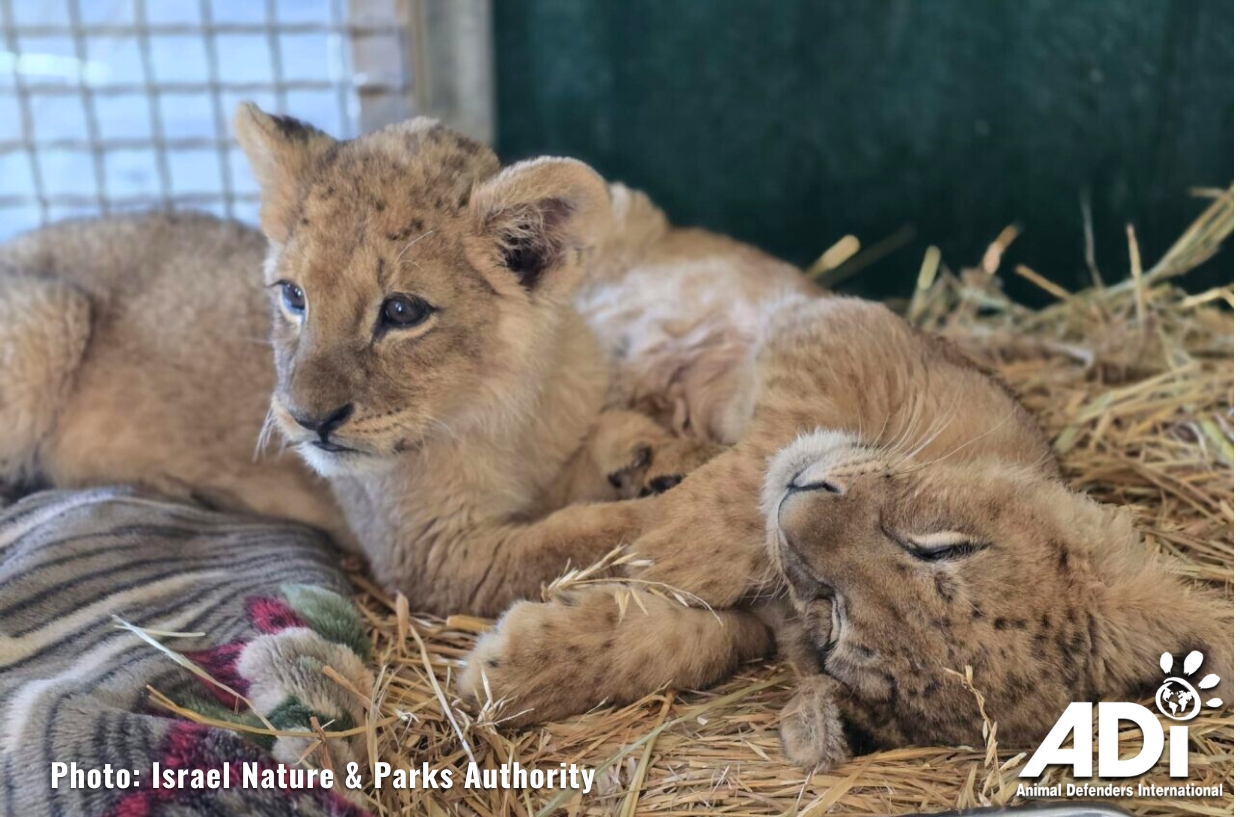
Ori was confiscated from a house by Israel’s Nature & Parks Authority (NPA) in a crackdown on illegally trafficked animals. He had been stolen from his mother so young that he was desperate for human attention, but Ori had another lucky break. Less than a week earlier, NPA had seized another cub, Ben-Tzur, after he was found tied to a tree. There is every chance the pair are brothers; certainly, they have become loving brothers. Ben-Tzur has helped Ori regain his confidence, reassuring him when he is nervous, and helping him become a lion again. Being with Ori has also helped Ben-Tzur’s confidence.
Now, the boys are on the brink of another giant step: A new life at the ADI Wildlife Sanctuary in South Africa.
We have been working since January to bring the boys home and are one permit away from confirming their flight. They needed to get out fast as they are outgrowing their temporary space – ADI took the financial risk and said yes.
With your help, Ori and Ben-Tzur have almost their entire lives ahead of them, not tied to a tree, not living in a basement being passed from person to person but roaming acres of space in the land of their ancestors.
We must fight back against the traffickers, we must enforce laws, and help officials seize animals – sometimes the window of opportunity is tiny. Please help ADI help enforce laws, bring Ori and Ben-Tzur home, and care for them for life.
Wishing all our supporters a very happy Valentine’s Day tomorrow, and with a huge THANK YOU for all the love and support you send to our precious rescued animals.
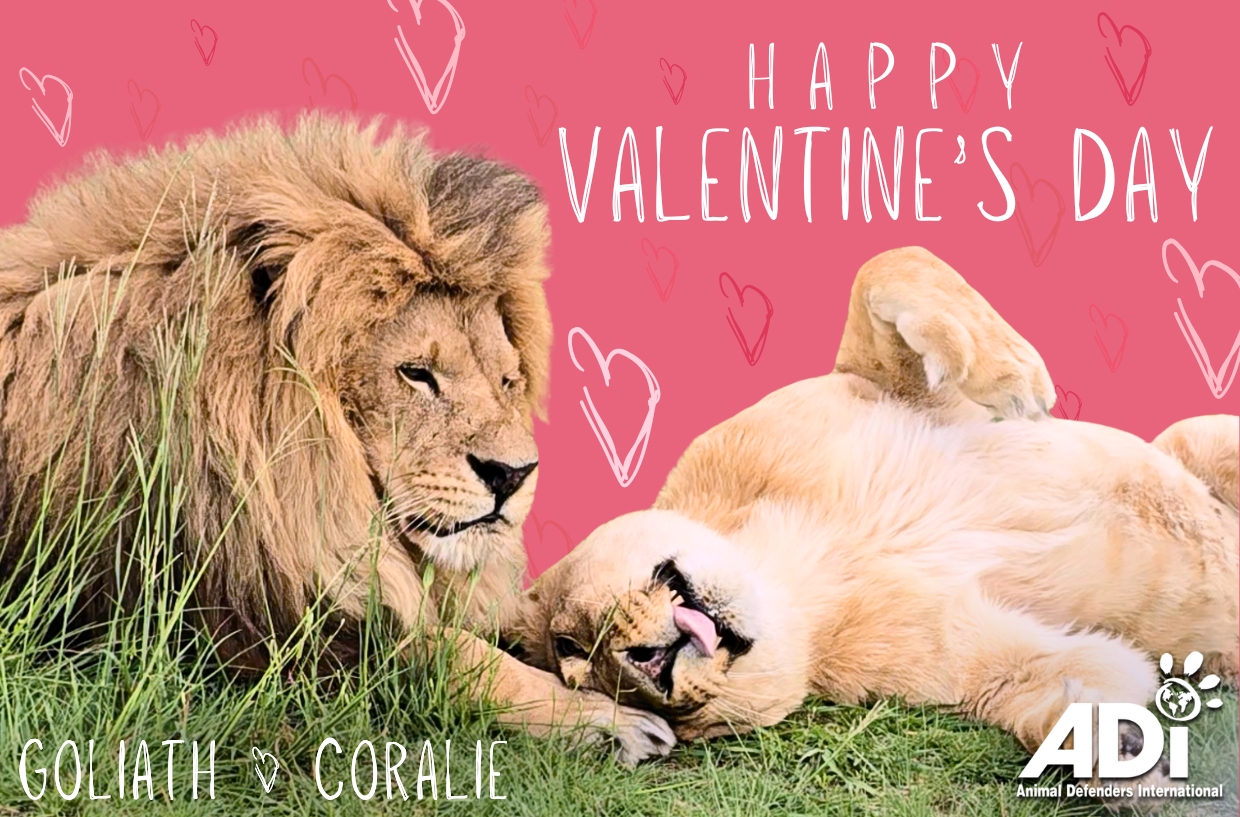
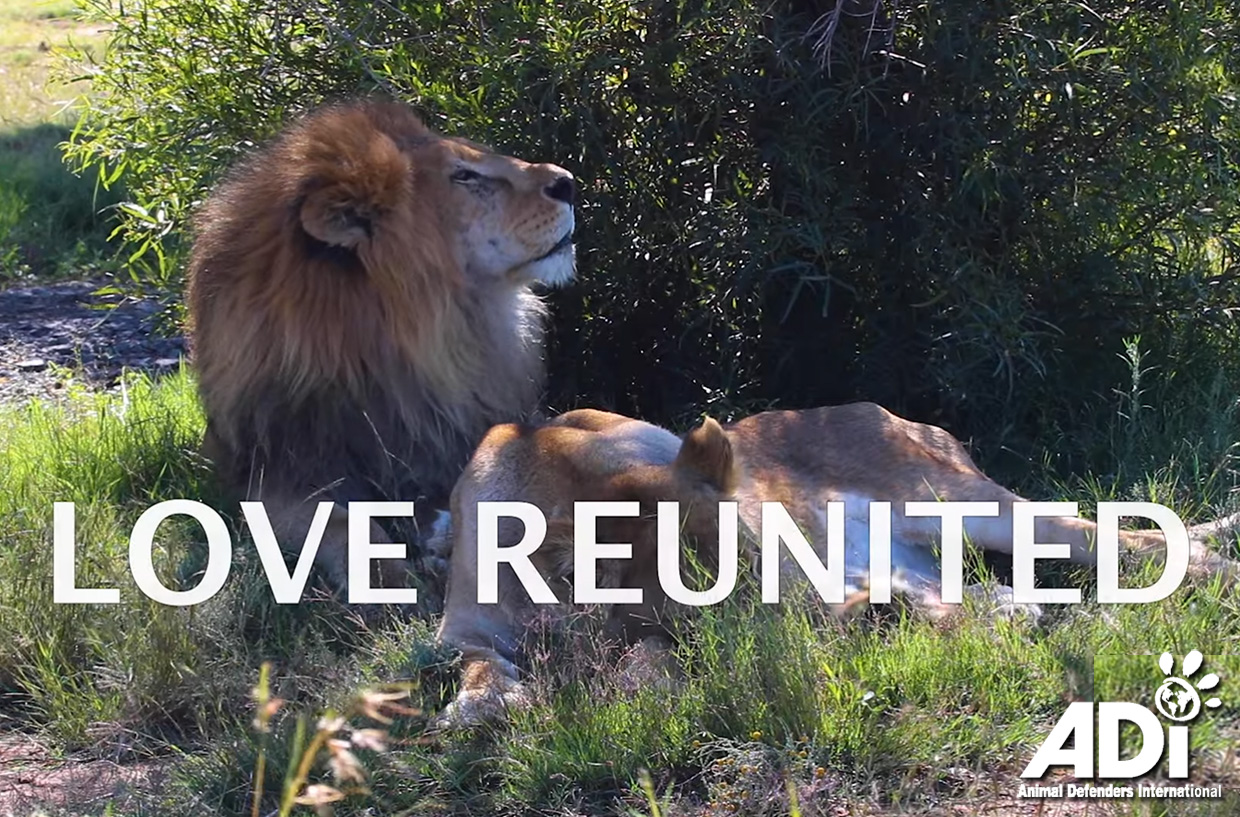
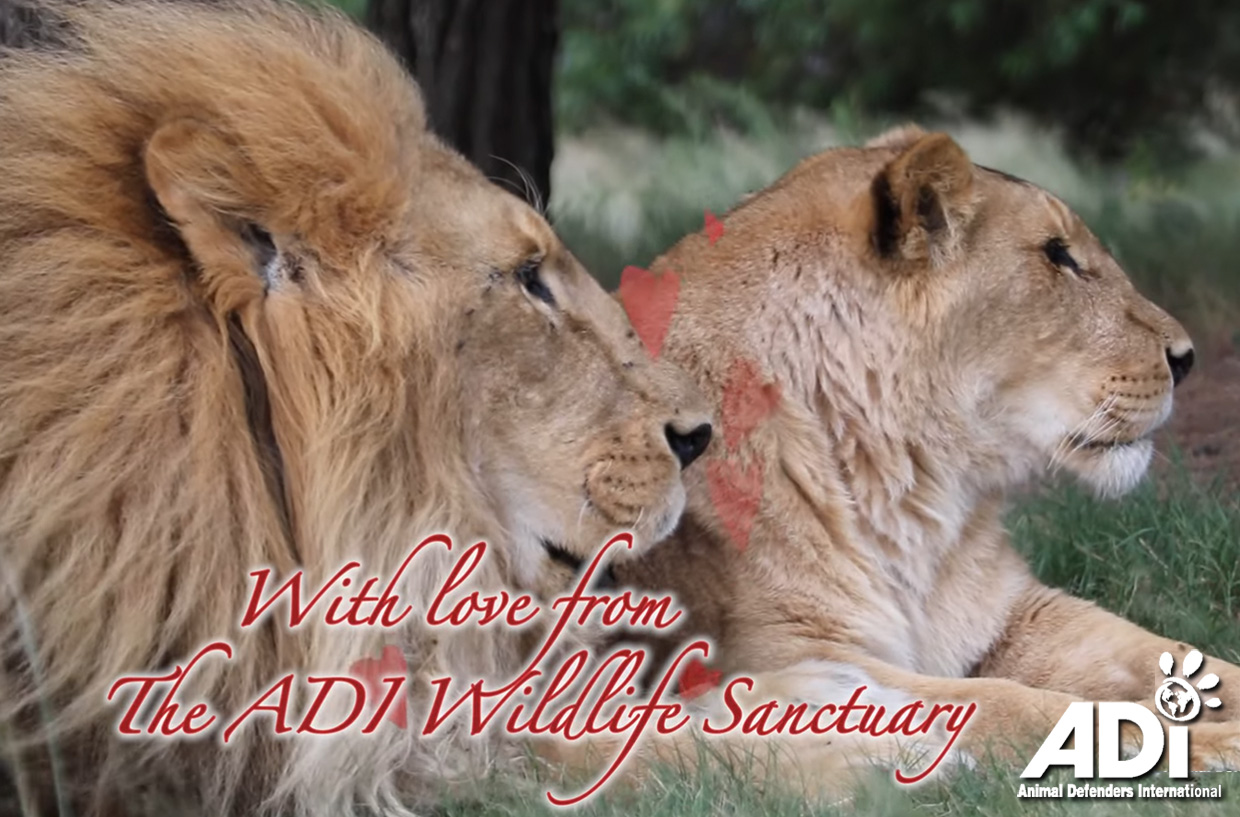
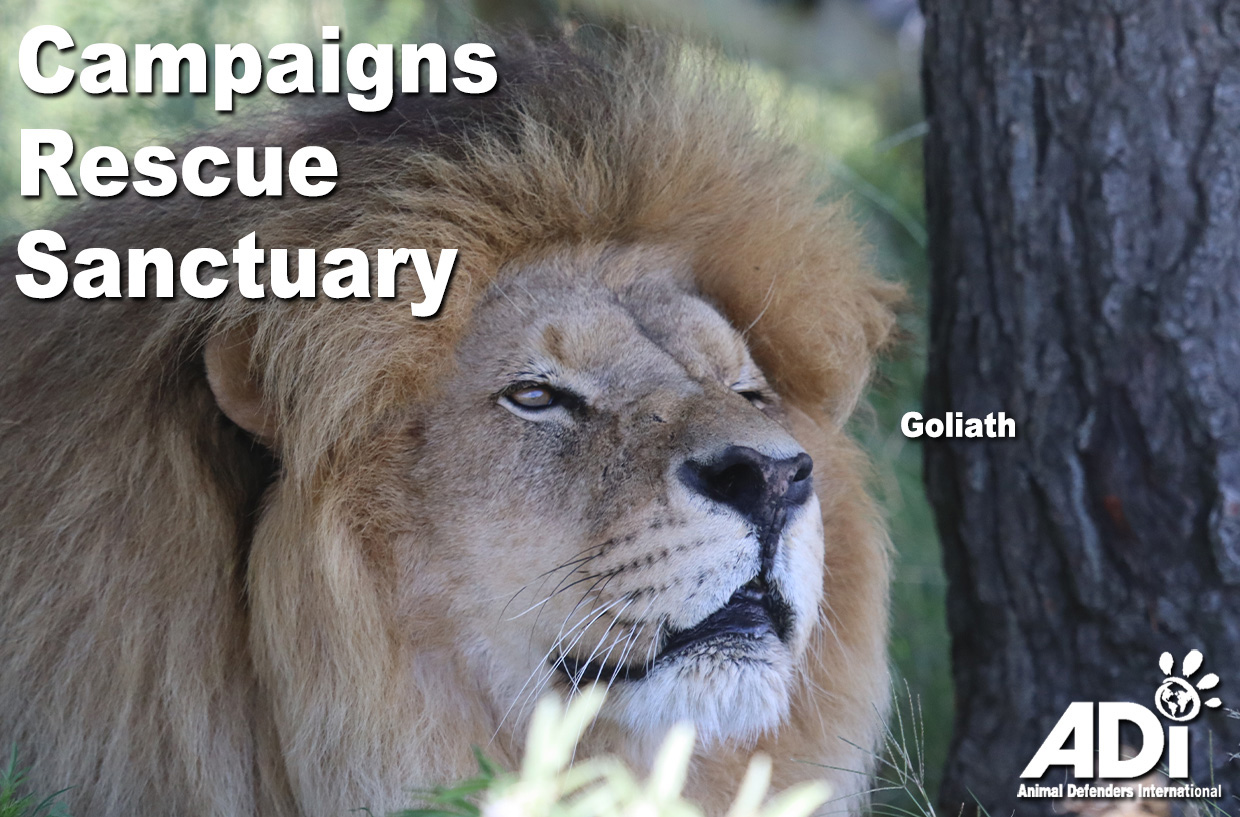
Our two lovebirds on this year’s card, Goliath and Coralie, were rescued from a circus in France, and will be soaking up the sun and roaring sweet nothings to each other in their forever home in Africa – Goliath and Coralie’s first Valentine’s Day at the ADI Wildlife Sanctuary.
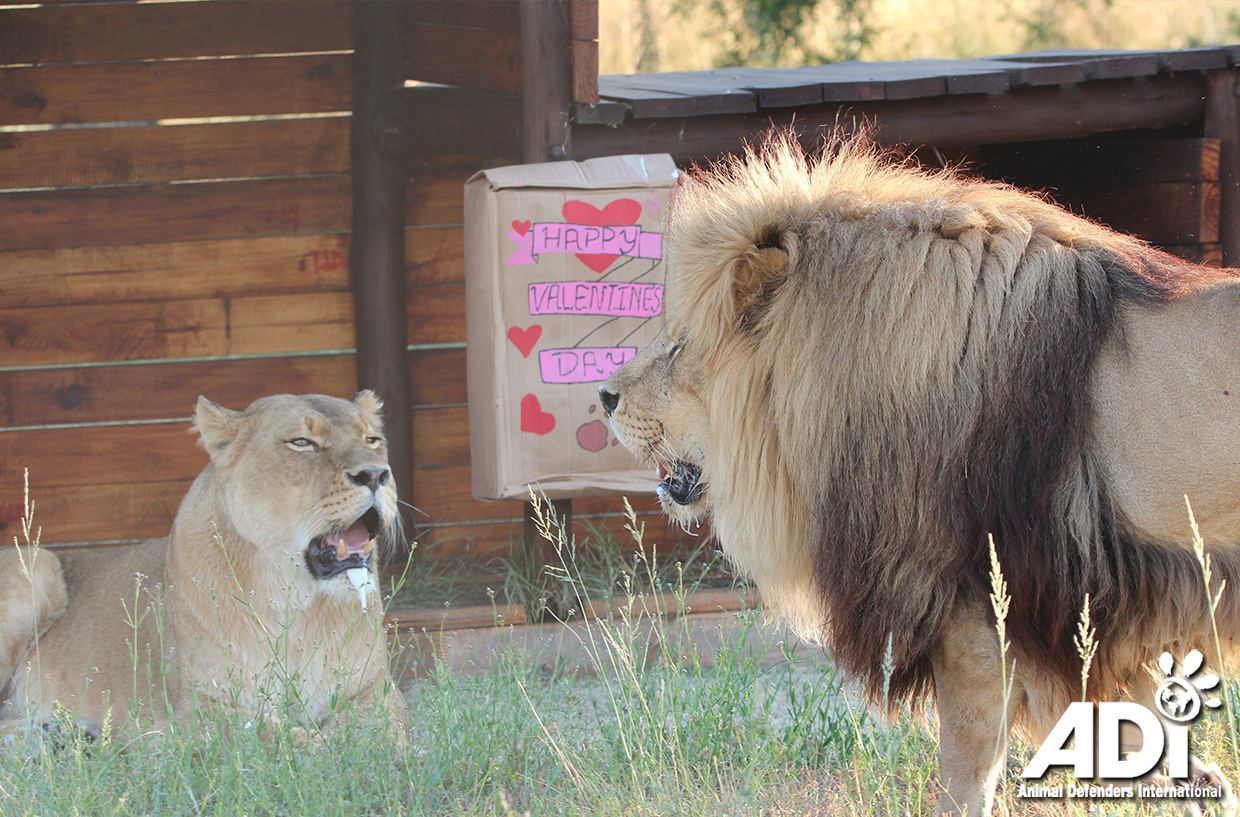
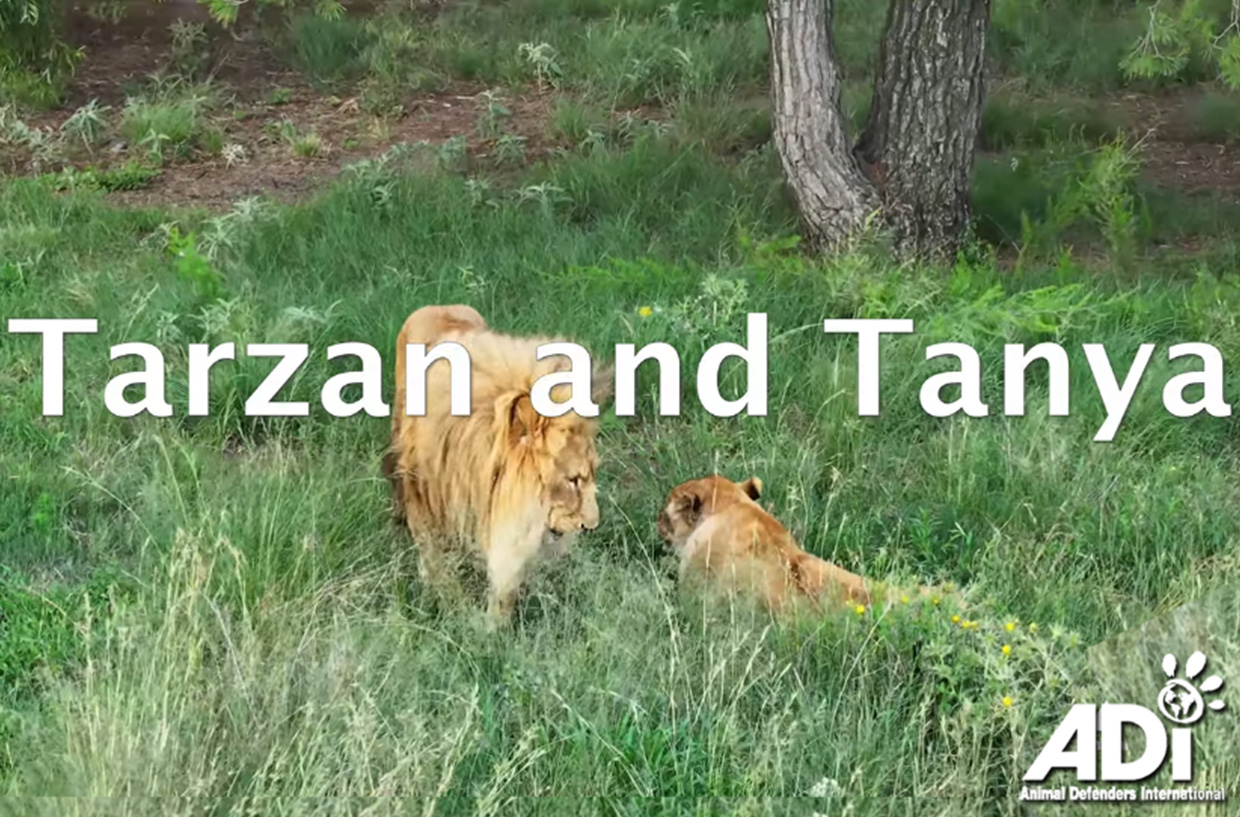
As always, this is the time of year when all of our residents get boxes of hay with catnip and other scents, painted with special messages of love. This picture shows Goliath and Coralie only have eyes for each other rather than their Valentine’s gift (above)! They remind us of our much loved, and missed, Tarzan and Tanya, who would often step over the gifts or treats and wander off together! Be sure to watch our special video of the lions and tigers getting treats here.
This Valentine’s Day, would you consider adopting Goliath and Coralie, as they embark on many years of Valentine’s celebrations at ADIWS? And we also do gift adoptions! See our US store | UK store.
Finally, please don’t forget two cubs seized from the illegal pet trade by authorities in Israel – Ben-Tzur and Ori need you TODAY! We are working as fast as we can to get them to safety at the ADIWS. Please give Ben-Tzur and Ori a big hearted Valentine’s Day welcome to the ADI family, let them know they are heading for their forever home where they will be loved, and safe, under your protection. Donate US $, CA $ | Donate £, Euros, Rand
Finally, just in case you have had enough of the ‘RomComs’ which will be screening all this weekend, I have picked a few of my favourite real life animal rescue stories – check them out below.
CHECK OUT HERE THESE REAL-LIFE LOVE STORIES MADE POSSIBLE BY ADI SUPPORTERS
The inspirational story of how the love and loyalty of lions Tarzan and Tanya carried them through the hell of a circus in Guatemala to a new life in South Africa.
Lions Leo and Muñeca, saved in two dramatic rescues in Peru, reunited to their forever home in Africa.
Doting couple Sasha and Kumal, how they were rescued from a circus in Guatemala and how they loved to play!
Last year’s Valentine’s Day celebration at the ADI Wildlife Sanctuary, with glorious memories of Tarzan and Tanya.
Our French Lovers: Goliath and Coralie had endured a decade in a tiny circus cage in France before flying to the ADI Wildlife Sanctuary, South Africa last year. This video captures the moment they left quarantine and explored their forever home.
Beautiful memories of the life at ADIWS enjoyed by Tarzan and Tanya – a precious gift from ADI supporters.
Yesterday, Tim and I returned from a whistle-stop 36 hours in Israel, preparing for the relocation of lions Ori and Ben Tzur to the ADI Wildlife Sanctuary. The lions were tiny cubs when they were rescued by Israel’s Nature & Parks Authority (NPA) in a crackdown on illegally trafficked ‘trophy pets’ that also saw a staggering sixty grivet monkeys seized.
This rescue is another blow against wildlife trafficking and a chance to create awareness about wildlife pets.
We took over the rescue at very short notice after Panthera Africa Big Cat Sanctuary was burned in a wildfire, leaving nowhere for the boys – we also evacuated two of their lions Elsa and Lei-ah, while Panthera Africa is being rebuilt.
We still do not know how long the evacuated lions will be fed and cared for by ADI but anticipate it will be months or even a year away. So, with Ben Tzur and Ori coming to ADIWS as their first proper home for an indefinite period, we agreed it would therefore be in their best welfare interests to remain at ADIWS for life, rather than settle in, build trust with their carers, only to be uprooted for a 15+ hour journey to another location at some point. The South African CITES authority, who we must commend for the speed they have worked on this, also required that the import be to their permanent home.
A big project to take on, and one that will impact our other work. However, your support shows it has been the right choice. Hence, we were off to Israel for 36 hours this week.
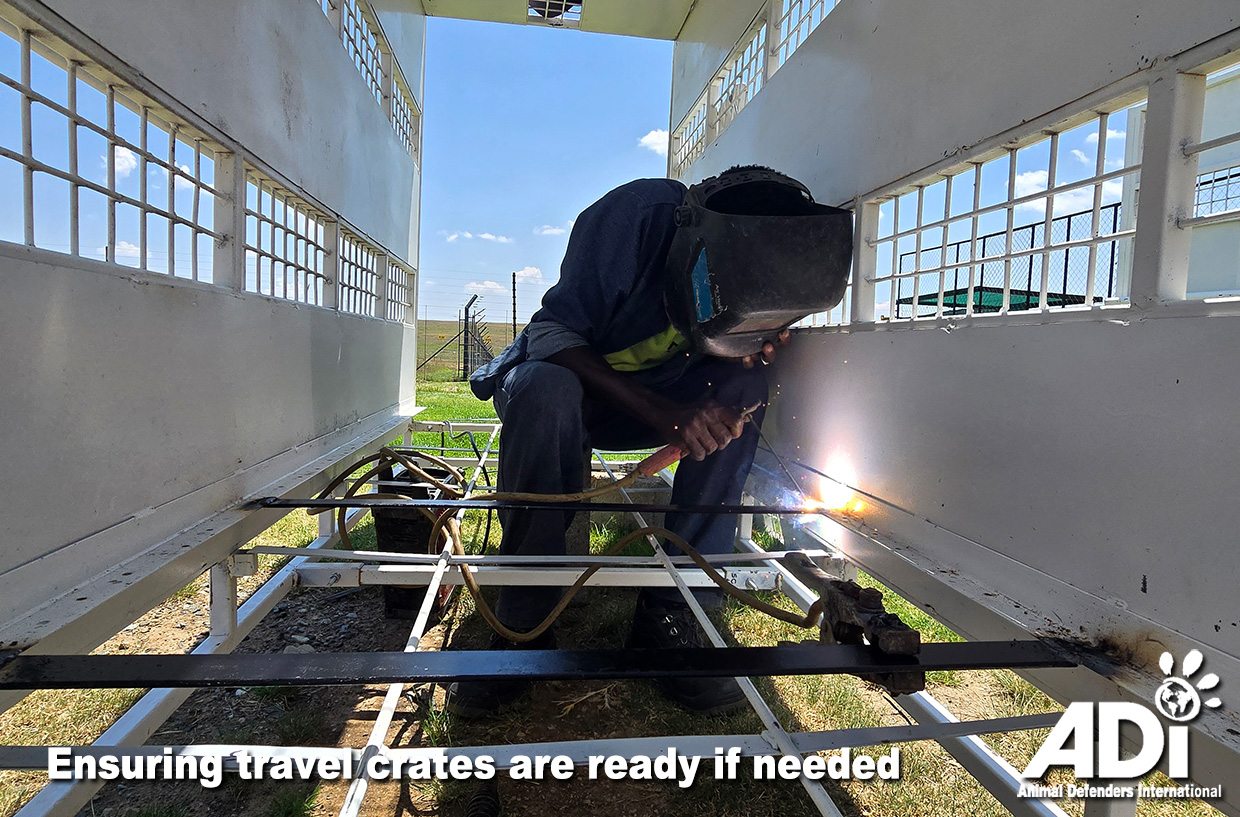
We have been working intensely since mid-January: hours securing permits, an inspection by the CITES authority and habitat modifications and preparing travel crates in case needed.
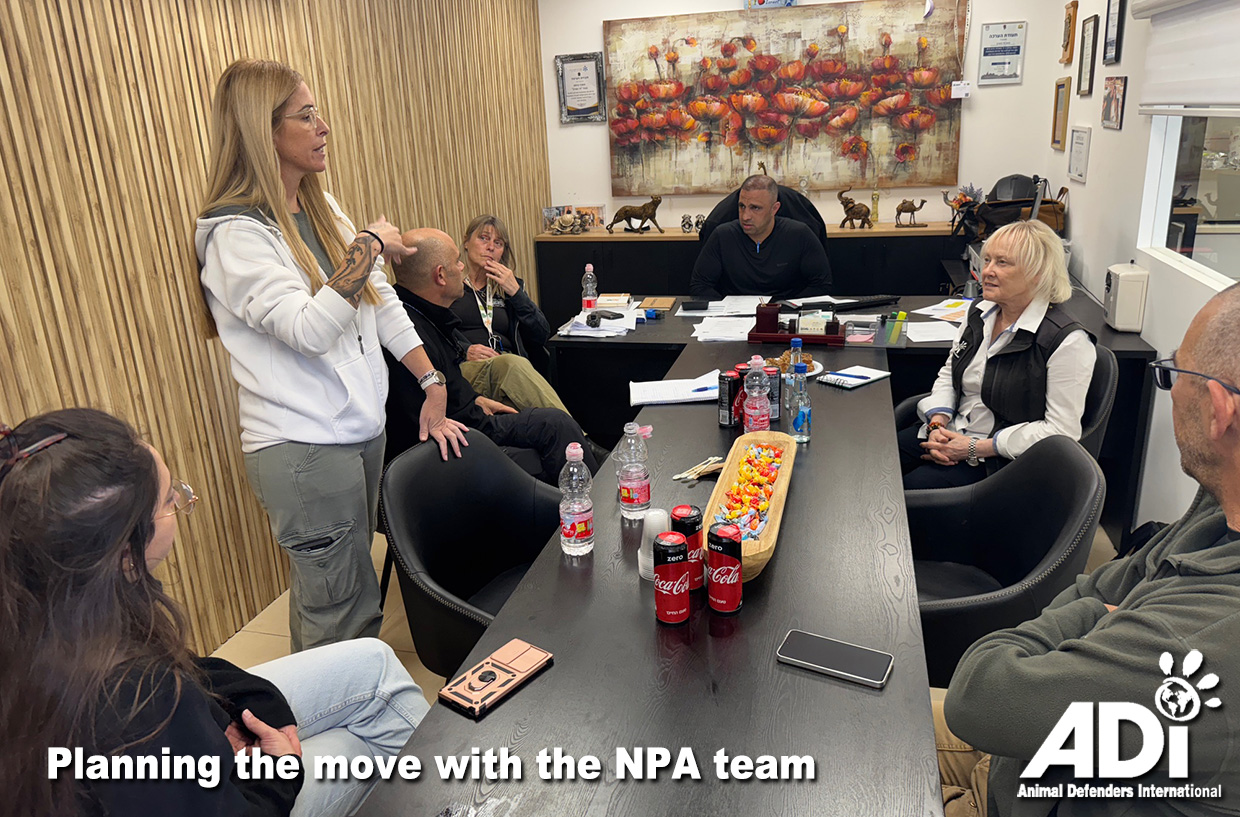
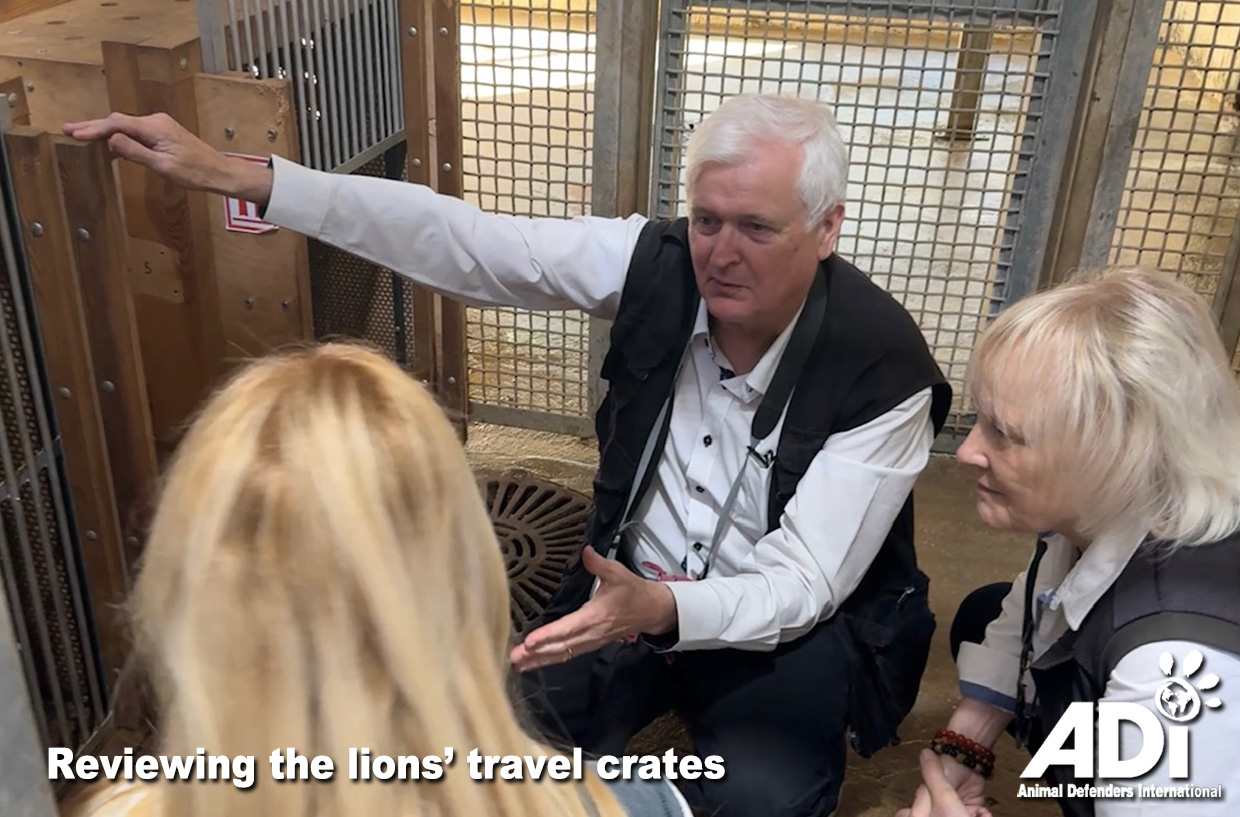
We had a very productive meeting with the NPA team, planning the relocation, learning about the characters of the lions, feeding routines and so on. It may not seem as exciting as the actual rescues and relocations, but meetings, planning and coordination are what ensure animals are moved safely. We also got to see a little of their work at a local nature reserve returning vultures and other animals to the wild.
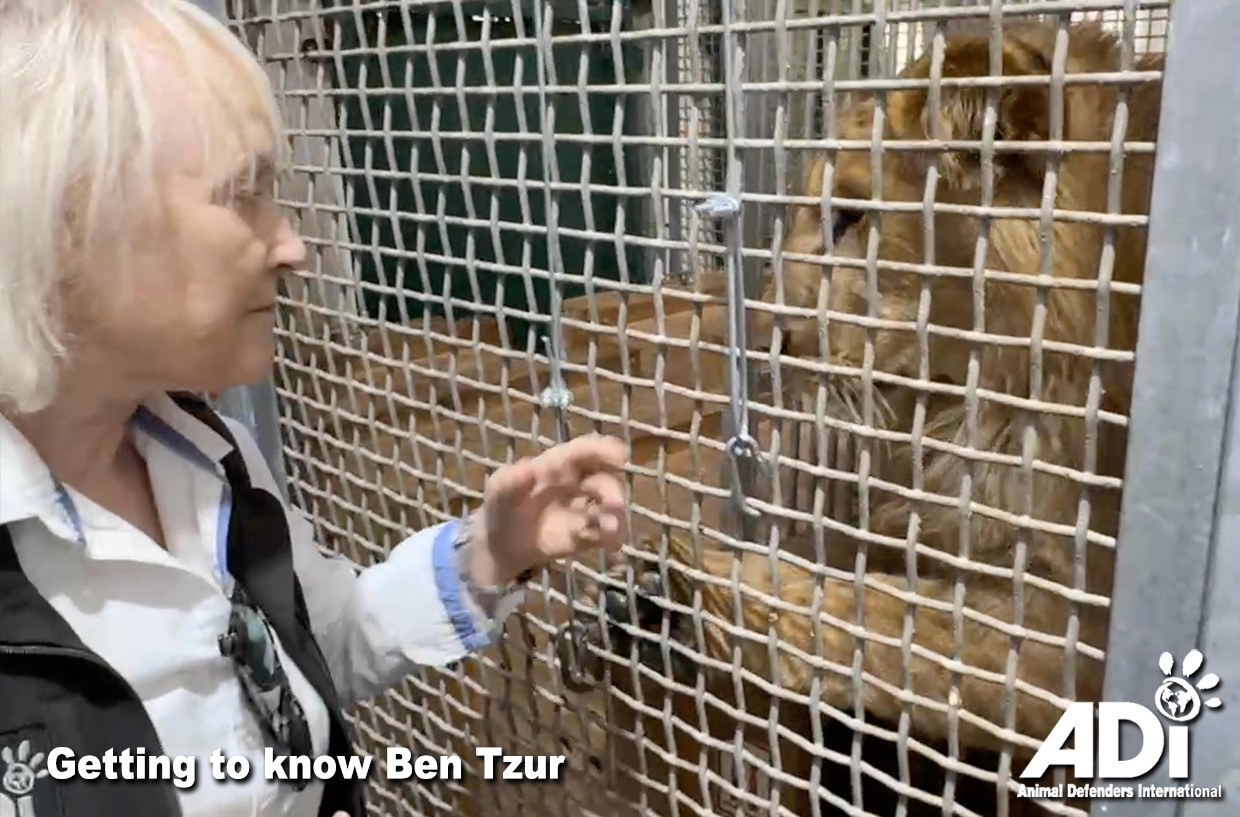
Seeing Ori and Ben Tzur made all of the hard work worthwhile. These two youngsters will be growing up in Africa! Ori is quite shy and Ben Tzur is extremely friendly, confident and looks after Ori. The NPA team said he had brought Ori out of himself.
Sadly, Ben Tzur has been made utterly dependent on humans and craves attention, wanting the social contact he would get from other lions. The traffickers drag the babies from their mothers when they should be suckling and receiving important nutrients and learning from their mothers. When you see people on social media pretending the animals adore them as they crave attention it is a lie. It is learned dependency born of being deprived of the relationships they really need.
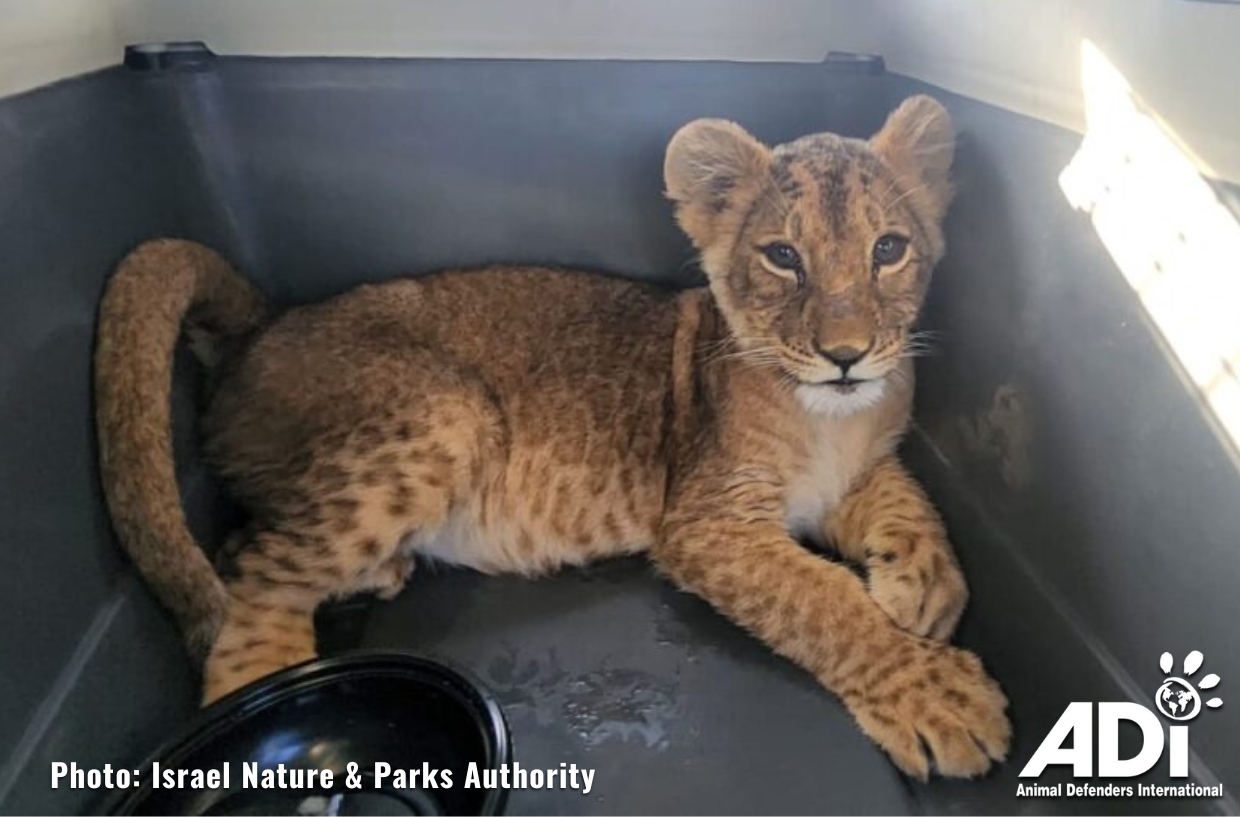
But there was a very important first impression seeing Ben Tzur and Ori – these are not tiny babies anymore! They are at least 10 months old, and huge.
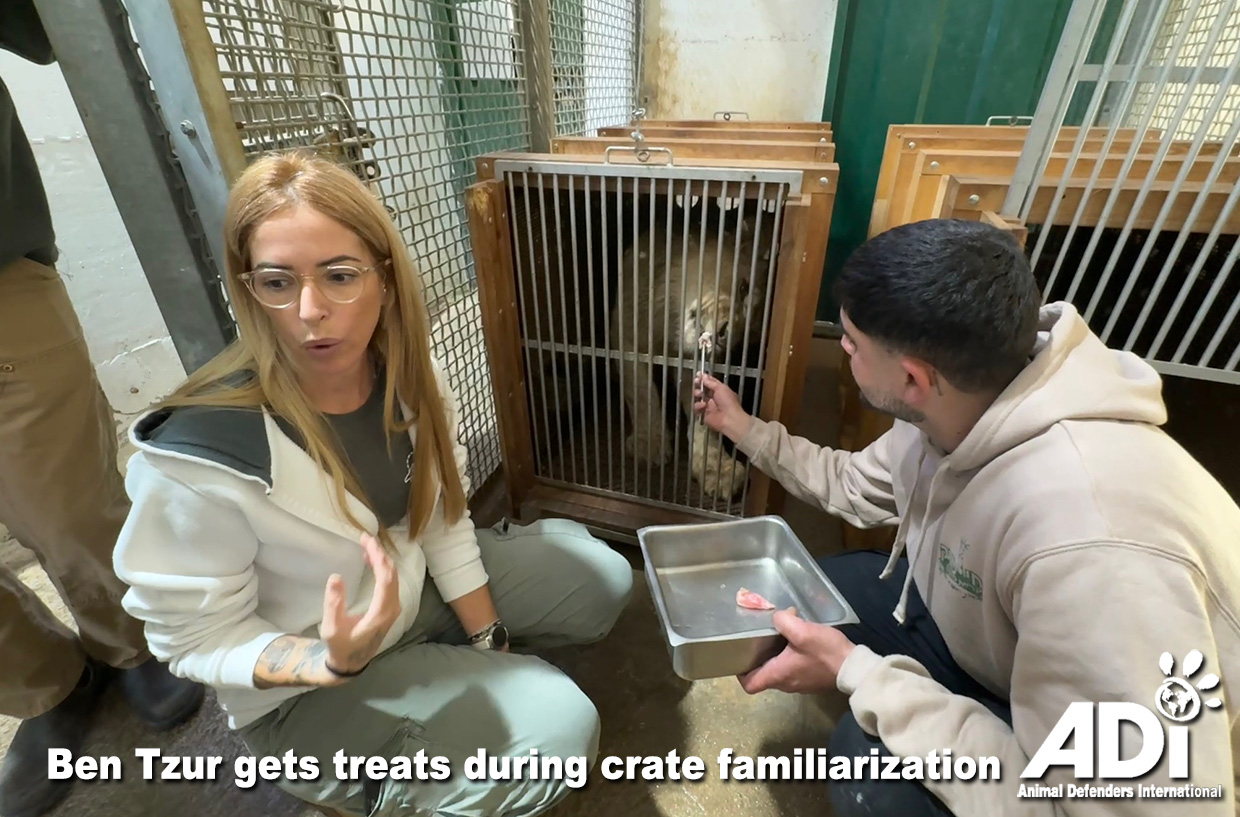
At the zoo they are being taught crate familiarisation. Each day they are fed in the travel crates, the doors are closed and they are given treats while inside – you will have seen us doing this as we prepare for a big lion or tiger move. This is the best way, as it enables loading without sedation and means the animals are calm and less stressed during journeys.
We reviewed the process but unfortunately it confirmed the cubs are now too big for these crates. We are looking to resolve this by sending our crates or with construction of new crates in Israel.
We hope this will be a minor setback and not add too much cost to the rescue. I still hope that the move will be before the end of February.
We really need your support for this additional rescue and have a very narrow timeframe to raise the funds needed, including what will be the biggest cost to ADI – feeding and caring for these boys for the next 20 years.
Tim and I are flying to Israel as ADI steps in to save two illegally trafficked lion cubs after their hopes of a new life seemed to have been shattered.
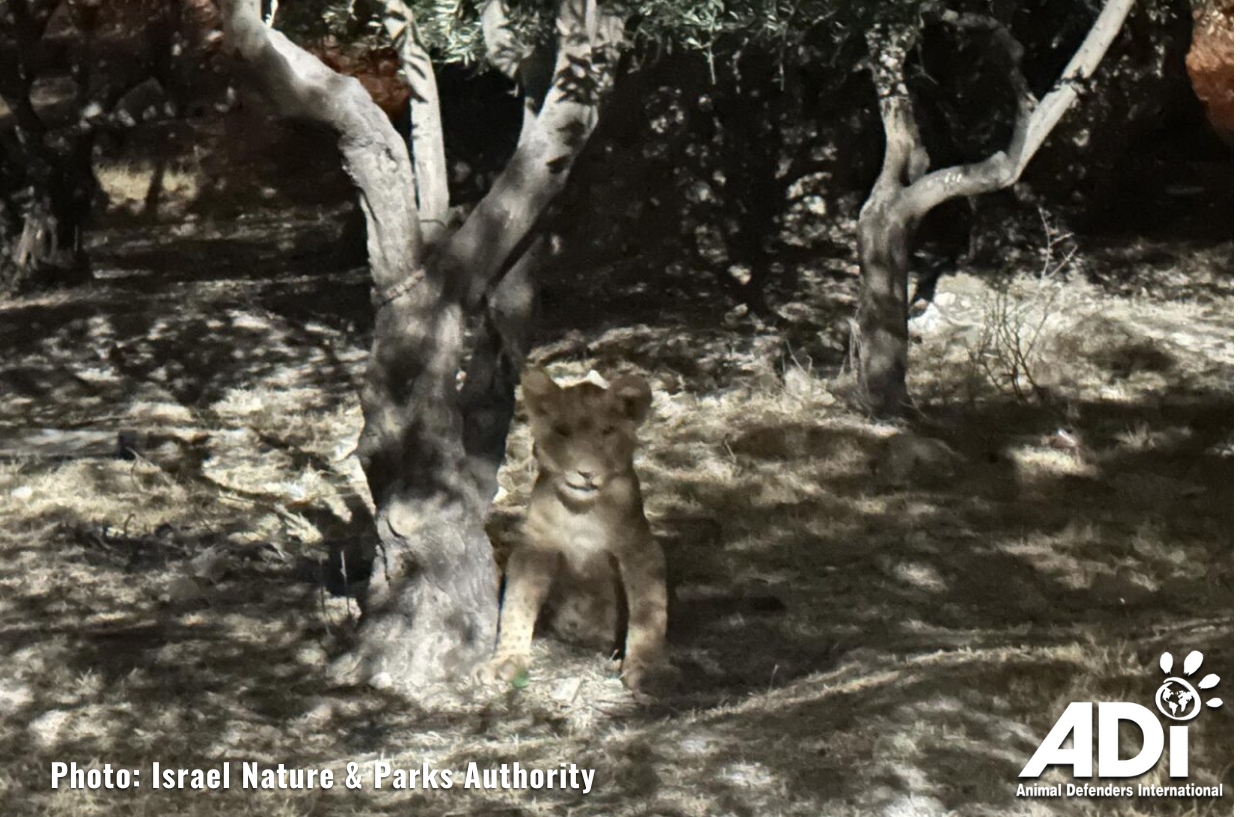
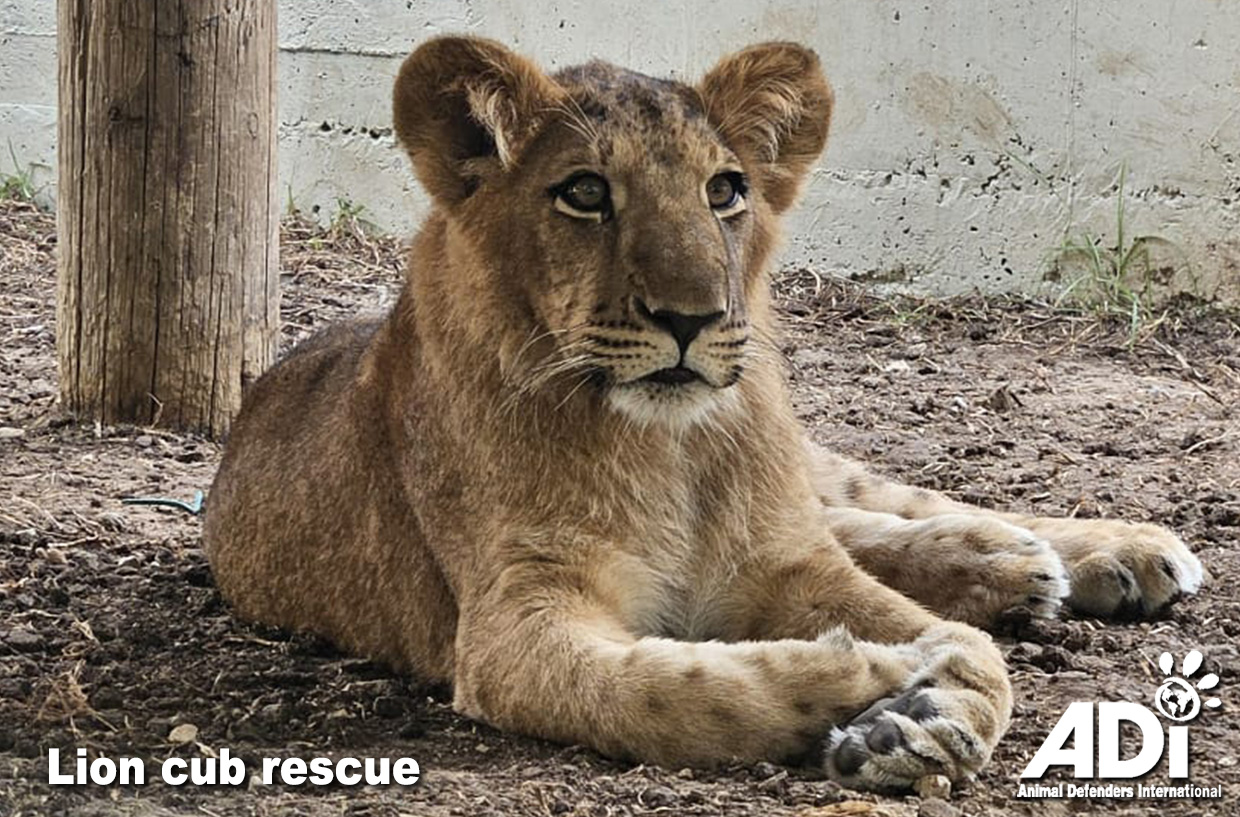
The cubs had the worst possible start in life – sold by a wildlife trafficker as illegal pets, Ben-Tzur was tied to a tree (see picture below) in a yard and Ori confined in miserable conditions inside a house. Thankfully, still tiny babies, they were seized by Israel’s police and Nature & Parks Authority (NPA), during a crackdown on wildlife trafficking.
They were seized in March 2025 and after waiting for almost a year to head to a new life, the boys were destined to fly in late January to Panthera Africa Big Cat Sanctuary in Western Cape, South Africa when it was suddenly devastated by a wildfire.
Sanctuaries across South Africa scrambled to take in evacuated animals with an ADI Wildlife Sanctuary team flying down to bring white lionesses, Elsa and Lei-ah to safety, the drive back taking over 15 hours. They will be our VIP guests until Panthera Africa can be rebuilt.
But what would happen to Ben-Tzur and Ori with their new home in ashes?
We have stepped in to help, and for the past weeks I have been working with our lawyers to quickly secure new permits to bring the cubs to ADIWS. With a huge rebuilding operation needed and unknown timeline for Panthera Africa, we both agreed it was in the best interests of the cubs for ADIWS to provide them with their forever home.
Things have been moving fast, and we are grateful to the CITES authorities in Israel for expediting the export permits, and to South Africa CITES for quickly inspecting the proposed home and for the super-fast import permits. We have prepared travel crates at ADIWS in case these need to be shipped to Israel.
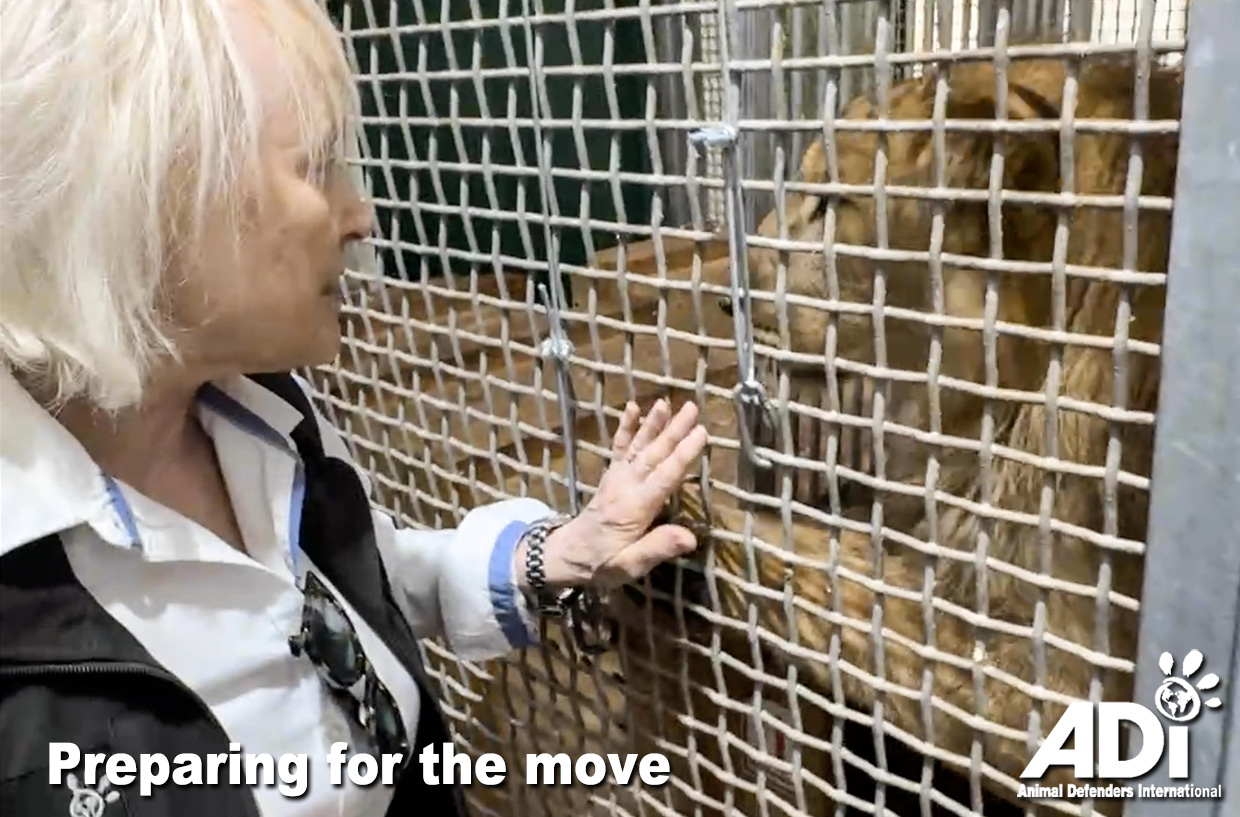
Tim and I are flying to Israel to meet Ori and Ben-Tzur, the NPA team who rescued the animals, and the zoo officials where they currently reside. We will review the options for travel crates, plan the route, and co-ordinate the logistics for the move. As we await potential flights and veterinary import permits, we are doing everything we can to move the boys to ADIWS this month.
This is a big rescue to undertake with short notice, and the youngsters will hopefully have more than 20 years ahead of them in our care. There will be transport costs, initial veterinary costs, the cost of a 2.5-acre habitat, food, care, and the veterinary costs for two decades – we really need your help to raise at least $75,000/ £55,000, if we are not to jeopardize our plans to help other animals.
I had to make a quick decision for these young lions whose dreams had just gone up in smoke, so I hope you will help us as you have done before.
It has been a busy start to 2026 with the emergency relocation to ADIWS of two white lions from a South African sanctuary hit by a wildfire, ex-circus lions Coralie and Goliath moved into their forever home, and major campaigns for animals in the UK, US, Peru and Colombia. Here’s a few of the highlights.
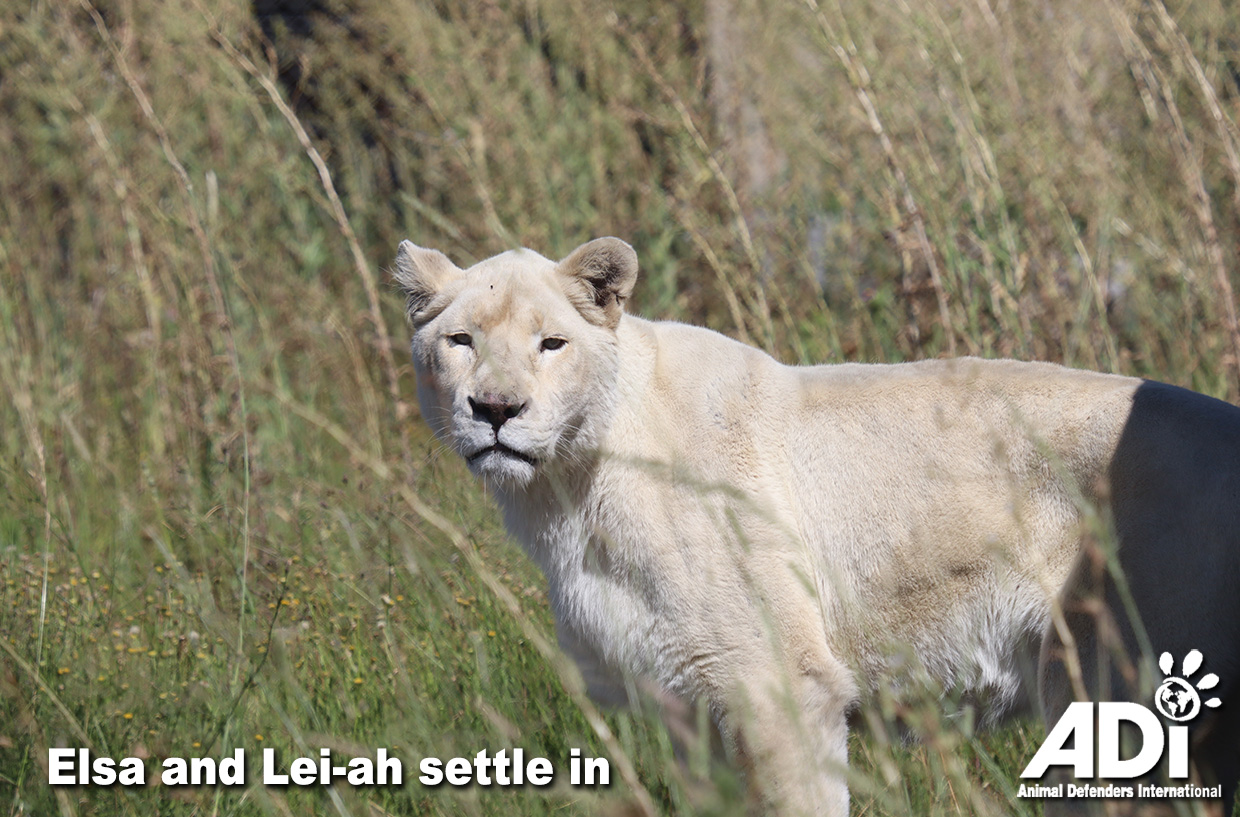
On 8th January, a devastating wildfire ripped through Panthera Africa Big Cat Sanctuary in South Africa’s Western Cape. True sanctuaries across South Africa scrambled to take in the animals and ADI flew a team to assist. Two white lions Elsa and Lei-ah were evacuated on a 15+ hour journey to the ADI Wildlife Sanctuary (ADIWS). After arriving shaken from the trauma of the fire, the lions have since settled in and are now very relaxed. Last week it was time for the girls to explore their main habitat, and we were delighted to be joined by founder Lizaene and Taryn, one of the carers, from Panthera Africa. The lions have a house, feeding camp and a 2.5 acre habitat and will be guests at ADIWS for as long as it takes for Panthera to rebuild. We had to act fast to evacuate these animals, so are especially grateful to the wonderful ADI supporters who then stepped up to help cover the costs of these two unexpected VIP guests. We do not as yet have any estimates on how long the lions will be with us.
ADI has also been working intensely to take over the relocation of two lion cubs from Israel, who had been destined for Panthera Africa until the devastating fire happened. This is another huge addition to our plans, and we will need to start raising funds quickly. This is moving very quickly and we will be providing a full update in the coming days.
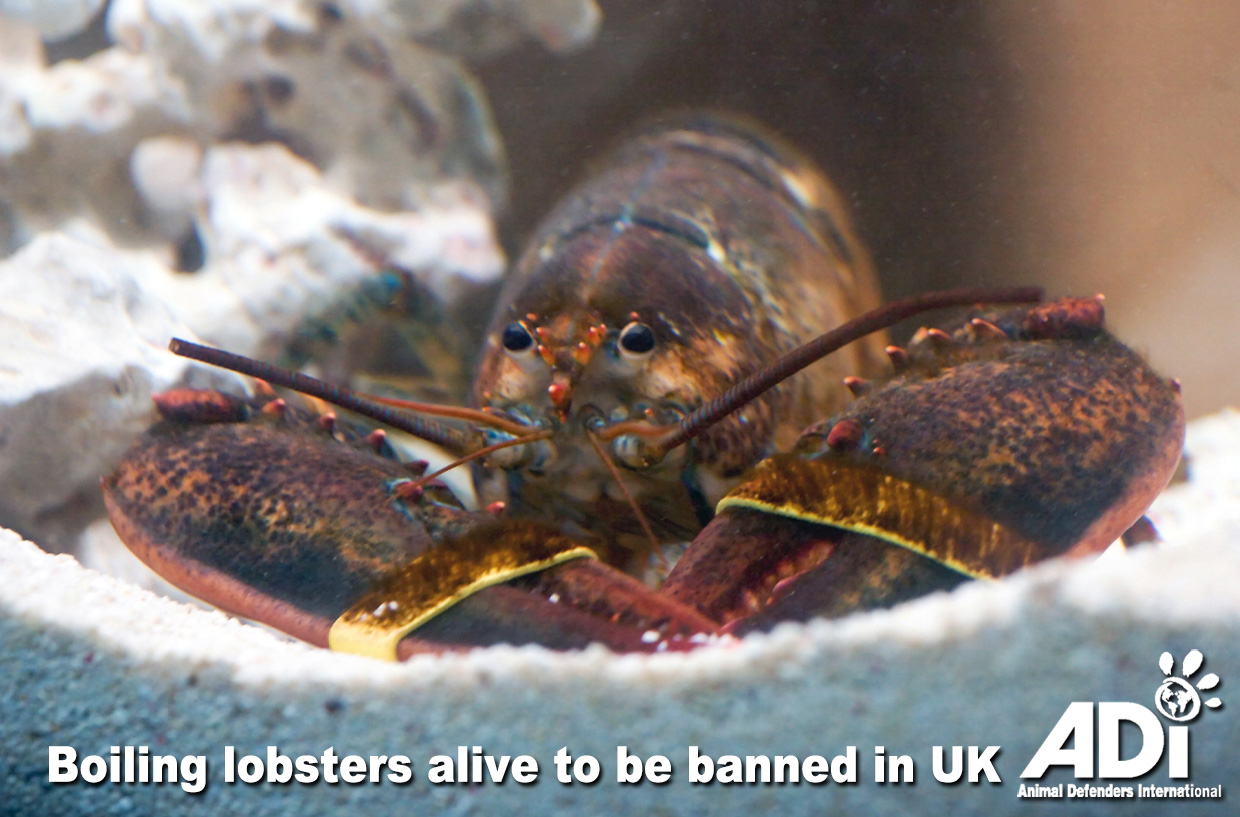
UK Government’s animal welfare strategy sets targets which aims to ban trail hunting in England and Wales, phase out colony cages for laying hens, ban CO2 stunning in pigs, ban snares, ban the boiling alive of crustaceans like lobsters and crabs, and more by 2030. The decision on lobsters is based on scientific evidence confirming that such animals are sentient and feel pain. Switzerland, Norway, and New Zealand have already introduced similar bans.
It is important for supporters in the UK to write to their MPs saying that you support the proposals and urge that they be moved forwards as quickly as possible to ensure that some of the target must be hit before the next general election. We anticipate consultations on these issues and it will be vital for supporters to participate and speak up for the animals – watch out for ADI updates. Find out more.
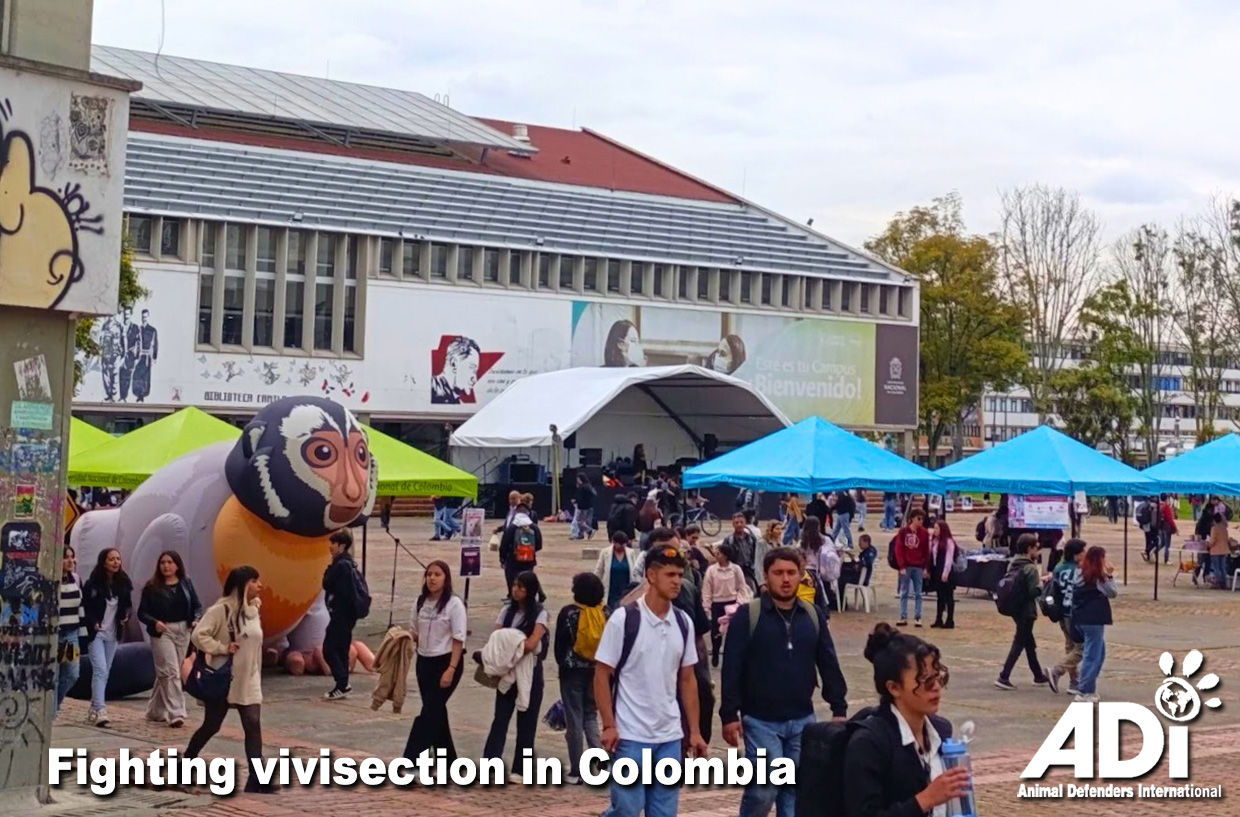
Our huge inflatable owl monkey Musmuqui continues to tour drawing attention to malaria experiments on small nocturnal monkeys. ADI undercover investigators exposed shocking scenes of trapping gangs catching monkeys in the forest and inside Colombia’s animal labs. The recent appearances of Musmuqui have included a three-day music festival and various schools in Colombia.
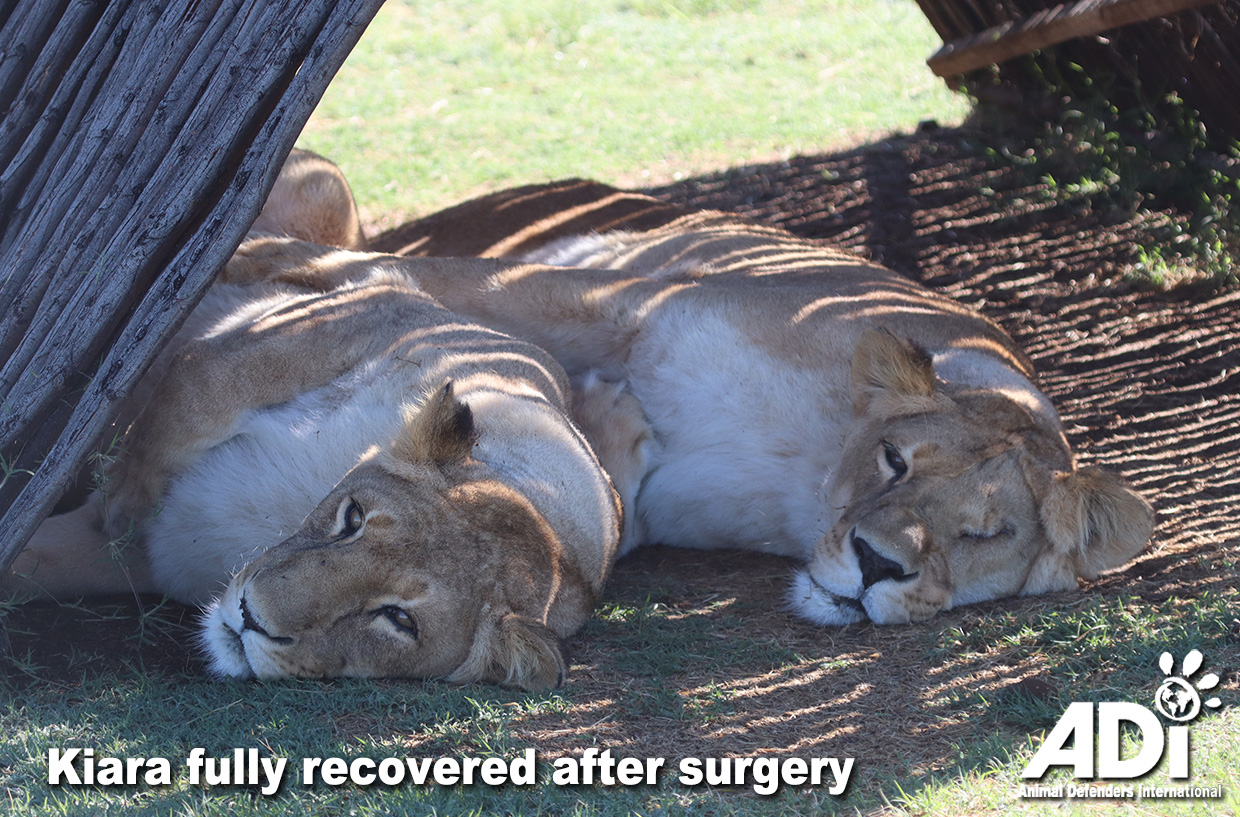
Kiara Piura (Kiara2) eye surgery: For a long time, we have been aware that at some stage the cataract in Kiara’s eye would become inflamed and require removal. Just before Christmas, there was rapid deterioration, and Dr Peter Caldwell and his team stepped in to perform the surgery and keep Kiara under observation during the holiday period. Brother Rolex and sister Africa were delighted to see her return to the Sanctuary for the new year. Kiara had already adapted to severely restricted vision in one eye, and has adapted following the surgery with ease, leaping onto her platforms or crates – she is pictured above this week enjoying a snooze with sister Africa.
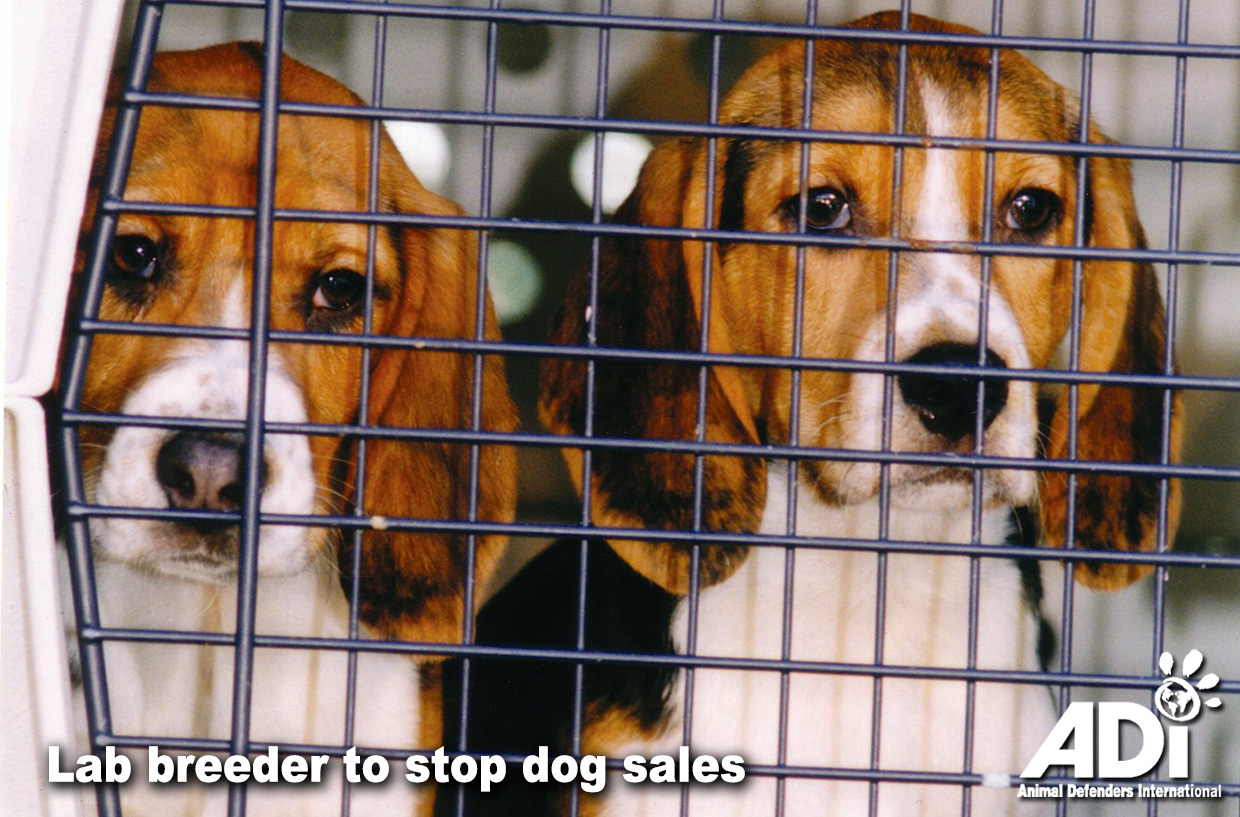
Beagle breeder Ridglan Farms will surrender its state license on July 1 this year, ending the sale of dogs to labs. The Dane County facility, long criticized for regulatory violations, will however, continue to breed dogs for its own research under USDA licensing.
The UK Parliament debates fireworks: This month MPs debated two petitions aimed at restricting the sale of fireworks to council approved events and reducing the noise limit from 120 to 90 decibels. The petitions, with almost 400,000 signatures combined, reflect the rising concern about the increasing domestic use of very loud, bright fireworks. The discussion covered terror induced in companion animals, livestock and wildlife, as well as human injuries, anti-social behaviour and effects on veterans. Not a single MP was against increasing restrictions but despite this, the debate concluded without any tangible timeline or plan of action from the Government.
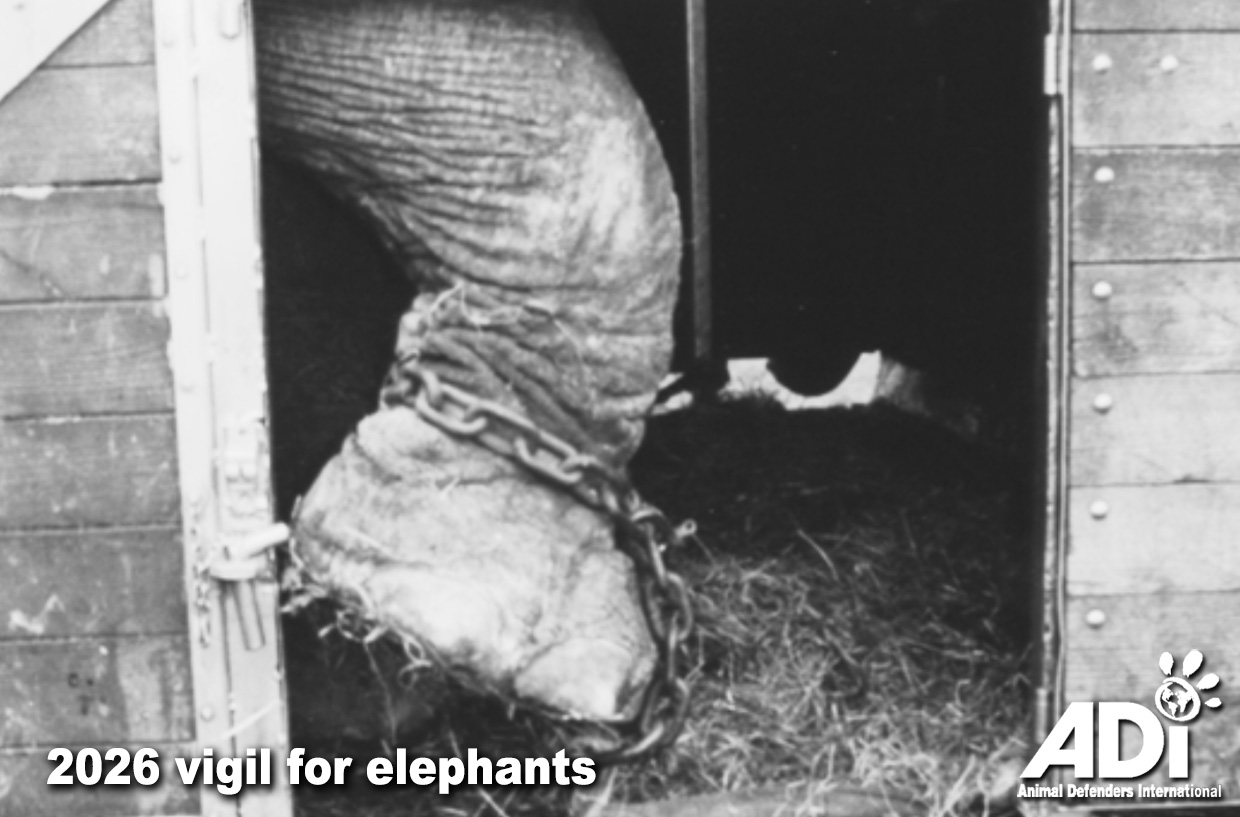
The International Candlelight Vigil for Elephants took place on January 10, backed by ADI and 30 other groups. Most of the elephants seen in zoos or circuses over the years have been born in the wild and spent decades in captivity. Candles were lit to remember these social, gentle, intelligent animals who lost their freedom to entertain people, and passed away in captivity last year.
In the US, please continue to speak up and fight for all those who are still confined and abused in the name of entertainment and contact your Congress membersin support of the reintroduction of TEAPSPA, to end elephant and other wild animal circus acts nationwide.
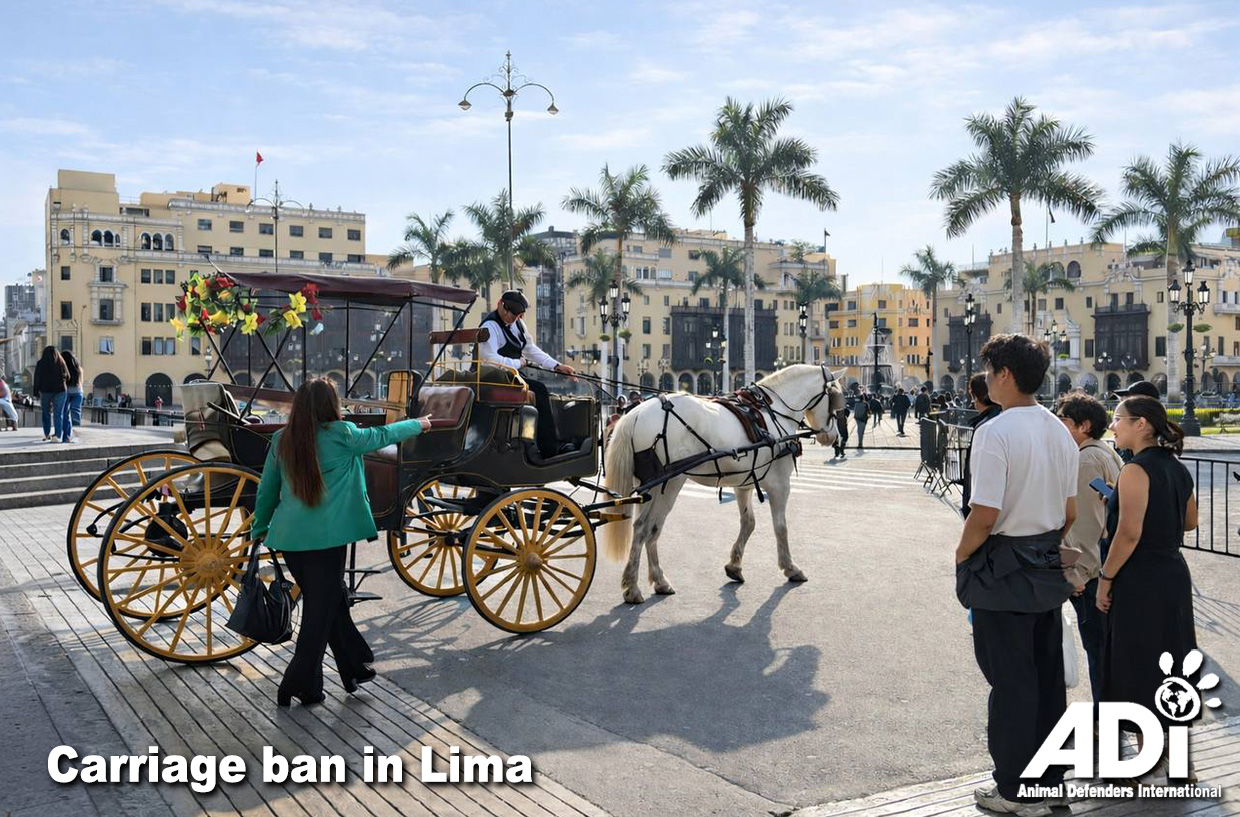
Horse-drawn carriages for tourists have been banned in Peru’s capital. The Superior Court of Justice accepted that horses are mistreated and a lack of oversight by municipal authorities, and so revoked all permits for “tourist” horse-drawn carriage rides. The court reviewed evidence of how horses are injured, suffer stress and respiratory problems working in noisy and heavily polluted areas of the city, crowded with cars, buses, trucks, and other vehicles. This could be an important precedent, because the court established that as animals are constitutionally protected sentient beings, the standard of protection cannot be reactive but must be preventive and protect animals from harm.
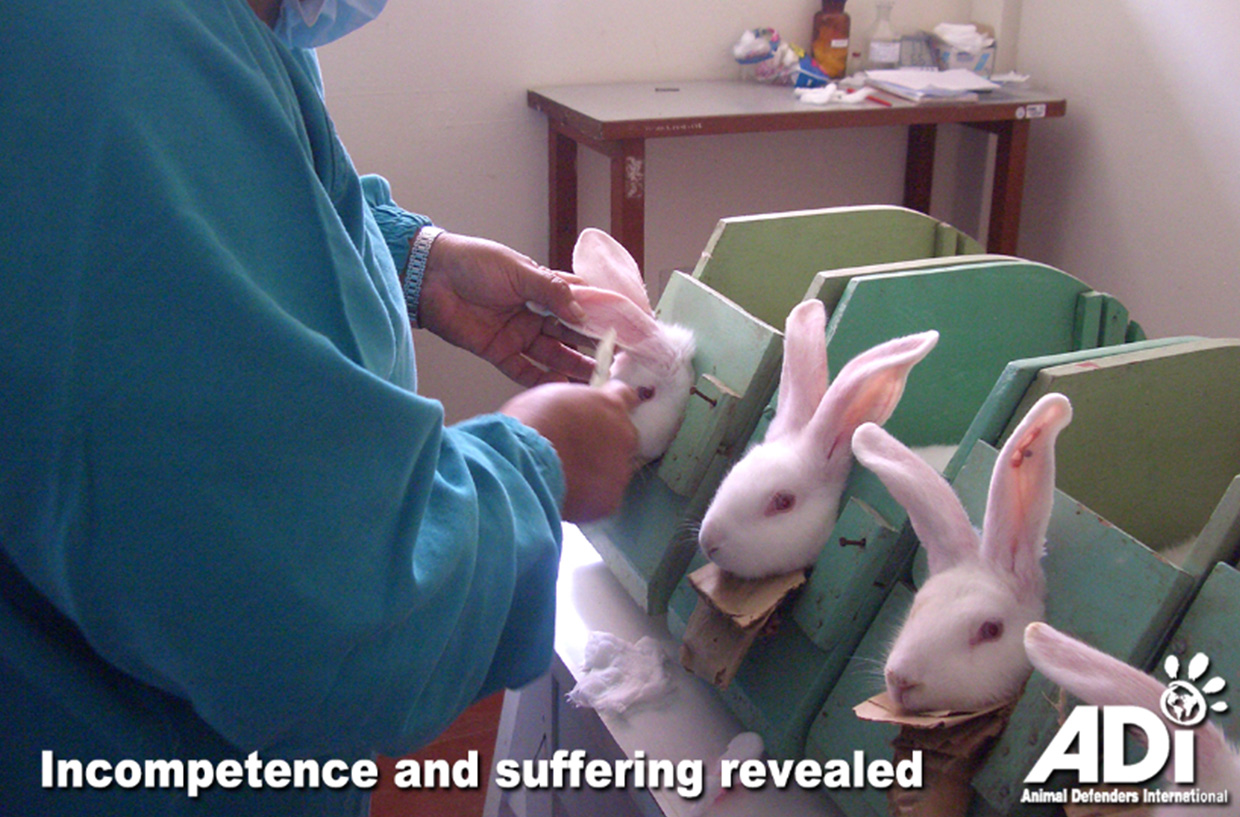
Report reveals lab suffering and incompetence: The UK’s Animals in Science Regulation Unit (ASRU) annual report reveals suffering and death in UK labs: regulated procedures performed on pregnant mice due to misidentifying sexes; multiple cases of mice mothers being removed from their new born too soon resulting in the deaths of pups; a system fault led to fish dying from chlorine exposure; dozens of mice killed by staff without proper euthanasia training; many animals accidentally left without food and/or water for up to 5 days; multiple live animals mistakenly put in waste bins. None of these cases received more than a letter of reprimand.
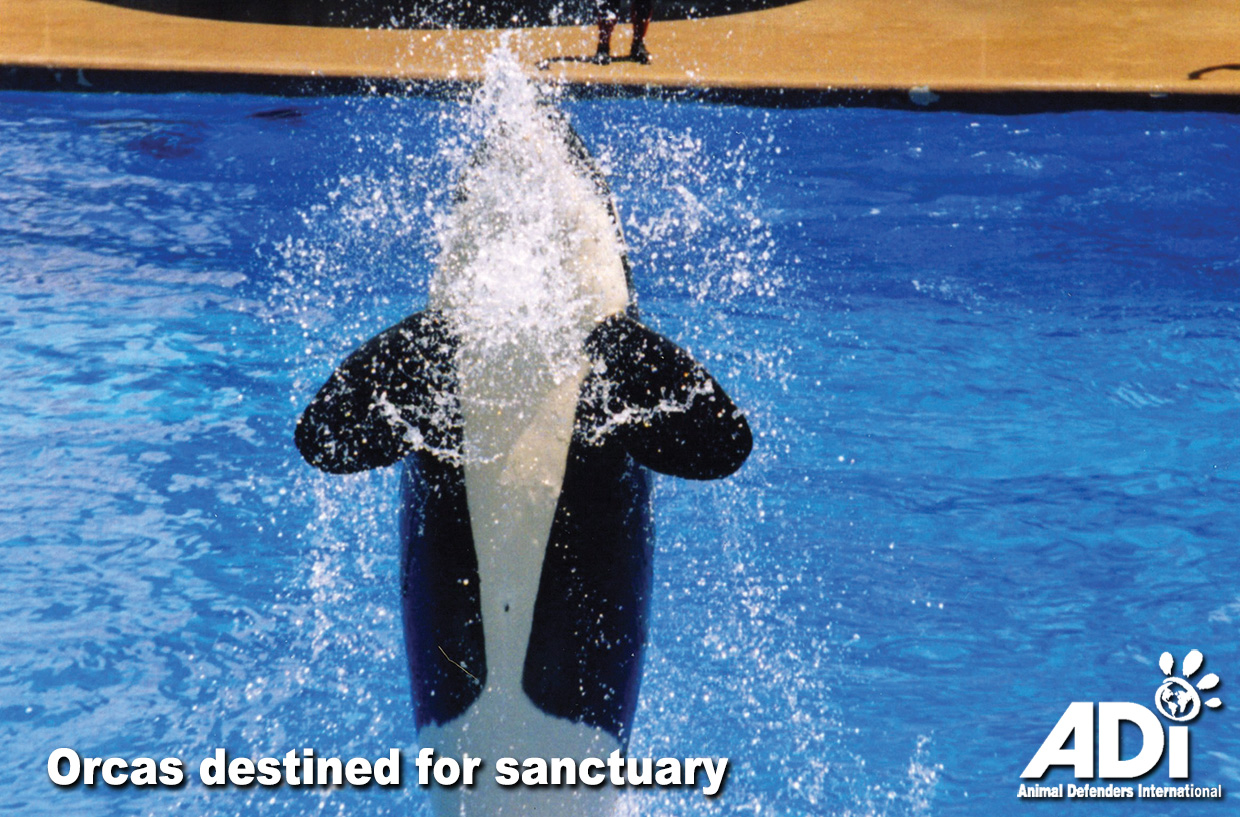
French Government confirms relocation of orcas: Mother and son Wikie and Keijo will be going to a coastal sanctuary off Canada. Both were born in captivity and have their lived entire lives in small concrete tanks in a marine park in the south of France that closed last year. The relocation is tentatively set for this summer when construction is complete.
In the US, please urge your Congress members (directory below TEAPSPA graphic) to reintroduce the SWIMS (Strengthening Welfare in Marine Settings) Act to ban the taking and breeding of orcas, beluga whales, pilot whales, and false killer whales for public display. It would also ban the importation and exportation of these marine animals, with exemptions for transportation to sanctuaries and the wild.
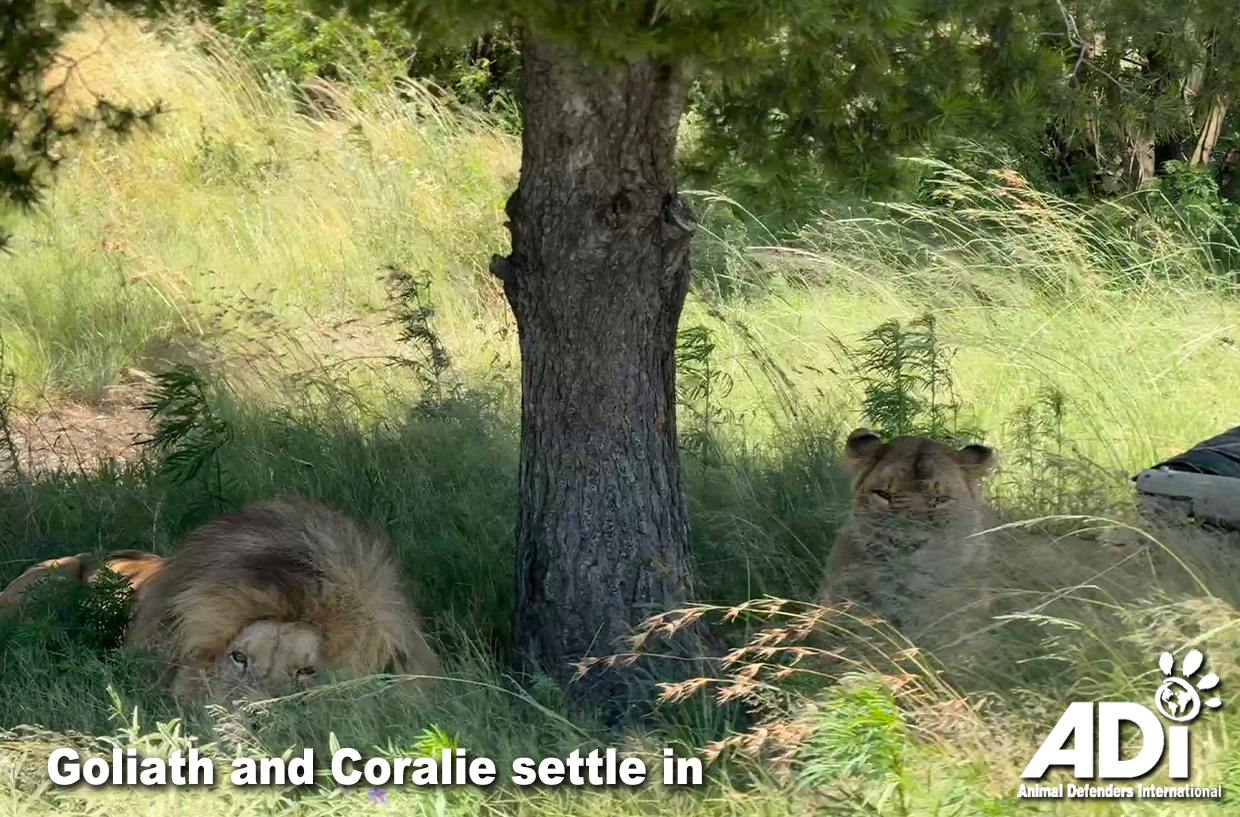
Rescued French circus lions move into new habitat at ADIWS: In preparation for the arrival of Lei-ah and Elsa, Goliath and Coralie were moved out of the Stephi quarantine unit into their forever home. The 3.7-acre Augie habitat is where Tarzan and Tanya spent so many happy years and so it feels appropriate that this loving couple are moving in and keeping their spirit alive. Don’t miss the beautiful video of Goliath and Coralie exploring their new home here.
Thank you for your support that makes the work featured here possible. To help us continue with our campaigns and rescue work: Donate US $, CA $ | Donate £, Euros, Rand

 Jan Creamer