Saying “Goodbye” to an old friend

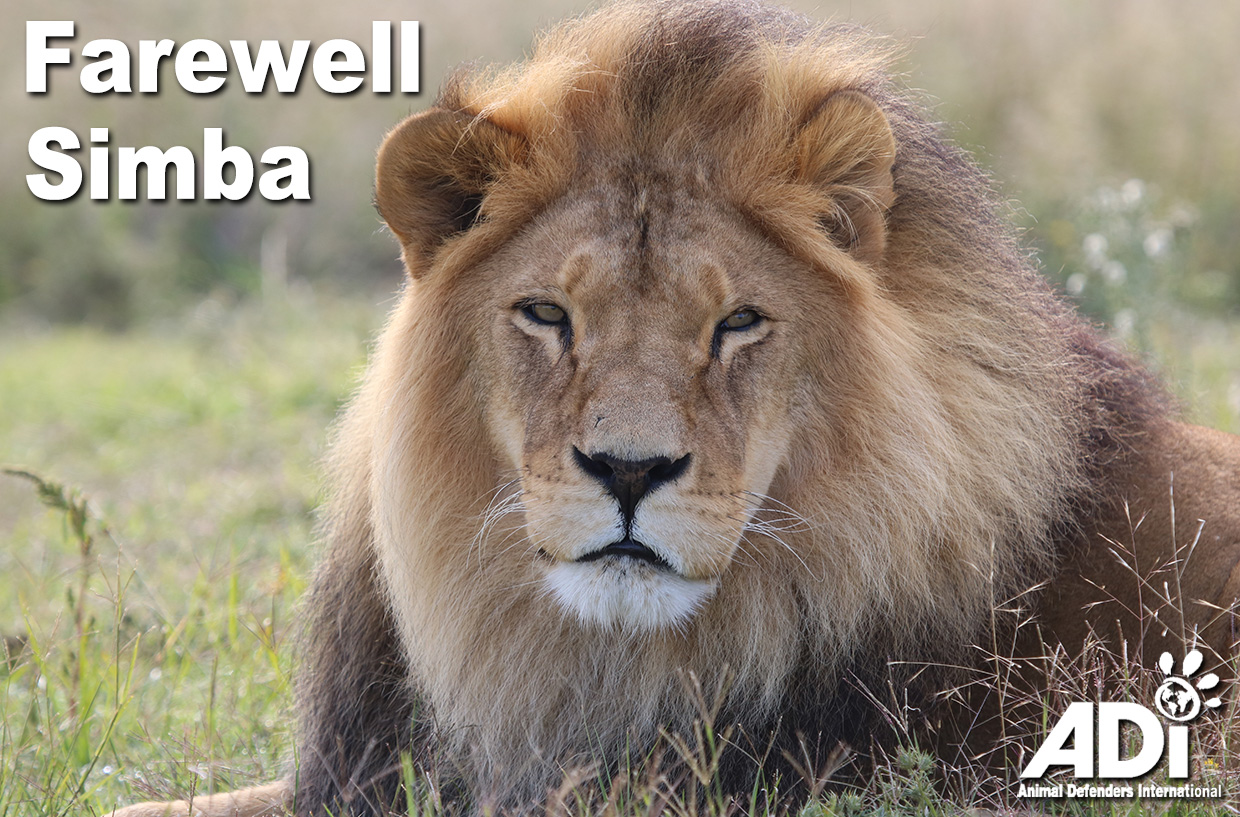
Two weeks ago, we said farewell to Simba an 18-year-old lion at the ADI Wildlife Sanctuary who had been part of my life for over 11 years, since his rescue from a circus in Ayacucho, Peru. It still seems strange this week to see his brother, Rey Ayacucho, alone.
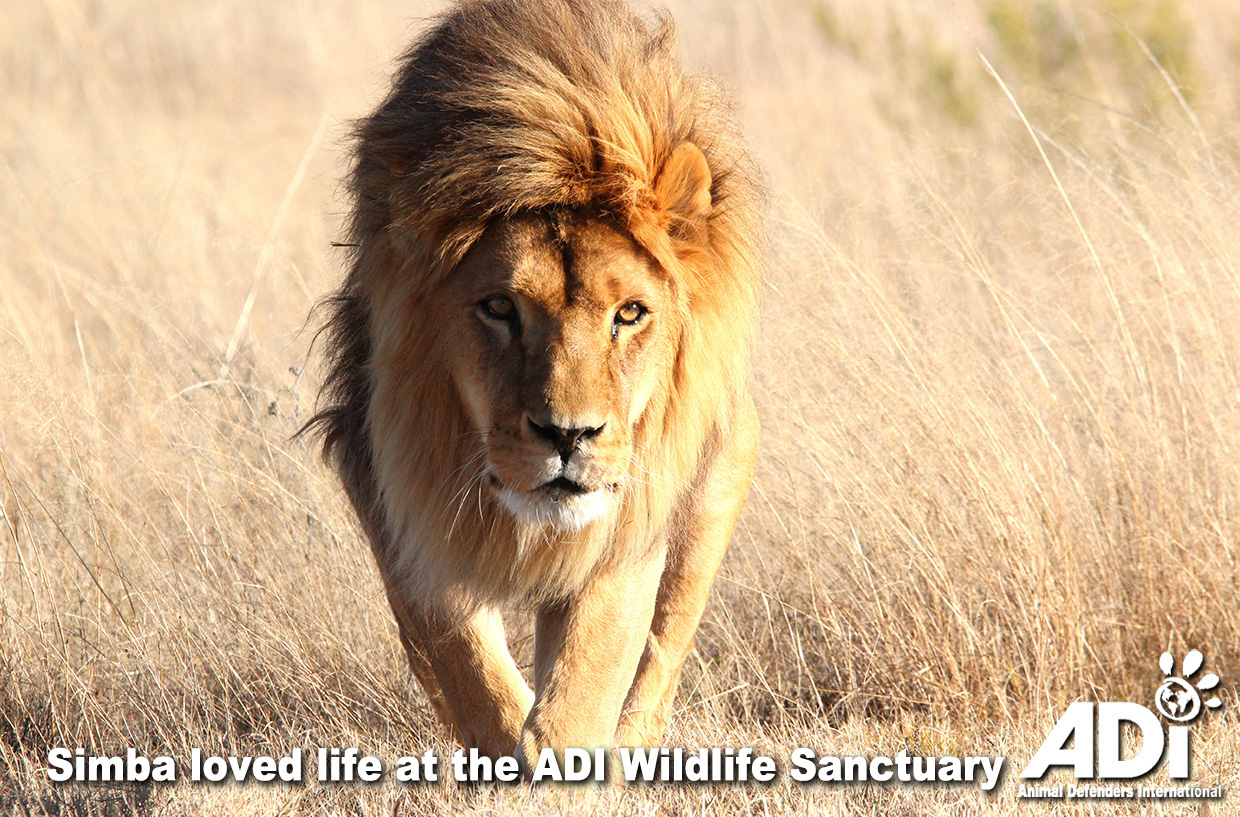
We had known it was coming – Dr Caldwell warned us a year ago that Simba’s severe arthritis was nearing the stage when there would be nothing more he could do for him – but our resilient warrior kept going, defying the odds, clambering onto his platforms with his crooked hind legs, roaring with Rey.

A family member is gone. I will miss this magnificent warrior, and I will be forever grateful for the precious years ADI Supporters gave him in Africa.
Back in 2014, we began Operation Spirit of Freedom; with police and wildlife officials, we raided a circus compound in a town north of Lima to enforce Peru’s ban on animal circuses. After a grueling day, we finally finished unloading lions Leo, Chino, Coco, and Rolex at the ADI Temporary Rescue Unit in the early hours of the morning, then headed to the airport and flew to Ayacucho – a city nestled in a valley in the Andes Mountains.
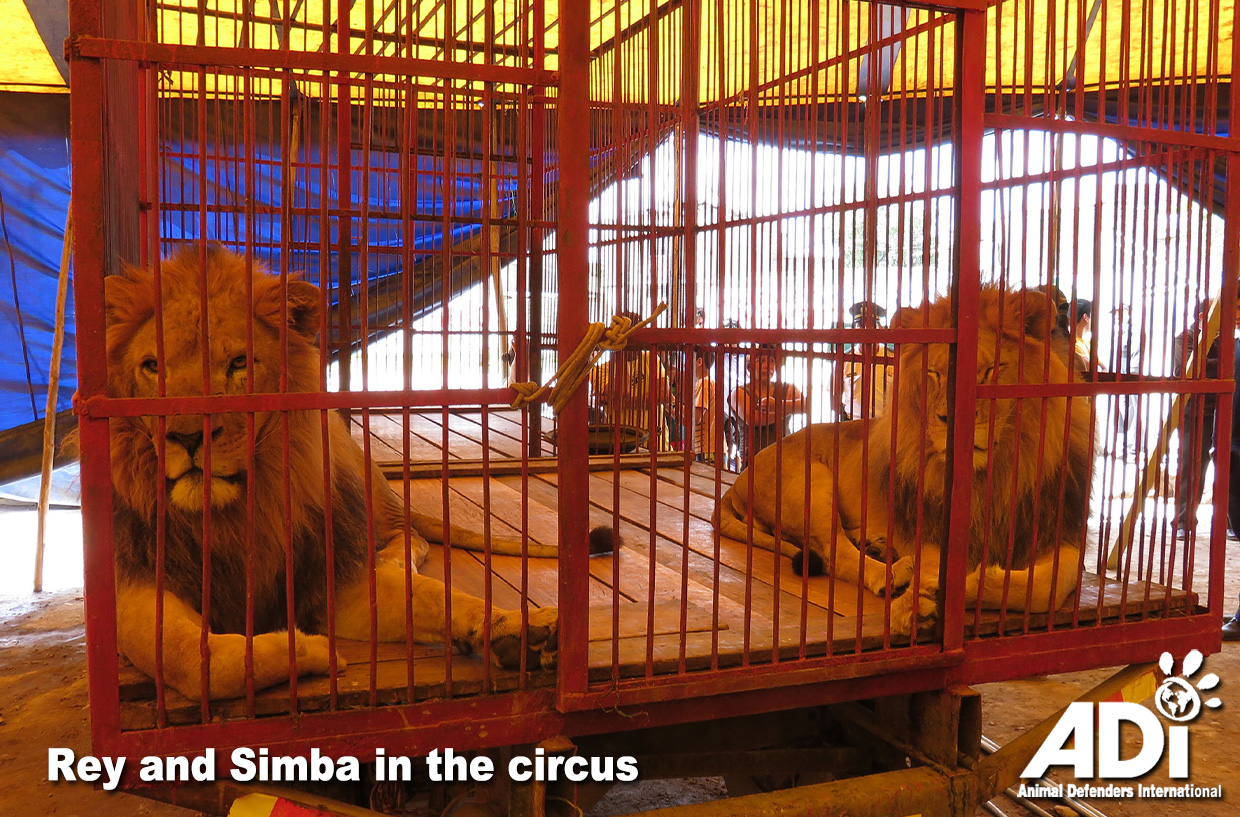
That’s where I met 7-year-old Rey and Simba. They were in a cage on wheels the size of two queen-sized beds, end to end. There was nothing inside, just bare, urine-soaked boards. Imagine your whole life like that, living those freezing nights in the Andes mountains? Little wonder that Simba developed arthritis early in life, and together with early-age malnutrition due to the poor diet in the circus, contributed to his distorted hind legs.
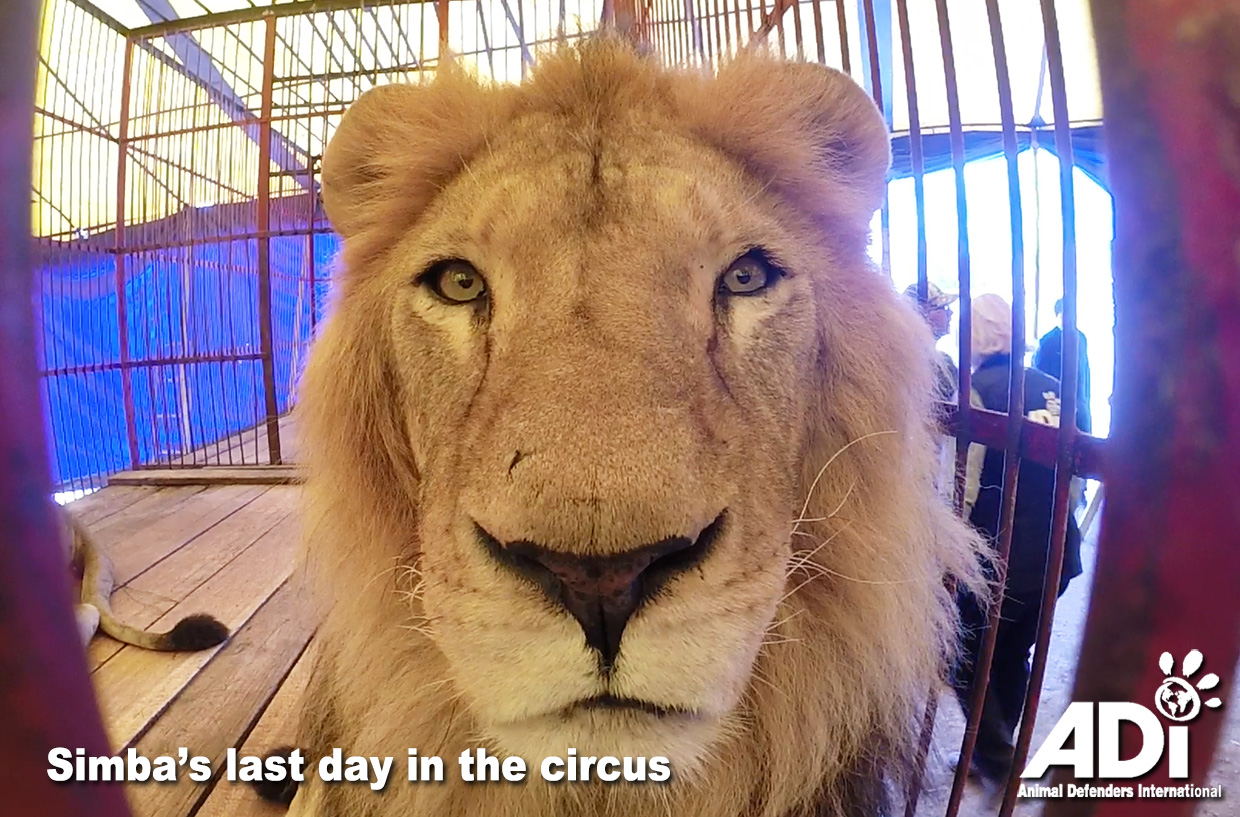
Nevertheless, Simba and Rey stood proud and dignified, stoic, watching carefully what was happening around them, the screaming, shouting and shoving between the humans.

The ADI team was small, we had relied upon support from the police and officials, but they stood back as we were surrounded by dozens of jeering circus thugs and their friends. Just as we got the boys ready to enter the ADI cage to take them away, the trainer would bang on it and send them scurrying back into the circus cage. It took several attempts to get them safely into our cage.
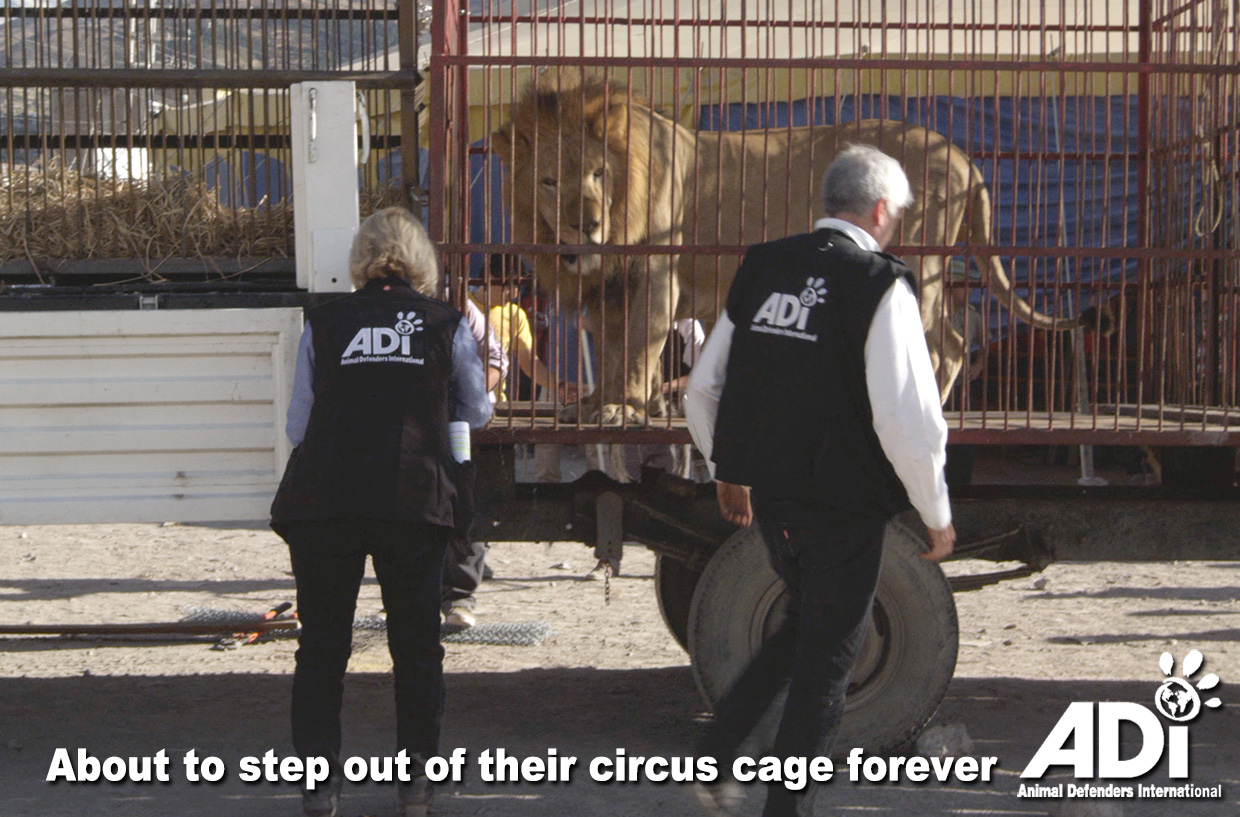
It was a 19-hour drive over the mountains through rain, sleet, and snow back to the ADI Temporary Rescue Unit (TRU) near Lima. I spent my birthday crossing the Andes with Simba and Rey – I can’t think of a better way to spend a birthday, and the best birthday present, ever!
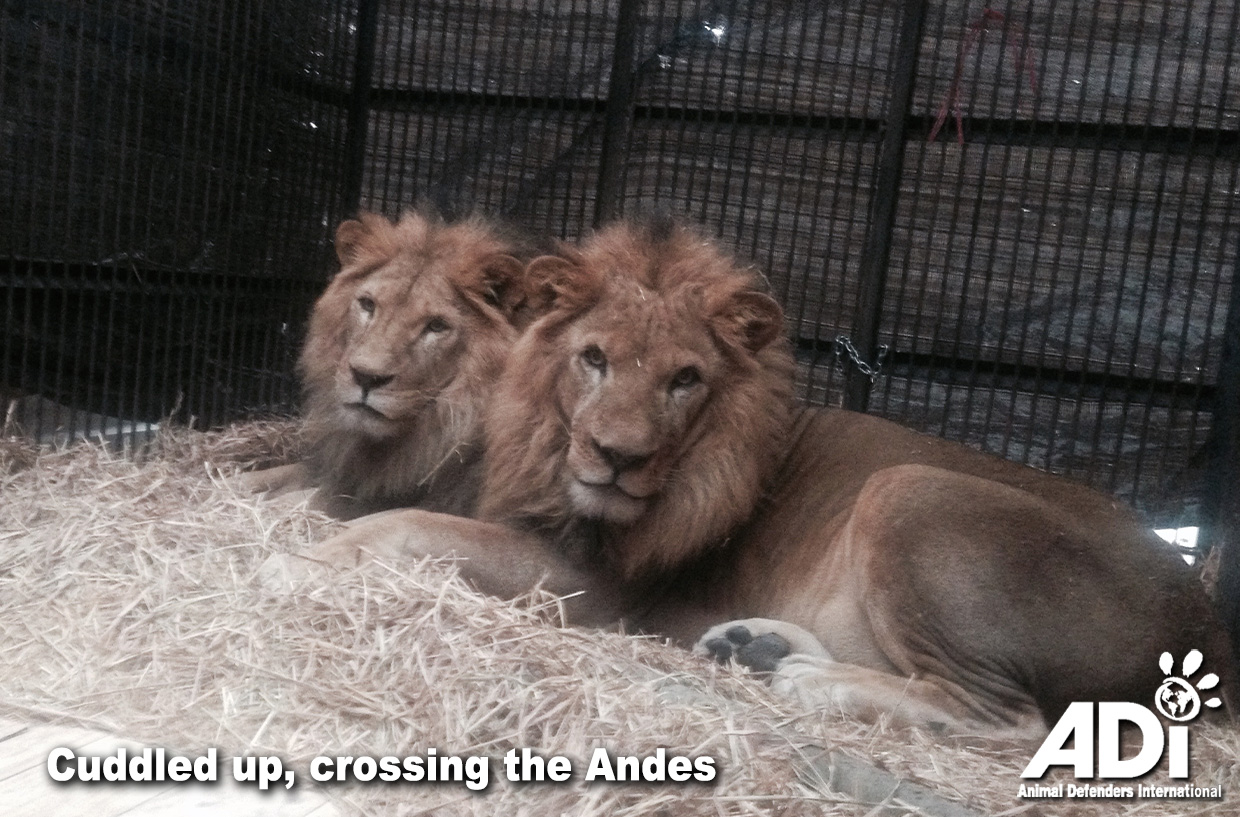
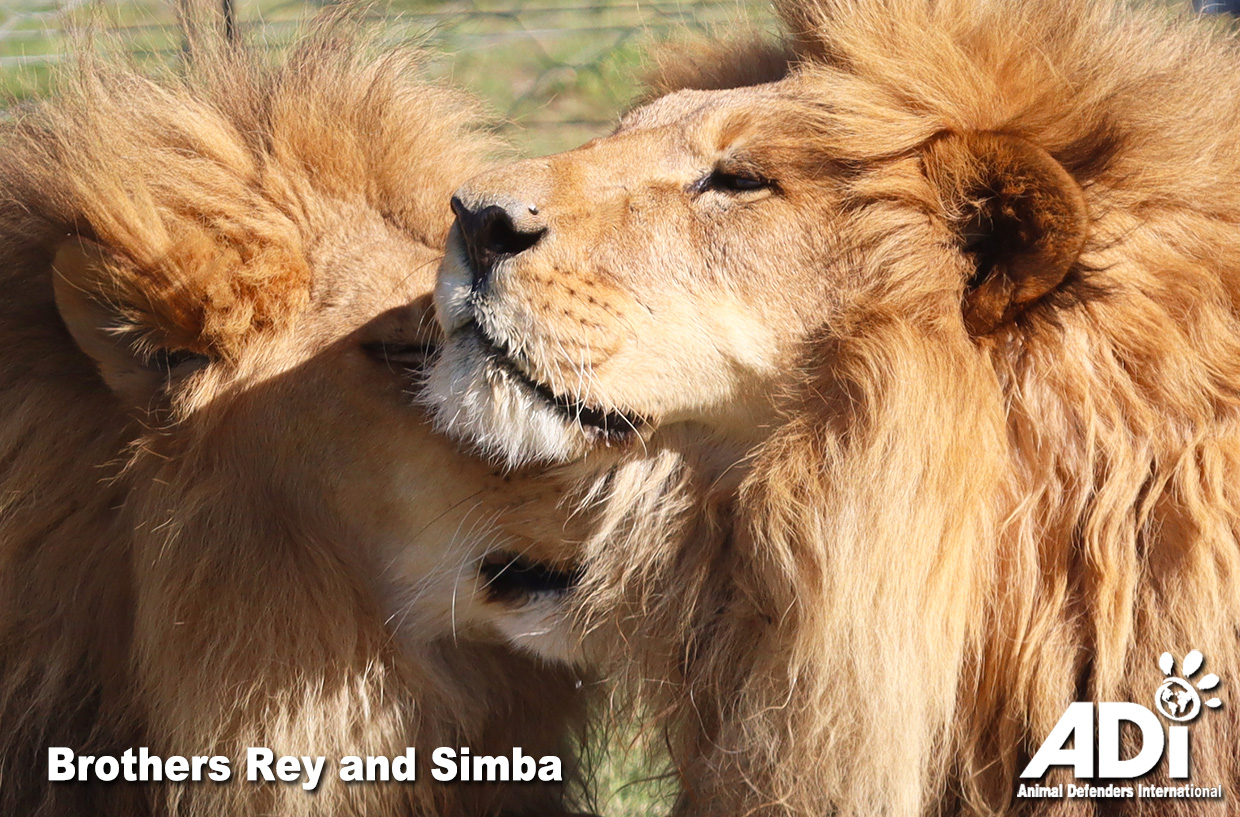
Each time we checked on them during the journey (their cage was covered) they were cuddled up together, keeping each other warm, their manes fluffed up, and they had made a nest in the deep hay – their first comfortable bed. We could see then they would always be there for each other.
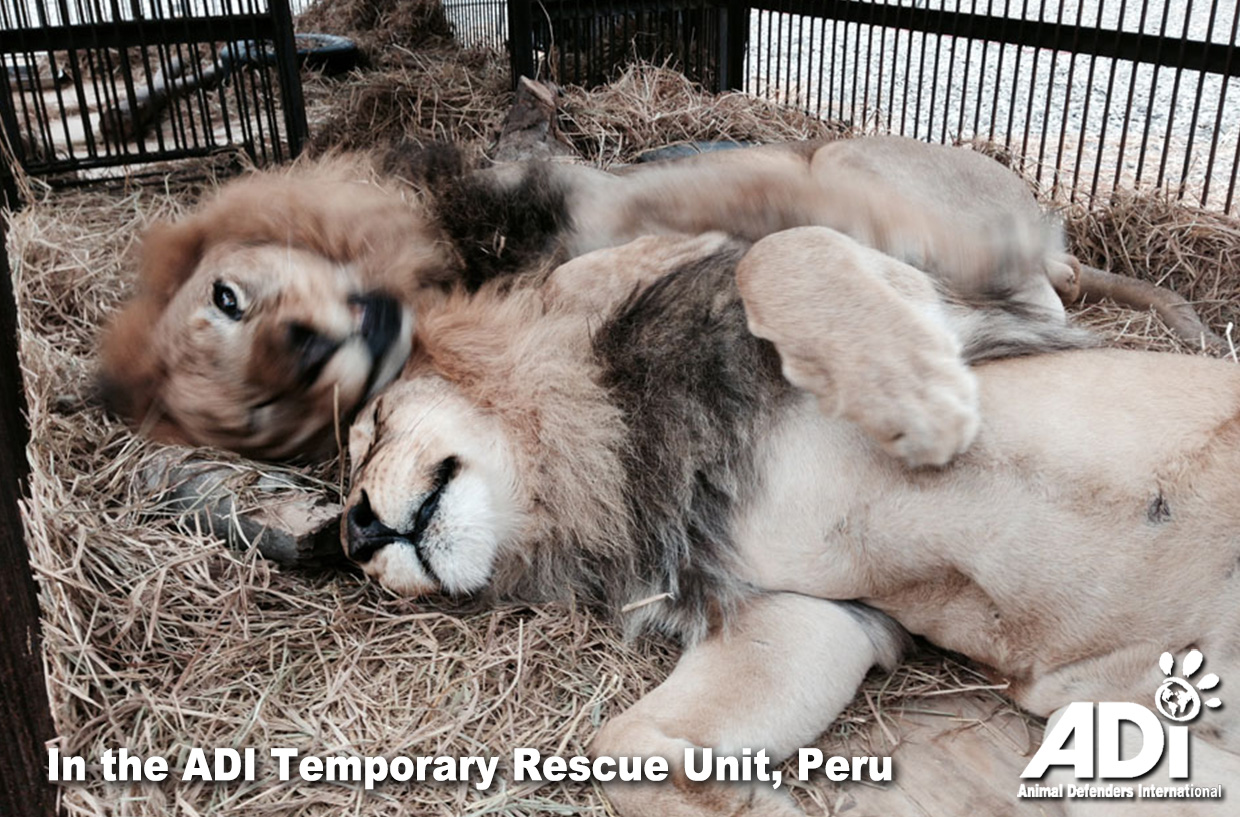
In the ADI TRU they found their inner kitten, they loved to play, especially chasing and bursting footballs. They were always together and their travel crates were side by side when we flew all 33 ex-circus lions home to Africa on the record-breaking Operation Spirit of Freedom Airlift – every lion from the circuses of Colombia and Peru came home to the land of their ancestors.
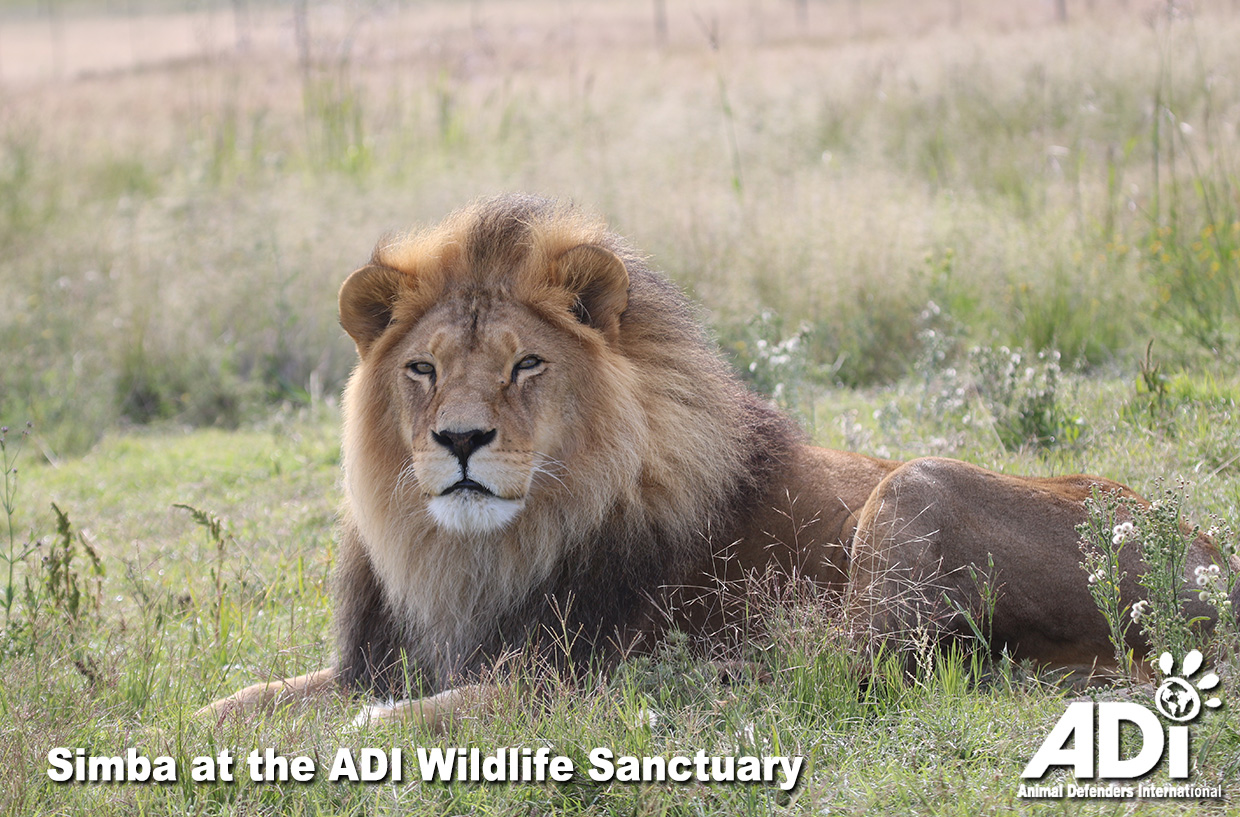
Once home in Africa, as the years passed, Simba’s arthritis grew worse and Dr Caldwell would regularly adapt his treatment. Believing Simba was struggling to get onto his platforms, we added extra steps between each level – Simba thanked us next day by leaping up and down at great speed, avoiding the steps altogether as if to say “I’m not an old man yet!”.
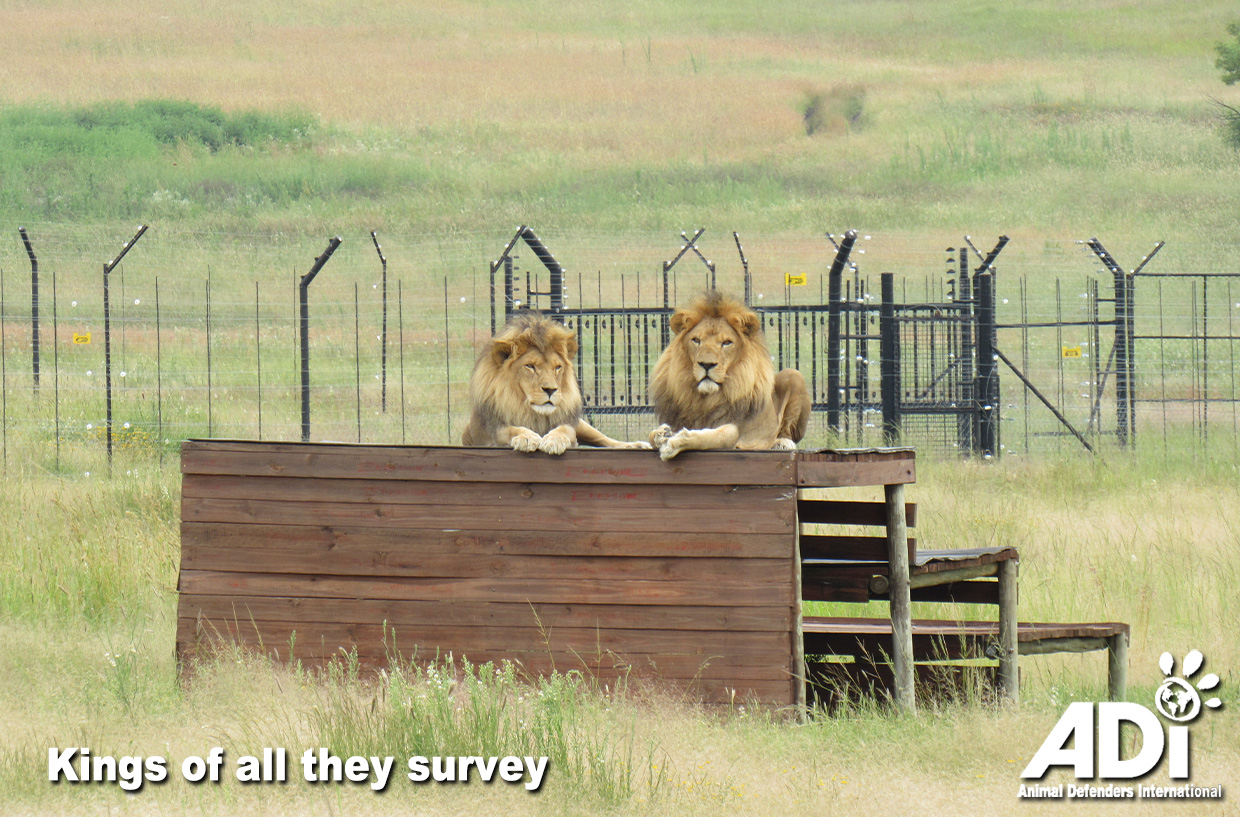
They had spent their entire lives always together, first in a small circus cage in Peru and then in ADI care until one day, Rey was taken ill and had to go to hospital.

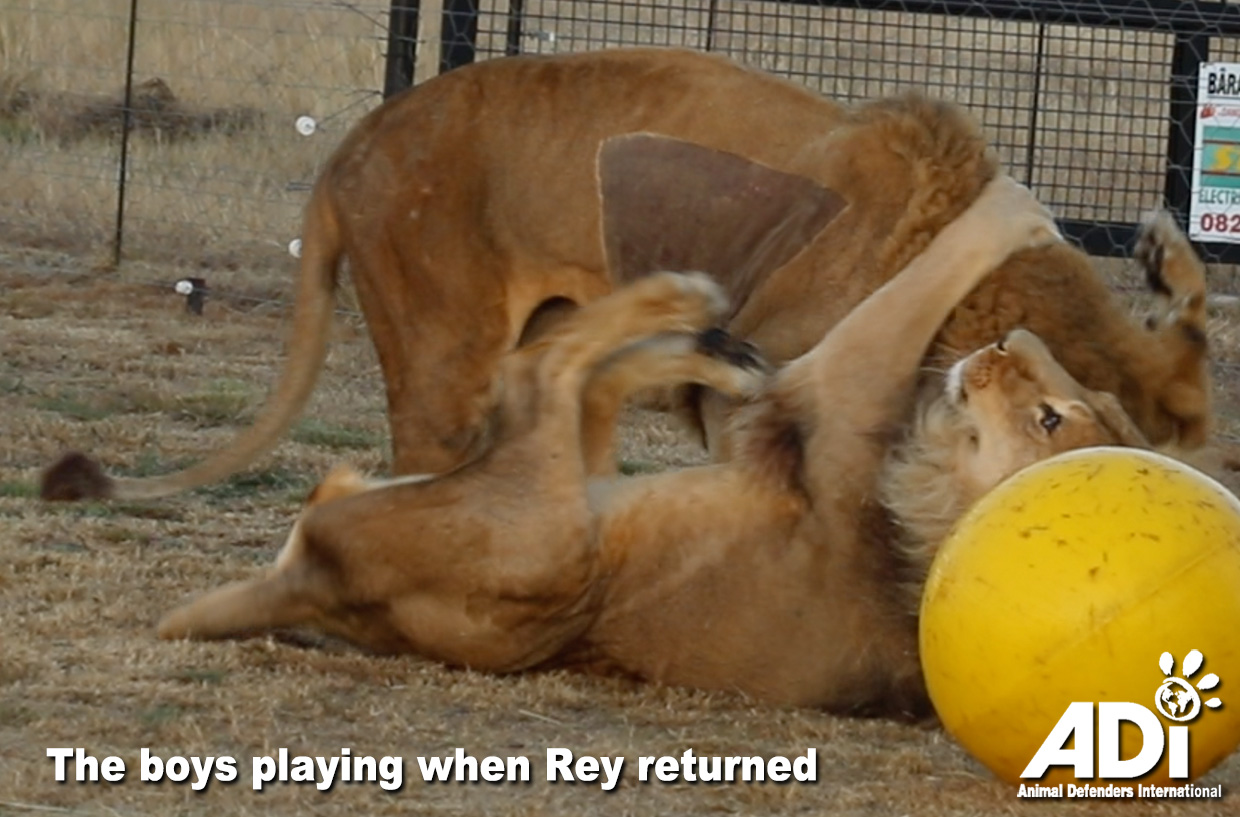
It was late at night when Rey returned. It is our practice to keep the animals separate, but within sight of each other when they return from hospital, to let them settle and if one feels vulnerable, it allows them to regain confidence. We did this, but the boys were desperate to be with each other and Simba was getting frantic.
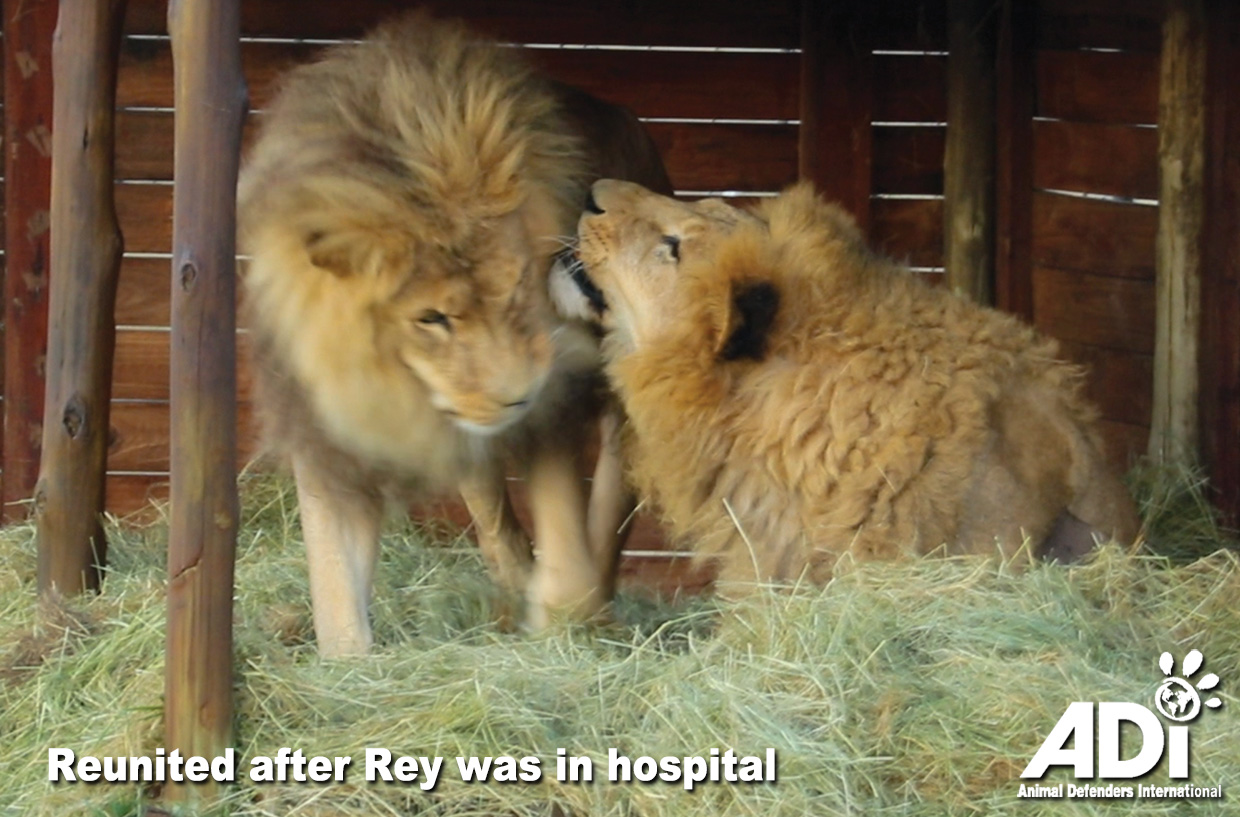
So, we put them together – they bumped heads and went straight to bed in a nest under the platform. It would only be as the sun rose that I would witness one of the most magical things I have seen in many years rescuing animals.

We took it in turns to sit watching all night. Tim’s and my shift started at about 3 or 4am. Then in the first grey light heralding sunrise the lions began to stir – nuzzling and rubbing heads. As the sun came up, they began to play. They nuzzled, head-rubbed, cuddled, wrestled, and rolled each other over. They were cubs again, and Simba joyfully skipped around his brother on his crooked, arthritic legs – in a circle, like a dog with the zoomies!
We let them out of the feeding camp and they marched down the length of Guibord-Sprague habitat, shoulder to shoulder, casually bumping their hips together. They began to roar and the other lions roared back.

In their 18 years, they were only apart again one more time, after a hospital visit for Simba last year. They would wander about and explore separately but most of the time it was always Simba and Rey together on top of the platform, in the long grass, in the shade, or eagerly watching the food preparation to kitchen to see if dinner was on the way.
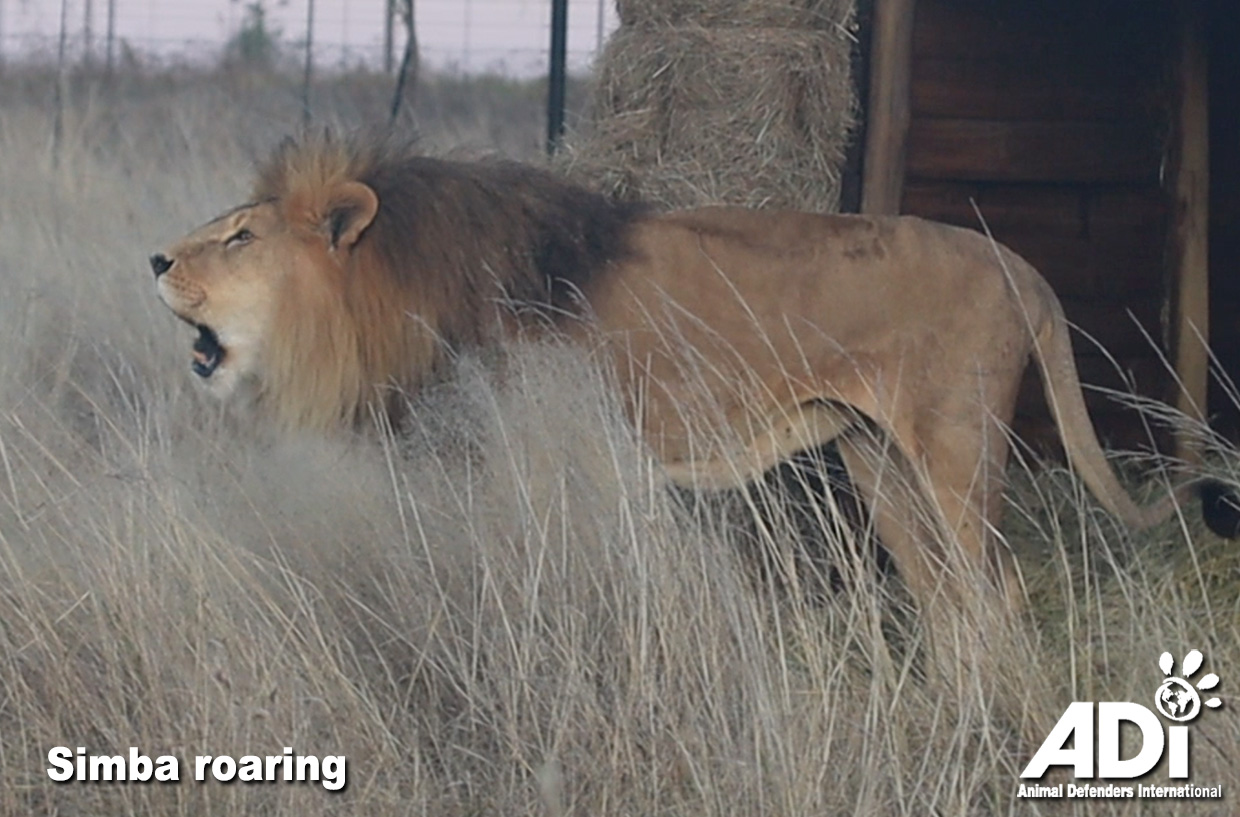
As Simba passed, Rey let out a deep roar. We left them together and when we finally drove Simba away, Rey did not stop watching until the vehicle disappeared. That night the sanctuary was eerily quiet. Rey and Simba were loud voices in the chorus roaring at sunrise and sunset, but even the other chorus voices, Kesari, Chino and Coco were silent. One of their own was gone.
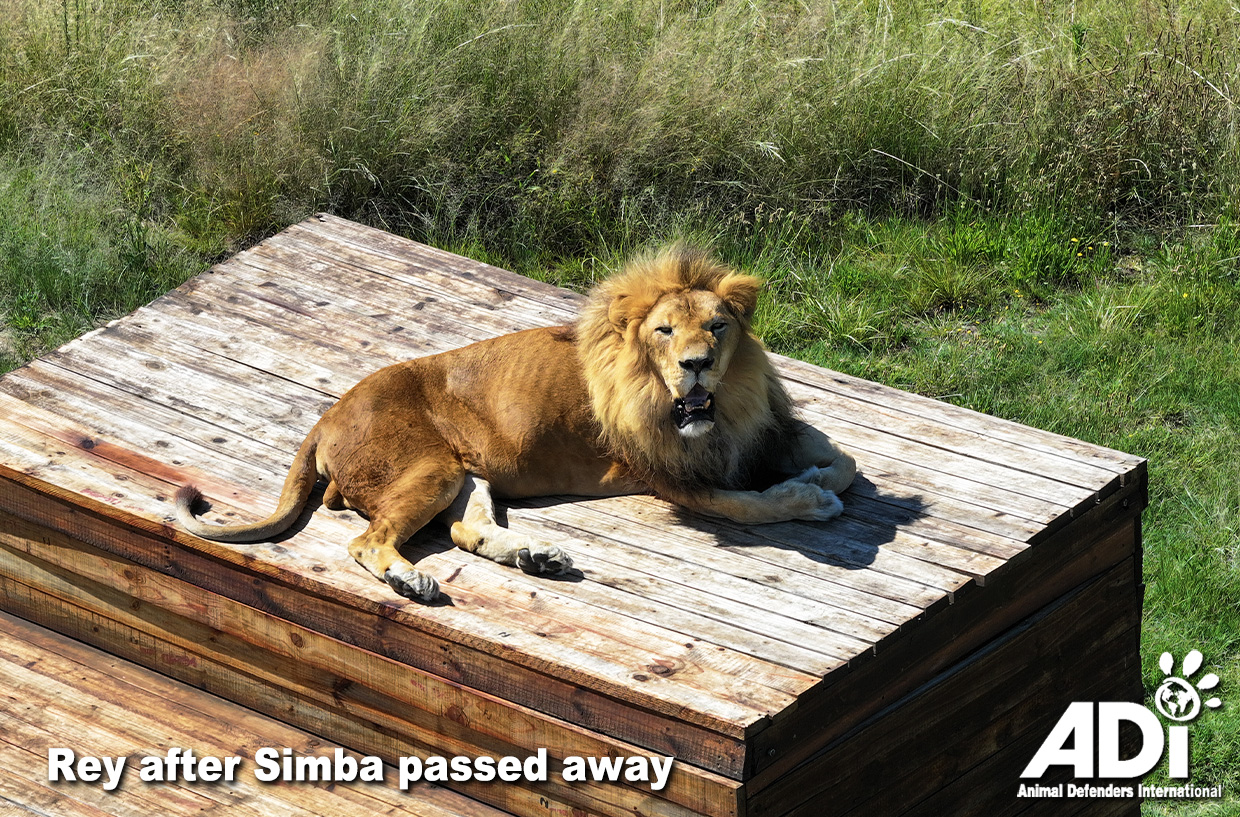
Our Resident Welfare Manager, Johannes, was designated Rey’s Grief Companion, spending time just being with him, talking to him, monitoring, adding scents and Feliway (the calming pheromone) to his favorite places and giving him treats to see him through the loss of his lifetime friend and companion.

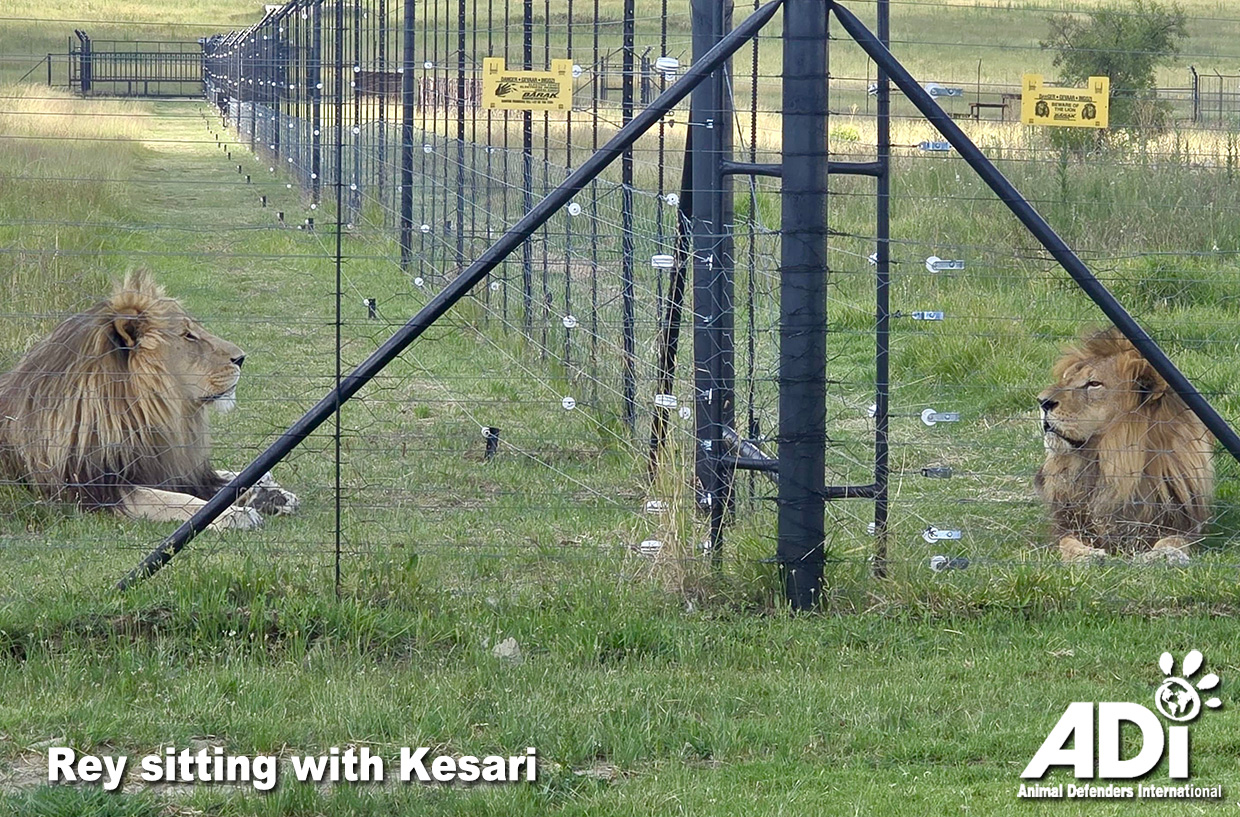
Rey has sought solace with his neighbour Kesari, and they have been lying together by the fence between their habitats. He has been eating well, engaging with Johannes, climbing onto his various platforms, and after two nights, resumed his role initiating the evening roaring chorus.
As new residents, lions Lei-ah & Elsa, arrived early last Sunday morning, Rey’s voice boomed out and his comrades joined in, welcoming the newcomers and announcing them to the whole sanctuary super-pride.
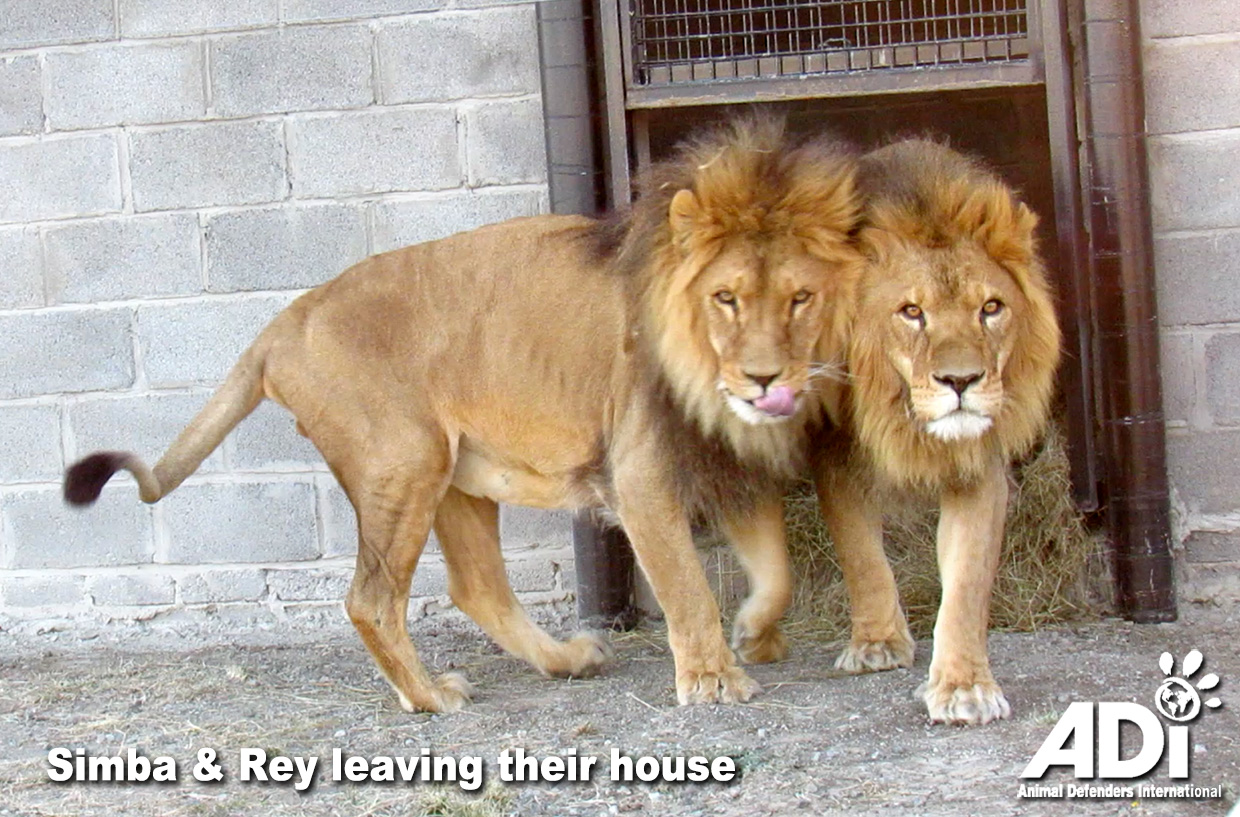
Some claim lions lack feelings, empathy, and other emotions, in truth, because it is convenient for humans, the evidence is clear – this is wrong – the problem is that humans ignore or fail to understand the communications of these incredible animals. Pretending because we don’t understand something, it does not exist. These lions display traits that we could all aspire to, including love, empathy, protection of family and high intelligence.

Like so many of the battered warriors we rescue, Simba’s resilience, determination and his loyalty and love for brother Rey will continue to inspire us.
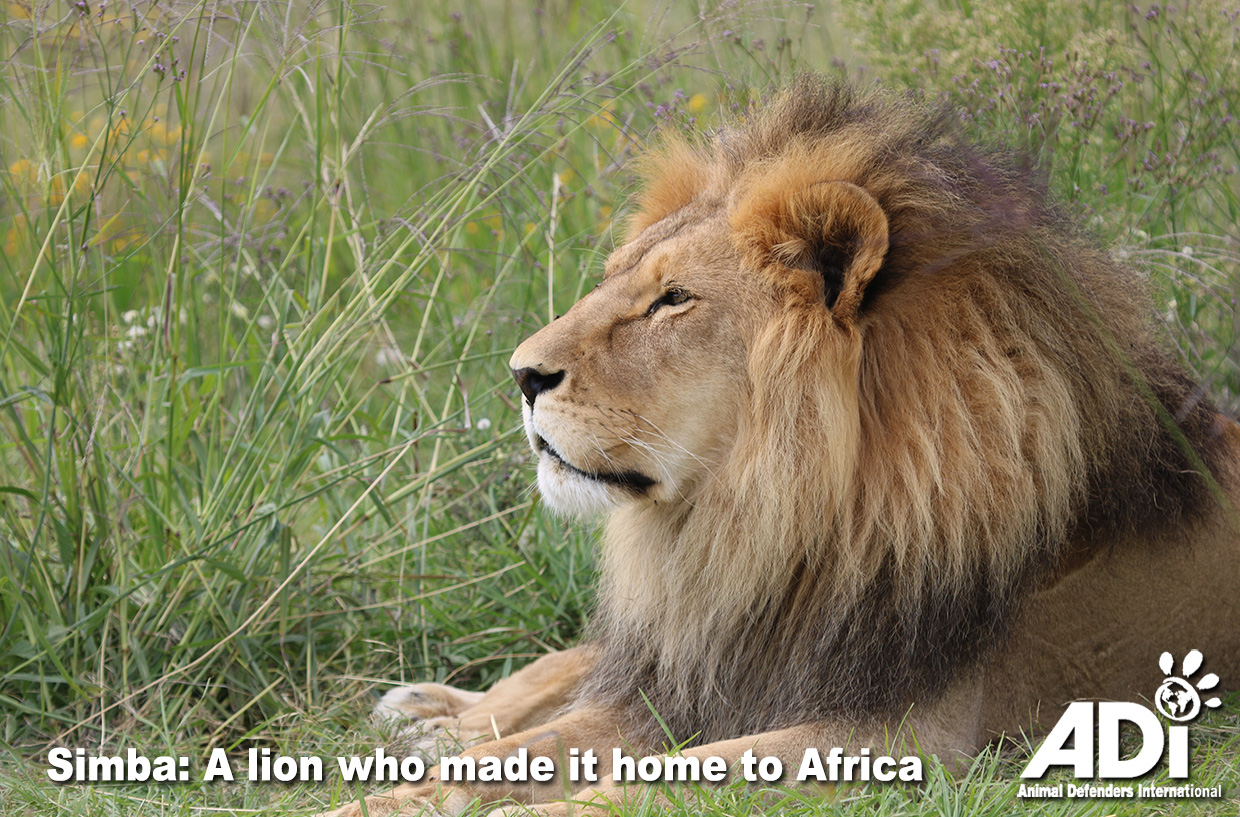
I still feel sad for the loss of one of the family, but also gratitude for the gift that ADI supporters gave him – leaving a cruel circus cage, to cross the world to come home to Africa, and for all those years living as a lion should with his mighty brother Rey at his side.
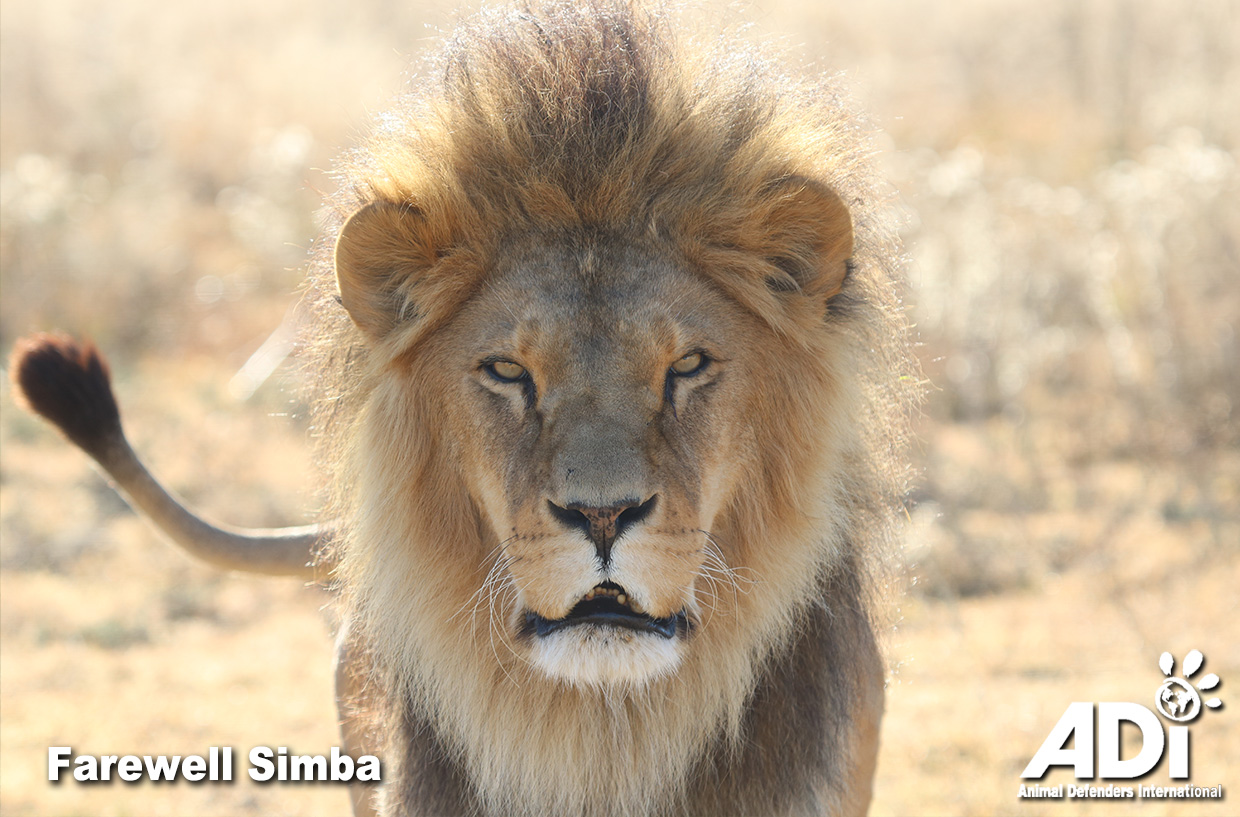
If you would like to contribute in memory of Simba for Rey A’s ongoing care and for those yet to be saved, you can do so here: Donate UK £ / Euros / Rand | Donate US $, Can $
Lions escape fire

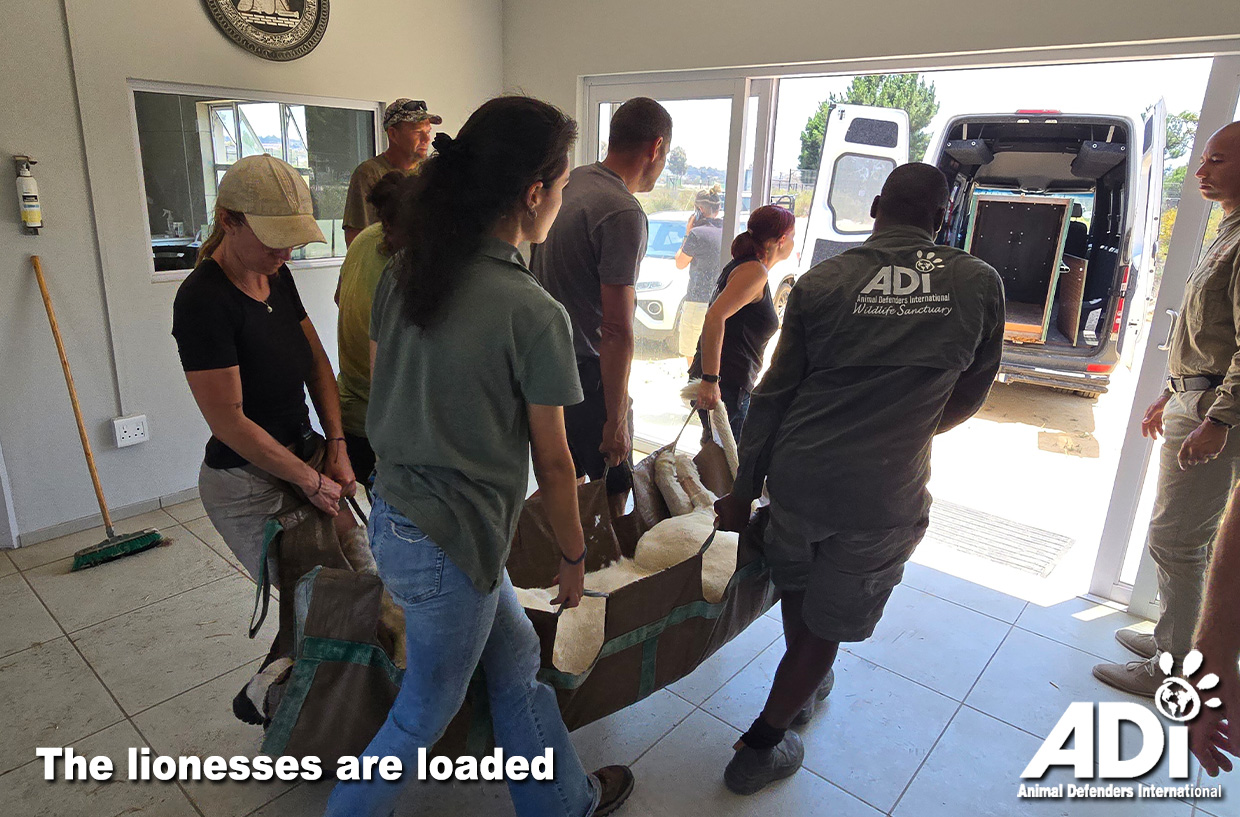
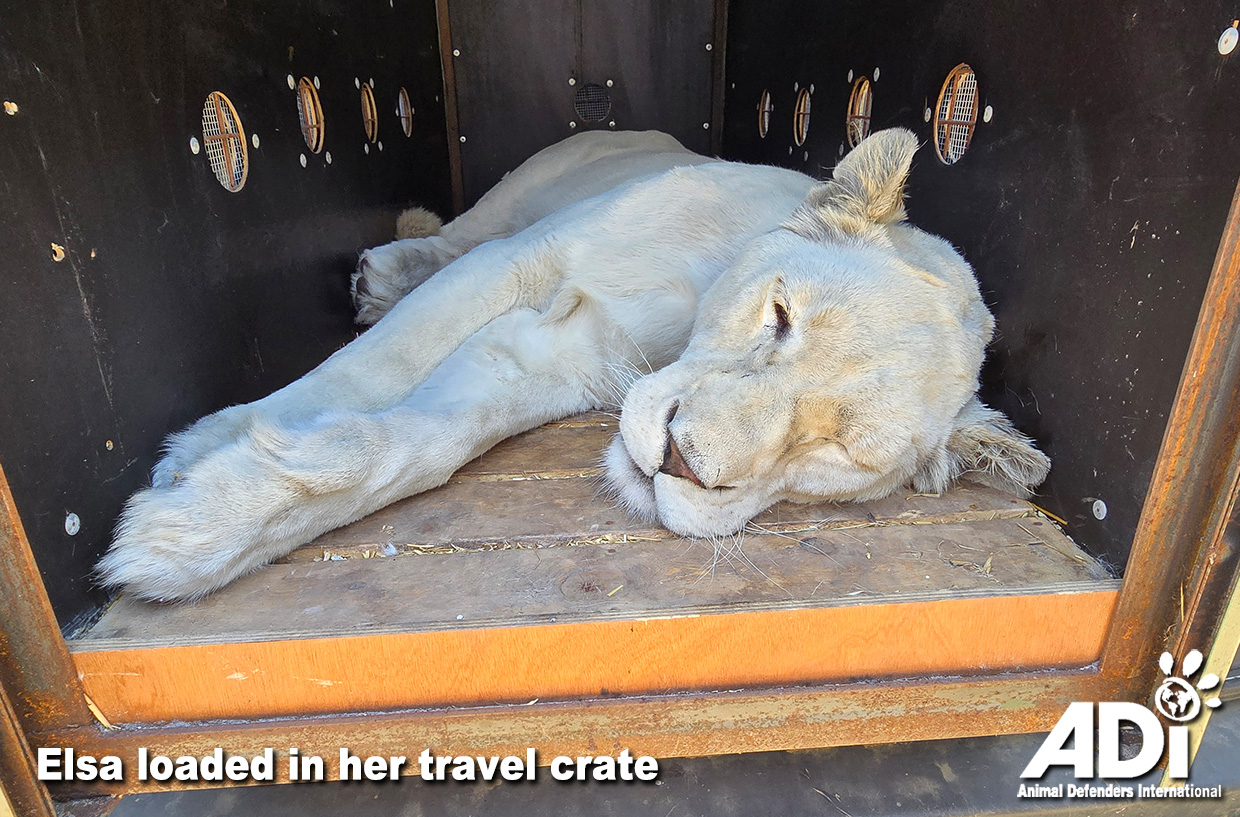
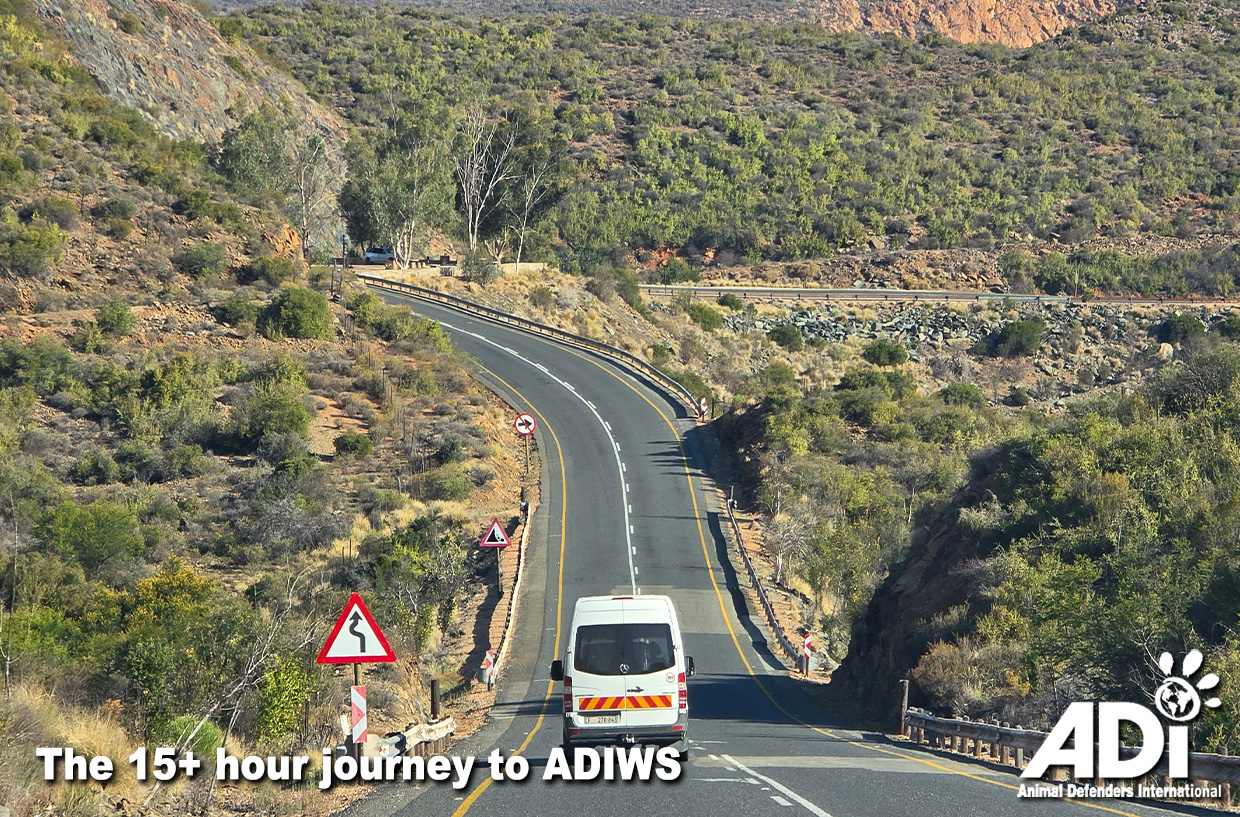
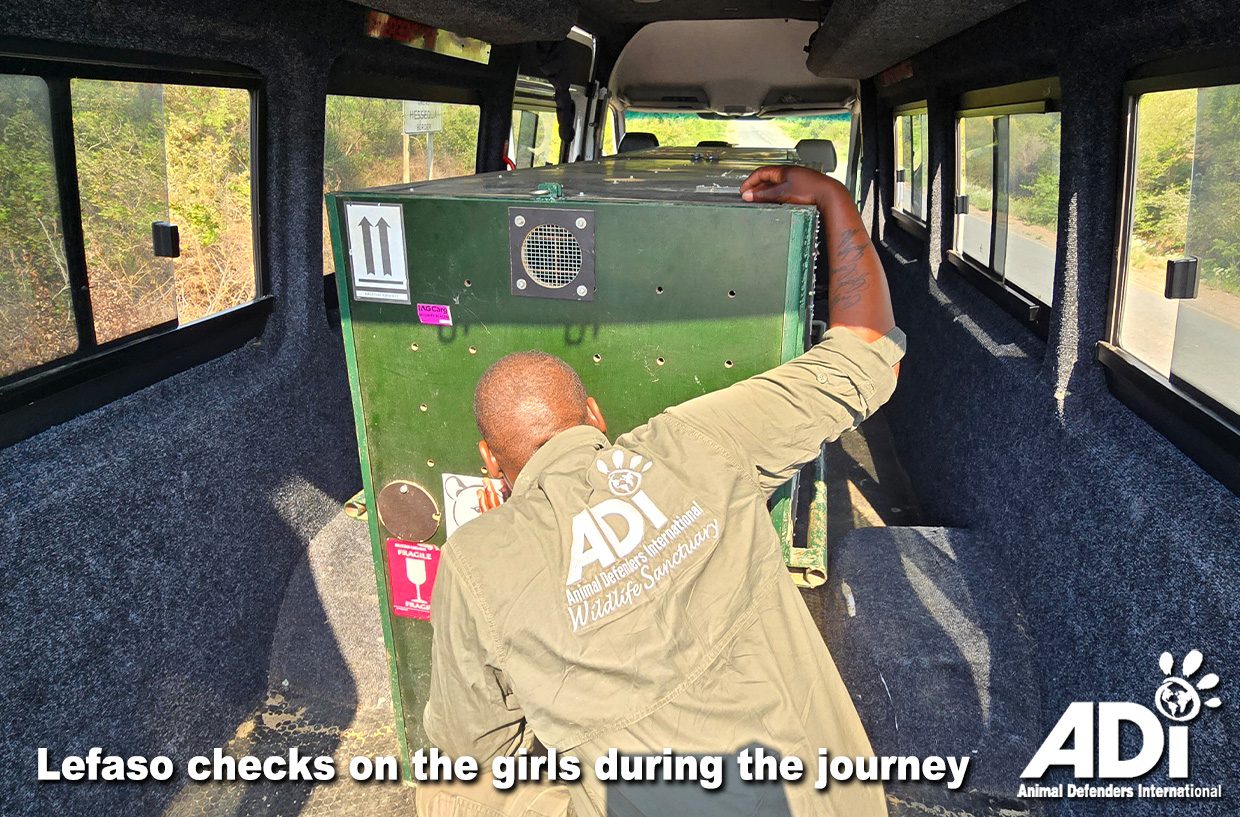
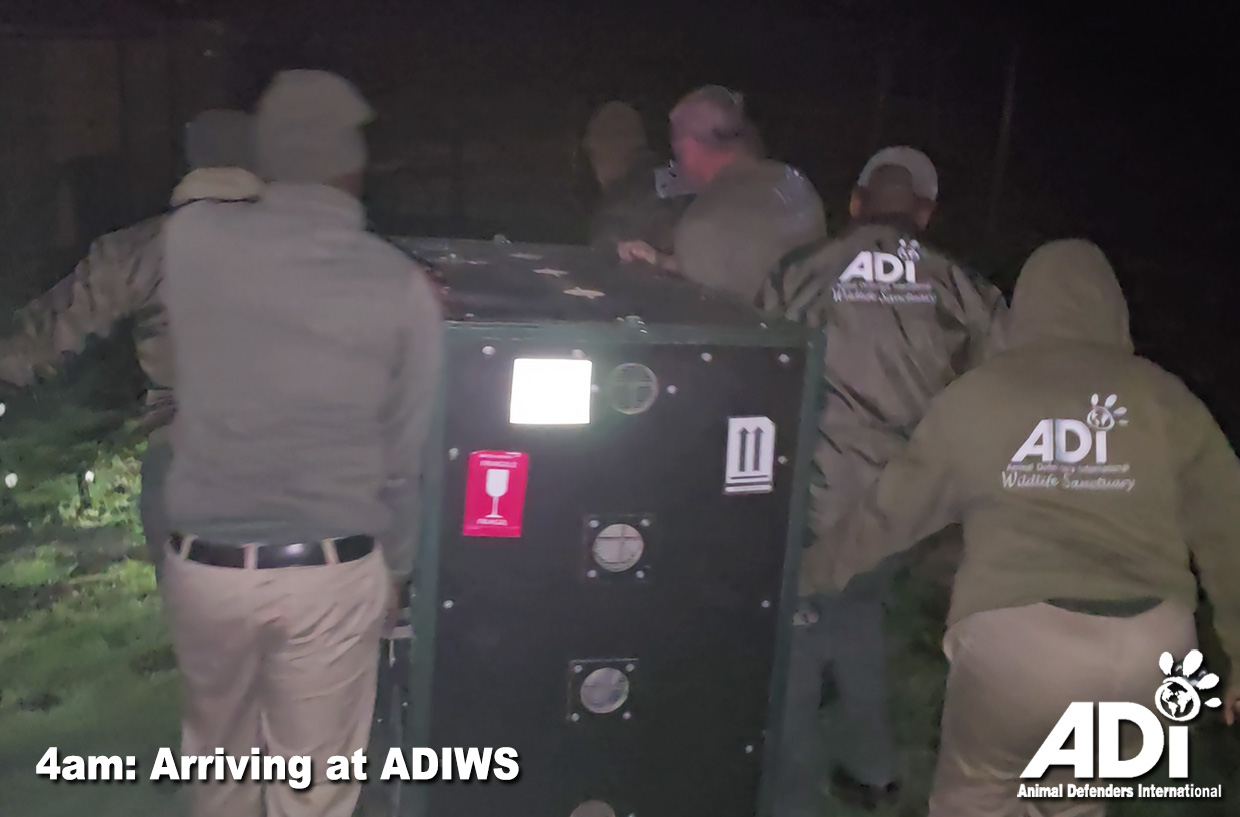
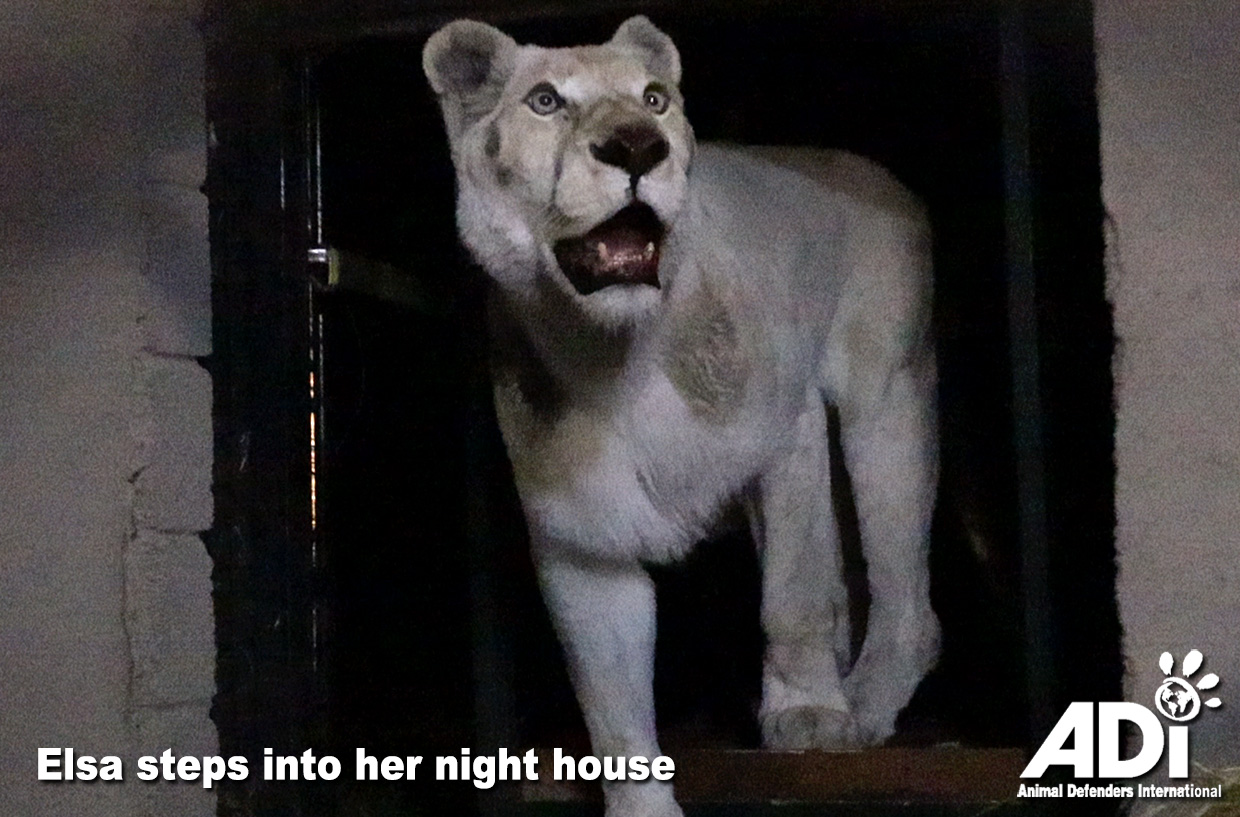
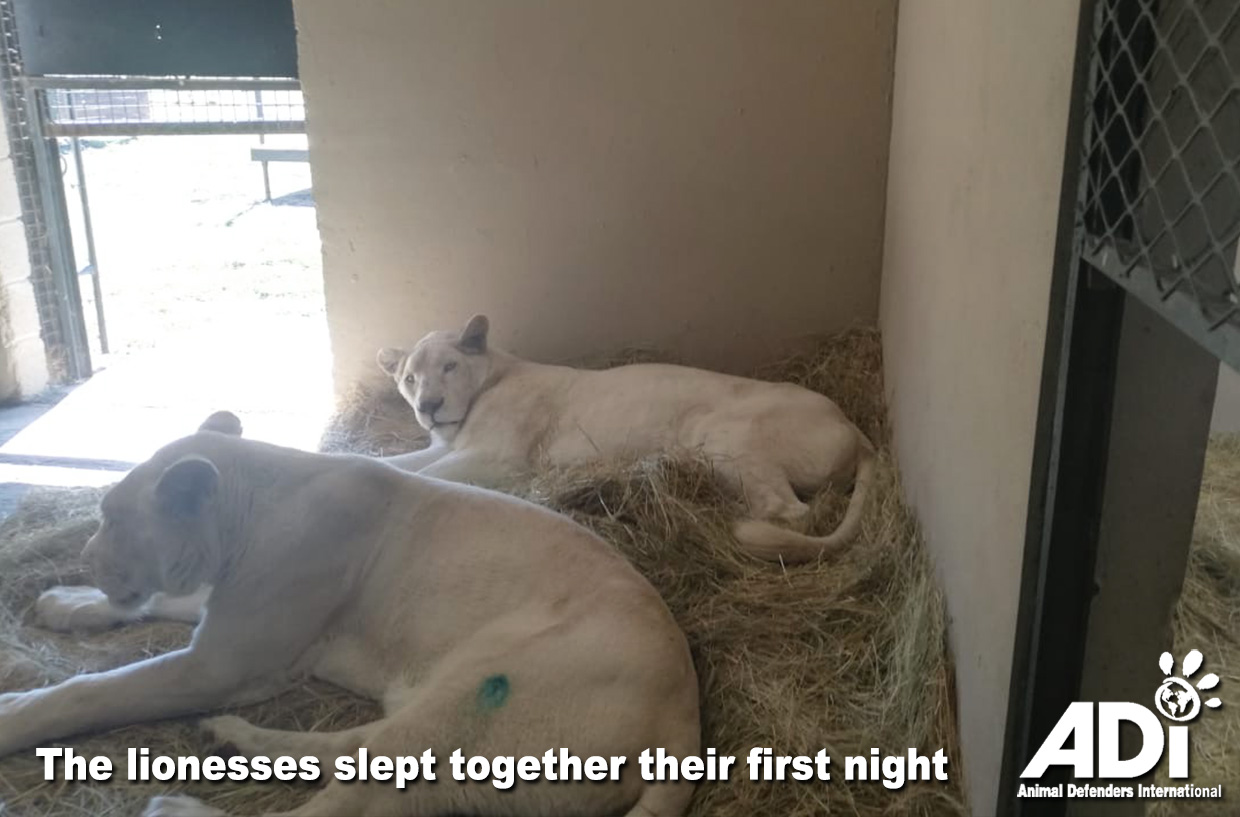
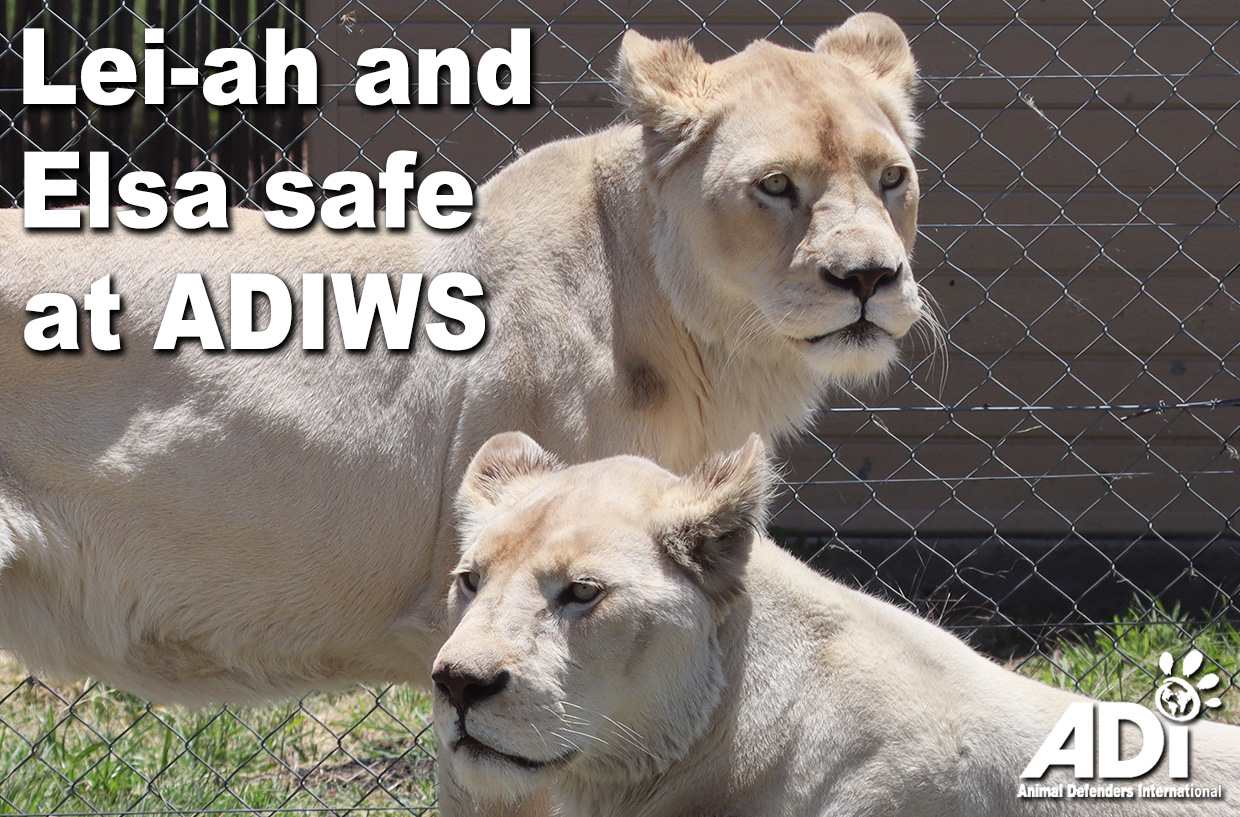
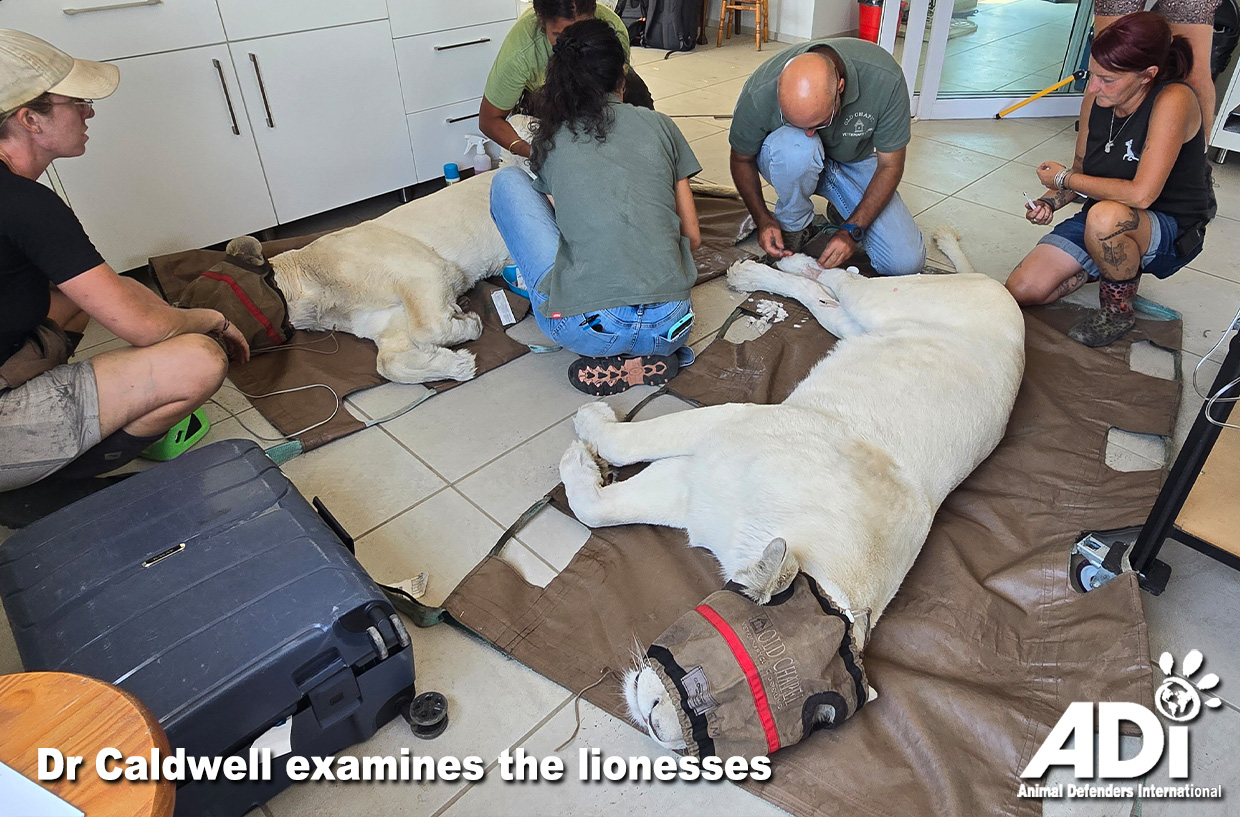
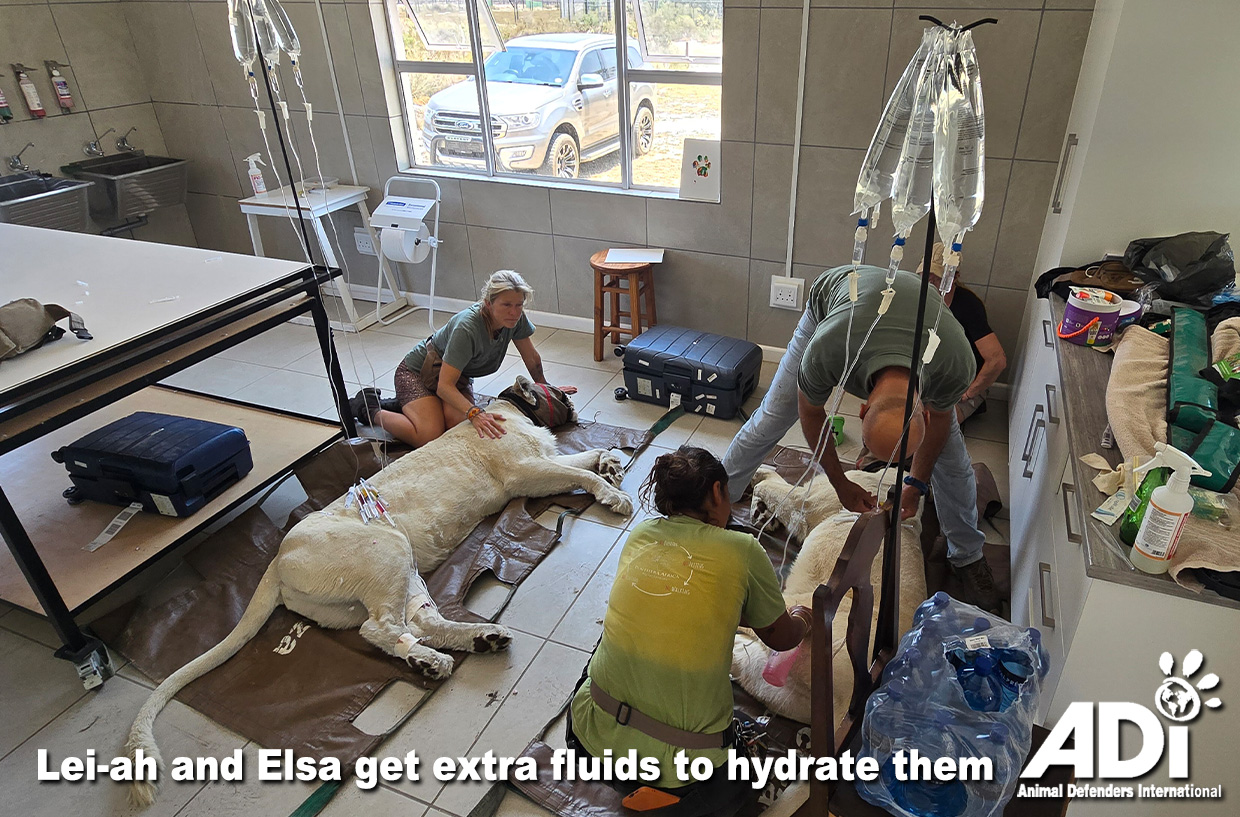
Thank you to everyone who responded to our emergency appeal to evacuate two white lions from Panthera Africa Big Cat Sanctuary after it was devastated by a wildfire. I knew you would come through; our team was already on the way, and after a return journey of over 15 hours, the lions arrived at ADI Wildlife Sanctuary at 4am. Lei-ah and Elsa were clearly traumatised by their terrifying ordeal, but are already settling in.

Here is the story of the operation to bring them home….

Lei-ah and Elsa will now stay at ADIWS for as long as it takes for Panthera to rebuild, which could be many months, or even a year or more.  ADI plans to help Panthera with other animals during this crisis.

This is going to change some of our plans and may mean we need to build additional habitats for rescues we have planned – so we are continuing to appeal for funds to cover this. But when you neighbour’s house is on fire, you just help as quickly as you can.

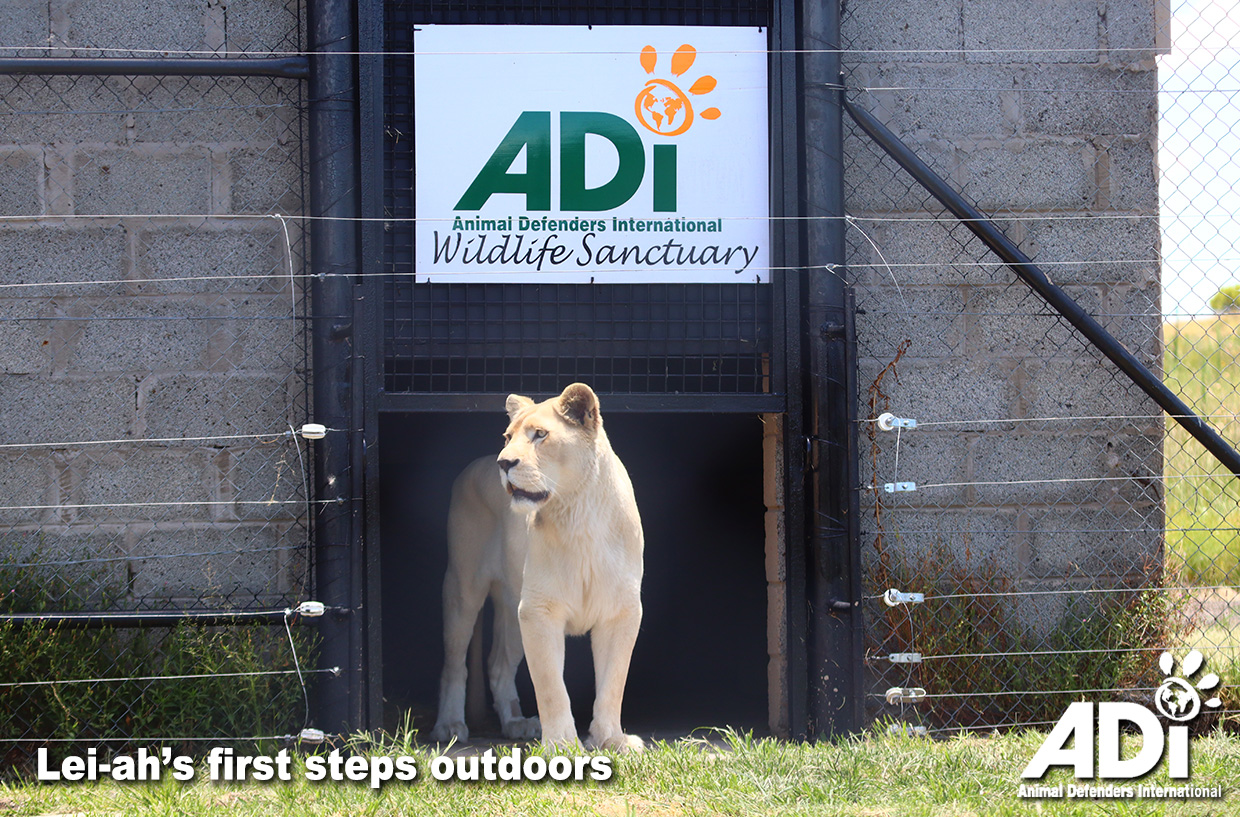
Both lions have only partial sight and we will be assessing their vision to see what adaptations may be needed to their habitat, such as around gates/doorways. They currently have access to a feeding camp of roughly 7,000 square feet and to a 2.5-acre habitat once they are moving around with confidence.

White lions, like Lei-ah and Elsa, are the result of a genetic mutation, like albinism. Tragically this mutation is exploited by constant in-breeding for pet sales, with cruel and disastrous effects including deafness, partial or complete blindness and other health problems.

Thank you to everyone who supported this important life-saving mission at short notice. We are well on the way to our initial target, but will continue to raise funds for veterinary treatment, longer term care and potential habitat adaptations. We are also raising funds to build new habitats for the next rescues, which will be the final 7 from Guatemala. 

Donate UK £ / Euros / Rand | Donate US $, Can $
Or you can donate to our Facebook Fundraiser here: https://www.facebook.com/donate/1165746448882219/

ADIWS stepping in to help wildlife sanctuary fire victims

This week we lost our beloved 18-year Simba who passed away peacefully at the ADI Wildlife Sanctuary, after eleven and half years in our care. I will be doing a special tribute to this magnificent lion, whose life I shared since rescuing him in the Peruvian mountain town of Ayacucho. However, this week we have been confronted by an emergency.

Yesterday, a horrific wildfire ripped through Panthera Africa Big Cat Sanctuary in South Africa’s Western Cape, leaving most of it in ashes. All 26 of their animals are being carefully monitored due to smoke exposure, and some are in critical condition. They say the sanctuary infrastructure is lost. They have asked ADI for help.

ADIWS will be providing a home for at least two lions and possibly others.

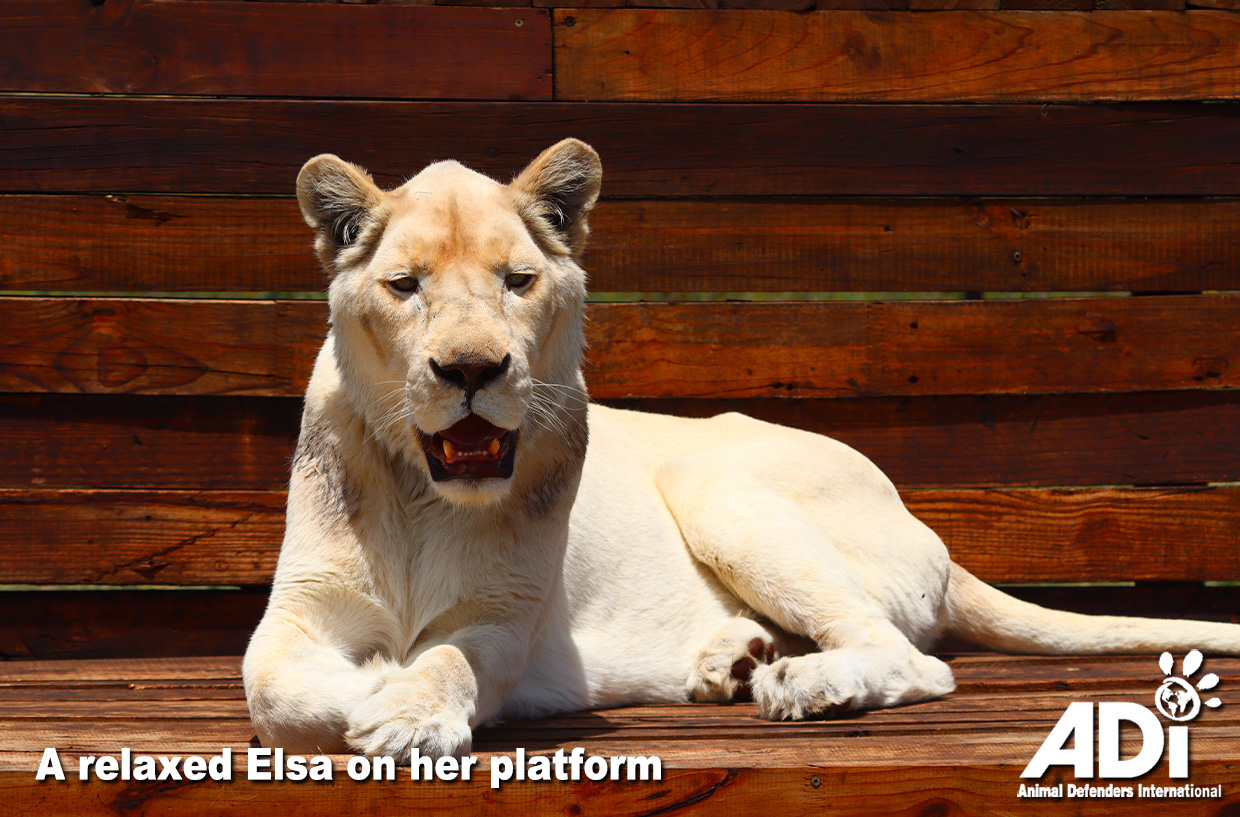
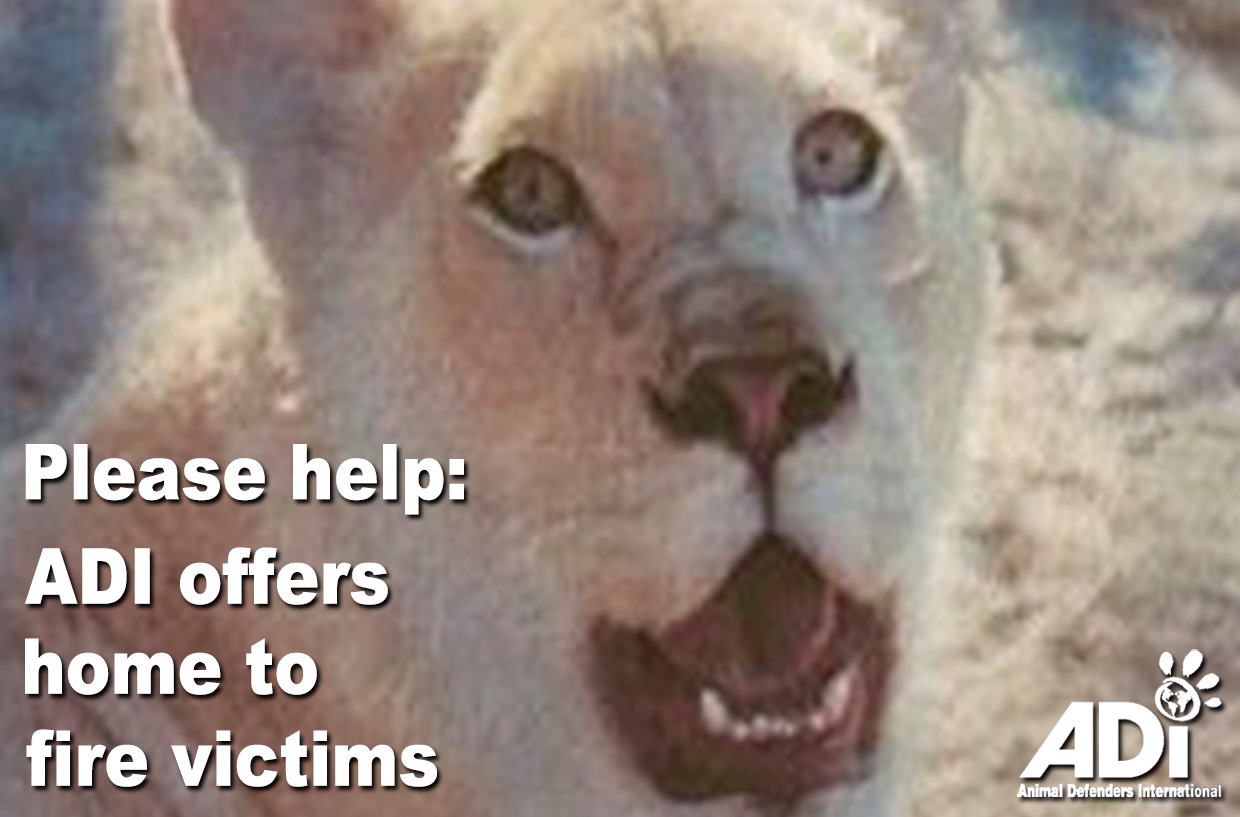
Dr Caldwell has flown down and is treating the animals. ADIWS has offered emergency space for some of Panthera’s residents for as long as they need, and travel crates to help them move other animals to other sanctuaries. Dr Caldwell recommended to Panthera that two nine-year old lionesses, Lei-ah (pictured) and Elsa should come to ADIWS due to their difficulty with their sight, as we have experience with sight-challenged big cats. They may also need us to take a male tiger.

Our team is en route to the Western Cape, and it will be a 15-hour journey back with Lei-ah and Elsa, and possibly the tiger. We were unable to fly them, or our crates, as the aircraft used for internal flights do not have the cargo capacity for our crates.

We will care for the rescues from Panthera for as long as it takes for them to rebuild (which could be a year or more, depending on damage to infrastructure). Or, they may be with us for life. So, these animals could be with us a long time and we will carry the cost.

Can you help us with these unexpected costs to relocate 2 lions and possibly one tiger, to ADIWS in the next 24 hours?  Donate UK £ / Euros / Rand | Donate US $, Can $
Or you can donate to our Facebook Fundraiser here: https://www.facebook.com/donate/1165746448882219/

Counting down our top ten magic moments from 2025

As we kick off 2026, I would like to share with you some of our special moments of 2025. Some had a global impact, like Poland ending the world’s second largest fur farming industry. Some were simply heart-warming, like Muheeb coming home from hospital and defying all the odds. Enjoy our countdown from ten to one!

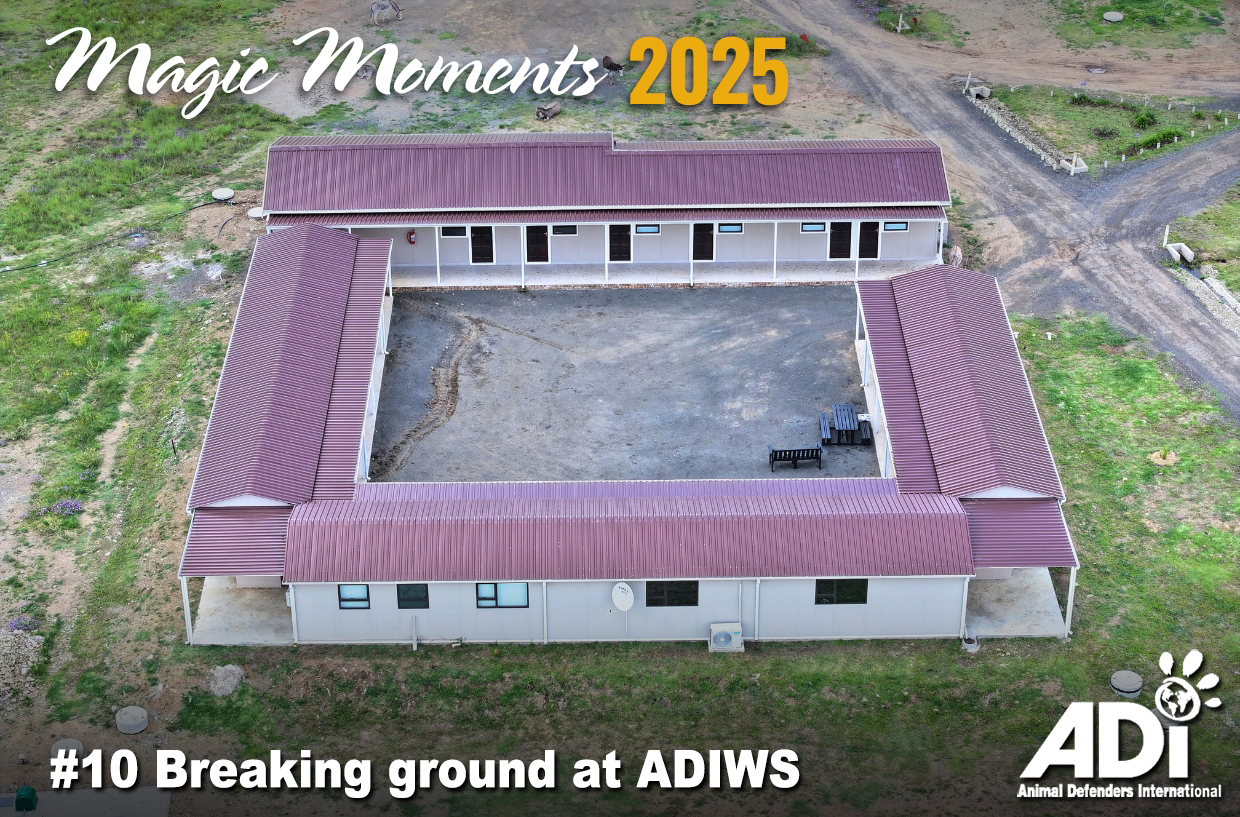
#10 Breaking ground at the ADI Wildlife Sanctuary. It’s been quite a year of construction at the ADI Wildlife Sanctuary with installation of the waste disposal and grey water recycling systems, completion of the final wing of the Tohir Staff Village (pictured – which can house 15 people on duty 24/7 for the animals), and the opening of three new boreholes giving us a huge boost in long term water supplies (after the year started with a serious drought).

As well as building up the infra-structure that keeps the sanctuary ticking, buildings were also going up for the animals. Sasha tiger moved into Alexis Habitat (named after our much-missed rescue team colleague Alexis Diaz Limaco) with a new house with two rooms. Sasha’s old habitat (Stephi) was then converted into the ADIWS Quarantine Unit, with drive through disinfectant for vehicles, footbaths for our team and its own washing areas and tools. Goliath and Coralie were the first animals to move into the facility in May. Unlike many facilities of the same name, our quarantine offers a full size 2.5-acre natural habitat with two feeding camps, pools, platforms and a two-room house, so animals can remain here as long as necessary. 2026 looks set to be even busier with work planned for the Non-Predator Reception Area, ADI operations complex and Jean Warner Sprague Education Center and the overhaul of Chris Lee Lodge.

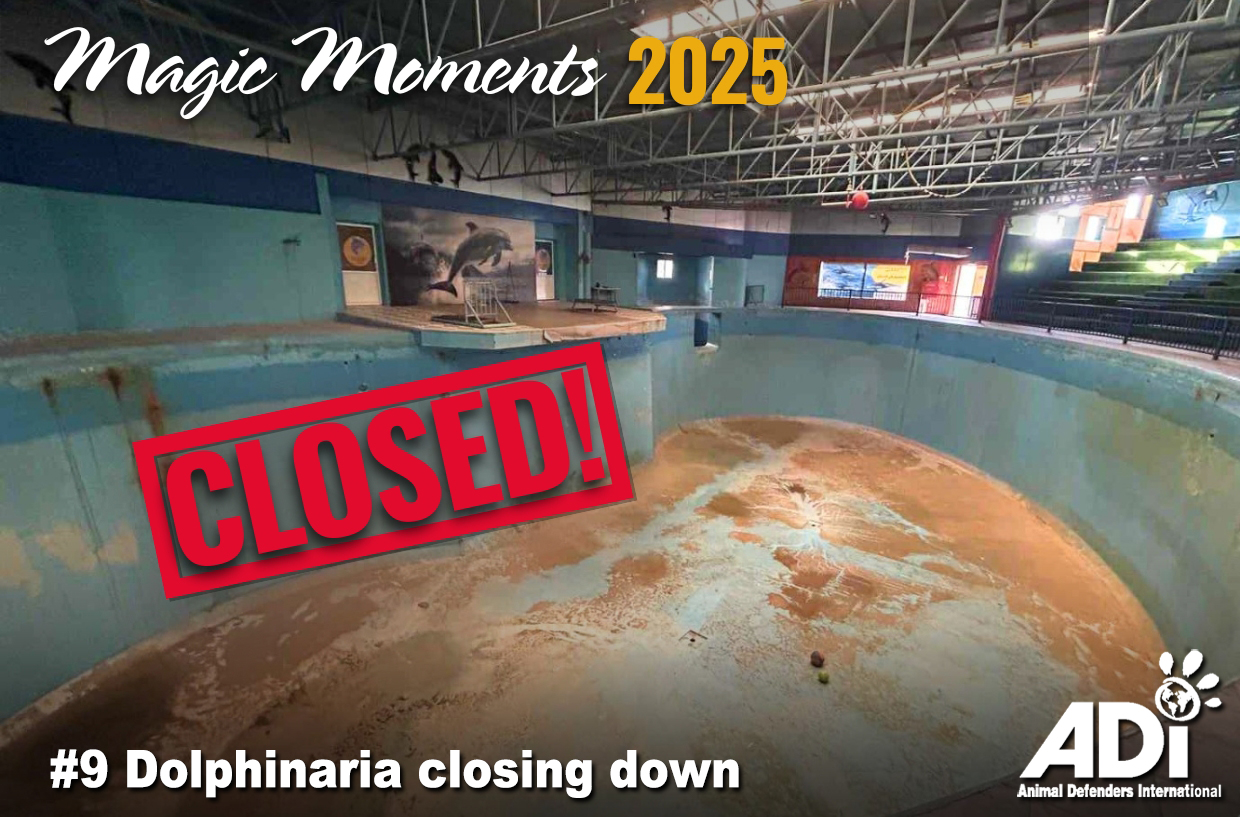
#9 Dolphinaria closing down. As the world wakes up to the cruelty of keeping marine mammals in tiny, barren tanks in the name of entertainment at least five of these exhibits have closed their doors, worldwide. Marineland in France, Marineland in Canada, Dolphinaris Barceló in Mexico, The Dolphin Resort in Bahrain, and Miami Seaquarium in the United States all permanently closed.

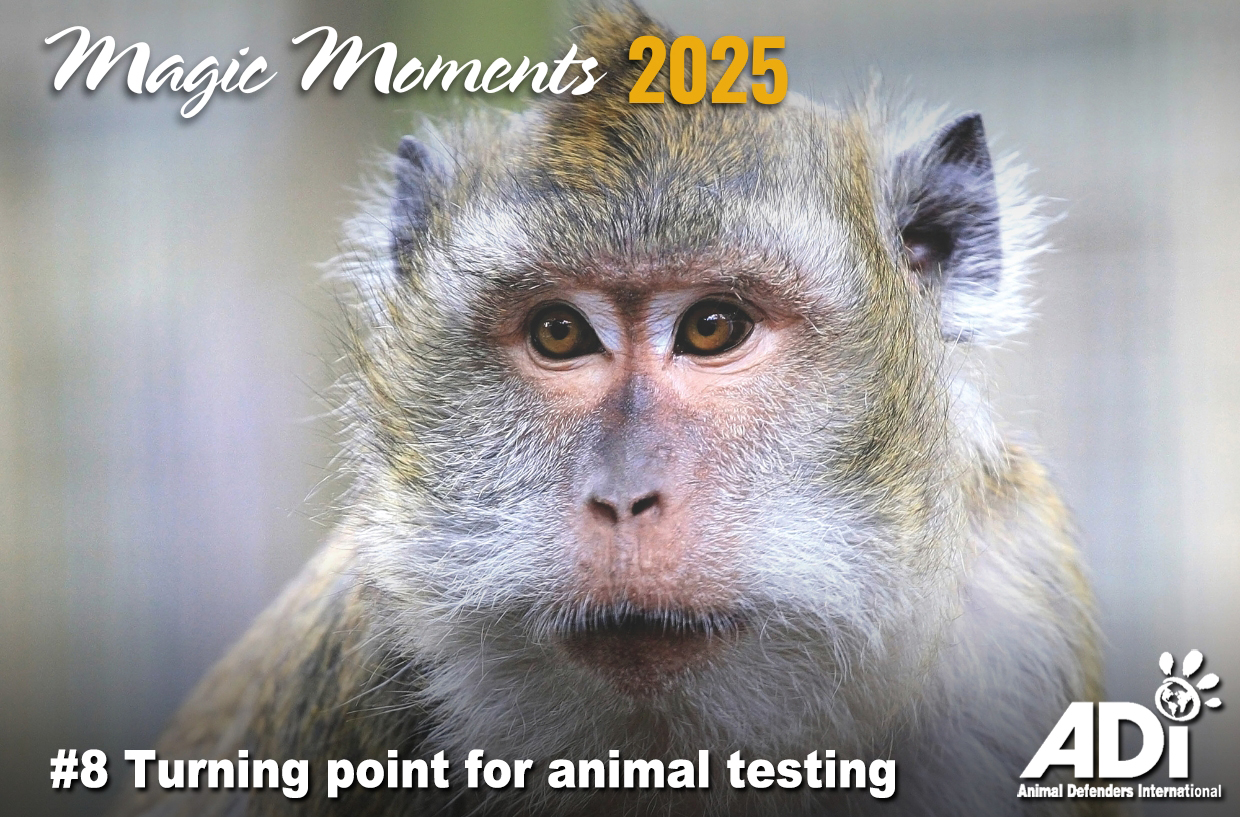
#8 US FDA & UK Roadmaps to end animal testing and US CDC to end monkey experiments. We will work to support these proposals to try to ensure they are implemented. The US Food and Drug Administration (FDA) has launched a ‘Roadmap to Reducing Animal Testing in Preclinical Safety Studies’ and the UK Government’s ‘Replacing animals in science: A strategy to support the development, validation and uptake of alternative methods’ could mark a turning point in the battle to end animal experiments. A breakthrough is the FDA acknowledging “…growing recognition that animals do not provide adequate models of human health and disease”, that “over 90% of drugs that appear safe and effective in animals do not go on to receive FDA approval in humans”, and advocating “more effective, human-relevant models”. The UK document maintains a familiar defensive position on animal experiments but does set deadlines for eliminating some tests. Watch for important announcements from ADI this year on how to ensure the roadmaps lead somewhere.

A more tangible result for now is the US Centers for Disease Control and Prevention (CDC) stating they will phase out the use of monkeys in their experiments by the end of the year saving hundreds of monkeys. While another victory saw the Netherlands government vote for public funds provided to Europe’s largest primate facility, Biomedical Primate Research Centre (BPRC), to be only used for animal-free research. An ADI undercover investigation of BPRC exposed terrified monkeys being chased into crush cages; sedated but still conscious monkeys wincing as they are tattooed and used for tests; animals with painful fighting injuries; and stress-related anal prolapses. Help ADI make 2026 a really important year in the battle to end animal experiments.

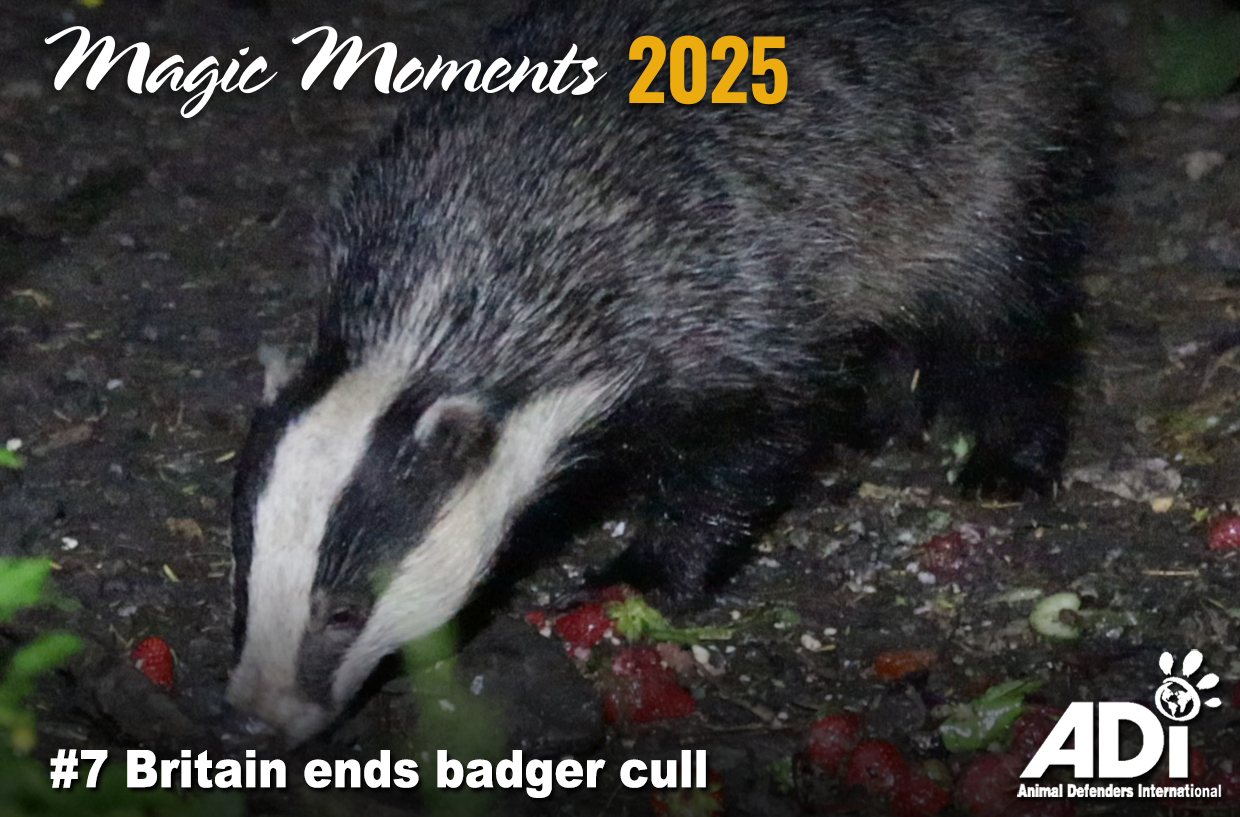
#7 Britain ends badger cull. Angela Eagle MP, Minister for Food Security and Rural Affairs, announced the UK’s notorious culling of badgers would stop by the end of 2025. The culling policy has been repeatedly discredited and the UK Government is now developing a new, science-based plan to tackle bovine TB – focusing on cattle testing, movement controls, farm biosecurity, and badger vaccination.

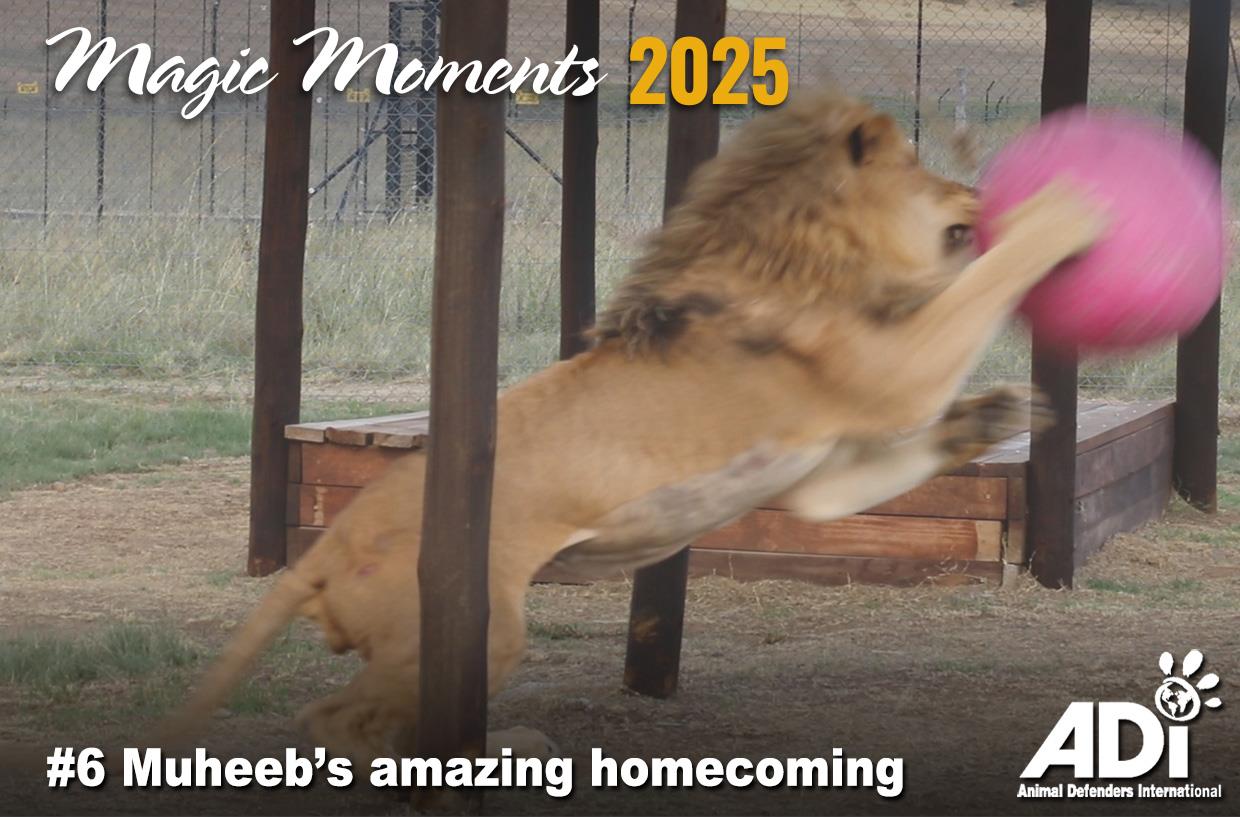
#6 Muheeb comes home from hospital and starts to play. The year began with the heartbreaking news that Muheeb, one of the lions we rescued from the pet trade in Kuwait, had inoperable cancer. We all had heavy hearts when he returned from hospital and we opened his crate to let him back into his habitat at the ADI Wildlife Sanctuary (Keith’s Happiness Habitat). Then Muheeb ran to the big robust-a-ball that was hanging up and began to play, grabbing it and batting it back and forth, and he just kept playing. He had no intention of giving up. Almost a year later, he’s still playing, has put on weight, and continues to defy the odds. An inspirational lion who reminds us all: Never, ever give up. Watch the video here

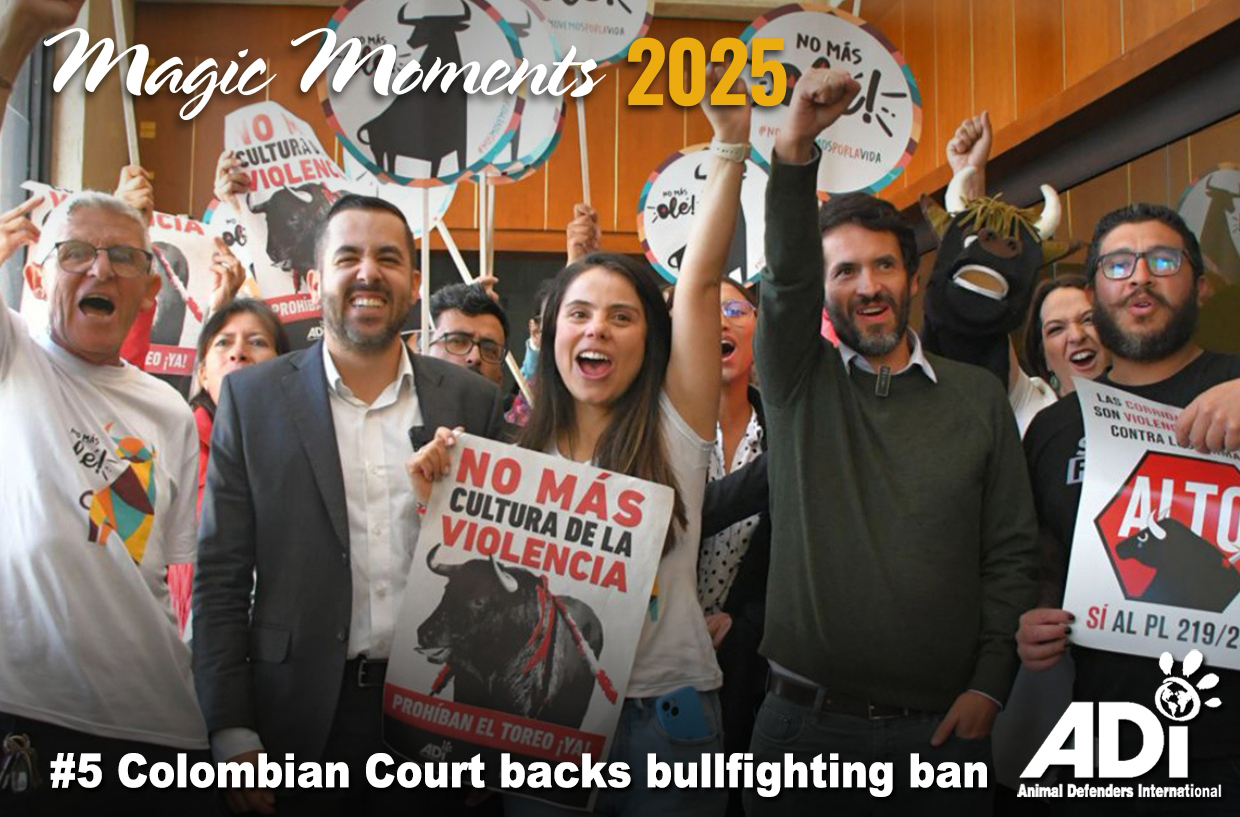
#5 Colombian Court backs bullfighting ban. Colombia’s ban on bullfighting was the landmark victory of 2024, so 2025 saw an onslaught from the industry to try to overturn it. That’s what makes the unanimous decision of Colombia’s Plenary Chamber of the Constitutional Court’s to not only support Law 2385 of 2024, but to extend it to other events abusing bulls and cockfighting, one of our magic moments of 2025. It’s always a long, hard fight to secure a ban on animal abuse and it can be followed by another battle to ensure such bans are enforced. The Court has allowed a three-year period for implementation of the new law, and ADI Latin America will keep watch to ensure there are no extensions.

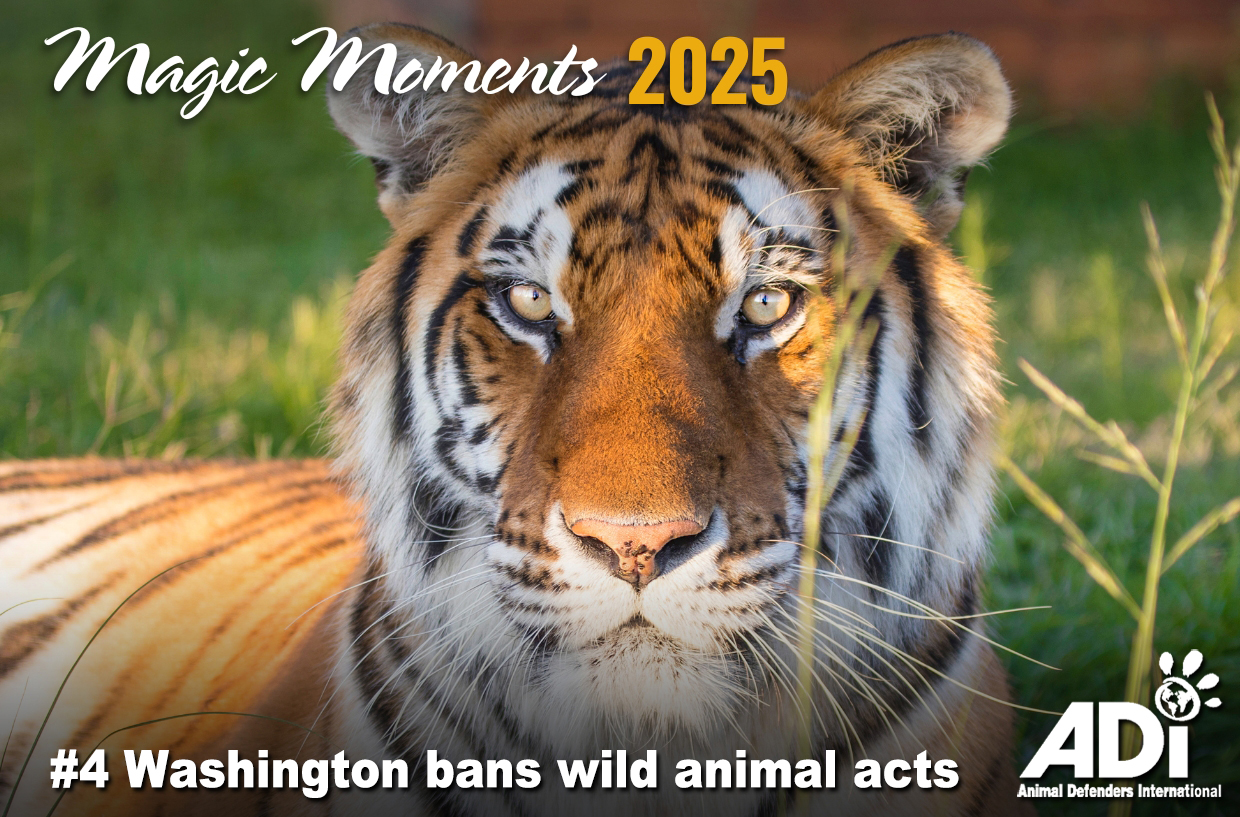
#4 Washington state bans wild animal acts. When Governor Bob Ferguson signed SB 5065 into law, banning the use of elephants, big cats, non-human primates, bears, and hybrids of these species in travelling acts statewide, Washington became the seventh US state with a ban. There’s still a way to go for the US, given progress elsewhere, but another animal circus fell by the wayside with Garden Bros Nuclear Circus removing performing animals from their shows.

#3 Bahati joins the herd. ADI stepped in to help a small calf found in the back of a pickup truck, cruelly tied up and struggling to breathe. The perpetrators are being prosecuted. We named him Bahati, which means lucky in Swahili. This is the most recent case where the SPCA has called in ADIWS to help. We have taken cows, pigs, geese, donkeys, horses, and injured wildlife. We are pleased to be a vital part of the rescue network in our region, enforcing animal protection laws and tackling wildlife trafficking. However, Bahati’s rescue confirms that although we have a lot of space, we are reaching our limit in terms of facilities for them. So, for Giving Tuesday 2025 we launched an appeal to build a new Reception Area for the rescued non-predator wildlife (antelope, tortoises and others) as well as the domestic rescues. Thanks to a wonderful response, construction will start this year so that we can continue to take in these animals, whether they are destined to be in our care for life or returned to the wild after veterinary treatment and care.

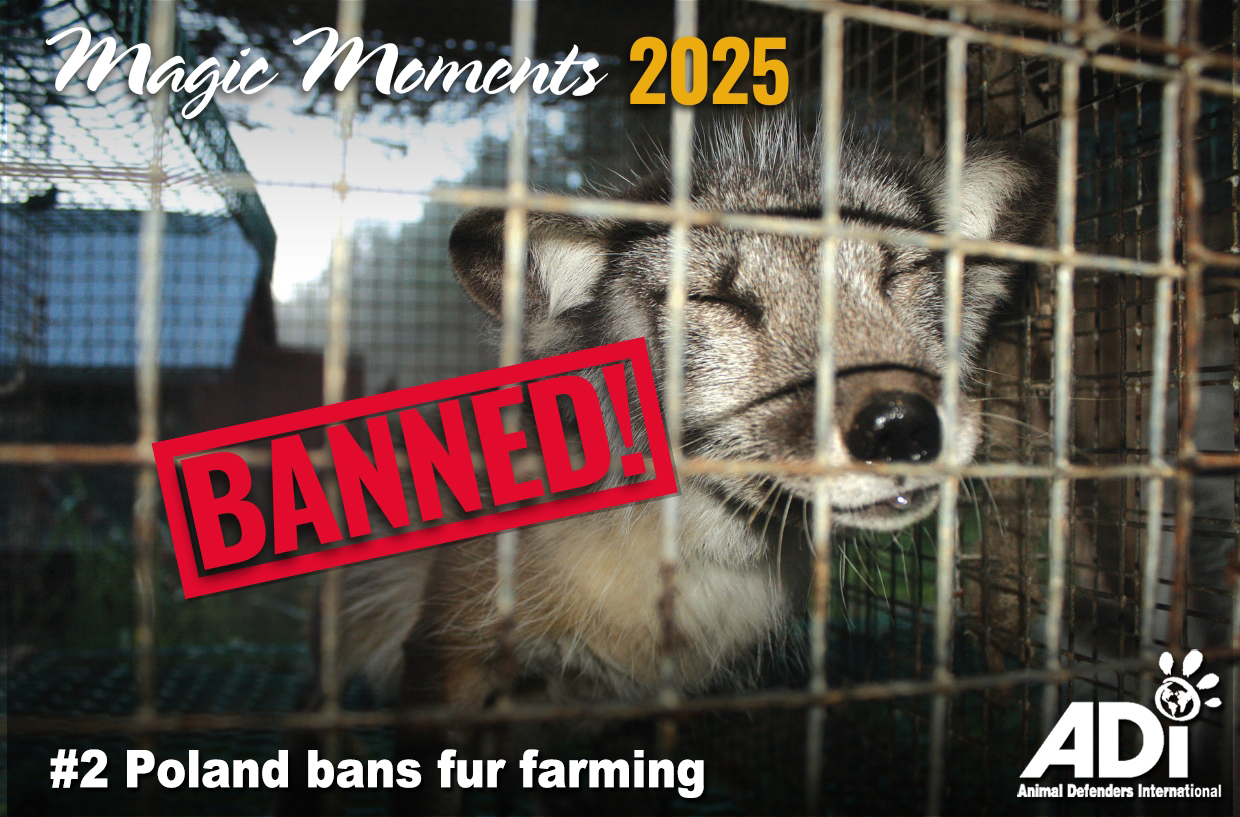
#2 Poland bans fur farming. The world’s second largest producer of fur, over 3 million mink and foxes are killed every year in Poland. The ban will end the killing by 2033. It is hoped that many farms will close ahead of schedule, as has happened elsewhere. This is the biggest national fur industry shut down so far, a seismic shift. Many will recall how ADI used hidden cameras in a Polish fur farm to track the lives of young foxes, from birth to death. The farmer was subsequently convicted of cruelty. A stepping-stone to ending the suffering. 2025 also saw the last of Norway’s fur farms closed following the 2019 ban – another country where ADI had investigated fur farms.

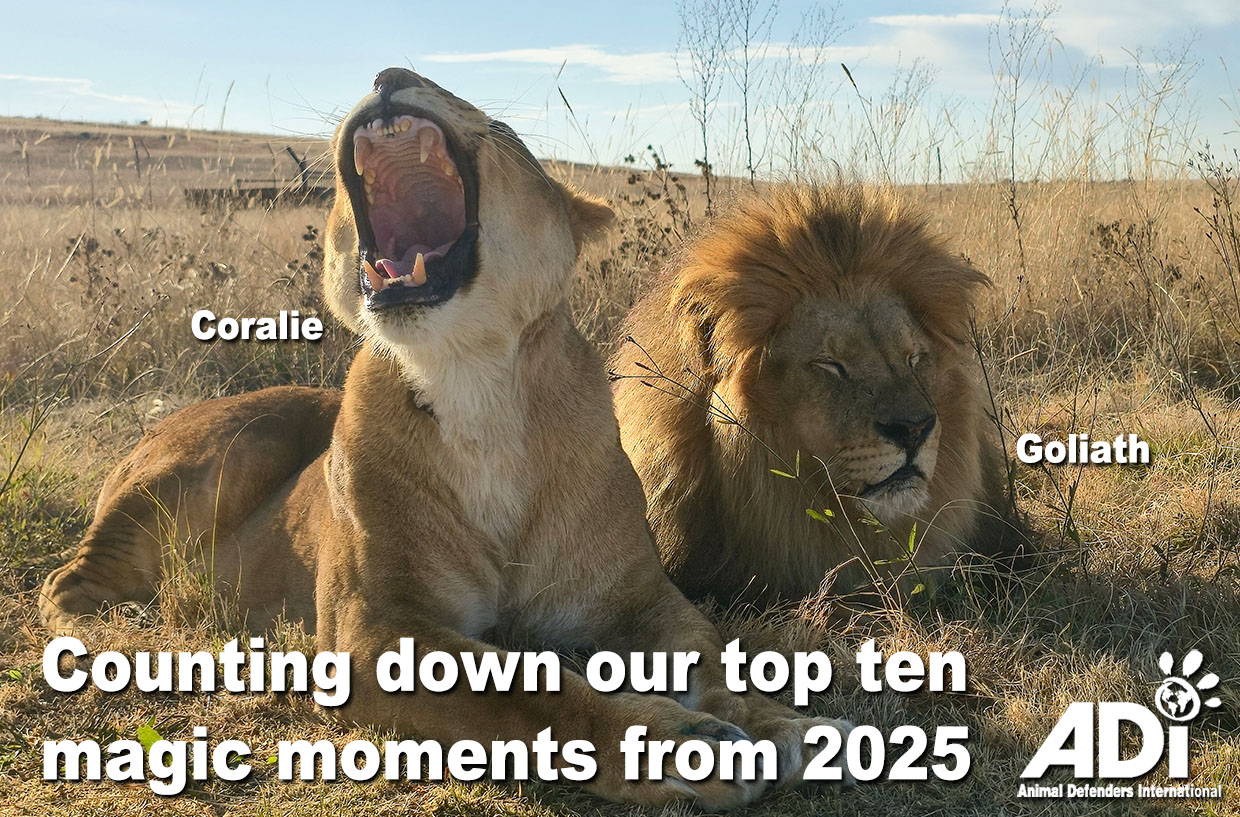
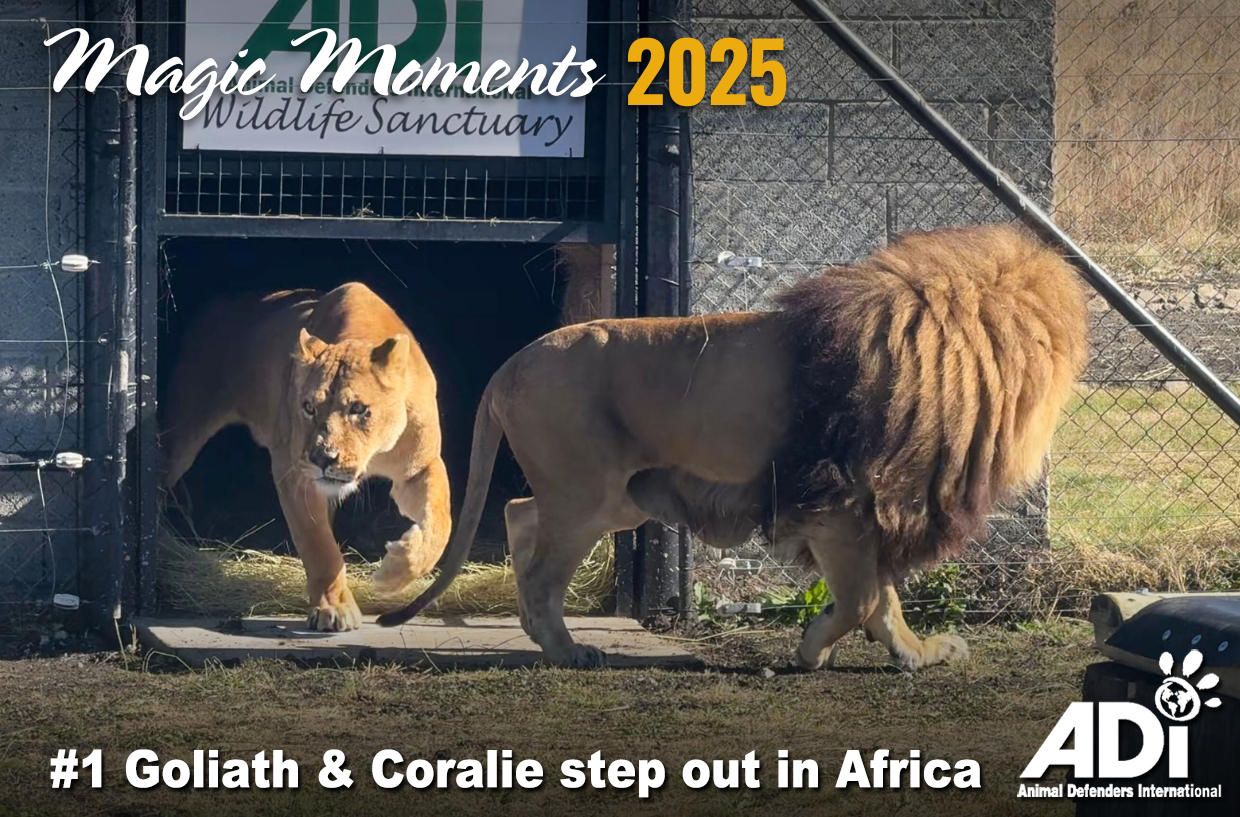
#1 Goliath & Coralie step out in Africa. Rescued from a tiny circus cage in France, Goliath and Coralie arrived on the night of May 21 at the ADI Wildlife Sanctuary, South Africa, after an epic journey. With the sun shining, the next morning the door to their house was slowly opened and out they stepped. Goliath first, quickly followed by Coralie, those great paws stepping onto the land of their ancestors for the first time. A glorious moment for two lions, back where they belong, as France phases out the use of animals in circuses.

Thank you to Tonga Terre D’Accueil, which cared for Goliath and Coralie after their removal from the circus following an investigation by Free Life Association, and to Qatar Airways Cargo for donating the flights as part of their WeQare program to help wildlife.

Watch Goliath & Coralie’s journey from France to the ADI Wildlife Sanctuary in South Africa.

Support ADI and make 2026 a really special year for animals. Donate here.