
On Sunday, Mother’s Day will be celebrated in the UK, Ireland, and other countries – while in the US and several other countries, Mother’s Day is May 11, and we will again celebrate our moms! For our sanctuary moms – lioness Kiara, mother of Mahla and Scarc, for tigress Lupe, mother of Max and Stripes, for horse Amani, mother of Crockett, and for donkeys Brighty and Puzzle, mothers of Nugget and Eeyore respectively – every day is Mother’s Day. So we thought we’d pay tribute to our moms while also, sparing a thought for those moms in captivity around the world, who are not so lucky.
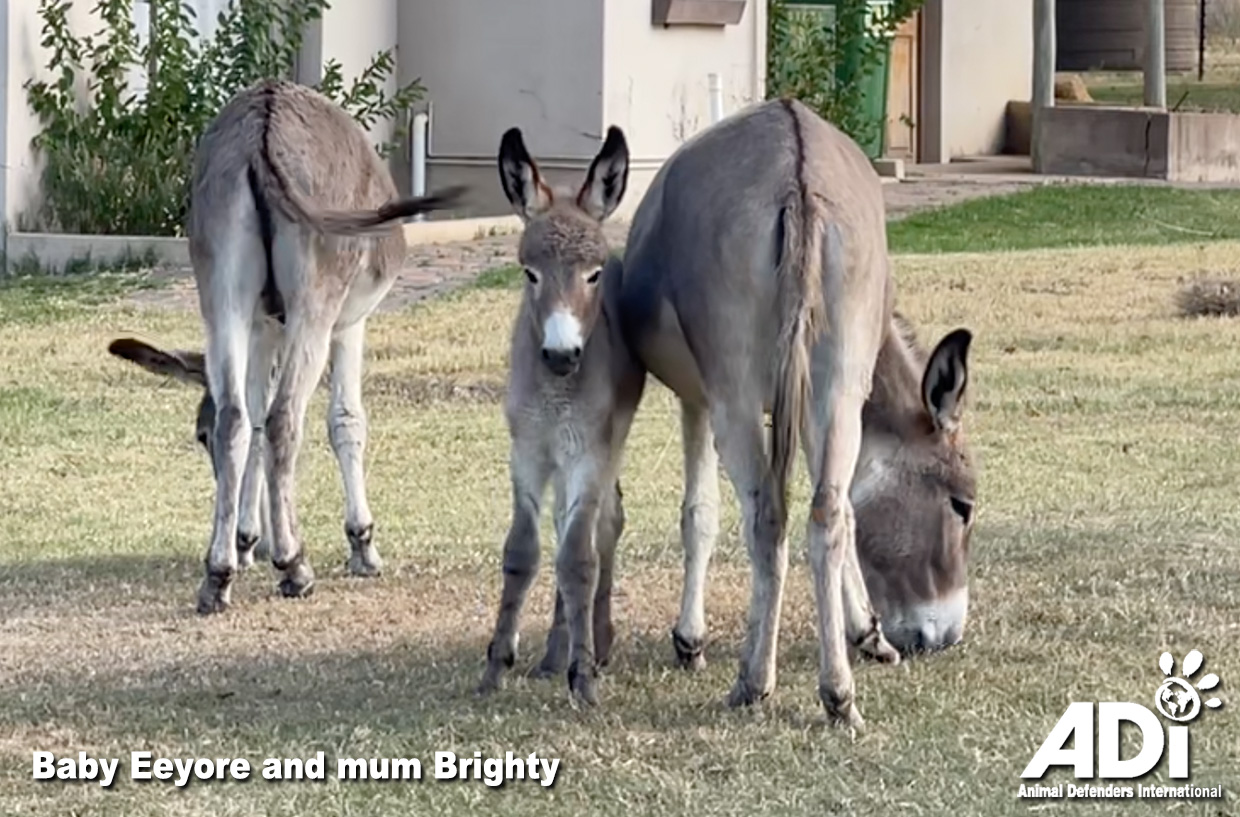
As a Sanctuary, we do not allow breeding, but we were in for a surprise when we rescued our family of donkeys from an abandoned lodge – donkeys have a 14-month pregnancy and so it was a while before we noticed two were pregnant. Almost a year later, we were joined by Nugget and then Eeyore. Since then, our donkey family has adopted a baby springbok (also rescued). The family roams freely across the ADIWS and when a storm is coming, the donkeys huddle protectively around their young, including the springbok.

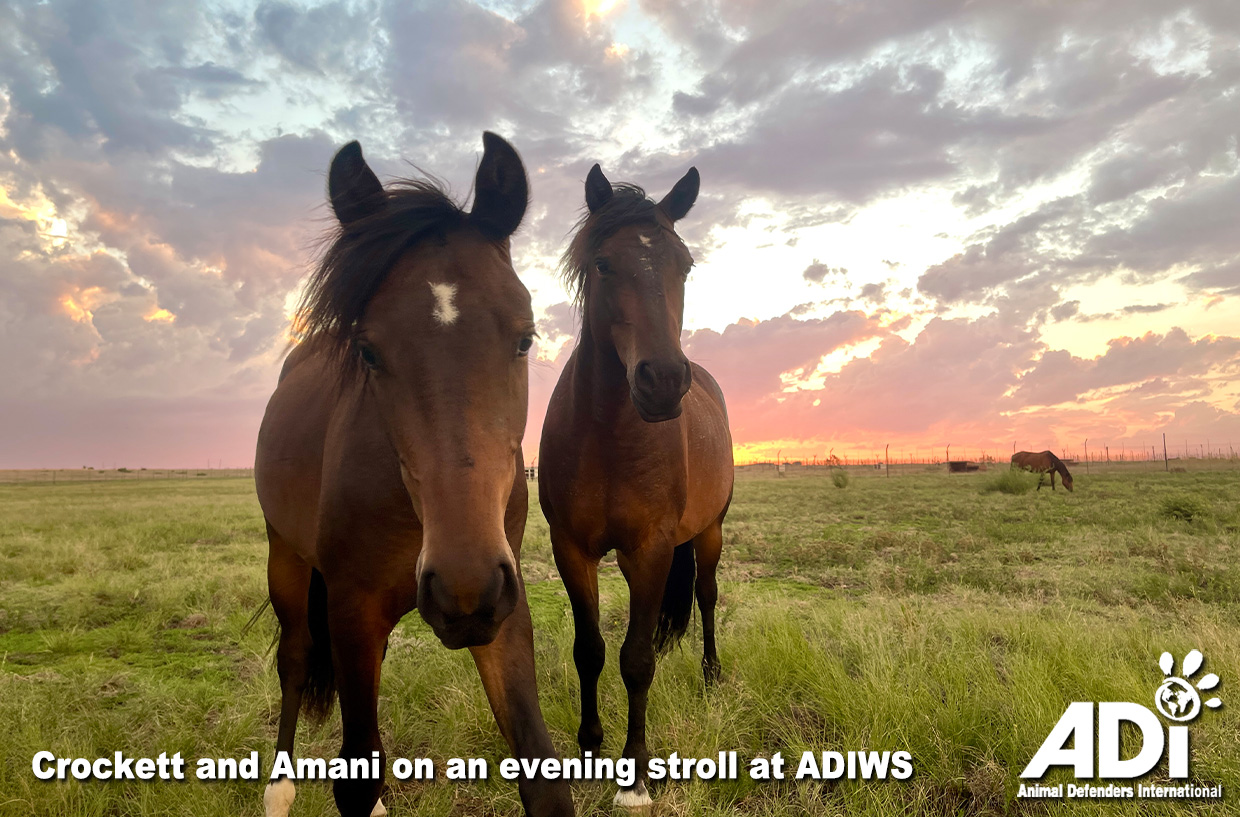
Crockett was born on a township street where, along with mother Amani and father Apollo, he was rescued after the family was found cruelly hobbled. Joined by another rescued horse, Sammy, they, like the donkey family, roam freely across the whole Sanctuary and will often turn up at the door for carrots and apples for breakfast.

Tiger cubs Max and Stripes were rescued from a circus in Guatemala at 6 months old, spent their first year at the ADI Temporary Rescue Unit (where they enjoyed their first pools), and so have grown up knowing little of the life they escaped. Alongside their extended family, they have all known freedom, care and loving kindness at the ADIWS.

Captive lion and tiger mothers are tormented throughout their lives – confinement, repeated pregnancies and heartbreak as their cubs are torn from them. Who can forget the grotesque scenes in ‘Tiger King’ when, even WHILE she was giving birth, a mother tiger’s newborn cubs were being hooked away from her. And this continues to be the fate of mothers in captivity worldwide – their babies torn away from them for photos, or to be used as pets, or killed for food or other products.

When I first met Lupe, she was in a metal box in a circus cage, nursing tiny cubs Max and Stripes. Circus workers would use metal poles to drag her babies out of the cage for photos with members of the public. Although Guatemala had banned animals in circuses, it was many months before we could take the animals, by which time Max and Stripes were six months old. However, they were still young enough for them to be protected from the most devastating impacts of early age malnutrition in the circus (many cats suffer neurological, skeletal and other problems due to lack of the necessary vitamins and minerals in their diet from a young age). Max and Stripes have grown up big and strong at the ADI Wildlife Sanctuary and tower over their mother.
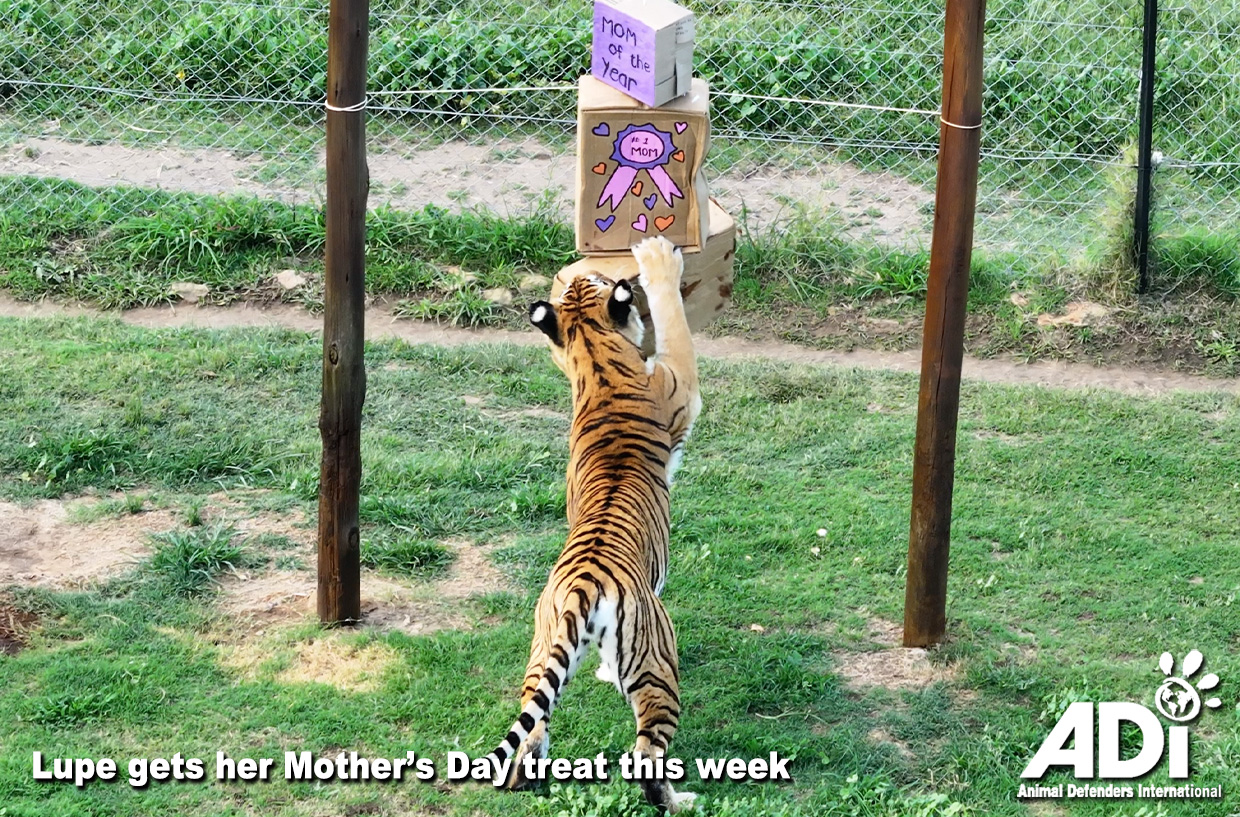
Sadly, Lupe was not so lucky; malnutrition and in-breeding in the circus have taken their toll on her body: she suffers seizures, has a cataract, and severe allergies (Max also suffers from allergies). Her seizures mean she cannot live with Max and Stripes (we cannot know how they may react), and she can only enjoy the pool when she is being monitored. However, she sees the boys every day and they can make contact through the fence. The circus stole a lot from Lupe; she is on lifelong medication, cannot plunge into a large pool, but she is enjoying the best life possible.
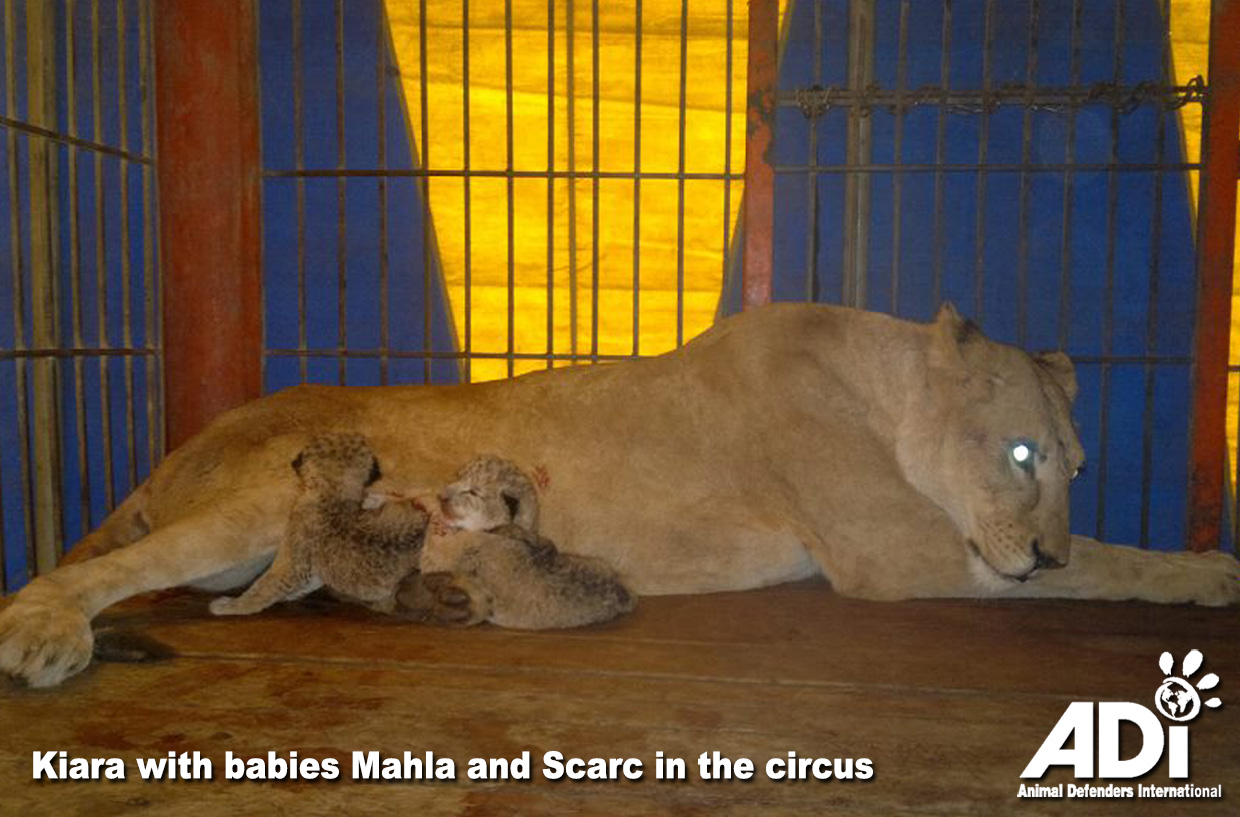
No life story expresses the anguish these mothers endure more than lioness Kiara.
I will never forget trying to distract her with toys in a truck stop in Cusco, Peru, as she stared into the distance and heartbreakingly wailed for her cubs, Mahla and Scarc. Earlier in the day, we had raided a circus with riot police to remove all the now-illegal animals. The circus brought a mob, got a lawyer, and a day-long stand-off commenced, during which the circus separated Kiara from her cubs. We loaded three lions, including Kiara; but officials, facing an angry mob, halted the rescue. We had to leave without castrated male Smith, and Kiara’s cubs, planning how to go back for them.

We holed up at a truck stop with the three lions and spent the next day trying to force the removal of the remaining animals through the local court. We headed back to the ADI Temporary Rescue Unit (TRU) near Lima with heavy hearts. Kiara paced and called for her cubs for a week as we worked to save them. We then returned to rescue the cubs.
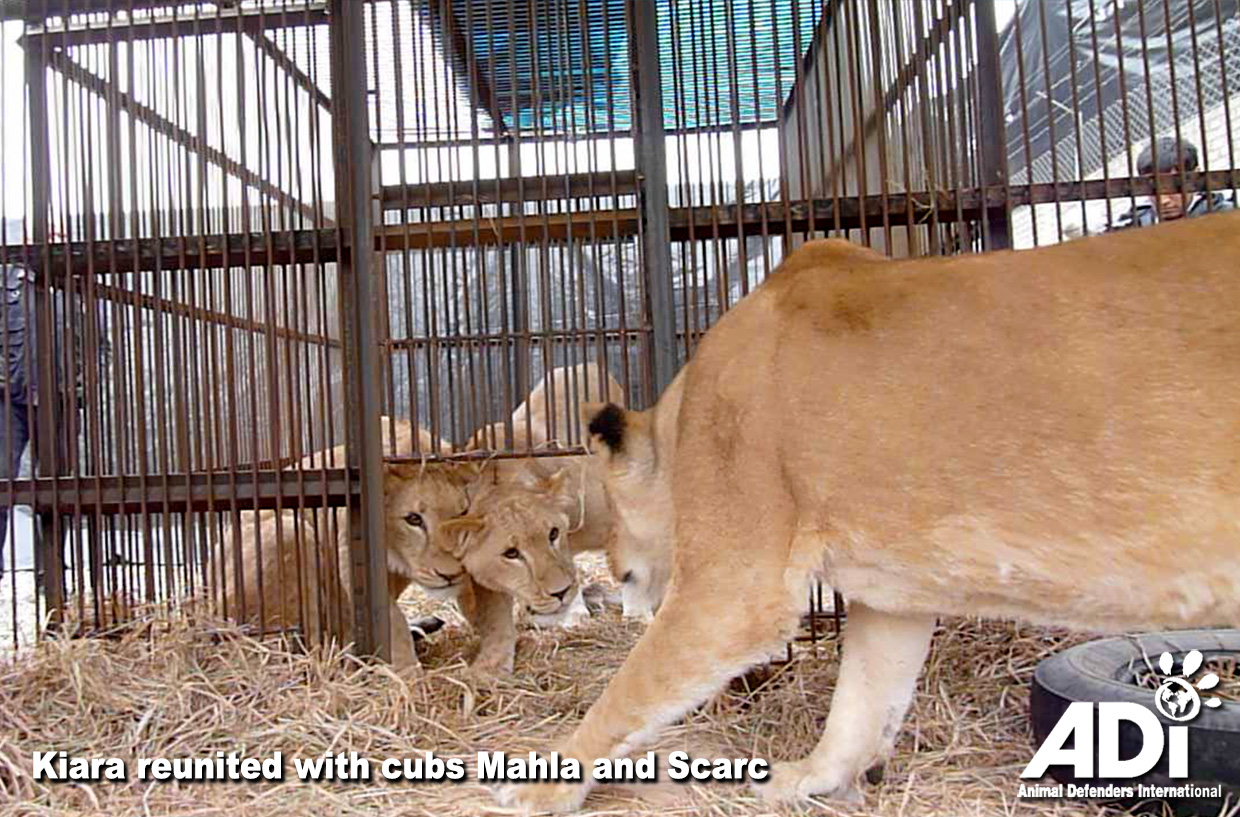
As we returned back to the TRU, even before we were through the gate, Kiara was on her feet. She knew. We removed the travel covers; she saw her cubs and was transfixed. We lowered the cage and released Mahla and Scarc into the cage with Kiara. During a long greeting of nuzzling and vocalizing, Kiara even lightly cuffed Scarc around the ear as if saying, “Don’t ever frighten me like that again”. The scenes were shown in an episode of the first series of ‘Dodo Heroes’, called ‘Jan & Tim’s greatest show on earth’, available on Amazon Prime.
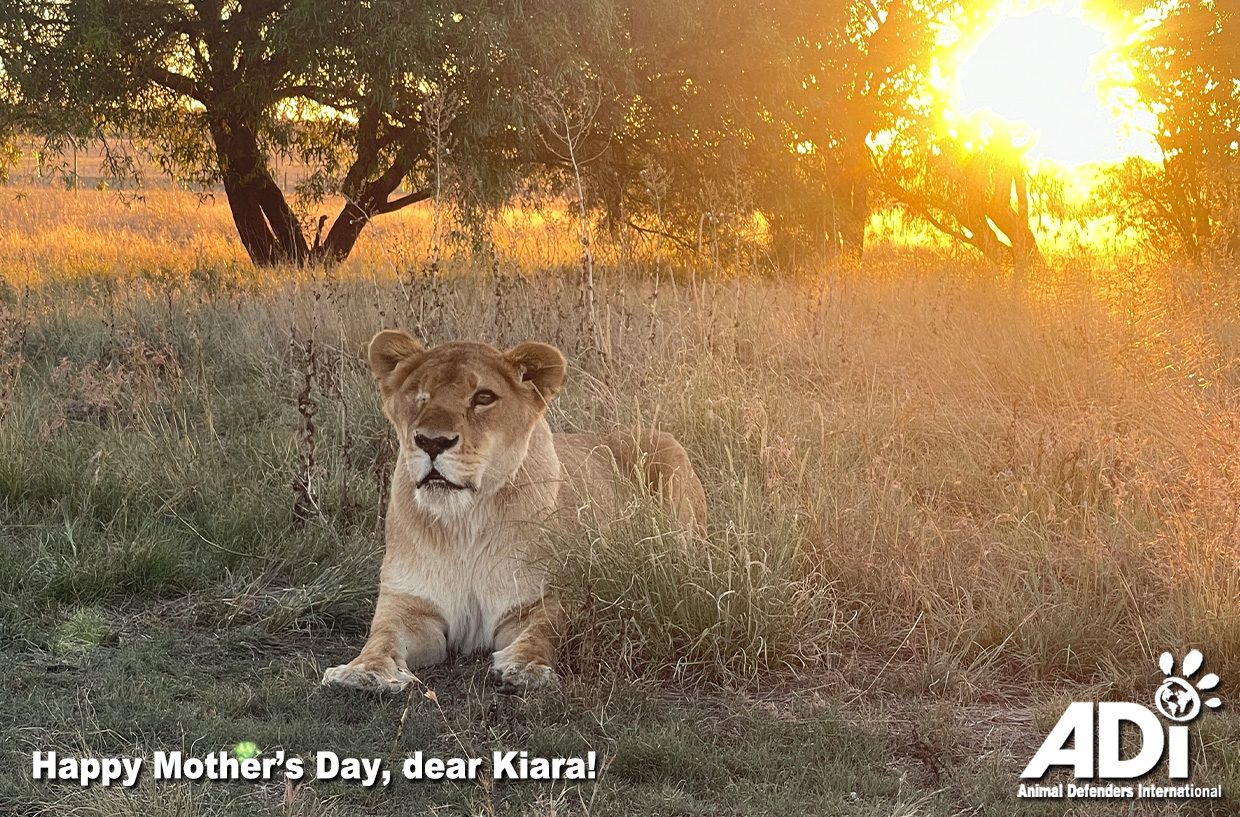
Those magical moments in Peru were ten years ago. Mahla and Scarc have grown into powerful lions, and they are very protective of their mother (who has lost an eye due to cataracts, from early age malnutrition).
Thank you for helping to transform the lives of our ADIWS mothers. Sunday will be another happy day for them. But please never forget, and tell all of your family, friends, work colleagues, social media contacts that animals’ mothers (and their babies) pay a high price for those pics of people with young animals you see on social media. With your help, we can change the world for animals.
Will you consider a special Mother’s Day donation to help?
Donate UK £, Euros, Rand | Donate US $, CA $

Please also consider what it takes to rescue young animals with their mothers. Since their rescue from the circus, we have cared for Kiara, Scarc, Mahla in the TRU for a year, then flew them to South Africa, built their ADIWS home and they have already been with us for a decade. We hope they will be with us for another ten years. Youngsters Saif and Dhubiya, rescued in Kuwait last year, could enjoy life at ADIWS for another 20 years. Crockett could roam ADIWS for 25 or more years, and Nugget and Eeyore may outlive many of us, and still be roaming ADIWS in 30 years’ time. They need you to be with them forever. This is why a bequest to ADI in your will is so vital, a gift that secures their future. Find out more here.
Please enjoy our video tribute to the ADI Wildlife Sanctuary mothers:





 Jan Creamer