
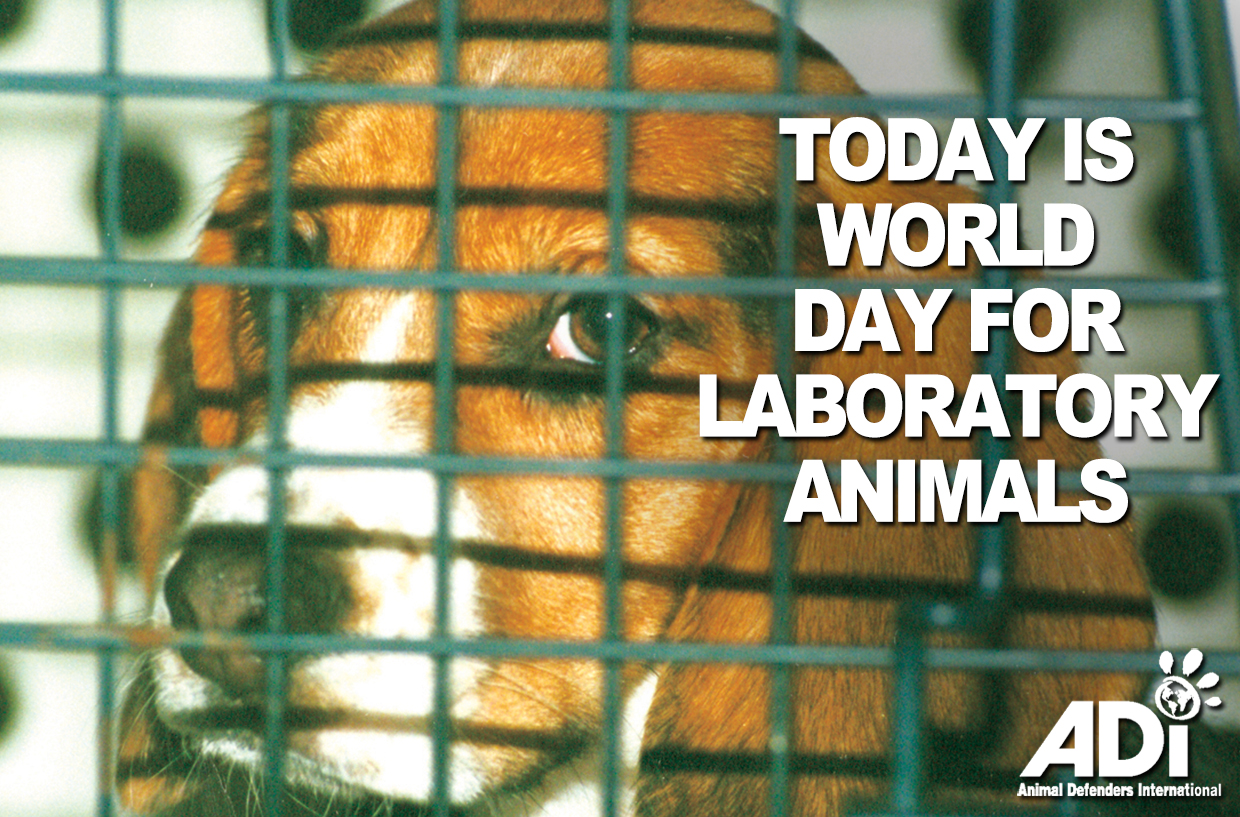
Today is World Day for Laboratory Animals (WDLA), founded over forty years ago by the National Anti-Vivisection Society/Animal Defenders International. Like other commemorative days, World Day for Laboratory Animals is a day we can bring public attention to the millions of animals that die in experiments, in secret, around the world – experiments producing results which can never be trusted.

Over the years, we have marked WDLA in a variety of ways, from huge public demonstrations of tens of thousands marching through London, vigils at laboratories, publicity events, launching new undercover investigations from inside labs, and legislative work. This year, in the UK, we are briefing Members of Parliament on ending dog experiments, as well as pushing forward the UK government policy to replace use of animals with advanced, human-relevant methods. In the US, we are pushing members of Congress to push forward the FDA’s proposals to replace animal use with advanced, human-relevant technology and methods. ADI Colombia is staging a protest at the National Institute of Food and Drug Surveillance (INIMA).

WDLA is also a time to remember how, at the turn of the previous century, two brave women, Lind af-Hageby and Leisa Schartau, went undercover at London University to document the suffering of a small brown dog passed from one person to another during lectures for students, where dogs were cut open. The women took detailed notes and exposed the cruelty, which resulted in violence by the students who marched with the vile little chant, “Ha, ha, ha, he, he, he, Little Brown Dog, how we hate thee”, and our founder of the National Anti-Vivisection Society, Frances Power Cobbe was attacked in our office. A statue was built to remember the little brown terrier but after being vandalised several times, the memorial was stolen and disappeared. We erected a new monument in1985.
More than a hundred years later, the suffering continues, but we have seen progress, thanks to our campaigns, funding of advanced, non-animal techniques, and the awareness created by the annual World Day for Laboratory Animals:
- Ending cosmetics testing on animals in the UK, Europe, and other countries such as Colombia.
- Preventing what would have been the biggest ever animal testing programme, proposed under the EU’s chemicals testing directive, REACH.
- Ending the use of apes in experiments in the UK and EU.
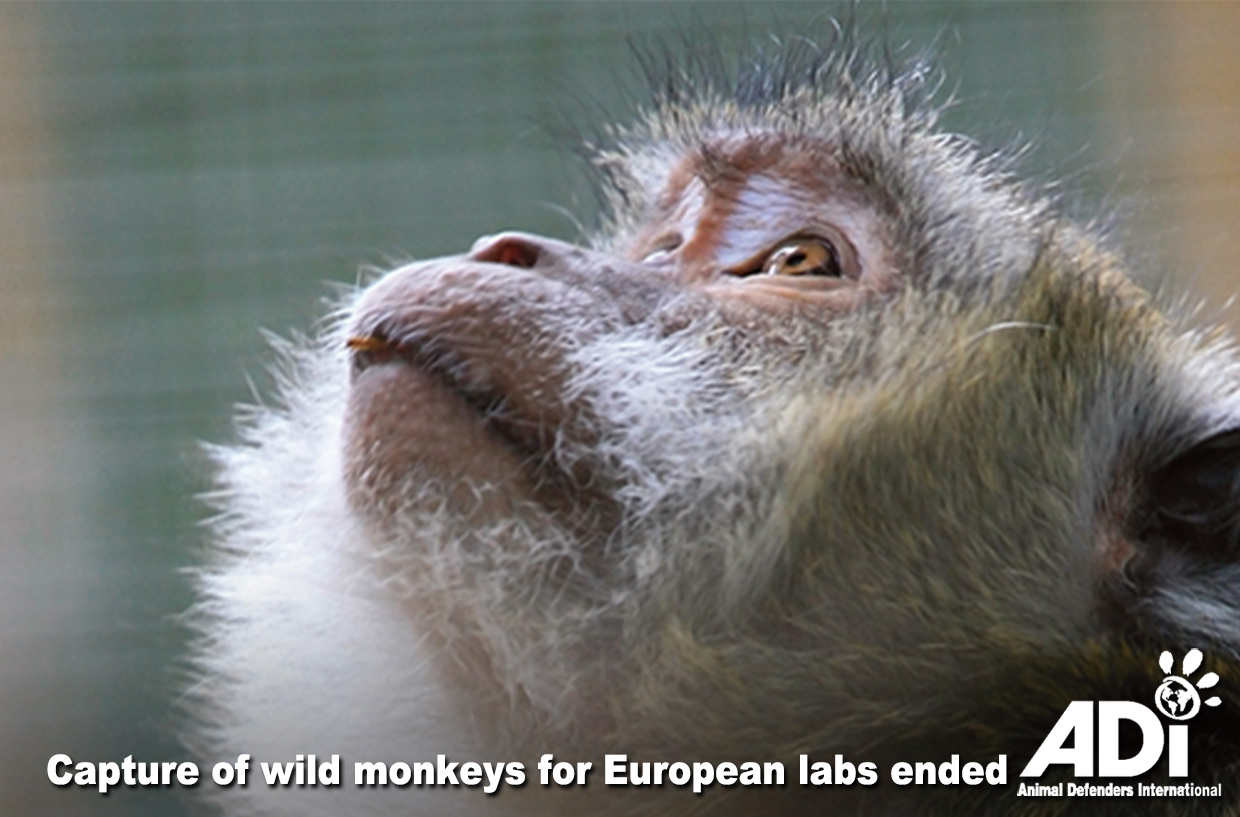
- Ending the wild capture of monkeys for UK and EU laboratories.
- Ending the wild capture of owl monkeys in the Amazon forest for malaria experiments in Colombia.
- Seeing various animal protocols in labs eliminated, such as the ascites method of antibody production.
- Ending requirements for school dissections in many countries.
- Developing advanced, non-animal technologies and methods for research and testing, e.g., one of our research projects developed the first standard non-animal test for dental fillings.
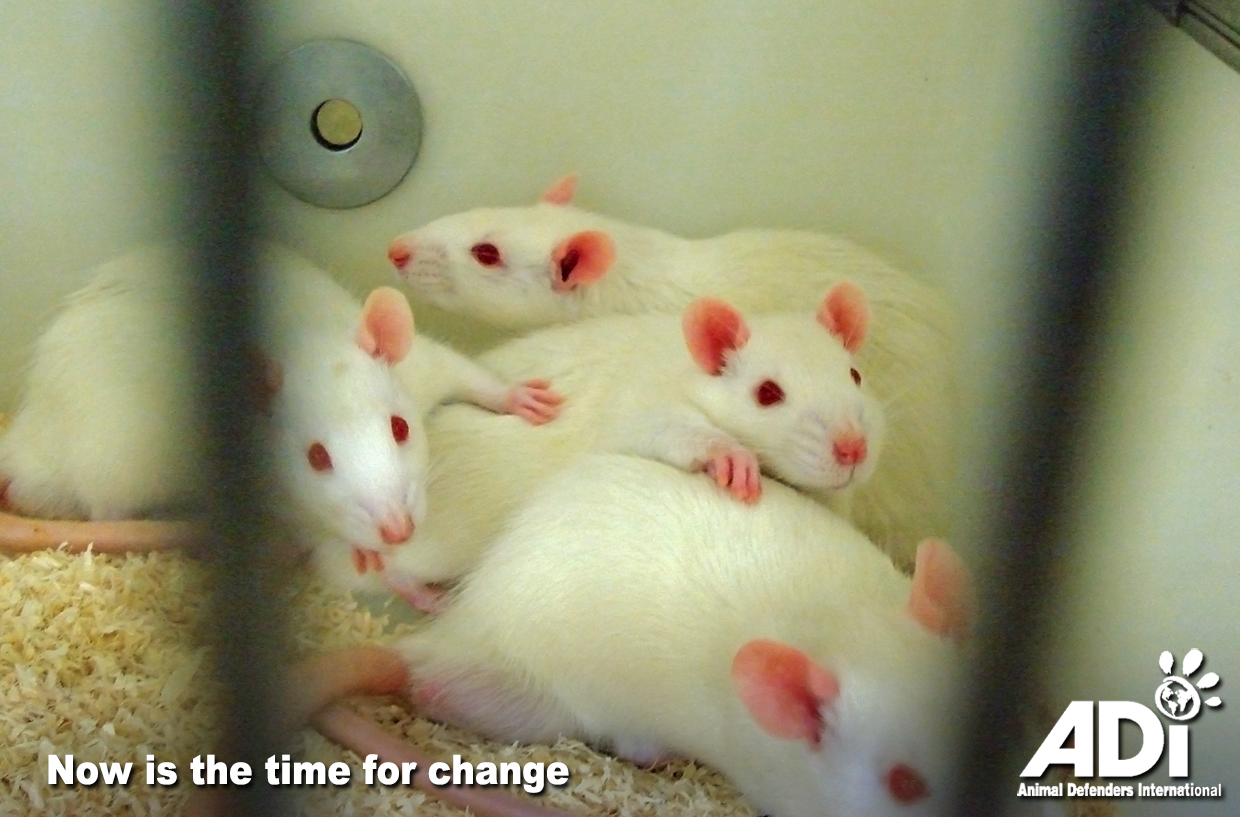
Right now, we may be standing on the brink of the biggest shift away from animal experiments the world has ever seen, but only if we seize it. Now is the time we must dig in, press harder than ever before.
For the first time, we are seeing governments conceding that animal experiments are not only cruel, but bad science. This is the change of mindset we need. With the UK government and US Food & Drug Administration both announcing their ‘roadmaps’ to end the use of animals in laboratories, and Colombia working on a similar law to replace animal experiments, this is an important time in the campaign.
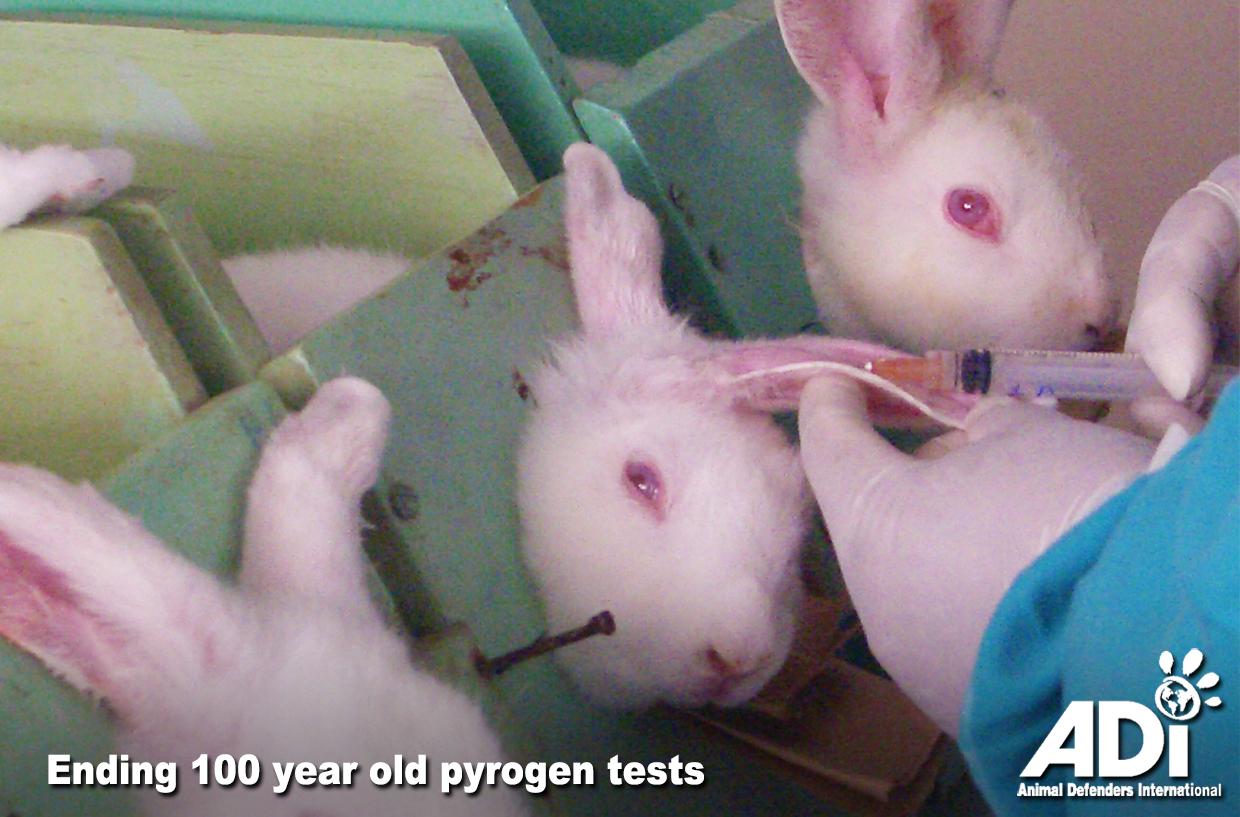
We have been assured by the UK Home Office that the 100+ year-old pyrogen test on rabbits is on track to be banned – a test we have exposed in the past, where rabbits are immobilized in stocks, injected with a test substance, and their temperature monitored. And the horrific forced swim test on rats is set to follow – if we keep pushing and work for it.
Critical to this progress is the increasing acceptance across science, regulators, and governments, that animal experiments are unreliable, unethical, and unnecessary.
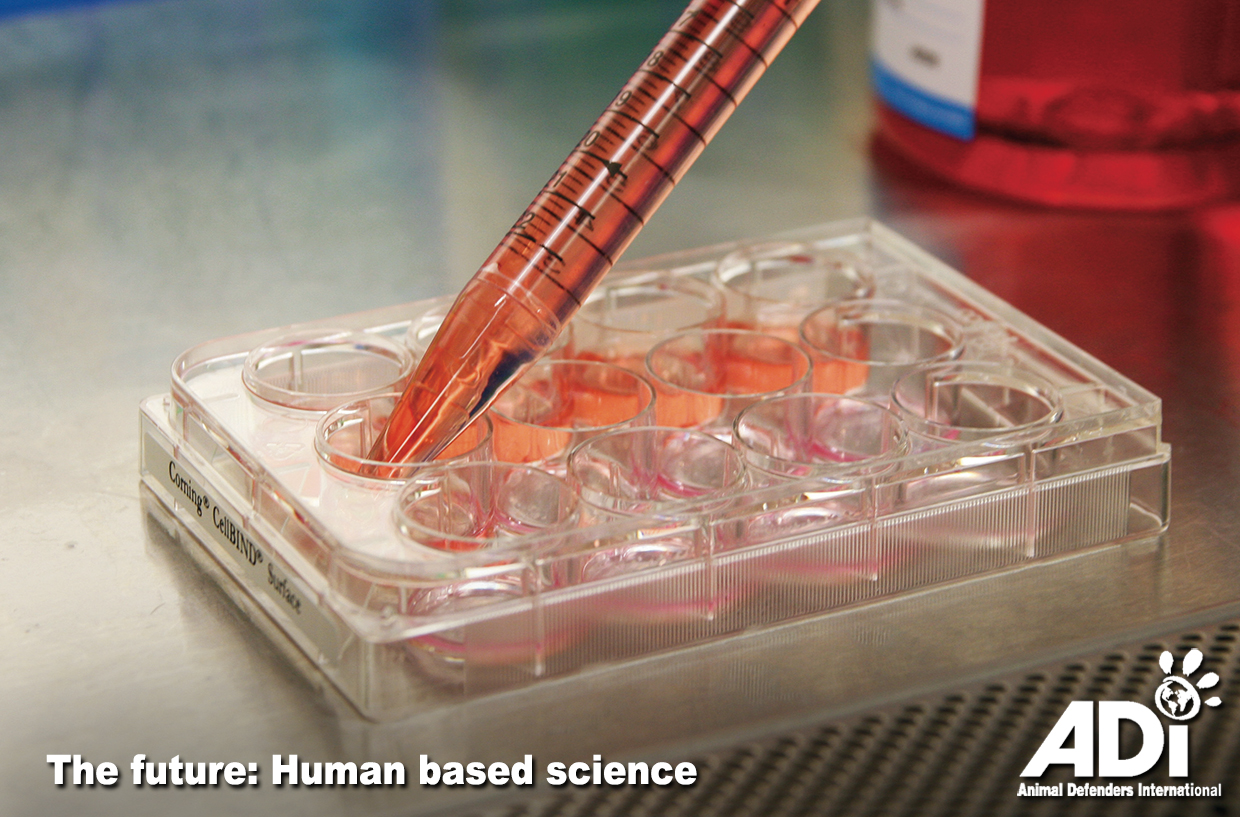
Advanced computer models, organ-on-a-chip technology, and lab-grown human tissues and other techniques are not only humane, but they are also more accurate, offering insights directly relevant to human biology.
This has been a long hard road, but animals need your help more on this World Day for Laboratory Animals than ever before. Today we do not pause, we press ahead.
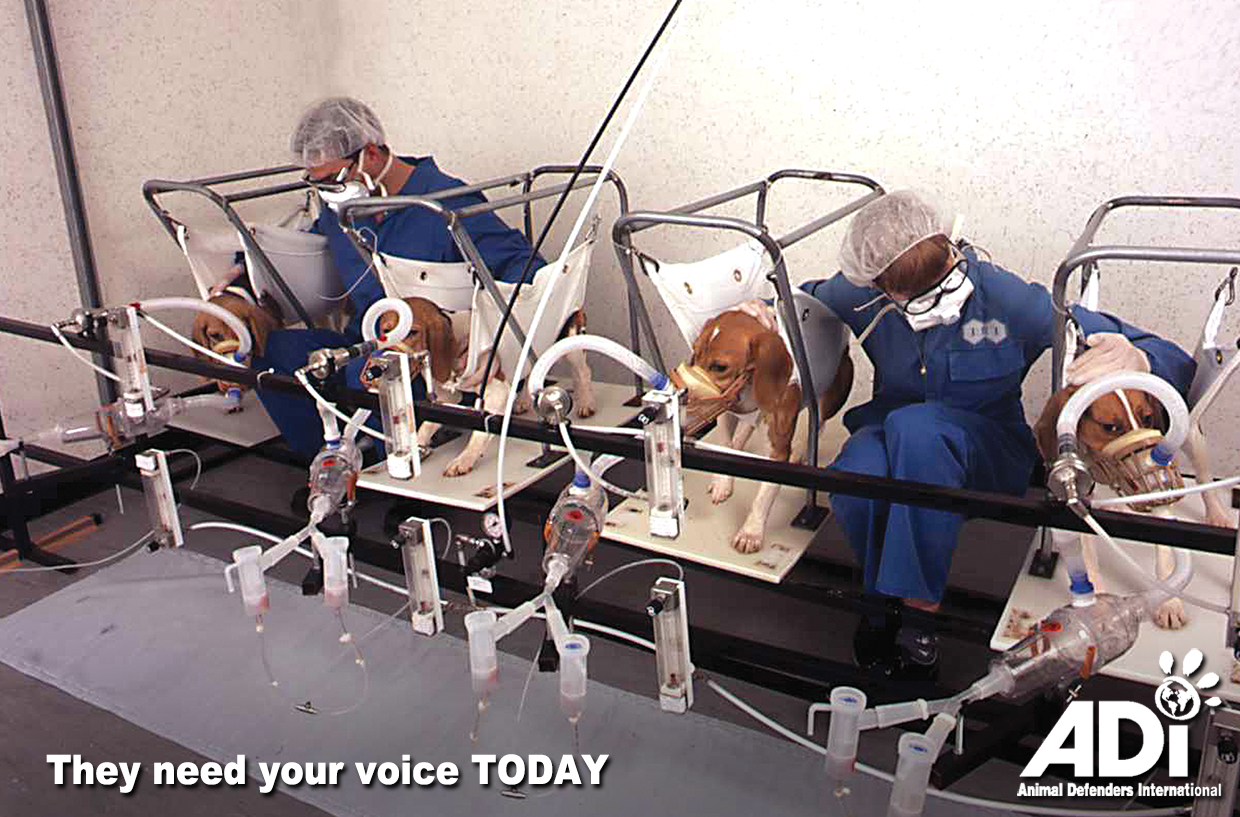
Send a message today to your Member of Parliament / Members of Congress urging them to accelerate progress on the ‘roadmap’ promises to end animal experiments.
Do not ever stop. Never be disheartened, never, ever, give up until we win.

