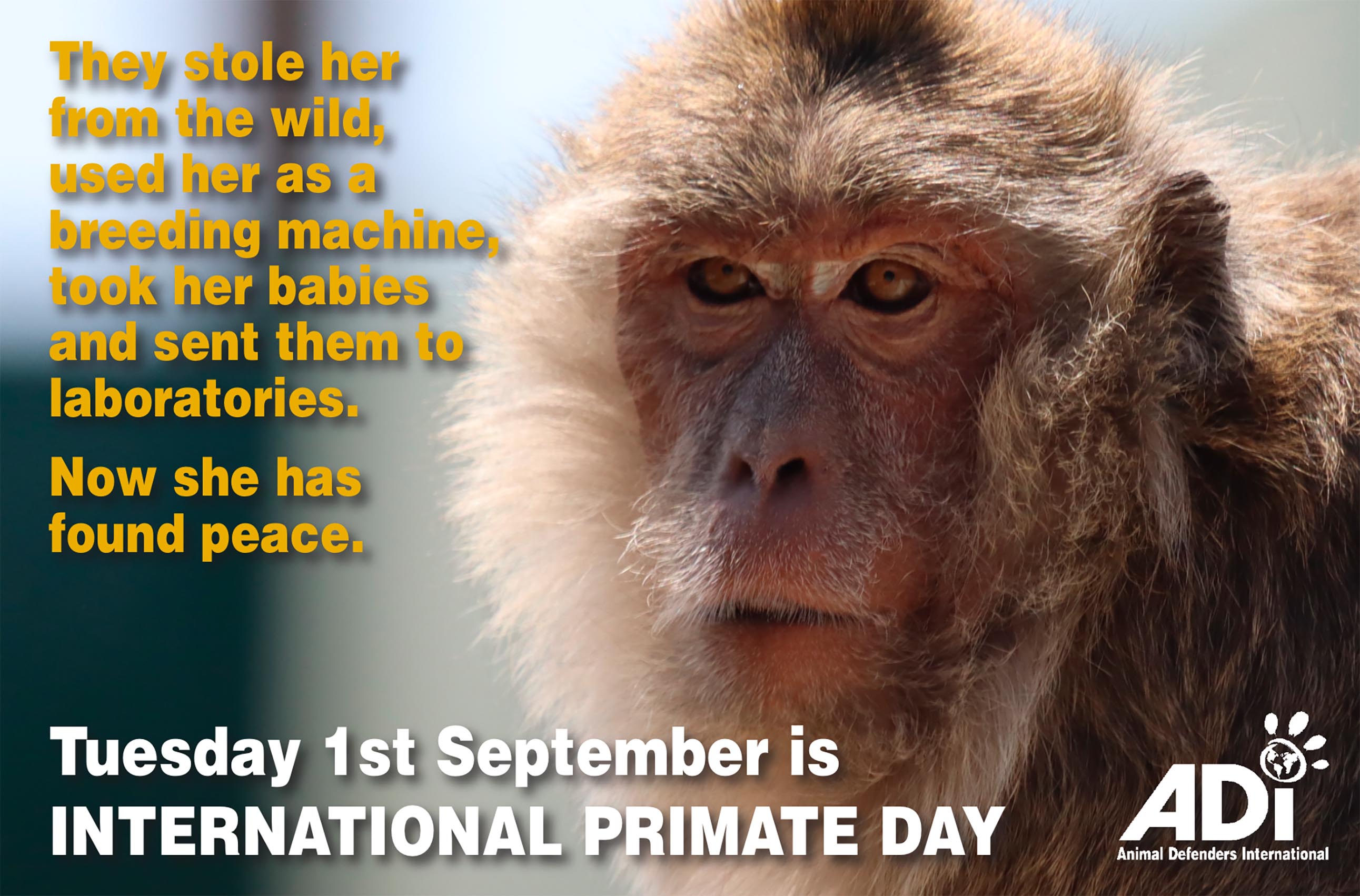
When we were recently in Israel to bring lion pet trade survivors BenTzur and Ori to the ADI Wildlife Sanctuary, Tim and I took time out to visit some of the survivors of the notorious laboratory monkey dealer Mazor Farm, which closed in 2015, who are now safe at the Israeli Primate Sanctuary Foundation.
It brought back to us our long history with the dealer; we paid Mazor a visit many years ago, and in 2010, we negotiated with a Swedish laboratory for the release of three monkeys (Betty, Boo, and Baloo), which had been supplied by Mazor Farm. Our undercover investigations on Mauritius exposed the brutal factory farms sending monkeys to Mazor, in Israel and we launched campaigns with the airlines about shipping these, and other monkeys, to laboratories around the world.
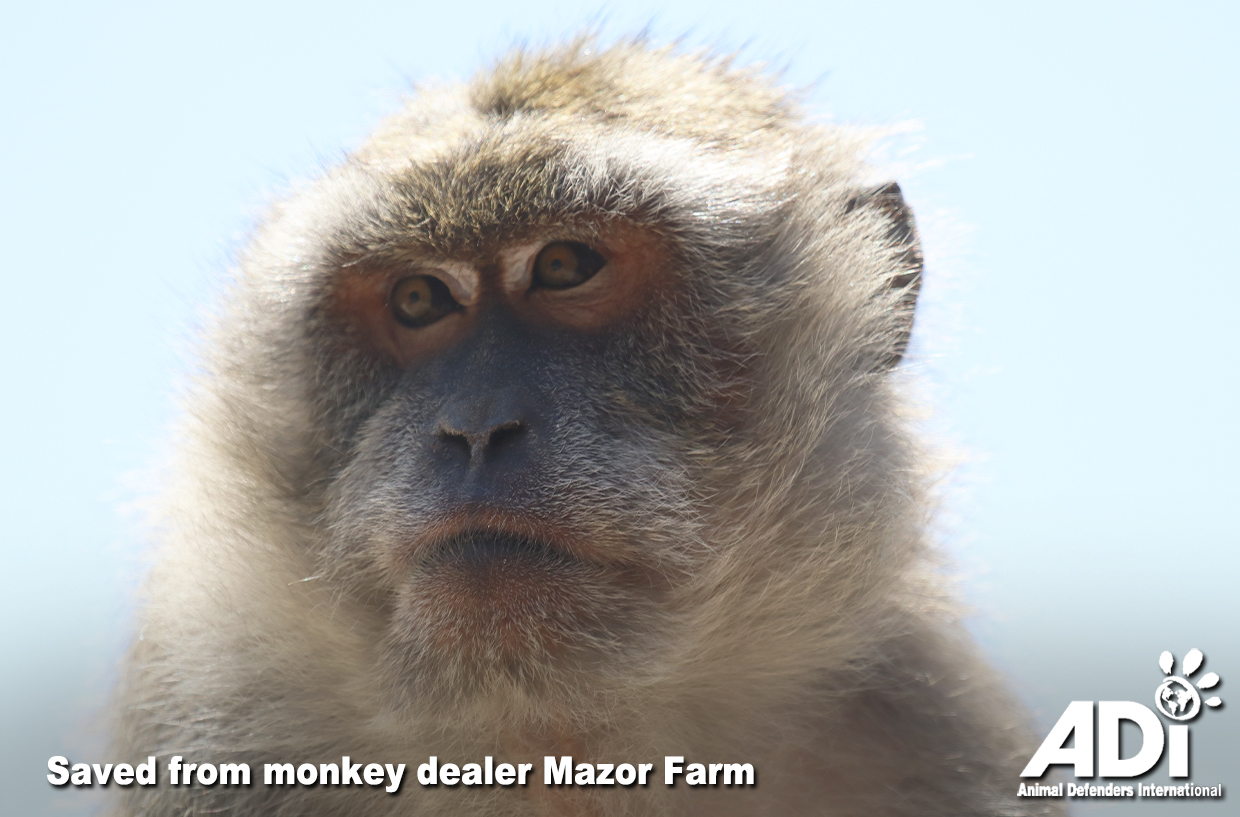
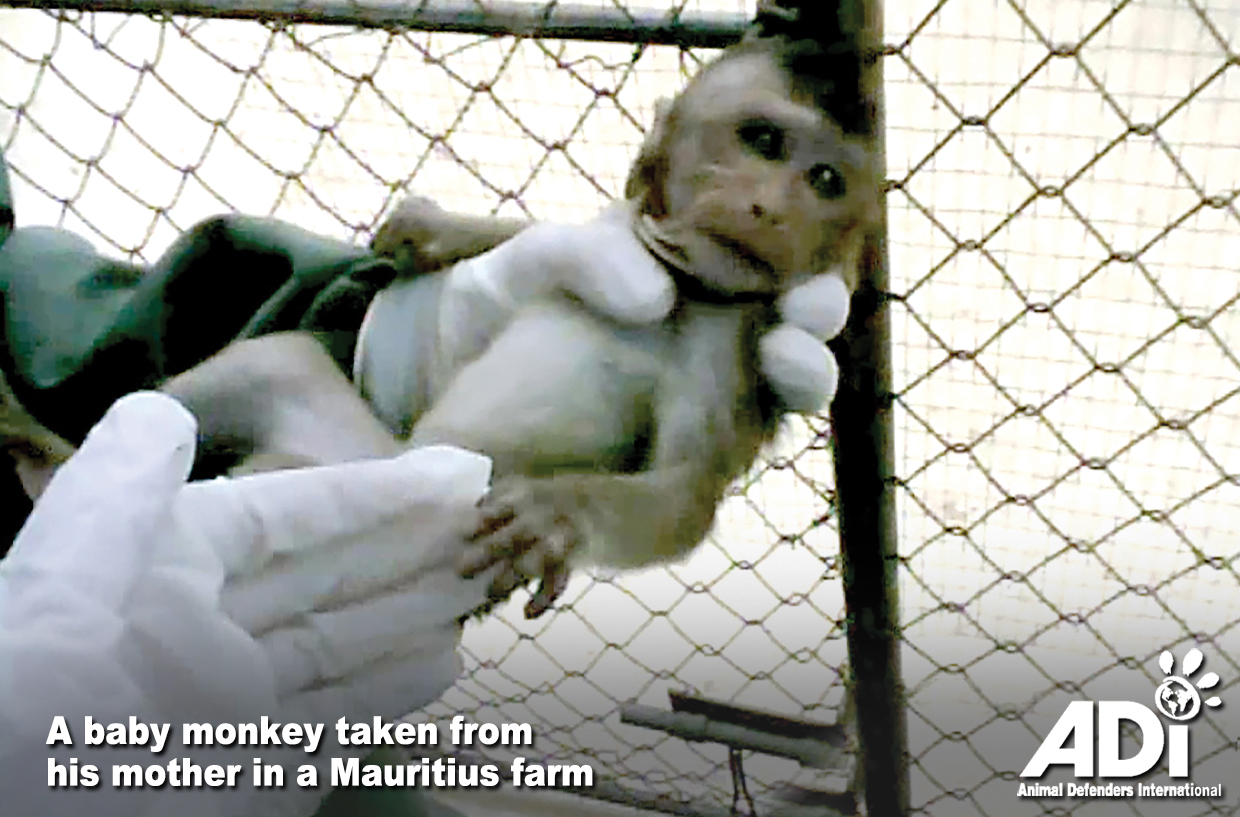
We found it very emotional, seeing these (now elderly) ladies, who had been snatched from the wild in Mauritius and sent 4,000 miles to be used as breeding machines, repeatedly giving birth only to have their infants ripped from them and sent to international laboratories – until Israel finally ended the export of monkeys to labs.
Like all of these rescued animals, they can never go home, but they are living in groups and their twilight years will be ones of peace and kindness after the Israeli Primate Sanctuary Foundation picked up the pieces, to care for over a thousand monkeys stranded in Israel due to the vivisection industry.
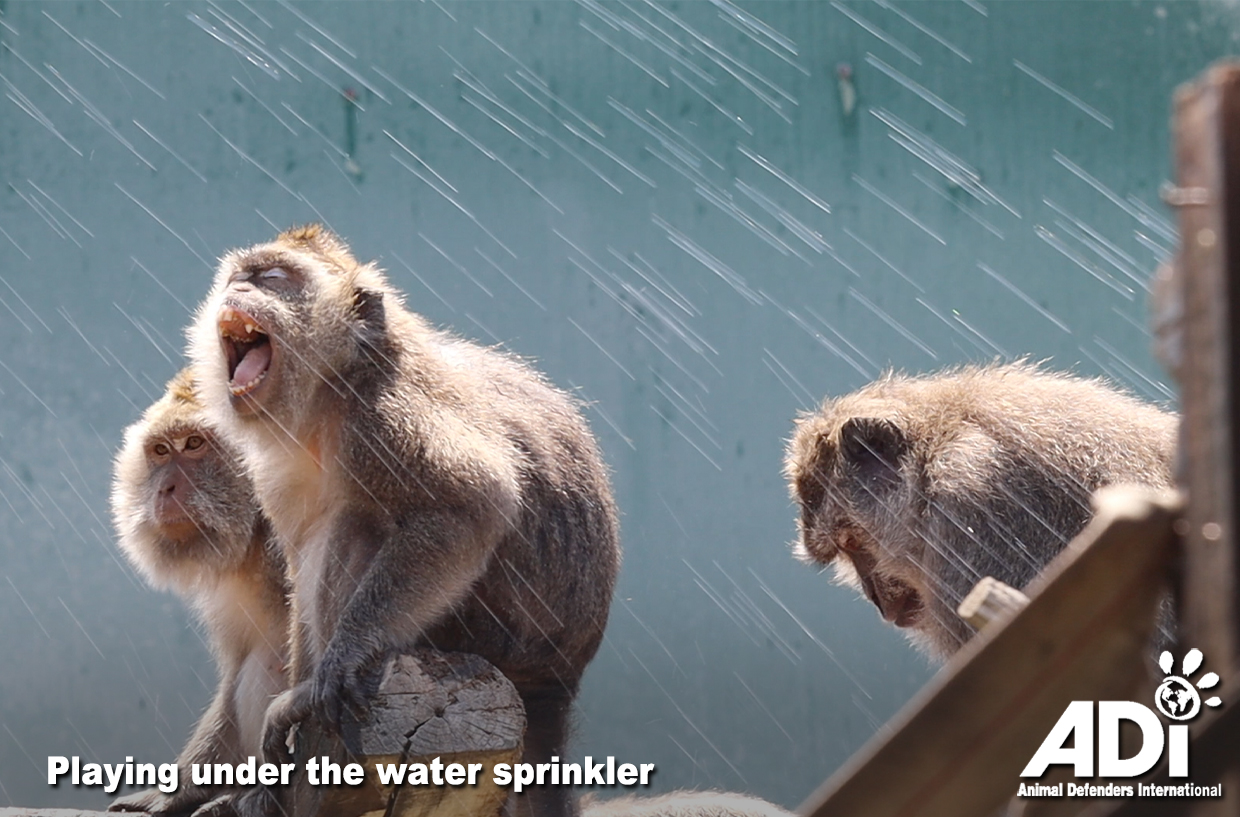
The Mazor Farm survivors sitting in the sunshine and playing in the water sprays in the habitat reminds us that progress can, and is, being made but also there is also still so much to do.
Tuesday 1st September is International Primate Day, founded by ADI in 2005 to ensure that nobody ever forgets the suffering, the threats and abuses, faced by our closest relatives in the animal kingdom, emotional, intelligent, communicative with a love for their family – traded as pets, children taken away, forced to perform in circuses, zoos and other entertainment, in terror and suffering in laboratories.
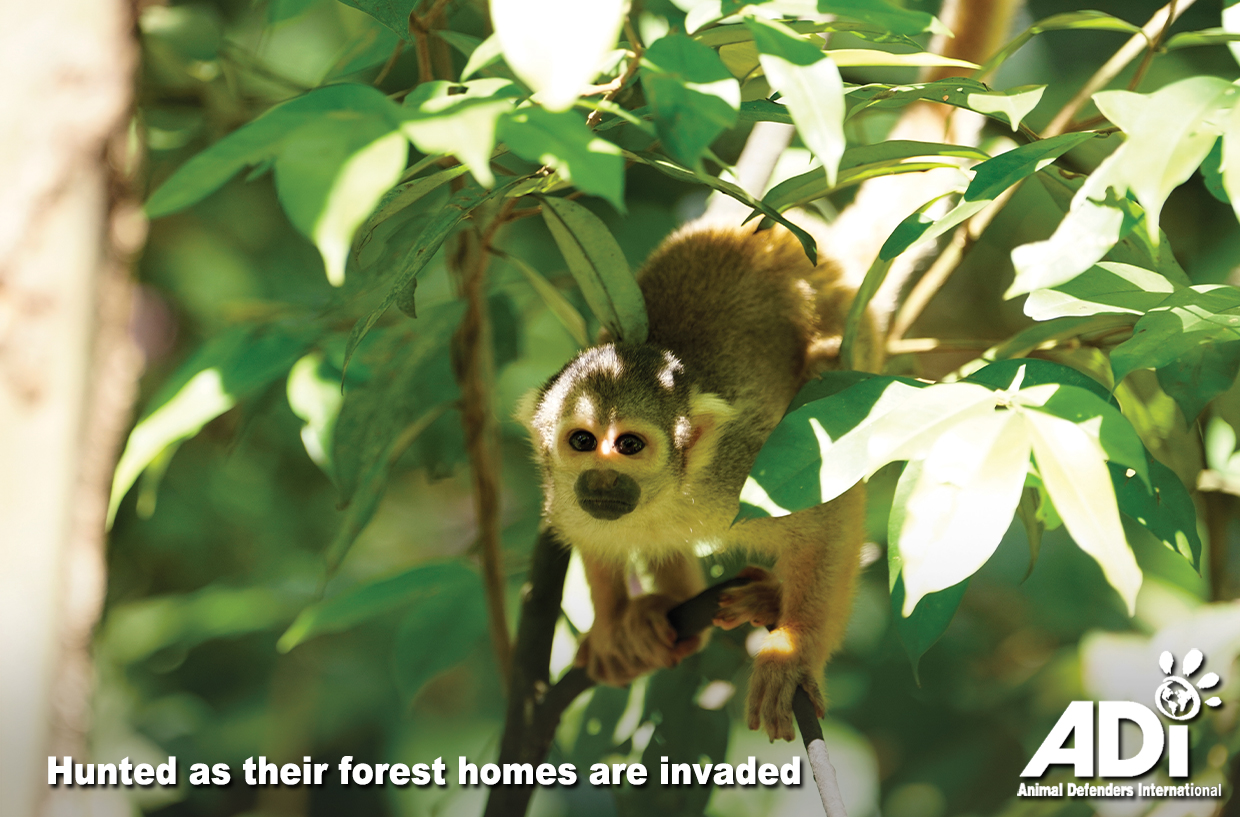
Animals of all species, once living safe deep in the world’s wilderness are increasing threatened by human encroachment. Primates all over the world are losing their homes and their lives as more and more habitat is stripped away.
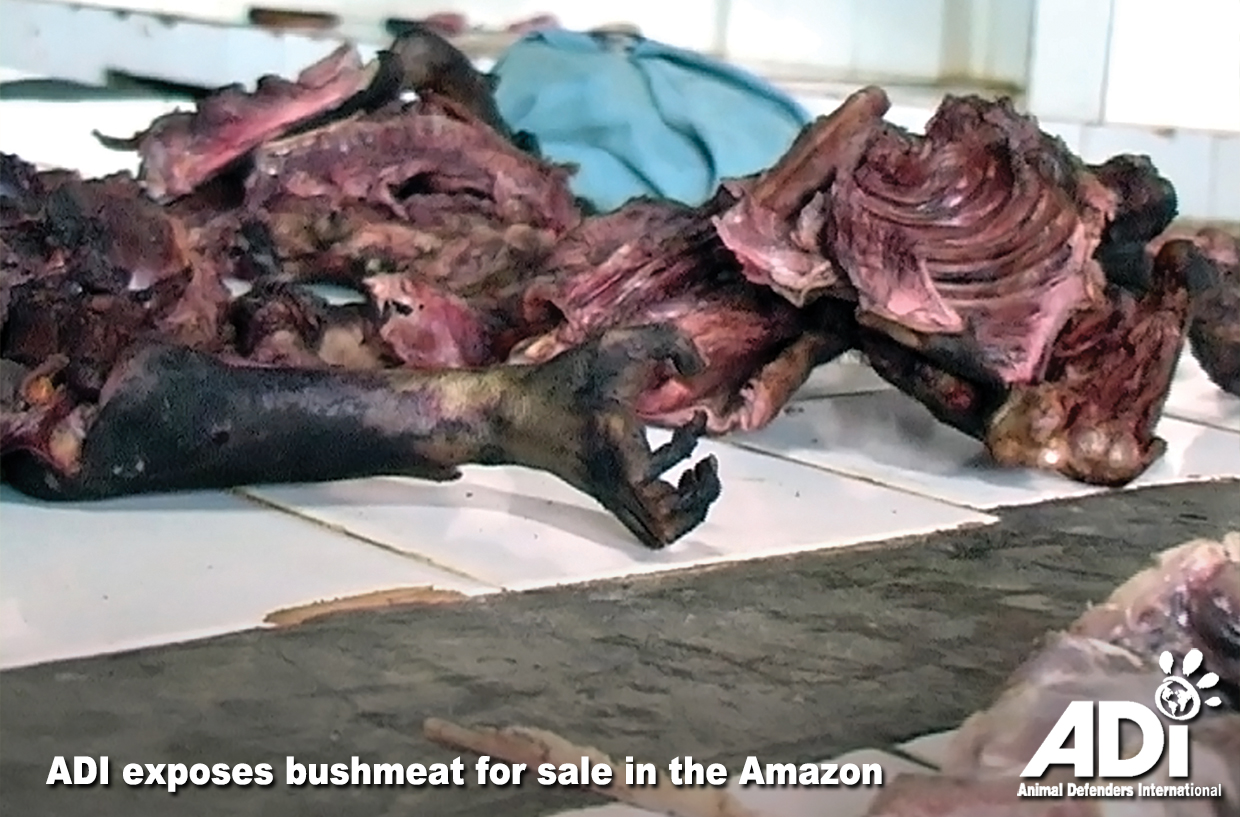
As roads are built deep into the forest for logging, mining, or to search for oil or rare earth minerals, human populations follow, pushing deeper into the forest. Monkeys are hunted for bushmeat, their babies taken to feed the pet trade, laboratories, circuses and other entertainment.
Forests and wild spaces are vital in the battle against climate change, they are the lungs of the earth, the best way to trap carbon emissions, they impact the whole planetary system. While protecting forests and habitats on the other side of the world may seem distant sometimes, they provide the air we breathe and we can all support the drive towards sustainable energy and supporting planetary systems.
We can all speak out against the denial of facts, against putting our heads in the sand and hoping. Our planet’s weather and water systems are now showing evidence that the pollution pumped into the atmosphere by a huge human population is now changing our weather and the earth’s ability to sustain us all. We can all say “no” as governments strip away the limited environmental protections there are. The natural world, like many things, is much harder to fix once it is broken, so let’s protect what we have.
From forest to concrete jungle
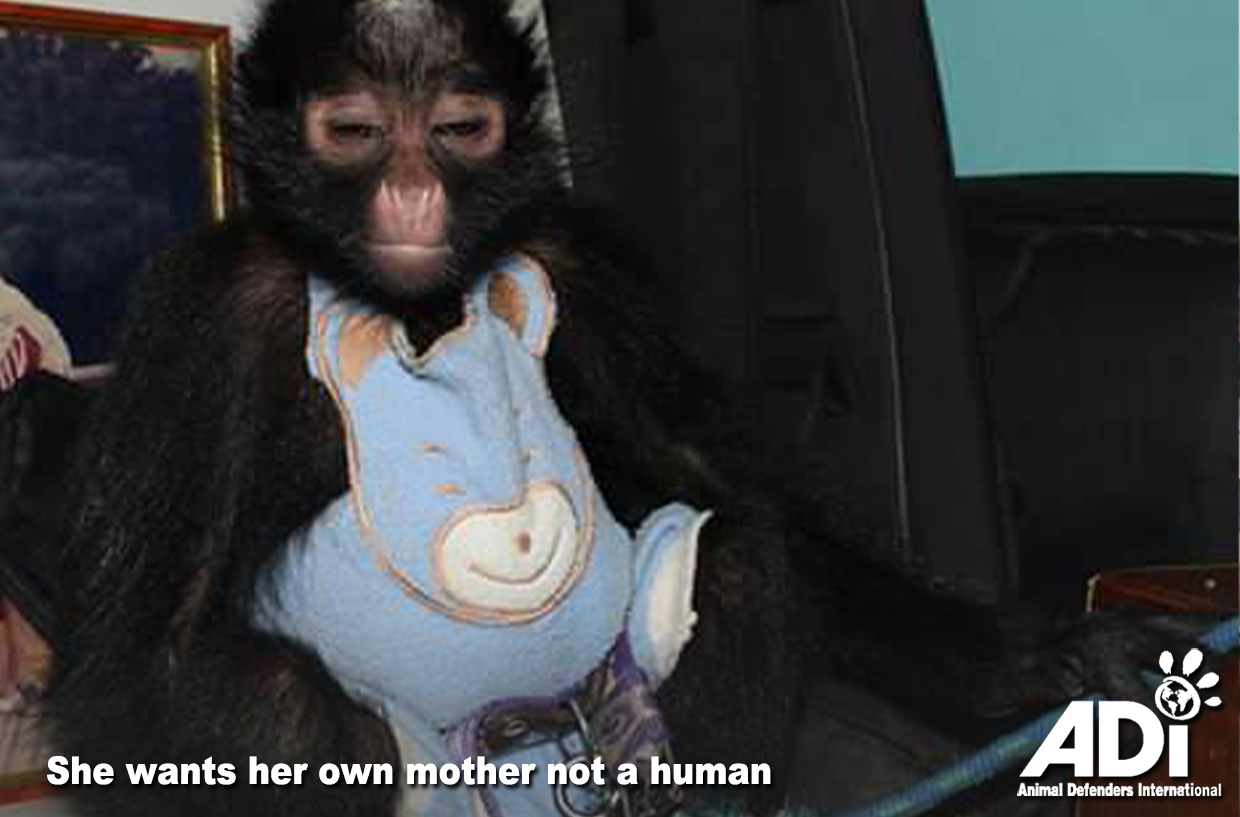
Primates are highly intelligent, emotional and social earthlings who love their families and suffer terribly in barren conditions and when isolated from their own kind. To feed the desire to have monkey in the house, like toys, trappers will often kill mothers to take the young as they cling to her dying body.
They take them young to force them into dependency on their human captors. Owners may dress them as human infants. It is not love when somebody forces a baby monkey to be kissed, it is abuse, it is cruelty to a frightened, lonely baby who just wants their own mother.
Even the smallest of monkeys grow into surprisingly strong and fast juveniles and adults, as their genes have developed for a life in the forest, feeding themselves on leaves, fruits, nuts and other natural foods, and living their best life. Because their teeth can hurt, even when they don’t mean to, they are removed or snapped off, with no concern for the pain and suffering this causes.
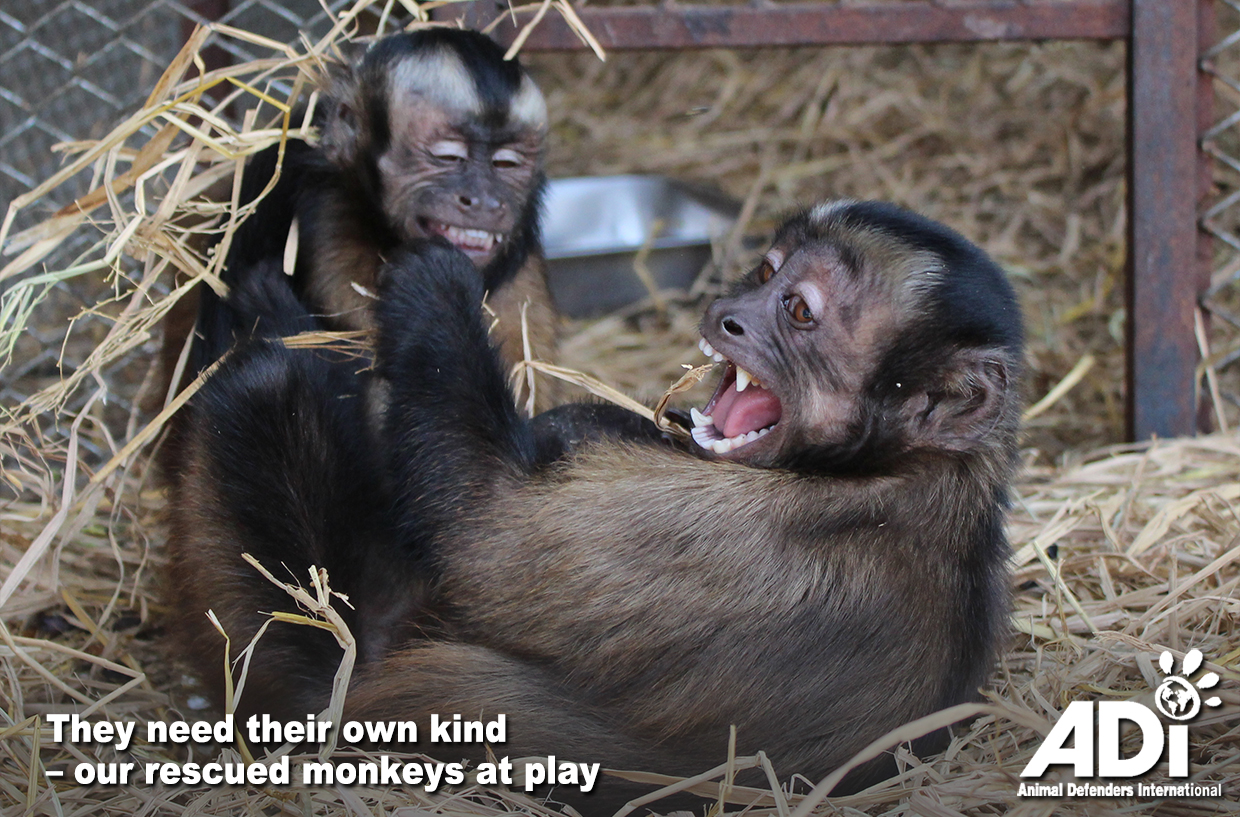
Nature provides natural barriers. The pandemic highlighted the consequences of bringing together species that would not normally meet in the wild, creating an unexpected viral cocktail and a new disease. Sending animals across the world for commercial trade opens the door to animals that aren’t indigenous to the new country posing a threat to native wildlife, if they escape.
From huge snakes in the Florida Everglades to grey squirrels pushing red squirrels to the brink of extinction in the UK, the exotic pet trade is repeatedly responsible for introduction of species where they should not be. Yet it continues, just to allow someone to selfishly buy a new toy or status symbol, ignoring the risks to the environment should they escape, and the suffering to the animal stolen from their home and their right to live free.
In April, the UK Government finally introduced licences/ licenses to regulate private ownership of primates but has failed to plan a systematic phase out of the industry. The British climate is unsuitable for primates, they can never be comfortable, there are health and safety issues with contact with humans, and no conservation or welfare benefits for the animals. Why not bring this to an end?
Social media is causing a hugely damaging spike in ‘trophy pets’ like lions, tigers, and many other exotic animals not suited for living with humans, all being used for social media by attention seekers. This problem is likely to get worse and so governments need to act, decisively, and quickly.
Primates as entertainers
Our Stop Circus Suffering campaign has seen wild animal acts in circuses banned in over 50 countries, but it is still legal in many countries – including the United States.
Primates suffer especially in circuses, where they spend their lives kept in small boxes and are chained by the neck or around the waist, to pose for photos. A life of complete misery for these intelligent, communicative animals who normally live in large family groups, in a varied, interesting environment.
Training is brutal. For example, our undercover investigation of the Korean monkey school showed how macaque monkeys are taught to walk on their hind legs; their hands were tied behind their backs, they repeatedly fell on their faces, unable to protect themselves, or get up to balance themselves. Eventually, they walked upright on command, dressed as humans to entertain the public. What a travesty.
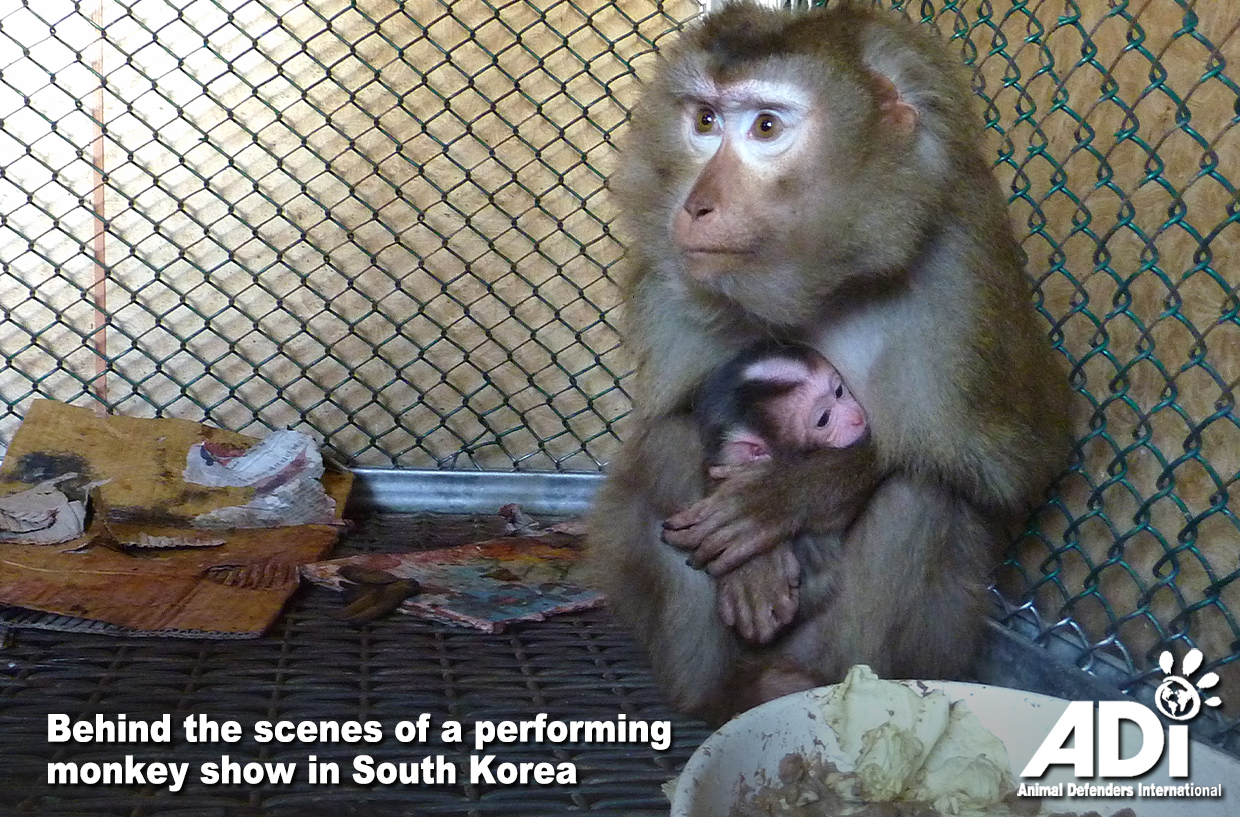
During an investigation by ADI in a UK supplier, a trainer pinned down a mandrill and pushed a prolapsed rectum back into the screaming animal, saying it often happened when making the primates walk on their hind legs.
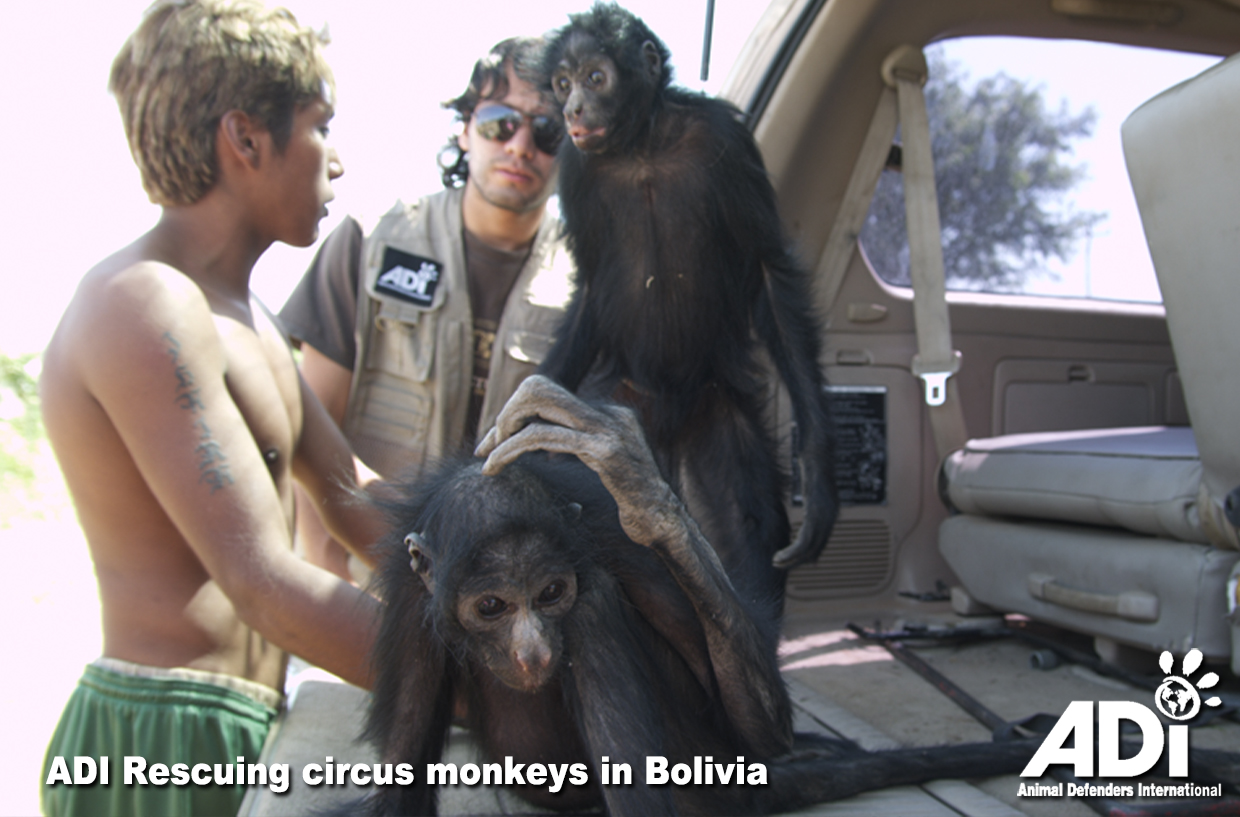
During ADI’s Operation in Spirit of Freedom to empty Peru’s circuses of animals, we rescued over 40 monkeys. Burned into our memories are some of the most heartbreaking and moving moments, when we reintroduced lonely animals to their own kind, their joy and being with someone who understood them, was unforgettable. Some, like Pepe, had lived his entire life chained, alone, in a circus.
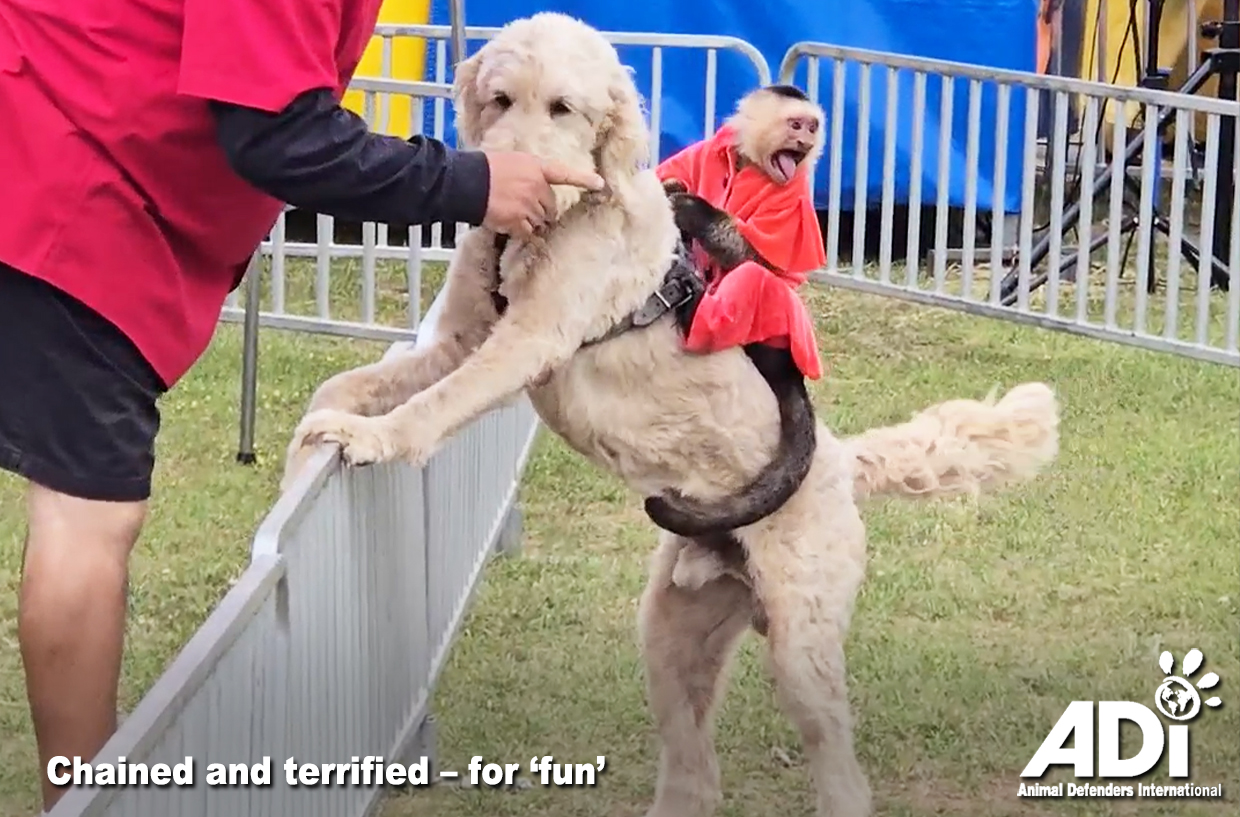
Right now, in the US, a despicable ‘show’ called ‘Banana Derby’ is appearing at fairs around the country. Capuchin monkeys are strapped onto dogs’ backs like jockeys, as the dogs race around makeshift tracks, throwing the terrified monkeys from side to side. Between races the poor monkeys are passed from person to person, who pay to be photographed with them.
Please contact your Congress members and urge their support for the Captive Primate Safety Act, find out more here.
Primates in laboratories – the ultimate betrayal
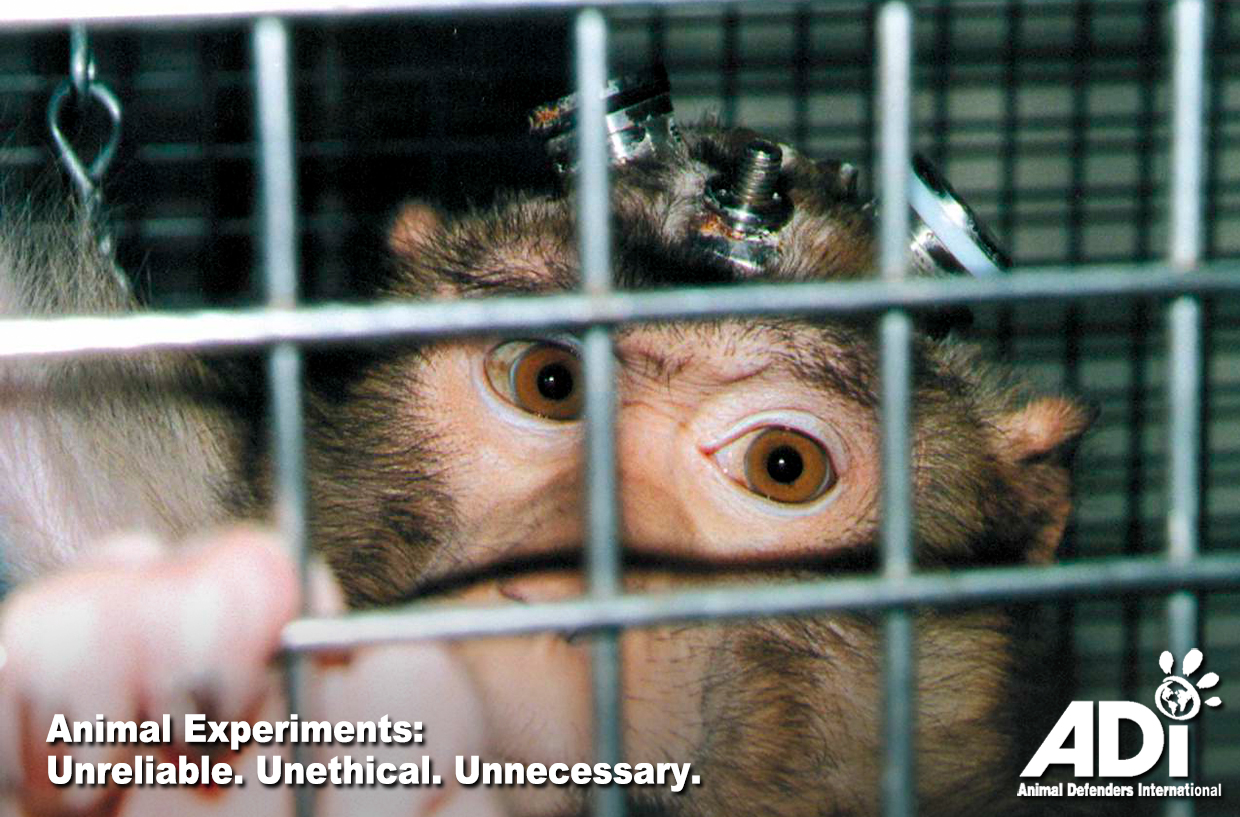
Monkeys in laboratories face the most terrifying ordeals – strapped down, force fed or injected with drugs, metal probes fixed into their brains, deliberately infected with disease. Intelligent like us, emotional, experiencing fear, anxiety, loneliness, distress. What makes this even more tragic is that due to species differences, the results can never be trusted and those that demand the tests know it.
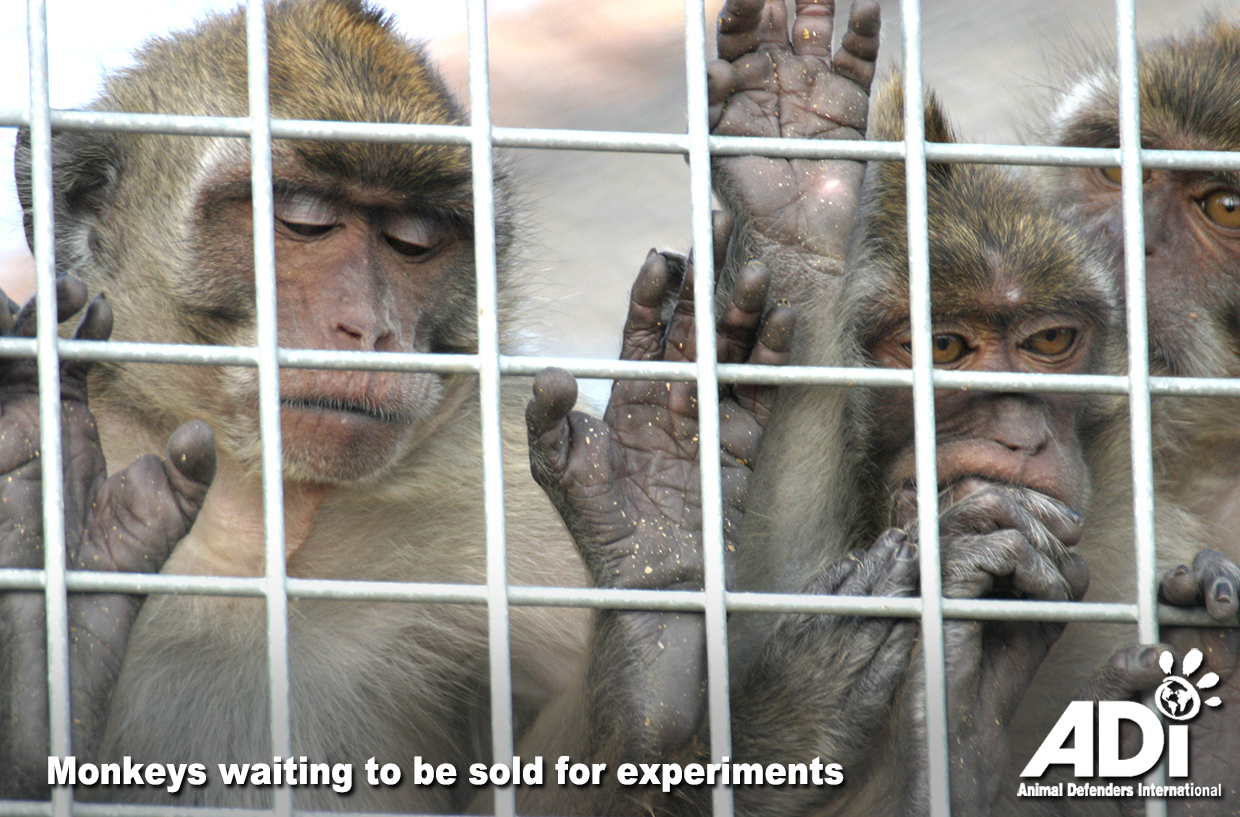
At the height of the global COVID-19 pandemic, the International Coalition of Medicines Regulatory Authorities (ICMRA), decided they needed to speed up vaccine development, so they cut requirements for animal tests for efficacy (effectiveness) before going to human trials. Decided they could skip them. Yet an estimated million animals die in such tests every year.
Despite the ICMRA ruling, Oxford University tested its vaccine for efficacy in monkeys. The vaccine failed to stop the virus in monkeys, so that was ignored, and human trials expanded. The vaccine was given to millions of people.
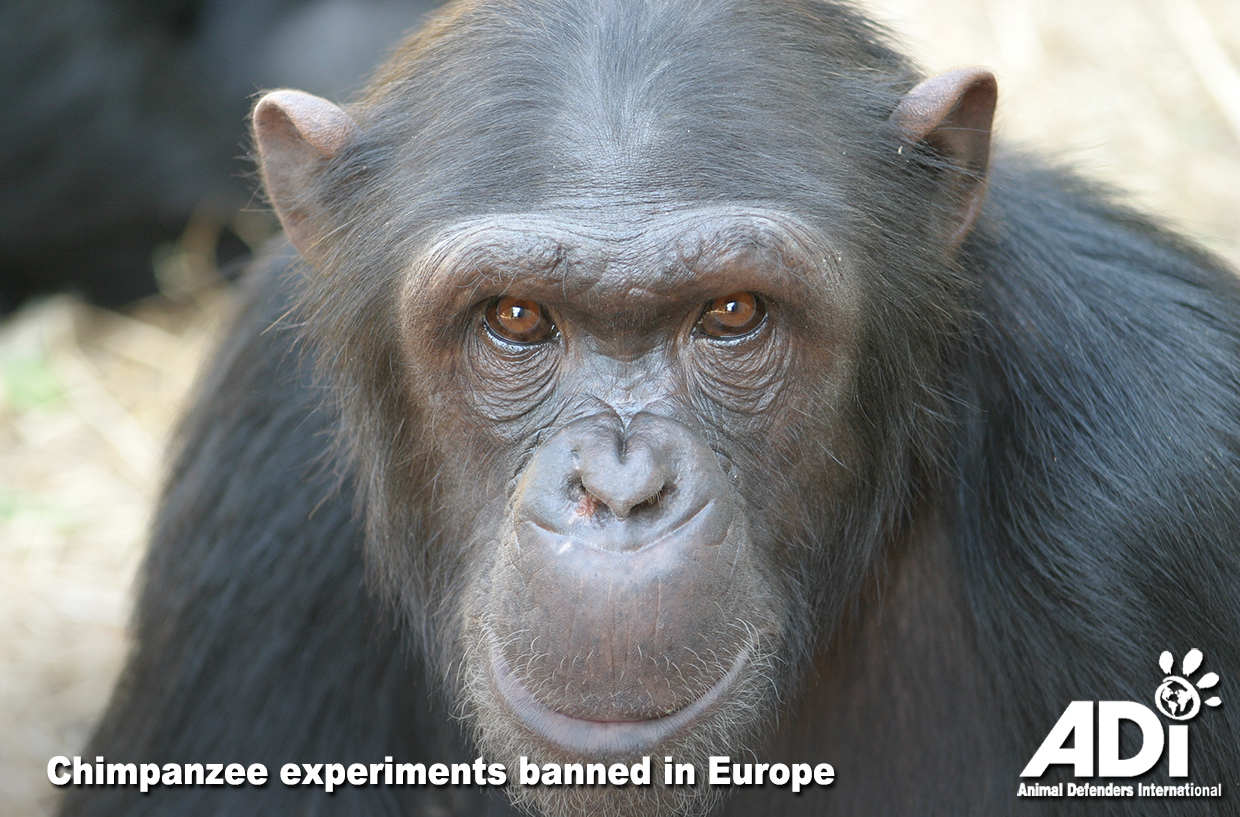
We can change this. We have made some progress: We secured a ban on use of chimpanzees and wild caught monkeys across Europe. We secured a commitment to phase out the use of ‘F1’ primates in laboratories (those born of wild parents), like the Mazor monkeys I mentioned earlier. Good news, but….we must be vigilant.
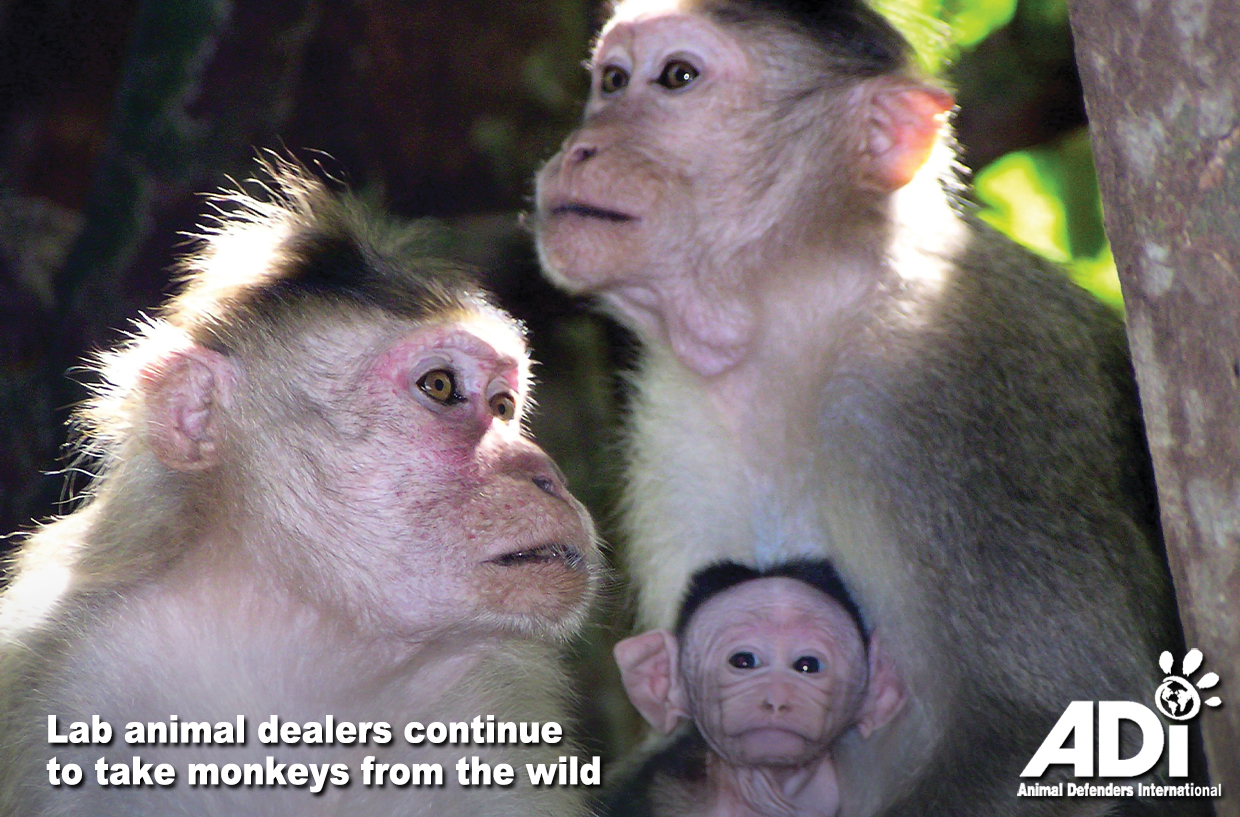
Shockingly, 16 years after the F1 Phaseout was passed, government figures reveal how in 2025, almost half of the monkeys used in UK labs, 859, (47%) were F1 – almost doubling the number in the previous year. Monkey dealers in Asia and Mauritius are continuing to stock their factory farms with wild caught monkeys.
This is why we must NEVER, EVER GIVE UP:
We must continue to monitor the regulators, keep up the pressure in the media and with our elected representatives – tell them to ask why regulators are failing. The UK’s Animals in Science Regulation Policy Unit told ADI last week, “establishments are operating within the strengthened sourcing requirements.” Unfortunately, these have had multiple loopholes and while, it is important that finally, “No wild-caught animals can be added to “self-sustaining colonies” since 1 August 2025”, a female macaque can give birth until she is 20 years old, so the dealers will ensure their babies are ending up in labs for years to come.
Write to your elected representatives and say this is not good enough. They need to do better. Put this on your social media and ask others to do the same. Contact ADI if you need help with this.
Roadmaps could pave the way to end this
Governments in the UK, US, the EU have all published their ‘roadmaps’ to eliminate animal use in laboratories. These plans set targets for replacing tests, and may offer the best opportunity for decades, to end animal use. And the regulators are taking note of the science – the US Food & Drug Administration roadmap finally acknowledges the failings of animal testing.
In the UK, contact your MP to urge the Government to fulfil its promise to prohibit the use of F1 primates and accelerate reducing the number of animals used in laboratories.
In the US, please contact your Congress members and urge them to back the FDA Roadmap and ensure the FDA Modernization Act is used to drive forward replacing animal tests with new technology.
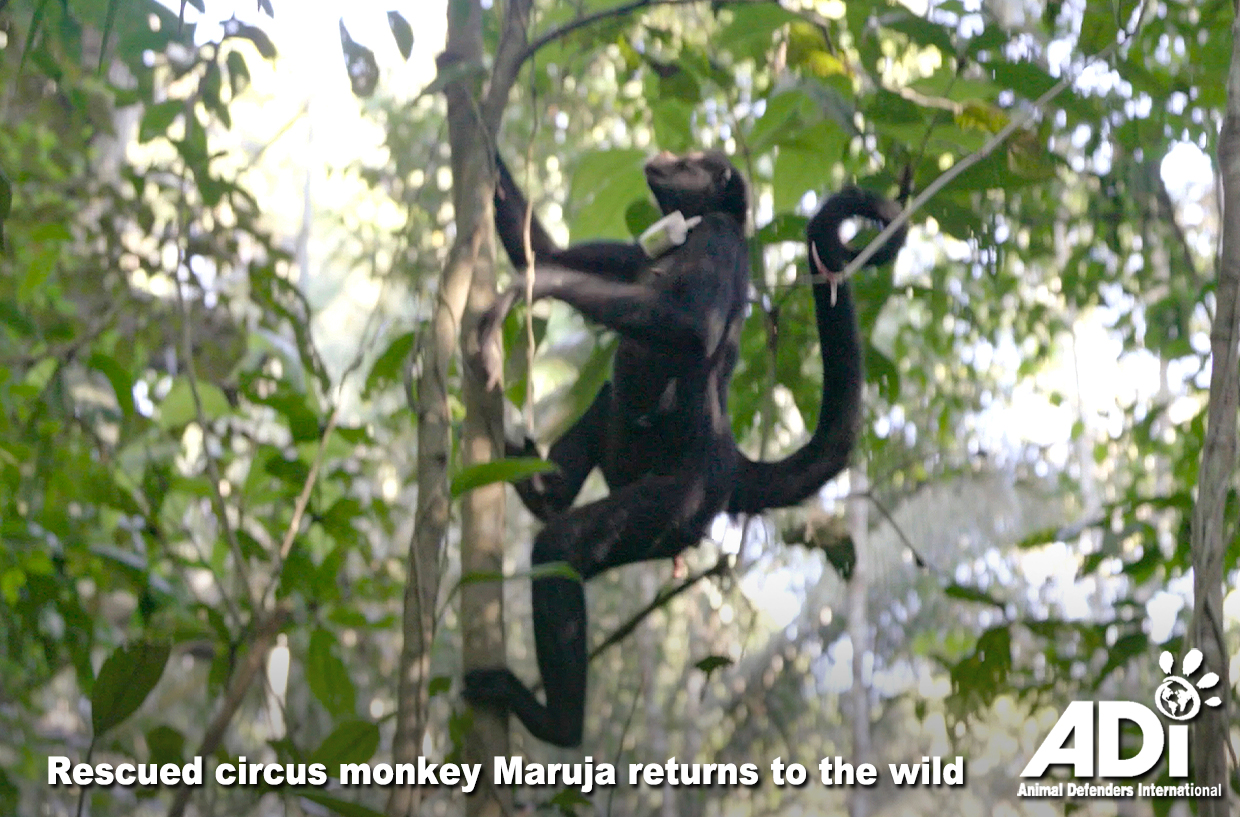
Hope for the future
To finish on a happy note, enjoy our video about the rescue of spider monkey Maruja – proof that together we are making a difference. Thanks to ADI undercover investigations and campaigns, Peru banned wild animals in circuses. ADI then raided every animal circus, saving over 100 animals including lions, bears and monkeys. Much later, a circus, thinking no one was watching, was spotted with a monkey, dressed as a child. However, ADI was still watching. Maruja was seized, and returned to the wild. Enjoy.
This International Primate Day, please support ADI’s efforts to end the suffering of primates through our campaigns and education, support our work to secure legislation, then once the bans are in place – help us get the animals out!
The rescues are important to show industries that when we get bans, we mean it. They are losing their animals.
Then, the responsibility continues (and why not!). Help us get the survivors of cruel industries to the best home we can, and continue to provide for the monkeys, bears, lions, tigers and others, who are so damaged, they can never return to the wild. Let’s do our best for them.
With your support we are making a difference, no matter what obstacles are put before us, the animals we are saving are testament to that.
Donate here: UK £, Euros, Rand | US $, CA $


Pingback: ADI Worldwide Animal News | Jan Creamer