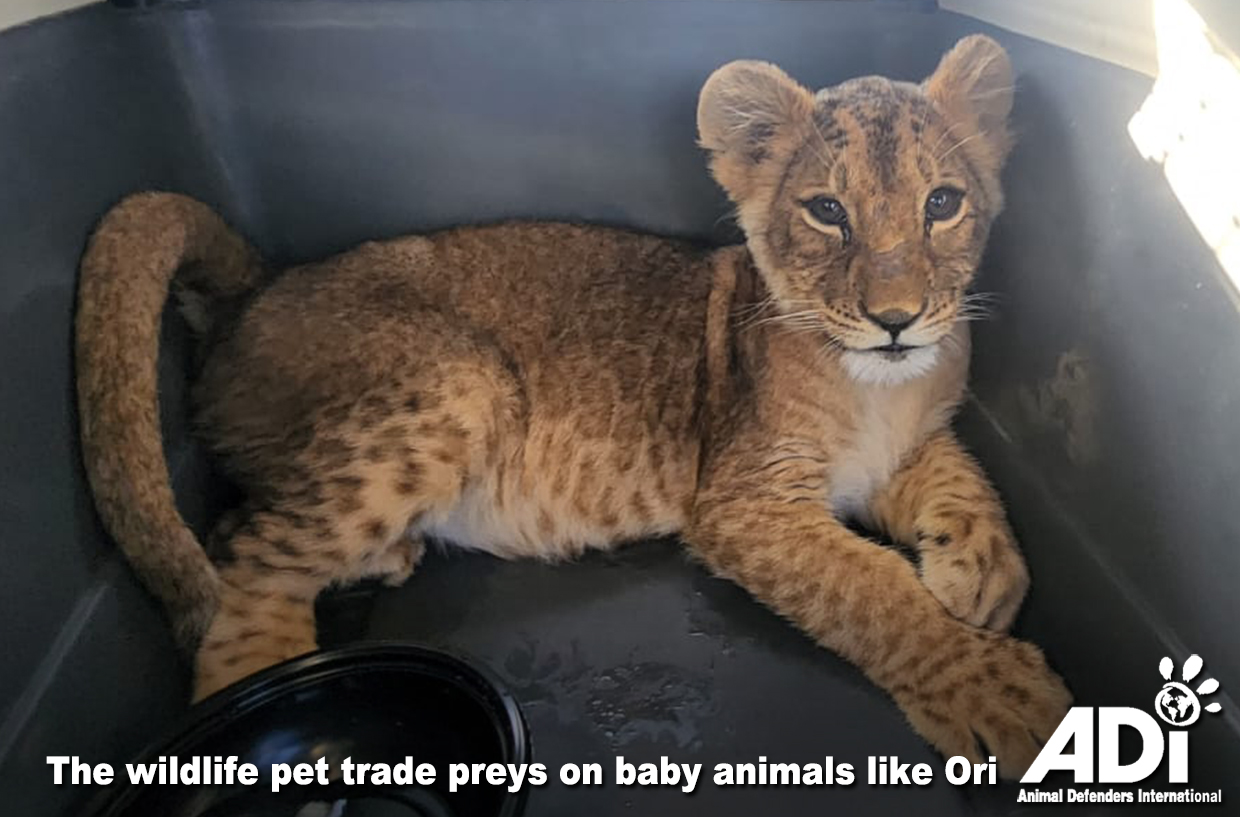
I am writing from our sanctuary in South Africa where Tim and I were expecting to be making the final preparations to bring home lion cubs Ben-Tzur and Ori from Israel. That operation remains on standby as the war continues, but we urgently need help to fund this unexpected rescue. In the meantime, ADI’s life-saving work and rescue efforts around the globe are ongoing.
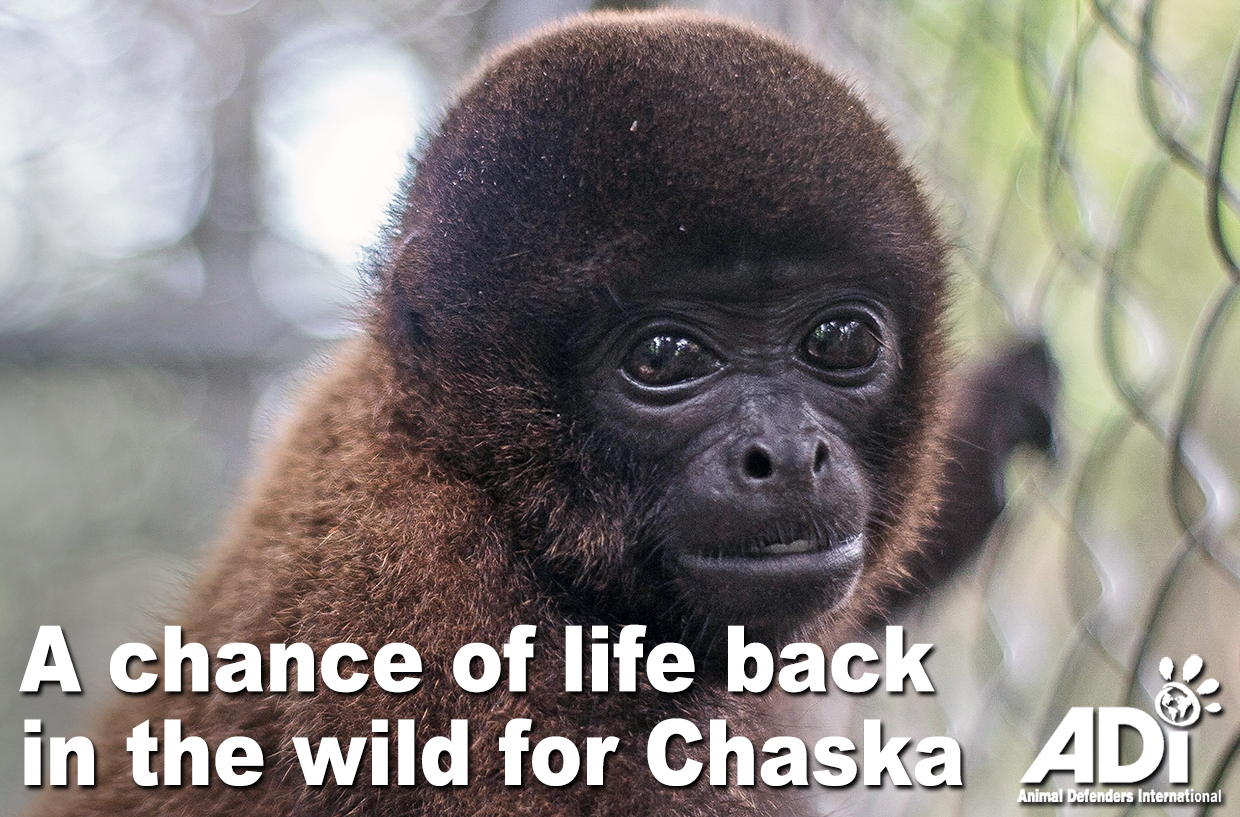
We rescued sweet Chaska (meaning ‘bright star’ in the region’s indigenous language) as a baby from wildlife traffickers in Peru. Just like the lion cubs we are rescuing in Israel, Chaska was a victim of the selfish desire to have an exotic animal as a pet – no matter how inappropriate or the suffering caused.
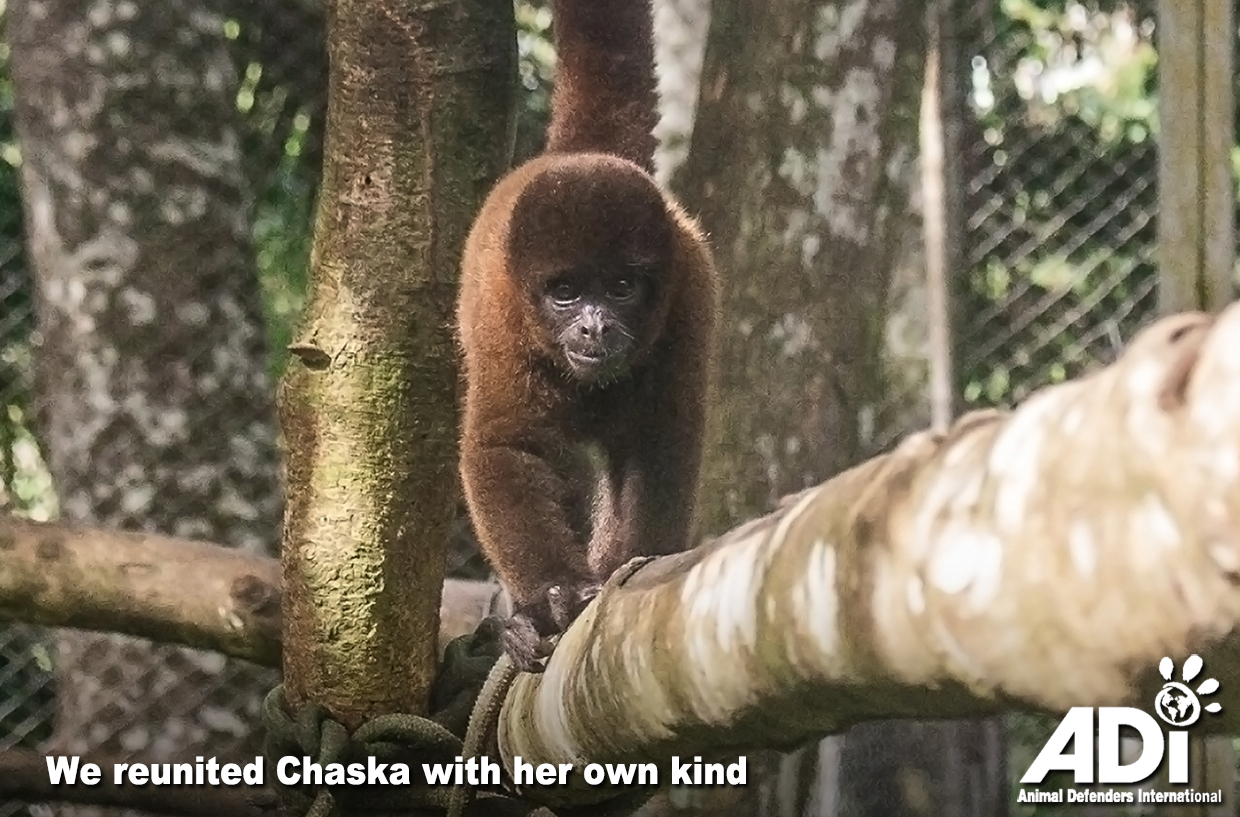
We took Chaska to the ADI monkey facilities at Pilpintuwasi in the Peruvian rainforest where we reunited her with her own kind, along with Fausto, a woolly monkey rescued by ADI from a restaurant. You can watch her rescue in Monkey’s Miracle video.
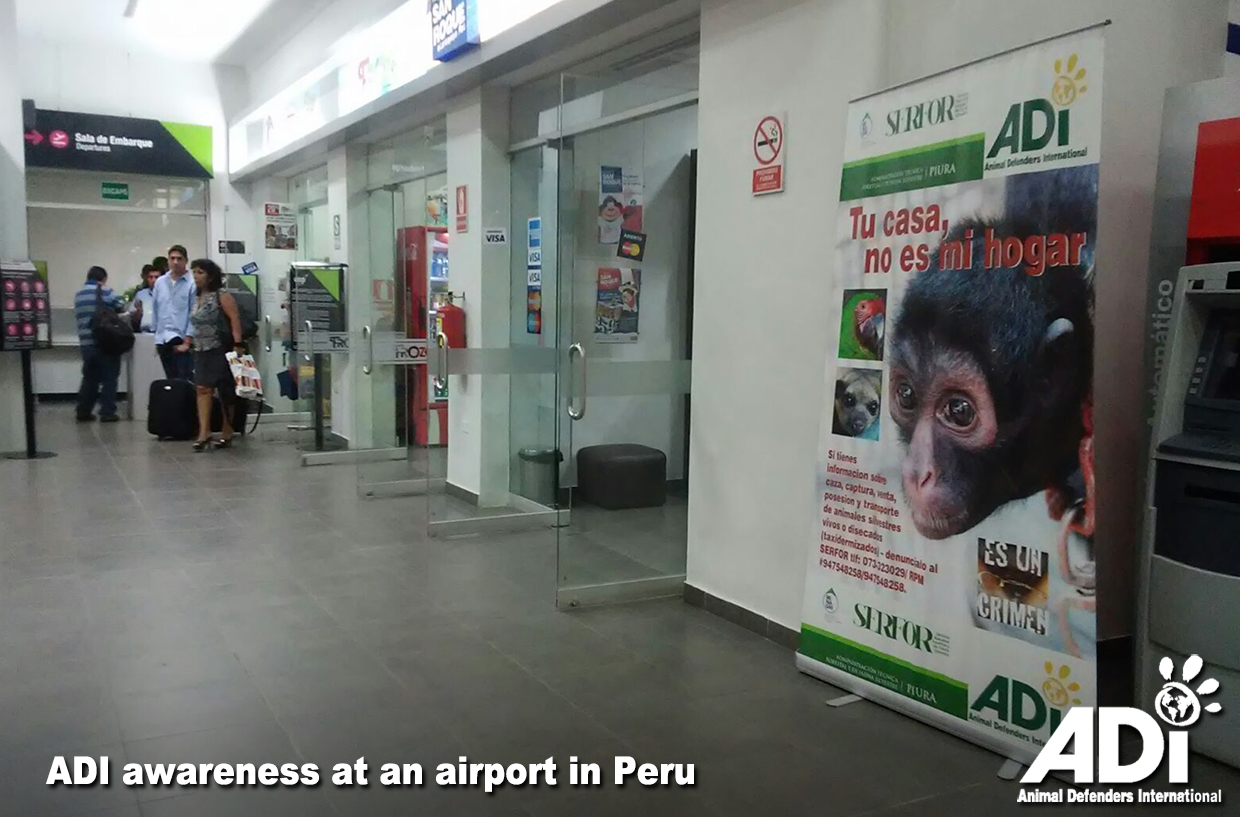
The rescue was part of ADI’s ongoing work against animal trafficking in Peru which has seen us rescue hundreds of animals, including monkeys, turtles and birds as well as running education and awareness campaigns to end the trade.
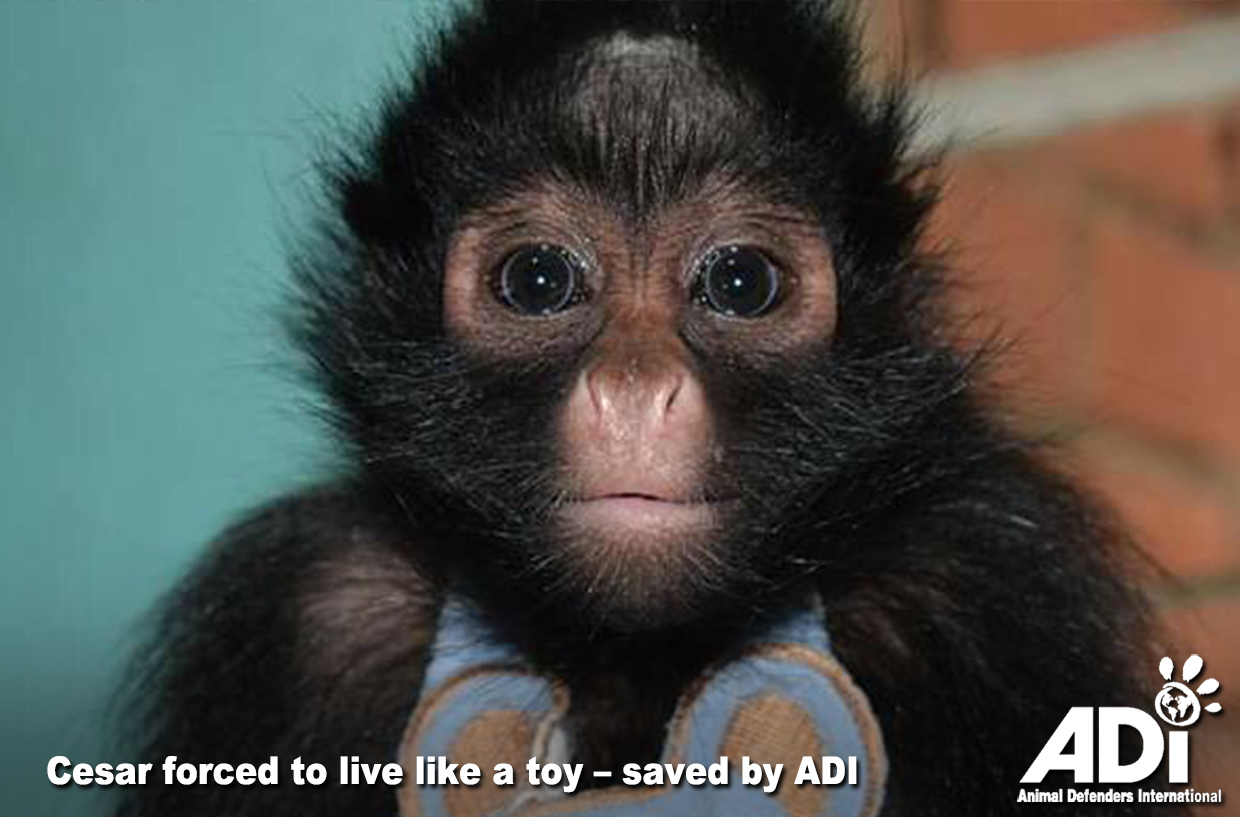
It is a cruel industry that sees baby animals like Chaska and Fausto, stolen from their mothers, who are frequently killed in the process, and taken for a life of isolation in a small cage or on a chain. Many of the monkeys we have rescued suffered their teeth being broken off to prevent them biting, as they are handed around like toys for photographs by their captors. For profit.
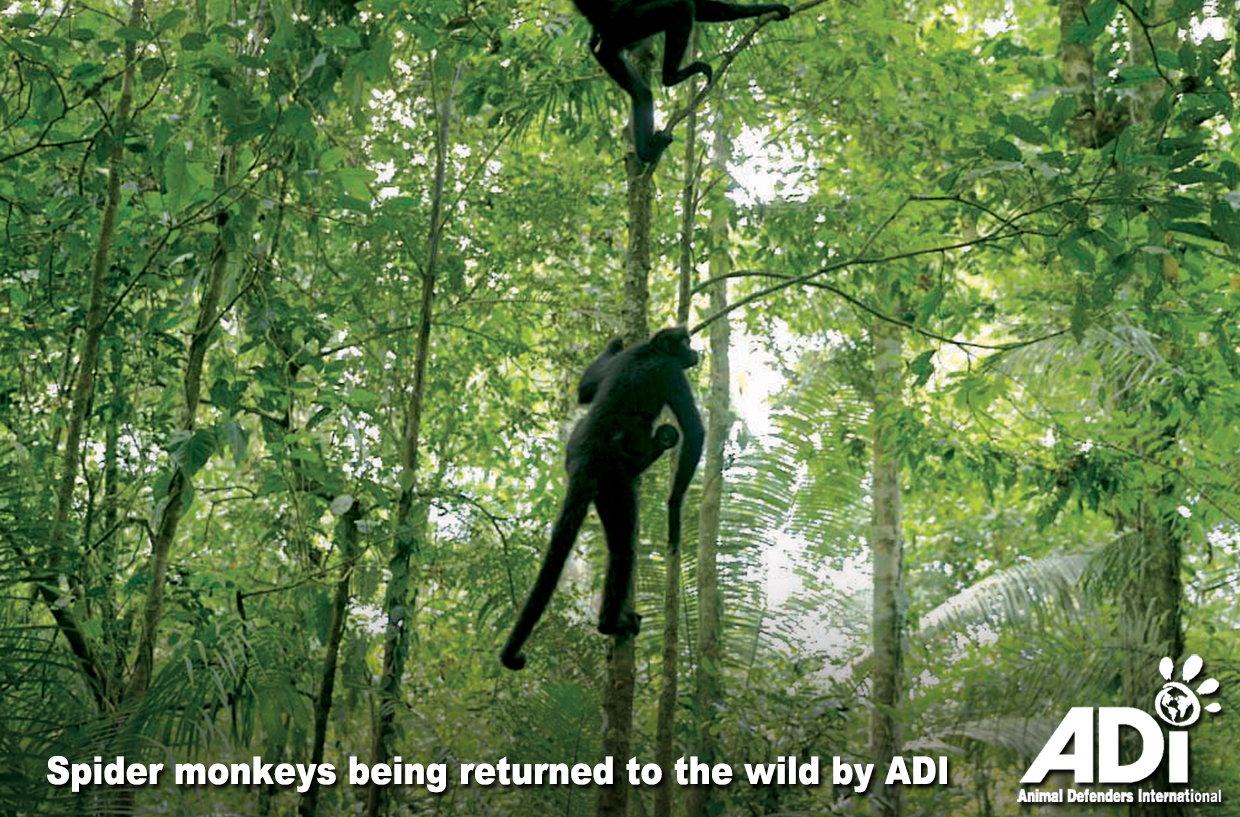
Sadly, Fausto passed away, and so we began to look for the best options for Chaska, and an opportunity arose for her to not only to be with her own kind, but also the chance of returning to the wild – always our dream, but rarely possible!
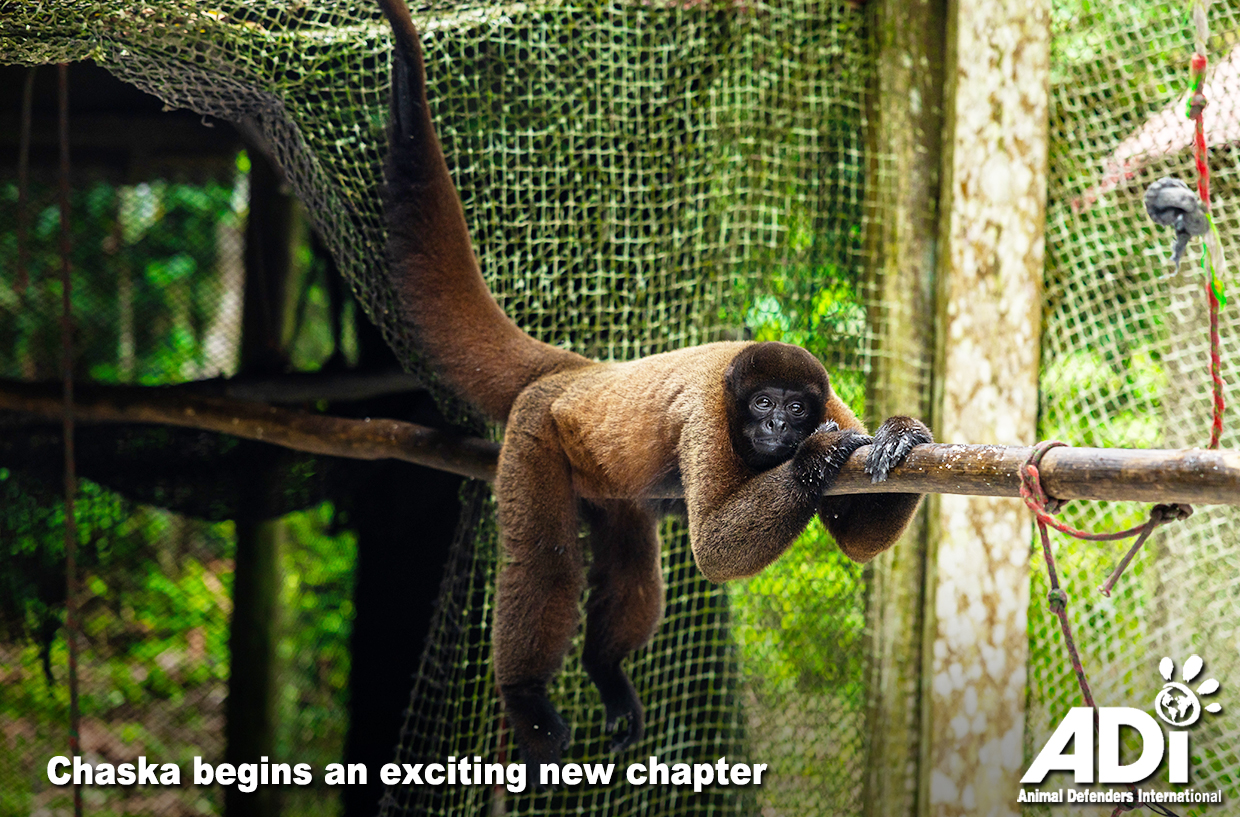
In another challenging relocation, Chaska was taken by river, road and air to Ikamaperu’s Tarangué sanctuary in the Pacaya Samiria National Reserve, Peru’s largest nature reserve in the Amazon basin. Chaska is already back with her own kind and if all goes well she will be rehabilitated into the wild with a new family. Tim and I visited the site and remember the trees full of wild monkeys as we walked through the forest around the rehabilitation location.
ADI has also rescued two more capuchins and a coati from the illegal wildlife trade in different regions of Peru.
Infant white capuchin, Miguel, was found by police, alone in a building in the Yanahuara district, Arequipa, and has made the 800-mile journey to the ADI facilities at Pilpintuwasi – another baby stolen from his parents by the traffickers; he clung to his blanket throughout the journey.
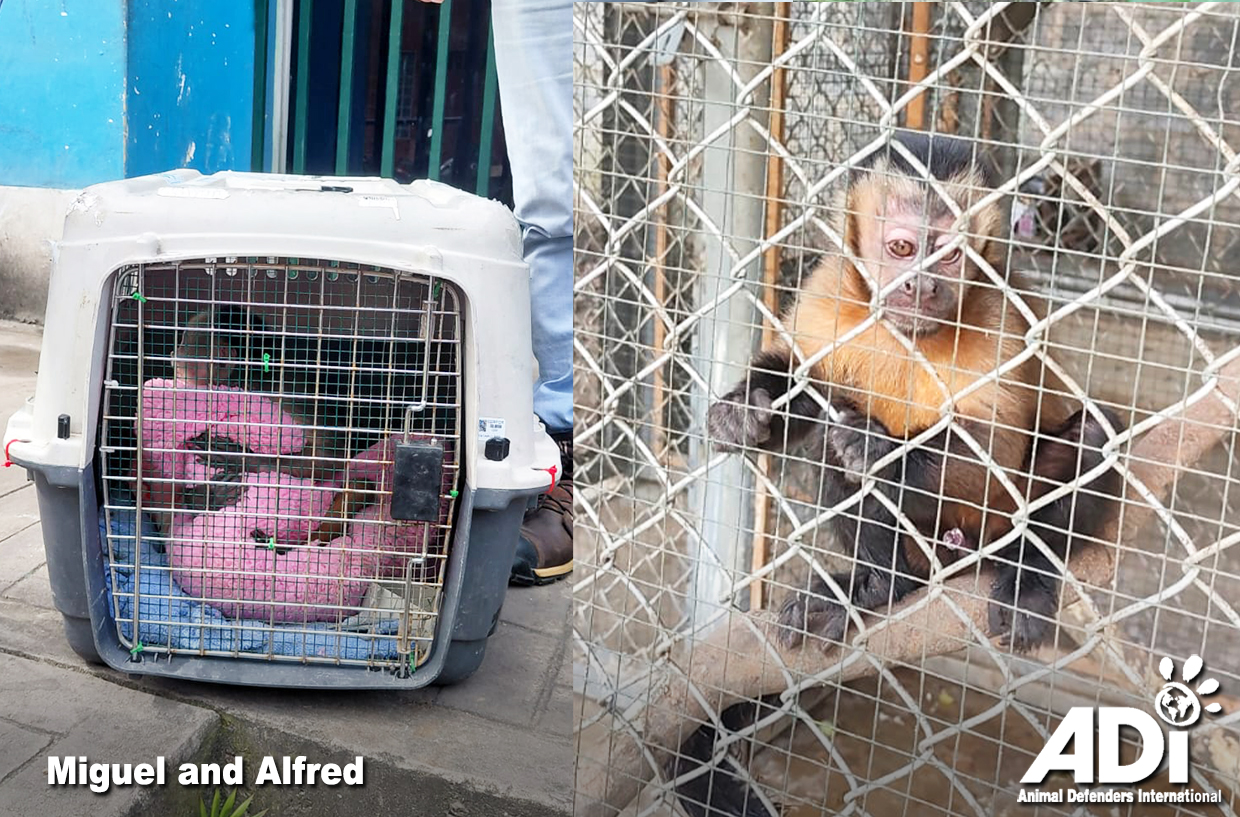
Miguel has moved into Chaska and Fausto’s old home, and the good news is he will soon be joined by another young capuchin named Alfred, seized from traffickers in Chachapoyas, a town towards the western edge of the Peruvian rainforest.
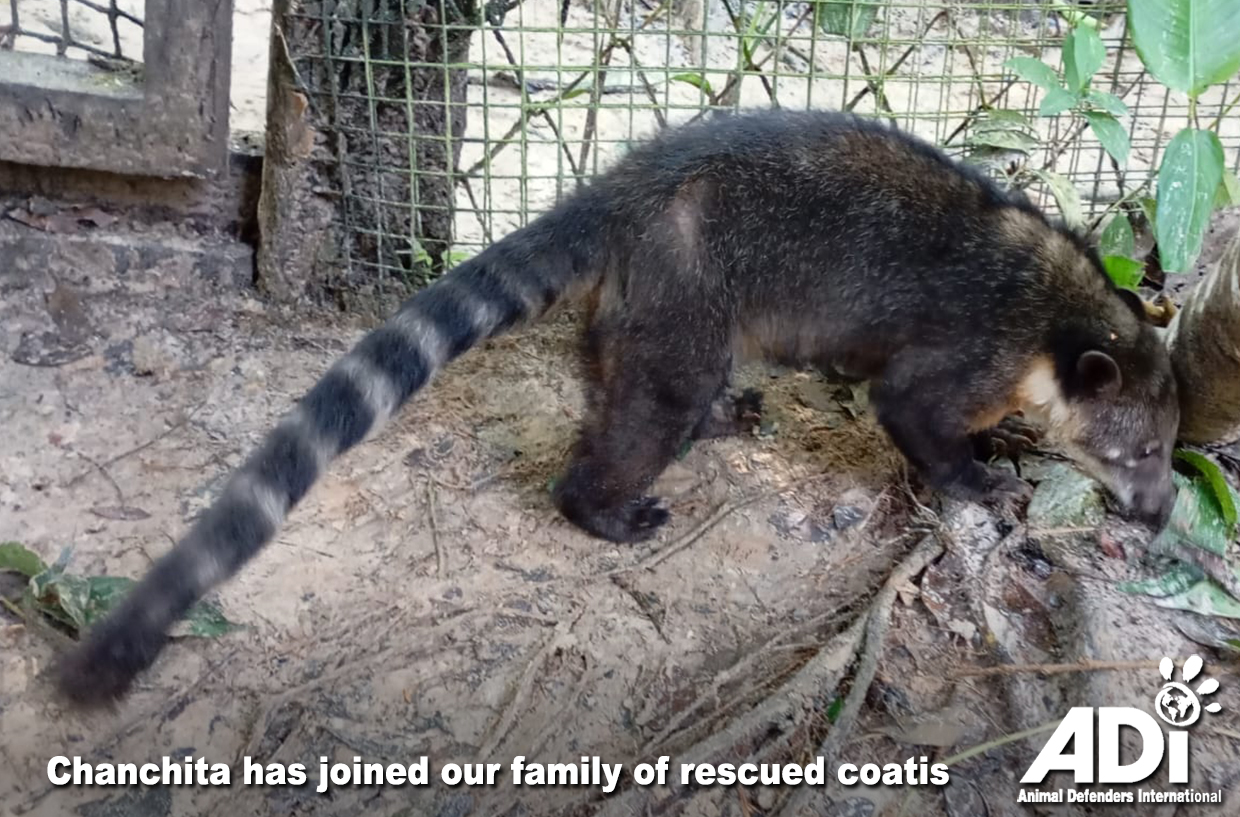
Our family of coati mundis at Pilpintuwasi has been joined by Chanchita, who was confiscated in Moyobamba on the western side of Peru’s forest, another sad reminder that wherever human populations encroach on wild spaces, wildlife is at risk and hunting and trafficking remain a serious threat to wildlife across Latin America.
However, thanks to our supporters we are fighting back for the animals, enforcing and strengthening laws and transforming the lives of animals. Chaska might be one of the very lucky ones that gets to go back to the wild.
Please help us provide lifetime care for the animals we rescue in Latin America, and fund relocations back to the wild where possible – keep supporting and helping our VITAL education campaigns to end the suffering once and for all. Donate UK £, Euros, Rand | Donate US $, CA $
 Jan Creamer