

ADI founded International Primate Day on September 1, 2005, to highlight the suffering of primates. Our campaign has had some major breakthroughs since then including ending the use of chimpanzees and wild-caught monkeys in EU and UK laboratories, airport awareness drives in Peru discouraging people from purchasing primates and trafficked animals as pets, and the rescue, rehoming, and return to the wild or sanctuary for dozens of monkeys rescued from circuses, laboratories, restaurants and traffickers. There is still much to do as primates continue to suffer but with your help we are turning the tide.
This International Primate Day, we are asking for your support to end the use of primates as pets around the world.
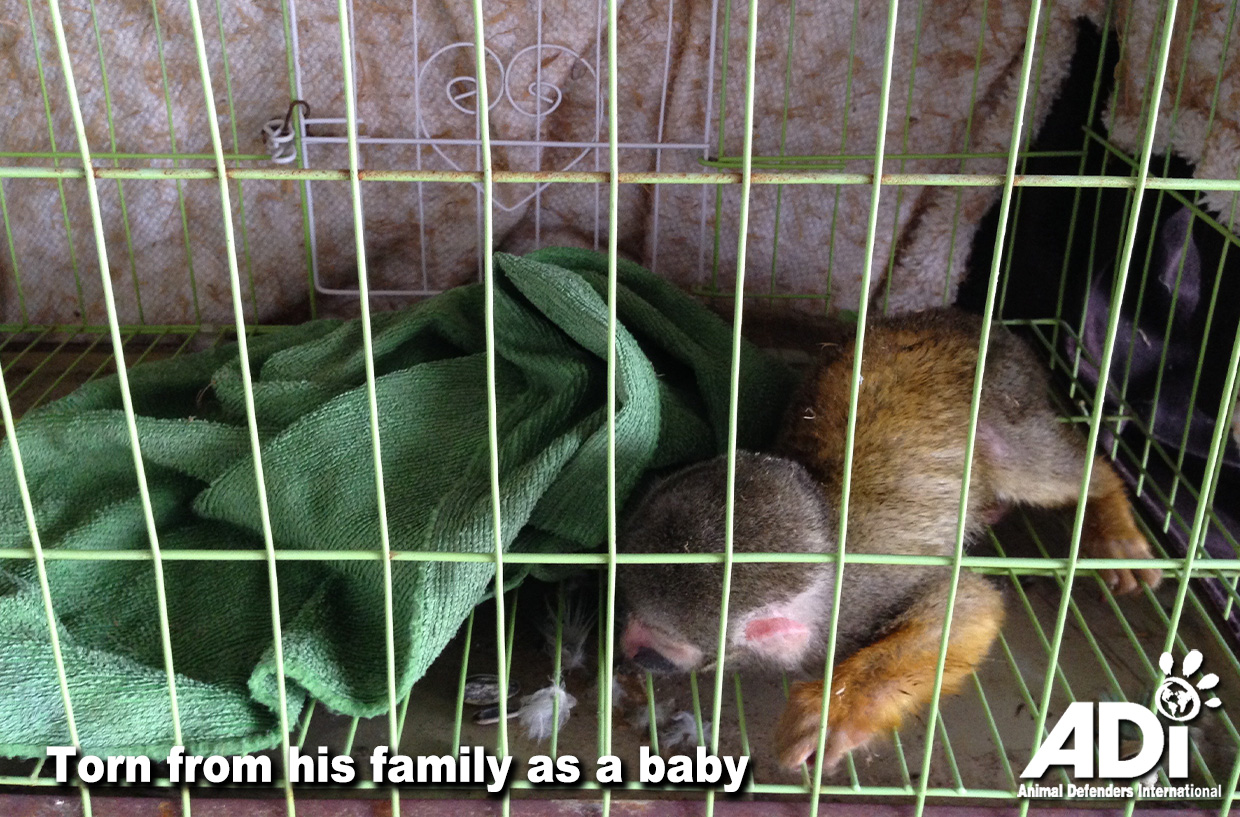
There are major welfare concerns and significant potential for suffering when primates are kept as pets. Nonhuman primates are highly intelligent, social animals who suffer in commercial trade. Babies are forcibly removed from their mothers, and wild capture means parents may be killed and their babies taken. After long, dark journeys as ‘cargo’, they face a life of isolation, away from their own kind.

Primates taken from their families suffer psychologically from the unnatural environment in human homes and this often leads to abnormal behaviors. They are unpredictable wild animals, who may be aggressive or bite, and they often suffer through having their teeth painfully extracted.
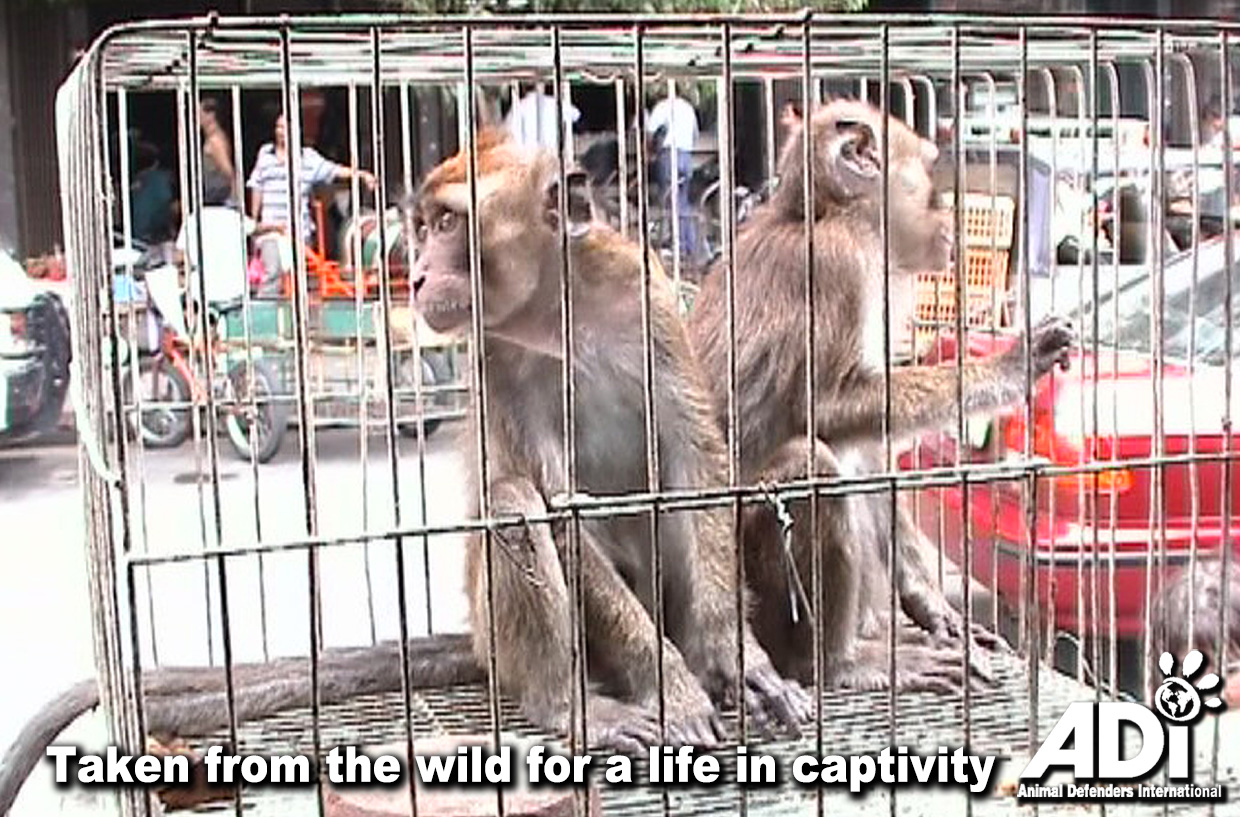
ADI has documented the severe physical and psychological suffering endured by primates kept in the exotic pet trade. Confined to cages, often denied companionship, and subjected to neglect or abuse, captive primates suffer from stress, abnormal behaviors, and chronic health issues. Their complex needs can never be met in a human home environment. A human dwelling and human companionship cannot provide primates with the communications or environmental and mental stimulation they require to develop normal primate behaviors essential to their well-being.
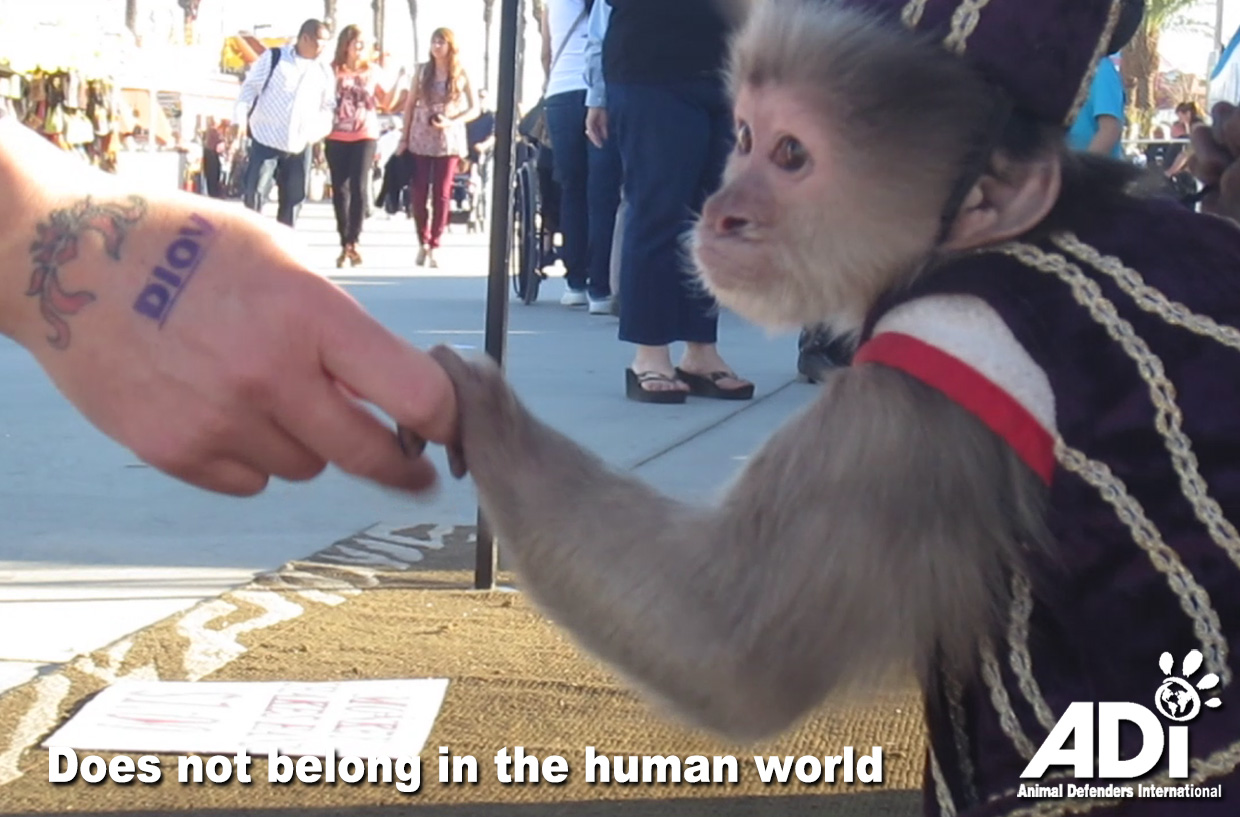
There is also the potential threat to native wildlife should they escape. As we know from the pandemic there are health risks from exotic animals in unnatural circumstances.
Nonhuman primates belong in the wild with their families – not as pets or entertainment for humans. Treating them as such is inhumane, and it puts the public at risk of attacks and dangerous viruses.
HOW YOU CAN HELP
- The government licensing scheme for private ownership of primates will come into effect in England in April 2026. There are an estimated 5,000 primates kept as pets throughout the UK. The climate is not suited to primates and artificial environments cannot replicate the variety and interest of their natural environment; therefore welfare is always compromised. Join our call to ban the keeping of primates as pets across the UK.
- To mark International Primate Day, please join ADI in supporting the Captive Primate Safety Act, HR 3199 / SB 1594, to ban the interstate and foreign trade, private possession, public contact, and breeding of monkeys, chimpanzees, lemurs, and other nonhuman primates in the U.S. Find our action page here.
- Share our social posts to help bring awareness to the suffering of these animals and urge your family and friends to take action as well.
- Support ADI’s campaigns to end the suffering of primates: Donate US $ I CA $ | Donate UK £, Euros, Rand
 Jan Creamer