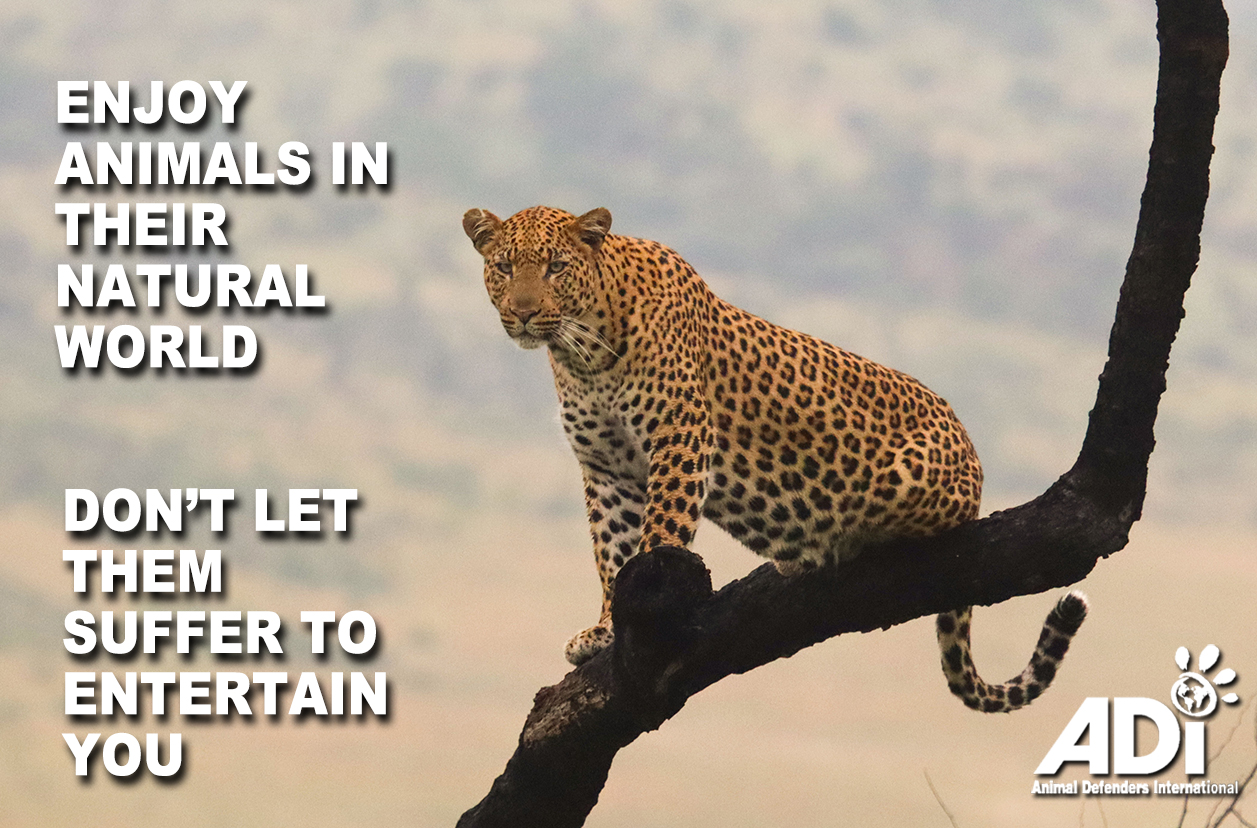
The summer holidays are here and for many, that will be a chance to enjoy nature and wildlife at home and abroad. There are plenty of ethical options, supporting wildlife and nature preserves in different countries, helping wildlife rescue and, from next year, we will welcome our first visitors to the ADI Wildlife Sanctuary. This will educate children about animals and the environment and also help care for our rescued animals – watch for our news!
Sadly, there are also plenty of unethical options to be avoided.

Horrific abuse such as bullfighting and bull running are often dressed up as tradition and promoted to tourists as a way to enjoy the local culture (UK fox hunters have made the culture excuse). Other cruel attractions are designed prey on people’s compassion and affection for animals, so, here’s a few to avoid this summer and make sure you aren’t taken in.
Cynical people who have torn babies from their mothers, trying to persuade you to get your picture taken with them, claiming they rescued the infant.

Remember, when animals are involved, what you are seeing is only part of the story. Apparent caring and kind public interactions between captor and animal are rarely what they seem.
Behind the scenes, we once filmed a baby elephant being trained for public appearances and performances. The baby was hooked, hit, even made to gasp by squeezing the trunk. Yet this cruelty was mixed with what appeared to be affectionate pats and gestures – caresses that, in public, would look kind, even loving, but served as a warning for the baby: ‘Keep doing as you are told, or you know what’s coming’. You can see the disturbing footage here.

It might seem like a magical experience to swim with dolphins, but it’s no fun for them. Dolphins at these attractions are confined and suffering, no matter how natural the setting looks – it’s not the open ocean, not freedom, not family life. Wild dolphins don’t kiss people or drag them through the water by their fins – those are tricks they are trained to do, not signs of affection. Behind the scenes, dolphins are kept hungry, confined in tiny pens, interacting with tourists just for the chance to eat. Interacting with humans is not a choice for them, it’s survival.

Offers to ride, or bathe, elephants may appear serene or romantic, but this is one of the most brutal industries there is. Baby elephants are torn from their mothers and their spirits broken through beatings with bull hooks and clubs studded with nails as they are chained and confined in crates.
Despite their incredible strength, elephants’ backs are simply not designed for people to ride. Their vertebrae are prominent with upward pointing protrusions, with little cushioning. Rides are uncomfortable for them and cause severe and painful damage.
There’s nothing romantic about an elephant ride and it’s certainly No Fun for Elephants.

The ADI Stop Circus Suffering campaign has seen more than 50 countries ban wild animals in circuses, that’s more than a quarter of the nations on earth, but that still leaves quite a few allowing this archaic cruelty – including much of the United States, Germany and most of Asia! So don’t let down your guard, this cruelty hasn’t been stamped out yet.
Circuses cannot meet the needs of animals. They are confined in small cages, chained or tethered, deprived of their most basic needs. Our evidence has shown how these animals are brutally conditioned through violence and intimidation.
But remember, it doesn’t have to be this way. You can support human acts, and if you are travelling these will often far better reflect the culture of where you are. That’s where you’ll see real talent, not animal abuse.
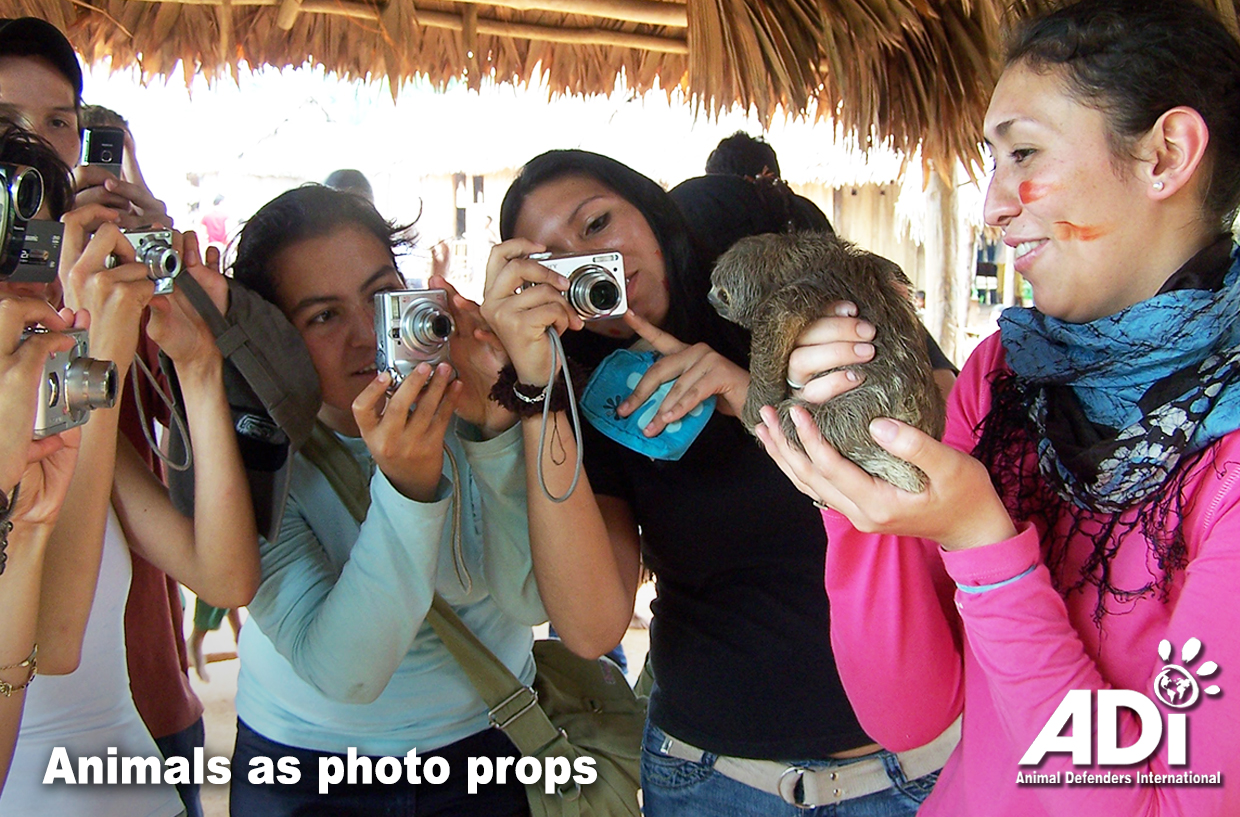
Social media is flooded with photographs of people cuddling all manner of animals, from tiger cubs to baby monkeys. But behind every snapshot and selfie is a lifetime of suffering for the animals.
Traffickers kill families to capture baby monkeys. Claims that baby animals have been “rejected by their mothers” are lies. To keep them compliant, captors isolate and often drug these animals. Monkeys have their teeth violently broken off to stop them biting and they are trained to perch on people’s shoulders.
I’ll never forget rescuing a small capuchin whose teeth had become so infected after they were broken off that pus was erupting from wounds under his eyes. He sat quietly on Tim’s shoulder, that was what he had been trained to do, as we cut him from his chains. Emergency surgery by ADI saved his life.

Cub petting may seem like a thrilling experience, but it’s part of a brutal cycle that harms animals from the start. Lion cubs are bred in excess, torn from their mothers far too early, and used for tourist interactions until they grow too big to cuddle, at which point they face lives in slum zoos or circuses, or they’re killed. Others are funneled into “walking with lions” attractions, where young lions are led through the bush, prowling alongside tourists. When they’re too big to control, many are sold to for canned hunting to be shot in confined spaces by tourist hunters.
While a few reap the profits, South Africa’s lion farming businesses have stained the reputation of a country with some of the most spectacular wildlife in the world. The South African government has promised action to end the captive lion farms and these interactions, and ADI has submitted evidence to the Ministerial Task Force and regularly attends meetings to help move this forward. But it is vital that tourists boycott these attractions NOW.

From the horse drawn carriages of New York to the camels carrying tourists near the pyramids, these are cruel industries that have often been romanticised, but in reality, these animals are forced to work in extreme heat or freezing cold, often without adequate food, water, or rest. They risk injury navigating chaotic and frightening traffic and may be beaten to force them on when exhausted.

ONLY SUPPORT GENUINE SANCTUARIES. ADI Wildlife Sanctuary (ADIWS) is a true sanctuary – no human contact or forced/unnatural interaction with the residents. If a resident chooses, they can follow a team member along a fence, like in this picture, but it is their choice.
Whereas many traditional sanctuaries focused on ‘conservation’ or ‘education’, there are now increasing numbers of captive wildlife establishments which claim to be sanctuaries, but are, in fact, pseudo sanctuaries – places of entertainment. Here’s how to spot the pseudo sanctuaries:
Breeding. True sanctuaries never breed. There are not enough homes for all of the suffering animals in the world. Breeding more captive wild animals denies homes to those in need and condemns new generations of animals to a life in captivity.
Petting. Wild animals do not want to be handled by humans, especially not by strangers. Humans cannot communicate with wild animals in a way they can understand.
Nowhere to run, nowhere to hide. Wild animals need space and freedom to run, play, investigate, and to be able to avoid the prying eyes of human visitors if they want. Where space is limited, extra enrichment for captive animals is essential, but humans are not enrichment.
Unsupervised visitors. If you see an establishment where visitors can wander around the animals unsupervised, it should ring alarm bells. It is possible to protect the animals with fences, but to ensure the animals are never vulnerable, ADIWS always escorts visitors.
Please get in touch if you would like to be alerted when ADIWS starts taking paying volunteers to help care for our animals: info@ad-international.org

As you travel this summer holiday season, please remember:
- Never support cruel tourist attractions featuring animals.
- Enjoy wildlife in the wild – watch, enjoy, and take home those pictures and memories.
- Report cruelty to holiday reps, Trip Advisor and ADI (info@ad-interntional.org) with pictures and details.
- Support travel companies with ethical policies that do not promote cruel animal activities and/or captive wildlife entertainment – tell companies why you won’t be booking with them.
- Never buy souvenirs made of animal body parts.
- Make a statement with one of our vibrant, sustainably made T-shirts, sweatshirts, and hoodies from our store. US store I UK store
A gift today, will help the animals in our care and keep us working towards ending the suffering of animals around the world.
Donate US $, CA $ | Donate UK £, Euros, Rand
I hope you have a wonderful summer.
 Jan Creamer