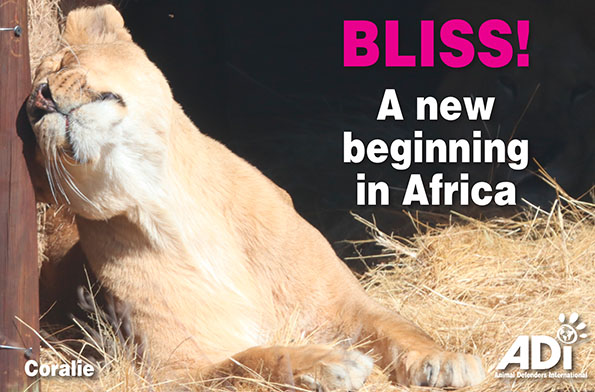
After last week’s dramatic airlift of lions Goliath and Coralie from France, it has been another wonderful week of watching them adapt to their home at the ADI Wildlife Sanctuary, enjoying their trampoline and toys, lounging in the outdoor dens, and basking in the African sunshine.

Getting them into the full 2.5-acre Stephi quarantine habitat was, however, slowed due to a foot injury sustained by Coralie during the journey from France. Dr. Peter Caldwell, who had accompanied Goliath and Coralie from France, sedated the lions on Tuesday for a thorough examination, additional vaccinations, and vitamin boosters. He also tended to Coralie’s foot, suturing a cut between two of her toes. This has meant a little “bed rest”, with a few additional days in their feeding camp.
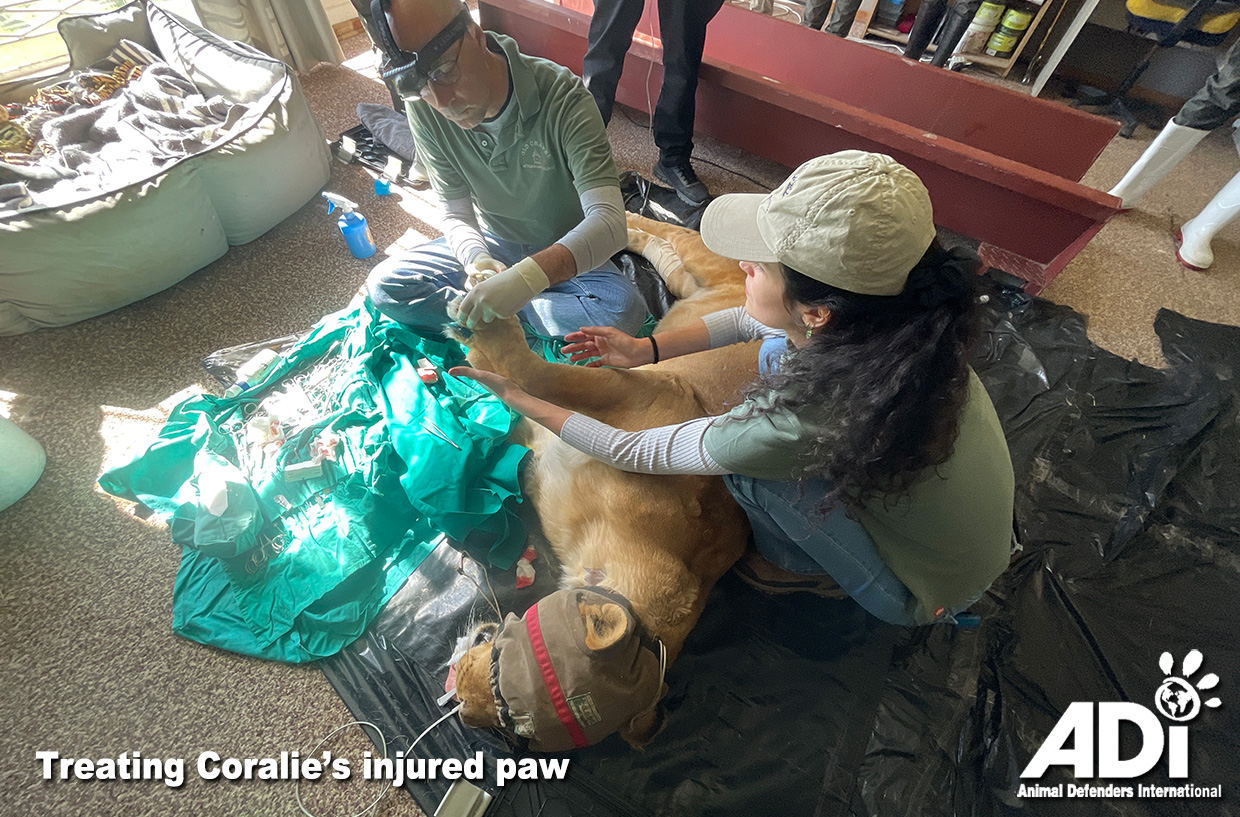
I am pleased to say that Coralie is back on her feet moving very well now. She is on painkillers while her paw heals, which keeps her comfortable.

Occasional injuries and illness remind us of the need to fund ongoing veterinary care for our residents. More serious, however, are the impacts of years of abuse. ADI’s studies have shown the lifelong effects of malnourishment in early life (vitamin deficiencies) due to poor and low-grade food in circuses, as well as restriction of movement and lack of exercise. Goliath and Coralie spent the first decade of their lives living in a brutal environment, on bare boards, behind bars, in a circus cage in France. A life of deprivation which includes food of low nutritional content, as well as restricted quantities.

Other resident news this week includes two very frightening examples of serious health issues involving Tomas and Tarzan from Guatemala circuses.
Tomas became ill, was seen throwing up, and was rushed to the hospital. As he was taken to hospital, it was all teams on deck, to walk through the habitat checking for potential objects or dead wildlife (sometimes the residents catch birds), which could have been a cause. The habitat was clear. Initially, it appeared to be an infection which might be treated with antibiotics, but an ultrasound revealed something more sinister, and Tomas was taken straight into surgery.
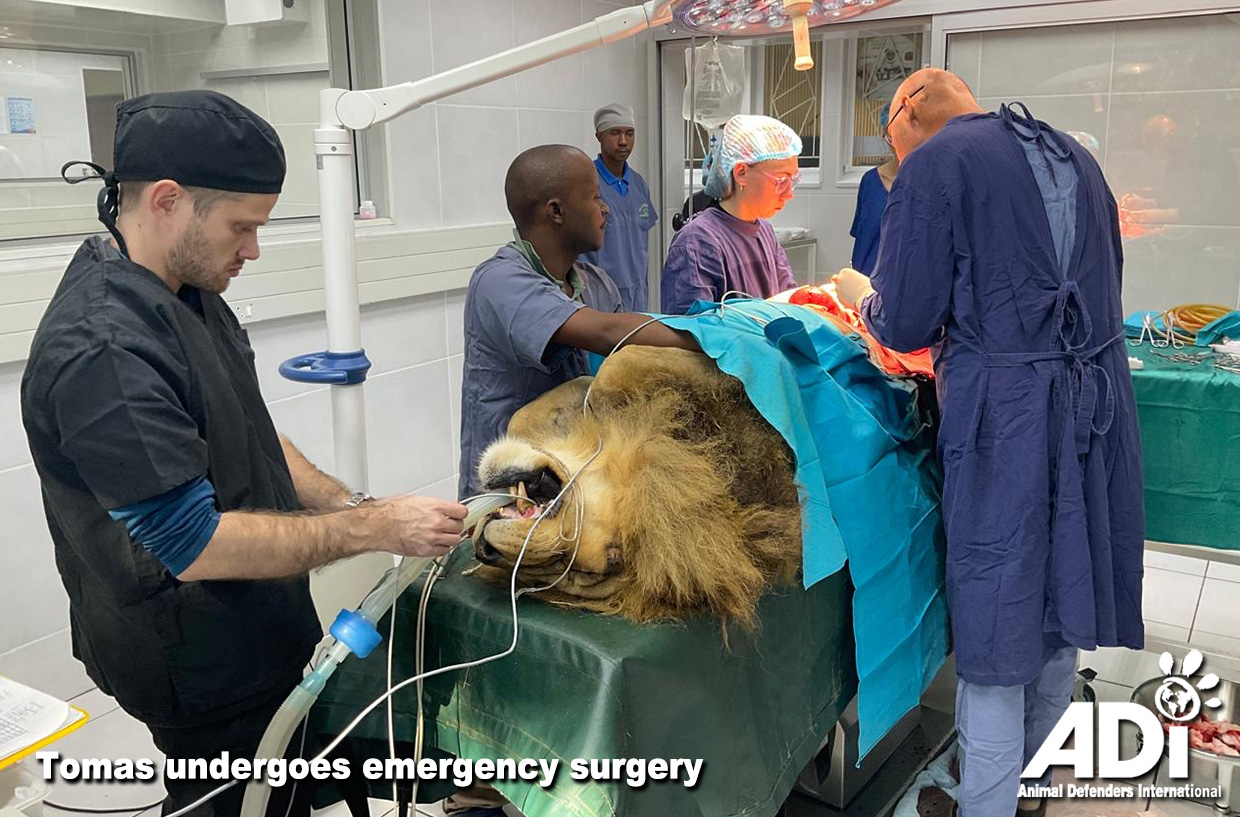
A section of Tomas’ intestine had looped around each other, causing a blockage, and cutting off blood supply. Dr. Caldwell removed 15cm/6 inches of Tomas’ colon. The cause is unknown and does not appear to have involved a foreign object, so we are awaiting the results of cultures.
The prognosis for Tomas is “guarded”, and the next five days will be critical. He is currently on liquidized food. This morning I was told he was responding well. We hope he will be home with his brother Kimba soon.

Tarzan also gave us a scare this week. Years of living in a cramped cage on bare, urine-soaked boards in a circus in Guatemala left him with severe osteo-arthritis. Consequently, Tarzan does not like the colder weather, and this week became lethargic and stopped eating and taking his medication. Dr. Caldwell sedated Tarzan, examined him, adapted his pain relief medication, and gave him vitamin boosters. Tanya watched quietly from the trees. Tarzan was placed in the night house to recover, with the gates left open for Tanya.
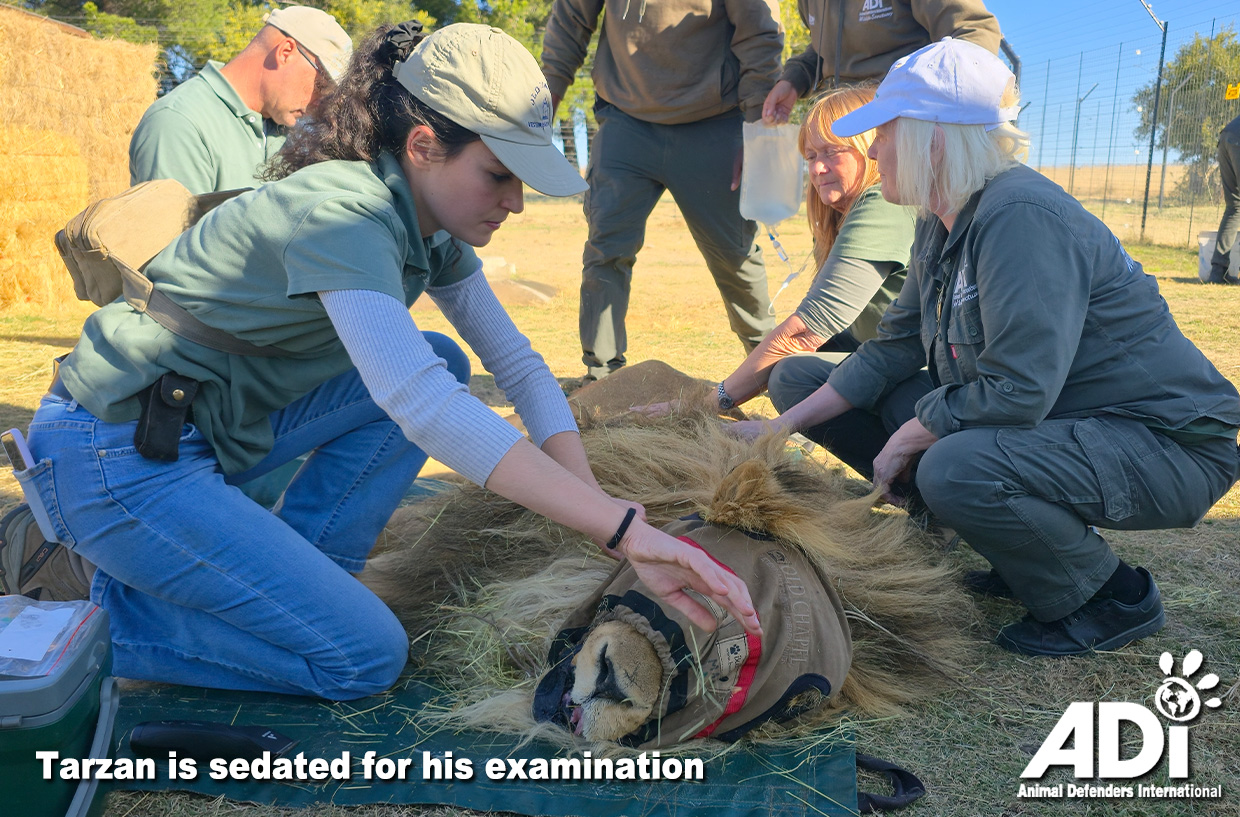
Tarzan’s hard circus life has taken a toll on his body. As we are having a very cold winter in South Africa right now, we needed to make some improvements to the den underneath the viewing platform (Tarzan and Tanya’s favorite place), while he was sedated. We added extra teff grass bales to the outside, installed a heating mat and buried the cable; made a new false floor to raise him off the cold ground and covered it in extra soft teff grass. After Peter Caldwell had treated him, we placed Tarzan in the night house to recover, where Tanya joined him, once we had left, and they stayed together for the night. When we arrived in the morning, they had moved into the outdoor den. Later in the morning they both lay outside together, soaking up the sun. We are hoping he does as well as possible.

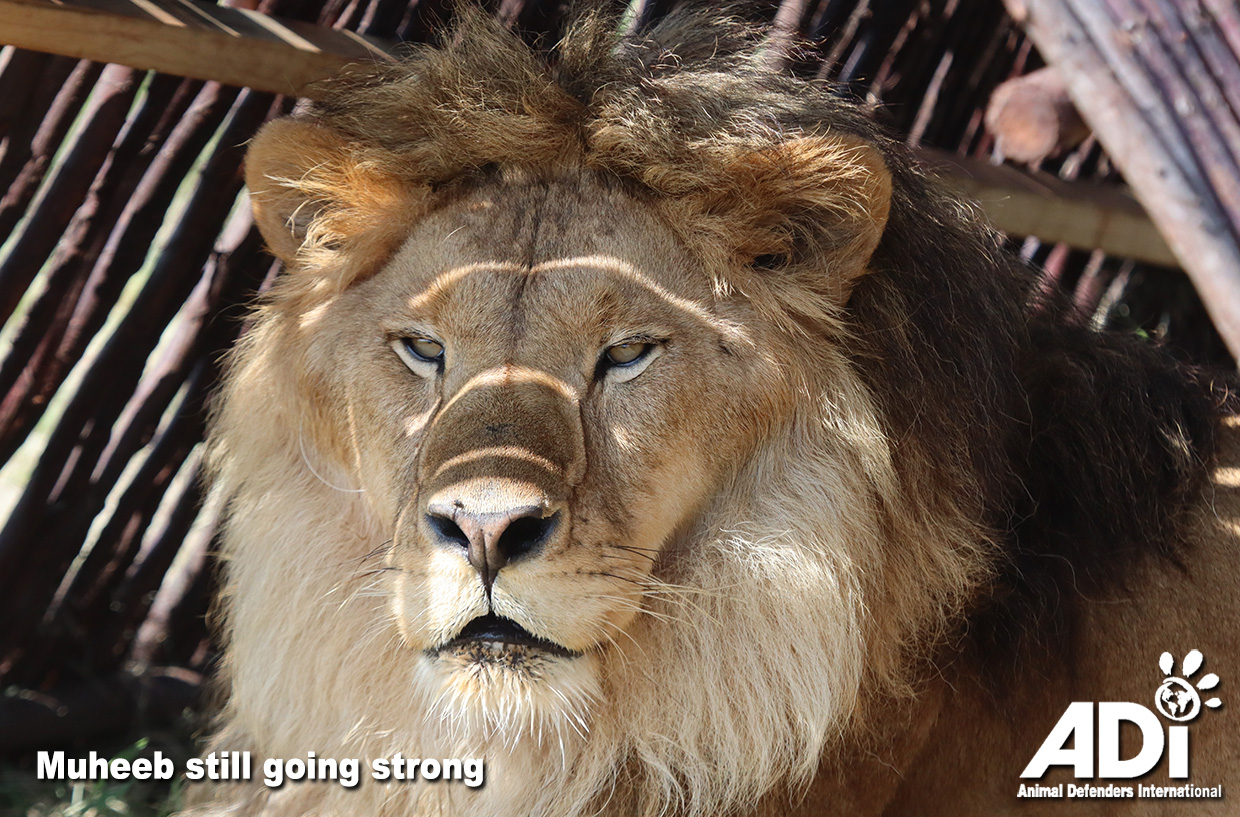
As we recount these medical challenges, I know many of you will want to know how Muheeb is doing, following his cancer diagnosis earlier this year. Dr. Caldwell examined him on this visit and was impressed with his weight gain, energy levels, and how alert and engaged he remains. Against all odds, marvelous Muheeb is still going strong. He has made it clear that, despite his illness, he is not giving up on life.
For Goliath and Coralie, this past two weeks has been just the beginning of the rest of their lives. Lives that – like those of all animals at the Sanctuary – will be as close to what nature intended, safely in our care.

Animals like Goliath and Coralie can never return to the wild. As you can see, a lifetime of confinement in small spaces, inbreeding, malnutrition, and abuse leaves them physically damaged. The combination of inbreeding and lack of essential vitamins in the diet in early life, can cause serious eye problems, or skeletal and neurological problems (we see this, for example, in the seizures in our rescued tigers). Physical mutilations such as broken teeth and brutal removal of claws (where the toe is cut off to the first joint), leave many circus animals incapable of defending themselves or hunting effectively. In addition to health issues caused by inbreeding, which would present a threat to the wild gene pool, wild animals in circuses have also been exposed to human viruses, which can mutate and potentially devastate wild populations.
That is why the ADI Wildlife Sanctuary is a vital lifeline for these animals. We offer a home for life and must be prepared to face all the challenges that Goliath, Coralie, Tomas, Tarzan, Muheeb, tigers Luna and Max, and all the other animals at the Sanctuary may face. That is why your support is so vital.
Donate US $, CA $ | Donate UK £, Euros, Rand
We have been broadcasting live reports throughout the rescue, giving an insight into how we relocate animals, the activities at ADI Wildlife Sanctuary, and veterinary treatments – all are available on our YouTube channel here.
Tim and I look forward to the next giant steps in Coralie and Goliath’s journey as they explore their 2.5-acre habitat and later the almost 8-acre habitat we have planned for them and sharing all those moments with you.
With your help, we can be on Goliath and Coralie’s journey into their new lives, together.

 Jan Creamer